Search results for 2008/08/06/for-normal-to-darker-skin

Rudo M. sent us a great example of how “normal” is socially constructed. The photos below are of the box containing a Vidal Sassoon hair dryer for “normal” hair:

1

It’s also, “good” hair, as is said, in so many words, the blurb on the box said so:

Not too fine or coarse,  normal hair is the most manageable hair type with the largest range of possible styles.  Though it’s fun to experiment, even the easiest-to-care-for hair requires a regimen of regular maintenance.  Proper styling tools with varying heats are crucial for keeping a healthy-looking shine, maintaining balance, and adding…

Yeah, so just in case it wasn’t clear already, “normal” hair is the bestest!  It’s “not too fine or too coarse,” has the “largest range of possible styles,” is “fun,” and is totally the “easiest-to-care-for”!

Rudo is an African woman who wears her hair natural, so she knew right away that Vidal Sassoon didn’t count her hair as “normal.”  So, what were the other options?  If you’re not normal, what are you? Well, according to Vidal Sassoon, you are, of course, “fine” or “coarse.”

But a lot of good this does Rudo, since even the models on the “coarse” box are white with essentially straight hair!  So much for a range of hair types!  Well, at least we know that even white women with straight hair can be abnormal!

And, just in case you didn’t know already that being abnormal means being WRONG, coarse hair is “hard-to-style,” fine hair is limp, and both tend to “frizz.”   What a difference from Vidal Sassoon practically falling over itself praising normal hair.

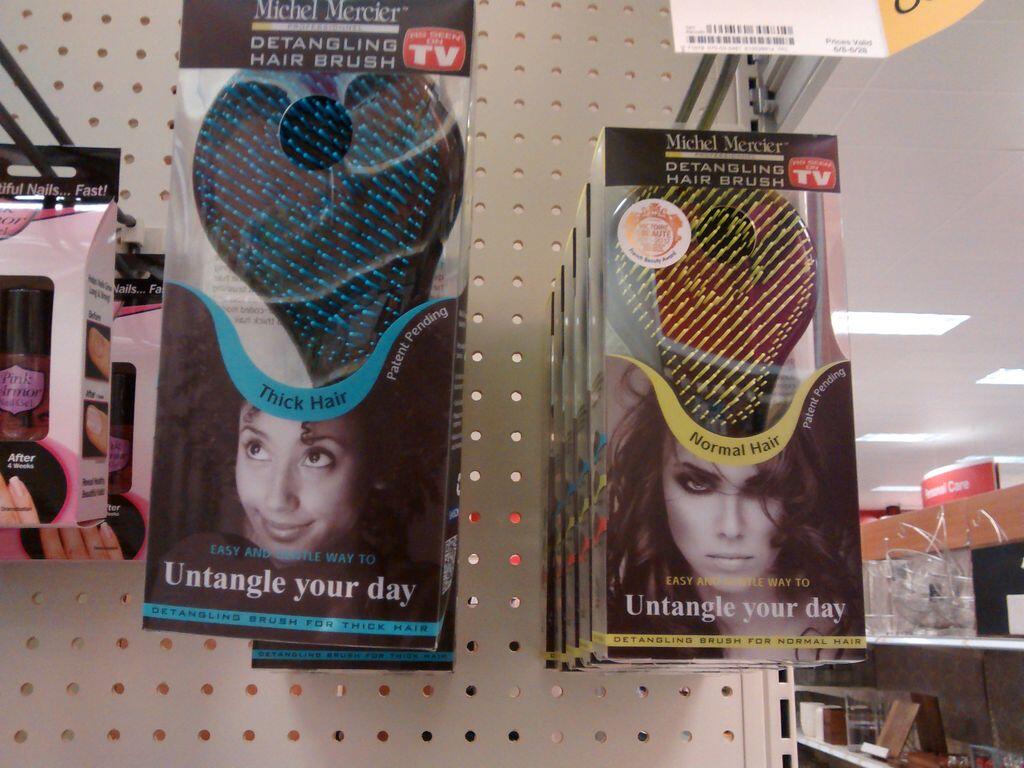
Here’s another example, sent in by @adentweets.  There’s “normal” and there’s “thick” hair.
1

Cara McC. sent us a Covergirl commercial selling foundation for “normal,” “oily,” and “sensitive” skin. Again, they include a range of skin types (and probably include women who represent three different races) in order to point to the diversity of skin types, but nonetheless label one “normal” (the one represented by the white woman).

For more examples of whiteness as normal and people of color as deviant (or, if we measure by Vidal Sassoon, non-existent), see our posts on Michelle Obama’s “flesh-colored” gown, Johnson’s lotion for “normal to darker skin,” bandaids and other “flesh-colored” things, why Sotomayor may be “biased,” families vs. ethnic families, and people of color add “spice.”

Lisa Wade, PhD is an Associate Professor at Tulane University. She is the author of American Hookup, a book about college sexual culture; a textbook about gender; and a forthcoming introductory text: Terrible Magnificent Sociology. You can follow her on Twitter and Instagram.

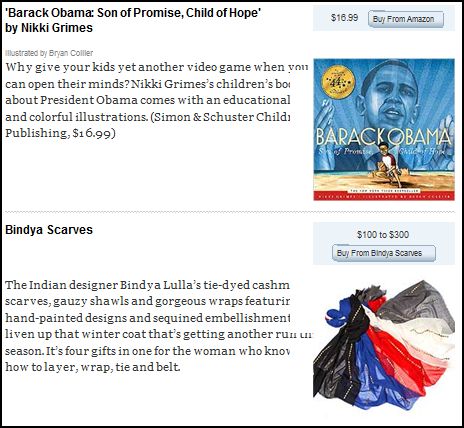
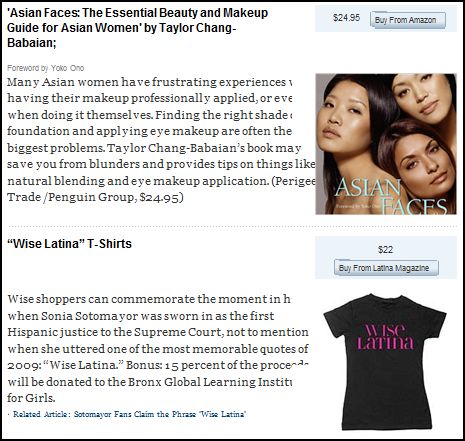
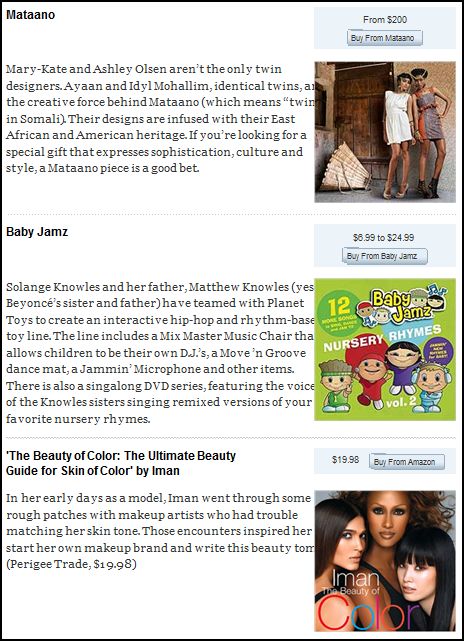
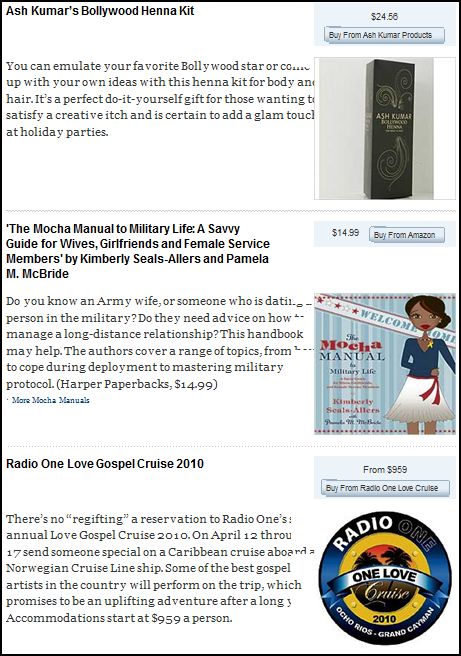
Cassidy P., Kailey V., Adèle G., and Allie L. sent in a gift guide put together by the New York Times specifically for people “Of Color” (center bottom):

color1

The guide lumps together all non-white groups, suggests that they are interested in race- and culture-specific products and implies that white people would NOT be interested in these things.  Some examples:

color2color3color4color5

The guide illustrates something we’ve discussed several times on this blog: the fact that there “needs” to be a guide specifically for people of color reveals that all the other products and guides, ostensibly for “people,” are really for white people.  Things that are marketed to non-white people are, supposedly, inherently uninteresting or irrelevant to white people.

Ultimately, this reinforces the idea that people of color are always outsiders in a white world.

Lisa Wade, PhD is an Associate Professor at Tulane University. She is the author of American Hookup, a book about college sexual culture; a textbook about gender; and a forthcoming introductory text: Terrible Magnificent Sociology. You can follow her on Twitter and Instagram.
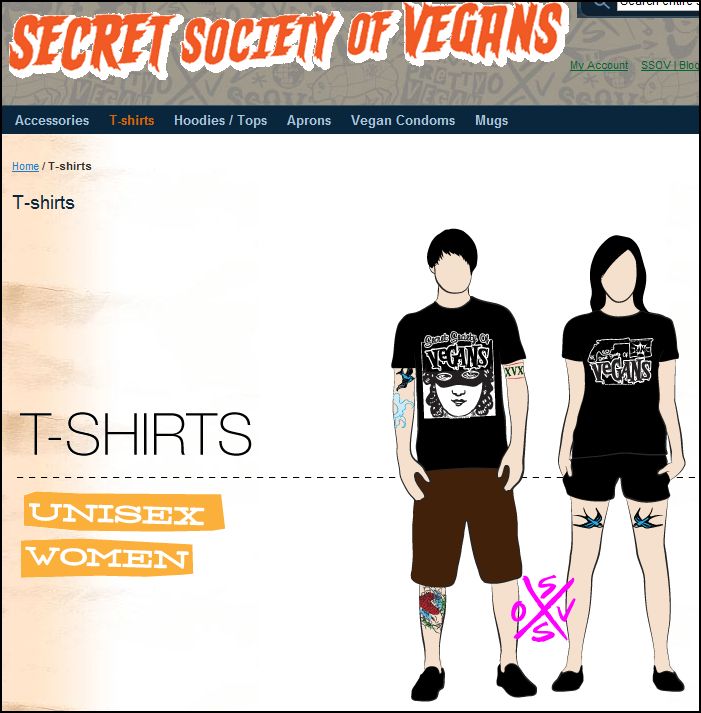
V. and Anna G. sent in this ad for a LOLCats T-shirt.  Notice that the woman’s t-shirt is for women only, but the man’s t-shirt also doubles as a unisex shirt.

Picture1

Both Emily W. and Sabine M. sent in this example of the same phenomenon at Mental Floss:

Capturecc

Mindy J. sent us a third example from Secret Society of Vegans:

From Johanna G:

Finally, Jessica S. sent in this example from Kung Fu Nation:

1

This is just another example of the phenomenon of how we take one half of a (false) binary (such as man vs. woman) and make one generic and the other specific.   Men can be human, but women are always female humans; white people can be just people, but non-white people are always other; Christian symbols are for everyone, but non-Christian symbols are exclusive; and so on and so on.

For more examples, see these posts on how racial and ethnic identity adds spice, Sotomayor’s racial bias, male neutrality in stick figures (here and here), male-default avatars, flesh-colored products, for normal to darker skin, Michelle Obama’s “flesh-colored” gown.

Lisa Wade, PhD is an Associate Professor at Tulane University. She is the author of American Hookup, a book about college sexual culture; a textbook about gender; and a forthcoming introductory text: Terrible Magnificent Sociology. You can follow her on Twitter and Instagram.
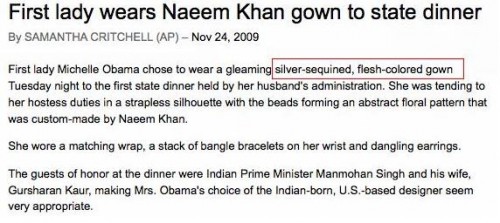
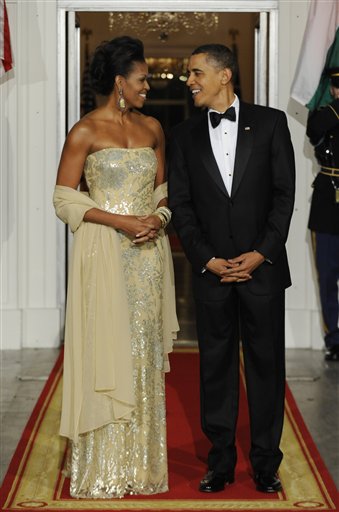
The Associated Press, a news service subscribed to by news outlets all over the world, distributed a story about the first Obama Administration State Dinner. In the story, sent in by Elisabeth R., Samantha Critchell describes Michelle Obama’s dress as “flesh-colored.”

gown2

[Thanks to Madeline T., Anne Marie, Therese S., and Drugmnky for the screencap!]

Gee, what could possibly be wrong with calling this dress “flesh-colored”?

APTOPIX Obama US India

This is what happens when white people are considered people and black people are considered a special kind of people, black people.  “Flesh-colored” becomes the skin color associated with whites and darker-skinned peoples are left out of the picture altogether.  We see this all the time.  Bandaids, for example, are typically light beige (though they rarely call them “flesh-colored” anymore), as are things like ace bandages.

See our post on “flesh-colored” for these examples and more.  See also this post on lotion for “normal to darker skin.”

For contrast, see this post about how the generic human in Russian cartoons is colored black instead of white.

—————————

Lisa Wade is a professor of sociology at Occidental College. You can follow her on Twitter and Facebook.