girls

/* Style Definitions */
table.MsoNormalTable
{mso-style-name:”Table Normal”;
mso-tstyle-rowband-size:0;
mso-tstyle-colband-size:0;
mso-style-noshow:yes;
mso-style-priority:99;
mso-style-qformat:yes;
mso-style-parent:””;
mso-padding-alt:0in 5.4pt 0in 5.4pt;
mso-para-margin:0in;
mso-para-margin-bottom:.0001pt;
mso-pagination:widow-orphan;
font-size:10.0pt;
font-family:”Calibri”,”sans-serif”;}

My daughter turned eleven this week. Though I agree with Allison Kimmich’s earlier post, which argued that it’s great to be a girl here in 2010, I can’t help but worry that growing up female in our culture still results in growing down.

Some examples to ponder:

When my daughter and I went to the mall to have her ears pierced last Saturday, we were deluged with anorexic size mannequins in thongs and barely-there bras.

Later, at the movies, we watched yet another film with a male protagonist (which included a male sidekick who ogled females throughout the entire movie).

For school, she worked on yet another dead white male report.

On television, she is still inundated by stories that focus on a girls looks and emphasize romance and/or beauty as the most important pursuits for a girl.

In music, there are undoubtedly many power-house female musicians, but this seems dampened by all the singing of ‘ho’s’ and ‘get-lows.’

Yet, there are positive aspects to each of these observations. At the mall, my daughter noticed the sexualization of the mannequins and complained about it, showing her awareness that our culture objectifies women in damaging ways (and revealing what I like to think is more feminist awareness in the culture generally). As for the film we watched, it did include one rockin’ strong girl character – only one, but one is better than none. As for books, we are able to find many feminist-friendly reads to fill her endless reading desires (and she subscribes to New Moon, a great feminist magazine for girls). Television may be the area most difficult to put a positive spin on, but at least there are more girl-driven shows. As for school, in general I think there is more emphasis on a diversified curriculum, one that offers more than the hetero white male view of the world.

However, I wish we had come further since I turned eleven back in 1982. The Equal Rights Amendment failed to pass that year, and has yet to be ratified. Laura Ingalls was still rocking the prairie feminism in “”Little House on the Prairie,” and my mom watched a show driven by the super-heroines “Cagney and Lacey.” Sure, Daisy wasn’t wearing much in “Dukes of Hazzard” and Suzanne Sommers was the stereotypical blonde ditz “Three’s Company,” but at least we had the strong mom and daughter trio of “One Day at a Time.” In music, female power abounded via the likes of the GoGos, Joan Jett, and Stevie Nicks. And ET, the top grossing film of the year, gave us one of my longtime favorite female actresses, Drew Barrymore. It was the year Women’s History Week was officially recognized, which has happily expanded to an entire month. (Ah, would that we could have inclusive history year round!)

In my hazy recollections of being eleven in 1982, I recall feeling I could be or do anything I set my sites on. I think here, in 2010, my daughter feels the same despite the fact popular culture still inundates her with the message she is only a sex object, only good for how she can please men, only important so long as she “plays by the rules” and shrinks to fit the mold of the “ideal female.”

As her world expands to include more ideas and experiences, her body is still expected to shrink to fit ever smaller and tighter fashions. As she grows up, the “queen be” culture at school seems to become ever meaner and more judgmental. As she is able to watch “more grown up” television and films, she is introduced incessant sexualization, dehumanization, and silencing of females. And, as her body starts to show the markers of womanhood, she will undoubtedly become more battered by the male gaze of a culture that is more pornified than ever.

Alas, growing up for girls in our culture in many ways still means growing down – but with feminist moms like ourselves guiding our daughters as they grow, I take heart in the fact that many girls are given the opportunity to expand their thinking, their horizons (and yes, even their bodies) without exhortations to “be quiet and diet.”

Last week, the NYT reported “Merck: Studies Boost Gardasil for New Uses“; this week the CDC’s Advisory Committee on Immunization Practices (ACIP) met to discuss these new results. It will be interesting to see what, if any, changes result from new clinical evidence that (1) the vaccine is effective in preventing anal precancers in males and (2) the vaccine is effective in women 27-45 years old.

Those who’ve followed HPV research for the past decade were not surprised by the findings of either study. What has surprised me is how little attention ‘male’ Gardasil has attracted since receiving FDA approval last October. Writing a feature article for the Winter 2010 Ms. magazine gave me the opportunity to more deeply explore this topic and hopefully raise awareness — not only about Gardasil, a.k.a. the “cervical cancer” vaccine, but also about the full range of male HPV-related cancers that it might also prevent. 

So, this month’s column is inspired by my desire to respond to some of the interesting questions, comments and accusations that I’ve received via the blogosphere (like WashingtonCityPaper and HugoSchwyzer) in these first days following the publication of my article. I’ll start by acknowledging that my article’s title seems to have pushed more than a few buttons: apparently not everyone wants to know “Why Men’s Health is a Feminist Issue.” One comment asked “Why does the burden for sexual health need to fall, yet again, to women?” My response: It’s a burden for only girls/women to be responsible for sexual health, so prioritizing equal access to STI/STD vaccines results in a more fair sharing of this ‘burden.’ From the opposite side, a comment criticized this angle as being self-interested: “…when feminists speak of male health issues, it is usually in the context of the way they affect women.” To that, I reply: if you read the full article, you’ll see that boys/men have plenty of reasons to care about having access to this vaccine that have to do with protecting their own health, regardless of whether or not they ever have a female sexual partner.

This leads to another trend in responses: What’s in it for men?  Or, as one comment put it, “The only reason for males to get the vaccine would be to prevent HPV in women.” Really? How about the variety of serious HPV-related male cancers (oral, penile, anal, and others) that are (1) on the rise, (2) often fatal due to lack of accurate testing/screening, and (3) in the U.S. likely result in more combined deaths in men than cervical cancers in women? (See my Ms. article for an overview of these stat’s or, if you love charts check out p. 4 of the American Cancer Society’s 2009 report).

And, media coverage of Gardasil would not be complete without questions/concerns focused on whether or not Gardasil does more harm than good. For the record: I have not taken a pro-vaccine or anti-vaccine stance on Gardasil or any other vaccine. But, I speak in favor of equal access to vaccines, support the conducting and media coverage of medical studies that reveal the full range of potential health costs and health benefits of any vaccine,  and argue for funding public health campaigns about HPV and other sexually transmitted epidemics. And, though some blog comments reveal confusion over the possibility of being “required” to get the Gardasil vaccine, I’m not aware of any current U.S. vaccination policy that does not allow for ‘opting out.’ (Note: as of December 14, 2009 Gardasil was no longer required for female green card applicants.)

A less popular theme, though one that intrigues me, came from those who took the angle of “What’s in it for big pharma?” One comment hypothesized, “…you can’t help but suspect Merck’s money motive is playing a role in the push for expansion to men.”  And, I reply, what PUSH? If money was their motive, then wouldn’t they have updated the Gardasil.com website to encourage male consumers? Visit that site prior to March 1, and you’d think that it was still only approved for girls/women.

I’ll end this post by expressing my thanks to all of the journalists and blog authors who are raising awareness about this topic, including Ms.‘s own Executive Editor Katherine Spillar on the Huffington Post. I also send out my gratitude to blog readers who add insightful, thoughtful, sociological, and truly feminist comments like Annie‘s. In my opinion, to be feminist is not to be pro-women, it is to be pro-equality and pro-justice (not to mention anti-sexism, anti-racism, anti-homophobia, anti-ageism…you get my drift). I don’t know if the pro- and anti-vaccine folks will ever see eye to eye, but there’s absolutely nothing to lose and everything to gain by being pro-HPV-education.

My thoughts have very much been with Girl w/Penner Alison Piepmeier these past few weeks, in part because of what she is going through as she wrote about here, and in part because I’ve so enjoyed reading her latest book, Girl Zines: Making Media, Doing Feminism.  Published by NYU Press this past fall, it is a significant contribution, wonderfully well written.  Comprehensive in tracing the history of girls’ involvement with zines, Piepmeier shows the significance of how zines function as an activist, feminist space.  Through her analysis, Piepmeier offers that “considered collectively, zines are sites for the articulation of a vernacular third wave feminist theory.  Grrrl zines offer idiosyncratic, surprising, yet savvy and complex responses to the late twentieth-century incarnations of sexism, racism, and homophobia.”

Her meticulous research is organized into five chapters – each exploring an aspect of zines’ history and use. Piepmeier gives an overview of the legacy of “grrrl zines” and their use by third wavers, then moves into the special joys the materiality of zines offers, particularly in contrast to the virtual world.  She analyzes how zines explore gender expectations, sexuality, motherhood, and intersectional identities through writing and drawing about topics such as body image, naming and calling out injustice, struggles with relationships and sexuality, in addition to creating visions for the future.  Finally, she offers a reading of zines as a “public pedagogy of hope” considering how zines are spaces of activism and agents of change.

Piepmeier is adept at revealing the incredible uniqueness of the zine as an active space for women and girls — a locus to work out identity, talk back to the presumptions of the mainstream media, contest heteronormative representations, and unleash anger, frustration, and an urge for change.  Her reading of zines as material artifacts of a generation’s grappling with cultural and political ideology becomes fascinating as these handmade artifact accrue meaning collectively.

What becomes progressively more mesmerizing is the revelation of how many levels at which the zine can function.  A handmade object, its value is held, in part, from the intimacy of containing the literal impressions of the hand that made it, then sent through the mail (almost old-fashioned now) with personalized attention, to be read individually.  Piepmeier points out the zine’s foremother in the scrapbook, then second wave’s move to the mimeograph machine, as part of a legacy of spaces where women collect images, preserve thoughts, and by taking the reins of independent printing also unleash words that might not otherwise be said, often around sexual abuse or identity, or dialogues that deviate from an omnipresenent cultural script.  Particularly interesting is watching the progression of Bitch magazine from its original zine roots in 1996 to its present-day incarnation with a major distributor as it straddled “zine and magazine status.”

This open space — standing outside “traditional” publishing practices of the magazine aimed at the teen girl, releases in zinesters an empowering sense of being able to say whatever they want, and unmasks worlds of emotion, rhetorics of protest, and concern with the micropolitical that uniquely combine in this format.  As Piepmeier details, the intersection of text and image, and a consequent sense of invention allows zinesters to query a multiplicity of issues through use of “flux, contradiction, and fragmentation” as she writes, using the zine as a space to both experiment and to creatively play.

Also conveyed is the sense of deep satisfaction zine-makers feel with their creations; by constructing their zines so they construct their subjectivities. Piepmeier writes, “I suggest that the physical act of creating a zine locates zine creators in their bodies… and the act of reading does the same thing for the reader, and thus they are brought into an embodied community.”  Her reading of these zines makes visible the palimpsest zinesters are writing over a cultural preset of female identity as zinesters articulate their outlooks, wounds, and joys.  This deeply affecting work collectively yields a deep effect – just like Piepmeier’s important book.

It’s my pleasure to introduce guest columnist: Valerie A. Young. Valerie is Advocacy Coordinator for the National Association of Mothers’ Centers (NAMC) and the MOTHERS Initiative. She blogs at Your (Wo)Man in Washington Blog. Welcome, Valerie!

Gender-Responsive Aid in Haiti

The push continues to get food to the people of Haiti. Distribution efforts are often hampered by unrest and chaos when thousands of starving people compete to get their hands on something to eat. The Washington Post reports that local authorities are now implementing a coupon system, directed to women and girls, who demonstrate less aggression and are more likely to share the food with others, including the young, elderly, or disabled, instead of selling it. As the primary caregivers for family members, women are particularly well situated to get more food to more people in their homes and neighborhoods, in less time and with less conflict.

Previous posts in this space have noted the gender-specific needs of women and girls, especially following crises that exacerbate their pre-existing vulnerability. In Haiti, sexual violence, poverty, hunger, and disease were already destroying the lives of women before the earthquake. Aid targeted to these populations, it is argued, is more effective for women and girls, and benefits the wider community as well, rather than coming at the expense of men. However, in addition to being a specific target for aid, the particular position of women renders them more effective as the conduit for relief, as aid organizers are now discovering.

This isn’t the first time international aid organizers have harnessed the power of the “girl effect,” the phenomenon of targeting aid to adolescent girls who start a chain reaction, multiplying the effect and reach of the initial investment by passing it on. For example, if a girl has an income, she will reinvest nearly all of it for the benefit of her family. If a girl has a goat, she will sell the milk, send her children to school, breed more goats, hire others to care for the herd and sell the milk, and so on. Disaster zones around the world have begun to focus on women’s ability to maximize and enhance relief operations. Countries funneling aid to the developing world, including the United States, are implementing the practice as well, as is evident from the numerous mentions made by Secretary of State Hillary Clinton.

Further proof is documented in the work of Greg Mortenson, author of Three Cups of Tea and Stones Into Schools. If a girl in the developing world receives at least 7 years of education, she will be older when she marries, bear fewer children, increase her earning power, and have healthier children. She is less likely to be beaten by her husband, less likely to die in childbirth, and more likely to be capable of supporting herself economically. There is a growing consensus that women may be the most effective agents of change on the planet, due to their ability to multiply the value of a resource and their willingness to share it with others.

The conclusion that women in the developed world must also be capable of transformative change cannot be far behind. After all, the girl effect arises from gender, not geography. Why aren’t women in the industrialized world also seen as offering exponential opportunity for optimizing human potential, sharing responsibility for governing, producing, educating, caring, healing, and leading? The impediments that exist, which make mothers more likely to live in poverty, and women more likely to work in low-paying jobs, cannot be the result of our lesser capacity or inferior potential. They cannot be the natural consequence of an inescapable truth of innate gender disparity. If the girl effect is true (and it seems more than amply supported by the evidence), then maternal poverty and women’s limited representation in certain aspects of society can only be the result of artificial distinctions, man-made barriers, and social constructs put in place and continually reinforced by learned behavior… which can be unlearned, with intentional, deliberate, and informed action. Distributing food aid via women, reducing violence and aggression, and getting more food to more people in less time following a disaster is precisely what such action looks like.

st1:*{behavior:url(#ieooui) }

Last week, my sons participated in their school’s first school play—a charming production of “The Sound of Music.” While my fifth-grader worked the spotlight from the mezzanine, my 8-year old played one of the Von Trapp boys, appearing in the scene in which Maria dresses her charges in dungarees she fashioned out of floral curtains. (Yes, it was adorable!)

But let’s get right to the gender point here: Out of 150 kids who voluntarily signed up for the cast, only 20% were boys—and most of them were in the younger grades. While dozens of older girls donned nun’s costumes, only a handful of pre-teen boys participated. The fifth-grader who played the Captain enjoyed a hearty applause after hitting all the right notes in “Edelweiss,” but his male peers were in the audience, not onstage with him. When I asked other folks why this was the case, I heard that most boys were too busy with sports to commit to two weeks of rehearsals. Or, they just didn’t think being in the play was cool.

According to two professional directors who teach acting classes and orchestrate children’s productions in our community, the percentage of boys in our school play was actually rather high. At one local theater program, only 10 to 15% of six-to-eight-year old kids are boys. At another, a recent casting call for “Peter Pan” attracted over forty young thespians, but only three or four boys. Ultimately, the Lost Boys were played by girls.

What’s up with this? “It’s a societal thing,” says Dan Ferrante of the Westchester Sandbox Theater in Mamaroneck, New York. Traci Timmons, of the Bendheim Children’s Theater in nearby Scarsdale, surmises that when parents guide their sons’ extra-curricular activities, they usually prioritize sports over the arts, even if their boys show interest in creative activities. As boys get older, some dads fear a stigma of effeminacy or homosexuality often connected to men in theater. One positive sign is that sibling involvement can attract cross-gender interest. When brothers come to see their sisters perform, they want to be part of the excitement the next time around.

Parents are always hearing about the character-building benefits of team sports for kids of both sexes: they promote cooperation, persistence, self-confidence, healthy body awareness, the list goes on. True enough, but can’t the same be said for performing arts? Ms. Timmons argues that acting can enhance kids’ self-confidence, reduce feelings of social apprehensiveness, build literacy skills, and foster emotional sensitivity. For decades, feminists (and parents in general) have rightly fought to ensure gender parity in athletics—but what can we do to increase boys’ involvement in the arts? Even the popularity of Disney’s “High School Musical”—in which Zac Efron plays a jock who eventually learns to love the limelight on stage as well as on the basketball court—doesn’t seem to have made much difference.

Kids’ free time is limited, and they can’t do it all. But it’s a shame that boys who would otherwise enjoy—and benefit from—theatrical pursuits avoid them because they’re worried that their friends will think it’s uncool or “girly.”

Next fall, Benji will move on to middle school—but Eli will be in fourth grade, and he’s already planning to be in the school play again. Rumor has it that next year’s musical might be “The Wizard of Oz.” I hope they won’t have to cast a girl as the Tin Man.

Calling all girls studies scholars and advocates for the National Women’s Studies Association 2010 conference in Denver, Colorado. The Call for Proposals specifically invites folks doing work on girls (and many other areas–see the Call for full details) to submit proposals.

DIFFICULT DIALOGUES II

November 11-14, 2010 Ÿ Denver, CO

Proposal Submission Deadline: March 1, 2010

Program Co-Chairs: Beverly Guy-Sheftall, NWSA President and Anna Julia Cooper Professor of Women’s Studies, Spelman College and Vivian M. May, Associate Professor of Women’s Studies, Syracuse University

About the Theme

In response to wide demand, NWSA 2010 builds on conversations that began in Atlanta at the 2009 conference. Difficult Dialogues II will explore a range of concepts and issues that remain under theorized and under examined in the field of women’s studies.

NWSA 2010 identifies several thematic areas in which ongoing and new difficult dialogues are urgently needed:

  • Indigenous Feminisms: Theories, Methods, Politics
  • Complicating the Queer
  • The Politics of Nations
  • “Outsider” Feminisms
  • The Critical and the Creative

Hope to see you there!

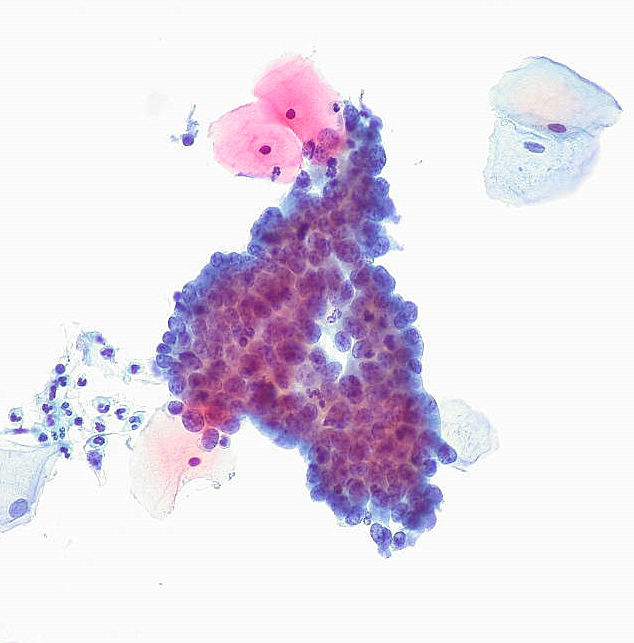
File:Cervical AIS, ThinPrep.jpgJanuary is Cervical Health Awareness Month, making it the perfect time to post a follow-up to Part I which featured my concerns about potential unintended consequences of new Pap test guidelines (from ACOG, the American College of Obstetricians and Gynecologists). To recap, it is vital that we do not confuse a recommendation of less frequent Pap tests with the unchanged recommendation of annual pelvic/sexual health exams (see the National Cancer Institute for explanations of both).


So, let’s look back at a letter dated November 20, 2009, in which the President of ACOG clarified:

Cervical cancer screening should begin at age 21 years (regardless of sexual history). Screening before age 21 should be avoided because women less than 21 years old are at very low risk of cancer. Screening these women may lead to unnecessary and harmful evaluation and treatment.

Medically speaking, why should this recommendation disregard an individual woman’s sexual history? His letter continues on to state:

Cervical cytology screening is recommended every 2 years for women between the ages of 21 years and 29 years. Evidence shows that screening women every year has little benefit over screening every other year.

Doesn’t this depend on how many new sexual partners a woman has in a given year? Are the revised guidelines assuming monogamy (or at least long-term, serial monogamous relationships) which decrease odds of a woman contracting a new cancer-causing strain of HPV in less than a 2-year period? Where are the conclusive findings of large-scale sexual-behavior surveys to support this assumption?


ACOG’s November 2009 press release featured these quotes from Alan Waxman, M.D.:

Adolescents have most of their childbearing years ahead of them, so it’s important to avoid unnecessary procedures that negatively affect the cervix. Screening for cervical cancer in adolescents only serves to increase their anxiety and has led to overuse of follow-up procedures for something that usually resolves on its own.

I agree with GWP reader anniegirl1138 who commented on my previous post that over-treatment is no joke. However, we have not been presented with data that a Pap test — the test, itself, not over-treatment based on test findings — is directly linked to significant increases of any negative health outcome.


Cervical HPV infections can be detected by Pap tests: ACOG acknowledges that, “the rate of HPV infection is high among sexually active adolescents, but counters with, “the large majority of cervical dysplasias in adolescents resolve on their own without treatment.”


Why should that smaller group of girls and young women (whose pre-cancerous lesions do not resolve without treatment) miss the annual opportunity to receive an early diagnosis? Early-stages of cervical HPV infection can often be resolved with less-invasive treatment options.


More-invasive treatment options, such as the “excisional procedures for dysplasia” that have been linked to increased risk of premature births, are one of several medical treatments for cervical HPV.


And, what about the possibility that an increased risk of premature births may not be the paramount concern for every female patient? Not all women want to or can biologically become mothers. What if an individual female patient would rather seek medical treatment for a HPV infection that has resulted in cervical dysplasia so that she has greater peace of mind in knowing that she has reduced her risk of cervical cancer and reduced the likelihood of transmitting HPV to her sexual partner(s) and/or future babies?


Call me a feminist, but I still believe that knowledge is power and that every sexually-active girl and woman should be encouraged to consider the benefits of annual Pap tests. When Pap smear results show “abnormal” cellular changs, then healthcare practitioners should explain the potential for false-positives and discuss the pro’s and con’s of moving forward with different diagnostic and treatment options.  


ACOG acknowledges that, “HPV also causes genital and anal warts, as well as oral and anal cancer.” A Pap test may be a girl/woman’s first chance to learn of a cervical HPV infection, which can result in her having a colposcopy exam. This procedure helps a practitioner find HPV-infected cells not only on the cervix but also in other anogenital areas (the vaginal canal, the labia, the perineum). Beyond the cervix, a Pap test that is positive for HPV may be a wake-up call to get a thorough oral screening for serious oral cancers which have been linked to sexually transmitted HPV.


In addition, my research and others’ studies have found that STI diagnoses can lead to attitudinal and behavioral changes which can decrease risks of contracting other STIs, including HIV. For all of these reasons, a Pap test that leads to a diagnosis of a sexually transmitted cervical HPV infection can bring unintended positive consequences.


In light of the new Pap smear guidelines, I hope that U.S. girls and women who get less frequent Pap tests will more frequently ask their healthcare practitioners to educate them about cervical cancer, about the full range of STIs, and about FDA-approved vaccines against viruses that can be sexually transmitted (HPV and Hepatitis B).

 

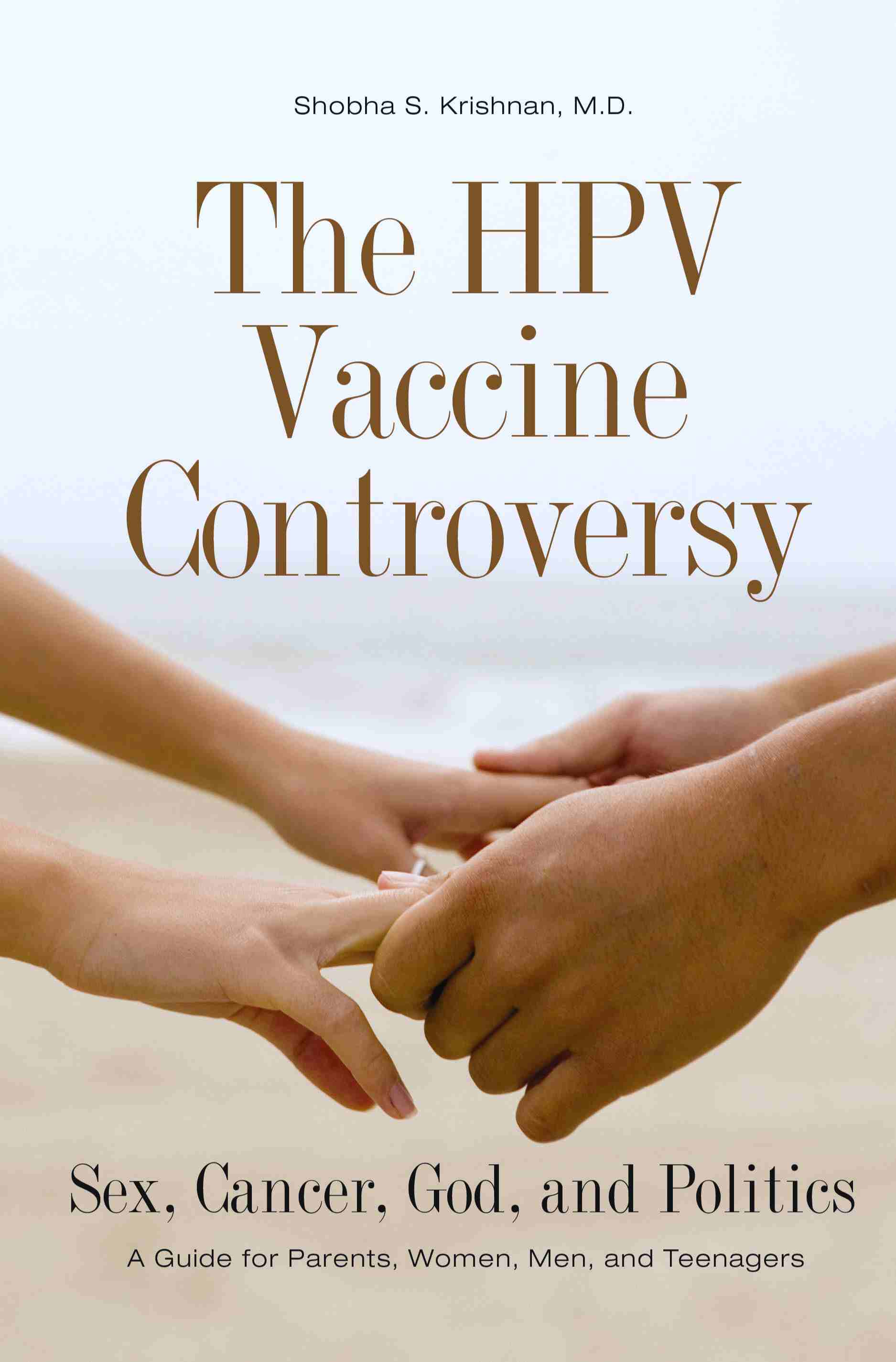
For the medical facts about HPV and HPV vaccines, check out the book The HPV Vaccine Controversy by Shobha Krishnan, M.D., a member of the Medical Advisory Board of the National Cervical Cancer Coalition


The Bottom Line: a recommendation for less frequent Pap tests does not mean you should forgo your annual pelvic exam. In our busy lives, e-reminders can make the difference:  PromiseToMe.com allows you to schedule an annual email reminder. [Note for boys/men: make sure to get an annual sexual health exam, too!]

My daughter turned 9 this week, and she reminds me of a wave about to hit the sand, full of power and beauty at the same time. Rarely have I wanted to turn back the clock to any earlier life stage—after all, I’m learning as I go—but girlhood right now looks pretty impressive from my towel safely above the shoreline.

Number 1: Title IX Rules

Title IX became law in 1972, so I am also a beneficiary of the legislation, but I think that my daughter will reap its rewards more fully. Title IX applies to both athletics and education, but its impact on athletic particpation is especially dramatic. In 1970 only 1 in 27 females played varsity sports; the number is 1 in 2.5 today. My daughter already plays soccer, a sport that I never encountered as an elementary school student; in fact, I didn’t have any opportunities to participate in team sports in middle or high school, either.

Number 2: Girl Power Rocks

Three cheers for the Girl Scouts! My daughter joined a Brownie troop last year, and while I don’t love everything about Girl Scouting, I do love the values of leadership and social consciousness that scouting promotes. My daughter dashes out the door to Friday meetings on dark winter evenings (when a week’s worth of work and school activities leave me feeling ready to hunker down at home) and bursts into a giggly gaggle of girls who sincerlely work—and play—at building community across differences.

Number 3: It’s All About Social Justice

My son and daugther spent last week hanging environmental responsibility signs around our house: they posted reminders on bathroom doors about conserving water during showers and decorated the hamper with a sign about wearing clean clothes more than once. Today my daughter took money to donate to a Haiti relief fund at school. To be sure these efforts are small and inconsistent (we discussed contributing to earthquake relief instead of buying birthday gifts and my daughter was not quite so selfless). Yet I’m hopeful that social justice issues are woven into her home, school, and extracurricular life in ways that reflect a larger generational trend.  What do you notice about the girls in your lives, GWP readers?

Do you ever think, “Duh!?” when you read a news story about how fattening movie popcorn or fast food is for us? I get that same feeling when I read that yet another research study has been published proving that girls and boys are equally good at math. How much more proof do we need?

Professor Marcia Linn’s paper focuses in on why there are differences in girls confidence around the world. The answer? Social expectations. [PDF link]

A society’s gendered division of labor fosters the development of gender differences in behavior by affording different restrictions and opportunities to males and females on the basis of their social roles….if the cultural roles that women fulfill do not include math, girls may face both structural obstacles (e.g., formal access to education is limited to boys) and social obstacles (e.g., stereotypes that math is a male domain) that impede their mathematical development.

Many people like to believe that we live in a post-feminist society. The evidence includes Hillary Clinton, Sarah Palin, and women making up half of the workforce. But girls and boys still receive messages on a daily basis that they have roles to play and only those roles. As recently as this past holiday toy buying season, Toys R Us advertised three different magnification power microscopes and  telescopes, guess which one had the lowest power? Yup, the pink one.

Some will argue that we need to pinkify science things to attract girls, but do they also need weaker microscopes too?

And that brings us to another Duh moment…Pink often does stink.

A friend of mine recently introduced me to the website pinkstinks.co.uk: a “campaign and social enterprise that challenges the culture of pink which invades every aspect of girls’ lives.” Founded by two “thirty-something” British twin sisters, pinkstinks aims to spark public discussion and influence the media to promote positive gender roles to girls worldwide. Website co-founder Abi Moore, a London-based documentary filmmaker and mother of two sons, grew disgusted by the vapid 24/7 media coverage of Paris Hilton and other celebrities while the achievements of brilliant female scientists and other talented women go virtually unrecognized. Determined to provide more substantive female role models for girls today, Abi teamed up with her sister Emma Moore—a publishing executive and parent of two girls—to start the online venture.

Their appealing website creatively challenges the “culture of pink” and its reductive, restrictive gender stereotyping. On one level, pink is just a color—and if you’re a mother struggling with whether to buy a rose-hued wardrobe for your princess-obsessed daughter, rest assured that a few pink shirts or dresses won’t keep your five-year-old out of the Ivy League down the road. On the other hand, though, “pink” is more than a color: it’s a ubiquitous cultural symbol for a set of prevailing values and messages about what it means to be feminine, for what girls are supposed to care about: beauty, appearance, domesticity, and (before you know it) heterosexual allure.

According to the website, for example, more than 60% of British girls aged 7 to 10 wear lipstick and / or perfume, while over 40% wear eye shadow or eyeliner. Among British girls aged 15-17, 73% say that when they feel bad about themselves, it’s related to their looks or their weight, rather than school work or other abilities. In contrast, pinkstinks motivates girls to develop more meaningful ambitions and privilege brains over beauty.

If you visit the website, be sure to click the box labeled “voices,” which links you to a video of two Swedish pre-teens who took on Toys-R-Us for its “very gendered and sexist Christmas Catalogue.” According to the young investigators, only 14 out of 54 pages of the catalogue portray boys and girls playing with the same toys. Their report is an inspiring example of children’s feminist activism on a global scale—and it may prompt your own kids to question, or at least be aware of, the hidden politics of pink. You can also purchase some alternative merchandise, including a bib or t-shirt emblazoned with the slogan “I’m no Princess.” Just think of how adorable your little one might look in that!  And by all means feel to comment with your thoughts below:  does pink stink?