Archive: Apr 2025

New & Noteworthy

This week’s Clippings by Mallory Harrington includes:

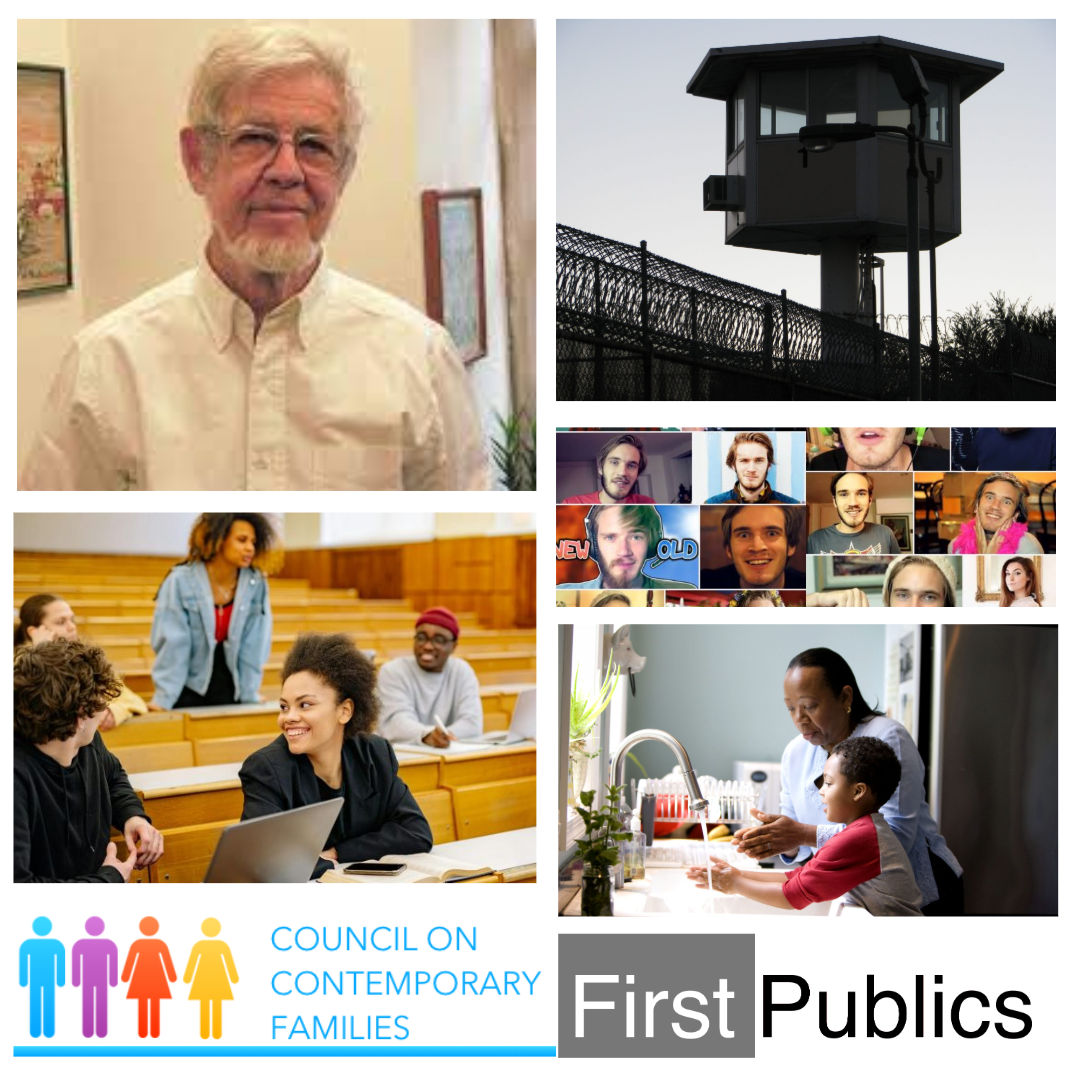
  • Herbert Gans: The influential urban sociologist and public intellectual passed away at 97; remembered for The Urban VillagersThe Levittowners, The War Against the Poor, and Deciding What’s News, as well as for his anti-war activism, press-freedom advocacy, and push for publicly accessible sociology—coverage appeared in New York Times, the Washington Post, and ABC News.
  • Laurie Essig: In a Ms. Magazine interview and the “Feminism, Fascism, and the Future” podcast, Essig linked authoritarianism in the U.S. and Russia to anxious masculinities, warning that “gender ideology” rhetoric masks fears of failed masculinity and urging the creation of mutual-aid “parallel societies.”
  • Stephanie L. Canizales: In Sin Padres, Ni Papeles, Canizales exposes how unaccompanied undocumented youth in California are exploited in low-wage jobs and politicized as scapegoats, lamenting that when they aren’t useful for agendas “the population is completely forgotten” (UC Berkeley News).
  • Craig Considine and Landon Schnabel: Argue Pope Francis widened the Church’s global reach while enacting careful reforms—outreach to the Global South and blessings for same-sex couples—demonstrating how ancient institutions can “bend without breaking” (Rice & Cornell news outlets).

Our latest Discovery by Eleanor Nickel covers research by David Jonathan Knight on African American and Afro-Latino men who spend their formative years cycling through U.S. prisons, and how growing up behind bars fuses identity to confinement, turning adulthood milestones into carceral experiences that constrain life chances long after release.

From the Archives

It has been twenty years since the first video “Me at the Zoo” was uploaded to YouTube. Since then, the site has become the second most visited site in the world behind Google. It is also on track to become the largest media company by revenue in 2025, beating out Disney. YouTube is also first for the amount of TV viewership time. Check out this archive 2017 piece on the evolution of YouTube in relation to “Legacy Media”.

The Trump administration floated a set of proposals this week aimed at boosting the U.S. birthrate—ideas that include things like a $5,000 “baby bonus” for new mothers after delivery and a “National Medal of Motherhood” for women with six or more children. The proposals highlight a familiar political tension: encouraging childbirth without meaningfully supporting families. This piece from our archives looks at the challenges contemporary mothers face—underscoring how policy often overlooks the realities of parenting.

Backstage with TSP

The Spring 2025 academic semester is coming to a close. The TSP board is now shifting to “summer hours” and will be posting less frequently to accommodate schedules, but, no need to fear. We will continue to bring you the latest and greatest social science to a device near you! Make sure to follow us on X, Bluesky, and Facebook to stay updated.

More from our Partners & Community Pages

Council on Contemporary Families

  • Landon Schnabel covers their research on how many young adults walk away from their parents’ churches—especially when rigid doctrines clash with inclusive values like LGBTQ+ equality—yet keep or reinvent a personal, DIY spirituality.

First Publics

New & Noteworthy

This week’s Clippings by Mallory Harrington includes:

  • Musa al-Gharbi (Stony Brook University): Argued that the Trump administration’s crackdown on higher education backfired—universities that complied, like Columbia, were punished, prompting others like Harvard to resist instead.
  • Madonna Harrington Meyer (Syracuse University): Described how grandparents are increasingly parenting their grandchildren, often sacrificing retirement or taking on debt, despite attempts to set boundaries like “fun days” or fixed schedules.
  • Aarushi Bhandari and Parul Bhandari (Davidson College & University of Cambridge): Discussed the Hermès Birkin bag as a symbol of elite status, and how Walmart’s “Wirkin” sparked conversations around wealth, accessibility, and anti-elitist sentiment.
  • Rebecca Sandefur (Arizona State University): Highlighted that most civil court users lack legal representation; the system is built for legal professionals, making it inaccessible to the general public despite its importance.
  • Michelle Janning (Whitman College): Explained that dishwashing arguments reflect deeper meanings—our home rituals symbolize control, identity, and resistance to automation in increasingly tech-driven domestic spaces.

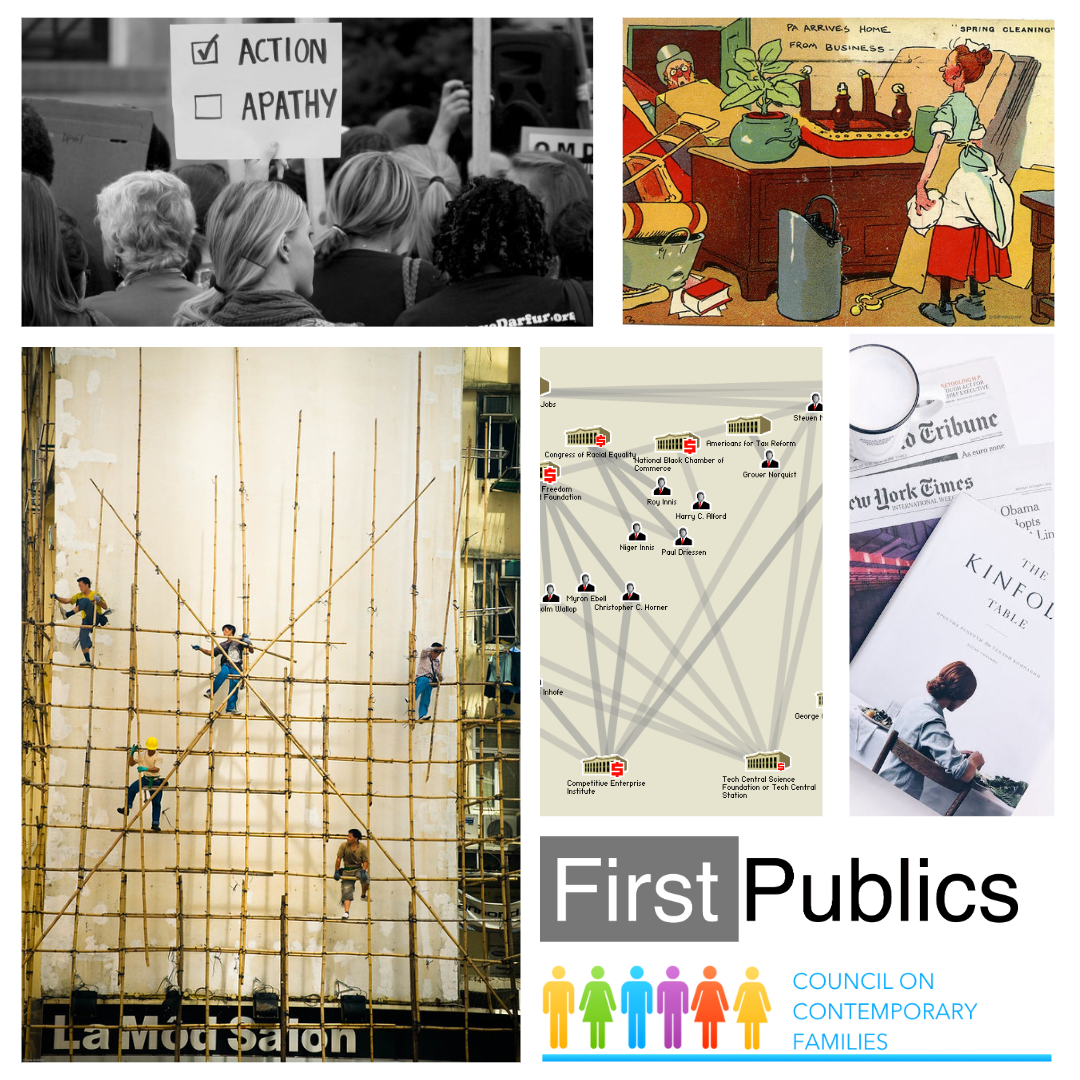
Our latest Discovery by Anastasia Dulle covers research by Ken Kamoche and Kuok Kei Law on bamboo scaffolders in Hong Kong, and how they navigate dangerous work and social stigma by embracing a macho identity that emphasizes toughness, risk-taking, and informal expertise in a declining and highly scrutinized industry.

From the Archives

Coinciding with holidays like Passover and Easter, spring cleaning used to have a religious significance. Today, spring cleaning is more about practicality. In this article, Sarah Catherine Billups discusses the gendered division of housework and the sociological significance of dust.

Peter Dutton, the leader of Australia’s conservative Liberal Party, has said that he believes in climate change. He was accused of minimizing the issue during a recent political debate. In 2015, Erik Kojola wrote about social science research into climate denial.

More from our Partners & Community Pages

Council on Contemporary Families

First Publics

New & Noteworthy

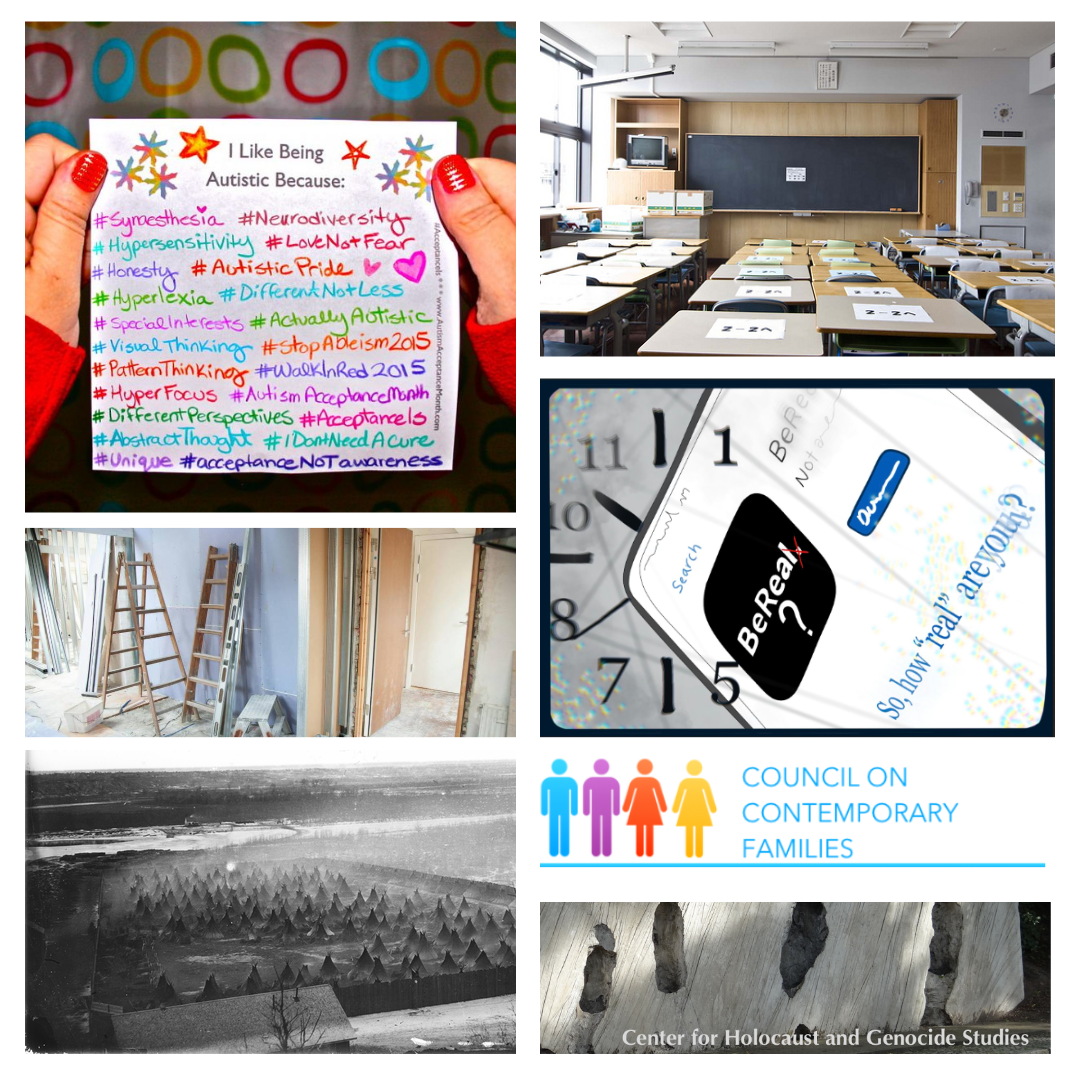
Our latest Discovery, summarizing recent academic article publications, by Emma Goldstein highlights a recent study by Annika Pinch and colleagues which found that while BeReal initially encouraged authenticity through time-limited, unedited photo sharing, users gradually began to game the system by delaying posts and retaking images to appear more curated.

This week’s Clippings from Mallory Harrington includes:

  • Tom Juravich examines how the residential construction industry has undergone a “race-to-the-bottom” since the Great Recession, with contractors increasingly offloading work to subcontractors and misclassifying employees to cut costs in a recent The New York Times piece.
  • Christian Smith argues that traditional religion in America hasn’t just declined—it’s become culturally obsolete. In his new book Why Religion Went Obsolete, Smith explores how shifts in social life have rendered organized faith less relevant, even as some individuals continue to find it personally meaningful, featured in Religion News Service, and picked up by The Salt Lake Tribune.
  • Paul Starr and Nancy Foner analyze Trump’s historically high support among Hispanic voters, arguing that some Hispanics identify with the white mainstream and are drawn to conservative cultural values, in a recent The New York Times opinion piece.
  • Justin Farrell in GQ explored how the ultra-wealthy are remaking the American West by purchasing rural land and building exclusive ski clubs, all while adopting the aesthetics of working-class life.
  • Arlie Russell Hochschild in Nonviolence Radio maps an “anti-shaming ritual” at the heart of Trump’s appeal, where public transgressions are followed by backlash, victimization, and emotional identification from his supporters.

From the Archives

  • As the Trump Administration continues intentions to slash education funding, this 2013 piece from the Scholars Strategy Network archives underscores how financial investment in schools directly shapes outcomes—especially for the most marginalized students.
  • Prices of a variety of grocery items are expected to increase if President Trump’s proposed 10% tariffs are implemented. In 2019, Allison Nobles surveyed the state of the research and found that poor Americans tend to spend a greater portion of their income on essentials like housing and food.
  • RFK reported that the government has launched a research effort to identify the cause of “the autism epidemic,” with the goal of eliminating the “exposures” he believes are behind the condition in a short timeline. This piece from 2019 covers research on the social factors that contribute to increased recognition and diagnosis of autism, as well as the ways autism is differently understood across cultures.

More from our Partners & Community Pages

Center for Holocaust & Genocide Studies

Council on Contemporary Families

  • Leave Laws Support Equity by Jeff Hayes and H. Elizabeth Peters write on how aid family and medical leave policies reduce inequality and support working caregivers, but access remains uneven, especially for low-wage workers, people of color, and those needing eldercare.

New & Noteworthy

April 1st, 2025 marks the official launch date of TSP’s official journal, The American Journal of Unfinished Sociology. We have several submissions that we will be sharing in the next few weeks, so stay tuned.

Gender-Affirming Care and Gender Stereotypes, our latest Discovery my Mallory Harrington, ​covers research by Tara Gonsalves‘s research reveals that insurance coverage for gender-affirming healthcare has expanded over the past two decades, but insurers often rely on gender stereotypes to determine which procedures are deemed medically necessary.

This week’s Clippings by Mallory Harrington includes:

  • Rebecca HansonDavid Smilde, and Verónica Zubillaga argue that deportations of Venezuelan migrants to El Salvador echo the authoritarian practices they fled, warning that criminalizing these individuals based on exaggerated fears of gang mobility undermines both justice and U.S. credibility.
  • Oneya Fennell Okuwobi critiques corporate diversity programs that prioritize optics over equity, showing how they often burden employees of color with performative expectations while corporations reap the reputational rewards.
  • Lucius Couloute shares how parole, once meant to support reentry, now functions as a carceral extension—trapping individuals in cycles of surveillance and punishment that undermine rehabilitation.
  • Manuela Perrotta and Lucius Couloute explores how I.V.F. technologies are reshaping emotional relationships to embryos, as patients develop profound attachments to time-lapse videos of developing cells—perceiving them not as potential life, but as life already unfolding.
  • Christine L. William’s concept of the “glass escalator,” describing how men in female-dominated professions are often fast-tracked to leadership, gained national recognition this week when it appeared as a clue on Jeopardy.

From the Archives

Severe storms and tornadoes have recently devastated parts of the South and Midwest, resulting in at least seven fatalities and widespread destruction. But what makes something a natural disaster? In this 2018 piece, such events become disasters not just because of nature, but because of how society shapes people’s risk and ability to respond. Things like poor infrastructure, uneven government response, and economic inequality all play a role in who gets hurt the most. This reminds us that behind every weather event, there’s a social story about who is most vulnerable and why.

With nationalist rhetoric escalating and reshaping policies in unprecedented ways, it’s crucial to understand why nationalism can also escalate tensions. This piece from the Sociological Images breaks down some of the dangers of nationalism.

More from our Partners & Community Pages

Contexts

Council on Contemporary Families

First Publics