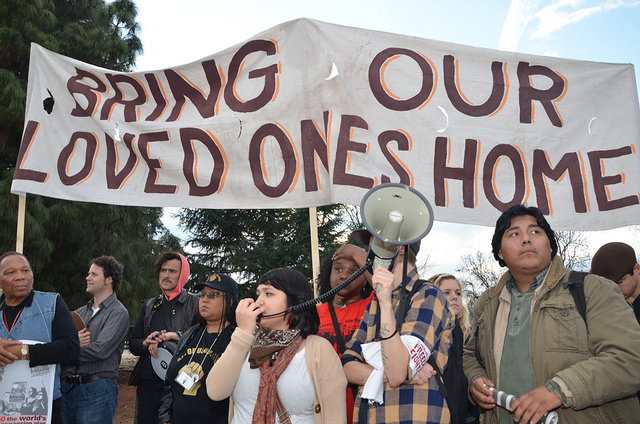

gender

Photo by Abhisek Sarda via Flickr.

For years, legislators and employers have framed guaranteed parental leave as a “women’s issue.” Women serve as the primary advocates for policies that allow more flexibility between work and family life, while fighting stereotypes that paint them as less committed to their jobs than men. In a recent article for Fast Company, sociologist Michael Kimmel discusses how the U.S. lags behind every other industrialized country in policies that guarantee parental leave and how he believes this contradicts “family first” ideals. “Supporting families is the very definition of family values,” writes Kimmel. “How can we possibly lecture others about loving and supporting families when we value our own so little?”

One key to the gradual change that’s come to cities including New York, Washington D.C., and Chicago may be a shift in male perspectives of household work. Recent surveys suggest many men want to be more involved in household duties. Despite that willingness, however, women still bear much of the burden. Consequently, fathers are often praised for more public acts of parenting, like taking children to soccer practice, while mothers are more likely to take care of unsung housework, struggling to also meet the demands of their careers. Further, researchers note that demanding careers cause increased risks of physical and mental illnesses such as heart disease, diabetes, and stress for everyone, not just fathers or mothers.

As legislators craft a new wave of parental leave policies, many question how employers can provide a working environment to support parents and families. In a recent study, Phyllis Moen and Erin Kelly studied the Star Initiative program that allowed for increased flexibility for 700 employees at a Fortune 500 company. The aim was to provide employees with more flexibility in attending meetings, working from home, and communicating via instant messenger. After one year, those involved in the initiative reported greater job satisfaction and lower rates of poor mental health. According to Kelly, “One important implication of this research is that workplaces can change to bring some relief to stressed out workers. It’s not up to an individual to figure out how to balance everything. Challenges come up with work, but organizations can change to bring some relief.”
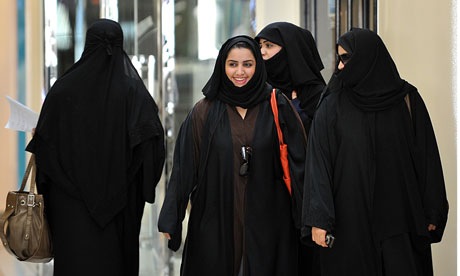

In Riyadh. Tribes of the World, Flickr CC.

Saudi women have just achieved the right to vote. Sociologist Mona Salahuddin Al-Munajjed showcases the power and roles of such Saudi women through her books and her work with on social issues with the United Nations.

Al-Manajjed told Arab News,

There is a huge misconception and misunderstanding in the rest of the world about the status of women in Saudi Arabia, which I realized while pursuing my higher studies in the United States and traveling abroad subsequently.

In the book, Saudi Women: A Celebration of Success, Al-Manajjed interviews those who “have made a difference in society with their education, professionalism, socioeconomic impact and contributions to the Kingdom, becoming a role model and an inspiration for the younger generations.”

Throughout, she introduces readers to educators, businesswomen, bankers, doctors, scientists, philanthropists, writers, actors, and decision makers, giving a glimpse into their lives and achievements. Consider another major advancement for Saudi women’s rights: new entrée into the Shoura Council. That change was driven by driven women.

Danny Fowler, Flickr CC.

Winter break is a time for students and faculty alike to hunker down after a long semester, spend time with family and friends, and relax. But if you’re a woman in your 20s or 30s, you’ve probably been cornered by at least one relative who tells you your biological clock is ticking. And while Aunt Helen may be right, it turns out there’s at least one big benefit for women who wait to start a family.

Recent research featured in the Huffington Post indicates that women in their 40s are actually healthier if they have their first child after age 24. Sociologist Kristi Williams and her colleagues followed 3,348 women for nearly 30 years, collecting self-reported health data. They found that women who had their first child between the ages of 25 and 35 reported better health at age 40 than women who had their first child between ages 15 and 19 or 20 and 24 (and there was no significant health difference at age 40 between these two younger groups).
Read the full article here.

Photo by Charlotte Morrall via Flickr CC. Click for original.

Gender bias in the workplace may not be breaking news, but its negative impact on mental health among powerful women might surprise you. A new study highlighted in Fast Company magazine suggests that women in high-ranking positions experience increased symptoms of depression. Lead author, sociologist Tetyana Pudrovska, describes the unexpected findings that came out of the WILLSHE project on the experiences of highly successful women:

What’s striking is that women with job authority in our study are advantaged in terms of most characteristics that are strong predictors of positive mental health. These women have more education, higher incomes, more prestigious occupations, and higher levels of job satisfaction and autonomy than women without job authority. Yet, they have worse mental health than lower-status women.

Men do not seem to suffer similar negative mental health consequences when in powerful occupations. Marianne Cooper, sociologist at the Clayman Institute for Gender Research at Stanford University, explains:

Women leaders are viewed as being less competent than men, they’re evaluated in performance reviews on personality traits while men are evaluated on accomplishments, and they’re interrupted more often during team meetings. The day-to-day interactions can become tiring to deal with—it’s like death by 10,000 paper cuts.

From an antiviolence PSA created for a Zurich women's organization coalition, Frauenzentrale, via Coloribus, an online advertising repository. http://www.coloribus.com/adsarchive/prints/unknownadvertiser-against-domestic-violence-5378305/
From an antiviolence PSA created for a Zurich women’s organization coalition, Frauenzentrale, via Coloribus, an online advertising repository.

Attention to violence against women has improved significantly within the legal system since feminists pushed for recognition of what had once been considered “personal problems”—like violence by an intimate partner—as part of a larger system of gender inequality. Even into the early 1990s, laws discrediting the possibility of rape within marriage remained on the books for some states.

Some discrepancies remain. According to recent study by Myrna Dawson, men who kill their wives, girlfriends, or female family members often face shorter prison terms and fewer first degree murder charges than men who kill female strangers. Dawson calls this an “intimacy discount.” Among many possible explanations for these disparities include that women may still be viewed as men’s property, therefore partner deaths aren’t taken as seriously as other killings. Another possibility is that crimes against intimate partners tend to be easier to solve, prosecute, and bring to a guilty plea, perhaps resulting in a lighter sentence, since the killer took responsibility for his crime.

Read the full article here.

ER photo via MilitaryHealth, Flickr CC.

In a recent piece for The Atlantic, sociologist Adia Harvey Wingfield explains how sexual innuendo can create hostile work environments for black men. As part of her research for her book about gender and race in men’s work, Wingfield interviewed Emergency Room doctors about their workplace experiences. Several recounted that sexual jokes and innuendo are commonplace between doctors and nurses. But these everyday jokes and comments, Winfield argues, create difficult situations for black male doctors.

Most of the black male doctors I interviewed for my research were the only black men in their work environments. They felt sensitive to that fact, and said they moderated their behavior when innuendo entered the conversation.

Black male doctors in these situations, Winfield explains, must navigate upholding a professional working identity while avoiding any link to the long history of black men stereotyped as dangerously hypersexual.

Responding to these interactions tactfully can be essential for black men to navigate their work environment, and the black male doctors I spoke to described feelings of deep discomfort and awkwardness. While some black male ER doctors do experience unique discomfort on the job, what these men encounter is similar to the plight of some black professionals more generally.

Protest at the closing of the Chowchilla Valley State Prison for Women in CA, 2013. Daniel Auraz, Flickr CC.

Women account for about 7% of the U.S. prison population. Compared to men, they are much more likely to experience poverty, mental health issues, and various forms of victimization prior to being incarcerated. And while they’re in prison, women are more likely to experience mental health problems, chronic medical conditions, and sexual misconduct by staff members. These issues do not disappear after release, but are coupled with difficulty finding adequate employment, public assistance, and health care.

Sociologist Susan Sered was recently featured in Sojourners, which explored her advice to faith communities helping formerly incarcerated women. Drawing on eight years of research with criminalized women in the Boston area, Sered suggests churches and communities of faith can provide shared knowledge and support in the form of information about housing, employment, health systems, and social networks. She believes faith communities can help women make meaning out of their suffering by reframing their incarceration as experience that can provide them with special insight, rather than a reason to blame or ostracize them. Sered says, “criminalized women need to hear these powerful messages from religious communities.”

Read the full article here.

Wikipedia is the largest source of free information on the Internet. According to the digital analytics website Alexa, it’s is the 6th most popular website in the United States and 7th in the entire world. What is troubling is that between 84 and 91% of its editors are male, and the site’s few female editors face regular harassment and marginalization. This imbalance means the content often reflects a strong gender bias. Emma Paling recently explored the problem for The Atlantic, interviewing Julia Adams, a professor of sociology at Yale University.

“Most people look at Wikipedia, and see the text, and assume that it’s unproblematically produced by volunteers and always on a trajectory to improvement,” said Adams. “But that is simply not the case.”

Read the full article here.

When the time comes... Jane Mejdal//Flickr CC
When the time comes… Jane Mejdal//Flickr CC

Traditional norms of feminine behavior encourage women to pledge sexual abstinence before marriage, instilling values of female sexual innocence and purity. In contrast, these norms suggest male sexual activity before marriage legitimizes their masculinity. Men who choose to abstain from sexual activity until marriage remain largely unexamined. In 2008, Ph.D. sociology candidate Sarah Diefendorf studied a male abstinence support group called The River to explore male beliefs about sexuality and masculinity in relation to sexual abstinence. Diefendorf discussed her findings in a recent Huffington Post article.

Men within The River used the group as a support network to resist various forms of sexual temptation, including masturbation, pornography, and same-sex attraction. While the resistance of sexual desires often proved difficult, these men believed that by waiting for sex, an act they believed God deemed sacred, they would enjoy fulfilling sex lives as married men. And by sharing their struggles with sexuality, the men in the group still “reinforce the norm that they are highly sexual men, even in the absence of sexual activity.”

During interviews conducted three years later, Diefendorf discovered that most of the men were still wrestling with their sexual urges even now that they were married. They no longer had a peer support network holding them accountable and did not feel comfortable speaking to their female spouses, since their group as taught that women are nonsexual.

Diefendorf explained, “After 25 years of being told that sex is something dangerous that needs to be controlled, the transition to married (and sexual) life is difficult, at best, while leaving men without the support they need. Women, meanwhile, are often left out of the conversation entirely.”

Photo by Gideon Tsang via flickr.com

Following yet another mass shooting, social scientists and the American community at large are engaging in some familiar conversations. While some folks are looking at mental illness as a trigger to violence and others are asking for gun laws that would put restrictions on gun ownership, sociologist Tristan Bridges wants to draw some focus on the role of masculinity in violence.

Bridges told The Christian Science Monitor that he believes the mass shooters are “over-conforming to masculinity, because they perceive themselves, in some way or another, as emasculated… It’s a terrible statement about American masculinity, to say that when you’re emasculated, one way to respond is to open fire.”