culture

Photo by Pierre-Selim, Flickr CC

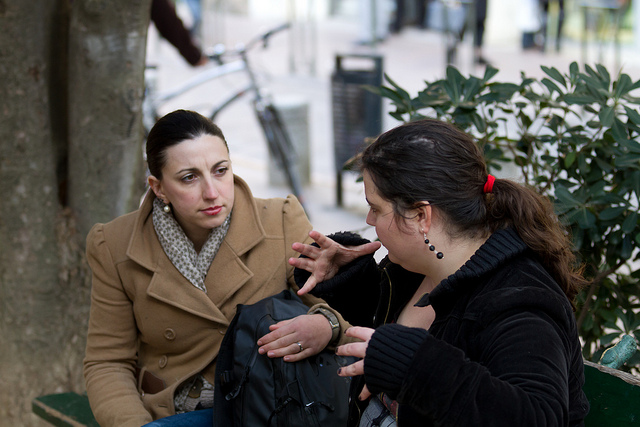
The #MeToo movement and high-profile sexual harassment and assault cases recently brought greater media attention to sexual violence. With this increased attention, however, comes new questions regarding the language used to talk about and write about various forms of sexual violence. This is not only a question of what specific words to use, but also how much detail to give about the act of violence or the victims’ experiences. Using vague or all-encompassing terms like “sexual violence” can flatten and sanitize victims’ experiences. However, when descriptions of sexual violence are not sanitized, they tend to be sensationalized.

In a recent Vox article on the complicated language of sexual violence, sociologist Heather Hlavka argues that sensationalizing violence can be a serious problem.

“Are we, as a culture, so titillated by the extremities of violence — the types, the details, the comportments — that we would like to ingest each sensationalized bit of people’s experiences?” asks Hlavka. “What is the ultimate goal? To better understand? To discredit the experience or mitigate the offense because it fell low on a range of horrors? To discredit the victim by dissecting her actions, her composure, her silence, or her resolve?”

People who experience sexual violence also struggle with language. According to Hlavka, many do not recognize or name their experiences as such, but this does not mean the problem is a lack of words to use to describe sexual violence. Instead, she argues that a broader culture of sexism has the power to reshape the meaning behind such terms, causing them to lose their power. 

Girls do not name their experiences as rape or sexual assault, despite very clearly fitting within established legal categories. Boys, too, struggle to understand, define, and identify as a victim of sexual violence but for different reasons. I would argue that we do not lack a language of sexual violence and harassment…It’s there — it’s a feminist language of power and control and abuse and consent — we just aren’t integrating it in truly meaningful ways, and thus our experiences will not neatly map onto law.”

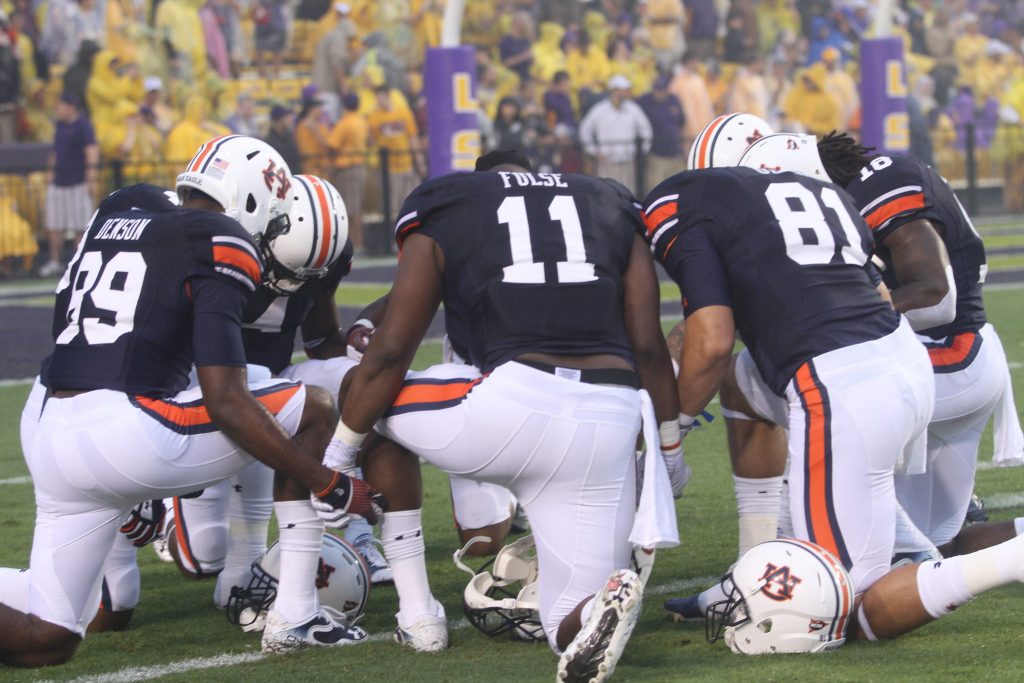
Photo by Dean Hochman, Flickr CC

Originally posted Jan. 26, 2017

Prospective college students consider a wide variety of factors when deciding on a university. While academics and career opportunities are often high on the list, colleges known as top party schools have a special appeal. Everyone loves a good time, but as Occidental College sociologist Lisa Wade describes in her new book, American Hookup: The New Culture of Sex on Campus, this idea of college as “fun” is a fairly recent trend some troubling consequences.

In a feature with Time Magazine, Dr. Wade explains how American universities changed from predominantly strict, formal institutions to environments known for casual hookups and wild parties. Whereas in colonial America, colleges were highly regulated places, as the student body underwent a shift, so did campus culture. Wade explains,

“They [colonial college students] were generally obedient, but as the eighteenth century came to a close, colleges were increasingly filled with wealthy sons of elite families. These young men weren’t as interested in higher education as they were in a diploma that would ratify their families’ hoarding of wealth and power. Predictably, they had a much lower tolerance for submission.”

This rebellious attitude led to widespread expulsions across many elite universities, as well as the early foundations of Greek life. Fraternities became hubs for parties, alcohol, and casual sex, a legacy that still holds strong on many college campuses across the United States. And while the party scene can be tempting for many, American Hookup highlights how this emphasis on noncommittal and unemotional sex also sets the stage for widespread rape and sexual assault.

“Thanks to the last few hundred years, most colleges now offer a very specific kind of nightlife, controlled in part by the same set of privileged students that brought partying to higher education in the first place, and designed to promote, as much as possible, the ‘big four-year org’ that students both desire and dread.”

Photo by Tammy Anthony Baker, Flickr CC

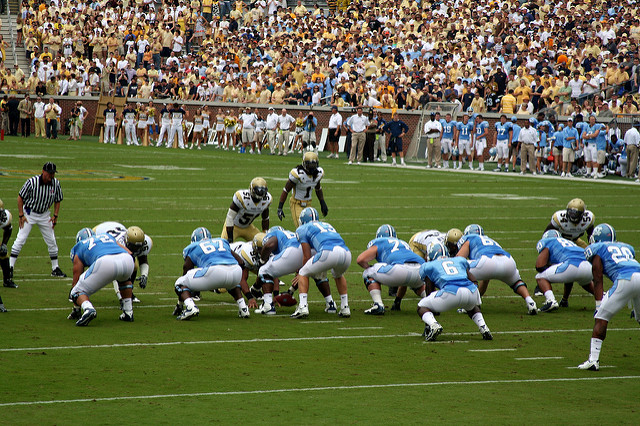
In the last few months, President Trump’s incendiary tweets have found a home in sports, including comments on the NFL, the NBA, and college basketball. In a recent article in ABC News, sociologists discuss how Trump’s tweets about sports with high percentages of Black athletes are racially-coded, and may reveal Trump’s own racial bias and attempts to appeal to his political base.

In response to President Trump’s  demand that owners fire NFL players for kneeling, sociololgist Ben Carrington argues,

“When Trump uses language referring to Black athletes or other Black figures that kind of speak out in terms of them being ungrateful and undeserving of their place in sports, he’s re-invoking that dark era in American sports in which that language was explicit and Black players couldn’t play.”

In another example, Trump demanded thanks for keeping three UCLA basketball players out of jail in China after shoplifting, calling the father of one player an “ungrateful fool” and “a poor man’s version of Don King, but without the hair.” As these tweets gain headlines, the media may miss the core racial issues that drive this kind of dialogue in sports, according to sociologist Doug Hartmann.

“Trump’s been able to make the focus be on whether this is appropriate or not, and how players should be punished or disciplined, and completely distracted our attention from the racial issues that the players who are protesting want to focus our attention on – police brutality, huge wealth gaps, the treatment of African Americans in cities — those are real racial issues.”

In short, Trump’s tweets and the media’s coverage of them divert public attention from larger issues of racial injustice in the United States.

Photo by Hector Alejandro, Flickr CC

Scandals in college athletics are becoming so commonplace that the NCAA’s decision not to sanction University of North Carolina over academic misconduct barely made the news, while corruption in NCAA basketball has turned into a major FBI investigation. Fans might be justified in viewing the NCAA as a boogeyman in scandal-plagued college sports. After all, the NCAA is the organization that began using the term “student-athlete” as a way to avoid workers compensation claims from the widow of a college football player. Rick Eckstein, however, argues in Salon that the NCAA is simply a sign of larger problems in higher education. In his evocative language,

If the NCAA is Oz’s projection on the wall, a profit-oriented higher education system is behind the curtain pulling the levers.”

Eckstein ties spending on college athletics, which is known to run huge deficits, to the larger trend of the “corporatization” of higher education. Under this logic, higher education institutions work more like businesses than schools, and college athletics are a way for university administrators to achieve a variety of revenue-driven goals. For instance, sports are a way for colleges to manipulate enrollment statistics, encourage alumni donations, and, most importantly, expand the school’s brand. Eckstein writes,

“If we think about college sports as a marketing venture rather than an educational venture, all of this spending makes perfect sense. Think of players as walking advertisements – each branded with the school’s logo – who appear before millions of viewers on ESPN and ABC.”

Athletics isn’t the only part of higher education that seems to have an unstable foundation. Over half of Republicans now believe that universities have a negative impact on the country. Even the students who attend have less faith in the institution. Eckstein argues that it’s time to view NCAA athletics, with all of its contradictions, as a symptom of a corporatized higher education system that places fights over financial gain over student learning.

Photo by Ray_LAC, Flickr CC

With the current presidential administration’s promises to build border walls and increase deportations, it may be surprising that Latinx immigrants report experiencing less discrimination than those born in the United States. According to a recent survey featured in NPR’s Code Switchonly 23% of Latinx immigrants report experiencing discrimination, while 44% of Latinx born in the United States report discrimination. 

Sociologist Emilio Parrado told NPR that perceptions and experiences of discrimination are related to an individual’s level of participation in and adaption into United States culture. Research suggests that Latinx born in the United States may face more direct discrimination than immigrants, because they are more likely to engage in competitive workforce and social settings. 

“Discrimination is a strategy of the dominant group to protect itself, to protect the benefits that they have, so discrimination is something that emerges not when people are culturally different, but that emerges when people compete.”

Parrado also argues that many immigrants come to the United States without knowing the contextual “rules” of interactions with others, which makes it harder to  immediately identify instances of discrimination or racism.

“For immigrants, there is a process of learning that you are being discriminated against…Immigrants tend to think that it’s their own fault, that it’s because they don’t know the rules, or they don’t know English.”

Thus, past research may not fully capture how much discrimination is occurring simply because people may not recognize it as such. In response, some children of Latinx immigrants who were born in the United States are trying to educate their families on what discrimination looks like.

Over the past few years, Hollywood has come under fire for its continued exclusion of women and racial minorities, both in front of and behind the camera. With controversies surrounding the perpetual whiteness of Oscars nominees to disappointing statistics coming out of the annual Hollywood Diversity Report, there is a renewed conversation about the lack of diversity in the media we consume. However, a new report finds that television showrunners and writers are still mostly white, which has important consequences for the ways people of color are represented in the shows we watch.

The report finds that less than 10% of the 234 major series studied were led by minority showrunners, and only 14% of writers for these shows were members of a minority group. The Washington Post talked to Darnell Hunt, author of the report and co-author of the annual Hollywood Diversity Report, who explained that this lack of diversity in the writers’ room leads to unequal and inaccurate representations of racial minorities on the screen. Hunt said,

“White men dominate the major positions, and people of color and women have a long way to go to attain any type of equity … We need to change that because television is not just entertainment. Media images do matter, particularly for people who don’t have a lot of face-to-face encounters with people who are not like them. A lot of what they learn about people is what they see in these images.”

Hunt explains that shows led by black showrunners, like FX’s “Atlanta,” and shows with a diverse writing room are more likely to acknowledge racial inequality, whereas predominantly white writers’ rooms more often portray minority characters as one-dimensional “sidekicks.” An especially troubling example from the report concerns depictions of the criminal justice system. The article explains,

“None of the [crime-drama] episodes acknowledged the systemic racial profiling of black Americans, that black people are more likely to be pressured into plea bargaining for crimes they did not commit, or that they routinely face harsher penalties than whites for committing the same crimes … [These] depictions of policing and the court and prison systems, combined with viewers’ existing biases, undermine public support for policies that could help advance racial equity in American society.”

In short, when people of color are left out of the writers room, their stories are left out too.

Photo by little birth, Flickr CC

As of 2015, about half of married couples were dual earners — meaning both partners work for pay — according to the Bureau of Labor Statistics. While having two income earners may be necessary, it also comes with its own stressors and difficulties. In a recent article, BBC spoke with sociologist Phyllis Moen about how dual-working couples make it work. Moen says that the most influential factor in leading a high quality of life is not having kids.

“If they had children, either one or both partners were stressed,” she says. “The things that ameliorate stress from dual-working couples is having a job with considerable flexibility, and not working long hours if possible. Today that is not always possible. So it’s important to make a commitment to both careers, which can be very hard to do.”

Moen cautions that when both partners have careers, one person usually ends up making sacrifices for the other. However, this becomes easier if the sacrifice is temporary. Couples can “leapfrog” so that both careers take priority at different times over the course of the relationship.

“Committing to both careers often means that one person will have to sacrifice for the other … but these sacrifices should be taken in turns with long-term goals in mind. People found that one career might have to come first. And it wasn’t and shouldn’t necessarily be the same career over time. You can leapfrog over time so it will be a different person whose career takes priority.”

Though the balance may be a difficult one to strike, Moen’s work shows power couples can find happiness by promoting each other’s success.

Pilsen Smart Communities Mural. Photo by Daniel X. O’Neil, Flickr CC

Since the 1990s, rates in homicide, robbery, assault and theft have seen a consistent drop in American cities like New York, Washington, and San Diego. Theories about this great “crime decline” typically focus on larger societal shifts, such as increased access to abortion and reductions in lead poisoning. However, a recent article in The New York Times presents evidence for a different trend: how local non-profit groups played a crucial role in reducing violence in some communities in the U.S.

Using data from the National Center for Charitable Statistics, sociologist Patrick Sharkey and doctoral students Gerard Torrats-Espinoza and Delaram Takyar traced the formation of community groups and nonprofit organizations in 264 cities over the past 20 years. The research team found that the growing number of organizations is connected to a considerable decline in both the murder rate and in violent crime. The article summarizes Sharkey’s findings,

“Every 10 additional organizations in a city with 100,000 residents, they estimate, led to a 9 percent drop in the murder rate and a 6 percent drop in violent crime.”

What is the connection between nonprofits and crime reduction? Sociologist Robert Sampson explains that effective crime prevention does not necessarily require hot-spot policing, mass incarceration, or tough-on-crime control measures. Community organizations engage in a wide variety of initiatives, from building playgrounds to employing young men, which contributes to the creation of vibrant communities and public spaces, dissuading criminal activity. And while the rise of community organizations is not the sole contributor  in the crime drop, it is a step forward in urban crime prevention that does not rely on intense policing or harsh penalties. As Sharkey notes,

“The model that we’ve relied on to control violence for a long time has broken down … This gives us a model. It gives us another set of actors who can play a larger role.”

Photo by Robert de Bock, Flickr CC

Perhaps unsurprisingly, women still tend to perform more housework and childcare than men in heterosexual relationships. In an article published by Slate, sociologist Jill Yavorsky notes that progress has been made in equal sharing of household tasks, but a significant gender gap still remains. Yavorsky’s own research sheds light on the influence childrearing has on the division of labor.

“We found that couples evenly shared housework immediately before they had a baby. After the baby was born, a different story emerged. Men reduced their housework by five hours per week (women’s housework remained constant), and women took on 22 hours of child care per week versus men’s 14.”

Yavorsky summarizes research on the division of labor and suggests six major factors contribute to a more equal sharing of household responsibilities after having a child. Some are straightforward: men who believe labor should be divided equally are more likely to equally share responsibilities. Others reflect broader gender dynamics. Men with higher levels of education or who work in female-dominated professions, such as nursing, tend to more equitably share the work. The division of labor is also more equal in households where the woman earns more, works long hours, or is not home at the same time as the man. But despite recent steps in the right direction, significant inequality remains across the board. Yavorsky notes,

Regardless of the economic arrangements of heterosexual couples, men rarely perform more housework or childcare than their spouses, nor do men typically drop out of the labor market when their wives work long hours, like women often do for their spouses.”

Photo by Maryland GovPics, Flickr CC

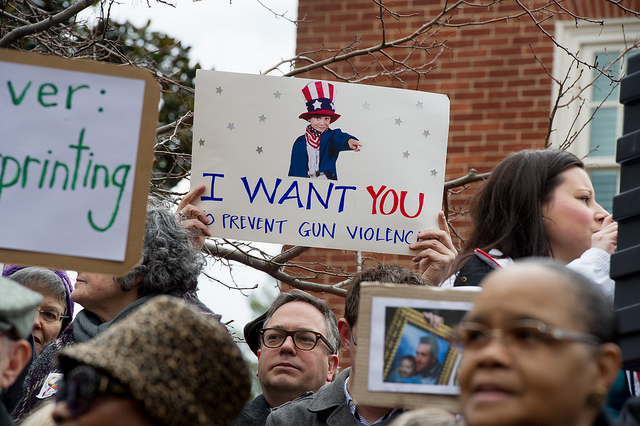
After a mass shooting, we often seek to understand why. Sociologists are well-positioned to help us to make sense of these tragedies. In a recent article for Quartz, Tristan Bridges and Tara Leigh Tober reflect on the importance of American masculinity for understanding the prevalence of mass shootings in the United States.

While the United States does have more guns than many other nations, Bridges and Tober argue that gun access does not fully explain why the United States has more mass shootings. This explanation also does not account for why nearly all mass shootings are committed by men. Bridges and Tober use the concept of “masculinity threat” — when men’s masculinity is called into question — to explain why mass shootings follow a larger pattern. Evidence shows that men who experience masculinity threats are more likely to condone violence, male superiority, and homophobic attitudes. 

“Mass shootings follow a consistent pattern: The men who commit them have often experienced what they perceive as masculinity threats. They’re bullied by peers, gay-baited by classmates, and often perceive themselves as unable to live up to societal expectations associated with masculinity, such holding down a steady job, having sexual access to women’s bodies, or being tough or strong. This does not suggest that men are somehow unavoidably more violent than women. But it does suggest that mass shootings need to be seen, in part, as enactments of masculinity.”

Unmasking the role of masculinity in mass shootings is critical because it removes the individualized framing of mass shootings, including equating white shooters with mental health issues but not extending this discussion to persons of color. Since mass shootings are not an individual issue, they cannot be solved by individual solutions. While gun control is one part of the solution to mass shootings in the United States, Bridges and Tober argue we also must recognize the role of masculinity and invest in a new culture of masculinity that is not so deeply invested in dominance and violence.