
culture

Kwanzaa altar


Holidays celebrated when it gets darker earlier – like Diwali, Hanukkah, Kwanzaa, and Christmas – can make people feel part of something larger. Maybe because people love holidays alongside those near and dear and those who may still enjoy being sentimental. Celebrating  holidays reminds us that we are part of a group who share our beliefs. But for some, holidays are  being part of the collective of scrooges and cynics that barely tolerate the lights, songs, and other festive stuff. More importantly, are those who feel lonely and removed from the collective support system, something that feels highly individualized and yet, perhaps paradoxically, is common  during the holidays.

This time of year is when our “belonging” to something larger is paired with highly individualized stories of unique gifts, treasured mementos, and objects symbolizing good and bad things about family, past and present. Here I offer ways that seemingly individualized holiday objects tell us an important collective story about roles and relationships in today’s families, and about social processes that extend beyond any individual family story.

Values Associated with Materialism, Spoiled Kids, and “Good” Parenting are Wrapped Up in Kids’ Gifts

It’s not hard to find buying guides for parents whose children want the latest toys and gadgets. It’s also easy to find online advice columns about how best to give children gifts without spoiling them, giving in to a marketplace filled with inequalities, or damaging our natural world. But what we often escapes our thinking is how social class may influence parents’ gift-giving, and how kids’ well-being can be affected by how they talk with classmates about the presents they received (or did not receive) after winter break.

Sociologist Allison Pugh reminds us that while it’s pretty universal for parents to want to give their kids gifts, sometimes parents give in to their children’s material desires and spend more than they can afford to buy an expensive toy or other object (Pugh calls this symbolic indulgence). Importantly, in these cases, parents are trying to give kids what they need to feel as if they belong. For better or worse, consumer culture powerfully influences parents. But if we only focus on the powerful marketplace, we miss important stories about how parents use holiday gift-giving to help their children fit into a peer culture where status is highly valued and is the currency through which children’s dignity and belonging are fostered. And we may miss  how parents from different economic backgrounds vary in how much they can give their kids the gift of “fitting in.” This sociological finding adds complexity to claims about spoiled kids and materialistic parents.

Annually Displaying Cherished Items from Lost Loved Ones Reflects Family Role Expectations

Saving cherished items is a social act, partially because  decisions to cherish something is shaped by values and experiences we collect interacting with others, and by our perceptions of others’ expectations surrounding those items. When giving talks about my book The Stuff of Family Life, the most common topic in the Q & A sessions afterward is about whether adult children will cherish objects their aging parents want to give them. Sometimes children’s reluctance to be excited about antique holiday ornaments from beloved grandparents is seen as reluctance to be connected to past family. The adult child may not see the ornaments as “stand-ins” for the grandparents, but parents may see them as substitutes for grandparents rather than symbols. To preserve ornaments is to preserve memories of grandparents; to dispose ornaments is also disposing the persons. Adult children are expected to demonstrate family loyalty by desiring the ornaments. This can be hard when adult children’s values about having too much stuff or beliefs that objects are unnecessary for memories of loved ones are stronger than their values about being dutiful to parents.

Less contentiously, sometimes adult children will save holiday objects from parents who passed away because the parent loved them. An annual display of the holiday objects from deceased parents can honor past family influence on present family. A father’s menorah may be displayed during Hanukkah to remind someone of the father; the holiday is the vehicle for that memory even if it is not explicitly celebrated.

Holiday decorations have biographies. They enter our lives, are participants in life transitions, and get lost, broken, or forgotten. They can serve as mementos, whether old things from a grandparent or new things, they are meant to create an imagined future nostalgia, something I discuss in my research on the preservation of private love letters. This means they are meant to be shared with children so they know the origins of their family story.

To “hand down” a cherished holiday object entails decisions about loyalty, memory, and longevity, not to mention the object’s aesthetic beauty (or lack thereof). So, when next you hear about a baby’s first [insert winter holiday item here], remember it is not just about that object. It’s also about expectations that it may be saved for when that “baby” leaves home and needs to figure out whether to cherish or dispose of it, which may require negotiating with others’ expectations about the preservation of those memories in physical form.

Object-Centered Holiday Rituals Help Families Find Stability in a Time of Uncertainty

We live in a time of perceived uncertainty. Our everyday lives are moving fast, news headlines showcase political and economic turmoil, and our family structures are changing. Whether because of family border separations, poverty-inflicted adverse childhood experiences, or estrangement, people from varied political perspectives perceive the family and social life as more precarious than ever.

At the same time, we love rituals that offer stability. We live, however, in a time that historian Elizabeth Pleck describes as post-sentimental – a reaction,  to  over-sentimentalization of holidays and the blues that sometimes accompany them. There is also a desire to be more inclusive about what holidays and rituals may be desirable and best represent the diversity of families who are celebrating. The rituals of gift-giving, displaying or using special objects that appear only during holidays, and expanding the repertoire of “acceptable” holiday objects and their use, all strengthen the claim that we seek rituals to clarify and stabilize our lives. This search for stability can appear via use of old objects symbolizing long-held traditions as well as via new and innovative objects that create new traditions that more accurately tell the story of the varied ways that family life takes place today. In both cases, the objects serve as tools for rituals that provide glue in a climate where stable family life can seem fragile.

How Is This About More Than Just My Family?

Of course, many other ways can symbolize family roles and relationships as they manifest during holiday times, including whether digital gifts are as “real” as physical ones wrapped in shiny paper, whether some gifts violate norms about privacy (are underpants too personal a gift from my in-laws?), or how holiday décor, like any display in the domestic realm, calls to mind gendered division of household labor (do women decorate indoors and men hang the lights outside ?). I am sure you can think of objects in your family that carry deeper meanings this time of year.

Here I showcased a few ways to think about individualized experiences with holiday objects – dilemmas about spending and spoiling, attachment to relatives with or without retaining their possessions, and use of objects in holiday rituals. Holding a holiday candle is never just about the candle. It also is never just about the family that only uses it during the holidays. The candle and the person holding it are about collective topics larger than any of us or our families: the marketplace where candles are made; the collective belief system that the candle represents, the light of someone no longer alive, and the tendency to value rituals as a form of social “glue” in  times of uncertainty and perceived loss of social connectedness. Holidays remind us that our family stories are both private and public. Our unique gifts tell a collective story about today’s families.

Michelle Janning is the Raymond and Elsie Gipson DeBurgh Chair of Social Sciences & Professor and Chair of Sociology at Whitman College in Walla Walla, Washington. She celebrates Christmas, and has had trouble throwing away her son’s “Baby’s First Christmas” stocking over the last fourteen years. She researches and teaches about the connection between material culture and family roles and relationships. She is the editor of the 2019 book Contemporary Parenting and Parenthood: From News Headlines to New Research, and the author of The Stuff of Family Life: How our Homes Reflect our Lives (2017) and Love Letters: Saving Romance in the Digital Age (2018). Her work can be perused at www.michellejanning.com.

Inevitably when I tell people that I study love letters and technology, someone participating in the conversation laments the way that texting and instant messaging have lessened the depth and thoughtfulness of love letters in today’s romantic relationships. A text is not a substitute for a handwritten note that takes time to write and symbolizes dedication to a relationship, they argue. But then another voice chimes into this conversation, offering something like this: “I love that my girlfriend and I can text each other little love notes. It’s quick, it’s in real time, and it makes me feel close to her even if she’s far away.”

A few years ago I was cleaning out a basement cabinet and found a box of old paper notes and love letters from high school, college, and graduate school. I brought the box upstairs and began rifling through the paper. My husband walked into the living room, saying to me as I sat amidst a pile of spiral notebook paper bits, “We started college before there was email and we ended college when the World Wide Web came into existence. I wonder if we’re the last generation of letter writers.” Around the same time I talked with a couple women about their love letters – one woman in her twenties who had saved texts from romantic partners in a memo folder on her smartphone, and one woman in her forties who had saved paper letters from her (now) husband that they had exchanged while studying abroad in college. Because of these conversations, I began to wonder whether gender and generation mattered in how people thought about the role of technology in romantic communication.

It is precisely these varied reactions – lamenting the loss of thoughtfulness, praising the access to real-time communication, and wondering about the role of rapidly changing technology on relationships for people from different groups – that my new book, Love Letters: Saving Romance in the Digital Age (Routledge 2018), dissects.

Through my own survey data, stories, and a rich weaving together of others’ research from a variety of academic disciplines, I tell the story not of the content of love letters exchanged on paper and via digital devices, but rather what people do with the love letters once they have them, and whether their format as digital or paper matters in terms of their meaningfulness to their owners. In other words, I study the curatorial practices of saving, storing, revisiting, organizing, and throwing away love letters. I do this because the objects in our lives – our material culture – not only impact our behaviors (think about how your smartphone shapes your behavior when it rings or dings during a class or concert); they also symbolize what we cherish or despise. More importantly, our actions surrounding these pieces of material culture require different kinds of bodily and emotional work depending on the relationship and on the digital or paper format – labor that I discuss in this podcast from The Verge. To save a thousand texts in a special folder requires not only the physical work of creating that folder by swiping and typing or by folding and stuffing, but also the emotional labor of discerning whether these saving practices are worth it given the type of relationship they symbolize.

My research reveals a few important findings. First, people overwhelmingly prefer saving paper love letters over digital ones, a pattern that spans all age groups (even among younger individuals for whom digital communication is more prevalent). But despite the preference for paper, people are more likely to use digital means to communicate to lovers. Thus, there is a mismatch between what people do and what they prefer their partners do. For people of different ages, this may stem from different causal mechanisms: for older individuals, they may prefer something from their past that they witness lessening; for younger individuals, they may prefer something they imagine as better despite not having experienced it much in their own lives. In both cases, there is a calling forth of a past image of love letters that is used to judge today’s practices.

Second, men and women differ in their love letter curatorial practices, especially with paper letters. Women are more likely to save love letters than men, but men look at the love letters they save more frequently than women. Women tend to store their love letters in, under, and behind things (e.g., in a drawer, under a bed), while men tend to store them on things (e.g., on a desk or bulletin board). Men and women are similar, as are people of varying ages, in the reasons why they may revisit love letters: people are as likely to look at a saved love letter intentionally (to reminisce fondly or remind themselves of what to avoid in the case of a negative relationship) as they are to stumble upon them accidentally (which is what I did when I found my box of old paper letters in my basement). And people across age and gender categories who get rid of love letters may do so for several reasons: to rid themselves of bad memories, to declutter, or to prevent others from seeing what they perceive to be highly private (often sexual) messages.

Most importantly, the underlying message of these and other findings in the book must be understood in light of social inequalities that move beyond individual preferences. In particular, the calling forth of a nostalgic image of handwritten paper love letters sent and received through the mail not only must be historically situated, as lots of epistolary research shows (mail delivery as we know it in contemporary society is not really that old; people have always adjusted to newer and quicker modes of communication exchange), but also must be understood in terms of privilege. To write, send, receive, and read a love letter that looks like those images found in popular culture and the marketplace began among those with tremendous privilege: those who were white, affluent, educated, literate, and geographically located in the Global North. This image of love letters was reserved for those who were among the most elite in Western society. If there’s one thing family scholars know, to mythologize past nostalgic images of family relationships as if they were universal not only fails to be historically accurate, it also becomes the basis for inaccurate and unfair judgment of today’s varied relationships. To label someone as unromantic because they send a text message rather than sitting down at a desk for an hour to handwrite a love letter upholds an image that historically was reserved for those who had plenty of time, money, and education.

When people lament the loss of paper handwritten love letter writing, they are really lamenting the loss of a nostalgic image of romantic love that has never been universal, and that has become part of a collective view of romance that is ahistorical, inaccurate, and was available only to privileged groups. What people do with their love letters – digital or paper – depends not only on individual preferences regarding orderliness, clutter, or sentimentality, but also on people’s access and attachment to powerful cultural values that make up contemporary views of romance such as individualization, taking time in a hectic world, longevity, privacy, and keeping cherished things in a safe place. These values are not accessible equally across groups. Ultimately, I contend, despite acknowledging that digital communication has changed how we view connectedness and the type of work we have to do to manage a huge amount of information, the cultural values that tell us how romantic love should be defined are more powerful than the format our love letters take.

Michelle Janning is Professor of Sociology at Whitman College in Walla Walla, Washington. She studies the intersection between intimate relationships, domestic objects, and spaces and places, usually while cleaning out basement cabinets or looking under couch cushions. She enjoys nice pens and stationery, as well as inside jokes in texts from her husband. She is the author of The Stuff of Family Life: How our Homes Reflect our Lives (Rowman & Littlefield 2017).

Originally posted 5/14/2015 

Recent months have seen a dramatic increase in media and government attention to gender-based violence, particularly sexual assault. Unfortunately, that attention has largely focused on a relatively elite group of young women – those enrolled in 4-year colleges. Much of the discussion has focused on the prevalence of a so-called “rape culture” in such settings, characterized by widespread tolerance of sexual violence. This essay presents evidence that sexualized violence and tolerance of such violence are actually more prevalent among youths who are not enrolled in college. more...

The rapid rise in nonmarital fertility is arguably the most significant demographic trend of the past two decades. The proportion of births to unmarried women grew 46 percent over the past 20 years so that more than four in ten births now occur to unmarried women. Nonmarital fertility is quickly becoming a dominant pathway to family formation, especially among the disadvantaged. This is worrisome because decades of research show that children raised in single-parent homes fare worse on a wide range of outcomes (e.g. poverty, educational attainment, nonmarital and teen childbearing) than children raised by two biological parents. The poverty rates of single parent households are particularly striking. According to recent data from the U.S. Census Bureau, approximately 46 percent of children in single mother households were living in poverty in 2013 compared to 11 percent of children living with two married parents.

How can we improve the lives of the growing numbers of unmarried mothers and their children? So far, a dominant approach has been to encourage their mothers to marry.  At first glance, the logic makes sense. If growing up in a two-parent home is best for children, then adding a second parent to a single-mother home should at least partially address the problem. The 1996 welfare reform legislation and its subsequent reauthorization institutionalized this focus on marriage by allowing states to spend welfare funds on a range of marriage promotion efforts. more...

Photo via VelvetTangerine, Flickr CC.

Reprinted from Beggruen Insights, Issue 4, with permission.

Nostalgia often arises out of a real experience of loss. It needs to be addressed and redirected, not ridiculed or denounced. And that applies to the nostalgia that motivates a considerable number of Trump supporters.

I have spent most of my career pointing out the dangers of imagining a Golden Age in the past that we should try to recapture. Nostalgia offers a warped explanation of what actually did work in the past and airbrushes out what did not. It leads to the scapegoating of those who supposedly ruined “the good old days” while providing no tools for coping with the new realities that underlie contemporary challenges.

That said, nostalgia often arises out of a real experience of loss. It needs to be addressed and redirected, not ridiculed or denounced. And that applies to the nostalgia that motivates so many Trump supporters.
more...

A new study of Quebec’s recent non-transferable parental leave for fathers demonstrates just how effective this generous benefit is in getting fathers more involved at home. With new benefits, fathers increased their participation in parental leave by 250 percent. In households where men were given the opportunity to use this benefit, fathers’ daily time in household work was 23 percent higher, long after the leave period ended. Background and details of economist Ankita Patnaik’s innovative study are provided in this briefing report, prepared for CCF.

This briefing is based on a study by Dr. Ankita Patnaik. The original paper is available here and is forthcoming in the Journal of Labor Economics. This research was funded by Cornell University.

more...

Photo by ibourgeault_tasse, Flickr CC.

Most Americans agree that entrepreneurship is an important component of economic growth and job creation. Small businesses accounted for two million new jobs last year, and innovative start-ups like those in Silicon Valley are key contributors to our GDP.

But women are a vastly under-tapped resource when it comes to growing a vibrant economy. For instance, in 2014, woman-owned firms in the United States employed only six percent of the workforce and created less than four percent of all business revenues—a figure that is about the same as it was in 1997.

In a recent analysis of survey data from 24 countries between 2001 and 2008, I find some surprising evidence about different kinds of gender gaps in entrepreneurial activity and the relationship between those gender gaps and government policies. It turns out that having more women entrepreneurs does not necessarily mean that more women are running large or lucrative types of enterprises. When it comes to entrepreneurial startups, in contrast to our experience with the benefits of having more women enter traditional workplaces, sometimes fewer ends up meaning better. more...

Photo via VelvetTangerine, Flickr CC.

One of the consistent findings of sociological research in recent decades has been that couples who had a child before getting married had substantially higher odds of divorcing than couples who married first. This held true even when researchers controlled for other factors that tend to distinguish such couples from those who marry directly—education, family background, race and ethnicity. But considering the tremendous increase in premarital cohabitation and childbearing over the past quarter century, and in light of new evidence that many other longstanding “laws” of marriage and divorce have been overturned (e.g., see “It’s Not Just Attitudes: Marriage Is Also Becoming More Egalitarian”; Are Individuals Who Marry at an Older Age Too Set in Their Ways to Make Their Marriages Work?), we set out to investigate whether this particular sociological “rule” still applies. more...

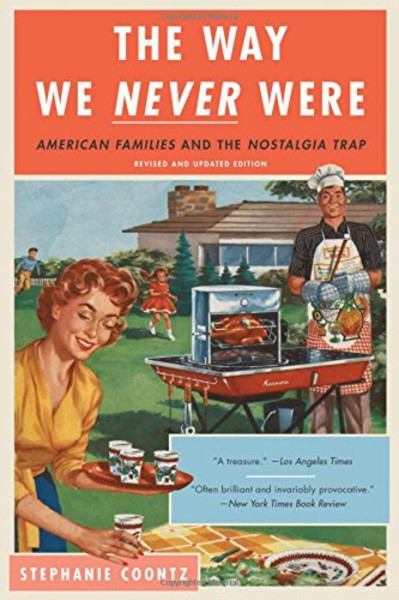
the way we never wereAnother Quarter Century of Family Change and Diversity

Editor’s note: In 1992—the year the U.S. presidential campaign erupted into a culture war over family values—Stephanie Coontz published The Way We Never Were: American Families and the Nostalgia Trap. The title itself offered the pithy concept, and the book demonstrated that diversity and change have always been hallmarks of American family life: “Leave It to Beaver” was not a documentary. This week (March 29, 2016) Coontz released a substantially revised and updated edition of The Way We Never Were. Below, she provides a brief review of ten things that have changed for the better in the past quarter century, three that have stayed the same, and two that have gotten worse.

In 1992, political leaders and pundits were predicting that changes in family forms and gender roles were leading America into disaster. Were they right? 

  1. Whatever happened to the Super Predators? In the early 1990s criminologists were predicting “a blood bath of violence” unleashed by “tens of thousands of severely morally impoverished juvenile super-predators” – all supposedly a result of rising rates of unwed births. But between 1993 and 2010, sexual assaults and intimate partner violence reported dropped by more than 60 percent. According to the FBI’s Uniform Crime Reporting Statistics, the murder rate in 2013 was lower than at any time since the records began in 1960. Since 1994, juvenile crime rates have plummeted by more than 60 percent, even though the proportion of children born out of wedlock has risen to 40 percent.
  1. How about crack babies? In the 1980s and 1990s, newspapers headlined an epidemic of “crack babies” in the inner city, with kids permanently damaged by their mothers’ use of crack cocaine during pregnancy. This led to a wave of punitive legal actions against such women. But follow-up studies have since revealed that children from the same high-poverty areas who had not been exposed to cocaine in utero were equally likely to have developmental and intellectual delays as babies born with cocaine in their systems. As I documented in The Way We Never Were, the big risk to these children was the pollution, violence, and chronic stress of deeply impoverished and neglected communities – including lead poisoning damage that was going on for years before it hit the headlines in 2016 because of the disaster in Flint.
  1. Did career women start “out-sourcing” their children’s developmental care? As women gained more high prestige jobs in the late 1990s, that’s what many experts feared. In fact, however, even as mothers’ work hours increased, their child-care hours increased too, while fathers’ child-care time tripled. Today, both single and working moms spend more time with their children than married homemaker mothers did back in 1965.

more...

Linda NielsenLinda Nielsen is a Council on Contemporary Families Expert, as well as a professor of Educational and Adolescent Psychology at Wake Forest University in North Carolina. Most of Nielsen’s research centers around the relationship between fathers and daughters. Nielsen’s research gained national attention when Pantene—the shampoo brand—reached out to her in hopes of creating a Super Bowl ad that was inspired by her research and centered around the importance of father-daughter relationships. Nielsen answered a few questions for us about her research, her own family, and any advice that she has:

Q: First, a challenge: what’s one single thing you “know” with certainty, after years of research into modern families?

LN: After writing books and articles about fathers and daughters for nearly three decades, the one single thing I know about father-daughter relationships is that most fathers and daughters would both like to have a more communicative, more comfortable, more personal relationship with one another. Both would like to spend more one on one time together without other family members involved – especially during the daughter’s teenage years when society generally discourages anything more than dad being involved in his daughters’ athletic or academic life – or being her banking machine.

Q: What does your family–both family-of-origin and family-of-choice–look like, and how does that fit with what you know about American families today? Are there points of dissonance? more...