aging

Although many older Americans have had long marriages, the proportions of Americans over age 50 who have been divorced and remarried have increased substantively over the past 25 years. In fact, individuals in the early ‘baby boomer’ cohort (born between 1946 and 1955) have divorced and remarried more often than any other age cohorts. It is not surprising, therefore, that many multi-generational American families include stepgrandparent-stepgrandchild relationships. This is relevant to multi-generational relationships and perhaps to the future care of these stepgrandparents.

In our studies, we have identified four distinct pathways to becoming a stepgrandparent, and we have conducted a series of investigations designed to uncover how these different pathways affect the formation of stepgrandparent-stepgrandchild relationships. In a recent study we interviewed 48 young adult stepgrandchildren, comparing their perceptions of 44 long-term stepgrandparents who joined the stepfamily before these stepgrandchildren were born, with their perceptions of 28 later-life stepgrandparents who joined their stepfamilies when the stepgrandchildren were late adolescents or young adults). A number of these adult stepgrandchildren had more than one stepgrandparent, and we asked about all of them.

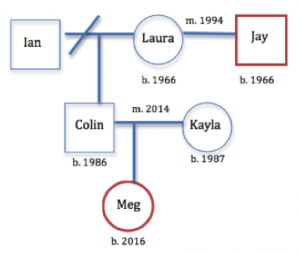
The differences between each pathway have been theorized to result in relationship differences. Long-term stepgrandparents’ are in relationships with stepgrandchildren because they became stepparents when their stepchildren were young – years before those stepchildren reproduced and made them a stepgrandparent. In this figure, Jay is a stepgrandfather to Meg. Jay married Laura in 1994, and Colin became his 8-year-old stepson. As an adult, Colin married Kayla in 2014, and Kayla gave birth to Meg two years later. Jay is a long-term stepgrandfather. As Meg grows up, she will always have had Ian, Laura, and Jay as grandparents on her father’s side of the family (for simplicity, we ignore Kayla’s family tree in this illustration). Jay was a member of Meg’s family long before she was born.


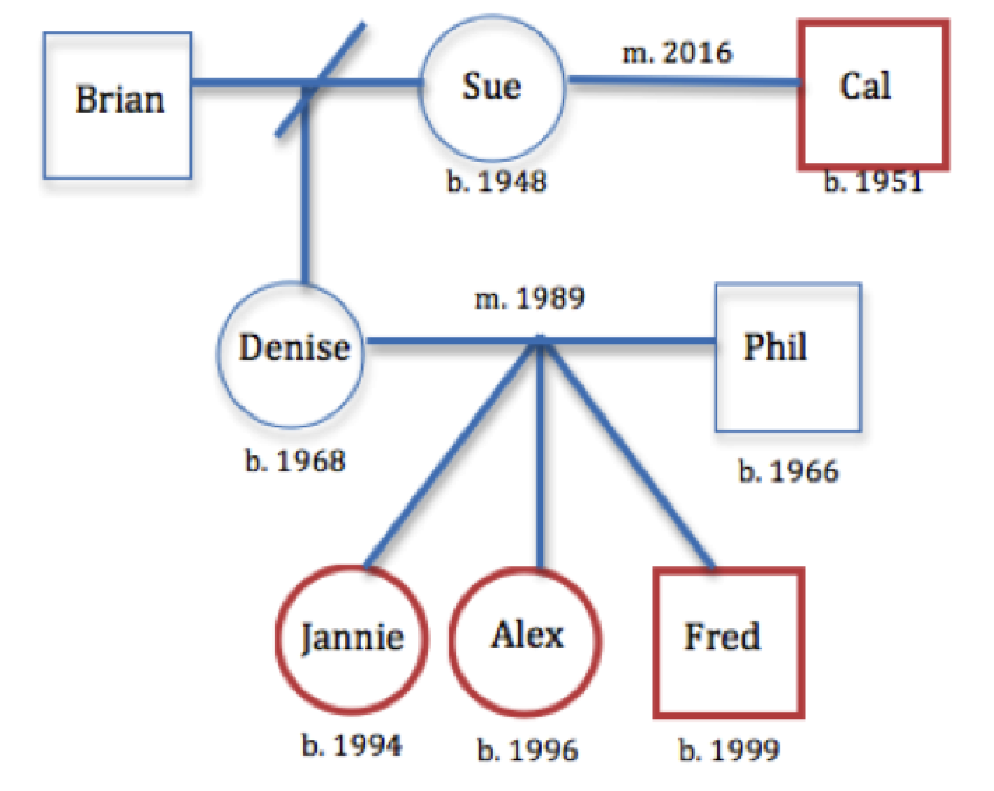
Comparatively, later-life stepgrandparents acquire adult stepchildren and stepgrandchildren following their remarriage to a grandparent; the new stepchildren are often middle-aged parents, and stepgrandchildren are often adolescents or older. The figure is an example of a later-life stepfamily. Cal married Sue in 2016. Sue has a daughter, Denise, who was 48 when her mom remarried. Denise had three children, ranging in age from 17 to 32 when Sue remarried. Those children are now Cal’s stepgrandchildren. Therefore, Cal is a later-life stepgrandfather to Jannie, Alex, and Fred.
 

The structural factors matter in how multi-generational stepfamilies interact and may affect the quality of stepfamily relationships. We discovered from our interviews that long-term stepgrandparents (like Jay) much more closely resemble biological grandparents in their relationships with stepgrandchildren than do later-life stepgrandparents, and they generally are called by family names (e.g., Grandpa, Nana). In large part this is because of conditions associated with the timing of remarriages and the subsequent personal histories that stepgrandchildren have with biological and stepgrandparents. Although the middle-generation influences how the stepgrandparents and stepgrandchildren bond in both long-term and later-life stepfamilies, parents in long-term stepfamilies control the amount of interactions between the older and younger generations more. Both later life stepgrandchildren and the middle generation adults, because they experience the remarriage of grandparents at the same time, concurrently are grieving the past (i.e., after the death of a grandparent) and trying to make sense of the family transitions. Perhaps not surprisingly, In long-term stepfamilies, relationships and kin connections usually have been defined long ago when the middle generation parents were quite young. The stepgrandchildren did not enter the family until long after remarriage transitions. These long-term stepgrandparent-stepgrandchild relationships and their multigenerational families generally functioned like grandparent-grandchild relationships in first-marriage multigenerational families; later-life families and relationships did not.

The stepgrandchildren did not remember a time when their stepgrandparent had not been a part of the family. Similar to findings from previous research, our results suggest that contextual factors, namely the timing of life events and transitions, duration of key family relationships, and opportunities for intergenerational interaction (e.g., co-residence, affinity-building), matter tremendously for if, how, and to what extent, intergenerational steprelationships are developed, maintained, and associated with caregiving and support exchanges, particularly in later-life.

Results from our study suggest that later-life stepgrandparents may be especially at risk for diminished social support, particularly from adult stepchildren and stepgrandchildren. These relationships often did not have enough time to develop before the older stepgrandparent needed care or other help. The later-life stepgrandparent had not had time to do things that bond people together – hanging out, giving gifts and sharing resources, having fun together. As a result, younger generations did not feel a sense of obligation or a need to reciprocate past gifts of the later-life stepgrandparent. The stepgrandchildren and their parents often referred to the later-life stepgrandparent as “grandma’s new husband” or “grandpa’s new wife.” Although stepgrandchildren’s thoughts and feelings about long-term and later-life stepgrandparents are worth exploring and shed light on complex family processes, we are unable to draw conclusions about the experiences of middle-generation parents or stepgrandparents. Because individuals experience family transitions differently, and these transitions, in turn, inform kinship ideologies and family interactions, more research is needed to glean the perspectives of family members from multiple family roles. Analyses of qualitative data garnered from multiple perspectives (e.g., biological grandparents, biological parents, stepgrandparents) would offer additional insights about family transitions and relationship trajectories. Data from more diverse multigenerational stepfamilies would also add to our knowledge base, as most of our respondents self-identified as White and ‘middle-class.’ Moreover, some stepgrandchildren were reporting on relationships with deceased stepgrandparents. Although the degree to which the death of stepgrandparents influenced stepgrandchildren’s narratives about their family relationships remains an empirical question, it is possible that interviews about dead relatives may differ in important ways from interviews about living relatives. Finally, family relationships and dynamics, including roles/rules, symbols, and language, are likely to vary across cultures, yet we are unable to speak to the influence of culture on intergenerational steprelationships given the cultural homogeneity of our sample.

This study has moved beyond describing stepgrandparenthood pathways to exploring underlying processes in intergenerational relationship building. Relationship quality among stepgrandparents and stepgrandchildren may vary widely, regardless of pathway. We have illuminated here the dynamics by which these distinct types of intergenerational stepfamilies diverge. Researchers and practitioners who work with older stepfamilies can utilize this knowledge to better think about, work with, and support stepgrandparents in later life. For researchers, knowing about pathways to stepfamily status (i.e., “How did they get here?”) provides hypotheses or assumptions to explore. In future studies of stepgrandparents, we encourage researchers to consider and attend to structural pathways, as the variability of stepgrandparent “types” is often an overlooked, yet important, distinction. For practitioners, understanding if, how, and to what extent stepgrandchildren’s relationships with stepgrandparents impact both upward and downward exchanges of social support, particularly as stepgrandparents age, can be useful in working with families to create care plans for older adults in later-life. Issues of who will care for frail stepgrandparents can only be addressed effectively by an understanding of the diversity of multigenerational stepkin relationships. Moreover, understanding pathway implications to stepgrandparenthood can enhance science and practice with older step-couples. Our findings illuminate expectations about new partner involvement in family life following transitions such as death, divorce, and remarriage.




Lawrence Ganong is a Chancellor’s Professor of Human Development and Family Science and Emeritus Professor of Nursing at the University of Missouri. Marilyn Coleman is a Distinguished Curator’s Professor Emerita of Human Development and Family Science at the University of Missouri. They have studied post-divorce family relationships and stepfamily relationships for over four decades. They may be reached at ganongl@missouri.edu and colemanma@missouri.edu

A Research Brief Prepared for the University of Texas at Austin Population Research Center

End-of-life planning enhances the quality of later-life caregiving, health, and death. Ideally, informal planning—conversation with loved ones about future care and end-of-life preferences—and formal planning—wills, healthcare proxies, advance care directives, and other legal documents—begins long before the end of life process. Planning is most beneficial when implemented in midlife before people are confronted with debilitating conditions or difficult decisions. Yet only about one-fourth of adults in midlife have advance care directives.

The institution of marriage, particularly heterosexual marriage, involves socially established and legally sustained patterns of norms, roles, values, and behaviors that provide spouses with informal guides to their roles and obligations. Yet norms about husbands and wives taking care of each other “in sickness and in health” may interfere with actually discussing and planning such care prior to serious illness or infirmity. Indeed, studies repeatedly show that heterosexual married couples often do not know each other’s wishes, do not always provide care for each other or receive adequate care from children and extended family, and sometimes even face interference from families.

On the other hand, the institution of marriage is less-established for same-sex couples—marriage only recently became a right and the spouses do not necessarily conform to the marital norms often seen in different-sex couples—which may change the incentives for end-of-life planning. For example, same-sex couples may be less likely to expect end-of-life care from a spouse and therefore be more likely to discuss their expectations for the end of life. In addition, same-sex spouses may worry about encountering discrimination that could lead to family interference and lack of family support and therefore take proactive steps to protect themselves at the end of life. Conversely, they may be wary of going to a lawyer or asking for help from family members because of those same fears of discrimination.

Therefore, formal and informal end-of-life planning unfolds differently for same-sex and different-sex spouses due to different incentives and disincentives that result from the institutional aspects of marriage and higher levels of discrimination against sexual minorities.

The authors conducted in-depth interviews with 90 spouses at midlife in 45 gay, lesbian, and heterosexual marriages. All respondents were Massachusetts residents at the time of the study (2012–2013); Massachusetts was the first U.S. state to legalize same-sex marriage, in 2004. At the time of the interviews, same-sex marriage was not federally protected and was not legal in the majority of U.S. states.

Key Findings

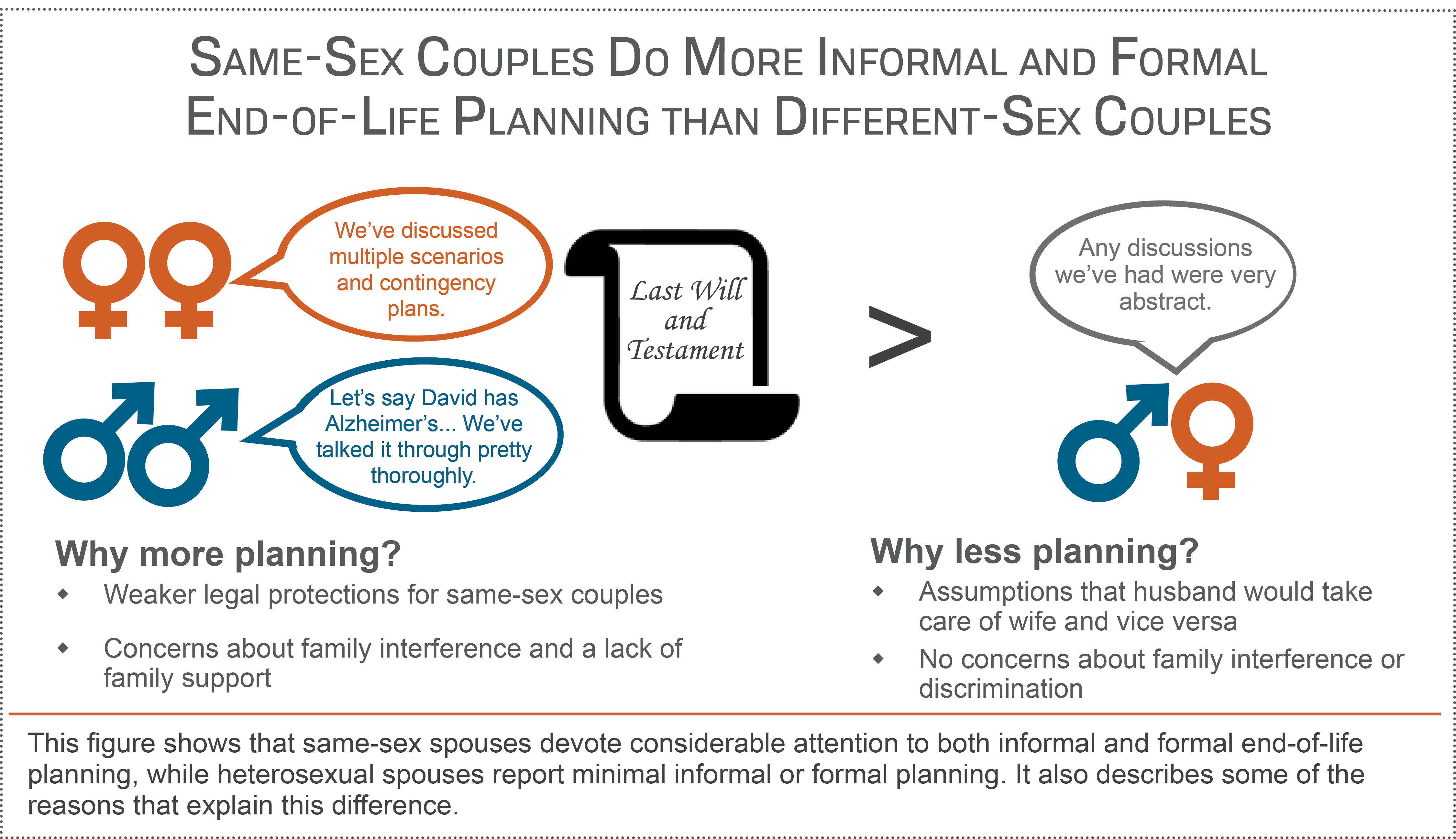
  • Informal planning conversations and formal end-of-life plans differ for same-sex and different-sex couples. Same-sex spouses devote considerable attention to both informal and formal end-of-life planning, while heterosexual spouses report minimal informal or formal planning. Two key motivators explain this difference:
    • Weaker legal protections for same-sex relationships: Greater engagement in end-of-life planning among gay and lesbian couples has been largely motivated by the weaker legal protections around same-sex relationships, especially prior to legalization of same-sex marriage across the U.S.
    • Concerns about family interference and a lack of family support:
      • Same-sex couples—especially lesbian couples—expressed concerns about family interference and about a lack of support from extended family at the end of life.
      • Heterosexual couples were largely unconcerned about the potential for extended family going against their end-of-life wishes. Therefore, heterosexual couples may be unprepared if they do encounter family interference.
  • Couples have different assumptions about what their spouse knows and what family will do at the end of life.
    • Heterosexual couples tended to assume that their spouses knew their wishes and that family members (especially adult children) would provide end-of-life care.
    • Gay and lesbian couples did not make these same assumptions and instead relied on multiple explicit conversations with spouses and friends about their plans and wishes.
      • Same-sex couples often created plans for multiple hypothetical scenarios and worked with lawyers to put legal protections in place.
      • Most gay and lesbian couples did not discuss being concerned about lack of family support. Rather, they talked about building strong friendship networks and having explicit conversations with those friends about providing future care.

Thomeer brief figure

Click here to expand figure

Policy Implications

The norms and expectations of heterosexual marriage serve as disincentives for different-sex couples to plan for later-life care and end of life. On the other hand, while gay and lesbian couples may be better prepared for death, their greater planning for end of life may reflect valid concerns about the need for more protection. Recent state initiatives—such as Florida’s proposed bill that would allow hospices to refuse to serve lesbian, gay, bisexual, and transgender adults—indicate that the end of life may actually be a time of heightened discrimination for gay and lesbian couples. Initiatives should aim towards more equality at the end of life. Indeed, policymakers should develop end-of-life planning incentives for all—as well as those not in long-term relationships—which would have the potential to increase well-being for the dying and the bereaved.

Reference

Thomeer, M.B., Donnelly, R., Reczek, C. & Umberson, D. (2017). Planning for Future Care and the End of Life: A Qualitative Analysis of Gay, Lesbian, and Heterosexual Couples. Journal of Health and Social Behavior 58(4):473-487.

Suggested Citation

Thomeer, M.B., Donnelly, R., Reczek, C. & Umberson, D. (2018). Same-sex couples devote more attention to end-of-life plans than heterosexual couples. PRC Research Brief 3(8). DOI: 10.15781/T2RF5KZ8Q.

About the Authors

Mieke Beth Thomeer (mthomeer@uab.eduis an assistant professor of sociology at the University of Alabama at Birmingham; Rachel Donnelly is a doctoral student in the Department of Sociology and the Population Research Center at The University of Texas at Austin; Corinne Reczek is an associate professor of sociology and women’s, gender, and sexuality studies and a faculty affiliate at the Institute for Population Research at The Ohio State University; and  Debra Umberson is a sociology professor and director of the Population Research Center at UT Austin. Thomeer and Reczek are also former Population Research Center NICHD Predoctoral Trainees.

Acknowledgements

This research was supported, in part, by an Investigator in Health Policy Research Award to Debra Umberson from the Robert Wood Johnson Foundation; grant R21AG044585 from the National Institute on Aging (PI: Debra Umberson); grant P2CHD042849 awarded to the Population Research Center at The University of Texas at Austin by the Eunice Kennedy Shriver National Institute of Child Health and Human Development; and grant T32 HD007081, Training Program in Population Studies, awarded to the Population Research Center at the University of Texas at Austin by the Eunice Kennedy Shriver National Institute of Child Health and Human Development.

Reposted from Psychology Today

Americans live longer than ever before, with life expectancy increasing from 60 to 80 years of age over the 20th Century. Baby boomers are living what sociologist Phyllis Moen calls a Third Act, discovering new ways to experience healthy active years after retirement. With a rapid increase in life expectancy and rising expectations for the quality of life, baby boomers are forging new ways of aging. So what does this mean for sexuality? Are we beginning to see gender equality between the sheets among the aging boomers?

Remember, it was only 40 years ago that women were considered sexually obsolete after menopause (and, many times, even earlier). Men defined their virility by their ability to get and sustain an erection. Today these may seem like ridiculous calculators of age and sexual fitness as both culture and technology has changed the ways we think about sex and gender.

Boomers pioneered the Sexual Revolution of the ‘60s and yet, they did so after having been raised with the sexual script that men pursue and women submit. This permitted men to interpret an awkward “no, thank you” rejection as a possible “yes” in the making. Still, it was a radical shift in our cultural norms for men to be able to take a woman to bed before promising marriage and for women to seek sexual pleasure outside of relationships. After all, the one night stand of the boomer generation precluded the “hook-up culture” of today’s Millennials.

While much misogyny remained, and gender inequality is still a futuristic goal, the boomers did liberate sex from marriage and made the right to sexual pleasure a human right. Now, it appears that boomers must—once again—break the gender rules set by generations before them when it comes to sex after 50.

For men, erectile dysfunction or ED (an inability to get or maintain an erection) can feel emasculating although such physiological changes are actually explained by the biology of aging. Even with the advent of Viagra and Cialis, which are impressively effective at treating erectile issues, research suggests that some men still feel uncomfortable bringing up sexual difficulties with their doctors. And doctors, too, are reluctant to ask patients over 50 about their sexual health due to old stigmas surrounding sex later in life. Gender stereotypes that men are powerful, and always ready for sex, still haunt the boomer men who were raised in an era when talking about sexual problems held negative stigmas. We do see boomer men working around some of these stigmas though, for instance, many men are ordering ED meds via online prescribers like the popular Roman website.

For women, menopause is often cited as the primary culprit affecting their sexual lives. However, research finds that social and psychological factors such as emotional well-being and a strong emotional connection with one’s partner as well as positive body image may be more predictive of sexual activity later in life than the hormonal changes associated with menopause. That’s not to say age has no physiological impacts on sex for women; discomfort during sex due to less blood circulation in the genital area (reducing vaginal lubrication) is a biological factor that reduces sexual comfort during sexual intercourse in later life. Of course, technology, here too, can come to the rescue with products to increase lubrication and blood flow. In fact, many women find menopause liberating sexually because they no longer have to worry about pregnancy every time they have intercourse. Even more promising, most women who desire to remain sexually active as they age will do so, albeit with a bit more prepping.

The boomers want fulfilling relationships as they age and our culture is beginning to reflect this. Women in their 60’s and 70’s are now being cast in leading roles involving romantic and sexual relationships. Both Jane Fonda’s and Lily Tomlin’s characters in Netflix’s, Grace and Frankie have love affairs, and of course, so do their ex-husbands… with one another. What’s more, people over 50 are the fastest growing demographic of online daters. Indeed, women over 50 who date report frequent and satisfying sex and boomer men can usually find an intimate partner if they are in the market for one.

Boomers are by far the most sexually liberal generation of older adults that we’ve ever seen.  And by pushing against the pre-existing molds of what sex after 50 looks like, boomers are showing us that they want gender equality and sexual satisfaction between the sheets in their encore adulthood, the third act of their lives.

References

Risman, Barbara J, Carissa Froyum and William Scarborough (co-editors). 2018.  Handbook on the Sociology of Gender.  Springer Publishers.

Nicholas Velotta is a Freelance writer and graduate of the University of Washington, and can be contacted at ndvelotta@icloud.com. Barbara J. Risman is a Distinguished Professor of Sociology in the College of Liberal Arts & Sciences at the University of Illinois at Chicago.  She is also a Senior Scholar at the Council of Contemporary Families.

Imagine that your 75-year-old mother has fallen and broken her ankle. She lives alone in a third-floor apartment in a city not far from where you live, but this accident means that she cannot manage on her own for several weeks, if not longer. What would you do? Would you take her into your home? Would you move into her apartment to help her until she healed? Would you pay someone to come in daily to help her cook, bathe, clean house, run errands? What if your mother had broken her hip instead of an ankle? Would that change what you would do? What if she showed signs of the early stages of dementia? What would you do then?

Suppose that your mother had divorced your father when you were 10 and moved far away from you and your father. Suppose also that you and she had not been close for years. Would that affect how you answered the questions above about helping her? What if I had substituted the word stepmother for mother, would that have made a difference to you? What if this stepmother had raised you since you were 11? Would that make a difference? What if it was your aging father who broke a hip? Your stepfather?

These are the kinds of questions we have been asking Americans for over two decades in more than 20 studies about beliefs regarding intergenerational responsibilities to older (and younger) family members. The beliefs we examined may be unique to the United States, although we suspect they are not.

It might surprise you to know that in an abstract way most Americans believe that adult children have responsibilities to their aging parents and other older kin. In fact, most Americans agree with the broad statement that ‘adult children should take care of their parents when they get old’. In fact, this belief is so widespread that most states have filial responsibility laws that define younger family members’ obligations to provide care for aging parents and grandparents.

Critics of these laws, however, argue that these and other U.S. social policies about intergenerational assistance are based on outdated assumptions that family ties are always emotionally close and loving, that families are able and willing to assist older kin, and that family membership is stable. These assumptions do not reflect the experiences of many, if not most, families in the 21st Century. Families vary in the degree to which members are emotionally involved in each other’s lives and, with most adult men and women in the paid work force, there are few families with available kin to provide aid. Moreover, longer life spans and lowered reproduction has meant that there are fewer young people and more old people in extended families. Family membership is not constant; families in the United States have experienced decades of structural changes due to divorce, remarriage, and cohabitation and these changes make connections among kin more tenuous than in the past.

U.S. policy makers are therefore faced with laws and social policies that are designed for a mid-Twentieth Century extended family at a time when multi-generational family structures are becoming more complex. We began investigating whether beliefs and attitudes about intergenerational responsibilities also were becoming more complex. We began a research program to investigate how divorce and remarriage affected beliefs about intergenerational assistance to genetic and step-kin, and we examined beliefs about aid given to both older and younger family members.

Consensual beliefs about intergenerational family relationships and support are important to examine because such beliefs function as parameters within which individuals define and negotiate their responsibilities to kin, they serve as criteria to measure how well individuals are functioning as family members, and they provide a framework that people use to justify and explain their conduct to others. What people actually do in relationships is based partly on personal beliefs about appropriate actions between kin and partly on widely held expectations about what should be done regarding family responsibilities. Normative beliefs about intergenerational responsibilities also are important to understand because such beliefs influence the development and application of public policy.

Our studies were random samples drawn regionally or nationally. We used phone surveys, mailed surveys, and face to face interviews. We can’t tell you about all the findings from these studies, so instead we summarize them.

In general, genetic bonds among generations denote greater intergenerational obligations than do affinal bonds. This means, all other factors being equal, people believe that genetic kin should receive more assistance than affinal kin (step-kin or in-laws).

Genetic kinship is not enough to attribute obligations to assist. For most people genetic kinship was relevant but did not automatically mean adult children and grandchildren should help.

Relationship quality is important in attributing obligations to assist, regardless of the type of relationship (genetic or affinal). Parents and adult children were thought to be much more obligated to help each other when relationships were emotionally close. When relationships were distant or hostile, any help was discretionary and more limited than when bonds were close. Step-kin who develop emotionally close relationships were perceived to be obligated to assist each other at levels similar to genetic kin who had close bonds.

Beliefs about helping older kin are stronger when the older kin have helped family members in the past. For most people, adult children are obligated to help parents only if the parents had fulfilled parental responsibilities to children when they were young. Family obligation norms no longer applied when genetic kin had not observed the norm of reciprocity between generations. Genetic kinship had significance, but without past histories of mutual helping it was as if the responsibilities attendant to kinship were unimportant. Without a history of financial, tangible, and emotional support from parents, adult children were seen as having lesser debt to repay than they would have had if parents had provided more for them. Divorced and remarried older parents who were perceived to have broken the reciprocity “contract” lost their “rights” to receive help from adult children.

Stepparents and stepchildren who had helped each other in the past were perceived as obligated to assist each other at levels similar, but not quite equal, to older parents and adult children who had reciprocal exchanges. Stepparents who help raise stepchildren thus can “earn” assistance later in life.

Intergenerational assistance is limited for relationships formed later in life. Step-relationships formed in later-life have less time to build close bonds and exchange resources, which reduced the likelihood of them being perceived as kin and having responsibilities to help each other.

For middle-generation adults, helping children takes precedence over helping elders. There is a hierarchy of intergenerational assistance, with children at the top as targets of aid.

Intergenerational assistance is conditional for most Americans. For most of the thousands of respondents in our studies, perceptions about intergenerational obligations were not automatic, but were related to several factors – relationship closeness/quality, reciprocity, resource availability, and other demands on family members’ resources were important when making judgments about helping.

Clearly, there is a lot we don’t know yet about how structural family changes affect intergenerational obligations to assist kin. This issue is relevant in societies with loose social safety nets, such as the United States. In six of our intergenerational obligation studies, we found that attitudes about helping kin were significantly related to participants’ helping behaviors in their own family networks. Our studies suggest that the final years of older adults who were less than stellar parents, stepparents, or in-laws may be in jeopardy when they need help to care for themselves. As a nation, we seem ill-prepared to deal with the rising number of Baby Boomers who are becoming our “senior citizens.”

Lawrence Ganong is a Chancellor’s Professor of Human Development and Family Science and Emeritus Professor of Nursing at the University of Missouri. Marilyn Coleman is a Curator’s Professor Emerita of Human Development and Family Science at the University of Missouri. They have studied post-divorce family relationships and stepfamily relationships for over four decades. They may be reached at ganongl@missouri.edu and colemanma@missouri.edu

Ashton Applewhite is a Council on Contemporary Families expert and has been recognized by the New York Times, National Public Radio, and the American Society on Aging as an expert on ageism. Her new book, “This Chair Rocks: A Manifesto Against Ageism,” was just published in April 2016. She blogs at “This Chair Rocks,” where you can follow her ongoing insights, speaks widely, and is the voice of “Yo, is this ageist?” Ashton’s work is a call to wake up to the ageism in and around us, embrace a more accurate and positive view of growing older, and push back. She agreed to answer a few questions for us:

Q: First, a challenge: what’s one single thing you “know” with certainty, after years of research into modern families?

AA: One of the biggest obstacles to the well-being of modern families is the all-American myth of self-reliance—that people can and should “go it alone”—and we don’t call it out enough. That myth, which equates needing help with physical frailty and weakness of character, serves none of us well—least of all caregivers, people with disabilities, and older people (increasingly overlapping circles on the Venn diagram of life).

The myth exacts an immense personal cost: it downplays life’s challenges, it needlessly exhausts, and it shames us when, inevitably, we fall short. The social cost is high too: a culture that idealizes self-reliance serves the anti-welfare agenda of proponents of small government, because it silences and deflects questions about the structures that strand us. This go-it-alone ethic is one reason that care for the very young and very old is not publicly funded, which typically leaves family members holding the bag. Another reason is ageism, the last socially sanctioned prejudice, which disproportionately affects people at either end of the age spectrum.

Q: Give us the “Twitter” version of your current research — in 140 characters (give or take), what are you working on now?

AA: I’ll give you two tweets worth: I’m an author, speaker, blogger, and activist working to make discrimination on the basis of age as unacceptable as any other kind of prejudice. It’s time for a radical age movement, and I hope my new book, This Chair Rocks: A Manifesto Against Ageism, will help catalyze it.

Q: How would you encourage a scholar of family life to work to get their research into public life, affecting policy and challenging assumptions about “average families”?

AA: Consider self-publishing. Jane Friedman’s site is a good starting point. I’ve been published by four of the big five publishers but elected to bring this book to market myself, partly because of their general cluelessness about the new digital landscape and partly because of my subject matter. Self-publishing means more control, more work, and more reliance on the network of friends and colleagues that social media enables. Like many of your publications, my book is a call for progressive social change—in this case to mobilize against ageism as we have against racism, sexism, and homophobia. Hence my slogan: Self-publish together! It’s different, and a lot more congenial, to ask for help from readers who share a goal that benefits many. People respond to a persuasive case that an issue requires collective action. I’m getting real traction, and I think many of my CCF colleagues would too. Self-publish together to change the world!

Molly McNulty was a CCF public affairs intern at Framingham State University 2015-2017. She graduated in May 2017 as a joint Sociology and Education major.

When New York Magazine published a story about eight adults and three kids sharing one big house as a COVER, How We Live Nowmodern-day family of choice, it was shared more than 4,000 times in just the first few days. In the research I did for my latest book, How We Live Now: Redefining Home and Family in the 21st Century, I interviewed people across the nation who were creating their own intentional families or designing other innovative ways of living. In this two-part series, I am sharing excerpts from the book. Part 1 was originally titled “The Way We Live Now: Intentionally with Others, and Joyously Alone.” Here is Part 2, from pages 1-4 of How We Live Now.

In the fall of 2012, an article in the “Great Homes and Destinations” section of the New York Times began like this:

“In a slowly gentrifying section of Bushwick, Brooklyn, where gunshots are no longer heard and the local brothel has been turned into a family home, five friends made a 10-year commitment.

The group— two architectural designers, two fashion designers and one advertising executive, all in their 20s — rented 2,700 square feet of raw space and agreed to fix it up and live there for a decade. Two years into that commitment, it seems to be going pretty well.”

In just a few understated sentences, the Times captured a way of living that would have been nearly unthinkable not so very long ago. A confluence of cultural, demographic, and economic factors have turned the opening decades of the 21st century into a time of unprecedented innovation and experimentation as Americans search for their place, their space, and their people.

The choices of the five twenty-somethings are remarkable in a number of ways:

  • Demographics and Relationships: The five men and women in their twenties are making a 10-year commitment, and it is not to a spouse, nor even to the goal of finding a spouse, though that is not out of the question. It is a commitment to one another, a set of friends. In 1956, the median age at which Americans first married was as young as it has ever been—22.5 for men and 20.1 for women. By 2013, though, the respective ages had jumped to 29.0 and 26.6—and that’s just for those who do marry. Today, the twenties can be devoted to all manner of pursuits; marriage and children, while still an aspiration for many, no longer dominate.
  • Geography: They are staying in the city, and not looking toward the distant suburbs. That’s new, too. For the first time in at least two decades, cities and surrounding suburbs are growing faster than exurbs.
  • Architecture and Design: A century ago, many Americans were selecting houses from a Sears catalog. Now, adults can step into a big hunk of raw space and envision a place they will call home that stretches beyond a space fit for a couple or a traditional nuclear family.

The friends have separate bedrooms. They share showers, a bathroom, and space for entertaining. They are also sharing their lives. They consider themselves family.

These five people could have followed a more familiar script. Instead, they dreamed. They designed their own lives, with their own place, their own space, and their own people.

Another group of young New Yorkers, all heterosexual single men, began living together just after they graduated from New York University. That was 18 years before they were interviewed about their experiences by the New York Times. When the rent for their loft in Chelsea doubled after fourteen years, they could have gone their separate ways. But they are close friends, and they instead chose to look for another place they could share.

The four men, all approaching 40, found two stories of a concrete building in Queens which they affectionately call Fortress Astoria. The men have their own rooms (more like tiny apartments) and share a kitchen, living room, and garden. None of the bedrooms are adjoining, so the men have privacy when they want to bring dates home.

“We are really close, and care about each other deeply,” one of the men told Times reporter Hilary Howard. “And yet we give each other lots of space…We’ve got all the benefits of a family with very little of the craziness that normally comes along with them.”

Not one of the men is a parent. That doesn’t make them all that unusual. In 2012, the birthrate in the United States fell to the lowest level since 1920, when reliable records first became available.

The ease and comfort they feel with one another is clearly one of the main attractions of the way the men live, but so is the money they save by splitting the rent and utilities four ways. Without the pressure of a pricier housing tab, the men can pursue circuitous, risky, and exhilarating career paths that the company men of eras past could not imagine. One of the men tried an office job for a while. The health insurance was nice, but the work wasn’t. He is now a personal trainer. His roommates are in film-making, acting, and the design of role-playing fantasy games.

In a vibrant Seattle neighborhood, complete with markets, cultural venues, and convenient public transportation, a group of artists longed to find affordable housing. There wasn’t any. There was, though, an old hotel that captured the fancy of their dreamy minds. With help from the city, they converted the hotel into a cooperative home with 21 living spaces, including doubles, triples, and solo “Zen” units.

The housemates—who range in age from 19 to 50—share kitchens, bathrooms, lounges, laundry facilities, and a roof deck. It is their responsibility to keep the building in good shape, but they throw work parties to get that done so it doesn’t feel like a chore. They have potlucks at home and organize outings to local stomping grounds.

The Brooklyn, Queens, and Seattle stories are all examples of one of the newly fashionable ways of living in twenty-first century America: under the same roof with people who are not your spouse or family. The bond that unites the housemates is not blood or marriage, but friendship.

The trend, however, is not confined to urban areas, to young adults, or even to artistic types. All across the nation, unrelated people who once went their separate ways (often with a spouse and kids in tow) are now living together.

Bella DePaulo (PhD. Harvard) studies single life and contemporary versions of home and family. She is the author of books such as How We Live Now: Redefining Home and Family in the 21st Century and Singled Out: How Singles Are Stereotyped, Stigmatized, and Ignored, and Still Live Happily Ever After. She writes the “Living Single” blog for Psychology Today and the “Single at Heart” blog for Psych Central. Visit her website at BellaDePaulo.com.

The demographic face of the nation has changed dramatically over the past half-century. Today, the number of unmarried adults in the U.S. is nearly equal to the number of married ones, and more and more women of all marital statuses are opting not to have children at all. Only about 20% of all households are comprised of mom, dad, and the kids. So how are people living now? For my most recent book, How We Live Now: Redefining Home and Family in the 21st Century, I traveled around COVER, How We Live Nowthe country asking people to show me their homes and tell me about their lifespaces – the domestic places, spaces, and people who are most important to them. I combined their personal stories with relevant research from the social sciences and some historical context to show the innovative ways in which contemporary Americans have moved beyond the paradigm of living in a nuclear family home in the suburbs. In this post and the next, I share excerpts from How We Live Now. This is the first, from pp. xiii-xv.

When I asked the people I interviewed what mattered to them in deciding how and with whom to live, they mentioned everything from dealing with the tasks of everyday life to existential concerns about who would care for them in later life. On a psychological level, there were two things that just about everyone wanted, though in vastly different proportions. You won’t find them mentioned in real estate circulars, in reports from demographers about the ways we live, or (with rare exceptions) in the writings of architects or builders or city planners.

They wanted time with other people and time to themselves. Everyone was seeking just the right mix of sociability and solitude. They would like their time with other people to be easy to come by. Sarah Stokes, who lives on her own, sometimes has so many social invitations that she stops answering her phone. Other times, though, her social circle is too quiet, and she is disheartened by having to be the one to initiate.

By living in cohousing, Karen Hester has found a way to have a place of her own and easy sociability, too. Just steps outside her door she will probably find neighbors in the courtyard or in the common house. There will always be community dinners several times a week, and a day now and then when the group comes together to keep the grounds in good shape. Anja Woltman and Tricia Hoffman live at opposite ends of a duplex, so each has a home of her own as well as a friend right next door. Robert Jones lives in a big old Southern house in a charming small town. It is a family home which he shares with his brother and sister-in-law. He finds his easy sociability, though, with his poker buddies and his theater group, and the neighbors he sees everyday as he walks to work.

In choosing a way to live, people are also regulating access to themselves, in ways that are both profound and mundane. Whether they end up satisfied with their situation depends on the fit between what they want, psychologically, and what their living arrangements afford. The important questions include:

  • To what extent do you want to know other people and be known by them?
  • How much control do you want over the depth to which you are known by other people?
  • Do you like the sense of presence of other people?
  • Is solitude something you enjoy now and then or something you crave?

People who want to know other people and be known to them are happy to engage in the day-to-day exchanges of pleasantries, but they don’t want their contacts with their fellow humans to end there. They want to be friends, and not just acquaintances.

A New York Times story captured the essence of the conditions conducive to the development of close friendships, as documented in social science research: “proximity, repeated and unplanned interactions, and a setting that encourages people to let their guard down and confide in each other.” The rhythms of cohousing, with regular or semi-regular dinners, meetings, and the occasional workdays—together with the spontaneous chats along the pathways of neighborly spaces—offer magnificent opportunities to develop relationships with breadth and depth. In cohousing, relationships can grow in their own good time. The more deliberative versions of house-sharing, which go beyond the mere roommate mentalities, are also rich with the potential for forming close personal bonds.

Maria Hall, who lives in a home of her own, is happy to cede some control over the access that people have to her and her house. “I don’t have a ‘you have to call me before you come over’ policy,” she told me. “If the truck is in the back, just come on in. If there’s something on the floor, step over it.” When I visited Diane Dew, who lives on the first floor of a two-story building, I noticed that the people on the top story across the way could probably see into her windows. That might make some people feel observed and self-conscious. Diane, though, told me that she loved opening her shades in the morning and waving to the children eating breakfast near their kitchen window; they, in turn, blow kisses to her.

Not everyone wants closeness from the people around them. That’s what Lucy Whitworth learned from her community of women who live in a house and two duplexes arranged around a generous stretch of gardens and fruit trees. Telling me about the kinds of people who have fit in well over the years, Lucy said that it is important that “you don’t mind if people know about who you are.”

The sense of the presence of other people, though distracting to some, is reassuring to others. One of two widows who live next door to each other told me that in the evenings, when she looks outside, she is comforted by the sight of the light on in the home of her friend. Marianne Kilkenny, who shares a house with four other people, likes the privacy she has in her own suite. At the same time, she enjoys hearing the soft sounds outside her door of her housemates going about their daily routines. She missed that when she lived alone.

Just about everyone I interviewed wanted at least some time to themselves. I thought for a moment that I had found one person who didn’t, Danica Meek, a 21-year-old who lives in a tiny room in a big house that she shares with one other woman and three men. When I asked Danica what she liked to do by herself, at first she couldn’t think of anything. Then she said she might like to do some writing but had not done any yet. As we continued to talk, though, she mentioned how much she enjoyed being the first one up in the morning, and starting her day in peaceful solitude. Len, a 91-year-old widower who opened his home to his daughters and grandsons, does not see the appeal of living alone. But he also shared with me what he remembered of a quote from Einstein: “being alone can be painful in youth but sweet in old age.”

For some, solitude feels more like a need or a craving than a mere desire. Arlia, who has a committed relationship but insists on living on her own, explained that she “requires” time alone “to get centered and balanced, to feel solid.”

Bella DePaulo (PhD. Harvard) studies single life and contemporary versions of home and family. She is the author of books such as How We Live Now: Redefining Home and Family in the 21st Century and Singled Out: How Singles Are Stereotyped, Stigmatized, and Ignored, and Still Live Happily Ever After. She writes the “Living Single” blog for Psychology Today and the “Single at Heart” blog for Psych Central. Visit her website at BellaDePaulo.com.

By Georgiana Bostean and Leah Ruppanner

We face a care crisis in the United States—the older adult population is growing rapidly, yet systems to provide care for them are inadequate, relying largely on informal, unpaid care. The U.S. population ages 65 and over is projected to double in the next 25 years, creating unprecedented need for caregivers as the largest cohort ever, the baby boomers, enters old age. If you live in the United States and have aging parents, chances are good you will be tasked with caring for them in their later years, especially if you are a woman or member of a racial/ethnic minority group. Who steps in to be a caregiver, and the implications of caregiving, are important social, political, and ethical questions. How will we meet the care needs of older adults? And what are the costs of caregiving to the family members with aging relatives?

Taking care of aging relatives has its rewards and its challenges. It can provide a sense of meaning and improve social relationships. But it can also be stressful and have health-harming effects, impairing immune function and accelerating immune system aging. And it turns out that the benefits and harms to caregivers depend partly on the social context in which the caregiving takes place.

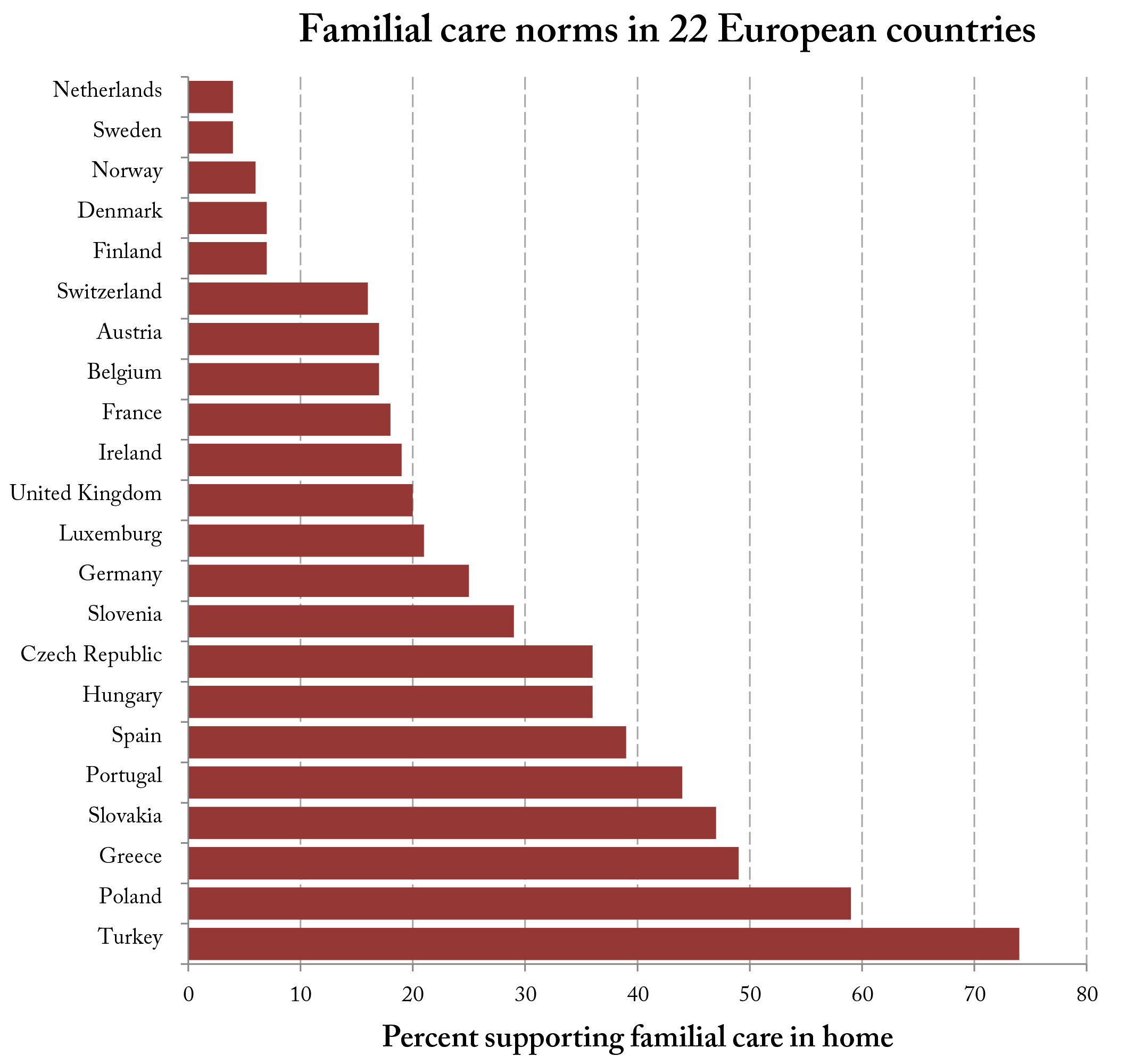
To help figure out how caregivers are affected in different social contexts, we studied 22 European countries to assess whether those in countries with greater societal pressure for informal family caregiving – in the form of strong social norms for familial care or limited public transfers for old age programs – have lower well-being than caregivers in countries with weaker familial care norms and more old age public transfers. We found that strong norms in favor of caregiving at home — and less government support for elder care — are associated with increased harms for female caregivers.

Sociologists often point out how macro-level forces (such as social norms) affect individual outcomes. Our recent research, just published in European Sociological Review, sought to understand how two features of different countries — social norms surrounding caregiving, and public funding for old age programs — are associated with individual caregivers’ well-being.

In the United States, how to provide care for aging family members is largely an individual decision, but social norms and public policies exert powerful influence on individuals’ ideals and ability to act on and carry out those ideals. Caregiving work has historically fallen to women and minorities, reflecting a system of “coerced care,” as Evelyn Nakano-Glenn calls it. Caregivers are not literally forced into their family roles. Rather, certain population groups experience social pressure through norms, and lack of institutional support.

Research suggests that when people are expected to do something based on their social status, but they do not have the resources to fulfill those expectations, they experience health-harming role strain. Caregiving, therefore, may be most deleterious to health when individuals are expectedto provide care, but lack the resources to do so effectively. In such contexts, when alternate options are unavailable, women particularly may step into caregiving roles and suffer health consequences as a result. Many studies find that caregiving affects women more than men; for example, caregiving daughters report greater depression while caregiving sons do not. Thus, coerced care can harm caregivers’ well-being, particularly for women.

In our study of 22 countries, we found substantial variation in people’s attitudes about whether care for aging parents should be provided by adult children in-home. Support for familial care ranged from 4% in Sweden and the Netherlands, to 59% in Poland, and 74% in Turkey.

familial care norms.xlsx

So, do country differences in familial care norms impact individual well-being?

Our results surprised us. We expected that caregivers in countries with strong familial care norms (i.e., where caregiving for aging parents is expected to be provided in their children’s home) would report worse well-being than those in countries with weaker familial care norms — because they were pressured into the caring role. We found, however, that only female caregivers’ well-being was worse in those countries. Female caregivers also have lower well-being in countries with fewer public transfers to support care for the aging. So, women in countries where there are strong social norms for familial in-home care – and where market or government subsidies for old age care are not readily available – may be more severely disadvantaged by caregiving responsibilities. This is consistent with research showing that female caregivers are more likely to be stressed, depressed, drop out of the labor force, and be sandwiched (caring for both a child and older adult).

That female caregivers in ostensibly coercive contexts report worse well-being may reflect role strain, related to lack of financial, socio-emotional, and other resources. Consider what it takes to provide care for an older adult, especially long-term. In the United States, taking time off from work to provide care for a family member is difficult, even a financial hardship for many. There is no federal paid family leave policy, and only about half of workers are eligible to take leave under the Family Medical Leave Act (meaning they may take up to 12 weeks off, mostly unpaid, without losing their job); thus, the economic implications of caregiving for a family member—be it a newborn, disabled person, or aging adult—can be disastrous for many families.

With over 65 million informal family caregivers in 31% of U.S. households, the current system is unsustainable. As the burden of care and the number of caregivers increase, so too will the social, economic, and health costs of caregiving. Middle-age adults who are beginning to experience their own health issues face compounding health effects of caregiving, leading to health risks earlier in life. This will inevitably strain the health care system as the number of caregivers grows.

What can we do to mitigate this bleak situation? First, we need a wide-ranging discussion about the vast challenges of informal caregiving in the current system, and how to promote equitable sharing of caregiving work in society. Second, we must address policy deficiencies, including the current piecemeal state-based approach that leaves many caregivers exposed. Potential starting points include broad policies to support caregivers through increased paid home care and community-care services. Recent innovative programs – like the one introduced for Pennsylvania, and federal respite care provisions – are first steps. Comprehensive federal policy changes that extend current family leave policies would also support caregivers, including paid and longer leave, and broader definitions of “family,” which would expand the range of people eligible and able to provide care.

Caregivers provide a valuable service to their loved ones and to society. Providing support for them is as pressing a social problem as providing care for the boomers heading toward old age. As older adults account for a larger share of the U.S. population, shifting demographics create unprecedented challenges for individuals and policy-makers alike. There is no better time to begin planning for this immediate future.

This paper is part of the Council on Contemporary Families’ Online Symposium “New Inequalities.”.

In contrast to the seeming stabilization of divorce rates for the general population over the past two decades, the gray divorce rate has doubled: Married individuals aged 50 and older, including the college-educated, are twice as likely to experience a divorce today as they were in 1990. For married individuals aged 65 and older, the risk of divorce has more than doubled since 1990. Researchers explain why.
–Stephanie Coontz

Contrary to the popular notion that divorce is increasing in the United States, the divorce rate has changed relatively little in recent decades. Marriages are not much more likely to end through divorce these days than they were 30 years ago. Yet this overall pattern of stability obscures important variations by class and age.

Generally, education tends to be protective against divorce. In fact, the marriages of college-educated couples seem to be lasting longer than they were 30 years ago. Among couples aged 40-49, the divorce rate for those with a college degree is about 50 percent lower than the rate for those with a high school diploma. This differential holds for younger adults ages 25-39, too. more...

Stacy Torres is a PhD candidate in sociology at New York University.

The American value of individualism affects us all, but what happens when you are not able to express that value? This is a dilemma for older people subject to stereotypes of dependency. They face special challenges in striving for this ideal and feeling comfortable enough to accept help so that they can remain self-sufficient. In my last post, I explored some reasons why older people may not want to move in with their families. Given these cultural pressures, how do elders living on their own negotiate their need for care and autonomy?

Programs like Meals on Wheels help older people remain independent in their homes. (Image via Wikimedia Commons.)

Polls consistently show that older adults and aging baby boomers want to “age in place”—or remain in their homes independently for as long as possible. This arrangement, desired by ordinary people as a means of preserving autonomy and by policy makers who view this as a cost effective alternative to nursing homes, requires that seniors—often in conjunction with their families—patch together creative ways to support their independence.

The day-to-day managing of routine tasks like grocery shopping, doctor’s appointments, and household chores, usually necessitates a little help from a supportive web that includes family, friends, neighbors, and social service agencies. Family may help older relatives with chores, coordinate medical appointments, and pay for supplemental help when possible. Network studies have foundthat friends are especially good at providing emotional support and a sympathetic ear when life’s travails require someone to bear witness. And neighbors can pitch in with practical help, such as picking up a few things from the store when an older person has trouble leaving the house. For years I have observed how eighty-year-old Joe’s next-door neighbor has served as his link to the outside world whenever his swollen ankles and knees leave him homebound. She brings him a copy of The Daily News and groceries whenever he needs a few days to mend.

Beyond kin and friendship networks, senior centers provide a range of services to community-dwelling elders, though they are also usually the first candidates for budget cuts. A few older people I’ve met over the years regularly took advantage of the cheap but nutritious meals offered daily by a local senior center for a dollar, which saved them the hassle of cooking for one and the cost of eating out but also provided a little companionship. Nonprofit organizations that serve older adults, such as the Jewish Association Serving the Aging (JASA), offer comprehensive access to services that help older people deal with the challenges of living alone in an expensive, gentrified city like New York, including benefits screening for programs such as food stamps and Medicaid. As I walked past a Midtown Manhattan food pantry the other day and saw the line stretching a half-block long, filled with mostly Asian and Latino elders and their shopping carts waiting for donated potatoes, rice, and canned vegetables, I was reminded again of how crucial these stop gaps are for those struggling to remain independent in old age.

But in some cases, elders may go too far in keeping their family at bay due to fears of losing their independence if they reveal their physical or financial challenges. In my own research I’ve found that some people feel so threatened by the prospect of moving in with family (or worse, a nursing home) and ashamed of asking for help that they sometimes go to great lengths to cover up health issues and other difficulties. It’s often only after a crisis that families learn of mounting problems. For example, after 83-year-old Dottie ended up hospitalized for a heart attack her daughter discovered that she had not seen a doctor besides her podiatrist for several years. In the absence of regular medical care, Dottie had improvised her own self-care measures such as weighing down a shopping cart with telephone books for support when she walked, rather than using a cane or walker. When Theresa, in her mid-70s, fell and twisted her ankle, her family discovered the severity of her dementia, which had eroded her ability to tell time and remember dates. Afterwards she moved closer to where her brother lived.

How can we support elders so that reaching out for help doesn’t pose a threat to independence but rather ensures that a bad situation doesn’t get worse or become an unnecessary crisis? Perhaps the first step is recognizing that none of us can do it alone and that at every age we achieve self-reliance by drawing on a mix of social resources and supports.