Tag Archives: travel/tourism

Local Residents as Vacation Souvenirs

We have posted in the past about non-Whites being used as props in tourism and travel ads, there for the enjoyment and convenience of tourists, like other tourist attractions. Rhiannon J. sent in another excellent example of the residents of vacation areas being treated like just another amenity. In this ad for Travelocity, a White family enthuses about the many pleasures of their vacation spot — including the sun, the sand…and “the Rodrigo”:

As Rhiannon pointed out, the family discusses Rodrigo, who apparently loves carrying fruits for White tourists, the way you might discuss a stray dog.

UPDATE: Reader Chorda correctly points out that, while my use of race as the dividing point made sense when viewing these ads as a group, in this particular case “ethnicity” would probably be a more appropriate term to use.

Trivializing the Slave Trade

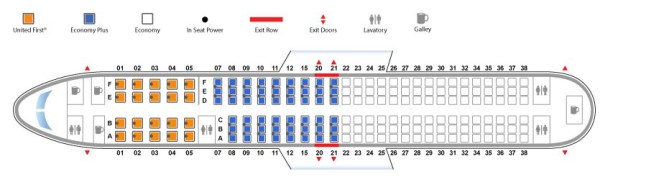
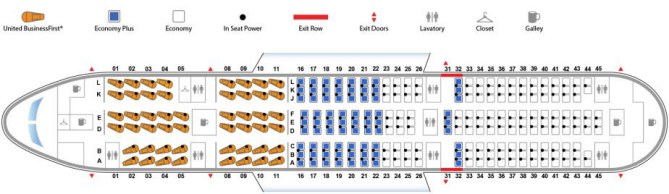
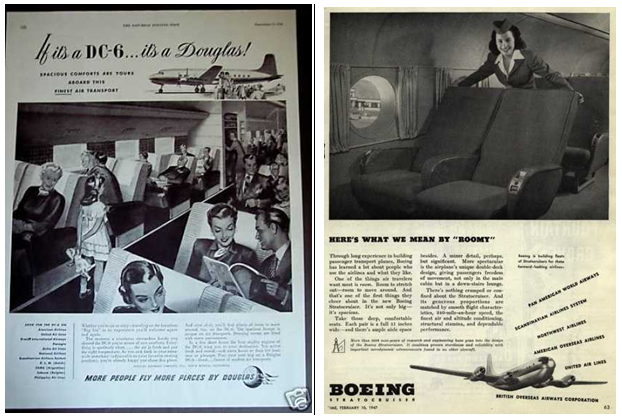
Just as “I’m not a racist, but…” is a sure sign that someone is about to say something racist, an essay that begins “I don’t want to trivialize the inhumane horrors that African slaves endured on slave ships destined for the Americas. But…” is certain to do just that.  Indeed, Steven Heller at Imprint began his post this way, going on to suggest that the design of modern airplanes “resemble[s]” that of slave ships.  As evidence, he recalls his own discomfort in coach and compares drawings of slave ships and blueprints of airplanes.

Heller prefaced his observations with a disclaimer because he knew comparing modern air travel to the slave trade was sketchy.  And it is, indeed, sketchy. The descendants of slaves live life with the knowledge that their ancestors were stolen, shackled, beaten, and denied their very humanity; at least they survived the trip across the Atlantic.  Nope, not like air travel one bit.

So, yes, it’s lovely to be clever, but it’s also lovely to be thoughtful and sensitive.  In this case, Heller’s desire to be the former won out over the latter.  Or perhaps he never really thought that anyone would seriously be upset by the comparison.  It’s obviously tongue-in-cheek right?  I mean, slavery has been over for, like, ever.  Or maybe he forgot that descendants of slaves read the freakin’ internet just like everyone else.

Who knows.  In any case, it’s a great example of the trivializing of the histories and traumas of a marginalized population.

Thanks to Dolores R. for the tip.

The Economics of Royalty

What is the fiscal relationship between the Royal Family of the United Kingdom and its taxpayers?  I have no idea.

Accordingly, I have no idea as to the accuracy of this 5-minute summary, made by CGP Grey (via), but it was entertaining and, I imagine, contains a least a kernel of truth:

U.K. readers, what say you?

Transcript after the jump:

(more…)

Spurious Relationship: Passport Ownership and Diabetes

Dolores R. sent along an illustration of the nature of spurious relationships. A spurious relationship is one in which two variables appear to be related, but are in fact both caused by a third, “confounding” variable. Drawing on Andrew Sullivan’s map of passport ownership and data on Type 2 diabetes posted at the US News and World Report, Mark Frauenfelder at BoingBoing suggested, with tongue-in-cheek, that owning a passport prevents Type 2 diabetes.  In fact, both are probably related to a third variable, class: having the money to travel also usually means having access to healthy foods and sufficient health insurance.

1870 Guide to New York City Brothels

The New York Times has made available a digital copy of The Gentleman’s Directory, a guide to New York City published in 1870. The guidebook informs travelers of a particular type of local attraction: brothels. Of course, the information was for curiosity’s sake only:

Not that we imagine the reader will ever desire to visit these houses. Certainly not; he is, we do not doubt, a member of the Bible Society, a bright and shining light…But we point out the location of these places in order that the reader may know how to avoid them… (p. 6-7)

Certainly passages like this, from p. 13, make it clear that such establishments are to be avoided:

It also included pages that were simply ads for particular brothels:

Interestingly, the NYT checked the 1870 Census for the houses listed in the guide. In general, the women living there were described by Census workers as domestic servants or women who “kept house.” However, they found a few cases where the Census openly listed them as working at a “house of prostitution” or “house of assignation.”

A doctor advertised “imported male safes,” i.e., condoms:

His ad also describes an unspecified cure for women that may very well refer to abortions (at the time, products that caused abortion were often advertised as helping with menstrual regulation or any type of “menstrual stoppage”):

In addition to an article about the directory, the NYT put together a map showing the locations of the establishments it mentions (which were a small proportion of all brothels in NYC, where prostitution was illegal but widely available at the time):

The Privileged White Vacationer in a Cruise Ship Ad

Nicole sent in this Australian commercial for P&O Cruises. Nicole was struck by the obvious racial divide, in which the privileged customers are all White, while non-Whites serve them, either literally (and with a smile!) or as a form of cultural entertainment:

It’s another example of a common tourism marketing theme, in which supposedly “traditional” and/or “native” cultures are provided as cultural experiences to “modern” tourists. This commercial just stands out because of the particularly stark division of the world into those who are entertained and attended to, and those who do the attending.

The Military Camels of the North American West

Dr. Grumpy re-tells the fascinating story of the importation of camels to North America for use as beasts of burden.  He begins:

Following the Mexican-American war, the United States found itself in control of a large desert, covering what’s now New Mexico & Arizona, and parts of Texas, California, and several other states. The U.S. Army needed to establish bases and supply lines in the area, both for the border with Mexico and the continuing wars with Indian tribes.

The railroad system was in it’s infancy, and there were no tracks through the area… The only way across was to use horses. But horses, like humans, are heavily dependent on water. This made the area difficult to cross, and vulnerable to attacking Apaches.

And so in 1855 Jefferson Davis, then U.S. Secretary of War (later to become President of the Confederacy during the Civil War), put into action an idea proposed by several officers: buy camels to serve in the desert. Congress appropriated $30,000 for the endeavor, and officials were sent to Turkey to do just that.

The next year they imported somewhere between 62 and 73 camels and, with them, 8 camel drivers all led by a man named Hadji Ali. Enter the U.S. Army Camel Corps.

Camels at an Army Fort:

(source)

Illustration of camels in camp:

(source)

Camels on the go (1850s):

(source)

Says Dr. Grumpy:

They led supply trains all over, from Texas to California…

But there were problems. The Americans had envisioned combined forces of camels and horses, each making up for the deficiencies of the other. But horses and donkeys are frightened of camels, making joint convoys difficult and requiring separate corrals. The army was also unprepared for their intrinsically difficult personalities- camels bite, spit, kick, and are short-tempered. Horses are comparatively easy to handle.

Then came the start of the American Civil War, which focused military attention to the east. With troops pulled out of the American desert, and horses better suited to the eastern terrain, the camels were abandoned.   Though Weird CA suggests that they were used in the war, Dr. Grumpy reports that most simply escaped into the desert.  For a time, there was a wild camel population in the U.S.

Meanwhile, a former-solider and Canadian gold prospector, Frank Laumeister, figured that camels would be great pack animals for his new line of work. He bought a herd in 1862, but they didn’t work out so well in the rockier terrain. Plus:

The Canadians, like the Americans, discovered they weren’t easy to handle. The same problems of difficult disposition and spooking horses came up. In addition, they found camels would eat anything they found. Hats. Shoes. Clothes that were out drying. Even soap. And so, after a few years, the Canadians gave up on the experiment, too.

Laumeister on one of his camels:

Our original head camel driver, Hadji Ali, eventually got out of the camel business, but he never left America. He became a citizen in 1880, married a woman named Gertrudis Serna and had two children. He died in Arizona in 1902, having spent 51 years of his life in the U.S. You’ll find his tombstone in Quartzsite, Arizona labeled with the name “Hi Jolly,” the Americanized pronunciation of his full name.

(source)

The last sighting of a wild camel in North America was in 1941 near Douglas, Texas (source).

Guest Post: On the Boardwalk in a War Zone

“It was kind of unreal,” the Steamboat Springs, Colorado native said, describing his recent 34th birthday fete at Kandahar Airfield, better known as KAF. “At least for a few minutes, you could pretend you were somewhere else. It was like going back home” (source).

“I was expecting to arrive in a warzone but instead here I am wearing sunglasses in the sun and eating a baguette,” said Dimitra Kokkali, a NATO contractor newly arrived from Brussels. “On my first night I surprised my family by calling them from an outdoor rock concert” (source).

Time magazine slideshow, titled “R&R at Kandahar Airfield,” uses images to describe how the busiest airport in the world “tries to re-create the comforts of home for the coalition forces in Afgahnistan.” Kandahar Airfield is the busiest airport in the world because all supplies and troops pass through on their way to or from war in Iraq or Afghanistan. At any given time there are about 25,000 service members and civilian contractors at the airfield.

These images of the Kandahar’s “Boardwalk” recreation area are striking for a few reasons. First, they show a blurring of the line dividing the homefront and the warfront. The slide show includes images of service members using FaceBook in computer labs, and eating meals in their fatigues at TGI Fridays.

For example, notice how all the visible computer screens in this image show Facebook.  New technology has drastically changed the relationship between the warfront and the homefront so that service members are able to keep in close touch with their loved ones while serving (source).

Second, these images reflect that there is increasing emphasis on how service members are supported and cared for by the military during wartime. These photos show the side of war that is not about fighting and danger—instead, they are about the comfort and making a foreign land where they are fighting as “homelike” as possible.

Images like the ones below, for example, are typical of the kind of images seen on recruitment websites for parents and family members, who need to be reassured that the military will take care of their loved ones. Particularly when the military is advertised to parents, training and military service is compared to college life (describing the food available, the structure of service members’ days, and the benefits and opportunities they are accorded). Very little of the reality of Armed Service—fighting in battles, conducting raids, patrolling boarders—is portrayed to families.

Third, these show the blurring of the boundary between the military and privately owned businesses. Civilian Contractors are augmenting military personnel during the wars in Iraq and Afghanistan and the inclusion of these civilian contractors in war zones has raised the issues of the safety of civilian workers and the costs of hiring corporations (Contexts).

For example, this image is of a TGI Friday’s at the Kandahar Airfield.  The presence of all uniformed troops in such a familiar restaurant setting is striking—upsetting the typical contrast between peaceful “home” and foreign wars.

Finally, as a consequence of the blurring of the boundaries of homefront and warfront, the division between the country of Afghanistan and the military is sharpened. Afghanis (except for those few with security clearance) are not allowed to shop or enjoy the free entertainment on the Boardwalk at Kandahar.  Meanwhile, service members can safely buy souvenirs on the Boardwalk itself.  Afghani culture is commodified as a tourist attraction in this theme park-like Boardwalk setting.

All of these images speak to the changing boundary between the homefront and the warfront, and as a result, changes in how we, as a country, view war. Instead of the images of brutality, death, and chaos that Americans saw in their living rooms on TV during Vietnam, for example, these images show the military taking care of service members who are being entertained, keeping in touch with loved ones, and having fun.

But as this service member describes, walking the Kandahar “Boardwalk” in a warzone is still a jarring experience:

“I couldn’t believe I was in Kandahar eating a double-dipped chocolate ice cream at sunset on a Saturday afternoon,” said Coleman, who was downing a strawberry smoothie from the French bakery behind him, where an Eiffel Tower climbs a wall above picnic tables with fake potted plants.

“It was a surreal experience,” he said, as a jet fighter roared across the sky, letting loose a stream of defensive white flares. “I remember thinking, ‘We’re in the heart of the war-zone. The bad guys are 10 miles away. And here we are eating soft-serve ice cream’” (source).

——————————

Wendy Christensen is a Visiting Assistant Professor at Bowdoin College whose specialty includes the intersection of gender,war, and the media.

If you would like to write a post for Sociological Images, please see our Guidelines for Guest Bloggers.