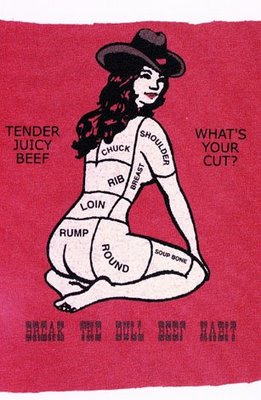
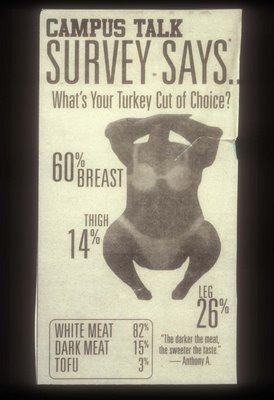
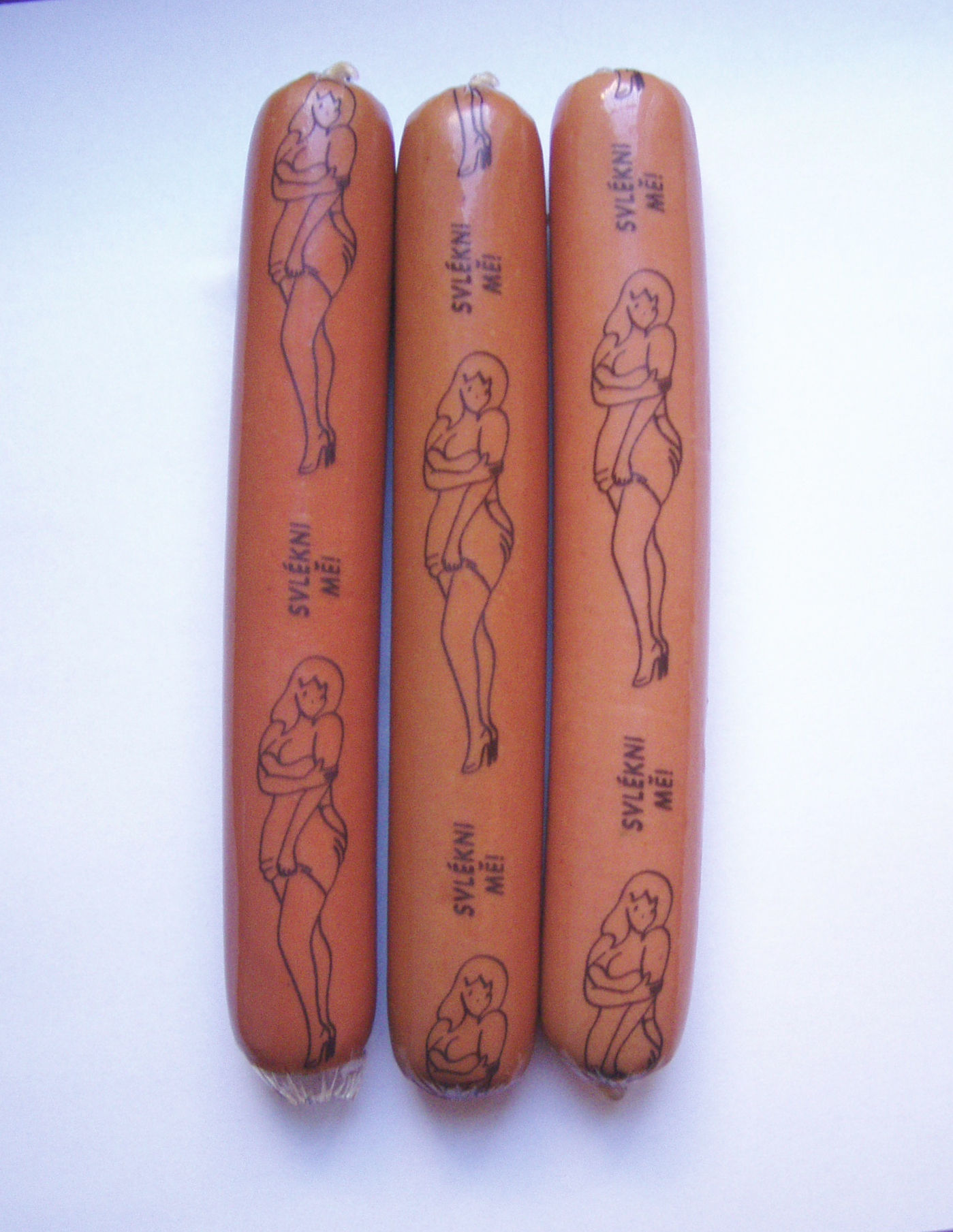
Poster part of an ad campaign by the Museum of Communism (Prague, Czech Republic).
Have a scholar we should commemorate? Send us a wacky pic and we will!

Poster part of an ad campaign by the Museum of Communism (Prague, Czech Republic).
Have a scholar we should commemorate? Send us a wacky pic and we will!
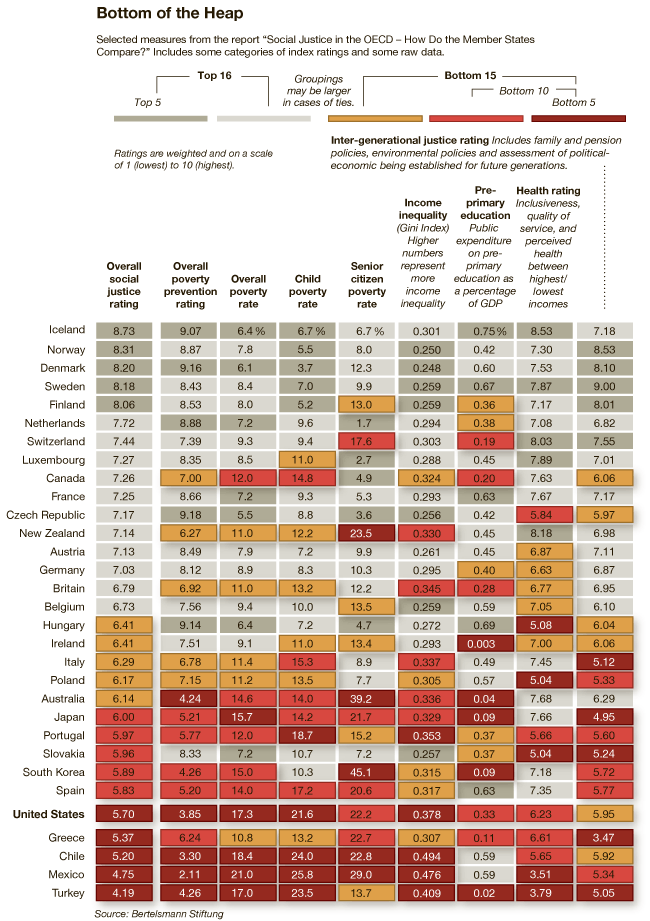
How does the U.S. compare to other developed countries on measures of social justice? According to the New York Times, not very well. The visual below compares countries’ poverty rates, poverty prevention measures, income inequality, spending on pre-primary education, and citizen health. The “overall” rating is on the far left and the U.S. ranks 27th out of 31.

Via Feministing. See also how the U.S. ranks on measures of equality and prosperity(33 out of 33, for what it’s worth). Thanks to Dolores R. for the link!
—————————
Lisa Wade is a professor of sociology at Occidental College. You can follow her on Twitter and Facebook.
As we enter the last frenzied days of Christmas shopping, Dmitriy T.M. thought it was worth looking at international comparisons in spending on the holiday. The Economist posted a graph based on Gallup polls and other data sources about how much individuals in various countries in Europe, plus the U.S. and South Africa, plan to spend on Christmas shopping this year, plotted against national GDP. Overall, Christmas spending correlates with national wealth, with the Netherlands being a noticeable outlier (spending less than we’d expect) and Luxembourg in a spending league of its own:
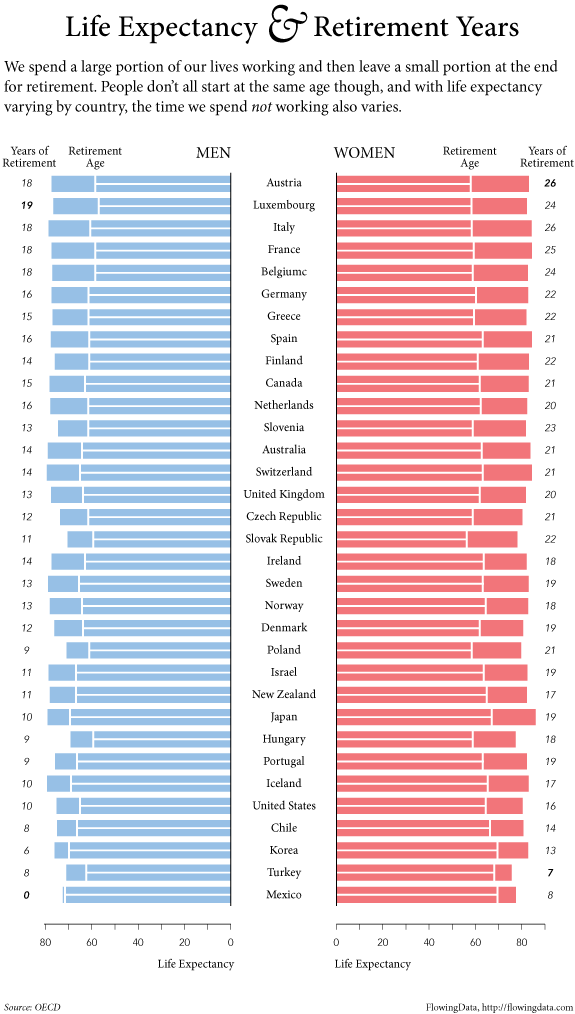
Does American prosperity translate into long retirements? Not compared to other developed countries in the world. Flowing Data borrowed OECD numbers on life expectancy and age of retirement to calculate the average number of years in retirement for men and women across many different countries. The portion of each bar with the line is the average number of years working, while the non-lined portion represents years in retirement.
Largely because of life expectancy, women enjoy more years than men in all states except Turkey, but the number of years varies quite tremendously, from an average of zero years for men in Mexico, to an average of 26 years for women in Austria and Italy. The United States is way down on this list, not doing so well relatively after all.
I am trying to re-enter society after several days being sick, so I’m going with something short and simple today. Eden H. sent in this chart, found at Business Insider, that compares hourly minimum wages in a number of European countries to the U.S.:
The European data are available from Eurostat (though note they report minimum wages in terms of Euros per month, not hour, so the data was converted for the chart).
An infographic accompanying an article at the New York Times reveals how “advanced economies” compare on various measures of equality, well-being, educational attainment, and more. To illustrate this, for each measure countries that rank well are coded tan, countries that rank poorly and very poorly are coded orange and red respectively, and countries that are in the middle are grey. The countries are then ranked from best to worst overall, with Australia coming in #1 and the United States coming in last. You might be surprised how some of these countries measure up.
Thanks to Dmitriy T.M. for the link.
Katrin drew our attention to the Christmas character of the Christkind, found in regions as diverse as Austria, Italy, Hungary, Slovakia, the Czech Rebublic, Croatia, Slovenia, Germany, Liechtenstein, Switzerland and, according to Wikipedia, “…parts of Hispanic America, in certain areas of southern Brazil and in the Acadiana region of Louisiana.”
The Christkind was introduced by the German Protestant priest Martin Luther (1483-1546). At the time, tradition held that gifts were given by St. Nicholas. Protestants, however, didn’t acknowledge saints, so they needed an alternative mythological gift giver. The Christkind was originally depicted as baby Jesus, but in many places today is instead an angelic blond child or adult woman.
In Nuremberg, Germany, a Christkind is chosen every two years in a pageant reminiscent of American beauty pageants (source). This year the Christkind is Rebekka Volland (source):
More photographs of the Christkind:
(source)
(source)
(source)
Because Western societies generally reward and value things that men do, the post-1950s feminist movement largely worked to get women access to those realms. Accordingly, today women wear pants, play sports, become lawyers, doctors, and engineers, and enter politics. Women’s participation in these arenas is generally tolerated, even regarded positively, on one condition: they must look and act feminine.
This is patently obvious if we examine television programming. Powerful women are ubiquitous in sitcoms and dramas, but they are almost always young, thin, and beautiful. Powerful men are ubiquitous too and they are often young, fit, and handsome, but they are also old, fat, or carry faces that show “character.” We also see the feminine apologetic among female engineers and professional women athletes like Candace Parker and others.
Women, then, are not allowed to simply appropriate masculine traits and activities, they must also display femininity. Sociologists call this requirement a feminine apologetic, a way to soothe others’ concerns about her appropriation of masculinity. The more powerful a woman becomes, the more important it is for her to perform the feminine apologetic.
I thought of this concept when Laura E. and Citizen Parables alerted us to the release of a sexy calendar featuring female politicians. As of last May, women now hold a record 44 of the 200 seats in the lower house of the Czech parliament (source). And, right on cue, the Public Affairs party released the girly calendar. Some months:


In line with the feminine apologetic, these images say:
Don’t worry boys. I may be an ambitious, successful woman, but I still want you to look at me… no, I still need you to look at me. Your opinion of my sex appeal still matters. A lot. I may be powerful, but that’s a power I still accede to you.
——————————-