Tag Archives: abortion/reproduction

The Science of Lady Parts and the GOP

Cross-posted at Caroline Heldman’s Blog.

Last Thursday, Republican Representative and Tea Party favorite, Joe Walsh (R-Ill), told reporters that when it comes to abortion, “there’s no such exception as life of the mother” because of ”advances in science and technology.” This astounding claim was news to the medical community.

Walsh joins the ranks of some other prominent Republican men who don’t understand basic lady parts science: Representative Todd Akin (R-MO), who claimed that pregnancy from “legitimate rape” is “really rare” because “the female body has ways to shut the whole thing down,” and conservative comedian Rush Limbaugh, who doesn’t understand the basics of birth control pills. (He thinks you take a pill every time you have sex!)

These remarks would be humorous if it weren’t for the fact that these men are part of a broader effort by the extreme wing of the Republican Party to take aim at women’s reproductive health.

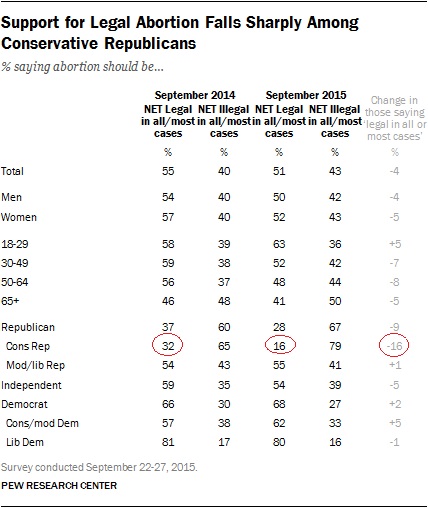
At the state level, Republican lawmakers enacted a record number of anti-abortion measures in 2011, four times as many as the previous year. A study from the Guttmacher Institute shows that legislators in 45 state capitals introduced 944 provisions to limit women’s reproductive health and rights in the first three months of 2012. These states are proposing/passing abortion ultrasound requirements, gestational limits, health insurance exemptions for contraception coverage, and stringent limitations on medical abortions.

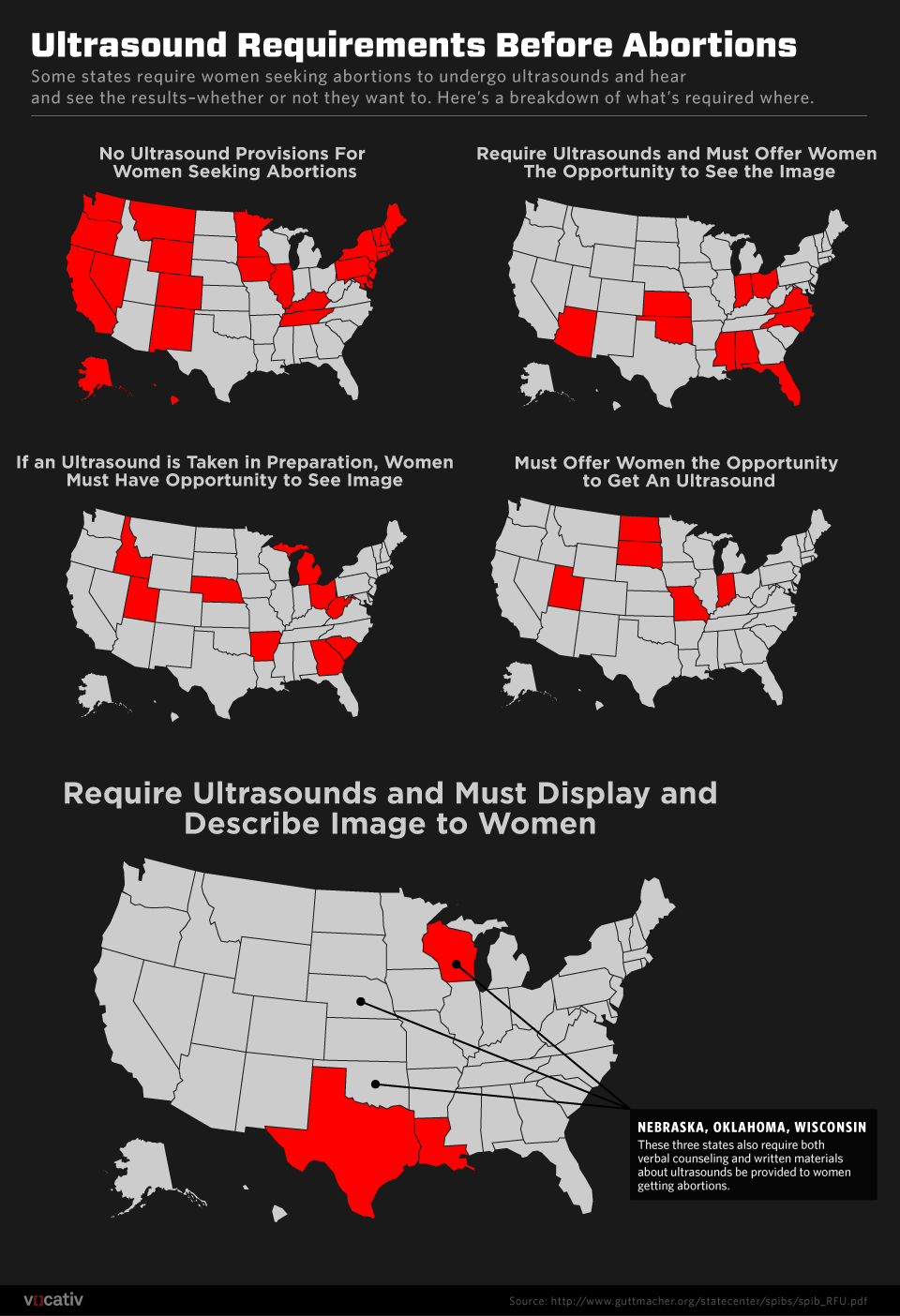
In the past two years, 19 states have introduced bills modeled on a Nebraska law that bans abortion 20 weeks after fertilization. The Oklahoma State Senate redefined “person” as starting at conception, while the Mississippi House approved a bill requiring women who want an abortion to undergo an examination to determine if there is a fetal heartbeat. Texas and Virginia require women to undergo an ultrasound prior to receiving an abortion, and many other states have similar proposals underway. Texas recently cut reproductive services for 130,000 poor women.  As this chart from NARAL indicates, twice as many states passed anti-choice laws in 2011 than in 2010.


At the federal level, in 2010, the newly elected House Republican majority was quick to propose major cuts to reproductive health services. They made several attempts to eliminate funding for Planned Parenthood, the largest family planning provider in the U.S. that has been around for a century. They also tried to gut Title X, a program that funds family planning and preventive breast and cervical cancer screenings. Both proposals were stopped by Senate Democrats. Ironically, on the same day that House Republicans tried to eliminate Title X funding, Representative Dan Burton (R-IN) proposed contraceptive funding for wild horses (something that we desperately need, actually).

Congressional Republicans also proposed an amendment to the health care bill that allows federally funded hospitals to turn away women in need of an abortion to save their lives. This is by far the most brazen attack on the “mother’s health” exception to restrictions on abortions. In May of 2012, Republicans proposed a veto on sex-selective abortions that failed to pass the House, despite broad Republican support for the bill. And in early 2012, Republicans in Congress held hearings on whether the new health care law should include contraception coverage. These hearings included virtually no female experts, so House Democrats held more inclusive hearings that (gasp) included women. Limbaugh assailed one hearing participant, Georgetown student Sandra Fluke, calling her a “slut” and a “prostitute.”

Prominent conservatives, including Republican Party leadership, have roundly dismissed the assertion that the party is engaged in a War on Women, but the recent flurry of legislation curbing reproductive freedoms tells a different story. Given baffling comments from the likes of Walsh, Akin, and Limbaugh, the generals in this War on Women obviously need to include lady parts science as part of basic training.

 ——————
Caroline Heldman is a professor of sociology at Occidental College.  You can follow her at her blog and on Twitter and Facebook.

Intra-State Variation in Vulnerability to Climate Change

Scholars are busy attempting to predict the effects of climate change, including how it might harm people in some parts of the globe more than others.  A recent report by The Pacific Institute, sent in by Aneesa D., does a more fine-grained analysis, showing which Californians will be the most harmed by climate change.

They use a variety of measures for each Census tract to make a Vulnerability Index, including natural factors (like tree cover), demographic factors (like age), and economic factors (like income).  At the interactive map, you can see the details for each Census tract.  Their compiled index looks like this:

You can also see the Vulnerability Index for each measure individually.  Here is the data for the percent of people over age 65 who live alone, a variable we know increases the risk of death from heat wave.

And here’s the data for the percent of workers who labor outside:

There’s lots more data at the site, but what’s interesting here is that, even in incredibly wealthy parts of the world, climate change is going to have uneven effects.  When it does, the most vulnerable people in the more vulnerable parts of the state are going to migrate to the other parts.  Most Californians don’t imagine that their cities will be home to refugees, but this is exactly what will happen as parts of California become increasingly difficult to live in.

—————————

Lisa Wade is a professor of sociology at Occidental College. You can follow her on Twitter and Facebook.

Targeting the “Supply Side” of Abortion

Opponents of abortion have long targeted the “demand side” of abortion by passing legislation aimed at dissuading patients from going through with an abortion. Examples of this type of restriction include parental consent/notification laws, waiting periods, and mandatory counseling. Research shows that targeting patients has had little impact on national abortion rates; they’ve been declining, but several factors are likely contributing to the decrease, including increased accessibility to contraceptives.

New approaches to restricting abortion have focused on the “supply side” of the abortion equation — that is, targeting the doctors and clinics that provide abortions. These regulations often require certain staffing and equipment requirements, resulting in clinics being shut down (often due to the expense of implementing the regulations). Reduced access to clinics often means that women have to travel further for an abortion — increasing costs (the procedure itself, travel, and accommodations), especially when a patient has to navigate waiting periods and counseling requirements.

Mississippi’s sole abortion clinic, for example, the focus of abortion opponents for many years, faced closure recently because of a law that changed licensing procedures. The law now requires all doctors performing abortions to have admitting privileges at local hospitals (difficult for the out-of-state doctors to acquire). The clinic was granted an extension to meet the requirements, though the law was allowed to stand.

So, does targeting the supply side of abortion work to reduce the procedure?

A recent article in the New England Journal of Medicine did a natural experiment to answer this question.  In 2004, Texas passed two new restrictions on abortion, one on each side. The “demand side” legislation required that women receive information about risks at least 24 hours before an abortion can be performed. The “supply side” legislation required that abortions after 16 weeks of gestation be performed in a hospital or an ambulatory surgical center instead of a clinic. At the time the law was passed, none of Texas’ non-hospital based clinics met the legal requirements, and very few abortions were performed in hospitals.

If the “demand side” legislation had an effect, the number of abortions would decrease at all levels of gestation. As Chart A illustrates, there was no change whatsoever in the number of abortions performed before 16 weeks — indicating that the demand side legislation had almost no impact.

If the supply-side legislation had an effect, the number of abortions provided after 16 weeks should have dropped.  In fact, Chart B shows that the number of later abortions performed dropped 88% after the legislation was implemented.

So, targeting the supply side reduced the number of abortions performed in Texas, but did the  women carry their baby to term?

No. Some of these women left the state to receive an abortion; in fact, the number of who received an out-of-state abortion more than quadrupled from 2003 to 2004. Accordingly, the average distance women had to travel to receive an abortion after 16 weeks increased from 33 miles in 2003 to 252 miles in 2004.

As has been noted on this site before, nations that have highly restrictive abortion laws do not have lower abortion rates; in fact, in those countries where abortion is illegal, many of those abortions are unsafe, resulting in high numbers of maternal deaths. Although targeting the supply-side of abortion might be appealing, it will probably not reduce the abortion rate nationwide. Instead, it likely places onerous restrictions on women with fewer resources, since they will be less able to meet the increased costs that result from having to travel for abortions.

Thanks to ­­­Jenna for the submission!

————————

Amanda M. Jungels is a PhD Candidate in the Department of Sociology at Georgia State University, focusing on sexuality, gender, and cognitive sociology. Her dissertation focuses on disclosures of private information at in-home sex toy parties. She is the current recipient of the Jacqueline Boles Teaching Fellowship, given to outstanding graduate student instructors.

News Media Make Men the Experts on Women’s Issues

The Fourth Estate has found that the vast majority of people quoted in news coverage of the 2012 election are men.  The media research group collected a sample of election-related news stories from print newspapers and TV broadcasts, finding that 13% of print sources were women (79% were men and 8% were organizations) and 16% of TV sources were women (81% were men and 3% were organizations).

Male dominance was true in all outlets, though Meet the Press and Time Warner stand out as the least disproportionate:

This might be old (though still frustrating) news, except for the fact that the pattern held for issues traditionally considered “women’s”: abortion, birth control, Planned Parenthood, and women’s rights (blue is men, pink is women, grey is organizations):

This asymmetry is found across media.  See also our posts on gender and book reviewinggender and top billing at Paramount pictures, gender and top creatives for family movies, and women as news subjects.

—————————

Lisa Wade is a professor of sociology at Occidental College. You can follow her on Twitter and Facebook.

Lisa Wade is a professor of sociology at Occidental College. You can follow her on Twitter and Facebook.

The U.S.: #1 in Health Costs

Cross-posted at Montclair SocioBlog.

In case you wondered about what we in the U.S. pay for health care compared with those unfree unfortunates who suffer under various forms of socialized medicine, here are some graphs from 2009 showing the advantages of what is sometimes called “the best health care system in the world.”

The graphs are from the International Federation of Health Plans. I’ve selected only four — to show the relative costs* of

  • an office visit
  • a day in the hospital
  • a common procedure (childbirth without complications)
  • a widely used drug (Lipitor)

You can download all the charts here, but be warned: it gets boring. We’re number one in every chart, at least in this one category of how much we shell out.

Since we have the best health care in the world, this must mean that you get what you pay for. Our Lipitor must be four to ten times as good as the Lipitor that Canadians take.

Hat tip: Ezra Klein.

———————–

*These amounts are what providers are paid by governments or other insurers, not what the patient pays, which in many Eurpean countries is essentially nothing. See the footnotes for the tables in the original document. Or look at the comments on this at Boing Boing, a discussion which is remarkably civil (do they monitor comments?).

Access to Abortion Clinics and the Abortion Rate

Abortion is highly politicized in the U.S. (more so than in many other countries) and the fight between those who are in favor of and against available abortion occurs on two fronts.  One is familiar to just about everyone: the effort to overturn Roe v. Wade, the legislation Supreme Court decision that established the legality of abortion in 1973.

The second front, though, is less familiar.  It involves reducing the ease of access to legal abortion. Efforts to increase barriers to accessing legal abortion include passing laws that require minors to notify their parents of an abortion or get their consent, requiring mandatory counseling for abortion-seekers, instituting waiting periods, and discouraging medical schools from teaching abortion procedures.  Some of the issues of diminishing access are non-movement related; others are the direct result of pro-life activism.

I bring this up in order to focus on an additional barrier to access: a reduction in the number of clinics and hospitals that provide abortions.  The map below, based on data from the Guttmacher Institute and compiled by ANSIRH, shows how availability varies by state.  In the darkest states, up to 20% of women live in a county with no abortion provider; in the lightest states, between 81 and 100% percent do.

Living far from the nearest abortion provider is a problem especially for low-income women.  Such women are less likely to have an employer who will give her a day off to travel to the clinic, less likely to get a paid sick day, and less likely to be able to afford to lose even a single day’s wages.  She is also less likely to have a car, making it more difficult to get to a distant location, and less likely to have reliable day care for any existing children.  If the state requires in-person counseling and has a waiting period, it means that the woman must take two days off, travel to and from the clinic twice, and arrange for child care on multiple days.

Reduction in the availability of abortion does not necessarily reduce the number of abortions.  We recently posted global data showing that less liberal abortion laws actually correlate with higher rates of abortion.  The data below, also from Guttmacher, show that were abortion laws are less liberal (largely in developing countries), the rate of abortion is 34/1,000 women oer year, compared to 39/1,000 in developed countries (the difference may look significant here, but imagine how trivial it would look if the horizontal axis went all the way to it’s true maximum of 1,000):

Guttmacher explains that the relevant variable isn’t availability of abortion, but the unintended pregnancy rate (which is surprisingly high in the U.S.).

Barriers to accessing abortion, then, don’t lower the abortion rate.  They do, however, increase the likelihood that an abortion procedure will occur later in pregnancy and guarantee a greater logistic burden on the pregnant woman.

—————————

Lisa Wade is a professor of sociology at Occidental College. You can follow her on Twitter and Facebook.

Target Knows You’re Pregnant: Psychological Management and Consumer Data

Cross-posted at Global Policy TV.

A great story at the New York Times, sent in by Katrin, reveals how the evolving science of marketing is creating its own set of challengers for advertisers.  Target, like many companies, tracks its customers purchases and uses the data to send packets of coupons tailored to individuals and households.  In this way, they tempt us into the store by offering us deals on things they know we want.

Target is also in the business of predicting what a person will want.  So the marketing company decided to try to use costumer shopping habits in order to predict pregnancy.  If they could start sending the woman baby-related before she started shopping for them in earnest, the company figured, she might end up always thinking of Target when she needed to spend money on the baby.

Using an algorithm that considered the purchasing patterns typical of newly pregnant women — e.g., prenatal vitamins, scent-free instead of scented lotion, a sudden uptick in the acquisition of cotton balls — they were able to make a pretty good guess as to whether a female customer was expecting.  Suddenly these women were getting coupons like this:

This caused two problems.

First was the father of the teenage girl who started getting coupons for diapers in the mail.  This led to an angry phone call to Target and, later, a chagrined apology by the stunned grandpa-to-be (story here).

The second was the reaction of the intended target, the expectant moms.  Some were pretty freaked out that Target knew they were pregnant!  It’s one thing, it turns out, for Target to know you like vanilla better than chocolate ice cream, or you fancy scented candles; it’s different, perhaps, to suddenly realize that it knows your you’re having a baby.  That could feel like a serious invasion of privacy.

So Target learned that the ability to predict our needs and desires comes with the need to do some psychological management as well. Accordingly, they began sneaking baby-related coupons into coupon books that also included other things.  So far, Target reports, these women are none the wiser… and thinking of Target as their one-stop baby shop.

—————————

Lisa Wade is a professor of sociology at Occidental College. You can follow her on Twitter and Facebook.

The Development of Oral Contraceptive Packaging

PBS has a gallery of images of oral contraceptives that provides a nice illustration of the way product design can be used as a form of behavior modification, while also needing to adapt to the way people actual use products — or forget to do so, the ever-present problem with the pill.

Initially , the pill came in bottles, like other prescriptions:

Notice the bottle contains 100 pills; there was no effort to package it into quantities for a single month. Women were supposed to take 20 pills in a row, then none during their period. It was up to them to keep track of everything and remember when it was time to start taking the pills again.

In 1962, an engineer created a prototype of a dispenser pack, designed to hold exactly a month’s worth of pills and help women remember to take them correctly:

The first contraceptive in a pack of this type, Dialpak, appeared the next year; oral contraceptives packaging has been designed to help women remember to take them accurately ever since. This became a major selling point, with Dialpak 21 even offering a small calendar you could attach to a special watch band so you could more easily keep track of whether you’d taken the pill:

In 1965, Eli Lilly introduced a new packaging design, with differently-colored pills arranged in a sequence; however, it didn’t label the days of the week, so it didn’t help women figure out if they’d remembered to take their pill on any given day:

Norinyl came in a package that took the sequential design but added several features that enhanced compliance. An extra pill was added, so that pills with active ingredients were taken for 21 days, not 20. Then a row of placebo pills were added so that women took a pill every day of the month, so they were less likely to forget to start a new pack:

When we think about the emergence and success of the pill, we tend to focus on the product itself. But the packaging tells an interesting story on its own. The pharmacological effectiveness of oral contraceptives meant little if women forgot to take them reliably. The design of the packaging helped play a crucial role, increasing users’ ability to follow the prescribed schedule.

Today, there’s an entire trade organization, the Healthcare Compliance Packaging Council, dedicated to promoting attention to the design of packaging as an important element in all areas of healthcare. The pill was the first prescription drug sold in a so-called “compliance pack,” serving as an example of the potential effectiveness of packaging design as a way to encourage patients’ conformity to prescribed medication regimens.