popular culture

Is refusing to wear a corset really breaking news in 2016? As multiple news, fashion, and entertainment sites have discussed over the past week, Emma Watson, the actress playing Belle in Disney’s live-action remake of Beauty and the Beast, will not be wearing a corset in the film. Articles covering this phenomenon state that Watson worked closely with costume designer Jacqueline Durran to recreate Belle’s iconic yellow gown to be “light” with a “lots of movement” because Belle is being reinterpreted as an “active princess.” The dress does hide a cage underneath layers of silk, satin, and organza, and Watson is wearing high-heels, but apparently these features of the dress will not impede the new Belle’s activity level.

Masking the absence of corsets as a major coup for gender equality is like hiding a wolf (or should we say beast?) in sheep’s clothing. It gives the illusions of progress, and generates praise and profits for Disney, without changing anything. Girl’s are already active; their participation in sports is at an all time high. Let’s keep encouraging female physicality. But we really need to stop insisting girls and women look hot while running, dancing, or or leading the free world.

Another major news story this week, at least according to our facebook feeds, is the “huge” decision Victoria’s Secret made regarding their 2016 fashion show. The models will be “embracing” their natural hair. Strangely, Victoria’s Secret’s vision of natural hair doesn’t actually involve letting hair remain natural. Models’ natural texture will be “enhanced” (read: styled) by professionals using a host of products and appliances. But in what is being reported as a major break from the past, every model’s hair will not look exactly the same.

It’s not that refusing corsets or presenting more than one hairstyle isn’t a step forward. But it’s ridiculous to call these decisions a momentous move toward a more inclusive beauty standard. If we’re going to cover this, let’s call it what it is: the teeniest, tiniest tip-toe toward progress.

Victoria’s Secret got the message that they shouldn’t dress white models in racially offensive costumes to sell bras. The lingerie corporation has been featuring more black and brown models in recent years. But skin color is the only way these women deviate from the standard lingerie model “look,” making Victoria’s Secret about as progressive as the Miss World pageant. At least at Miss World the contestants are permitted to talk and wear clothes.

Sustainable social change is often incremental. It doesn’t ever happen as quickly as the people demanding it want. It is partial and provokes backlash. But there’s incremental advancement and then there is recasting the most diminutive wobble toward progress as “making history.” Let’s not reward corporations for exchanging the pink bow on the same old narrowly restrictive beauty standards for a blue one.

Some might see looking to Disney or Victoria’s Secret to model a more inclusive gender or beauty ideal as a lost cause. Both are giant corporations, in the business of selling stuff and generating profits. Unless it leads to more money, they don’t have an incentive to challenge the status quo regarding gender stereotypes or cultural beauty standards.

But Disney and Victoria’s Secret are big business. The Beauty and the Beast trailer was viewed 127.6 million times in 1 day, making it the most watched trailer in a 24 hour period. The Victoria’s Secret Fashion Show will be broadcast to 800 million viewers in 190 countries on December 5. On the off chance either wants to put their money where their mouth is and “embrace” some real diversity or approach any type of action that could semi-reasonably be referred to as “making history,” here are a few suggestions for Victoria’s Secret:

  • Use a range of models with a variety of body types that average out to the height and weight of the average US woman.
  • Put on a fashion show in which none of the models have had cosmetic surgery.

And for Disney:

  • Make a movie with Emma Watson (who has proved her feminist bona fides on numerous occasions) that isn’t called “Beauty and the Beast.”
  • Cast a Belle who isn’t white, thin, and perfectly in line with conventional beauty standards. Unlikely, we know, but in a world where candlesticks and teacups can talk anything is possible.
  • Clarify what it means for a princess to be “active” (hint: it should involve more than not being a passive damsel in distress). Then make sure this active role model isn’t half the size of her male counterparts.

Let’s stop spreading the pseudo-progressive message that girls can do anything they want as long as they stay thin, tiny, and beautiful while doing it. Until Disney, Victoria’s Secret, or other corporations are interested in making meaningful changes that lead to more inclusive gender and beauty ideals, let’s hold off on all the “celebrating” and “embracing.”

Alexa Trumpy is an Assistant Professor of Sociology at St. Norbert College. She studies gender and social movements. Marissa Elliott is an undergraduate student at St. Norbert College. She is double majoring in sociology and psychology and plans to attend graduate school.

KelsyBurke.SpringHeadshotKelsy Burke is an assistant professor of sociology at St. Norbert College. Her first book is Christians Under Covers: Evangelicals and Sexual Pleasure on the Internet (forthcoming, University of California Press). 

The #DuggarScandal is rising once again to the top of media headlines as Jim Bob, the father of Josh who molested his sisters and other underage girls, explained away the incidents of sexual abuse in an interview with Fox News. “They didn’t even know he had done it,” he said about Josh “touching” his daughters after they were asleep.

CJ Pascoe and Sara Diefendorf explained earlier this week in another Girl w/ Pen post the rationale used by religious conservatives like the Duggars to make sense of sexual scandals. For these Christians, sexual sin is an expected and, as Jim Bob’s interview reveals, forgivable offense. Importantly, and outrageously, the sin of sexual abuse may be equivalent to the sin of consensual sex before marriage, pornography use, or masturbation. And while the liberal pundits may cry GOTCHA! in exposing the hypocrisy of fundamentalist families like the Duggars, their beliefs rely on a logic that does not see sexual sin as hypocritical, but rather as inevitable. All of us are sinners.

The long, long list of conservative Christian leaders caught in a sexual scandal is nearly all men (here is a story that details some recent examples). Not surprising, the critical-thinking feminist may observe, given that conservative Christian traditions believe in men’s headship and women’s submission. As one blogger described, the Quiverful movement of which the Duggars belong demands that women “never exercise a moment of sexual agency in her entire life.” Conservative Christian men may be hypocrites, but conservative Christian women are the victims or at least the dupes.

To be sure, the girls abused by Josh Duggar are victims of sexual assault. They did not choose it or deserve it. But let’s think for a moment, feminist readership, about the implication of the attitude that conservative Christian women have no agency or an ability to make choices on their own terms. (To be precise, the blog quoted above surmises that the Quiverful movement itself bars women’s agency, but even this isn’t an entirely fair assessment.) When feminist commentary on conservative religion deals almost exclusively with women’s victimization, we are left to believe that religious women indeed don’t have any agency. Is a feminist dismissal of conservative religious women actually endorsing the attitude of Jim Bob that these women don’t know any better?

What would happen if we acknowledged that women may make choices and feel empowered by them even if those choices seem to defy feminist logic? What would happen if we reimagined the plot lines in the typical feminist narrative of conservative Christianity? Instead of women as dupes or victims for believing in a patriarchal religion, how might these religions serve a purpose in these women’s lives?

Many scholarly accounts of conservative religious women suggest that they find some aspect of their religion to be empowering, all while believing they should submit to men. One of my favorite examples of this is a study of evangelical women who are married to “ex-gay” men (men who admit to, though do not necessarily act upon, same-sex attraction). Through interviews with these women, sociologist Michelle Wolkomir finds that they at first blame themselves for their inability to sexually entice their husbands. Yet Wolkomir finds that women overcome this guilt as they realize that their husbands are engaging in sin. This means that their wives are no longer obligated to submit to their husbands, but rather only to submit to God.

Evangelical women married to ex-gay men are certainly a small group, but the lesson here is far reaching: In patriarchal religions, God is the ultimate patriarch. Especially for religions in the Protestant tradition, women believe they connect directly with the final authority, the one who is In Charge. Converting to Christianity has the power to help women feel more, not less, in control of their lives: to have the strength to speak up to a cruel co-worker or to be optimistic about a recent divorce. Conservative Christianity may not change women’s life’s circumstances, but it can help women change their perception of those circumstances.

A common feminist mantra on the choices of other women, in the words of Amy Poehler in her book, Yes Please, is “Good for you, but not for me.” Yet feminists commenting on stories like the Josh Duggar scandal are quick to point to Christianity’s flaws, never its virtues for some of its followers. Women who are complicit in religions that appear to many feminists as anti-feminist seem to cross a line that has no defense. But why can’t feminists take up the attitude, “Good for you, but not for me.”? Of course there are obvious answers to this question: because these religions perpetuate ideas about gender and sexuality that harm us, especially women and queers. Gender-based violence, though, is a social problem that is not limited to fundamentalist Christianity. And don’t we live in a world where nearly all dominant ideas about gender and sexuality harm us? How can we defend Miley Cyrus and Kim Kardashian and nail art and not at least acknowledge that for some women, conservative religions are “good for you, but not for me.”? We may learn from these women that we all must make our own choices in a world that tries to limit them.

Terms like “empowerment” have flooded popular culture for quite some time, often in relation to promoting consumerism as well as hypersexual self-presentation. Of late, though, a rather unlikely source employed the word “feminist” to describe herself. Last week, media sensation Miley Cyrus stated: “I’m one of the biggest feminists in the world because I tell women not to be scared of anything.”

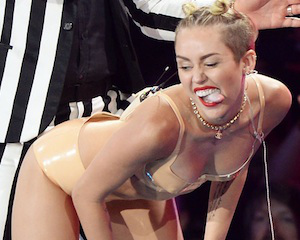
Central to Miley’s values of “not being scared of anything” is her embrace of shock value, especially as related to seemingly self-assured hypersexual posturing. As consumers of popular culture are likely familiar, she exhibited her self-confidence at the August 2013 VMAS, in which she performed a raunchy rendition of “Blurred Lines” with Robin Thicke. She continued her domination of the headlines by appearing nude (save for some boots) in the music video for her song “Wrecking Ball.” This sort of “empowerment” has underscored Miley’s rebranding effort from Hannah Montana to…something else more…well, “adult.”

miley-cyrus-vma-performance

Given that Miley’s brand of feminism feels more like Girls Gone Wild than a feminist figurehead, it’s quite interesting that she uses “feminist” as a self-descriptor. It’s notable, too, since many female celebrities, especially her contemporaries, have distanced themselves from identifying as a feminist. For example:

Katy Perry: “I am not a feminist, but I do believe in the strength of women.”

Carrie Underwood: “I wouldn’t go so far as to say I am a feminist, that can come off as a negative connotation. But I am a strong female.”

Beyoncé: “That word [feminist] can be very extreme … I guess I am a modern-day feminist. I do believe in equality … Why do you have to choose what type of woman you are? Why do you have to label yourself anything? I’m just a woman, and I love being a woman.”

The qualifications in Katy, Carrie, and Beyoncé’s communication about employing the word “feminist” reflects a longstanding conversation in feminist scholarship about why feminist has become a label that is fraught with contention. Part of the reason seems to be the history of generational conflict associated with women’s efforts to fulfill feminist aims. Along these lines, women seem to want to assert that their view of feminism is not that of their mothers or grandmothers. They want to own their feminism.

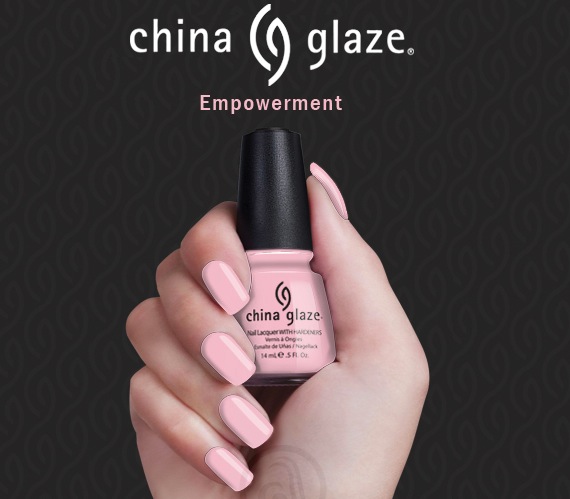
In addition, female celebrities’ ambivalence towards the term “feminist” is perhaps based on the ways in which notions of feminism have been communicated through mass media outlets over almost fifty years. As many scholars of consumer culture have identified, feminist discourse has been employed in advertisements and other media products to create a positive association between goods and the values we associate with them. This, in turn, has led to a devaluing of the language of feminism in popular culture, particularly in relation to feeling good through self-beautification. So, for instance, even though most people are aware that it’s simplistic to equate an experience of empowerment with nail polish, the constant presence of manufactured visual/verbal associations reinforces the desired meaning of the message, as in this advertisement:

9852420ce6b16a5eec1c05ca3cad9a53

While it is unlikely that wearing a nail polish called “Empowerment” will actually lead a woman to feel empowered when she wears it, it is possible that her act of carving out a space in her busy day to take care of herself and exercise an aesthetic pleasure will constitute a meaningful assertion of her power. The trouble here is that it’s not just one nail polish advertisement that links meanings of empowerment with a beauty product. The messages in this advert connect to those in other types of media texts (films, tv shows, ads/branding campaigns, celebrity images) as well as to cultural values that equate women’s work on their beauty/bodies with self-improvement. This sort of messaging about “empowerment” reinforces the idea that beauty routines are a necessity for presenting ourselves as socially acceptable and transform the pursuit of beauty into an oppressive journey of conformity.

Although feminism and feminist may currently be nebulous terms, there exists nonetheless an understanding among the public about what feminism, in essence, means. A poll conducted on People Magazine‘s website found that 92% of those who responded did not think that “Miley is, as she claims, one of the world’s biggest feminists.”

People poll

In early twenty-first century Western culture, it’s not a leap to argue that meanings and practices of feminism have become distorted and distant from their origins or that they have come to be associated with beauty-related goods and issues in consumer culture. Feminism is not a catch all for anything that involves a woman feeling good about herself, nor is it an excuse for a woman’s bad behavior. There is much feminist work to be done (see, for instance, recent studies on gender pay gaps here and here). As a culture and as individuals, we need to start thinking more about what we want feminism to be and do for women and society. Miley’s brand of feminism opened up a conversation. Let’s continue it.

Recently, 26-year old YouTube beauty guru Michelle Phan launched her cosmetics brand in collaboration with beauty giant Lancome. Just shy of 5 million subscribers, her YouTube videos have made her a millionaire and an Internet celebrity.

At the beginning of American consumer culture in the early twentieth century, women owned local service-oriented shops and shared beauty rituals as a part of “the personal cultivation of beauty – the original meaning of ‘beauty culture’” (as described by historian Kathy Peiss in her book Hope in a Jar: The Making of America’s Beauty Culture). This beauty culture was contemporaneous with the first wave of feminism, and its founders employed women in their businesses, actions that Peiss characterizes as “a form of feminism.”

YouTube beauty gurus

Now, YouTube beauty gurus cultivate community around beauty, reviewing products and demonstrating various makeup “looks” through tutorials that mostly mimic those seen on fashion runways, on celebrities, and in women’s magazines. An underlying theme in their communication indicates how much more confident they feel about their appearance when they use specific products or craft their appearance in certain ways. Such declarations of empowerment are encapsulated in a former tagline of one vlogger: “conquering the world one lipgloss at a time.”

Certainly, in an environment that places immense pressure on women to improve their appearance (through makeup, hair styling, diet, exercise, cosmetic surgery, and so on), beauty vloggers have cultural cachet. Through their expertise about beauty products/techniques, they can gain subscribers and, if they develop a sufficient following, they can acquire financial power via the YouTube Partner Program, through which vloggers earn anywhere from a few thousand dollars to six figures per month. In addition, as in Phan’s case, they can leverage their online popularity/visibility to build their own beauty brand.

For many women, engaging with makeup of various colors and textures can be an aesthetic, artistic, playful, and adventurous experience. The issue becomes sticky, however, when women accept makeup as not just a means of empowerment, but as the tool for agentic self-realization. This point holds especially true when cosmetics are promoted by a beauty guru (who may be doubling as a brand ambassador for a beauty brand or for her own brand) whose primary interest aligns more with consumerism and conformity than with creativity and self-expression. In this case, beauty gurus’ expertise and their videos work more as infomercials than as vehicles for women’s inspiration via beauty, thereby benefitting corporate — instead of women’s — power.

So, then, I ask: What does the beauty expertise of vloggers and the women who watch them signal about current cultural values regarding female empowerment? Critically thinking about the role of beauty (and, specifically, the cosmetics industry) in past and present consumer culture and how these dynamics relate to women’s lives is an important place to start the conversation.

Girl w/ Pen is pleased to announced the addition of a new columnist to its team.  Dara Persis Murray is an expert in the intersections of beauty and feminism as they occur online and in consumer culture.  Her monthly column, “Mediating Beauty,” will delve into this topic. Without further ado, here’s Dara! 

Robin Thicke’s “Blurred Lines” has been heralded as the song of summer 2013. Since its release, media discourse has cited the music video for the song, in which models dance suggestively around Thicke, T.I., and Pharrell (the song’s male contributors and writers), as a blatant objectification of women. This criticism has been especially strong for the Not Safe for Work (NSFW) version of the video, in which the women are topless.

When questioned about the controversy, Thicke positioned “Blurred Lines” as “what great art does. It’s supposed to stir conversation, it’s supposed to make us talk about what’s important and what the relationship between men and women is, but if you listen to the lyrics it says ‘That man is not your maker’ — it’s actually a feminist movement within itself.”

Thicke’s perspective challenges me to ponder how meanings of feminism have become so misconstrued in popular culture that a music video depicting women in the way that “Blurred Lines” does can in any way be described as “feminist.” Which is why, when I heard recently that there was a “feminist parody” of “Blurred Lines,” I was curious to check out what themes would be drawn out from the original.

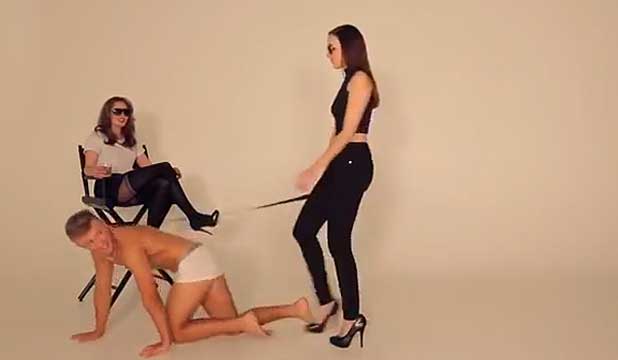
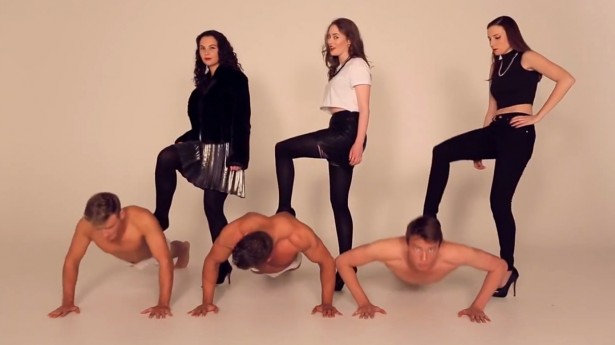
“Defined Lines,” created by a group of law students at the University of Auckland, was described by The Independent as “featur[ing] three fully dressed women responding to the attentions of scantily clad men as they sing about sexism.” After watching the video, it was evident to me that the women took issue with the lyrics in “Blurred Lines” (as new lyrics were provided) as well as with how the female body was objectified in the original (they substituted nearly naked men to make this point). Interestingly, the video offers conventionally attractive men in its effort to “objectify” them (perhaps to parallel the conventionally attractive women in “Blurred Lines”). Like so many contemporary depictions of female empowerment, though, “Defined Lines” reinforces visual codes of “acceptable” bodies in media messages. In so doing, it does not make an obvious statement about the ways in which the appearance of the women in “Blurred Lines” denotes standards of beauty that are so closely linked with the objectification of women.

Clearly, the parody’s creators wanted to “flip the script” by portraying a gender reversal of the “Blurred Lines” video. However, representations of men in (almost) the buff simply do not convey the same cultural meanings as women without clothing, as each gender’s socially, politically, and economically situated role is different. And, since beauty norms play such an important role in how women feel about their bodies and themselves, taking this issue on could have contributed to a larger conversation about the objectification of women and sexism. Instead, female “empowerment” is presented through lyrics that combat sexism in ways that pit women against men, as well as by showing women walking men on leashes or placing their stilettos on the men’s backs as the men do push-ups.

I applaud the creators of “Defined Lines” for taking “Blurred Lines” to task. Since I am writing this piece, perhaps both of these videos can be considered “art,” in that they have worked to generate conversation about media depictions of gender and messages of popular feminism. But, “objectifying” men does not help to unravel the knot between meanings of female beauty, objectification, and sexism in media messages.

leash               stilettos


I loved doing dot-to-dots as a child. There was something grand about linking all the tiny dots together to reveal a bigger picture. As an adult, I still love dot-to-dot, but now I attempt to link various “dots” into larger pictures that reveal cultural trends and ideologies.

This week, a number of “dots” sat scattered across my computer screen, in the form of various posts and podcasts, waiting for me to have time to more thoroughly connect them – the wonderful “Letter to Bella” post from Ms. Blog, Are Boys Natural Born Killers?, a podcast about war and gender, the “Born to Breed” interview with author Vyckie Garrison, news about JC Penney’s t-shirt “Too pretty to do homework, so my brother has to do it for me” t-shirt, and, as I am about to head off to Forks, Washington to speak at Stephenie Meyer Day, a number of Twilight related posts.

When the metaphorical dots between all these pieces are connected, the picture I am left with is one of a world that has definitely not gone “beyond pink and blue” (to borrow the title of another Girl with Pen column).

As Melissa Wardy points out in one “dot”, her post to the young Bella, “grown ups try to fit kids into little boxes that are labeled ‘Boy’ or ‘Girl’, and then they only let certain colors or ideas into each box.” As Wardy further points out, four year olds are sadly more likely to “know that girls can like or do anything boys can” than their grown up counterparts.

This claim was confirmed by heated comments in my War Literature class last evening. I had students listen to one of the dots coloring my desktop, the podcast Are Boys Natural Born Killers?, which includes Professor Joshua Goldstein, author of War and Gender, talking about the fact that boys are not “natural warriors” and that the only biological claim that seems to hold up this widely held cultural view is their propensity for more upper body strength. Though the entire podcast emphasized that gender is constructed and downplayed biological essentialism, the one comment made by Goldstein about upper body strength was latched onto. One student, for example, insisted men are built to fight whereas women are not. In this “Me Strong, You Weak” debate, I found myself thinking back to yet another dot, to the “Born to Breed” piece I had read earlier in the week.

In the piece, Vyckie Garrison, a former member of the Quiverfull movement, talks about the growing religious movement and its grounding in the belief that “the husband is the head of the household and the wife is the submissive ‘helpmeet.’” As Garrison documents, “A Quiverfull daughter is taught from a young age that her purpose in life is to serve the man whom God has placed in authority over her,” as well as to have as many children as possible. As such, “Her education is geared toward developing domestic skills–college is generally considered unnecessary and even dangerous for her spiritual well-being.”

And this brings me to Twilight, that oh-so-popular saga that has the heroine Bella (who shares no resemblance to the blue-shoe-wearing four year old feminist Bella above), giving up college to marry Edward and bear his vampire/human baby.

As I argued in my piece Wed, Bed and Bruised but Certainly Not Equal, the romanticization of sexual violence that texts like Twilight entail is part and parcel of the continuing inequality of our society. But, as lamented in “In Defense of Twilight,” this type of criticism is, like, a major bummer. The author writes: “Have you noticed Twilight gets attacked a lot? It gets attacked by men & feminists all the time & also by other fandoms. The latest thing I’ve heard is how Twilight romanticizes “domestic violence” & supports “inequality.” What a downer!” What a downer indeed. Far better to take the view enthusiastically supported by the author of the post that “It’s a love story and nothing more.”

Supportive of this enthusiastic love of love is the tendency to frame females and males as entirely opposite species, as in the post “Julia Jones Calls ‘Twilight’ Wolf Pack a Boys’ Club.” Author Brooke Tarnoff starts her gender essentialist piece with the following: “You might think you understand the plight of a woman in traditionally male-dominated fields — but none of them have anything on Julia Jones.” Suggesting that being an actress playing the lone female werewolf in an otherwise all male pack is far more heinous, say, than being the only female soldier in your regiment or than a lifetime of butting your head against the glass ceiling, Tarnoff’s piece not only brushes off male domination as something to joke about, but is also grounded in the “opposites attract” type of mentality that keeps heterosexism firmly in place.

The actress Jones, discussing her time working with the “ wolf boys club” notes “I kind of got to a place where I felt like I… know how to think like a guy,” which, Tarnoff suggests, entails learning “how gross they really are.” While admittedly this is a light piece joking about having to deal with “male talk” when one is the only female on the job, it nevertheless reflects a deeper issue – the still widely held belief that men and women naturally think, talk, and act differently – a belief that belies the social construction of gender and acts as if other markers of difference – race, class, sexuality, and so on, don’t matter.

This belief is echoed in the last weekly news story in my dot-to-dot puzzle – the JC Penny t-shirt that reads “Too pretty to do homework, so my brother has to do it for me.”

Like four-year-old Bella who is told blue shoes are not for her, like the Quiverfull movement that claims men are meant to lead and women to breed, like the male student that suggested women are weak, like the Twilight texts and the surrounding fan culture that tends to frame males as “wolfish boys” and females as selfless romantics, this t-shirt echoes our continuing entrenchment in the gender binary.

Strung together, all these dots show one big, ugly patriarchal picture.

Thankfully, some of the dots – for example, the stories about the feminist actions that resulted in the JC Penney shirt being pulled, muddle this patriarchal image, making it less stable.

Let’s hope we can keep connecting the dots in order to show how everything from the gendering of children to the upswing in religious fundamentalism is colored by the sexism of our culture. Further, let’s not forget how important it is to forge our own dots — our own points of connection — so as to create a new, more inclusive societal picture for the benefit of us all.


/* Style Definitions */
table.MsoNormalTable
{mso-style-name:”Table Normal”;
mso-tstyle-rowband-size:0;
mso-tstyle-colband-size:0;
mso-style-noshow:yes;
mso-style-priority:99;
mso-style-qformat:yes;
mso-style-parent:””;
mso-padding-alt:0in 5.4pt 0in 5.4pt;
mso-para-margin:0in;
mso-para-margin-bottom:.0001pt;
text-indent:.5in;
mso-pagination:widow-orphan;
font-size:11.0pt;
font-family:”Calibri”,”sans-serif”;
mso-ascii-font-family:Calibri;
mso-ascii-theme-font:minor-latin;
mso-fareast-font-family:”Times New Roman”;
mso-fareast-theme-font:minor-fareast;
mso-hansi-font-family:Calibri;
mso-hansi-theme-font:minor-latin;
mso-bidi-font-family:”Times New Roman”;
mso-bidi-theme-font:minor-bidi;}

I had the pleasure of spending last weekend in the presence of Isla, a four-year-old who LOVES Toy Story Two and LOVES Jessie even more. When the scene highlighting Jessie’s back story came on, she jumped off the couch and ran towards the television with a look of rapture on her face. Once the song finished and the main narrative resumed, she chanted “More Jessie, more Jessie!!!”

Sadly, if her parents bring home Toy Story 3 for her to enjoy (released on DVD November 2nd), she will find there is not more Jessie. Rather, the male toys are still front and center. Meanwhile, the female toys have gone missing (Bo), fallen in love with Ken (Barbie) or gone soft for Latino Buzz (Jessie).

Though Toy Story 3 opens on a female-empowerment high, with Mrs. Potato-Head displaying mad train-robbing skills and Jessie skillfully steering Bullseye in the ensuing chase, from there, the bottom drops out of the film’s female quotient. Out of seven new toy characters, only one is female – the purple octopus. This is far worse than the one female to every three males ratio documented in children’s media by The Geena Davis Institute on Gender and Media.

When I first viewed the 3rd film, I was almost giddy as Mrs. Potato-Head and Jessie chased a train in the opening scene. Alas, after this first scene, the movie went back to its male focus, throwing in rather sexist and homophobic banter along the way. For example, Mr. Potato Head says at one point “No one touches my wife, except for me!” while another character suggests she needs her mouth taken off. As for Ken, he is depicted as a closeted gay fashionista with a fondness for writing in sparkly purple ink. Played for adult in-jokes, Ken huffily insists “I am not a girl toy, I am not!” when an uber-masculine robot toy suggests as much during a heated poker match. In the typical way homophobia is paired with misogyny, the jokes about Ken suggest how funny and scary it is for a man to be either feminine or queer. Admittedly, Barbie ultimately rejects Ken and is instrumental in Woody and Co’s escape, but her hyper-feminine presentation coupled with Ken’s not-yet-out-of-the-toy-cupboard homophobia make this yet another family movie that perpetuates damaging gender and sexuality norms.

Though the film ends with young Bonnie as the happy new owner of the toys, Woody would have to become Wanda and Buzz become Betty in order for the series to break Pixar’s male-only protagonist tradition. Finally a female-helmed film is on the horizon though – Brave – too bad the protagonist is a princess (how original!) and Pixar recently fired the female director (it’s first ever).

This is not to say that Pixar’s films are not funny and clever. And I would agree that in many regards Pixar films are an improvement on Disney. But need we settle for “better than Disney”? Can’t we ask they also make films with female protagonists, with racial and class diversity, without homophobic jokes, and, ahem, with FEMALE DIRECTORS?

Some 43 years after Mowgli’s love interest in The Jungle Book sings of her future daughter, “I’ll send her to fetch the water, I’ll be cooking in the home” her metaphorical daughters populate not only Disney films, but also those of Dream Works and Pixar. Alas, not only do these animated daughters still accord to gender norms for the most part, so too do their creators – most animators, screenwriters, directors, and producers are still men, completing Mowgli type adventures in the Hollywood jungle, adventures that still place boys front and center while keeping their female counterparts as figurative water fetchers.

Brenda Chapman, the female director who seemingly broke away from the sticky Cinderella floor to slipper through the glass ceiling into what is reportedly the Pixar boys club was sadly turned back into a non-directing pumpkin– no fairy tale ending for her as the director heroine of Brave, a film she wrote and has been developing for several years. Instead, Mark Andrews has reportedly taken over director duties. The title of his Pixar Short, One Man Band, is a fitting way to describe what seems to have become Pixar’s one-note ode to male helmed and focused films.

While changes in directors are common in the film world, Chapman’s firing caused quite the stir as she was Pixar’s first woman director – all eleven previous films were directed by (and featured) men. Pixar is not unique in this regard: As Sharon Waxman & Jeff Sneider write, “The animation industry is not known as a warm and fuzzy place for women.”

And, it was only this year that a woman finally won Best Director at the Academy Awards, despite the fact women have been involved in filmmaking since its beginnings in 1896.

Tracy L., a former film development executive with 12 years experience in the industry, responded to Chapman’s dismissal as follows:

“The bigger issue here is not the firing but why Pixar has never had a female director to begin with. The bigger story to my way of thinking is the utter lack of female input behind the scenes and the lack of female protagonists on screen.”

In films, this lack of women behind the scenes seems to translate to a certain type of woman character on screen–one who is less heroic, adventuresome, independent and important than the male robots, toys, cars and humans that surround her.

With Disney figuratively cutting Rapunzel’s powerful locks by making Tangled more boy-focused, and now Pixar taking away Chapman’s directorial wand, what’s next–a film about a female warrior who suddenly becomes a gooey-eyed animal lover? Oh, that’s already been done (Pocahontas). How about taking a you-go-girl patriarchy-defier and stealing her voice? Oh, that one is taken too (Little Mermaid).Wait, I know: a movie about a matriarchal society filled with female power-players that have to be saved by a tremulous boy. (Oops, that’s Bug’s Life).

So, I want to add my virtual voice and echo four-year-old Isla “I want more Jessie!” Come on, Pixar, get with the Bigelow effect already: encourage more women directors and more female friendly story-lines! Really, now, let some women lead your (or at least play in) your one-man band, would you?

/* Style Definitions */
table.MsoNormalTable
{mso-style-name:”Table Normal”;
mso-tstyle-rowband-size:0;
mso-tstyle-colband-size:0;
mso-style-noshow:yes;
mso-style-priority:99;
mso-style-qformat:yes;
mso-style-parent:””;
mso-padding-alt:0in 5.4pt 0in 5.4pt;
mso-para-margin:0in;
mso-para-margin-bottom:.0001pt;
mso-pagination:widow-orphan;
font-size:10.0pt;
font-family:”Calibri”,”sans-serif”;}

My daughter turned eleven this week. Though I agree with Allison Kimmich’s earlier post, which argued that it’s great to be a girl here in 2010, I can’t help but worry that growing up female in our culture still results in growing down.

Some examples to ponder:

When my daughter and I went to the mall to have her ears pierced last Saturday, we were deluged with anorexic size mannequins in thongs and barely-there bras.

Later, at the movies, we watched yet another film with a male protagonist (which included a male sidekick who ogled females throughout the entire movie).

For school, she worked on yet another dead white male report.

On television, she is still inundated by stories that focus on a girls looks and emphasize romance and/or beauty as the most important pursuits for a girl.

In music, there are undoubtedly many power-house female musicians, but this seems dampened by all the singing of ‘ho’s’ and ‘get-lows.’

Yet, there are positive aspects to each of these observations. At the mall, my daughter noticed the sexualization of the mannequins and complained about it, showing her awareness that our culture objectifies women in damaging ways (and revealing what I like to think is more feminist awareness in the culture generally). As for the film we watched, it did include one rockin’ strong girl character – only one, but one is better than none. As for books, we are able to find many feminist-friendly reads to fill her endless reading desires (and she subscribes to New Moon, a great feminist magazine for girls). Television may be the area most difficult to put a positive spin on, but at least there are more girl-driven shows. As for school, in general I think there is more emphasis on a diversified curriculum, one that offers more than the hetero white male view of the world.

However, I wish we had come further since I turned eleven back in 1982. The Equal Rights Amendment failed to pass that year, and has yet to be ratified. Laura Ingalls was still rocking the prairie feminism in “”Little House on the Prairie,” and my mom watched a show driven by the super-heroines “Cagney and Lacey.” Sure, Daisy wasn’t wearing much in “Dukes of Hazzard” and Suzanne Sommers was the stereotypical blonde ditz “Three’s Company,” but at least we had the strong mom and daughter trio of “One Day at a Time.” In music, female power abounded via the likes of the GoGos, Joan Jett, and Stevie Nicks. And ET, the top grossing film of the year, gave us one of my longtime favorite female actresses, Drew Barrymore. It was the year Women’s History Week was officially recognized, which has happily expanded to an entire month. (Ah, would that we could have inclusive history year round!)

In my hazy recollections of being eleven in 1982, I recall feeling I could be or do anything I set my sites on. I think here, in 2010, my daughter feels the same despite the fact popular culture still inundates her with the message she is only a sex object, only good for how she can please men, only important so long as she “plays by the rules” and shrinks to fit the mold of the “ideal female.”

As her world expands to include more ideas and experiences, her body is still expected to shrink to fit ever smaller and tighter fashions. As she grows up, the “queen be” culture at school seems to become ever meaner and more judgmental. As she is able to watch “more grown up” television and films, she is introduced incessant sexualization, dehumanization, and silencing of females. And, as her body starts to show the markers of womanhood, she will undoubtedly become more battered by the male gaze of a culture that is more pornified than ever.

Alas, growing up for girls in our culture in many ways still means growing down – but with feminist moms like ourselves guiding our daughters as they grow, I take heart in the fact that many girls are given the opportunity to expand their thinking, their horizons (and yes, even their bodies) without exhortations to “be quiet and diet.”