gender studies

In 2013, I became the director of an unusual gender center. This is its story.

September 18, 2014

My Girl w/ Pen column is called “GenderLab” or watch what happens when you run one of the most unusual gender centers in the country. That sounds hyperbolic. I know because I can’t believe I’m living it. As we are about to finish year one today, I’ve come up for enough air to document this experiment. And this year I’m going to be writing about it.
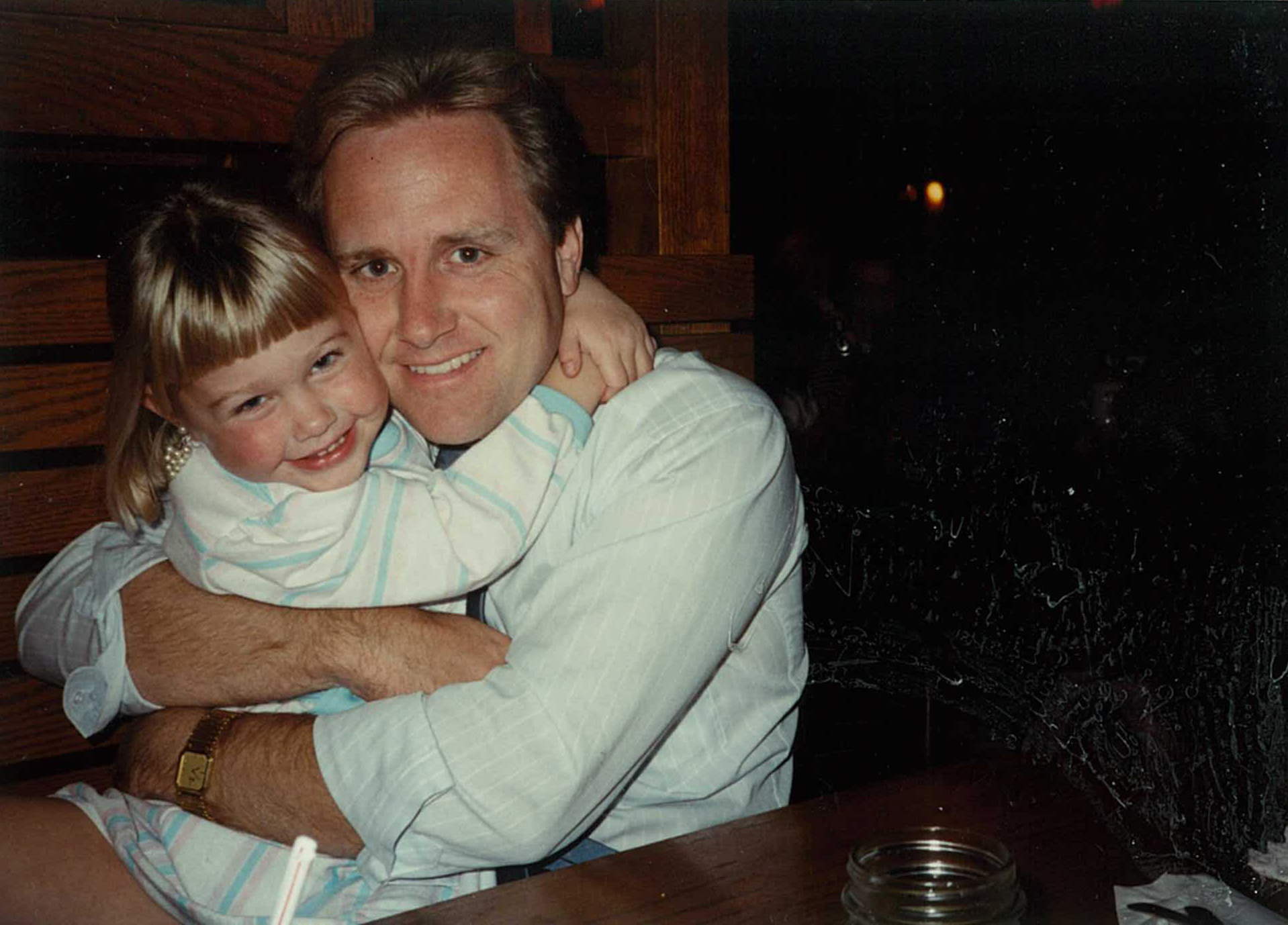
Kurt Voss & Daughter Cassandra

The heart of our center is a story of father/daughter love. You heard that right. Not an abstract story about rights and politics–though we know from Women’s Studies that those things are also personal. But ours starts with the personal. This is a story of love across difference. Of grief and transformation. Of a father who listened to his daughter and a daughter who stayed in dialogue with her father.

Cassandra Voss, for whom the center is named, was my student. She was effervescent. Let me give an example. When I first met her in 2004, I was two years into being an assistant professor. In class I was talking about the film Iron Jawed Angels, which is about Alice Paul and the suffragettes who secure the women’s vote in 1920. In the film, Alice Paul is played with pluck and determination by Hilary Swank; she wears her hair in long braids on occasion. After class, a young woman, Cassadra Voss, ran up to me and said, “Look, I wear my hair like Alice Paul. Ever since I saw the film, I love to wear my hair in braids like her.” I thought who is this luminous, geeky creature in front of me who does feminist cosplay? I loved her from the start.

Cassandra set out to be the first-ever major in Women’s and Gender Studies at our school. We started a minor in 2005 (notably late in higher ed), but she wouldn’t settle for that. She was also determined to put on the first production of the Vagina Monologues. And she insisted on hiring the first man in the Women’s Center. So she wasn’t so different from Alice Paul afterall. The thing that’s harder to capture about her is that she was one of the most hopeful, ebullient people I’ve met in my life. And that combination of bravery and delight was intoxicating. She was the kind of student who always bounded into my office and plopped on my couch. There was nothing small or half-hearted about her.

You see I’ve been in Women’s Studies a long time. Since I was 19–the same age Cassandra was when she first took Introduction to Women’s Studies. At her age, I was equally passionate about gender and social justice, but I was not nearly as loving. Early I had to manage so much anger about deep inequality and oppression; I didn’t know what to do with it. Cassandra managed to keep believing in people and “their better angels” which often made me feel a bit sheepish in her presence. She recentered my politics in love. And one of the ways she did that was how she talked about her dad.

Cassandra Voss, St. Norbert College

I’ll never forget when Cassandra said to me, “My dad is coming to hear our panel on The Women’s Room and he’s conservative and I want you to meet him.” I had taken Cassandra and a handful of students to present their work on that interesting, rarely taught early classic, The Women’s Room by Marilyn French. Now they were presenting it again at our undergraduate research day. I walked in the room and spotted him immediately. He had the starchiest shirt in the room. On a campus that is uber midwest-casual, Kurt Voss was pressed and tucked. And like his daughter, game for anything. Which is why the Fox-news watching, deeply religious CEO was in the front row taking notes about second-wave feminism. Some of Cassandra’s friends snickered at his questions which were uninformed, understandably, and real. Real questions, ones they needed to answer to not cocoon themselves in their private ideologies. That day in the spring of 2006, I had no idea that a little over a year later, Kurt and I would begin a friendship after Cassandra’s death that would last six years.

Cassandra died unexpectedly in 2007.  Sometimes I still dream about her. Only now when I wake up, I go to work and see her face every day in the building her father built for her. Some days I talk to her. Some days, I stare at the floor because I can’t look at her face. It’s just too much. I make my coffee and get to work. But there are moments, like her birthday coming up where I remember one of the three life-long goals she wrote on her then “Myspace” page in 2007: my goal is to make my dad a hard-core feminist.

She got her wish.

Stay tuned for how that dad built a multi-million dollar gender center.

Follow us at: www.snc.edu/cvc    Facebook: https://www.facebook.com/snc.cvc

Cassandra Voss Center St. Norbert College, De Pere, Wisconsin
Cassandra Voss Center,  St. Norbert College, De Pere, Wisconsin

GB_Box_BT002_v1_r1

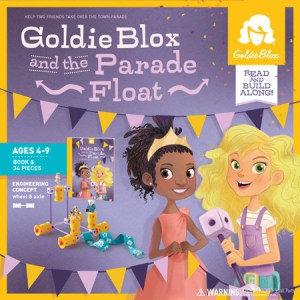
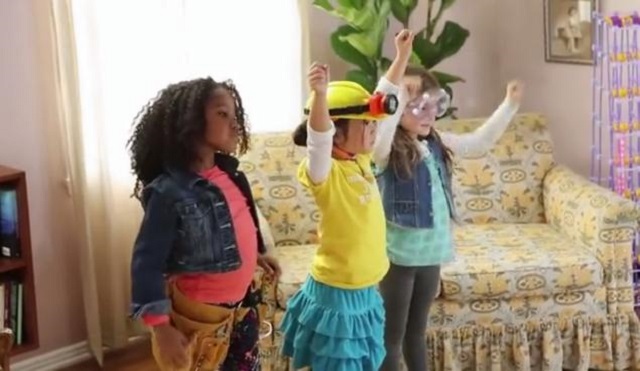
If you care about smart toys or if you don’t live under a media rock, then by now you’ve heard about GoldieBlox, the girls engineering toy. Maybe you read about it here at Girl w/Pen. Maybe you saw the viral video about the toy that parodied the Beastie Boys song, “Girls.” In the video, three girls set off a Rube Goldberg machine and aim to take over the world. The only problem was that the Beastie Boys said thank you by suing GoldieBlox. Then the toy got critiqued left and right—too pink, too princessy, too wrong for “stealing” a Beastie Boys song. Well now, no matter how you felt about the toy, you likely saw their new ad while inhaling nachos during the Super Bowl. GoldieBlox won Intuit’s small business Super Bowl commercial competition which means they essentially won 4 million dollars, the amount equivalent to make and then screen a commercial during the Super Bowl.

And that means that GoldieBlox really just became a household name.

This commercial puts GoldieBlox, a small start-up toy company that wants to, as they say, “disrupt the pink aisle,” at your local toy store, back on top. And to make matters even better, days ago GoldieBlox’s “Spinning Machine” won the People’s Choice and Educational Toy award of the year at the 14th annual Toy Industry Association (TIA) Awards. Debbie Sterling, GoldieBlox CEO, invented one of the first engineering toys for girls. She shares her challenges in her TEDX talk: her path as a female minority in a Stanford engineering program, a woman inventor in the big business androcentric toy industry, and as a female entrepreneur in booming Silicon Valley. Sterling’s vision as an entrepreneur, and the ideological work of the toy, are the reasons we wanted her to help us open a new gender center, the Cassandra Voss Center, on our campus. So this Fall, we became the “Midwest launch” of GoldieBlox.

What did that mean? Debbie Sterling and VP, Lindsey Shepard, spoke on our campus and taught us how to engage hundreds of kids with GoldieBlox when we created a toy zone in our Center. St. Norbert College was also among the first colleges to include the toy in their curriculum. As Assistant Professor of Education, Chris Meidl, said when he introduced the toy in his class on “Play,” “No matter any other criticisms about the toy itself, the clear message delivered is that girls can build too. And that is a message worth being heard, for girls and boys, for women and most importantly for men.”

So I’m loyal-it’s true. I know the founders personally and heard them speak passionately about their dream of the toy and for girls globally. The toy, though, has come under a lot of critique. When Slate’s holiday gift guide tagline read “Forget GoldieBlox. Buy a Birdfeeder Instead,” I wanted to throw a birdfeeder at my computer screen. The holiday season is, of course, the biggest commercial moment in the toy company year. Slate just kept going with, “First Everyone Loved GoldieBlox. Now Everyone Hates GoldieBlox.” Hate is a strong word and I guess Slate figured that out since at this writing, they removed the above title and have given GoldieBlox a second look under the article, “GoldieBlox: Great for Girls? Terrible for Girls? Or Just Selling Toys?” Well good for you Slate for modifying your backlash after the fact. Sigh. Then when Jezebel recently wrote, “GoldieBlox Means Well But Doesn’t Live Up to the Hype,” I had to weigh in.

I’ve been in Women’s and Gender Studies since I was 19 years old. On the one hand, I welcome and get the onslaught of feminist critique of GoldieBlox that is now coming to a blog near you. On the other hand, I am no ideological purist and I wonder the degree to which critics grasp what it takes to break gender barriers in all these fields—STEM, toy industry, start-up/Silicon Valley culture—and make a toy that has mass appeal. I repeat—mass appeal.

My supportive response really comes from watching the toy work on the ground. I saw hundreds of girls play with GoldieBlox for an entire day. I watched as girl after girl mastered a “basic belt drive,” the first engineering challenge of the game and saw how they interacted with the “bill of materials” that is designed to be especially welcoming to girls—girls who rarely play with construction toys. Debbie made the wheels look like thread spools, the axles resemble crayons, and the belt mimic a thick hair ribbon. A hair ribbon is stereotypically feminine, but it’s likely a girl has seen one, unlike other construction toy parts that can appear off limits in gender-segregated toy aisles. Debbie conducted research for her start-up toy and discovered that girls would frequently turn her prototypes into non-competitive games. In other words, girls needed all the adorable animal characters to spin on the spinning machine or ride the float. Everyone needed to win. So Debbie redesigned the game.

Now as a gender critic, I know that girls are socialized into these sensibilities rather than born into them, but that fact does not make their gender socialization any less real. When my three year old picked up the toy, she gravitated first to the character animals just as GoldieBlox VP Lindsey Shepard had predicted. “The character animals are the way for girls to feel invited into engineering,” said Lindsey who urged us to reach out a hand with, say, Katinka the dolphin, and welcome a girl into play. The GoldieBlox mission is to make engineering as appealing a job for a girl as the pink-collar work that so many girls are still ushered into. Debbie’s basic gender critique in her Kickstarter video asserts a claim in Gender Studies about inequity and representation—engineering is still 89% male, women make up half the population, women and girls need to be building for a better, more inclusive future. Few toys offer such a gender critique which is why GoldieBlox had an initial feminist appeal.

Critics say about the toy: it has pink on it. And the second game is called “GoldieBlox and the Parade Float” where girls partake in dreaded “princess culture” and help build a parade float. It’s all true. The toy has pink on it, but is mostly yellow. Debbie talked about how using some pink was intentional. She aimed for girls to “want to pick the toy up,” in the first place. Debbie said recently to the New York Times, “It’s OK to be a princess. We just think girls can build their own castles too.” The deeper story of the princess float—and I loathe princess culture…I avoid saying the word out loud in my house—is that Goldie’s best friend, Ruby, who is African-American, is actually the winner of the pageant. This fact prizes afro-centric beauty in a racist culture that makes beauty synonymous with whiteness. Now it is certainly more troubling that Ruby is the best friend of Goldie and not Goldie herself. Goldie of the Blox is a white protagonist, a central critique that is rarely mentioned in the feminist response. Though I wonder if Goldie is “Golda,” an homage to Debbie’s Jewish foremothers. The Jewish cultural allowance for smart girls is something Debbie mentions in her TEDX talk. On the ground, watching girls play with the toy, they actually play with the animals in the set which are not necessarily racialized. The question remains: can a toy ever be designed (add books, movies, etc.) with a girl of color at the center? Girls and women are barely represented authentically in mass culture at all, let alone women of color. We know something will have shifted with a girl-of-color is at the center of a story.

So the answers to the GoldieBlox critiques are a bit more complicated. I appreciate critic Deborah Siegel’s more balanced provocatively titled piece, “Is GoldieBlox Trojan Princess, or Trojan Feminism?” I think it’s both. Which brings me back to my point about ideological purity. Why do we keep asking this binary question of “is it or isn’t it” feminist? Let’s step back and take the long view. The truth is I want GoldieBlox to have the same appeal as Bob the Builder or Lego dudes because girls still get nada in girl toy world. Like I teach my students—you can hold conflicting ideas simultaneously and still make a commitment. GoldieBlox is listening. Let’s commit to help them navigate the hyper-stereotyped toy world many of us are resisting by giving them some advice as The Brave Girls Alliance is doing with Lego when asking them to make smart girl Minifigs. I appreciate that GoldieBlox is trying to meet girls where they are. We can find the common ground between these worlds intellectually and maybe we can even find it around play. And even if we can’t, GoldieBlox is about to change play nationally regardless.Goldieblox_Commercial-1

Christine Gallagher Kearney is a Public Voices Fellow with The OpEd Project and President of DePaul University’s Women’s Network and the Business Manager for the Office of Public Relations and Communications.

I’ve been thinking a lot about what it means to be a woman leader in the 21st century in the context of the 50th anniversary of The Feminine Mystique as two women leaders left the spotlight during these past few weeks while a third prepares to instruct others to Lean In.

Within days of each other Pauline Phillips, the Dear Abby columnist, passed away in Minneapolis at age 94, Hillary Clinton prepared to step down as Secretary of State, and Sheryl Sandberg moved onto the public stage ahead of the release of her new book, Lean In: Women, Work and the Will to Lead. On the surface, these three women have little in common, one the doyenne of advice, another the doyenne of diplomacy, the third a corporate female success story. But all three negotiate their femininity as prominent women leaders to varying effect.

Phillips and Clinton held, and still hold, a unique place as leaders in American culture. They are both role models to women across the country and both women played the femininity game, leaning in and out of stereotypical feminine traits to get the job done. Phillips was trusted with intimate details of American lives. She trucked in the personal, but she also acknowledged the political. Clinton demonstrated a full spectrum of strengths during her tenure as Secretary of State, most recently at the Benghazi defense hearing, where she showcased her power, knowledge and authority in addition to her compassion and sensitivity.

As a society, we still expect women to abide by classical feminine traits and some women leaders are accepted as more feminine than others. There are those—Michele Obama, Sarah Palin—who are acceptably feminine; there are those—Margaret Thatcher, Supreme Court Justice Sonia Sotomayor—who are not. This isn’t new, and some women are making gains in the workplace, regardless. more...

This fall I had the great privilege of designing and teaching the first Sociology of Gender class to be offered at the City College of New York.  My goal of the class was for the students to leave able to apply a nuanced gender lens to whatever social problem tickled their fancy. One night reading their weekly reflexive journals, I witnessed that “click” moment when the students start to engage with the class material in very exciting ways.  More importantly, I realized I had stumbled upon the next generation of gender justice thinkers.  They were asking questions and making connections that I knew the movement needed to hear.  How could I NOT invite them to blog here at Girl w/ Pen, a space that has long supported the next generation of feminists?  So without further ado, here are some of my star students, chatting about a few of the key debates we had in class this semester. Enjoy!

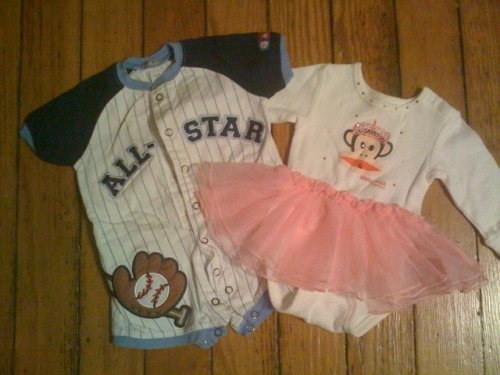
Throughout the semester, we debated whether the goal of a movement for greater gender justice should be the expansion of gender or the explosion of gender.  In other words, is your utopian vision a world with a multiplicity of genders or a genderless world?  Where did you end up in this debate?

Alex Constantin: Although I understand some (utopian) reason behind the call for exploding gender to reach a genderless, liberated world, my personal sense of justice lends towards the expansion of gender. There are still far too many oppressive gender rules for me not advocate for expanding gender. We have an entire outdated archive on the male and female dichotomy that calls for an urgent expansion above and beyond the binary.

Gloria Robles: I personally believe that the goal of a movement for greater gender justice should be on the expansion of gender – not the explosion, or elimination. To draw a comparison of gender to race, it’s important to recognize that there are differences and to not promote “color-blindness.” We are all unique and have many nuances to who we are and that should not be disregarded but celebrated.

Sandra Prieto: I can’t really relate to a genderless world. A genderless world would only allow some other category to restructure how we relate to each other, like sports team affiliations or preferred ice cream flavor. Maybe I’ve read too many Orwell novels, but the only genderless world I can imagine is where we all have to mask our faces and bodies. Sure, it might create greater equal opportunities, but might it also strip away one way we express ourselves? That is why I find the expansion of gender more appealing. With the introduction of more genders, we would no longer be able to assign masculinity to just males and femininity to just females. Instead of expecting everyone to fit into one of two ideal categories, we would be creating more flexible gender norms.

Shari Mohammed: For me, this is a both/and question. To successfully move towards greater justice, we need to expand gender, which will eventually entail the explosion of gender. Not that this will result in a genderless world, just an exploded understanding of what is gender. We need to recreate how we think of, react to, and how we express gender. My utopian world would be everyone expressing their gender however they wish without fear of social sanctions.  The first step, in my opinion, is eradicating the sexism inherent in our current binary system and then working toward an expanded sense of acceptance.

Dairanys Grullon-Virgil: We need an explosion of gender. Today people more than ever are becoming more comfortable and proud of who they are. The problem is that we still judge individuals based on socially constructed ideologies of gender. I think that the conversation about having greater gender justice should revolve around acknowledging the multiplicity of gender identities, instead of imposing gender identities to individuals.

Erin Crowder: It is difficult for me to pick a side in this debate.  Expanding what is considered normal sounds utopian at first, but then I think about how much I despise the word “normal.”  It is quite clear that norms are always regulating and oppressive, so why simply create more?  On the other hand, however, I feel a genderless world is problematic too.  I believe there is an internal force creating gender that creates our identity.  Personally, my gender is central to my identity, although, I do not know if this is a good thing.  What I do know is that in a genderless world I would lose this part of my identity.  Lacking this identity could be detrimental, but it could also be a source of liberation.   I find myself somersaulting between the two sides in this debate.

Kenya Bushell: I feel that we should live in a genderless world. The world shouldn’t have expectations of anyone for any reason, especially regarding genetics. It shouldn’t matter that a person was born a male or a female. They had no control of this outcome and therefore should not be controlled by it. As we continue to conflate gender and sex, a genderless world is the only way I see out of this conundrum.

One of your first assignments was to go out in public and do your gender differently in a way that challenged current gender norms.  What gender norm did you choose to break and what was the experience like for you? more...

Last year, I read about a case of a nurse who alleged being sexually harassed by a doctor during her job interview, and a couple of months later I was struck by a report from the Netherlands about the high rate of sexual harassment experienced by female nursing and healthcare workers. Although cases like these make it seem like doctors and managers are the primary perpetrators of sexual harassment, reports show that it is patients who sexually harass nurses most often.

With a recent study suggesting that nurses simply distance themselves from patients who are sexually inappropriate, how do nurses maintain quality health care of these patients? A new book, Catheters, Slurs, and Pick-up Lines: Professional Intimacy in Hospital Nursing (Temple University Press) sheds light on female nurses’ experiences of being sexually harassed by patients.  For this month’s column, I had the chance to ask the author, sociologist Lisa Ruchti, Ph.D. of West Chester University, about nurses experiences of “intimate conflicts” with patients.

Adina Nack: Why did you decide to study the dynamics of patient-nurse interactions?

Lisa Ruchti: I initially thought that nurses’ experiences of sexual harassment by patients would be similar to waitresses’ experiences of sexual harassment by customers because they are each one type of women’s work. Instead, I found that nurses did not refer to their encounters as ‘sexual harassment’ because work culture affects definitions of sexual harassment (other sociologists have found this too; for example, Christine Williams and Kirstin Dellinger).  In nursing, it was the fact that nurses provided both professional and intimate care that contributed to differences in how and when nurses said they were sexually harassed. I became intrigued with the function of intimacy in professional care work and wanted to learn more.

AN: I’m intrigued by the concept of “professional intimacy” – how is this experienced by nurses?

LR: In my work, I found that nurses negotiated a cycle of what I call “professional intimacy” with patients. I also found that negotiating intimate conflict with patients is inextricably a part of how nurses gain their trust. Nurses start with gaining the intimate trust of their patients. This trust sometimes escalates to patients having feelings of familiarity for their nurses, which leads to conflict for the nurse. These conflicts include patients feeling entitled to service beyond the scope of care in nursing, angry verbal interactions, and/or sexualized entitlement. This conflict can also be unavoidable such as the ways that nurses negotiated the sexual encounters between patients and their visitors. Nurses negotiate care through this conflict to renew trust to ensure that quality health care is administered.

AN: How do nurses experience conflict when providing care to patients?

LR: The majority of the 45 nurses I interviewed avoided describing patient care as involving conflict. They used words like nurture, kindness, and compassion to make it seem like nurses “being caring” was a natural personality characteristic characterized by goodness. Feminist philosopher Eva Kittay discusses this in her work: patients are not usually described as anything other than “needy,” and we don’t tend to think of needy people as causing conflicts for those who provide their care. My focus on identifying conflict is as much about seeing patients clearly as it is about seeing the work of nurses clearly.

AN: You make a key point about not only a nurse’s sex but also her race/ethnicity shaping her experiences of patients’ harassment – can you give a couple of examples of how nurses described these interactions?

LR: It is one thing for nurses to manage sexually explicit language or touches; it is quite another when those are combined with racial slurs and epithets.  Imagine that a nurse not only walks in to check on a patient and sees himmasturbating, but she is also called a “dirty foreigner.” Or, a nurses isgiving a patient a bath, and the patient says you remind him of his mammy. It was incredibly important for me to look at the function of multiple identities since I was looking at intimate care as something that is constructed in interaction between patients and nurses and informed by social ideologies. Intersectionality is an incredibly useful tool when explaining complex social experiences.

AN: As a medical sociologist, I was instantly hooked by your book’s title, but I can also see why many of us — not just nurses — should read your book. 

LR: Thanks, I wrote it not just to give voice to nurses but also because almost all of us have all been patients or visited loved ones in hospitals. Many of us have or will have long medical journeys at some point in our lives, and this book can help us understand a vital part of that journey. If we can better understand the lives of those who are taking care of us, then we can help ensure that quality care occurs when we need it.  Other studies have documented how much nurses care about patients, and it’s time for us to listen to their stories – we need to understand their experiences of caring for us.

2011 brought us two top-selling autobiographical takes on female aging. Jane Fonda’s Prime Time asks readers to explore everything from friendship to fitness to sex, with a goal of having us accept that “people in their 70s can be sexually attractive and sexually active.”  Betty White’s If you Ask Me (And Of Course You Won’t) offers readers a candid and often humorous take on the last 15 years of her life. White warns of the pitfall of our youth-centric culture: “So many of us start dreading age when we’re in high school. And I think that’s really a waste of a lovely life.”  While these celebrity authors paint provocative personal portraits of aging, I’m drawn to the new book by Colgate sociologist Meika Loe, Ph.D.: Aging Our Way: Lessons for Living from 85 and Beyond (Oxford University Press) charts her three-year journey following the lives of 30 diverse “elders” (women and men ages 85 to 102 years old), most of whom were aging at home and making it work.

Aging Our Way: Lessons for Living from 85 and Beyond

Adina Nack: How did your last book on the Viagra phenomenon lead you to your new book on the ‘oldest old’?

Meika Loe: For The Rise of Viagra I interviewed elder men and elder women partners of Viagra users. It became clear that ageism impacted their lives and was a key ideology that propelled the Viagra phenomenon forward. Afterwards, I missed those interactions with elders and wanted to know more about their experiences aging at home. Aging Our Way ended up being a book that focuses more on elder women’s experiences, voices that had been marginalized, if not completely absent, from the media coverage of the Viagra phenomenon.  In the 85+ age group, women outnumber men by almost 3 to 1, and close to 80% of elders living at home alone are women. Too many people assume that research on elders is sad and depressing, in comparison to research on Viagra. To the contrary! I find elders’ stories inspirational. Aging Our Way features the lessons I learned from them – lessons for all ages.

AN: Aside from the Viagra interviews, what inspired you to focus on this group of people who are all more than twice your age?

ML: I was extremely close with my grandparents and great-grandparents growing up. More recently, I rent a room from a village elder in the small town where I work. Living with her, an invisible world opened up to me – a world of widows caring for one another and collectively attending to quality of life, mostly in the absence of biological kin.  Like, Carol, my seventy-something landlady, who gets a check-in call from octogenarian Joanne every morning at 8 a.m. Then Carol calls 98-year-old Ruth. All of these widows have lived alone in their homes within 10 square blocks of each other for decades, and now they constitute a social family. Once in a great while, when Carol cannot reach Ruth, she’ll grab the extra key and head to her home to make sure everything is okay. One time she found Ruth on the floor.

AN: That must have been scary – so, even with this type of ‘morning phone tree’, isn’t isolation a problem for these women and men aging alone?

ML: Yes, like most of us, elders attempt that delicate balancing act between dependence and independence every day. So, while many of these elders value independent-living, they’re also adept at building social networks. Ruth H. is committed to making a new friend every year of her life: she reaches out to my campus’s Adopt-a-Grandparent group and has five student walking partners this year, all new friends. That said, aging alone comes with its share of isolation and risk, and I’m reminded of Elizabeth, a Navy veteran and high school English teacher who insisted on living alone in her home, amidst her longtime friends and neighbors, despite her children’s pleas for her to move to Georgia. Elizabeth recently passed away during Hurricane Irene. She was inspecting her basement for flooding and must have fallen. This is such a sad story, but Elizabeth would not have wanted it any other way: she said she wanted to die with her boots on.

AN: Do women have an advantage over men when it comes to longevity and aging?

ML: Social epidemiologists Lorber and Moore have shown that women live longer but not necessarily healthier lives. Traditional gender roles take their toll: often, women prioritize caring for others for so long that their own health suffers.  Perhaps as a result, women have higher rates of chronic illness and depression. At the same time, many of the women I followed are enjoying a chapter in their lives where they can focus on themselves, their communities, their gardens, and their own health. Shana, 95, says things like “Now I am finally living for myself. Now I can focus on me.” Most women have lifelong gendered skill-sets for self-care: systems for food preparation, cleaning, bathing, budgeting, and reaching out to others. The men I followed are less adept at those skills: they had never been expected to cook and clean. So men, like Glenn, told me about having to learn these skills after the loss of their spouses.

AN: Does caretaking of others really end at age 85?

ML: Caretaking continues, often in new and familiar ways.  I think of Olga, age 97, caring for her grandson every weekend and putting aside a few dollars every day for her daughter who is battling cancer.  In her subsidized senior housing community, she delivers hot meals, hems pants, and runs errands. By caretaking, Olga feels a sense of community, a web of support. When she needs assistance, she has options and knows where to turn. So contrary to expecting nonagenarians to be sickly and dependent, many not only receive but also give care.

AN: Talk of cutting Social Security and Medicare has been in the news – how did you see these programs impacting elders’ lives?

ML: I have to admit – in my 30s, I see money going out of my paycheck—and I remind myself that that money is put aside for when I need it – I just hope it will be there! Through this research I saw how and why programs like Medicare and Social Security matter. For example, Juana worked in factories her whole adult life, and her small Social Security check keeps her hovering above the poverty line, able to afford rice and beans for the family and to pay for cable TV so she can watch her beloved Yankees.  Medicare covers annual doctor’s visits that likely keep her from spending time in the emergency room, a more expensive cost for society. Like most elders, she depends on Social Security for a significant portion of her income.

AN: Why should we all – not just the elders in the U.S. – read your book?

ML: Undergrads come to my Sociology of Aging course with all sorts of preconceived notions. They dread aging, seeing it as synonymous with depression, disease, and death. Our ageist society has taught them that aging equals loss, and they’re surprised to learn about elders who are aging on their own terms: coordinating self-care, combating isolation and loneliness, and exercising autonomy and control – sometimes in the face of disabilities and chronic illnesses. We all benefit from learning creativity, connectivity and resiliency from our elders. They teach us crucial lessons about all stages in life: living in moderation, designing comfortable spaces, constructing social families, appreciating humor and touch, and building social capital.  And, let’s face it, if we’re lucky, then we will all be elders soon enough.

Ask me five years ago and I’d have told you I’d be first in line to challenge gender stereotypes if ever I had kids myself.  I minored in feminist cultural studies!  I believe boys and girls are made, not just born!  But sixteen months into parenting my boy/girl twins, I’m starting to wonder how I’ll ever ensure that my boy grows up sensitive and my girl stays, as one of my favorite organizations has trained me to say, strong, brave, and bold.

It’s an unfortunate moment for complacency.  Children are boxed into hyper-gendered categories at ages younger than ever before.  Just last month, Disney infiltrated the delivery room.  New research shows that girls as young as three are internalizing the thin ideal.  As blogger Pigtail Pals reports, a study by Dr. Jennifer Harriger, published in 2010 finds that preschoolers are attributing stereotypes to others because of their weight.  The news is distressing.  Gender-aware parents can cleanse our daughters’ bedrooms of pale pink and defend a love for Tinkerbelle in our sons, yet the clutch of our pink-vs.-blue culture seems only to tighten its hold.  Why, we’re all asking, is this so?

There’s ample proof that since the utopian hope of “Free to Be You and Me” in the 1970s, as a culture we’ve slid backwards. As Peggy Orenstein documents so thoroughly and well in Cinderella Ate My Daughter: Dispatches from the Frontlines of the New Girlie Girl Culture (reviewed here this week by Elline!), things are far worse than they were when we grew up.  The hyper-marketing of gendered purchases target kids at an increasingly vulnerable age, and it’s enough to make any parent tired.

We can blame Disney and we can fight the princesses, but perhaps two additional reasons that a generation of parents raised on feminism feels like we’re losing the war is that 1) we’re confused and 2) we’re alone.

We’re confused by “science.” Fighting gender-based discrimination has morphed into dealing with science, which carries boldfaced authority—and many feminist scientists themselves are now fighting this fight too.  Sometimes I wonder about the effects.  Have Gen X parents grown convinced of children’s innate gender sensibilities?  Decades of media stories hawking the latest in neuroscience have emphasized the nature side of the nurture debate that second-wave feminism famously upstaged.  Have the things we’ve heard about gender affected a new generation’s parenting behavior?  “The more we parents hear about hard-wiring and biological programming, the less we bother tempering our pink or blue fantasies, and start attributing every skill or deficit to innate sex differences,” suggests neuroscientist Lise Eliot in her book Pink Brain, Blue Brain, (which argues, by the way, that social expectations—not biological differences—have the upper hand in shaping who our children become.)  Sensational, whiplash-inducing headlines tell us gender is inborn—no, wait, made—no, born.  Unless you’re steeped in this research, it’s often hard to know what’s what anymore.

But our biggest problem, I fear, is that when it comes to resisting the hyper-genderfication of childhood, we’re largely fighting it alone.

Over the past sixteen months, as my babies have progressed from a crawl to a walk and now to words, it’s slowly dawned on me how much the premise of my previous book, Sisterhood, Interrupted: From Radical Women to Grrls Gone Wild, applies to my new situation: As parents, and especially as new parents, we don’t always feel plugged into a movement to change the larger culture in which we raise our kids.  Instead, we’re left to focus on ourselves—in this case, our familial microcosms—on our own.

To be sure, there’s a burgeoning movement out there. I’m a huge fan of initiatives like SPARK and the Geena Davis Institute and efforts to redefine girly like Pigtail Pals and of course the longstanding work of Girls Inc.  I voraciously consume every new book by educators like Lyn Mikel Brown to learn what we can do to resist (See Packaging Girlhood, Packaging Boyhood, and also the resource page at the wonderful Peggy Orenstein’s site.) But these initiatives aren’t as mainstreamed as they might be.  I can control my growing babies’ media consumption and control what comes in the house, but control only goes so far.  I fear that as a new mother, I’m long on feminist parenting ideals, short on ways to make them stick in the world outside my home.

I hear that change feels more possible once your kids hit kindergarten.  My friends there tell me that they feel successful in their attempts to provide a larger context in which it’s natural for their girl to love Star Wars and their boy to take ballet.  They feel effective.  They feel their actions span far.

In the meantime, we mothers of babes continue our preparations for the good fight by lining our children’s bookshelves with The Sissy Duckling and No I Will NOT Wear a Dress and painting our nurseries sage.  But short of a massive and visible movement—you know, like the political ones we see right now on tv—sometimes I worry.  Are we all just focusing on the equivalent of wardrobes and walls?

What do YOU think?  Do you see a new generation of parents taking on the battle against the hyper-genderfication of childhood in spades?  Is there a movement?  Or are we all basically out here on our own?  If you have strong thoughts on this either way, for a writing/blogging/thinking project I’m working on (The Pink and Blue Diaries), I’d love to hear from you.  Please email me at deborah@shewrites.com

I have said it before about sexually transmitted diseases and HPV vaccines, and now I will say it again about brain trauma and football — men’s health is a feminist issue

Back in 2007, a NYT article covered “Wives United by Husbands’ Post-N.F.L. Trauma” whose activism motivated the NFL creating the “88 Plan” to provide dementia benefits.  Then, in 2008, a LA Times op-ed proclaimed, “The NFL’s in denial about depression.”  This week, the NYT article “A Suicide, a Last Request, a Family’s Questions” added yet another tragedy to the growing number of media stories about the physically and psychologically devastating consequences for NFL players. 

As I read it, I found myself flashing back to when I was an undergrad and first read sociologist Michael Messner‘s academic article, “When bodies are weapons: Masculinity and violence in Sport.” What does it mean for boys and men — and for all of us — when   not only normalize but also reward boys and men for using their bodies as weapons?

Check out the abstract (bold font added for emphasis):

This paper utilizes a feminist theoretical framework to explore the contemporary social meanings of sports violence. Two levels of meaning are explored: first, the broad, socio-cultural and ideological meanings of sports violence as mediated spectacle; second, the meanings which male athletes themselves construct. On the social/ideological level, the analysis draws on an emergent critical/feminist literature which theoretically and historically situates sports violence as a practice which helps to construct hegemonic masculinity. And drawing on my own in-depth interviews with male former athletes, a feminist theory of gender identity is utilized to examine the meanings which athletes themselves construct around their own participation in violent sports. Finally, the links between these two levels of analysis are tentatively explored: how does the athlete’s construction of meaning surrounding his participation in violent sports connect with the larger social construction of masculinities and men’s power relations with women?

Mainstream U.S. society continues to validate a very narrow construction of socially acceptable masculinity.  When I teach the Sexuality and Society course at CLU, I ask my undergrad students to tell me the traits of an “ideal” man.  Each time, a new group of students generate basically the same list which includes being heterosexual, tall, muscular/physically strong, and a “protector.”  With this clear and consistent construction of masculine bodies, it’s not a surprise that the NFL continues to attract players who are willing to sacrifice their health and fans who enjoy the spectacle. 

The lure of the N.F.L. — the glory of hyper-masculinity — masks the still unmeasurable damage that these players (and their families) endure.  Their sacrifices allow ‘armchair athletes’ to vicariously revel in battles on the gridiron.  These warriors, ill-protected by sports gear masquerading as armor, are paying steep prices for embodying unrealistic and unhealthy ideals of what it means to be a man in the U.S.  

As research studies work to document the ways in which this sport consistently results in life-changing injuries (and sometimes life-ending conditions), we owe it to boys and men to challenge the status quo.  But, how can we hope to do this if, as one political science blogger suggested, “Americans have begun to construe access to football spectating as a social right“?

I often write here about the girl in my life, my daughter, Maya.

Today I want to focus on girls nationally. The National Women’s Studies Association convened several girl-serving organizations at its 2010 conference, and learned, among other things, that the organizations wanted to broaden the audience for disseminating research and information about their programs.

To that end, NWSA created a research roundup. Some highlights:

  • 90% of Girls For A Change participants know they can create change in their communities, they can and will use those skills to create change in their own lives
  • The Girl Scout Leadership Experience curriculum is designed so that girls learn to advocate for themselves and others, locally and globally
  • Hardy Girls Healthy Women offers a strength-based approach to working with girls and is grounded in a review and critique of resilience literature for its over-emphasis on the individual and lack of attention to relationships and environments
  • Smart-Girl is a program that works with 8th grade girls in Denver, Colorado; a program evaluation shows that participants had increases in science grades and overall GPA

Even this brief overview points to some effective strategies for serving girls: we can teach girls to take leadership and translate their ideas into action.  We can create sustaining, respectful spaces for girls to engage and learn.  GWP readers, what has worked for you?  What other girl-serving organizations do you know?

You’ll also find highlights from girl-centered presentations at last year’s NWSA conference, with topics ranging from public education to food and sexualization.

This promises to be a growing area in NWSA.  The conference proposal submission deadline has been extended until February 21, 2011. Plan to come and find out the latest in the world of girls and girls’ studies!

This past week you might have noticed something different around here.

In addition to a guest post from Andrea Doucet (author of Do Men Mother? and a forthcoming book tentatively titled The Bread and Roses Project: Breadwinning Moms and the New ‘Problem with No Name’) about whether dads are facing discrimination on the playgrounds and a well-earned celebratory announcement from Veronica Arreola (go SCIENCE GRRL!), a number of regular GWP writers devoted our monthly columns to various aspects of historian Stephanie Coontz‘s new book, A Strange Stirring: The Feminine Mystique and American Women at the Dawn of the 1960s.  Coontz’s book is a biography of Betty Friedan’s iconic book.  A forum about book about a book?  Sounds rather…discursive.  So why did we do it?

As “crossover” scholar type peeps, we think the way conversations about feminism play out in public, in this case the cultural conversation about a second-wave feminist text, are important to track.  As a generation, we’re indebted to Betty Friedan for her classic.  And we’re  indebted to Stephanie Coontz for reviving a conversation about the journey this book helped launch–not only for women at the dawn of the 1960s, but for those of us striving for egalitarian marriages and humane workplaces and raising our children here in 2011.

Here’s a recap:

To kick it off, Virgina Rutter (NICE WORK) asked two dear friends, one born in 1935, the other born in 1940, to tell her their experiences around the publication of Friedan’s TFM in 1963. The kicker: they’re both men.

Fueled by Coontz’s analysis, we cleared up some myths about TFM and encouraged readers to Test Your Feminine Mystique Cliche Quotient. In a Review of ‘Stirring’ Reviews, we offered a reading of the initial reviews of Coontz’s book appearing in in The Wall Street Journal, The Washington Post, The New Yorker, and The New York Times, Salon, Ms., Bitch, and feministing.

Natalie Wilson (POP GOES FEMINISM) asked whether “Housewives” today are just as “Desperate” as in the era documented by Friedan and offers up pop-culture infused Thoughts on Coontz’s A Strange Stirring.

Finally, Deborah Siegel (MAMA W/PEN) waxed intergenerational and mused on How the Choices of Our Generation Are Shaped By the Last. (Your comments on that one are giving me–it’s Deborah here–tons of food for thought…!)

We hope you find the discussion of interest.  We’d love your feedback.  And if you’d like to see more of this kind of group forum, or would like to propose one yourself for the future, please do let us know!