
gender studies

Please help me welcome an awesome new addition to the feminist blogosphere: Laura Sundstrom, who just recently graduated from Beloit College in May 2009 with a B.A. in Women’s and Gender Studies, can now be found musing at: Adventures of a Young Feminist.

I’m always psyched to see more young feminism out there online. And hey, Laura just joined SHE WRITES, so extra props for her! There’s now a few different bloggers groups over there and I’m jazzed….


I’ve been busy working up my comments for this Saturday’s 2pm panel at the Brooklyn Museum, billed as “a fresh conversation among feminists in honor of Father’s Day.” We’re an editor’s pick over at the Daily News and Time Out is supposed to be featuring us too!

We’ve been launching a multimedia publicity attack, so if you receive email from me and another from Facebook, please bear with us.  As always, it’s one great experiment in getting the word out in the age of social media.  (Learning lots along the way!)

For a taste of WomenGirlsLadies, you can check out this YouTube video from one of our past events:

My fellow WGLs Courtney Martin, Gloria Feldt, Kristal Brent Zook, and I REALLY like to make these talks interactive, so it’d be so great to have YOUR voices there! And if anyone’s game for liveblogging it here on GWP, the door is open!  Just email me and let me know.  K?

The question: Why is the media talking about Sonia Sotomayor’s tongue or temperament?

In a recent New York Times article, Sotomayor’s Blunt Style Raises Issue of Temperament, journalists Jo Becker and Adam Liptak write that President Obama’s Supreme Court nominee “has a blunt and even testy side.”

There’s way more to this story! Read about it at Huffington Post with my latest piece,

Sonia Sotomayor: The Answer Rhymes With “Fender.”

Cross-posted at http://shiratarrant.com

Our very own Shira Tarrant, of The Man Files here at GWP, was speaking on WBAI radio today about her awesome anthology Men Speak Out: Views on Gender, Sex and Power. Joining Shira were filmmaker Byron Hurt, author Jeremy Adam Smith (who I met last weekend at CCF!) and author Jacob Anderson-Minshall. The group chatted about some of our favorite topics over here: men, masculinity, sex, relationships, violence prevention, and positive change. Check out the MP3 version here.

MCMiley Cyrus is all grown up.  Yes, I am going to squeeze Simone de Beauvoir and Miley Cyrus into the same sentence.  If you’re following Miley’s career these days, you’ll know that she’s “becoming a woman” in the media and entertainment worlds.  Simone de Beauvoir definitely had it right, and rarely do we see so clearly exactly how someone “becomes” a woman.  But really, this is her “adult,” womanly roll-out, and just to be sure we get it the media coverage makes clear that Miley is all “grown up” now.  She’s on the cover of Glamour magazine this month, hit the American Idol stage this week in a sexy strapless gown, and has a movie in theatres nationally.  With a career like that she definitely has adult responsibilities, I’m sure.

But just ask my daughter—Miley is sixteen, which does not seem especially grown up to me, particularly as the parent of an 8-year-old (So my daughter is halfway to adulthood?? I hope not!).  Here are my questions: what does it mean for a sixteen-year-old (or her handlers) to be reinventing herself as a “woman” in media terms?  Can we expect her to shed the squeaky-clean image and angle for meatier (read: sexier) parts?  And what does it mean for her tween fan base to witness this transformation?  Finally, you tell me: when do girls become women?  What marks that transformation in your mind?

Becoming a man.  Judith Warner has a thoughtful column this week, “Dude, You’ve got Problems,” about the use of “gay” as an epithet.  She writes, “It’s weird, isn’t it, that in an age in which the definition of acceptable girlhood has expanded, so that desirable femininity now encompasses school success and athleticism, the bounds of boyhood have remained so tightly constrained?”  I’m not so sure, however, that I agree with Warner’s assertion that being called a “fag” has “almost nothing to do with being gay.”  Instead, she argues, “fag” is used to deride weakness or femininity.  Well, yes, and that’s what I call homophobia, which certainly does go hand in hand with sexism.

Is Women’s Studies the next Sex and the City?  Let’s hope HBO can do for women’s studies what it has already done for big city career girls, mobsters, undertakers, and polygamists.  The cable network apparently has a show in development about a former “feminist It Girl” who is now turned to being a professor at a small liberal arts college.  Will such a show poke fun at women’s studies?  Sure, this field offers plenty of material for laugh lines, but if we also wind up as the next hit series everyone is talking about, then the HBO line on my cable bill will have been money well spent.

–Allison Kimmich

I’m supershort on battery so may only get through part of this next session, but here we go…

Jeremy Adam Smith, creator of the blog Daddy Dialectic and author of the book The Daddy Shift, is introducing the panel by talking about the difference in attitudes about fatherhood among his grandfather, his father, and himself.

Panelists are:

Reeve Vanneman (he’ll be talking about The End of Gender Revolution?)
Oriel Sullivan (on Slow but Steady-ish Change)
Josh Coleman (speaking on The Ghost of Traditional Marraige in Contemporary Ones)
Mignon Moore (talking about Is Convergence Moot in Same Sex Copules?)
Amy and Marc Vachon, bloggers at Equally Shared Parenting and coauthors of a forthcoming book on the subject (on that)

Reeve Vanneman is up first:  There was a big shift in the 1990s, he notes, a stalling in gender revolution. But the question is, why?  Three possible reasons:

1. End of feminist protest: in the mid-1990s, media coverage of feminism declined…

2. Economics: in the mid-1990s, for the first time in a long time, men’s earnings increased.  They had stagnated in the 1970s, but during the early Clinton years, there were fairly broad-based increases in men’s earnings.

3. Culture: gender attitudes shifted (ie, when surveys asked questions like “do you agree that a working mother can have a warm relationship with her children?” the answer “yes” trended upward from the 1970s, then leveled off in the 1990s; other questions tracked were questions like “do you believe that men make better politicians”? etc)

In sum, we have evidence that there was a stalling of gender revolution in the mid-1990s. But we don’t fully know WHY.

ARGH! Hate to leave ya’ll hanging, but I’m running out of battery here…

Josh Coleman steps up to the mike and frames the conference by starting with how the women’s movement has made life better not only for women but for men.  Yet at the same time, and especially in this moment of recession, where men are being laid off in droves, women’s increased power is in some way a challenge to men’s identity.  The traditional markers of male identity–protector, provider–have been eroded.  As Michael Kimmel says, men are left with all of the empowerment and none of the power.  [??!!]  So there’s a crisis in masculinity out there.  (Ok, yes, reality check: women earn 80% what men do, etc etc.)

Questions the conference will ask:

How will recession affect relationships between men and women?

Will men express their masculinity by doing even less?

Is the gender revolution dead, or still evolving?

What’s going on with gender convergence in families and intimate relationships?

What’s going on with gender in the next generation?

Is our culture of individualism make marriages today more happy and resilient or more fragile?

What kind of work/family policies make families more resilient and what makes them more stressed?

What does the recent election tell about gender today?

Stay tuned….

So this just well may be my favorite annual report out there, and it’s just out now: Unconventional Wisdom: New Data, Trends, and Clinical Observations about Equality in American Family Life and Gender Roles

In it, experts from the Council on Contemporary Families review key recent research and clinical findings on gender and equality. In preparation for the Council on Contemporary Families’ Twelfth Anniversary Conference at the University of Chicago at Illinois, April 17-19, 2009, CCF surveyed its members about their “most important or surprising research results and clinical observations related to topics being considered at the conference.” The resulting report provides a snapshot of what some of the nation’s leading authorities are seeing in their research and clinical practice. Check it out:

1. Does marital quality decrease when couples need to negotiate the division of household chores and child-care?

Researchers and clinical psychologists Philip and Carolyn Cowan report that marriages suffer most when couples fail to talk through these thorny issues. On average, having a child leads to a long-term decline in marital satisfaction. But couples who have more egalitarian relationships can avoid these problems, first when they jointly plan for and welcome the birth of a child, and second, when they minimize the tendency to slip into more traditional gender roles after the child’s birth. Still, the closer couples move toward equality, report conference presenters Marc and Amy Vachon, the less likely they are to focus on quantifying who does which chores. Good to know, huh?!

2. Women feel more work-family conflict than men, right?

Not any longer. A just-released report from the Families and Work Institute, “Times Are Changing: Gender and Generation at Work and at Home,” shows that as men have increased the amount of time they spend with young children over the past 15 years, they are now experiencing more work-family conflict than women.  Welcome to our world, dudes.

3. What’s happening to the traditional double standard?

It’s been to a great extent reversed in middle school, according to researcher Barbara Risman. Forty-five years ago, studies showed that the school culture was suppressing girls’ natural talents and aspirations by the time they entered middle school. At age 10 or 11, girls stopped speaking up in class and even started “playing dumb” to attract boys. They often chose not to compete in sports or to develop their bodies for fear of being teased as tomboys. Risman’s new study of middle-school children in the 21st Century shows a remarkable reversal of this pattern. Being a top-flight athlete is now considered part of the “ideal” girl package, and girls are very willing to compete with boys in the classroom. Today it is young boys who are afraid of showing off how smart they are and who feel they have to suppress their interest in certain activities for fear of being taunted as “gay.”

4. But the double standard is still alive and well in college, says Stanford University researcher Paula England.

While women have gained some sexual freedoms, they risk harsher judgments than men do if they proceed beyond “making out” in a hook up. And when activity does progress beyond making out, there is a striking “orgasm gap” between males and females-it is worse than the sex gap in pay! “Men get more than their share of the orgasms while women get more than their share of the bad reputations,” notes England, who is currently interviewing students across the country about changing sexual practices and norms.

5. In another finding, sexual health researcher Adina Nack discovered that women who are diagnosed with an STD ultimately develop improved sexual communication with their partners and are better able to discuss their own needs and wishes as well as insist on safe health practices.

In still more data-driven observations from family experts, you can learn about important and surprising research on family, gender, economics, and sexuality from the past year. The report is available here.

WANT MORE UNCONVENTIONAL WISDOM? CHECK OUT CCF’s CONFERENCE “Relationships, Sexuality, and Equality” — I’ll be there! Here’s more:

The Council on Contemporary Families 12th Anniversary Conference,
“Relationships, Sexuality, and Equality: How Far Have We Come?” (April
17 and 18, 2009 at the University of Illinois, Chicago) includes the
following panels, presenting new research and best practice findings on
these timely topics:

*Work-Family Balance for Women and Men
*Gender Convergence in Families and Intimate Relationships
*Gender in the Next Generation
*The Marriage Go-Round – A Special preview of his forthcoming book with Andrew Cherlin
*Women, Men and Equality: What the Election Taught Us

You’ll hear Jeremy Adam Smith discuss his study on role-switching
between husbands and wives, including interviews with dads forced into this
position by lay-offs. At a time when men have experienced more than 80
percent of layoffs since 2007, we have a growing number of families with
stay-at-home dads and breadwinner moms. The entire work and family panel
offers fresh perspective on families in a time of recession.

In the “Next Generation” panel, noted psychologist Diane Ehrensaft will
discuss the growing phenomenon of children telling their parents
that they are not the gender stated on their birth certificate or are
not able or willing to play within the culturally defined binary boxes
of “girl,” “boy.” They might be transgender; they might be gender
fluid; they might be a “Prius”-a hybrid half boy-half girl; or they
might be a “gender smoothie”–a synthesized blend of male/female.
What do we know about how parents can best handle these situations?

For a detailed conference program, visit www.contemporaryfamilies.org.
Accredited journalists seeking complimentary registration should contact
Stephanie Coontz, Director of Research and Public Education, Council on
Contemporary Families: coontzs@msn.com. Phone: 360 556-9223.

While a number of wonderful feminist bloggers converged at WAM! this past weekend, a few weeks ago I attended a conference at Harvard’s Radcliffe Institute, entitled Gender and the Law: Unintended Consequences, Unsettled Questions. The conference included a number of provocative panels, including one on gendered states of citizenship, and another called “Gendered Bodies, Legal Subjects.” Maggie Gallagher, of the Institute for Marriage and Public Policy, spoke on this latter one of her fear that legally doing away with marriage would create “genderless-ness” as an ideal and expressed her concern that, by forgetting how bodies matter, the law would eventually hurt women by taking away the special status of crimes like rape. Gallagher is a staunch opponent of same-sex marriage, and appears to use a similar, if more convoluted, rationale concerning the significance of bodies and gender to support this position, arguing that by making the gender of a citizen’s marriage partner meaningless, the state interferes in a citizen’s private realm by disallowing its citizens to attach meaning to gender.
Yet recognizing marriages in which the selected sexual partner is not of the historically normative gender does not seem to neutralize gender to me, but instead recognizes the full significance of gender as it intersects with sexuality and marriage-like commitment. Laws may need to be changed and language refined for marriages in which the partners are no longer assumed to be of opposite gender, but a more specific law seems an altogether better law to me.

I do, however, agree with Gallagher that marriage does still matter—to both straight and gay couples. Yes, I can easily imagine a society in which government no longer has a say in, or provides benefits to, those who have made a private commitment to each other, but I don’t think our current society has reached that point yet. Hence, full recognition of gay marriage is essential for the full equality of gay couples in the United States.

An opinion piece in the New York Times last month proposed a “reconciliation” on gay marriage. The reconciliation was that the marriage issue should be dropped:

It would work like this: Congress would bestow the status of federal civil unions on same-sex marriages and civil unions granted at the state level, thereby conferring upon them most or all of the federal benefits and rights of marriage. But there would be a condition: Washington would recognize only those unions licensed in states with robust religious-conscience exceptions, which provide that religious organizations need not recognize same-sex unions against their will. The federal government would also enact religious-conscience protections of its own. All of these changes would be enacted in the same bill.

I am sympathetic to the compromise trying to be made here—in order to progress the rights of gay couples at the federal level, the authors propose to jettison the concept of marriage and promote civil unions with religious exemptions. As a result, a church that employs a lesbian woman would not be required to provide health care benefits for her civil union partner. Yet I am wary of this being proposed as any sort of goal or focus for the gay rights movement as opposed to a necessary intermediary step.  Two states have legalized gay marriage, and while this may not seem much, less than a decade ago we were still debating whether to support civil unions or not. The Vermont Senate passed a bill legalizing gay marriage a week ago—marking the first time these rights may be granted through a legislative instead of judicial process. I appreciate these authors care for the practical benefits enjoyed in civil unions, and the progress made toward legalized gay marriage may seem like baby steps right now, yet it does feel like we are getting closer to a watershed moment that will result in a deluge. At heart, the very purpose in distinguishing civil unions from marriage to emphasize the need for full equality for gay couples, to enjoy the same rights as straight couples in the United States. For the many married couples in California who now face suits demanding their divorce, marriage is a very real subject. While momentary compromises may need to be made, marriage does matter—and it’s important to maintain as a primary goal.

With the economic downturn and an $800 billion stimulus and recovery package going through the Hill, it’s no surprise that welfare, or the “W” word as the New York Times termed it in an article yesterday, is making the rounds once again. If ever there were a need for an influx of research into the journalist’s notebook and the politician’s rationale, it is now when the word “welfare” will be sure to once again pervade popular lingo with all the attendant stereotypes.

The Times article cites Robert Rector of the Heritage Foundation’s taking a traditional, conservative, Reaganesque stance on welfare:

“I find it offensive that they’re trying to sneak things in there,” Mr. Rector said of the bill’s supporters. “None of these programs deals with the fundamental causes of poverty, which are low levels of work and lower levels of marriage. They just say, ‘Give me more.’ ”

With 524,000 jobs lost in December and joblessness at 7.2%, a 16-year high, I wonder what Rector and other conservatives expect those who just can’t find work to do in the years ahead while the economy, as Obama has emphasized, will very slowly repower itself (hopefully). For many, jobs will be hard to come by.

But most offensive is the myth of the “welfare queen” that Rector invokes with references to “lower levels of marriage” and welfare as a direct underminer of marriage. Rector is well aware that such language is meant to image up racialized and gendered ideas of the innercity single mother who ostensibly gets herself pregnant and remains unmarried to bring in optimal welfare income.

To give credit to the Times, on the same day, it published an editorial entitled “No Welfare, No Work” defending welfare programs:

The truth is, there will always be people who need to rely on welfare, especially when the economy takes a grim turn. Civilized societies make sure that when people are in desperate need of help, the money is there to take care of them.

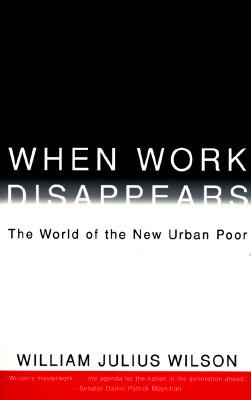
Yet the article on the W-word relies on more of a he-said, she-said back-and-forth, playing into people’s preconceived stereotypes, referencing no studies on the actual benefits and repercussions of welfare as studied by sociologists and economists. I’ve recently begun to read works on urban poverty, including William Julius Wilson’s When Work Disappears: The New World of the New Urban Poor. Published in 1997, just after Congress did away with Aid to Families with Dependent Children (AFDC), the study reveals the conundrum of a new urban poor defined primarily by the lack of jobs available to them.

Importantly, Wilson stridently emphasizes the lack of evidence for the idea that “a direct causal connection exists between the level of welfare benefits and the likelihood that a young woman will bear a child outside marriage,” as pundits and politicians often claim when criticizing welfare.

Wilson writes:

The scientific evidence offers little support for the claim that AFDC benefits play a significant role in promoting out-of-wedlock births. Research examining the association between the generosity fo welfare benefits and out-of-wedlock childbearing and teen pregnancy indicates that benefit levels have no significant effect on the likelihood that African-American girls and women will have children outside marriage; likewise, welfare rates have either no significant effect or only a small effect on the likelihood that whites will have children outside marriage. There is no evidence to suggest that welfare is a major factor in the rise of childbearing outside marriage.

As a discussion on welfare once again becomes part of the national dialogue, I hope that it doesn’t fall into the typical stereotypes it did back in the ‘90s. Growing up in a predominantly white, middle-to-upper middle class suburb in Connecticut, I have multiple memories of adults and news programs discussing the “Puerto Rican, welfare queens” in neighboring Hartford. Let’s hope that discussions today will be more nuanced, infused with better research and with a deeper understanding of those very real problems that face all who are affected in this downturn, but particularly the urban poor.