science

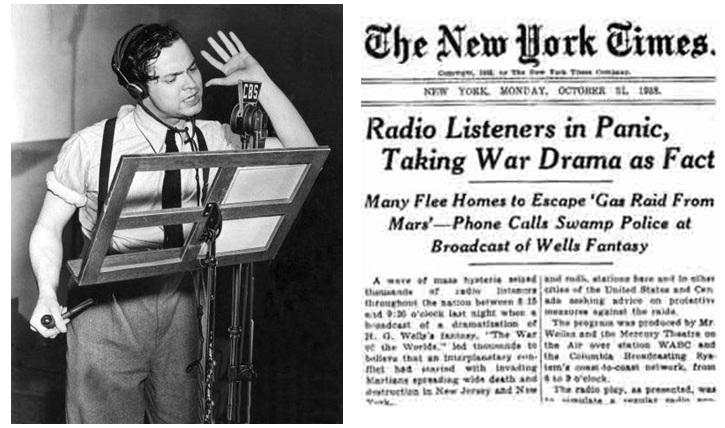
When I started this series three weeks ago, my goal was to provide a review/recap of Orphan Black’s final season, tying it to issues of the body, history and philosophy of science, and the value of fiction. Turns out that last element drew me in and I was most curious about the way that Orphan Black’s creators, Graeme Manson and John Fawcett, employed their science consultant, Cosima Herter, in order to make the science in the show as “real” as possible, while still developing and producing a piece of work that was very clearly fiction. Along the way, I’ve found myself wanting to bring in other works of narrative-based fiction. I wrote about Mr. Robot, but I have drafts that include Minority Report, Black Mirror, Nathaniel Rich’s 2013 novel, Odds Against Tomorrow, Margaret Atwood’s Oryx & Crake, The Blair Witch Project, and Orson Welles’s 1938 War of the Worlds radio broadcast. Reflecting back on those drafts, I came just short of plotting these works along a matrix consisting of two axes: plausibility and believability. That is, could this not only actually happen, but would a public believe it had? In effect, I began to work out how hyperstitious to consider each of these culture artifacts. more...

Findings from a recent study out of Stanford University Business School by Yilun Wang and Michal Kosinski indicate that AI can correctly identify sexual preference based on images of a person’s face. The study used 35,000 images from a popular U.S. dating site to test the accuracy of algorithms in determining self-identified sexual orientation. Their sample images include cis-white people who identify as either heterosexual or homosexual. The researchers’ algorithm correctly assessed the sexual identity of men 81% of the time and women 74%. When the software had access to multiple images of each face, accuracy increased to 91% for images of men and 84% for images of women. In contrast, humans correctly discerned men’s sexual identity 61% of the time and for women, only 54%.

The authors of the study note that algorithmic detection was based on “gender atypical” expressions and “grooming” practices along with fixed facial features, such as forehead size and nose length. Homosexual-identified men appeared more feminized than their heterosexual counterparts, while lesbian women appeared more masculine. Wang and Kosinski argue that their findings show “strong support” for prenatal hormone exposure which predisposes people to same-sex attraction and has clear markers in both physiology and behavior. According to the authors’ analysis and subsequent media coverage, people with same-sex attraction were “born that way” and the essential nature of sexuality was revealed through a sophisticated technological apparatus.

While the authors demonstrate an impressive show of programming, they employ bad science, faulty philosophy, and irresponsible politics. This is because the study and its surrounding commentary maintain two lines of essentialism, and both are wrong. more...


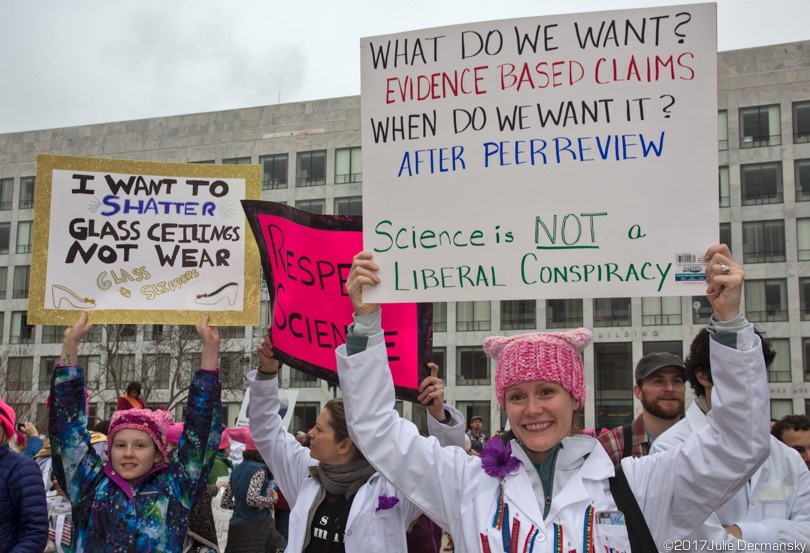
Source: DeSmogBlog.com

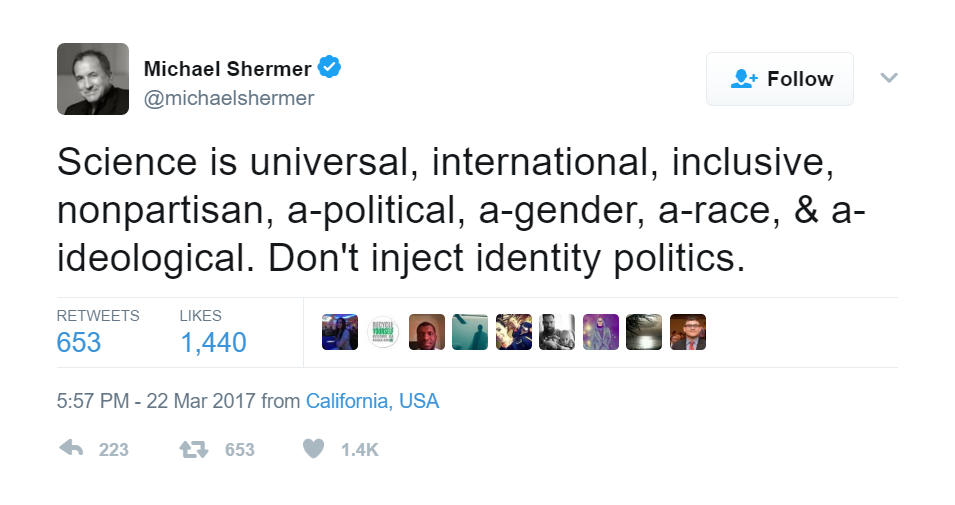
Science. Is. Political.

This concept will probably be easy to absorb for the regular readership at Cyborgology. It’s a topic that has been discussed here a time or two. Still, as truisms go, it is one of a very few that liberals and conservatives alike love to hate. The fantasy of apolitical science is a tempting one: an unbiased, socially distant capital-s Science that seeks nothing more than enlightenment, floating in a current events vacuum and unsullied by personal past experiences. It presupposes an objective reality, a universe of constants that can be catalogued, evaluated, and understood completely. But this view of science is a myth, one that has been thoroughly dissected in the social sciences. more...

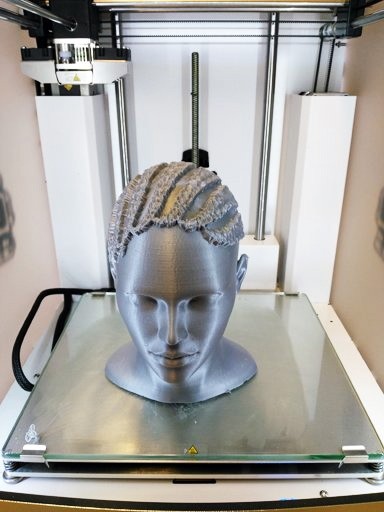
3dcornrows

Much of the post-election analysis has focused on strategic fixes–what should have been done. But what can Trump’s win tell us about more fundamental theories of politics? In what way does the failure of an alliance based on labor, environmentalists and civil rights activists give us clues about our basic social power concepts?

Those three categories are fairly clear voting blocks (consider, for example, the very different constituencies that the AFL-CIO, Sierra Club, and Black Lives Matter represent), but they are also broad theory categories. Marxist theory predicts that working class voters will struggle to find a way to understand and represent their interests; environmentalists interrogate Western views of “dominion over nature”; and race theorists confront the structures of white supremacy. None of these theoretical projects occurred in a vacuum and there has been lots of good intersectional work across all three. But when it comes to praxis, history has lots of examples where these movements were pitted against each other or were incompatible from the start. Think of the 1930s labor strikes when black scabs were brought in to break all-white unions; the 1970s white activists who abandoned civil rights to start “Earth First”; and the 1980s loggers who found themselves pitted against the spotted owl. more...

7050486303_86a1ff7351_z

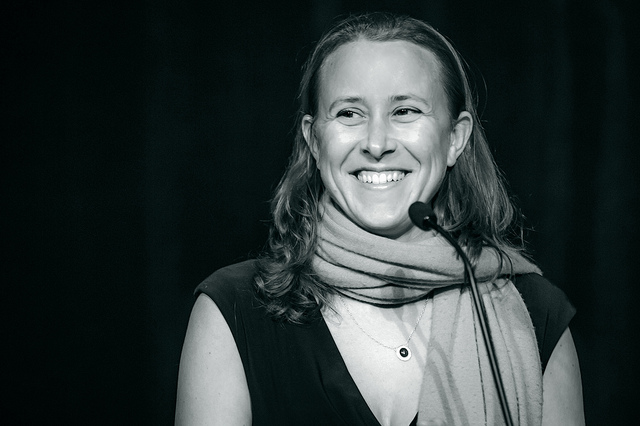
23andMe Co-Founder Anne Wojcicki
by Thomas Hawk on Flickr

Anne Wojcicki’s thinks it’s “incredibly meaningful” to honor scientists who are “purists” who “love what they do” and have “never looked for any kind of celebrity.” So she and a slew of other Silicon Valley technocrats gathered to recognize these altruistic innovators at the NASA Ames Research Center in Mountain View last week by giving them a spotlight on primetime network television and also $3 million each. At the event, called the Breakthrough Prize ceremony, the 23andMe CEO sat down with a reporter from Bloomberg to discuss the award, which, per her interviewer, should “empower scientists just like technologists are empowered in silicon valley.”

It is most likely wishful thinking to presume that the curriculum for a Yale bachelors of science in molecular biology—of which Wojcicki is a recipient—would include the likes of Ludwick Fleck or Bruno Latour. more...

After my last post on Neil Degrasse Tyson and the (seemingly fictional?) War on Science, I received feedback from a few people suggesting that there was more to be written. In fact, more has been written; for well over a century, the field of science studies has been developing and shifting, comprised of scholars studying the history, philosophy, and sociology of “science” and many of its cousins (technology, asceticism, “innovation”, et al.). I am an artist who is starting to immerse myself in the field in order to strengthen my critique of technological mediation in culture. So while I don’t plan on using science studies frames in every one of my posts, I do expect there to be shades of its tenets throughout.

That said, where should one start to understand the history and development of science studies? more...

snackwells

Doctor’s don’t want you to self-diagnose and would prefer you got rid of the internet entirely—a sentiment that is quite understandable. Medical professionals have gone through extensive training, continue to keep up with recent research findings, and are there to help the patients who come under their practice. Moreover, doctors have to maintain these laudable goals under tight time constraints and competing pressures. When a patient comes in with a self-diagnosis and treatment plan acquired through WebMD and responses to their Facebook blast, it not only dismisses the physician’s professional expertise, but also requires time and energy in which the physician has to consider—and often debunk—patients’ firm sense of knowledge based on incredibly partial and unreliable information. I get it.  But with an article released this week that traces the direct influence of the sugar industry upon heart health research, seeking crowdsourced medical advice that originates outside of the established medical canon emerges as both appealing and entirely reasonable. more...

Via ESA http://www.esa.int/Our_Activities/Space_Science/Rosetta/The_Rosetta_lande


Earlier this month, Science had a big victory. The Rosetta Project landed their spacecraft, Philae, on a comet.  This was a billion Euro and entire careers in the making. This was a huge step in space exploration. The accomplishment is unprecedented and data gleaned from this project are entirely unique. Good job, Science.

Meanwhile down on earth, a #ShirtStorm broke loose. Rosetta Scientist Dr. Matt Taylor gave a television interview about the project. His choice of attire—a naked-lady shirt—was ill conceived. Moreover, he described the project as the “sexiest mission,” feminizing and then validating the probe as “sexy” but not “easy.”

Thank goodness women don’t have a science problem!! Oh, wait…

Quickly, Atlantic writer Rose Eveleth posted this tweet: more...

Ship of the Imagination from Fox's rebooted Cosmos with Neil Degrasse Tyson
Ship of the Imagination from Fox’s rebooted Cosmos with Neil Degrasse Tyson

While I was, and still remain, a Beakman’s World partisan, I have fond memories of watching Bill Nye The Science Guy throughout the 90s. It is unfortunate that the just-so-happy-to-be-doing-science character of my childhood has turned into another angry white dude occupying a rectangle on a cable news show. Undoubtable he has a lot to be upset about: not enough Americans agree that the future will be marked by resource scarcity and vastly altered climates and even fewer are convinced that the way we live our lives can’t be sustained. Understandably, many of us (and cable news producers especially) turn to Science Guys like Bill Nye or Neil Degrasse Tyson for answers to society’s most important questions: What is the future going to look like? How can we make it better? Why are so many of us not agreeing on what needs to be done? This impulse is dead wrong.

more...

Scientific Dualism

In a recent post for Cyborgology, I attempted to both refine the concept of digital dualism and explain its connection to the set of arguments that constitute conservative thought. With respect to the former, I argued that “digital dualism” should refer strictly to those instances where a person attempts to establish a normatively-charged ontology based upon some technological category. Thus, a digital dualist might first posit that the world is divided between the “real” and the “virtual” (or perhaps the “offline” and the “online”) and then imbue these categories with normative value by judging the former to be superior to the latter (or vice versa). more...