research

Yes, Please to this article by Amy Orben and Andrew K. Przybylski, which I plan to pass around like I’m Oprah with cars. Titled The Association Between Adolescent Well-Being and Digital Technology Use, the paper does two of my favorite things: demonstrates the importance of theoretical precision & conceptual clarity in research design, and undermines moral panics about digital technology and mental health.

The effects of digital technologies on the mental lives of young people has been a topic of interdisciplinary concern and general popular worry. Such conversations are kept afloat by contradictory research findings in which digital technologies are alternately shown to enhance mental well-being, damage mental well-being, or to have little effect at all. Much (though not all) of this work comes from secondary analyses of large datasets, building on a broader scientific trend of big data analytics as an ostensibly superlative research tool. Orben and Przybylski base their own study on analysis of three exemplary datasets including over 350,000 cases. However, rather than simply address digital technology and mental well-being, the authors rigorously interrogate how existing datasets define key variables of interest, operationalize those variables, and model them with controls (i.e., other relevant factors). more...


In last week’s much-anticipated conversation between Barack Obama and Prince Harry, the pair turned to the topic of social media. Here’s what Obama said:

“Social media is a really powerful tool for people of common interests to convene and   get to know each other and connect. But then it’s important for them to get offline,  meet in a pub, meet at a place of worship, meet in a neighbourhood and get to know   each other.”

The former president’s statements about social media are agreeable and measured. They don’t evoke moral panic, but they do offer a clear warning about the rise of new technologies and potential fall of social relations.

These sentiments feel comfortable and familiar. Indeed, the sober cautioning that digital media ought not replace face-to-face interaction has emerged as a widespread truism, and for valid reasons. Shared corporality holds distinct qualities that make it valuable and indispensable for human social connection. With the ubiquity of digital devices and mediated social platforms, it is wise to think about how these new forms of community and communication affect social relations, including their impact on local venues where people have traditionally gathered. It is also reasonable to believe that social media pose a degree of threat to community social life, one that individuals in society should actively ward off.

However, just because something is reasonable to believe doesn’t mean it’s true. The relationship between social media and social relations is not a foregone conclusion but an empirical question: does social media make people less social? Luckily, scholars have spent a good deal of time collecting cross-disciplinary evidence from which to draw conclusions. Let’s look at the research: more...

Photo taken by Dheera Venkatraman in Myanmar.

For a little over a decade, those researchers and visionaries originally involved in establishing the infrastructure for the World Wide Web have set their sights higher.  While hyperlinking Web pages has been pivotal to creating a Web of documents, the more recent goals to establish a Semantic Web involve hyperlinking data, or individual elements within a Web page.  In attaching unique identifiers (in the form of Uniform Resource Identifiers or URIs) and metadata to data points (rather than to just the documents where those data points appear) machines are able to interpret, not just what the browser should display, but also what the page is about.  The hope is that, in providing machines with the capacity to interpret what data is about, it will be possible to drastically improve Web search and to allow researchers to perform automated reasoning on the massive amounts of data contributed to the Web.  There are numerous examples where this infrastructure is already having impact (albeit largely behind-the-scenes).  For instance, the New York Times has already “semantified” all of its data and created a Semantic API where researchers can query its database.  Facebook’s Graph API, which employs Semantic Web infrastructure to structure user profile data, has been the foundation for several studies attempting to make sense of human behavior and interactions through the platform’s “big data.” more...

a

The most crucial thing people forget about social media, all technologies, is that certain people with certain politics, insecurities, and financial interests structure them. On an abstract level, yeah, we may all know that these sites are shaped, designed, and controlled by specific humans. But so much of the rhetoric around code, “big” data, and data science research continues to promote a fallacy that the way sites operate is almost natural, that they are simply giving users what they want, which then downplays their own interests and role and responsibility in structuring what happens. The greatest success of “big” data so far has been for those with that data to sell their interests as neutral.

Today, Facebook researchers released a report in Science on the flow of ideological news content on their site. “Exposure to ideologically diverse news and opinion on Facebook” by Eytan Bakshy, Solomon Messing, and Lada Adamic (all Facebook researchers) enters into the debate around whether social media in general, and Facebook in particular, locks users into a so-called “filter bubble”, seeing only what one wants and is predisposed to agree with and limiting exposure to outside and conflicting voices, information, and opinions. And just like Facebook’s director of news recently ignored the company’s journalistic role shaping our news ecosystem, Facebook’s researchers make this paper about minimizing their role in structuring what a user sees and posts. I’ve just read the study, but I already had some thoughts about this bigger ideological push since the journalism event as it relates to my bigger project describing contemporary data science as a sort of neo-positivism. I’d like to put some of my thoughts connecting it all here.

more...

Ecology of thought

My feeds this week kept popping up with a bothersome headline, stated in a variety of ways: Smartphones are Making Us Stupid, Technology is Making us Lazy, Does Smartphone use Decrease Intelligence?

The University of Waterloo released a paper this week that was originally published in Computers in Human Behavior back in July. Titled The Brain in your Pocket: Evidence that Smartphones are used to Supplant Thinking, the authors find a negative correlation between cognitive functioning and the use of search engines via smartphones.

The authors refer to smartphones as an “extended mind,” and make causal claims about the effects of this technological extension upon the current and futures state of human cognition. Namely, they predict that increased use of smartphones to gather information will indulge the human tendency towards lazy thinking, and we will become increasingly reliant upon devices. That is, the authors predict an outsourcing of critical thought. It’s kind of scary, really.

But before the phone stackers triumphantly proclaim that they told us so! Let’s look more closely at the research and the underlying assumptions of the research question.    more...

Ship of the Imagination from Fox's rebooted Cosmos with Neil Degrasse Tyson
Ship of the Imagination from Fox’s rebooted Cosmos with Neil Degrasse Tyson

While I was, and still remain, a Beakman’s World partisan, I have fond memories of watching Bill Nye The Science Guy throughout the 90s. It is unfortunate that the just-so-happy-to-be-doing-science character of my childhood has turned into another angry white dude occupying a rectangle on a cable news show. Undoubtable he has a lot to be upset about: not enough Americans agree that the future will be marked by resource scarcity and vastly altered climates and even fewer are convinced that the way we live our lives can’t be sustained. Understandably, many of us (and cable news producers especially) turn to Science Guys like Bill Nye or Neil Degrasse Tyson for answers to society’s most important questions: What is the future going to look like? How can we make it better? Why are so many of us not agreeing on what needs to be done? This impulse is dead wrong.

more...

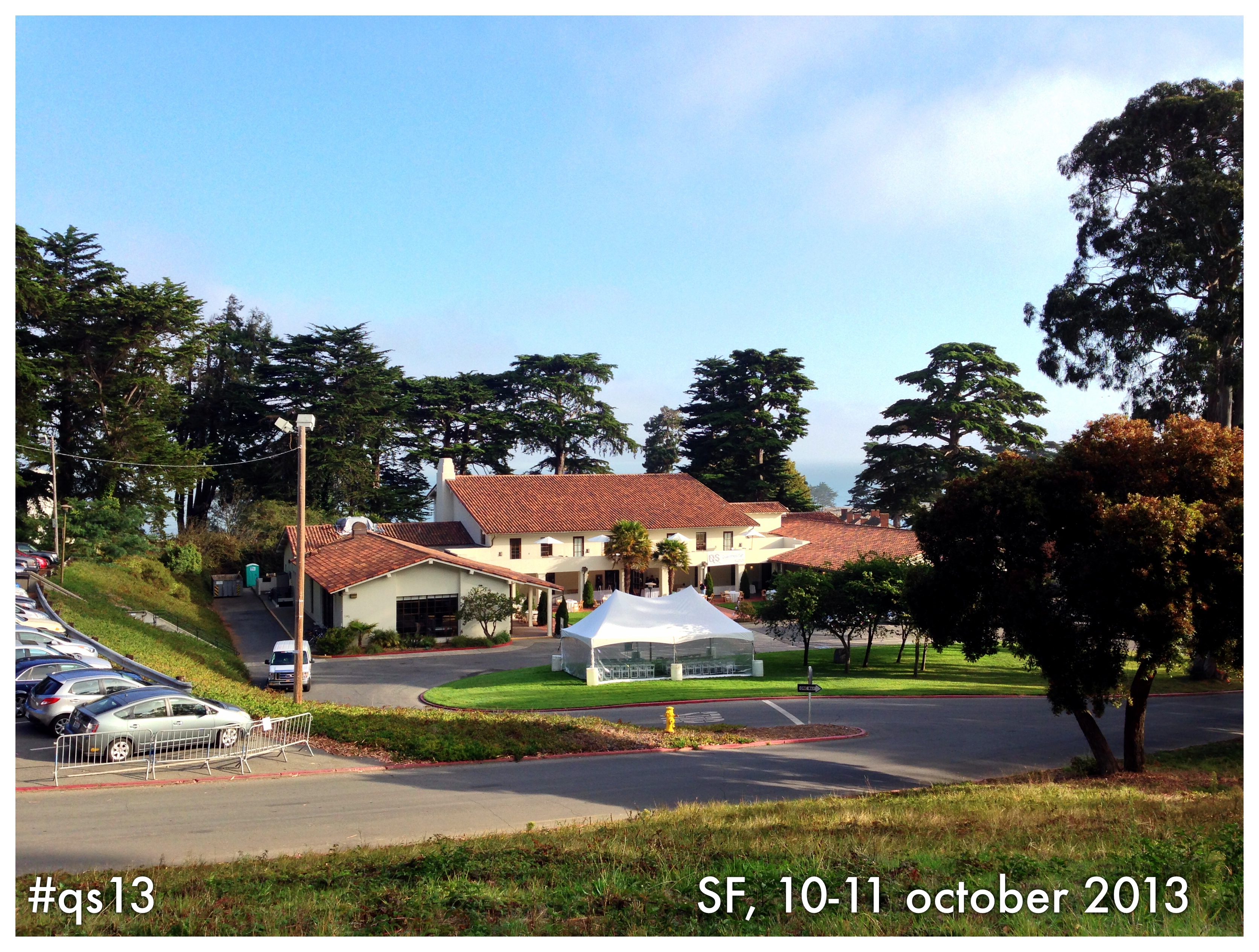
#qs13 took place in San Francisco's Presidio. Image credit: Whitney Erin Boesel
#qs13 took place in San Francisco’s Presidio. Image credit: Whitney Erin Boesel

It’s almost a week now since I attended the 2013 Quantified Self Global Conference in San Francisco, and I’m still not sure where to begin with my summary of the event itself. Instead of jumping in with an overview, this time I’ll cover my own session—in which what started out as asking how researchers studying Quantified Self could better connect with each other became an (at times) intense debate about what Quantified Self is, what Quantified Self should be, and what role (if any) academic or institutional research and researchers should have within the Quantified Self community.

more...

Via: http://forum.nationstates.net/viewtopic.php?f=31&t=215547


EXTRA!! EXTRA!!!  DIGITAL MEDIA CONSUMPTION WILL SURPASS TRADITIONAL TELEVISION VIEWING THIS YEAR!!!!

The folks at eMarketer just released a study which projects that this year, adults will spend over 5 hours consuming digital media, as compared with about 4.5 hours watching television.  This makes for a nice headline. It also makes for a wonderful example of the social construction of knowledge, and relatedly, the embeddedness  of digital dualism.

A root assumption of Science and Technology Studies (STS) is that both science and technology, though billed as objective, are anything but. Knowledge systems, and methods of knowing (i.e. epistemologies), are necessarily based in human values, cultural norms, power structures, and historical context. Bruno Latour and Steve Woolgar famously deconstruct the notion of scientific objectivity in their 1979 anthropological study of Laboratory Life. In this vein, Emily Martin illuminates the gendered ways in which biologists depict the egg-sperm relationship within the reproductive process.  And a few months back, I argued that to be a Quantified Self requires quite a bit of qualitative interpretation and decision making. In short, Big Data, statistical techniques, and laboratory procedures produce knowledge that is equally as biased as storytelling or ethnographic interpretation. Sorry, Enlightenment. more...

Cartoon by Alex Gregory. Published in The New Yorker, a Condè Nast Publication.

At the beginning of the year, rumors were going around that the popular but relatively small citation software company Mendeley Ltd. was going to be purchased by the publishing giant Elsevier. TechCrunch ran a story and there were a few others but not much else came out of it. When I heard these “advanced talks” were taking place, I wrote an essay in which I said,

“When our accounts of reality are owned by profit-seeking organizations and those organizations control the very tools that help us exchange those accounts, we are in danger of losing something fundamental to the institution of science. Ideas should not end up behind prohibitively expensive pay walls, especially when so little of that money goes towards new scientific discovery.”

Today, Mendeley announced on their blog that their purchase by Elsevier was official. They also reassured existing users, “Mendeley is only going to get better for you.”

I’m very skeptical.  Back in January, I raised the question, “what is Elsevier going to do with Mendeley that warrants uninstalling it from you computer?” and hinted that the kind of criminal charges faced by the late Aaron Schwartz could become commonplace, if not easier to prove and litigate.  I also noted that Elsevier has been so malicious and aggressive in their search to control and subsequently monetize knowledge that it has inspired over thirteen thousand academics to sign a pledge saying they will not support Elsevier’s journals. They have supported SOPA, PIPA, and used to support the Research Works Act as well. Oh, and they support CISPA too. None of that has changed, and there’s still plenty to be done if Elsevier wants to gain the respect their new property once had. more...


Each morning, after reading the news and checking my emails, I reward myself with a quick (okay, not that quick) scroll down the Facebook News Feed.  Over a peanut butter bagel and strong cup of coffee, I look at pictures, laugh at status updates, ignore political rants, and leave small traces along the way: Likes, congratulations, the occasional snarky retort. I look forward to my Facebook time. It’s the dessert portion of my morning routine. The little sugary something that warms me into my day. And yet, this is a precarious treat—one day sweet, the next lip-puckeringly tart.

I never know quite how I will feel at the end of my scroll session. Some days, I am energized, connected, warm, fuzzy, and one with the world. Other days, I feel annoyed, left out, jealous, regretful that I let that half hour slip away while others were doing something more productive, more impactful, more meaningful. Admittedly, on most days, my feelings lie between these poles in the far less dramatic realm of mild amusement or hinted anxiety.   more...