I’d like to point readers to a terrific three-part essay by Laura Portwood-Stacer on three reasons why people refuse media, addiction, asceticism, and aesthetics. We can apply this directly to what might become an increasingly important topic in social media studies: social media refusers, already (edit: and unfortunately, as Rahel Aima points out) nicknamed “refusenicks”. There will be more to come on this blog on how to measure and conceptualize Facebook (and other social media) refusal, but let’s begin by analyzing these three frameworks used to discuss social media refusal and critique some of the underlying assumptions. more...
We're always connected, whether we're connecting or not.
Last month at TtW2012, a panel titled “Logging off and Disconnection” considered how and why some people choose to restrict (or even terminate) their participation in digital social life—and in doing so raised the question, is it truly possible to log off? Taken together, the four talks by Jenny Davis (@Jup83), Jessica Roberts, Laura Portwood-Stacer (@lportwoodstacer), and Jessica Vitak (@jvitak) suggested that, while most people express some degree of ambivalence about social media and other digital social technologies, the majority of digital social technology users find the burdens and anxieties of participating in digital social life to be vastly preferable to the burdens and anxieties that accompany not participating. The implied answer is therefore NO: though whether to use social media and digital social technologies remains a choice (in theory), the choice not to use these technologies is no longer a practicable option for number of people.
In the three-part essay to follow, I first extend this argument by considering that it may be technically impossible for anyone, even social media rejecters and abstainers, to disconnect completely from social media and other digital social technologies (to which I will refer throughout simply as ‘digital social technologies’). Even if we choose not to connect directly to digital social technologies, we remain connected to them through our ‘conventional’ or ‘analogue’ social networks. Consequently, decisions about our presence and participation in digital social life are made not only by us, but also by an expanding network of others. In the second section, I examine two prevailing discourses of privacy, and explore the ways in which each fails to account for the contingencies of life in augmented realities. Though these discourses are in some ways diametrically opposed, each serves to reinforce not only radical individualist framings of privacy, but also existing inequalities and norms of visibility. In the final section, I argue that current notions of both “privacy” and “choice” need to be reconceptualized in ways that adequately take into account the increasing digital augmentation of everyday life. We need to see privacy both as a collective condition and as a collective responsibility, something that must be honored and respected as much as guarded and protected. more...
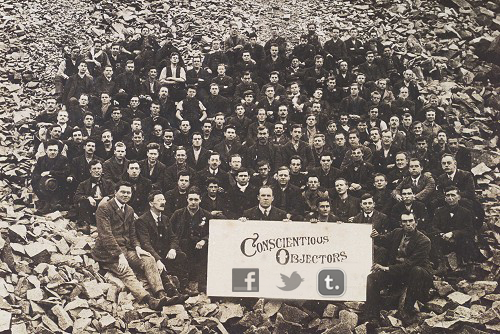
We all know them: the conscientious objectors of the digital age. Social media refusers and rejecters—the folks who take a principled stance against joining particular social media sites and the folks who, with a triumphant air, announce that they have abandoned social media and deactivated their accounts. Given the increasing ubiquity social media and mobile communications technologies, voluntary social media non-users are made increasingly apparent (though, of course, not all non-users are voluntarily disconnected—surely some non-use comes from a lack of skill or resources).
The question of why certain people (let’s call them “Turkle-ites”) are so adverse to new forms of technologically-mediated communication—what Zeynep Tufekci termed “cyberasociality”—still hasn’t been sufficiently addressed by researchers. This is important because abstaining from social media has significant social costs, including not being invited to or being to access to events, loss of cultural capital gained by performing in high-visibility environments, and a sense of feeling disconnected from peers because one is not experiencing the world in the same way (points are elaborated in Jenny Davis’ recent essay). Here, however, what I want to address here isn’t so much what motivates certain people to avoid smartphones, social media, and other new forms of communication; rather, I want to consider the more fundamental question of whether it is actually possible to live separate from these technologies any longer. Is it really possible to opt out of social media? I conclude that social media is a non-optional system that shapes and is shaped by non-users. more...
This is part of a series of posts highlighting the Theorizing the Web conference, April 14th, 2012 at the University of Maryland (inside the D.C. beltway). It was originally posted on 3.28.12 and was updated to include video on 5.10.12. See the conference website for additional information.
Presider: Dan Greene (@Greene_DM)
“Logging Off and Disconnection” presents an important new set of perspectives on a key theme of Theorizing the Web: ‘Cyberspace’ does not exist as an immaterial realm separate from human bodies and relationships. The online is instead always imbricated with the offline and the connections we make and unmake are crucial determinants of of both spaces. This panel explores this co-determination from the perspectives of those who decide, or are forced, to disconnect from online media in order to examine the relationships between personal participation and motivation and structuring forces of media design, cultural narrative, and economies of data and prosumption.
Jenny Davis’ qualitative study of Facebook users explores how social networking technology’s tight integration into the rhythms and relationships of everyday life highlights the tension between moral definitions of a meaningful life and cultural ambivalence about the technology’s effects on sociality. Jessica Roberts uses the global data of the world Unplugged projectto investigate the behavioral and emotional responses university students had to a 24-hour withdrawal from ambient media. She expands the ‘awareness systems’ tradition in computer science and stresses the integration of already-existing awareness systems into daily life, demonstrating that the seamless connectivity of ambient media makes it harder for students to recognize how their relationships with, and through, those media function. Laura Portwood-Stacer focuses on discourses of Facebook rejection in popular and alternative media outlets and in her interviews with ‘non members’. This rejection of a specific, dominant medium is an important piece of non-members’ production and negotiation of political and ethical identity. Finally, Jessica Vitak builds on the rich social scientific research literature on self-presentation and privacy in order to explore different users’ management of personal information, audience relationships, and social norms through the specific affordances of Facebook . All four researchers illustrate how in relationships with and through online media the links not made, the social graphs refused, are powerful forces in media ecologies and (non-)users’ lives.
[Paper titles and abstracts are after the jump.] more...
About Cyborgology
We live in a cyborg society. Technology has infiltrated the most fundamental aspects of our lives: social organization, the body, even our self-concepts. This blog chronicles our new, augmented reality.

 I’d like to point readers to a terrific three-part essay by Laura Portwood-Stacer on three reasons why people refuse media, addiction, asceticism, and aesthetics. We can apply this directly to what might become an increasingly important topic in social media studies: social media refusers, already (edit: and unfortunately, as Rahel Aima points out) nicknamed “refusenicks”. There will be more to come on this blog on how to measure and conceptualize Facebook (and other social media) refusal, but let’s begin by analyzing these three frameworks used to discuss social media refusal and critique some of the underlying assumptions. more...