augmented conference

asa-2013During the 2013 Annual Meeting of the American Sociological Association (#ASA13) in New York this last week, I was reminded of the post that I wrote last year before #ASA2012 in which I encouraged tweeting academics to reach out to non-tweeting academics to bridge the gap between those who participate on the conference hashtags at ASA and those who don’t. Nathan Jurgenson (@nathanjurgenson) followed up with a post titled, “Twitter isn’t a Backchannel,” in which he made the point that the term “backchannel” perpetuates digital dualist ideas of what does and doesn’t count as “real” participation at a conference:

There is no “backchannel”, there is no more or less “real” way to exist within this atmosphere of information, yet we continue to hear that the Twitter distraction whisks people away from the “real” conference in favor of something separate and “virtual.” Each time we say “real” or “IRL” (“in real life”) to mean offline, we reify the digital dualist myth of a separate digital layer “out there” in some ‘cyber’ space. And when we call Twitter a “backchannel” to mean a separate conversation, running tangent to the offline conference in some space behind precious face-to-face exchanges, we continue to support this digital dualism. The implicit, and incorrect, assumption is that the on and offline are zero-sum, that being offline means being not online, and vice versa.

In the comments, I agreed that Nathan had a point: “backchannel” really isn’t a great term for what we-who-livetweet do when we tweet at a conference. But what, I asked, should we call this activity? more...
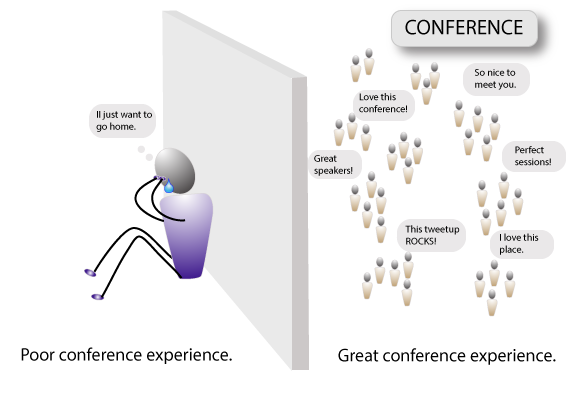
Academic conferences: the model needs to change.

As the 2012 meeting of the American Sociological Association (#ASA2012) kicks into gear, I want to use this post to start a conversation about a somewhat-contentious topic: academics’ use of Twitter, particularly at conferences. I begin by extending some of what’s already been written on Cyborgology about the use of Twitter at conferences, and then consider reasons why some people may find Twitter use off-putting or intimidating at conferences. I close by considering what Twitter users in particular can do to ease the “Twitter tensions” at ASA by being more inclusive. The stakes here include far more than just “niceness”; they include as well an opportunity to shape the shifting landscape of scholarly knowledge production.

more...

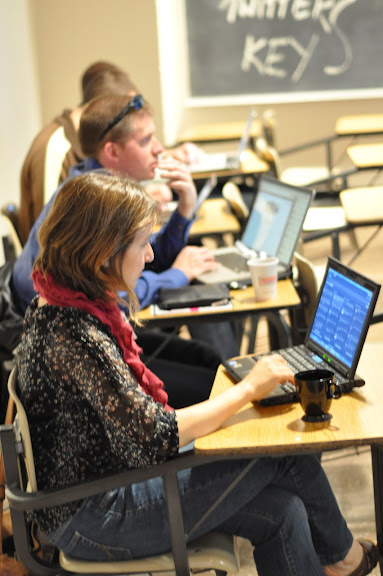
The Twitter backchannel in action. Photo by Rob Wanenchak.

Last weekend, I had the double pleasure of presiding over an excellent panel on technology and protest, and having David Banks as my extremely capable Twitter backchannel moderator and Livestream assistant. Both the Twitter backchannel and the Livestream were getting their first serious run as an institutional part of Theorizing the Web, and despite some minor difficulties with mics and cameras, I think they were a clear success.

But the experience of presiding on a panel and then serving as the backchannel moderator for the panel immediately after delivered some interesting revelations regarding what these kinds of technology actually mean for how our conferences work, and for how we engage with and in our spaces of knowledge production.

more...

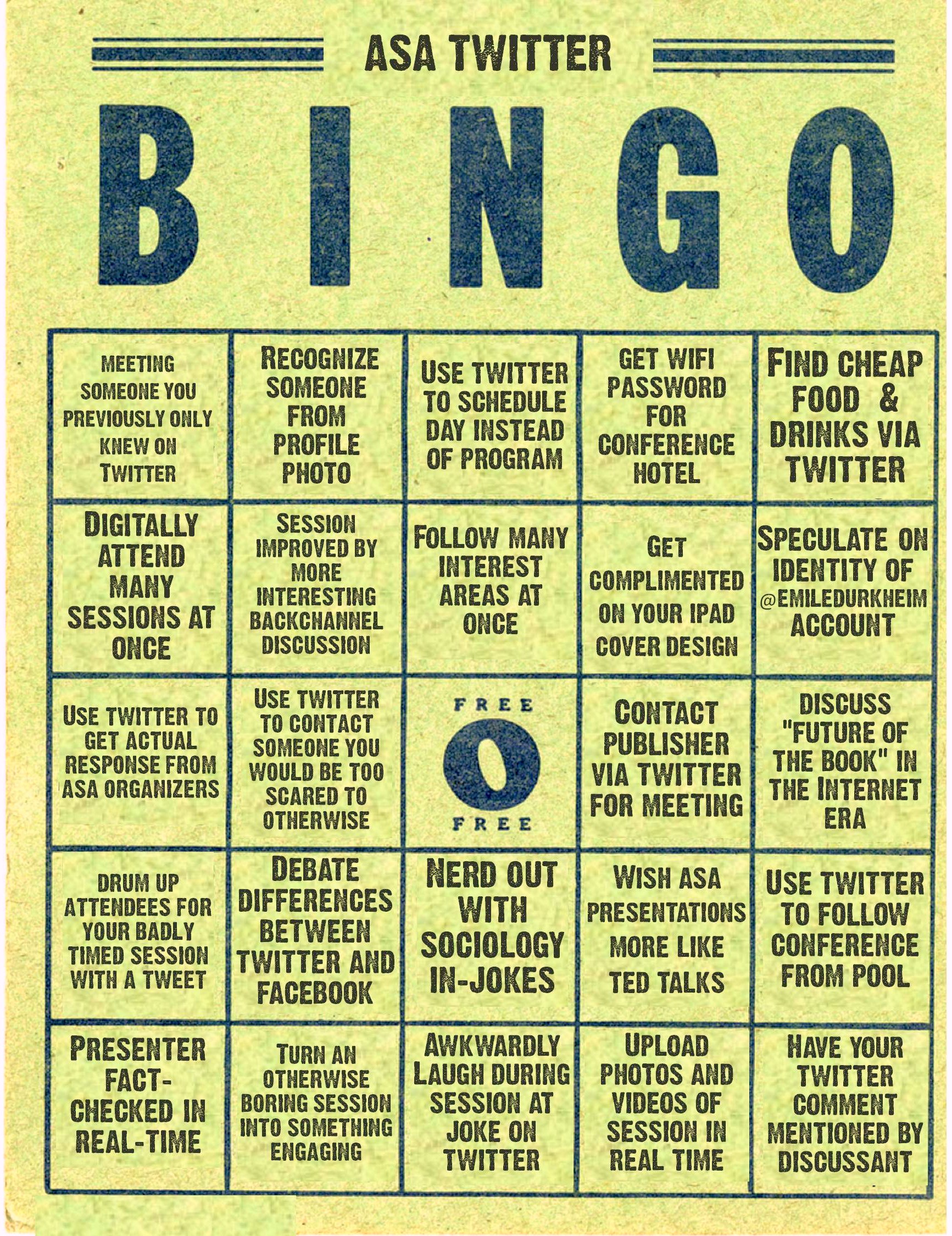
Conference Twitter Bingo Card created by Jessie Daniels and Nathan Jurgenson

There was a popular “bingo card” for the annual meetings of the American Sociological Association held last week in Las Vegas. It poked a bit of fun at sociologists and the meeting itself. Nathan Jurgenson’s reaction was that the card itself revealed much about the sociological discipline and the problems with the annual meetings. He wrote a post here on Cyborgology calling for a more positive bingo card that might be helpful to improve the conference experience rather than just complaining about what is wrong. It is easy to be annoyed, much harder to be constructive.

CUNY sociologist Jessie Daniels responded to this call, and, toegther, we have created a more constructive and useful Bingo card that looks specifically at how to improve a conference by augmenting one’s experience with Twitter.

The card describes how conferences in general benefit from engagement on both the physical and digital levels. Conversations taking place move onto the web, and discussions in the “backchannel” flow back into physical space. In fact, we noted this trend during the Theorizing the Web conference this past spring, calling it an “augmented conference.”

More on Twitter use at the ASA 2011 meetings.