media

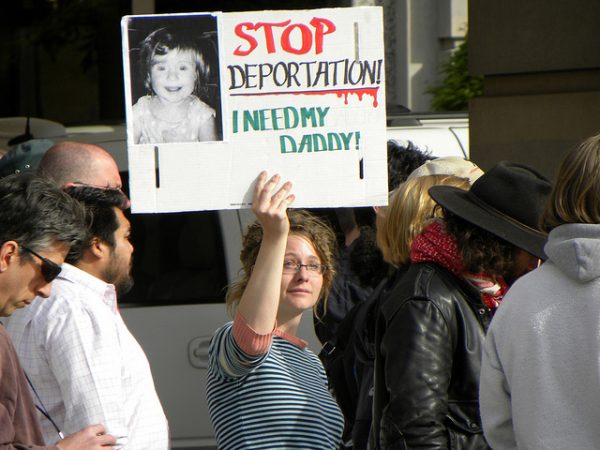
Photo of a protester holding a sign that says, “Stop deportation! I need my daddy,” with a picture of a child. Photo by Fibonacci Blue, Flickr CC

This post was created in collaboration with the Minnesota Journalism Center

A Way Out of the Immigration Crisis.”Like it or Not, Immigrant Children are Our Future.” “Trump Talks Tough on Immigration in Nevada but it Could Backfire.

All three of these news headlines were published by mainstream news outlets in the United States in September 2018. All three portray immigration in a negative light. While much news and media coverage across the globe portrays immigration negatively, researchers who study this area also identify media outlets that include more positive coverage. 

One thing scholars have found is that immigration coverage has increased rapidly since 2004. In U.S. coverage, there is a heavy focus on “immigration reform” and “tougher border control” as solutions to the immigration “problem.” Across the pond in the United Kingdom, polls have ranked immigration as one of citizens’ top concerns, with coverage of immigration being overwhelmingly negative and centered on conflict through utilization of crime frames and discussion of immigrants as “illegal” or “failed.”
But not all publications discuss immigration in the same way. For example, scholars have found that African-American media outlets publish immigration stories with racial frames that depict immigrants as allies, while other major mainstream media outlets frequently utilize crime frames that discuss the legal status of immigrants.
Research also shows suggests that the conflict-oriented news coverage of immigration contributes to polarized public opinions about immigration policies in digital spaces as well as comment sections of mainstream news sites. Conversely, social and mobile media in Australia has been used as a platform for asylum-seekers in detention to share their experiences with the public directly. Journalists and citizens alike have collaborated with detained asylum-seekers to create journalistic narratives that raise awareness of human rights violations unfolding in offshore detainment centers. Though not embraced by all consumers, such stories about immigration appear to cultivate expressions of empathy from audiences.
Photo by Jeffrey, Flickr CC

This post was created in collaboration with the Minnesota Journalism Center

From FiveThirtyEight to the front page of the local paper, data journalism is on the rise at media outlets worldwide. As early as 2012, Columbia Journalism Review published reports featuring examples of local and regional outlets beginning to publish stories with graphs, charts, and visualizations online. In the case of New York City news media in particular, data, analytic, and platform-based positions now account for nine percent of all media jobs — marking considerable growth since 2010. Studies also show that, in today’s journalistic job market, entry-level journalists are often expected to have skills in data journalism, social media, and analytics in addition to traditional reporting and editing skills. Social science research shows how social forces contribute to this shift. 

Legacy media organizations including the Los Angeles Times and the Washington Post produce news at breakneck speed in a 24/7 news cycle, and are constantly innovating to find the most profitable and efficient methods to distribute news to the public. Not only are online media able to host the results and illustrations of large data analysis, but some media outlets utilize computational and/or algorithmic processes and programs that automatically convert batches of data into news stories for publication.
The rise of data journalism is also self-reinforcing: As data becomes a central fixture in newsrooms worldwide, higher education institutions are developing programs to train journalists in data, analytics and programming. Established data journalism programs at higher education institutions include Columbia Journalism School and the University of Missouri’s M.S. in Data Science & Analytics, while other institutions offer data journalism courses taught by part-time, adjunct, and/or visiting instructors who specialize in the field. Not surprisingly, social scientists are beginning to track and analyze these programs.
Media Missionary Day, San Diego, 2008. Pamla J. Eisenberg, Flickr CC

The recent U.S. presidential election has everyone thinking about the role of media and religion in political life. From fake news to mainstream media spectacle, both the left and the right have been criticizing American journalism. White evangelical Christians also overwhelmingly broke for Trump, despite concern that he was not particularly pious himself. The intersection of politics, media, and religion is clear, but what can research tell us about how they interact?  Some of the best work suggests we can learn a lot by making an unexpected comparison: the role of religion and politics in the media in the United States and Africa.

First, political leaders across the globe use religious media in similar ways. Religious programming and discourse in the media creates new ways for people to use religion to signal their social status. Politicians in both the U.S. and countries like Nigeria have harnessed the power of these shows and their large audience numbers as a tool to publicly cultivate their spiritual image by integrating administrative goals with images of divine will.
Second, religious leaders also use secular media outlets in similar ways. The political economy of the media both in Africa and the U.S. means that secular media organizations are willing to broadcast religious programs because they garner large audience numbers. Additionally, religious leaders embed themselves in the elite, administrative networks that run secular media outlets, political groups, and academic organizations to disseminate their messaging to both religious and non-religious audiences. This also means that religious media personalities are firmly ensconced in today’s globalized media and public culture that is characterized by a focus on media icons, spectacle, and a penchant for dramatization.
Studying media as a central category across different international cases provides fresh perspectives on religion, citizenship, authority, and political engagement.
Photo by Jon S, Flickr CC

The ways that non-Western victims of violence and poverty are portrayed in the news is problematic. For example, on the 6th of October this year, The New York Times had an above-the-fold image of migrants on its front page. The image was of several dead and dying African migrants on a boat and, troubling as this may be, the image was not an anomaly. Consider the images we have recently seen from Syria — from the drowned child on the beach to the dazed child covered in dust pulled out of a bombed building. Social scientists explains how the choice to use these kinds of images is neither an objective nor an accidental process.

News images are rarely meant to teach us something new, rather, they are meant to reaffirm what we already know while tugging at our heartstrings. Nowhere is this more evident than during instances of instability and violence in the Global South. Even in death and suffering, non-Western victims are denied their privacy; their pain is meant to be consumed by the audience while reaffirming real and symbolic differences.
Images of pain and suffering are less about an increase in “bad” things happening and more about how  we understand the consumption of pain, suffering, and death of victims that are “Other.” They allow us to consume the pain of others from the comfort of our living rooms while reminding us of how “good” we have it.
In the case of Africa and Africans especially, the use of images has a long and troubled history. Research continually shows that images of Africans are often steeped in stereotypes of Africans as simplistic, tribal, “noble savages,” and primitive.
The defining images of 1960s Africa are of starving Biafran children. The image of the 1990s is that of a vulture stalking an emaciated Sudanese child near the village of Ayod in South Sudan by Kevin CarterSuch images often reaffirm stereotypes of the continent and its peoples as ‘starving’, ‘chaotic’, or ‘sick’. This history makes it possible to plaster images of dead and dying migrants on a boat across the front page of an American newspaper with little to no discussion of the structural factors leading to their deaths.
Photo by Ryan Godfrey, Flickr CC

During a political season in which very little has gone according to script, one thing has been fairly predictable: the demand on all sides for “media objectivity.”

Advocates for objective political reporting are typically referring to journalistic conventions that include using direct quotes, presenting “both” sides of the story, and focusing on the presentation of “material facts.” These facts, we are often told, speak for themselves. But as intuitive and appealing as the call for neutral, unbiased reporting might sound, however, sociologists have been both cautious and critical.

One reason for sociological skepticism is that the notion of objectivity in political journalism is actually a fairly recent historical invention. It has less to do with balance or fairness than it does with ritualized procedures journalists use to protect themselves from the pressures they face in the day-to-day reporting of complex issues. Objectivity, in this sense, emerged as a kind of protective blanket for political journalists.
Not only are the ritualized practices of objectivity in political journalism relatively new, sociologists have shown that they are fraught with problems and limitations. For example, basic standards of media objectivity are typically less consistently applied to female political candidates and candidates of color.
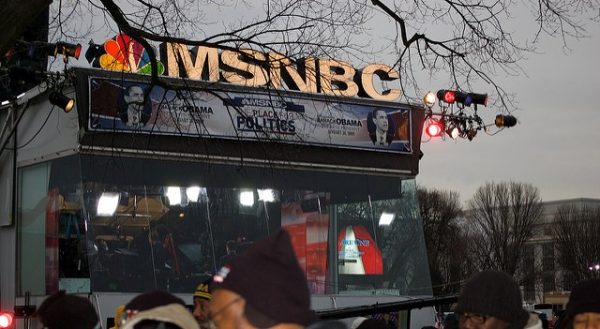
Another strand of sociological scholarship suggests that most standards of objectivity are strongly linked to social context, personal experiences, and the types of conversations that people have with their peers. In other words, journalists and media organizations tend to define objectivity in relation to their target audience and frame their coverage to appease this group. This approach suggests that although MSNBC and Fox News typify the seemingly bifurcated nature of political journalism in the United States, they epitomize two sides of the same coin and may represent the “new normal” in political journalism.
Right: Taylor Swfit performing. Right: Ryan Adams performing. “Taylor Swift 007” by GabboT is licensed under CC BY-SA 2.0. “Ryan Adams, Clapham Common, Calling Festival, London” by Drew de F Fawkes is licensed under CC BY 2.0)

In 2019, after this post was published, Ryan Adams was accused of engaging in a pattern of manipulative behavior including verbal, emotional, and sexual harassment. You can read more of this coverage here.  (Updated, October 26, 2022)


The release of Ryan Adams’ cover of Taylor Swift’s 1989 resulted in a media frenzy about which album is “better” and who deserves credit for the “depth and complexity” that many say Adams brought to Swift’s poppier original. Some reviews argue Adams “vindicated” Taylor Swift as an artist; others argue that emotional depth was already present in Swift’s songwriting and reviews of Adams’ cover operate under gendered understandings of emotions and legitimacy in pop music. Many publications that reviewed Adams’ version did not review Swift’s original. Ironically, the albums will be competing for a Grammy this year, and many think Adams will take it over Swift. Sociological studies of popular music show how gender affects who gets credit for creativity in the industry.

Research finds that male musicians, regardless of genre, are more likely to receive critical recognition and be “consecrated” into the popular music canon. Women are less likely to be seen as “legitimate” artists and are more often judged on their emotional authenticity and connections with “more” legitimate, male artists. Further, newspapers and music critics are more likely to cover music written and produced by male artists.
Style doesn’t stem from the artist’s creative mind alone. Musical genres are gendered, as well as raced and classed. Industry norms require women and men to adopt different styles depending on the music genre in which they work. For example, women are more often expected to be sexual and/or emotional in their presentation of self and their music.

For more on gender in culture industries, check out this Discovery on fashion design.

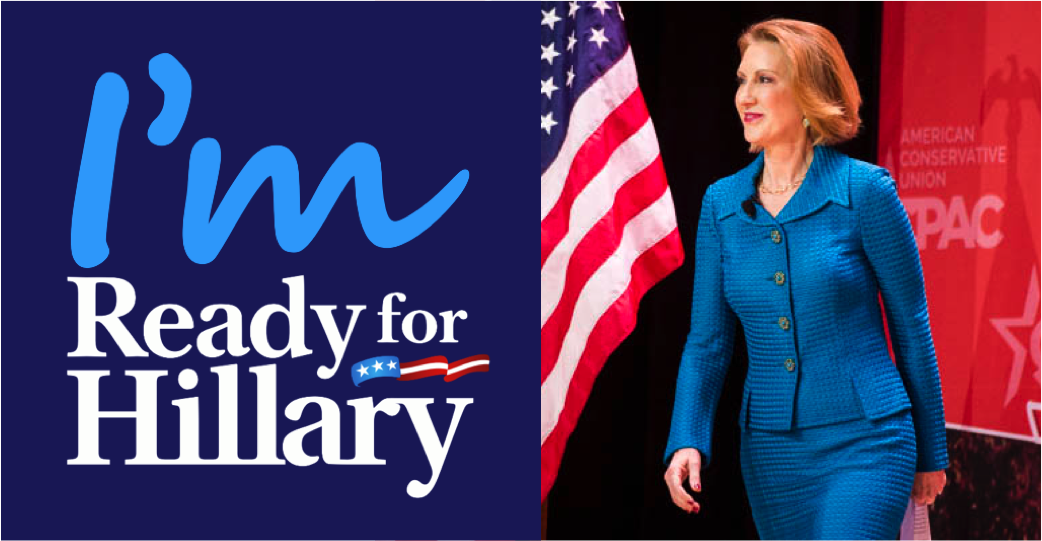
Hillary Carly


With Hillary Clinton’s official announcement of her presidential candidacy—and now Carly Fiorina’s GOP candidacy—we have seen the immediate and constant sexism that will undoubtedly plague the campaign coverage until election day. Time Magazine, for example, ran a piece focusing on Clinton’s presumed post-menopausal estrogen levels as an asset to her presidential leadership skills (we have yet to spot an article on the testosterone levels of Jeb Bush or Bernie Sanders).

Media outlets often pay a disproportionately higher rate of attention to female candidate’s wardrobe, appearance, and age than to that of male candidates, treating women as novelties rather than serious contenders. The focus on appearance objectifies and sexualizes, delegitimizing their authority.
People evaluate “appropriate” roles for women in public office based on gender stereotypes about policy and issue competency more than on personality traits. Public opinion survey respondents indicate that they find female candidates more capable of handling “feminine” topics like education and healthcare, while male candidates are more qualified to deal with “masculine” issues like terrorism and the economy.
Contrary to expectations, neither higher numbers of educated women nor the type of political system translates to more women in national office. In fact, female congressional candidates win at similar rates to men in general elections. Instead, ideologies about women’s roles and positions in societies influence women’s abilities to enter politics as candidates and survive the primary process.

For more on this topic, check out Scholars Strategy Network and Sociological Images

ISIS recently announced they “will conquer Rome, by Allah’s permission” in a video that showed the murder of 21 Christians in Libya.  Not long after the video’s release, Italians offered cheeky travel advice to the militant group via Twitter, using the hashtag “#We_Are_Coming_O_Rome.”  Tweets warned of traffic jams and tourist traps at landmarks like the Trevi Fountain, while others humorously applauded ISIS’s “vacation” choice.  But is laughter the best medicine for international threats? 

Jokes are a way for societies to cope with threats.  People use irony to lessen their anxieties about an unsettling situation without seeming paranoid.  Humor also give status by discrediting those with strong anxieties and giving the joker an air of nonchalance. 
Ethnic jokes also draw symbolic boundaries between who does and doesn’t belong.  These jokes reinforce the moral values of the in-group by characterizing outsiders’ unacceptable behavior. Framing is key in being playful with something political—those involved in the interaction need to have shared beliefs and the joke needs the right context.
However, humor is a double-edged sword as evidenced by the events that followed the Charlie Hebdo cartoons earlier this year and the Jyllands Posten depictions of Mohammad in 2006. Targeting a minority group reinforces stereotypes and masks the diversity of individuals within the group. When a member of the dominant culture “punches down,” with an ethnic or racist joke, the audience is more likely to be judgmental of individual members of a minority group.

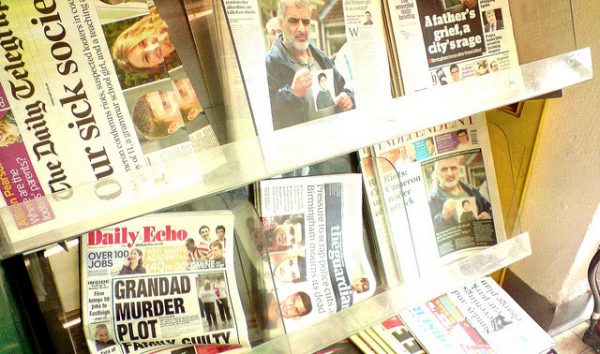
Between social media, television, Internet, and yes, even newsstands, a person has to work pretty hard to not hear about new and noteworthy events. Avoiding spoilers in Game of Thrones or the winner of a major election is nearly impossible without a retreat into the wilderness. Now, with passing of one of America’s most prominent journalists and media critics, David Carr, the news has taken a self-reflective turn. We took some time to review the research on how journalists don’t just report the truth—they make it.

Mainstream news provides the general public with information about current events. Choices about what to cover direct attention and influence public opinion, but these choices aren’t always at the center of the action. For example, social movements get more coverage when they appear as formal, professionalized organizations rather than confrontational, volunteer-led groups. It’s news agencies that frequently affect whether a movement is seen as serious and effective or a disorganized bunch of crackpots.
Network ties and framing strategies within the media also change who gets coverage. Insider self-promotion helps draw attention to stories about social problems, and the old “15 minutes of fame” rule only applies to newcomers. Once celebrity is established, that notoriety has staying power.
Good journalism relies on emotional storytelling, but this isn’t because readers are passive consumers of salacious media. Instead, most are “news omnivores” who learn about events through multiple sources and recognize that even “objective” journalism has an angle. With so much happening in the world, stories that help make meaning and emotional sense out of basic information tend to engage readers.

On Thursday, November 6, Minneapolis-Saint Paul ABC affiliate KSTP ran a story claiming Minneapolis Mayor Betsy Hodges had “flashed a gang sign” with a “known felon” during a get out the vote drive in North Minneapolis. The photo shows Hodges embracing and pointing at a young black man, and him pointing back. To support the headline that law enforcement officials were “outraged” by Hodges’s interactions with this man, KSTP reporter Jay Kolls quoted retired Minneapolis police officer Michael Quinn, who accused Hodges of “legitimizing gangs who are killing our children.” The story drew an immediate backlash in other press outlets and on social media. Writing in the Star Tribune, University of St. Thomas law professor Nekima Levy-Pounds criticized the media’s routine portrayal of black men as dangerous criminals and argued that such stories desensitize people to institutional racism. Twitter users deployed the hashtag #pointergate to criticize KSTP and Kolls for their inflammatory reporting, and by mid-day Friday, #pointergate was the top non-sponsored hashtag in the U.S. What might KSTP have expected to gain from running a story like this? Should it have anticipated the furious backlash? And should we be surprised that the reaction on Twitter is as big a story as the original report? Playing on fear has long been a media tactic for drawing attention to stories, but the fear of crime and gangs is a special case.

News media organizations construct their stories as secular morality plays that deploy a “discourse of fear,” which transforms news consumers into victims of the problems that the stories construct. The use of these “problem frames” has increased during the 2000s, and the media applies them much more frequently to stories about race, drugs and gangs.
Social media allows marginalized groups to share frustration much more quickly and publicly. In these symbolic conflicts, both sides escalate their positions through the same venues, like Twitter, and the side that escalates fastest usually prevails. KSTP’s silence on Twitter has given their critics full, uncontested voice, and allowed them to make their protest itself a news item.