war/military

War is always an opportunity for someone, many someones, to make money. A recently closed ebay auction sold a pair of Converse shoes manufactured and sold during World War II. If I understand the description right, the shoes were sold to overseas servicemen who wanted to “stomp” on the Nazis; alternatively, they were sold to Nazis (I think the former).

The shoes:

And, the kicker, the soles:


UPDATE! In the comments Joe C. linked to a website, aryanwear.com, where you can buy these:

Via BoingBoing.  See also our post on the surprising history of the symbol.

—————————

Lisa Wade is a professor of sociology at Occidental College. You can follow her on Twitter and Facebook.
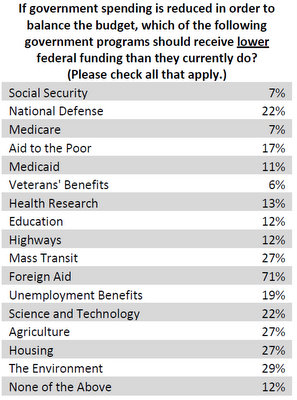
Sixty-two percent of Americans think that the country should reduce spending in order to cut the deficit.  What do they think we should cut?  Nothing really.

Well, nothing except foreign aid.

Kevin Drum at Mother Jones reminds us that foreign aid is about one percent of the U.S. budget.

…there were only four [other] areas that even a quarter of the population was willing to cut: mass transit, agriculture, housing, and the environment. At a rough guess, these areas account for about 3% of the federal budget. You could slash their budgets by a third and still barely make a dent in federal spending.

The Economist, via BoingBoing.

Lisa Wade, PhD is an Associate Professor at Tulane University. She is the author of American Hookup, a book about college sexual culture; a textbook about gender; and a forthcoming introductory text: Terrible Magnificent Sociology. You can follow her on Twitter and Instagram.

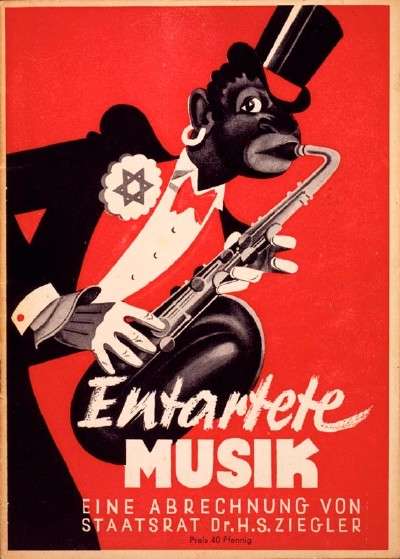
After reading my recent post on how Gypsy jazz guitarist Django Reinhardt survived World War II (hint: rank-and-file Nazis loved jazz!), Dmitriy T.M. sent me a link to a fascinating account of a German jazz band, called Charlie and His Orchestra, that was put together by Joseph Goebbels, a Nazi propaganda guy.

To recap, jazz music was labeled “Neggernmusik.”  Attributed (rightly) to blacks and Jews, it was considered pollution to German sensibilities.  Jazz lovers, jazz musicians, and swing dancers were all sent to concentration camps.

Nevertheless, Undercover Black Man describes how Goebbels saw potential in the music and, so, “weaponized” it to “screw with British and American minds.”

Charlie and His Orchestra recorded jazz standards, but changed the lyrics to “anti-British, anti-American, anti-Communist or antisemitic messages.”

The songs were broadcast via medium-wave and short-wave radio to Great Britain and North America. It was all about taunting and demoralizing the Allies… and trash-talking Winston Churchill and F.D.R. by name.

In this clip, the Orchestra, covering Goody Goody, is accompanied by WWII photographs. The propaganda starts at 1:04:

For more, check out the Charlie and His Orchestra versions of You Can’t Stop Me From Dreaming, You’re Driving Me Crazy, and Makin’ Whoopee.

Lisa Wade, PhD is an Associate Professor at Tulane University. She is the author of American Hookup, a book about college sexual culture; a textbook about gender; and a forthcoming introductory text: Terrible Magnificent Sociology. You can follow her on Twitter and Instagram.

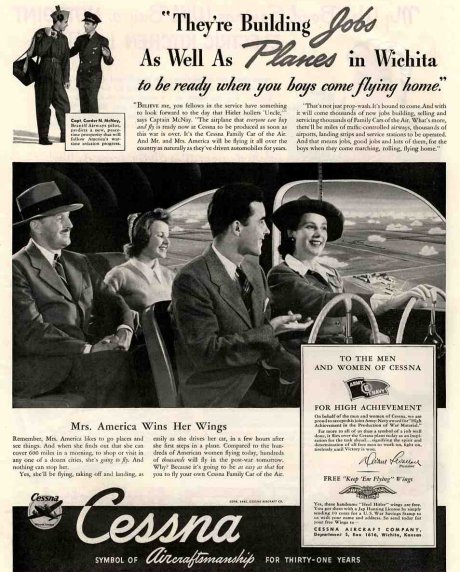
Peggy R. sent in this great vintage ad for Cessna private planes.  Placed in 1941, it suggests that all families should have private planes after the war:

I spoke with my friend and Cessna expert, Stephen Wilson.  He explained that the G.I. Bill, which reimbursed veterans for educational expenses, applied to flying lessons.  Veterans, then, could be reimbursed for learning to fly and Cessna was trying to encourage all veterans and their families to take to the skies.

Lisa Wade, PhD is an Associate Professor at Tulane University. She is the author of American Hookup, a book about college sexual culture; a textbook about gender; and a forthcoming introductory text: Terrible Magnificent Sociology. You can follow her on Twitter and Instagram.


Kevin I. sent in a great short clip instructing women workers newly employed in industrial factories during World War II on how to do their hair to maximize safety. It assumes both ignorance and vanity on the part of women and speaks to the lack of efficiency caused by efforts to remain attractive on the line. Pretty great:

Lisa Wade, PhD is an Associate Professor at Tulane University. She is the author of American Hookup, a book about college sexual culture; a textbook about gender; and a forthcoming introductory text: Terrible Magnificent Sociology. You can follow her on Twitter and Instagram.


Crossposted at Jezebel.

Simon O. sent in this Ukrainian army video meant to recruit women:

The translation (taken from YouTube, and I think it’s a somewhat rough translation; I cleaned up the punctuation and spelling a bit):

Girl 1: Would you take us for a ride in your BMW?
BMW-driver: Even to the end of the world!
Soldier: Hey, I’d like to drown [drink?] some vodka, girls!
Girl 1: Just a second!
Girl 2: Where do you live?
Soldier: Right here- daytime at work, and at night in the clubs!
Girl 1: Which work???
Soldier: Contract, of course!
Blonde girl: Contract? Marriage contract or what?
Girl 3: Army contract, stupid!
BMW driver: Hey, don’t you wanna ride in my car?
Girls: Forget it, take yourself for a ride!
Narrator: It’s about time for new heroes! With contract-based service in Ukrainian armed forces!

Apparently the Austrian army thought it was awesome and made their own version:

Translation (again from YouTube):

Audi Driver: Hey girls, wanna go for a spin in my fast ride?
Girls: Ehh not sure, there’s not even enough space for all of us.
Soldier: Wazzup girls, in the mood for a joyride?
Girls: *Yaaaaay*
Soldier: Join the army if you wanna drive a tank.
Soldier2: Jump in, starting engine.
Audi Driver: Hey, what about the spin?
Girl: Forget it, I want to drive something big.
Narrator: The Austrian Armed Forces offer unique opportunities for young people who are at least 18, everything else is just everyday life.

Both versions play on the idea of women as materialistic, looking for the guy with the best car. Vehicles become a stand-in for masculinity; the bigger/faster the ride, the more attractive you are to women. And what’s more manly than a tank, with a long, phallic-shaped barrel? Women are simply entranced and can’t help running off after the biggest, strongest, manliest vehicle they can find…and, if we take the phallic imagery seriously, presumably the guy with the largest penis, too.

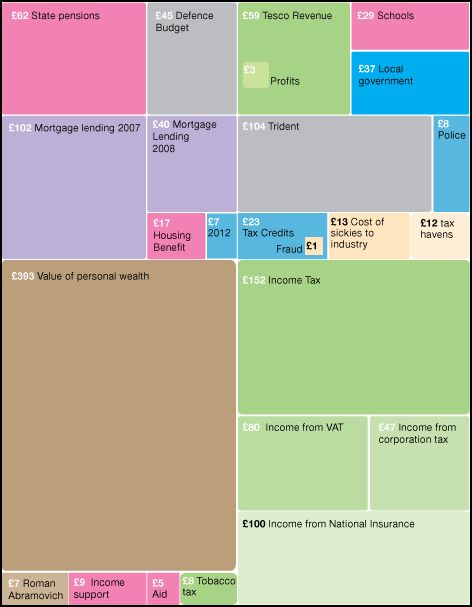
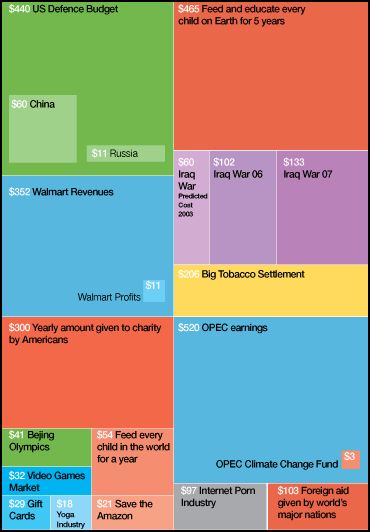
Katrin sent along links to visual portrayals of how much money goes, or could go, to various causes.  While sometimes it’s hard to comprehend what a billion, or 300 billion, dollars amounts to, these images give us perspective on just where our priorities lie.  The segments below are clipped from the visuals for the U.K. and the U.S. at Information is Beautiful.

The British example nicely illustrates how little social services like education, police, and welfare cost in the big scheme of things.

It also reveals how easy it would be to wave all of the African countries’ debt to Western countries. Just £128 spread out over the West.  Shoot, that’s the money for just a couple of corporate bailouts.

The U.S. example reveals how costly (just) the Iraq war has been.  All of our spending pales in comparison to that expenditure., with the exception of what we have spent bailing out the U.S. economy.

It also reveals that the U.S.’s regular defense budget is almot enough to feed and educate every child on earth for five years, and/or about the same as the revenues of Walmart and Nintendo combined.

If we diverted the money spent on porn, we could save the Amazon… almost five times over.  For that matter, if we gave our yoga money to the Amazon, that would just about do it.

Bill Gates could have paid for the Beijing Olympics and had money left over.

Dmitriy T.M. sent in an interactive breakdown of the US Budget for 2011.  In the figures below, the sizes of the squares represent the proportion of the budget, but the colors refer to changes from 2010 (dark and light pink = less funding, dark and light green = more).  These figures will give you an idea, but the graphic is interactive and there’s lots more to learn at the site.

See also our posts on how many starving children could be fed by celebrity’s engagement rings and where U.S. tax dollars go.

Lisa Wade, PhD is an Associate Professor at Tulane University. She is the author of American Hookup, a book about college sexual culture; a textbook about gender; and a forthcoming introductory text: Terrible Magnificent Sociology. You can follow her on Twitter and Instagram.

Even the most cursory discussion of the history of women’s paid employment in the U.S. will include the importance of World War II, when the scarcity of men meant many jobs became available to women for the first time.

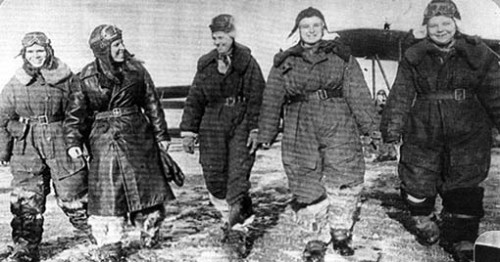
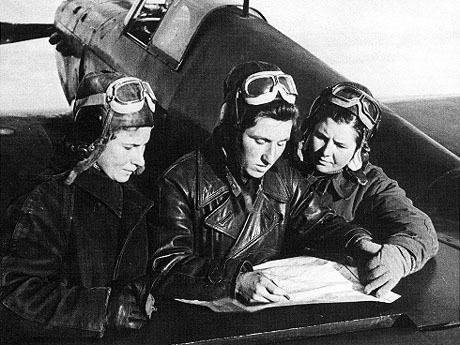
The U.S. wasn’t the only place this happened, of course. In the face of a massive attack by the Nazis, the Soviet Union allowed women to occupy combat positions, including setting up three regiments to fly night bombing raids (according to Wikipedia, it was the first nation to allow women to do so). The regiments became known as the Night Witches:

“We slept in anything we could find—holes in the ground, tents, caves—but the Germans had to have their barracks, you know. They are very precise. So their barracks were built, all in a neat row, and we would come at night, after they were asleep, and bomb them. Of course, they would have to run out into the night in their underwear, and they were probably saying,—Oh, those night witches!’ Or maybe they called us something worse. We, of course, would have preferred to have been called ‘night beauties,’ but, whichever, we did our job.”

Members of the 588th Night Bomber Regiment:

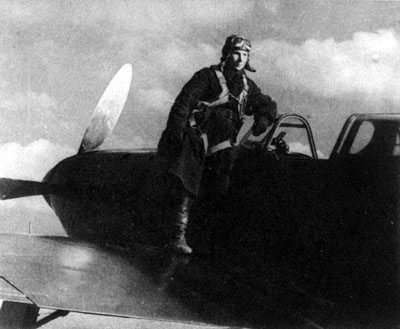
Lilya Litvyak:

In this video, Lidiya Gudovantseva recalls working as a sniper, including the first time she had to kill a German soldier and later being injured herself:

When the war ended, many women in the U.S. were pressured to leave their jobs; similarly, female Soviet soldiers found that opportunities for promotion dried up during peace time. They were apparently even barred from military colleges, closing off many positions to them altogether, though the military’s draft policies stipulated that women should be called up next time there was a war. Women served as a reserve labor force for the military, to be called up when needed (and praised on Soviet propaganda posters) but pushed out of the ranks to provide room for men the rest of the time.