Cross-posted at The Atlantic and Family Inequality.

The Census Bureau has a new report on nonmarital births. Based on the American Community Survey — the largest survey of its kind, and the only one big enough to track all states — the report shows that 35.7 percent of births in 2011 were to unmarried mothers.

Beneath the headline number, two patterns in the data will receive a lot of attention: education and race/ethnicity. I have a brief comment on both patterns.

Education

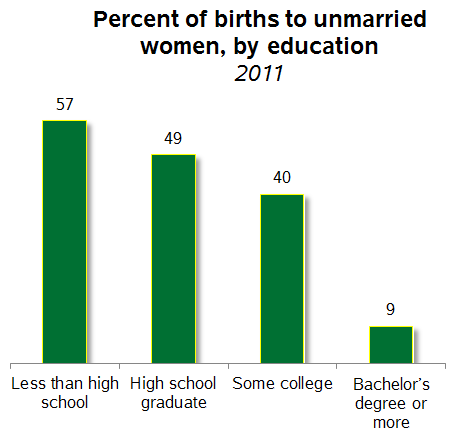
The education patterns show a very steep dropoff in nonmarital births as women’s education increases. From 57 percent unmarried among those who didn’t finish high school to just nine percent among those who have graduated college.
1

Given the hardships faced by single mothers (especially in the United States), it looks like women with more education are making the more rational decision to avoid childbearing when they’re not married. And I don’t doubt that’s partly the explanation. But we need to think about marriage, education and childbearing as linked events that unfold over time. The average high-school dropout mother was 26, while the average college-graduate mother was 33. Delaying childbearing and continuing education are decisions that are made together, based on the opportunities people have. And completing more education increases both the likelihood of marriage and the earning potential of one’s spouse.

So I think you could tell the story like this: Women with better educational opportunities delay childbearing, which increases their marriage prospects, and makes it more likely they will be married and financially better off when they have children in their 30s.

Race/Ethnicity

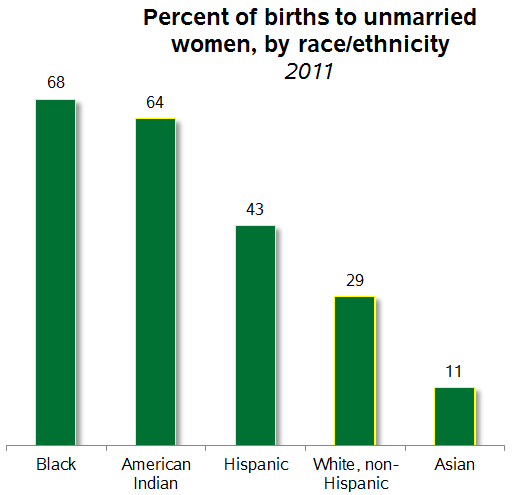
The differences in nonmarital birth rates between race/ethnic groups in the U.S. are shocking, from about two-thirds for black and American Indian women to 29 percent for whites and 11 percent for Asians.
2

This pattern is related to the education trend, naturally, but that’s not the whole story. One aspect of the story is race/ethnic geography of opportunity in this country. I’ve written before about the shortage of employed men available for women to marry, a particular expression of racial disparity first popularized by sociologist William Julius Wilson a quarter century ago.

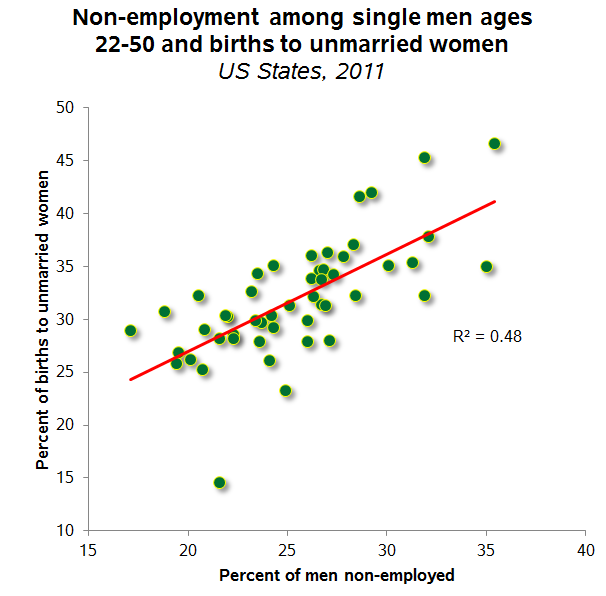
Using the new numbers on nonmarital birth rates for each state from the Census report, I compared them to the male non-employment rate — specifically, the percentage of unmarried men ages 22-50 that are not currently employed. Here’s the relationship:
3

The states with more single men out of work have higher rates of nonmarital births. Single mother, meet jobless man.

My conclusion from these patterns is that unmarried parenthood is primarily a symptom of lack of opportunity, especially for education and employment. Surely that’s not the whole story. Maybe we should be persuading people to marry younger or shaming them into avoiding parenthood. But I think those approaches increase stigma more than they change behavior or improve wellbeing — Pew surveys show that 77 percent of people already say raising a family is easier if you’re married and only 12 percent of single people say they don’t want to marry. So who needs convincing? Meanwhile, if we addressed the problems of education and employment, is there any doubt family security and stability would improve, and with it the wellbeing of children and their parents?

Philip N. Cohen is a professor of sociology at the University of Maryland, College Park, and writes the blog Family Inequality. You can follow him on Twitter or Facebook.

Dieting is for women.

I mean we all know that dieting and women go together like peas and carrots.  We know this — collectively and together, even if we don’t agree that it should be this way — not because it’s inevitable or natural, but because we constantly get reminded that women should be on diets and dieting is a feminine activity.

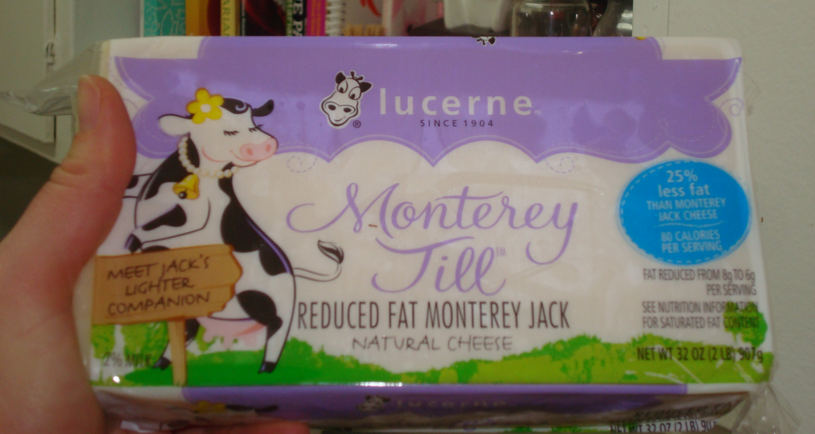
@msmely tweeted us a fabulous example of this type of reminder.  It’s a reduced fat block of Monterey Jack cheese, re-named “Monterey Jill.”  There’s curvy purple font and a cow in pearls with a flower, in case you missed the message.  And, oh, on the odd chance you thought that this was about health and not weight, there’s a little sign there with a message to keep you on track: “Meet Jack’s lighter companion.”

Screenshot_2

So now we’ve gendered cheese and managed to affirm both the gender binary  (heavy vs. light), heterocentrism (Jack’s companion Jill), and the diet imperative for women.  And it’s just cheese people!  Cheese!

That is all.

Lisa Wade, PhD is an Associate Professor at Tulane University. She is the author of American Hookup, a book about college sexual culture; a textbook about gender; and a forthcoming introductory text: Terrible Magnificent Sociology. You can follow her on Twitter and Instagram.

Please enjoy these posts from Mother’s Days past:

Cross-posted at VitaminW.

In 2006, The Walt Disney Company bought the computer-animated feature film powerhouse Pixar.  This makes the lead of their most recent movie, Brave (2012), not just a princess, but a Disney Princess.  Merida is having a royal coronation at the Magic Kingdom this morning.

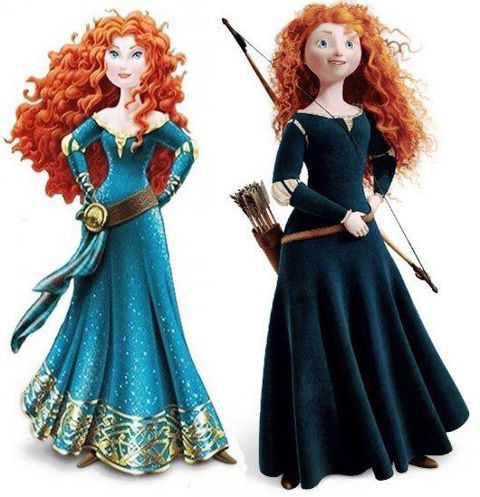
For her coronation, the princess has gotten a good ol’ Disney makeover. On the left is the new Merida (“after”) and on the right is the old Merida (“before”).  Notice any differences?

1

Here are the ones that I see:

  • Sleeker, longer hair with more body
  • Larger eyes and more arched eyebrows
  • Plumper lips
  • A thinner waist
  • More obvious breasts
  • An overall more adult and less adolescent appearance
  • Lighter colored and more ornate gown
  • A lower cut neckline that also shows more shoulder
  • Perhaps most symbolically, her bow and arrows have disappeared in favor of a fashionable belt

We’ll add the new Merida to our always-growing collection of toys and logos that have received sexy make-overs.  You’ll love this Pinterest page, featuring a surprising set of newly sexy characters, including Care Bears, Polly Pockets, Holly Hobbie, Strawberry Shortcake, My Little Pony, Rainbow Brite, Cabbage Patch Kids, Dora the Explorer, and the Trollz.

Lisa Wade, PhD is an Associate Professor at Tulane University. She is the author of American Hookup, a book about college sexual culture; a textbook about gender; and a forthcoming introductory text: Terrible Magnificent Sociology. You can follow her on Twitter and Instagram.

Cross-posted at The Ethical Adman.

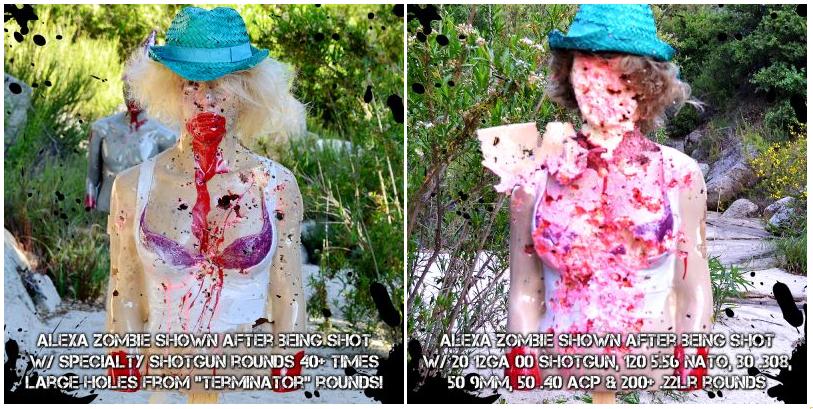
So it turns out there’s this company that makes “zombie” targets for gun enthusiasts. They have clown zombies, nazi zombies, “terrorist” zombies, dog zombies and even a green zombie named “Rocky” that has Barack Obama’s ears.

And one woman.

1

Here’s their explanation:

The Zombie virus does not discriminate and neither does Zombie Industries.  We take preparation for the Zombie Apocalypse seriously, which is why we strive to have all groups of undead monsters represented in our product selection.  In addition to the Ex Girlfriend Zombie, we currently sell 15 male zombies, 5 animal zombies & 2 aliens… to discriminate against Women by not having them represented in our product selection would be just plain sexist.

Each of the zombie targets has a story.  Here is the story of “The Ex”:

Be warned, hell hath no fury like a woman scorned but a man scorned is nothing to mess with! A young gent from Louisiana, we’ll call him André to protect his identity, was deeply committed to his one true love and her to him, or so he thought. While partying with her friends during one particular Mardi Gras, she took several suitors over the course of the festivities. André felt something odd indeed, so he paid a visit to his great aunt, Marie, who helped him see the truth. With a few eggs, candles lit and kiss upon his forehead, her voodoo curse was set in motion. Late each night while lying in bed, a smile would appear across his face, for a slight breeze would travel through a cracked window bringing with it, a faint whiff of decay and a unnatural cry of regret.

That’s right. In this narrative, a man kills a woman for cheating on him, and has her turned into a zombie. Which you, bro, are now invited to blow to bits.

2

Despite the game-like zombie theme, it is notable that the single human female representation has been created specifically as a target of violent male anger towards a woman’s ownership of her own sexuality.  And “The Ex” is portrayed in a highly sexual way, with what seems to be a bare lower torso and busting out chest.

Policymic writes, “Every day, at least three women are killed by an intimate partner in the US alone.  Let’s make sure those numbers go down, not up. Let’s make sure companies like Zombies Industries know that we’re not buying it.”

Some people, however, are buying it. And this is what’s most troubling.

From the product reviews:

This Zombie Bitch is awesome, reminds me of a girl I knew in High School, My LMT LM308MWS should put a stop to the undead bring them on !!! Later Party till you drop Corvette forever !!!!!

And:

I love that this target looks like Britney Spears and it bleeds when I shot it.

And from YouTube:1

Tom Megginson is a Creative Director at Acart Communications, a Canadian Social Issues Marketing agency. He is a specialist in social marketing, cause marketing, and corporate social responsibility. You can follow Tom at workthatmatters.blogspot.com.

Cross-posted at Pacific Standard.Screen Shot 2013-05-07 at 7.33.46 PM

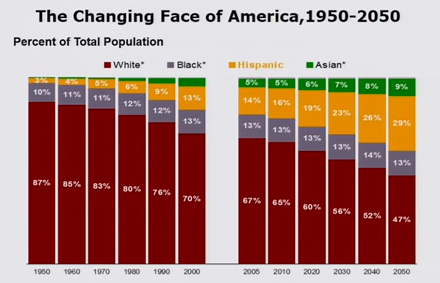
In this 20-minute video, the Pew Research Center’s Paul Taylor discusses trends in the racial/ethnic breakdown of the U.S. population over the last century. Taylor discusses a number of related issues, including the income and wealth gap, perceptions about interracial relations, and the electoral implications of the demographic changes. For instance, while Ronald Reagan once said Hispanics are “Republicans who don’t know it yet,” there’s no evidence that they’re any closer to realizing it. As Hispanics and Asians make up an increasing proportion of the voting population, old electoral strategies based on winning most of the White vote are no longer sufficient to win a national election.

I’d skip the introductory remarks and start just after the 2-minute mark.

Gwen Sharp is an associate professor of sociology at Nevada State College. You can follow her on Twitter at @gwensharpnv.

1I was so honored to be invited to give the AKD Induction Ceremony Address for the University of Akron this year.  It was an opportunity to give a speech about something in which I deeply believe: the awesomeness of sociology.  So, here it is!

My 13 minute ode to the discipline, featuring (an attempt at) self-deprecating sociology humor and a few personal confessions regarding my own rough start with sociology:

Lisa Wade, PhD is an Associate Professor at Tulane University. She is the author of American Hookup, a book about college sexual culture; a textbook about gender; and a forthcoming introductory text: Terrible Magnificent Sociology. You can follow her on Twitter and Instagram.

Cross-posted at BlogHer, VitaminW, and The Huffington Post.

At about 1:00 Monday, a quorum of the Occidental Faculty overwhelmingly voted No Confidence in the campus attorney, Carl Botterud, and the Dean of Students, Barbara Avery. I was among the faculty in attendance.

The votes are in response to a belief that these high-level Occidental employees have mishandled sexual assault education, reporting, and adjudication in ways that have harmed individual students and campus culture.

While the motions are symbolic, such measures are quite rare. It is a very powerful statement coming from a faculty united in defense of survivors of sexual assault and their allies. We now wait to see how the College President, Jonathan Veitch, moves forward. The two are currently still active employees at Occidental (that is, not on administrative leave) and Avery continues to chaperone students through the reporting and adjudication process. We are told there is or will be an internal investigation into their conduct.

The vote of no confidence comes on the heels of two federal complaints filed by a coalition of students and faculty and a set of lawsuits filed by Gloria Allred. It is the next step in our personal fight for a better campus, but part of a nationwide movement involving dozens of campuses across the country.

Lisa Wade, PhD is an Associate Professor at Tulane University. She is the author of American Hookup, a book about college sexual culture; a textbook about gender; and a forthcoming introductory text: Terrible Magnificent Sociology. You can follow her on Twitter and Instagram.