In this post I present the most comprehensive analysis ever reported of the gender of New York Times writers (I think), with a sample of almost 30,000 articles.

This subject has been in the news, with a good piece the other day by Liza Mundy — in the New York Times — who wrote on the media’s Woman Problem, prompted by the latest report from the Women’s Media Center. The WMC checked newspapers’ female byline representation from the last quarter of 2013, and found levels ranging from a low of 31% female at the NYT to a high of 46% at the Chicago Sun-Times. That’s a broad study that covers a lot of other media, and worth reading. But we can go deeper on the NYTimes, thanks to the awesome data collecting powers of my colleague Neal Caren.

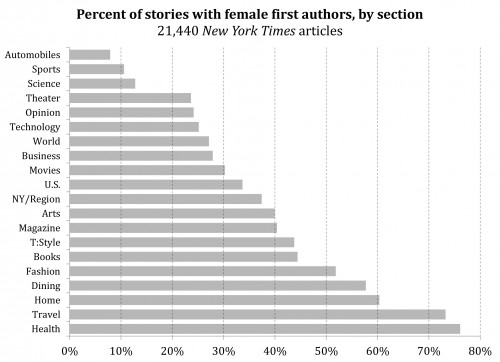
Here are the results based on 21,440 articles published online from October 23, 2013 to February 25, 2014.

Women’s authorship

1. Women were the first author on 34% of the articles. This is a little higher than the WMC got with their A-section analysis, which is not surprising given the distribution of writers across sections.

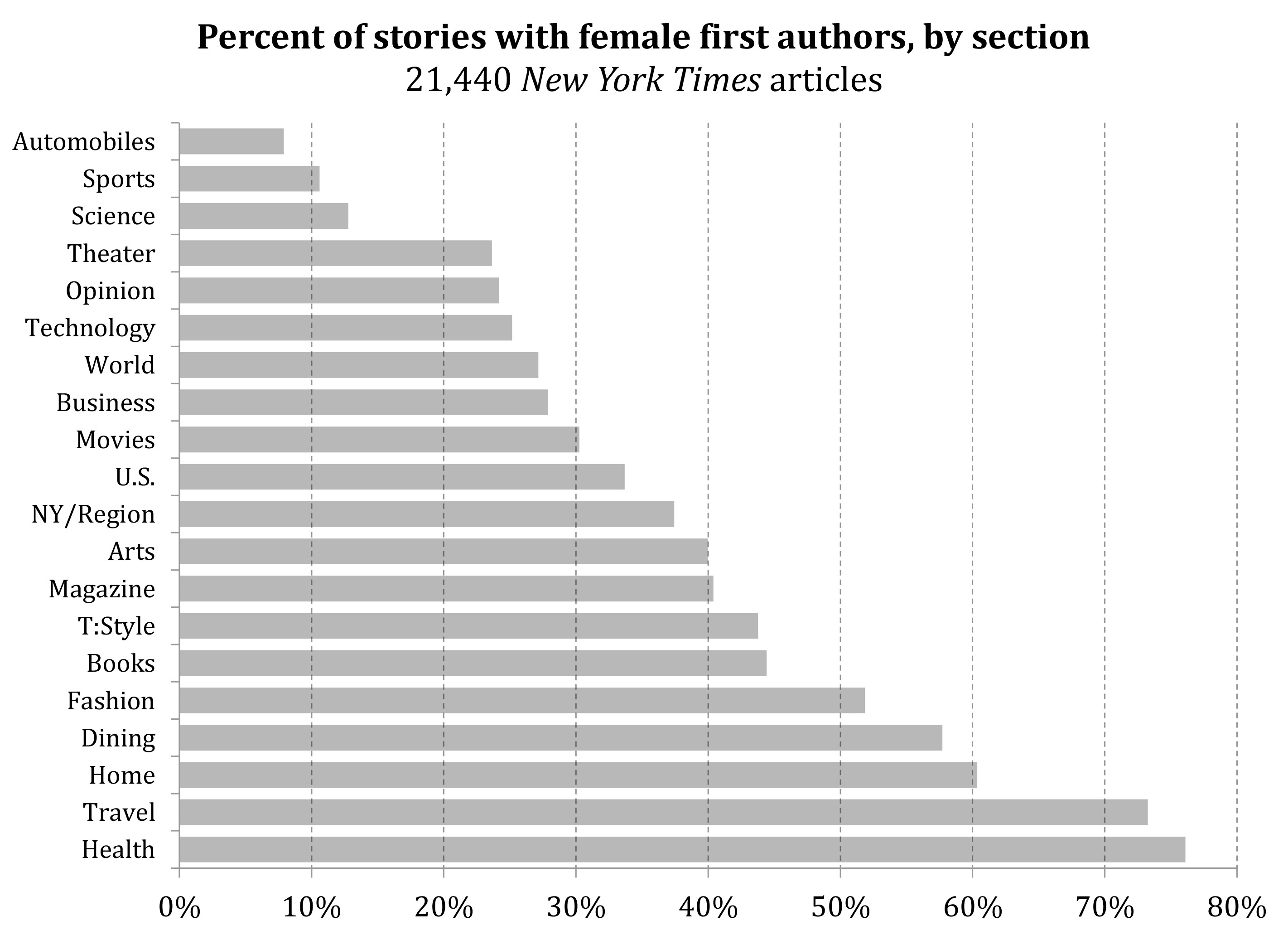
2. Women wrote the majority of stories in five out of 21 major sections, from Fashion (52% women), to Dining, Home, Travel, and Health (76% women). Those five sections account for 11% of the total.

3. Men wrote the majority of stories in the seven largest sections. Two sections were more than three-fourths male (Sports, 89%; and Opinion, 76%). U.S., World, and Business were between 66% and 73% male.

Here is the breakdown by section (click to enlarge):
1 (2)

Gender words

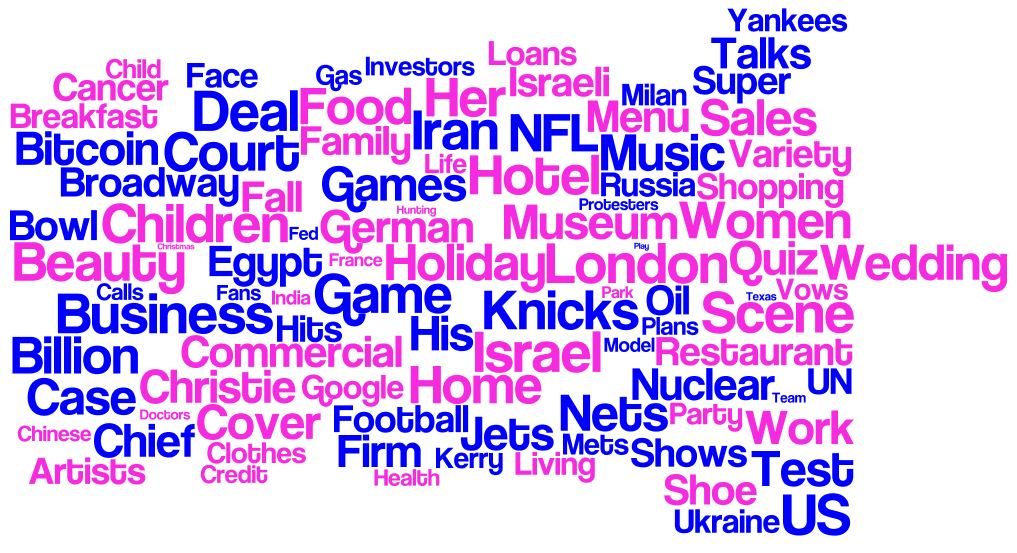
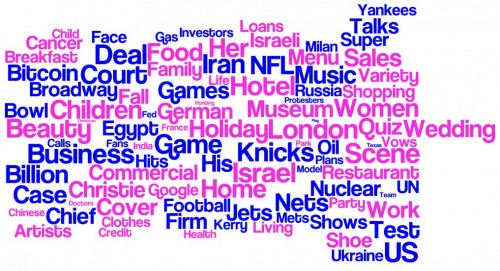
Since we have all this text, we can go a little beyond the section headers served up by the NYTimes‘ API. What are men and women writing about? Using the words in the headlines, I compiled a list of those headline words with the biggest gender difference in rates of appearance.

For example, “Children” occurred 36 times in women’s headlines, and 24 times in men’s headlines. Since men used more than twice as many headline words as women, this produced a very big gender spread in favor of women for the word “Children.”  On the other hand, women’s headlines had 10 instances of “Iran,” versus 85 for men. Repeating this comparison zillions of times, I generated these lists:

NYTimes headline words used disproportionately in stories by

WOMEN MEN
Scene US
Israel Deal
London Business
Hotel Iran
Her Game
Beauty Knicks
Children Court
Home NFL
Women Billion
Holiday Nets
Food Music
Sales Case
Wedding Test
Museum His
Cover Games
Quiz Bitcoin
Work Jets
Christie Chief
German Firm
Menu Nuclear
Commercial Talks
Fall Egypt
Shoe Bowl
Israeli Broadway
Family Oil
Restaurant Shows
Variety Super
Cancer Football
Artists Hits
Shopping UN
Breakfast Face
Loans Russia
Google Ukraine
Living Yankees
Party Milan
Vows Mets
Clothes Kerry
Life Gas
Child Investors
Credit Plans
Health Calls
Chinese Fans
India Model
France Fed
Park Protesters
Doctors Team
Hunting Texas
Christmas Play

Here is the same table arranged as a word cloud, with pink for women and blue for men (sue me), and the more disproportionate words larger (click to enlarge):
1 (3) - Copy

What does it mean?

It’s just one newspaper but it matters a lot. According to Alexa, NYTimes.com is the 34th most popular website in the U.S., and the 119th most popular in the world — and the most popular website of a printed newspaper in the U.S. In the JSTOR database of academic scholarship, “New York Times” appeared almost four-times more frequently than the next most-commonly mentioned newspaper, the Washington Post.

Research shows that when women are charge, they tend to produce better outcomes for women below them in the organizational hierarchy. Jill Abramson, the NYTimes‘ executive editor, is aware of this issue, and proudly told the Women’s Media Center that she had reached the “significant milestone” of having a half-female news masthead (which is significant). So why are women underrepresented in such prominent sections?  I’m really wondering. The NYTimes doesn’t even do as well as the national average: 41% of the 55,000 “News Analysts, Reporters and Correspondents” working full-time, year-round in 2012 were women.

Organizational research finds that large companies are less likely to discriminate against women, and we suspect three main reasons: greater visibility to the public, which may complain about bias; greater visibility to the government, which may enforce anti-discrimination laws; and greater use of formal personnel procedures, which limits managerial discretion and is supposed to weaken old-boy networks. Among writers, however, an informal, back-channel norm still apparently prevails — at least according to a recent essay by Ann Friedman. Maybe NYTimes‘ big-company, formalized practices apply more to departments other than those that select and hire writers.

A more in-depth discussion of these findings, with details on Cohen and Caren’s research methods, can be found at Family Inequality. Cross-posted at Pacific Standard.

Philip N. Cohen is a professor of sociology at the University of Maryland, College Park, and writes the blog Family Inequality. You can follow him on Twitter or Facebook.

In New Orleans there is this magical thing where you can put your alcoholic drink in a plastic cup of any kind and leave the establishment you are patronizing — or even your own very house — and go outside!

!!!

It’s called a “go-cup” and, in its simplest form, it looks like this:

1

The bars and restaurants have them for your convenience and many residents keep a supply on hand too.

I still remember the first time I went to New Orleans, about five years ago, and realized that I could do this.  It was… okay “liberating” might be a strong word… but it did bring into sharp relief the lack of freedom that I experience in other parts of the U.S. that do not allow public consumption of alcohol.  Moreover, it revealed to me how deeply I had internalized the idea that (1) you can’t drink alcohol in public, (2) if you want to drink alcohol and you’re not at home, you have to purchase it from a vendor and, (3) if you purchase a drink, you must finish drinking it or abandon the remains if you want to go somewhere else.

None of these rules apply in New Orleans.

I had the pleasure of showing my friend Dolores around the city last month and chuckled as she kept forgetting that we could leave a bar or restaurant with a drink in hand.  I’d suggest we go and she’d remember, suddenly, that we could.  We didn’t have to sit around and finish our drinks.  Or, even crazier, we could pop into a bar as we walked by, order a drink, and keep going our merry way.  Her realization that these were possibilities happened over and over again, as she kept reverting to her non-conscious habits.

Dolores’ experience is a great example of how we internalize rules invented by humans to the point where they feel like laws of nature.  In our daily lives in Los Angeles, where we both live, we hang out together and drink alcohol under the local regulations. We rarely feel constrained by these because we forget that it could be another way.  This is the power of culture to make alternative ways of life invisible and, as a result, gain massive public conformity to arbitrary norms and laws.

Cross-posted at Pacific Standard.

Lisa Wade, PhD is an Associate Professor at Tulane University. She is the author of American Hookup, a book about college sexual culture; a textbook about gender; and a forthcoming introductory text: Terrible Magnificent Sociology. You can follow her on Twitter and Instagram.

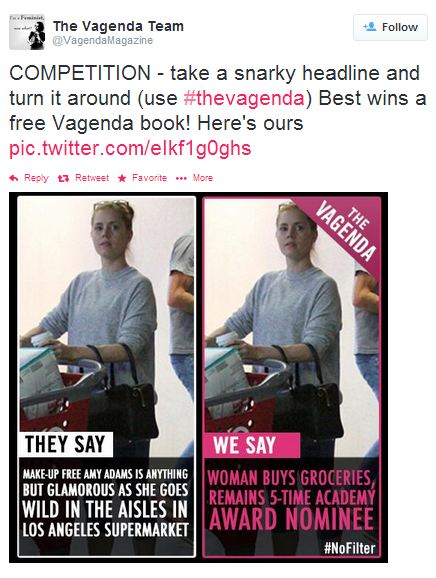
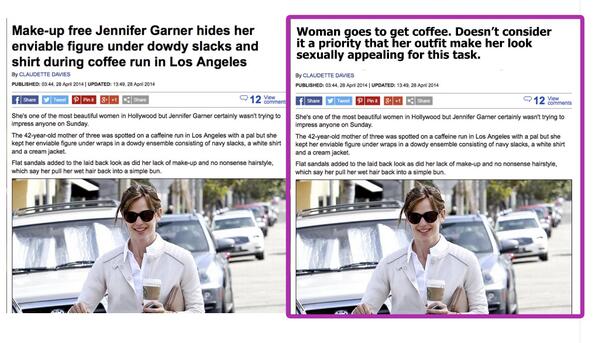
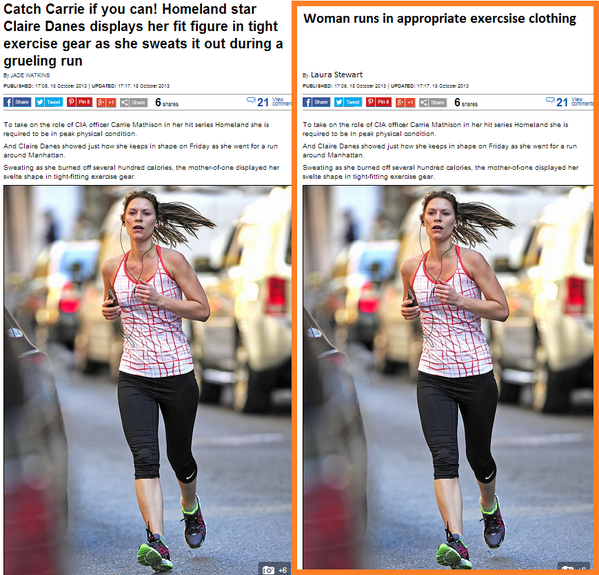
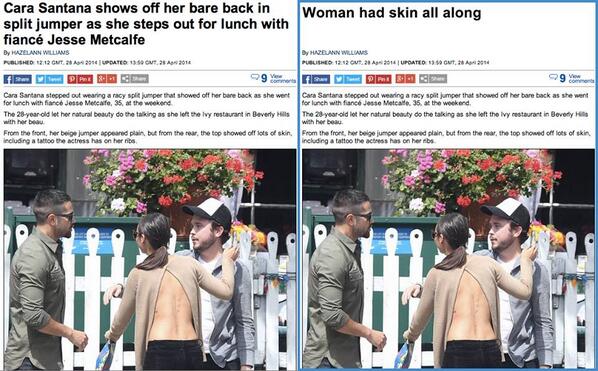
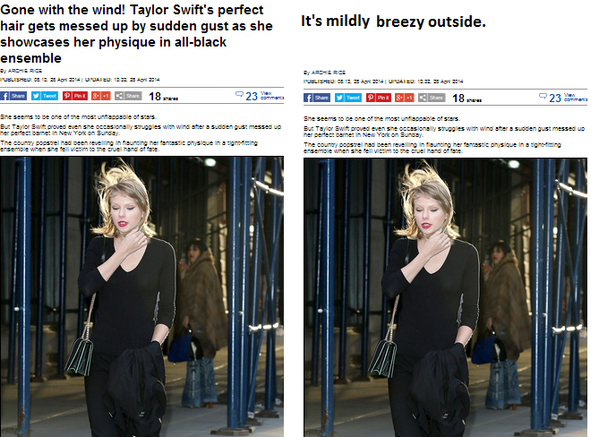
Folks at The Vagenda had the idea of asking readers to rewrite stupid/sexist headlines. Like this:

1a

The results were fantastic. Here’s a sampling.

From @bexatrex:

1

From @ledavies: 1.jpg

From @RubyJLL:1b

From @kimmibobs: 2

From @ce_corp: 2Via Buzzfeed.

Lisa Wade, PhD is an Associate Professor at Tulane University. She is the author of American Hookup, a book about college sexual culture; a textbook about gender; and a forthcoming introductory text: Terrible Magnificent Sociology. You can follow her on Twitter and Instagram.

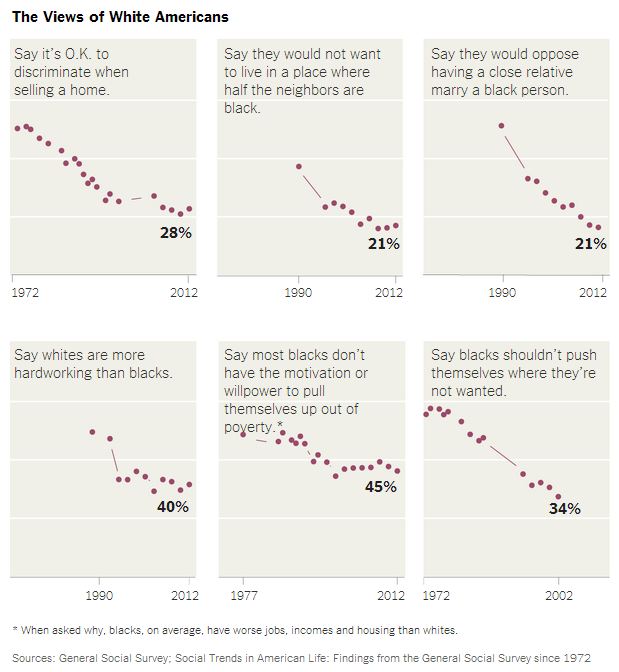
Here’s solid data on how some white Americans see black Americans:

1H/t New York Times.

Lisa Wade, PhD is an Associate Professor at Tulane University. She is the author of American Hookup, a book about college sexual culture; a textbook about gender; and a forthcoming introductory text: Terrible Magnificent Sociology. You can follow her on Twitter and Instagram.

Flashback Friday.

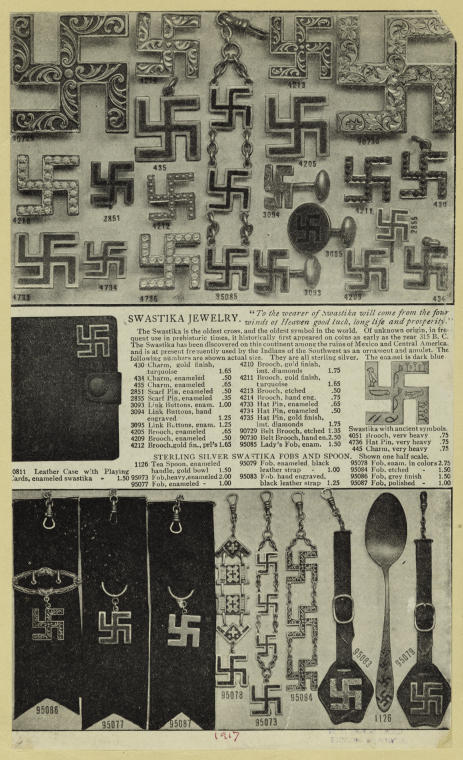
I found this 1917 advertisement for swastika jewelry while browsing through the NY Public Library Digital Gallery. The text reads in part:

To the wearer of swastika will come from the four winds of heaven good luck, long life and prosperity. The swastika is the oldest cross, and the oldest symbol in the world. Of unknown origin, in frequent use in the prehistoric items, it historically first appeared on coins as early as the year 315 B.C.

As this suggests, while the symbol of the swastika is most frequently associated with Hitler and Nazis during World War II, and is still used by neo-Nazi groups, the symbol itself has a much longer history. From wikipedia:

Archaeological evidence of swastika-shaped ornaments dates from the Neolithic period. An ancient symbol, it occurs mainly in the cultures that are in modern day India and the surrounding area, sometimes as a geometrical motif and sometimes as a religious symbol. It was long widely used in major world religions such as Hinduism, Buddhism and Jainism.

Before it was co-opted by the Nazis, the swastika decorated all kinds of things.  Uni Watch has tons of examples. Here it is on a Finnish military plane:

A Boy Scout badge:

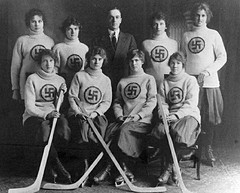
A women’s hockey team called the Swastikas from Edmonton (from 1916):

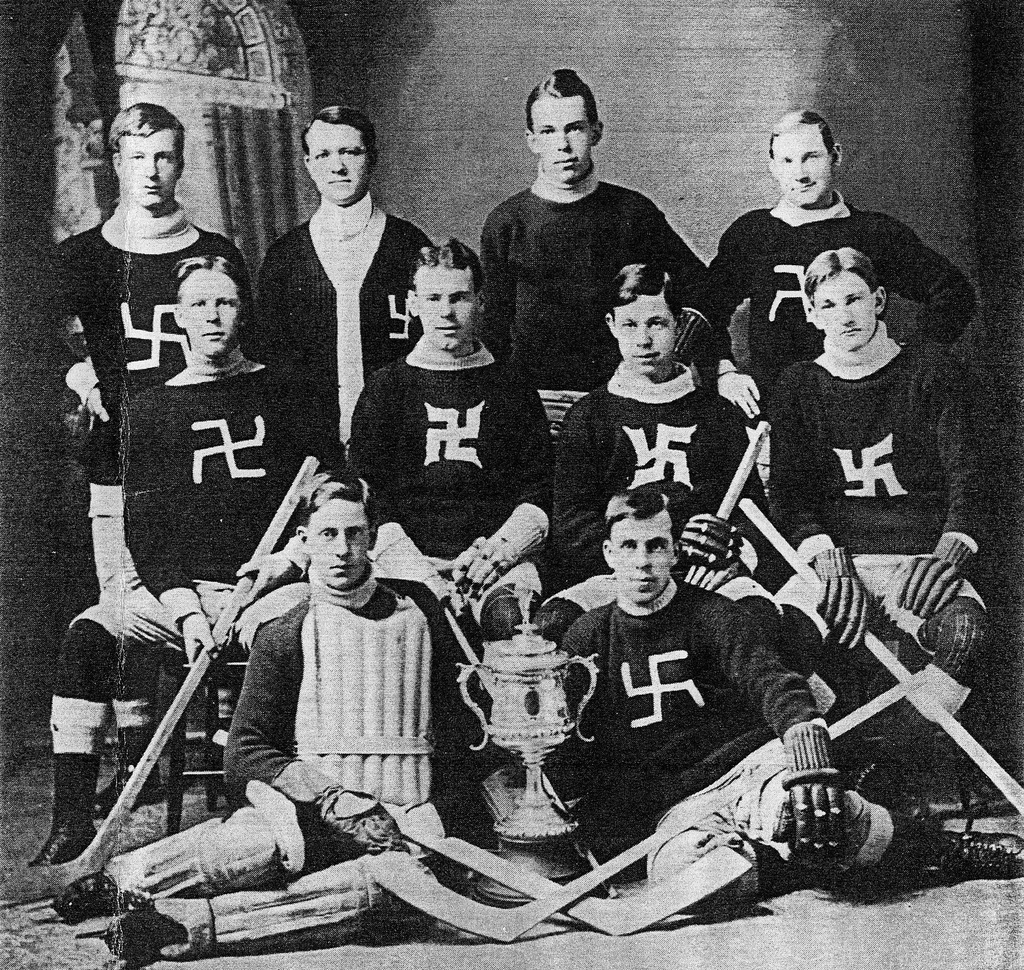
Another hockey team:

In the comments, Felicity pointed to this example:

She writes:

My mom is a quilter and collects antique quilts (when she can afford them). She says that while in general, antique quilts and quilt-tops have gone up a great deal in price over the decades, there’s still one sort you can pick up for a song — swastika quilts.

It’s kind of sad to think of somebody in 1900 putting all that time and hand-stitching into a ‘good luck’ quilt that is now reviled.

All of these examples occurred before the Nazis adopted the swastika as their symbol (and changed it slightly by tilting it on a 45-degree angle). Of course, the original meaning or usage of the swastika is beside the point now. Because it is so strongly associated with the Nazis, it’s impossible to use it now without people reading it as a Nazi symbol. And in fact it’s unimaginable that a group in the U.S. or Europe would use the swastika today without intentionally meaning to draw on the Nazi association and the ideas espoused by Hitler and his party.

Wendy Christensen is an Assistant Professor at William Paterson University whose specialty includes the intersection of gender, war, and the media.  You can follow her on Twitter.

“Stay-at-home mother” evokes black and white images of well-coiffed women in starched aprons. Rather than a vestige of a bygone era, stay-at-home moms are on the rise, according to the findings of a new Pew Research study. In 2012, 29% of women with children under the age of 18 stayed home, a number that has been on the rise since 1999 and is 3% higher than in 2008.

However, while more women are staying home with their children, the face of the stay-at-home mom has changed dramatically since the 1950s “Leave It to Beaver” days. Stay-at-home moms today are less educated and more likely to live in poverty than working moms. Younger mothers and immigrant mothers also make up a good portion of stay-at-home moms.

The story of why mothers are staying home is more complex than you may imagine and has more to do with the poor labor market, the exorbitant price of child care, and the contemporary structure of work. In a recent interview with Wisconsin Public RadioBarbara Risman, a sociologist at the University of Illinois at Chicago, spoke about how this report has been picked up by the mainstream media:

What’s surprising to me is the headlines and how it’s portrayed in the news. Although the numbers are going up, when you look at what mothers say, 6% of the mothers in this study say they are home because they can’t find a job. When you take those 6% of mothers out, the results are rather flat. Part of the real story here then is that it’s hard to find a job that allows you to work and covers your child care, particularly if you have less education and your earning potential isn’t very high.

These days stay-at-home moms, who are more likely to be less educated, are not able to make enough money for working to even be worthwhile. Many times, their pay wouldn’t actually cover the cost of child care. Beyond these important financial considerations, lower wage shift work makes it extremely difficult to coordinate child care in the midst of work schedules that change on a weekly basis.

Erin Hoekstra is pursuing a PhD in Sociology at the University of Minnesota. This post originally appeared on Citings and Sightings and you can read all of Erin’s contributions to The Society Pages here.  Cross-posted at Pacific Standard.

These are not fancy glasses:

1b

They’re celery vases and they’re exactly what they sound like: vases for celery.   In the late 1800s, people used these vases to ostentatiously present celery to their guests. Celery, you see, was a status food: a rare delicacy that only wealthy families could afford and, therefore, a way to demonstrate your importance to guests.

As celery began to decline in importance — cheaper varieties became available and its role for the elite declined — celery vases were replaced by celery dishes.   “Less conspicuous on the dining table,” writes decorative arts consultant Walter Richie, “the celery dish reflected the diminishing importance of celery.”

1a

Lisa Wade, PhD is an Associate Professor at Tulane University. She is the author of American Hookup, a book about college sexual culture; a textbook about gender; and a forthcoming introductory text: Terrible Magnificent Sociology. You can follow her on Twitter and Instagram.

Screenshot_2
Happy Graduation, Seniors! Congratulations! What’s next?  Below is some sociologically-inspired, out-of-the-box advice on work, love, family, friendship, and the meaning of life.  For new grads from the two of us!

1. Don’t Worry About Making Your Dreams Come True

College graduates are often told: “follow your passion,” do “what you love,” what you were “meant to do,” or “make your dreams come true.”  Two-thirds think they’re going find a job that allows them to change the world, half within five years.  Yikes.

This sets young people up to fail. The truth is that the vast majority of us will not be employed in a job that is both our lifelong passion and a world-changer; that’s just not the way our global economy is. So it’s ok to set your sights just a tad below occupational ecstasy.  Just find a job that you like.  Use that job to help you have a full life with lots of good things and pleasure and helping others and stuff.  A great life is pretty good, even if it’s not perfect.

2. Make Friends

Americans put a lot of emphasis on finding Mr. or Ms. Right and getting married. We think this will bring us happiness.  In fact, however, both psychological well-being and health are more strongly related to friendship.  If you have good friends, you’ll be less likely to get the common cold, less likely to die from cancer, recover better from the loss of a spouse, and keep your mental acuity as you age.  You’ll also feel more capable of facing life’s challenges, be less likely to feed depressed or commit suicide, and be happier in old age.  Having happy friends increases your chance of being happy as much as an extra $145,500 a year does.  So, make friends!

3. Don’t Worry  about Being Single

Single people, especially women, are stigmatized in our society: we’re all familiar with the image of a sad, lonely woman eating ice cream with her cats in her pajamas on Saturday night. But about 45% of U.S. adults aren’t married and around 1 in 7 lives alone.

This might be you.  Research shows that young people’s expectations about their marital status (e.g., the desire to be married by 30 and have kids by 32) have little or no relationship to what actually happens to people.  So, go with the flow.

And, if you’re single, you’re in good company.  Single people spend more time with friends, volunteer more, and are more involved in their communities than married people. Never-married and divorced women are happier, on average, than married women. So, don’t buy into the myth of the miserable singleton.

4. Don’t Take Your Ideas about Gender and Marriage Too Seriously

If you do get married, be both principled and flexible.  Relationship satisfaction, financial security, and happy kids are more strongly related to the ability to adapt in the face of life’s challenges than any particular way of organizing families.  The most functional families are ones that can bend.  So partnering with someone who thinks that one partner should support their families and the other should take responsibility for the house and children is a recipe for disaster.  So is being equally rigid about non-traditional divisions of labor.  It’s okay to have ideas about how to organize your family – and, for the love of god, please talk about both your ideals and fallback positions on this – but your best bet for happiness is to be flexible.

5. Think Hard About Whether to Buy a House

Our current image of the American Dream revolves around homeownership, and buying a home is often taken for granted as a stage on the path to full-fledge adulthood. But the ideal of universal home ownership was born in the 1950s.  It’s a rather new idea.

With such a short history, it’s funny that people often insist that buying a house is a fool-proof investment and the best way to secure retirement.  In fact, buying a house may not be the best choice for you. The mortgage may be less than rent, but there are also taxes, insurance, and the increasingly common Home Owners Association (HOA) fees. You may someday sell the house for more than you bought it but, if you paid interest on a mortgage, you also paid far more than the sale price.  You have freedom from a landlord, but may discover your HOA is just as controlling, or worse.  And then there’s the headache: renting relieves you from the stress of being responsible for repairs. It also offers a freedom of movement that you might cherish.

So, think carefully about whether buying or renting is a better fit for your finances, lifestyle, and future goals. This New York Times rent vs. buy calculator is a good start.

6. Think Even Harder about Having Kids

One father had this to say about children: “They’re a huge source of joy, but they turn every other source of joy to shit.” In fact, having children correlates with both an increased sense of purpose in life and a long-lasting decrease in individual and marital happiness.  Having kids means spending a lot of your short life and limited income on one source of joy. It’s not a bad decision. But it’s also not the only good decision you can make. We want to think we can “have it all” but, in fact, it’s a zero sum game. You have only so much time and money and there are lots of ways to find satisfaction, pleasure, and meaning in this life.  Consider all your options.

Lisa Wade is a professor of sociology at Occidental College. You can follow her on Twitter and Facebook.  Gwen Sharp is a professor of sociology at Nevada State College. You can follow her on Twitter.

Originally posted in 2013 and cross-posted at The Huffington Post and PolicyMic (with gifs!).