Crazy Vet offers us this rather amazing commercial for BP as an example of “green-washing” or an effort to make a company appear environmentally friendly:
What I think is especially remarkable about this example is how entirely free of any content it manages to be. The commercial combines pretty colors, animation, babies, cute music, and whistling gas pumps. That alone, apparently, is effective in convincing us that BP is environmentally benign. It is pure emotion, completely devoid of an argument.
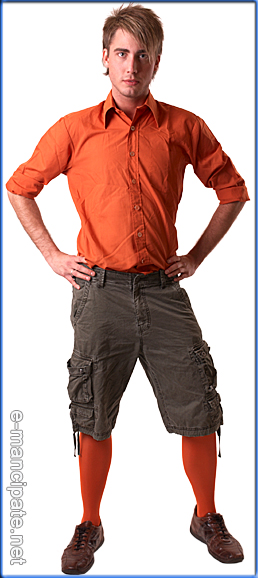
From the website: “Project E-MANcipate is a project to accelerate the acceptance of male pantyhose as a regular clothing item.”
Hey, I’m all for men and women wearing pantyhose if they want to (as long as no one makes me wear any) but what sort of “emancipation” is being advocated?
Is this about emancipation men from the confines of masculinity so that they can wear an item associated with femininity?
“Men who wear pantyhose do it to improve athletic performance, energize and revitalize tired, aching leg muscles, and to stimulate circulation if they sit all day. In addition, compression can help reduce swelling and decrease the dangers of circulatory problems. And of course there are many men who simply like the soft material and the comfort that sheer pantyhose provides.”
So men would mostly wear pantyhose for (manly) athletic reasons. And, as the website also notes, to keep warm in the winter. But, some men might just like “the soft material.” What about them?
Or maybe the point is to emancipate pantyhose from being associated with only femininity?
“Since pantyhose (or tights), as a garment, has about it nothing gender-specific (such as a panty that fits only the female body, or a bra that is ‘organ-specific’), there is no reason why people of either sex should think of it as a female-only piece of clothing in everyday life.”
But, as the website points out, it’s important for guys to wear pantyhose in a way that doesn’t look “femmy”– “even hosiery that is thought to be very femmy could go together with an average outfit without making the whole outfit femmy at all.”
The conclusion: “White pantyhose with floral patterns [as opposed to plain pink tights] makes you look like a man.”
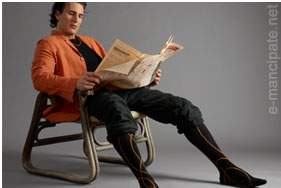
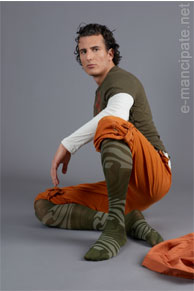
These images would be great for a class discussion on the reappropriation of gendered clothing items. What makes pantyhose specifically “manly” or “femmy”? Does this “e-MANcipation” reify the same old ideas about masculinity and femininity, or challenge and expand them?
And I think it’s interesting that this website is U.K.-based. (UPDATE: The company is actually Hungarian– thanks to commenter “bozeman” for the clarification!) I have a hard time imagining a project like this in the U.S. How are ideas about what constitutes a “manly man” different from country to country?
In this 7 1/2 minute video Hans Rosling maps the relationship between life expectancy, GDP, and sexual health and rights over 300 years of Swedish history:
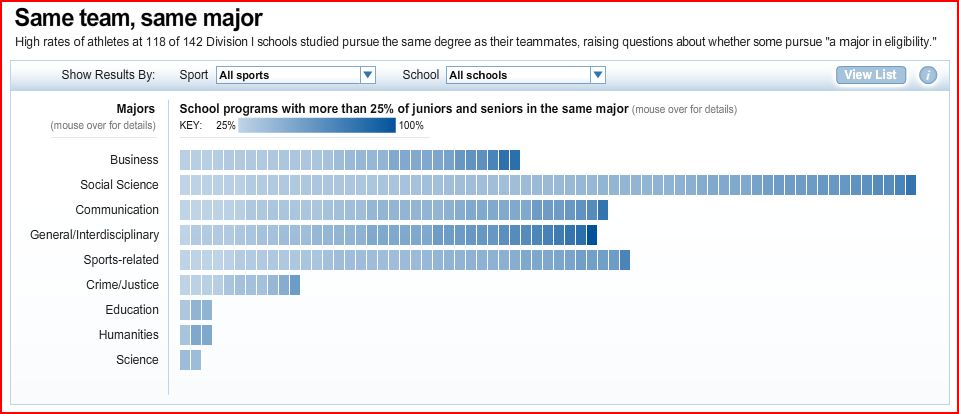
USA Today posted an interactive graphic demonstrating how different types of college athletes cluster into majors differently at different schools (via Montclair Socioblog). For example, the screenshot below includes the data for all athletes in the study. Each rectangle represents a school; the darker the blue, the more concentrated major choices are for that team at that school. In this iteration, the darkest blue rectangle in the “social science” category represents Louisiana Tech at which 80 percent of male basketball players major in Sociology:
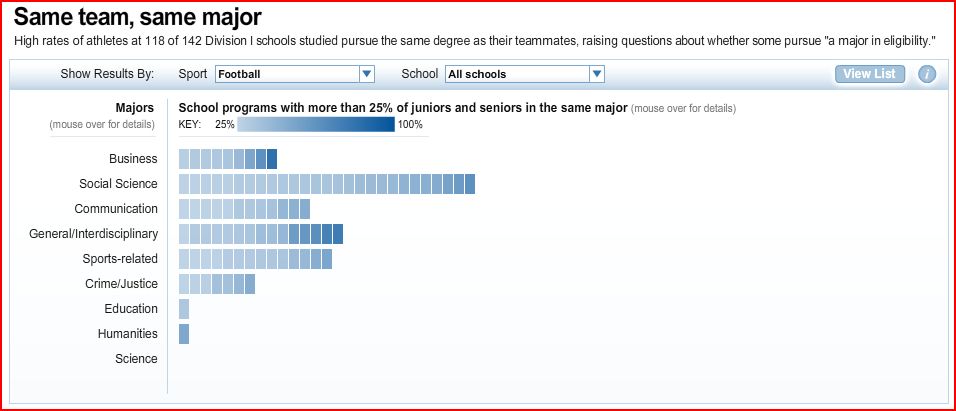
This screenshot features football players only. At Georgia Tech, 82 percent of football players major in Business:
If you visit the site, you can manipulate the graphic as you like and see what school and team each rectangle represents.
Certain majors have long been rumored to be athlete friendly and I think this actual data sheds a lot of light on the false stereotype of both disciplines and athletes.
The article doesn’t speculate as to why teammates cluster, but we could…
I was recently speaking to a colleague at my College who remembered a time during which a good percentage of the football players majored in Sociology. He suggested that this was because one of the most high-profile football players, one who was very well-liked by his teammates and had a leadership role on the team, majored in Sociology. Since that player has left the College, the percent of football players in our major has decreased. In that sense, part of the explanation for why teammates cluster may be more social psychological than sociological.
Burk sent in several Miller beer ads, all directed by Errol Morris, which contain some interesting messages about modern masculinity. Specifically, real men drink beer and don’t worry about stupid things like their diet or health:
This one connects drinking Miller to pro-American patriotism and the value of manpower (and it really means MANpower):
Real men know how to back up Suburbans pulling boats:
Clearly, we’ve lost an important element of manhood when men can no longer do this. Of course, driving a Suburban pulling a boat seems to contradict the whole patriotic non-use of gas element of manhood, but let’s not get into details.
And finally, real men have to restrain themselves while they listen to women:
In these ads, with the exception of the cyclist, none of the men’s faces are ever fully shown. What if this was a series of adds with images of women? How would the regular poster and commentators normally react to this kind of framing? What would it mean in that context? Does that analysis apply to this context?
I think that’s a good question. One criticism people often make of ads is the way women’s faces are often obscured; this is pointed out as a way of objectifying them, turning them into bodies rather than full people with faces, voices, etc. I certainly think it’s possible to objectify men as well, although it’s also possible to show part of a body because the viewer is supposed to take on the viewpoint of the person in the ad, in which case you can’t, obviously, see the face or head, since you’re supposed to be the face/head. I found the bacon and butter burger ads creepy overall, as well as another one of the Morris ads where a (generally faceless) grandma is cooking for a bunch of men whose faces we never see.
Thanks for the comment, chuk!
About Sociological Images
Sociological Images encourages people to exercise and develop their sociological imaginations with discussions of compelling visuals that span the breadth of sociological inquiry. Read more…

 Crazy Vet offers us this rather amazing commercial for BP as an example of “green-washing” or an effort to make a company appear environmentally friendly: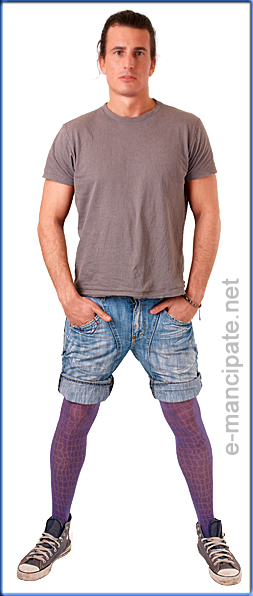
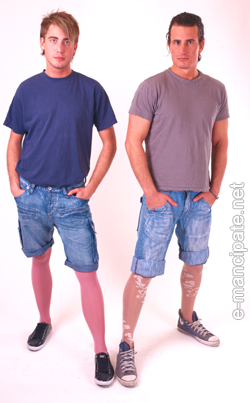
 These images would be great for a class discussion on the reappropriation of gendered clothing items. What makes pantyhose specifically “manly” or “femmy”? Does this “e-MANcipation” reify the same old ideas about masculinity and femininity, or challenge and expand them?