Archive: Aug 2015

Women – and black women in particular – have seen significant improvements in high school completion rates since the turn of the century, almost cutting in half the black-white gap for women during that time, as I shared last month. But has that meant an increase in college entry and completion – especially since a college degree should demand higher wages in the labor market?

The second report in my Young Black America series of reports examined just that. I found that Figure 1young black women and men are entering and completing college at higher levels than in the past. Yet, these gains haven’t been enough to noticeably close the gap between them and their white counterparts.
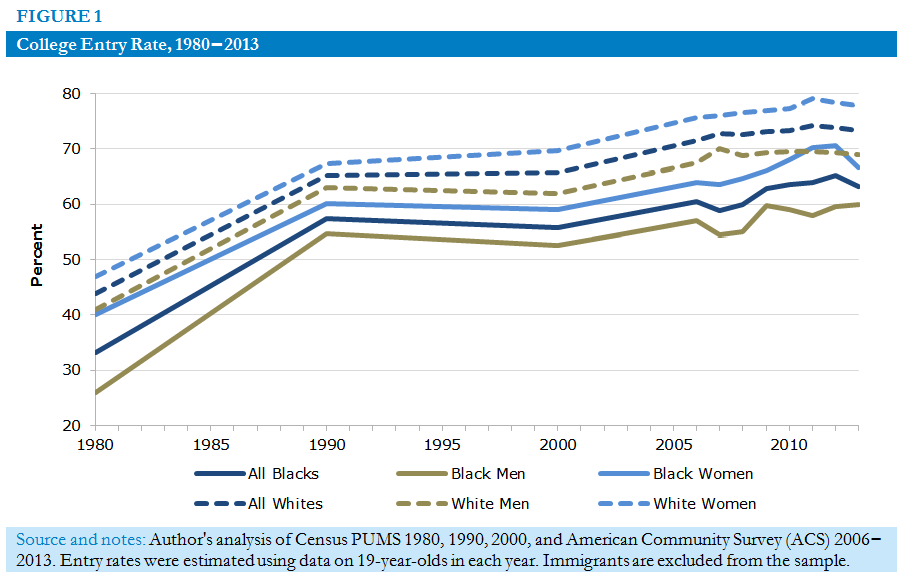
From 1980 to 2013, women had higher college entry rates than men, with white women having the highest entry rates of all (see Figure 1). In 1980, 46.9 percent of 19-year-old white women had entered college (including community college). The college entry rate for white men was 41.0 percent and the rate for black women was 40.0 percent. Black men had the lowest entry rate of 25.9 percent, 14.1 percentage points lower than that of black women.

Since then, college entry rates have significantly increased, with most of the increases occurring between 1980 and 1990. During that time, entry rates for both black and white women increased about 20 percentage points, and rates for white men increased 22 percentage points. College entry rates for black men increased the most, rising 29 percentage points from 1980 to 1990.

Despite making the most progress in entry rates, young black men still lag behind black women and whites. In 2013, the entry rate of black men was 60.0 percent, 34.1 percentage points higher than their entry rate in 1980. However, this rate was still 6.6 percentage points less than black women, 9.0 percentage points less than white men, and 17.9 percentage points less than white women.
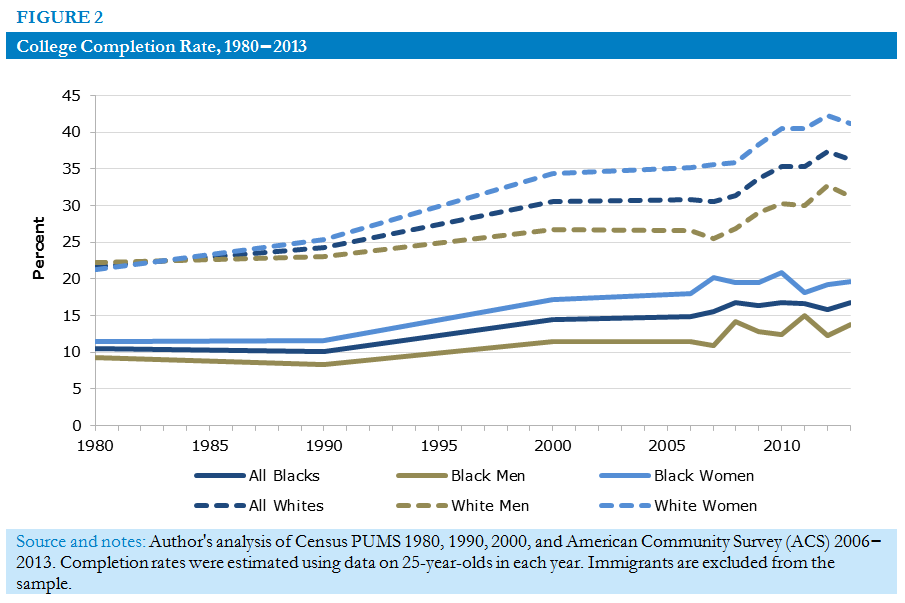
Figure 2But entry is different from completion. The data on racial gaps in college completion rates were even more striking. Although my analysis of high school completion rates showed a significant convergence between black and white women, the exact opposite is the case with college completion rates (see Figure 2). In 1980, 11.5 percent of 25-year-old black women had completed college with a bachelor’s degree or higher. During the same year, the college completion rate of white women was 21.3 percent, for a black-white gap of 9.8 percentage points.

Things got worse not better: In 2013, the gap in college completion rates between black and white women was 21.4 percentage points, with completion rates of 19.7 percent and 41.1 percent, respectively. The same is true among men. In 1980, the black-white gap in completion rates for men was 12.9 percentage points, and it increased to 17.6 percent in 2013.

These growing rather than shrinking gaps confirm that there’s more work to be done. Young blacks are 30 percentage points more likely to enter college than in 1980, with entry rates increasing 26.6 percentage points for black women and 34.1 percentage points for black men. These are significant improvements, but remain far behind their white counterparts. Young blacks also still lag almost 20 percentage points behind young whites in college completion rates.

But the growth—rather than continued decline—in black-white gaps highlights the need to examine why these racial gaps persist, and in the case of completion rates, continue to widen.

Increases in educational attainment are important, but not just for their own sake. College degrees should lead to higher employment rates, wages, and other labor market outcomes. However, large gaps in completion rates are likely to result in sizable racial disparities in these outcomes. Upcoming installments of my Young Black America series will examine whether that is in fact the case.

Cherrie Bucknor is a research assistant at the Center for Economic and Policy Research. She is working on a year-long series of reports on Young Black America. Follow her on Twitter @CherrieBucknor.

 August already? The summer has sped by. Each time a new atrocity hits the airwaves—anti-voting legislation, another police shooting of an unarmed black citizen, new measures to curtail access to women’s reproductive health care—I pause. What can I possibly say that hasn’t already been said by others as sick at heart as I am? So many eloquent voices have been raised and yet new assaults on citizens’ rights continue.

Ninety-five years ago this month women won the right to vote. Fifty years ago, August 6, 1965, Congress passed the Voting Rights Act . Those of us who witnessed the passage of the 1965 legislation hoped that finally we had a way to overcome many of the barriers racism had built. Racism remained virulent, as the Watts riots—the very same August of 1965—revealed. But with more equal voting rights, I along with many others, hoped further progress could be made. Often people speak as if the 19th amendment was ‘for women’ and the Voting Rights Act was for ‘minorities’ as if Black and Hispanic women aren’t hampered by racism every bit as much as they are by sexism.

And during the last fifty years we made progress on a second critical aspect of the struggle for women’s equality—the right to control our own bodies. Without access and choice in matters of birth control and reproductive health, even the right to vote leaves women caught in a world where biology too often equals destiny. The birth control pill was a major breakthrough—by the mid 1960s more than five million American women were using ‘the Pill’. And by 1972 the Supreme Court had overturned state laws prohibiting the use of contraceptives by unmarried people . The 1973 Court decision in Roe v Wade protected a woman’s right to terminate a pregnancy at any point during the first 20 weeks.

But the path forward for women’s equality and reproductive rights soon twisted. Opposition to the Equal Rights Amendment (ERA) which had seemed headed for passage in the 1970s, stalled and although the deadline for ratification by the required thirty-eight states was extended to from 1979 to 1982, the Constitutional amendment failed.

Today’s reality is shaped by decades of work by anti choice activists with little concern for the health and self-determination of women. They have campaigned relentlessly to overturn Roe v. Wade. They threaten abortion providers; even murder staff and doctors. And they spread all manner of false information on the ‘terrible consequences’ and ‘life long regrets’ of abortion procedures. All this goes along with strengthened opposition to sensible sex education.

Today women, especially poor women without the financial resources to travel and to pay for medical advice and assistance, are no longer able to count on controlling our own bodies. Under the guise of saving unborn babies, and ‘protecting’ the health of women, conservative legislators are proposing and passing wildly expanded restrictions on access to sound reproductive health care. Programs such as Colorado’s that clearly lower rates for teen pregnancy and abortion by providing access to effective birth control are denied public funds. Using misleading data and heavily edited videos they demand the defunding of Planned Parenthood and the critical health services the organization provides.

It is no coincidence that these campaigns often go along with opposition to equal pay legislation and increases in the minimum wage, opposition that keeps the poor, poor. Meanwhile, the conservative agenda has muted potential pro-choice advocates. Many choose to ignore the threats to women’s rights, convincing themselves that they are not personally affected.

Reproductive rights can never be separated from the struggle for women’s equality. They are a central component. So let’s get busy and understand what’s at stake. In a recent New York Times opinion piece Katha Pollitt said it best:

“[The stakes are] about whether Americans will let anti-abortion extremists control the discourse…Silence, fear, shame, stigma. That’s what they’re counting on. Will enough of us come forward to win back the ground we’ve been losing?”

I hope so. I am not the only woman who helped friends when they needed an abortion. I am not the only parent whose developmentally challenged daughter would require an abortion if she were to become pregnant. I am far from alone in my outrage and disgust with the current climate, and I am certainly not the only one speaking out.

But there are more women and men still to be heard from. The stakes are high. We need every voice, every personal story that can deepen understanding of the costs to women, their children and families that result when reproductive freedom is curtailed. Impersonal facts alone carry so little of the truth that matters, the truths that touch and sometimes change hearts and minds.   Now is the time to speak up—in public as well as private conversations; to write heartfelt letters; to send a larger-than-usual donation to organizations battling for reproductive rights. Action is required—and it is required now.

Darren, a charismatic program facilitator, scrawls masculinity themes across the white board. The youth, as they get called collectively, fidget in their chairs and rumble with ideas. They are from high schools scattered across this East Coast city, all Black and Latino, and have become friends in this grant-funded program. They call out things they’d like to address in a skit they will perform – “fatherhood,” “dominance,” “violence.” We take a break and the youth retreat into their screens. Ray kicks back, heels up on Shawna’s lap, laughing at a video his friend sent of a scuffle from school that day. “That doesn’t seem like healthy behavior, does it?” I ask. Ray laughs, “Naw. It’s stupid funny though” and he flashes a wide smile. “Does that count as attitudinal change?” I turn to ask Darren.

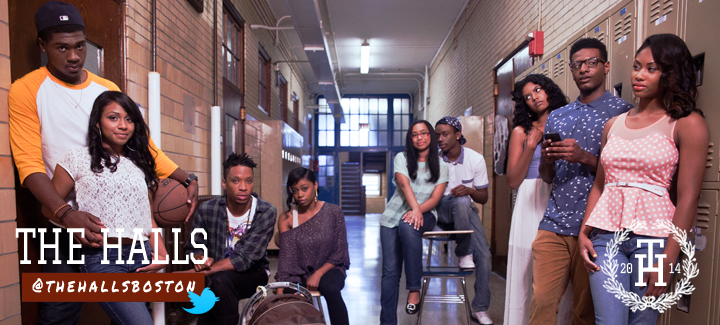
The Halls
The Halls is a group helping young people navigate healthy relationships. Find them on twitter at: https://twitter.com/TheHallsBoston

When we hear about feminist men, we almost inevitably hear the story of how and why they came to identify with feminism. A friend of mine, borrowing language from superhero comics, once called this ritual narrative an origin story. While these stories can be repetitive and self-centered, I understand why men recount them over and over. When men talk about how they became feminists they are, in essence, explaining how they came to identify with a movement of people who work to reduce men’s privileges, their own privileges. Today, for some men their origin involves a washed-out community room, a binder with a violence prevention curriculum inside and a low-paid facilitator.

Scholars have examined men’s pathways into feminism and other forms of gender justice work and found patterns. Often, it is a two-part reaction, some kind of “sensitizing experience” in childhood and a radical spark in young adulthood. While this pattern is no doubt very common, by telling the stories this we way can obscure the larger social and historical architecture in which they occur, and miss the work it takes to grapple with the implications of feminism over the long haul.

In our book, Some Men: Feminist Allies and the Movement to End Violence Against Women, my co-authors and I look at the life histories of feminist men with a wide angle lens as we try to bring into view the institutional structure and cultural system of the feminist movement at the historical moment at which men became engaged. In short, not only do men’s sensitizing experiences and radical sparks take dramatically different forms depending on the historical moment, but which men are sensitized and sparked also shifts.

Today, in a startling number of ways, feminism is in the water, but more specifically it is in organizations. The White House has a campaign against sexual violence called It’s On Us. During the Super Bowl, a coalition of corporations and organizations, called No More, ran an ad calling attention to sexual and domestic violence against women. The NBA has been running a “Lean In Together” commercial, with star WNBA and NBA players encouraging men to support women’s equality. In the wake of the Ray Rice assault, the NFL brought on Beth Ritchie and has promised more prevention programs. Public health departments and foundations now fund violence prevention programs in many urban communities. If these campaigns provide sensitization or spark, it looks dramatically more mainstream, straightforward and diverse than it did forty years ago.

Violence prevention programs, including those with high school youth, are rarely explicitly feminist. But the women and men who implement them often are. Many young feminist men of color who we interviewed for the book had come to identify as feminist through their work with boys and men of color around community violence or drug abuse and, often guided by women of color, found that feminism helped make sense of connections between power and violence in their lives. We call the perspective that these men provide “organic intersectionality” – a way of connecting violence against women with other systems of power and inequality that bubbles up out of lived experience. But most youth in these programs won’t take up careers in feminism or social justice. They will learn about hegemonic masculinity and empowerment and feminism and then the grant will run out or they will leave the program, and their formal education in this area will end. Their passions will change. Some men I know have left these programs and gone on to college, started a business or worked in a warehouse. How does feminism reverberate through their lives and politics?

The institutionalization of feminism into policies and organizations has opened up cracks for men to find their way to feminism in new ways. We must begin to understand how young men of color living in urban communities, as well as transmen, undocumented immigrant men and others make sense of allyship, consciousness-raising, and violence. Tomorrow’s feminist men are already out there – what stories will they tell?

________________________

Sq Prof low 2Max A. Greenberg is a lecturer at Boston University and the author (with Michael A. Messner and Tal Peretz) of Some Men: Feminist Allies and the Movement to End Violence Against Women (Oxford University Press, 2015).
credit: Avl Schwab / Flickr Commons

Sandy Keenan at the New York Times wonders “Are Students Really Asking?” for affirmative consent. Her premise is that talking about how we want to have sex is some new legal imposition. Whether they support it or not, most of her interviewees see it this way too. The affirmative consent debate seems to turn on whether communicating about sexual desires and boundaries is asking too much, killing the mood, or even necessary when ‘alternatives’ like tacit consent exist.

As a queer person (never mind as a sexualities scholar), all of this straight consternation makes me giggle. Silent sex just isn’t possible for us. Same-sex encounters, group sex encounters, encounters involving kink, and encounters involving trans and gender nonconforming people all tend to necessitate discussion between people about what they do and do not like and want before and during sexual activity. For us, much of the communication affirmative consent asks for is routine (which is not to say that LGBTQ folks don’t experience sexual assault and rape–we do).

There’s no obvious sexual script to follow in queer sex (e.g. “man pursues woman, begging to put his penis in her vagina”). Even what may seem like the most obvious case—sex between two gay men—is not obvious. The majority of sexual encounters between gay men in the US don’t involve penis-anus penetration but they usually involve 5-9 different sexual behaviors that occur in over 1,300 unique combinations. Even with anal sex, we still have to talk about who wants to “top” and “bottom.” So for us, communicating about what we want is less of a strange new requirement imposed by decree—Keenan’s word—of state legislature or university president than a normal matter of course.

Lest you write us queers off as weird and complicated, straight sex isn’t as simple as Hollywood would have us believe. Research on women’s orgasms by Elizabeth Armstrong, Paula England, and Alison Fogarty shows that straight college students also perform a wide variety of sexual acts in a wide variety of combinations. And, importantly, they highlight how un-communicated sexual expectations among straight partners lead to misunderstandings, unsatisfying sex, and even sexual assault.

One of the men Keenan interviewed was initially defensive, as if affirmative consent were an attack on men categorically as sexual abusers of women. Again, from my queer perspective this seems a bit silly. When two men have sex, we still need consent, and it has nothing to do with one of us being a “vulnerable woman” or the other being a “predatory man.” Even in heterosexual encounters, men are sometimes assaulted by women (albeit less often than the reverse). This highlights the real target of consent campaigns: people who feel entitled to sexual activity without regard for their partner’s willingness. (Entitlement and willingness are, of course, deeply gendered.)

I’m not trying to say communicating about sex is easy at first or doesn’t need to be learned/taught. But it’s really not so strange or new once we step outside strictly scripted heteronomative roles—roles that are too narrow even for most straight sex (let alone things like pegging). Likewise, concerns that consent campaigns are an attack on men only make sense within those narrow sexual scripts as well. If queer sex has taught me anything, it’s that communication, far from being an onerous burden, is a part of the fun.

Jeffrey Lockhart is the principal investigator of an international study of LGBTQ college students and a graduate student at the University of Michigan. He can be found tweeting at @jw_lockhart.