work

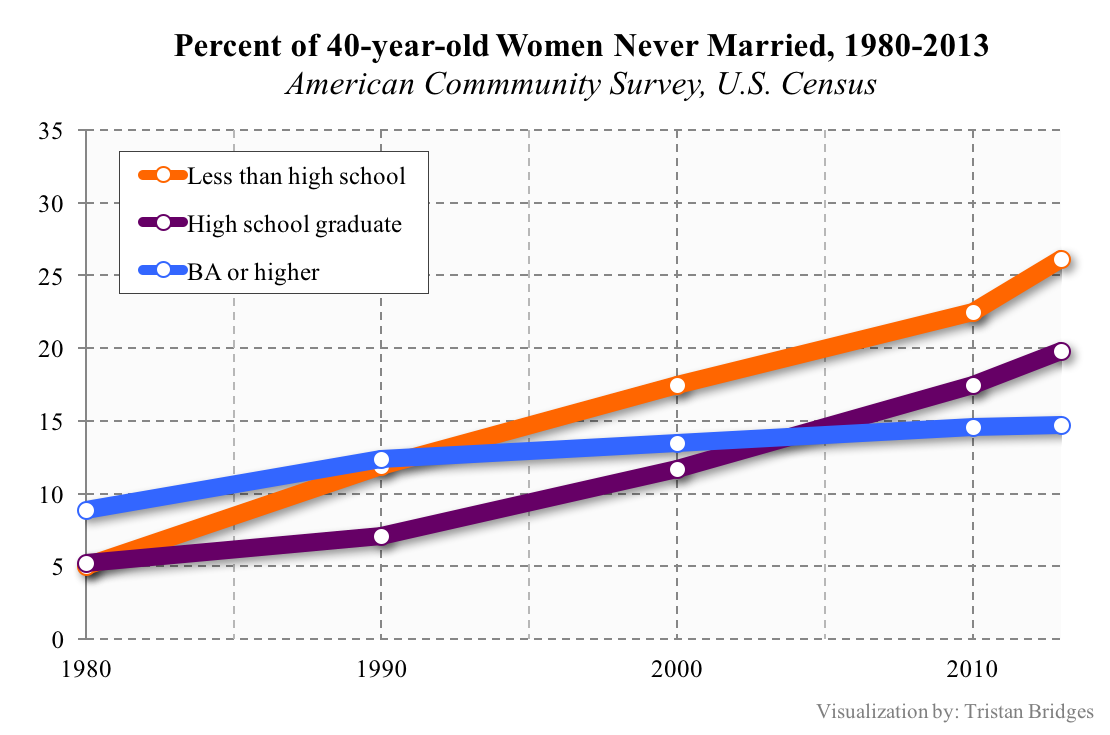
The situation. Americans are delaying and foregoing marriage in larger numbers than they used to.  In 1980, about 5% of 40-year-old women with only a high school education or less had never been married.  Almost 9% of 40-year-old women with at least a BA had never married.  And these numbers have been rising for all of these groups, some more than others.  It’s all the more interesting because, in this same time period, marriage has become legally accessible to more individuals.  But, by 2013, the proportions of 40-year-old women who had never married exploded (see graph below*).  There are a variety of reasons that account for this shift.  At a basic level, women are getting more education and have more life options than they did 30+ years ago.  But are heterosexual women foregoing marriage altogether, or are they still waiting for “Mr. Right”?  And if they’re waiting, are there enough Mr. Rights to go around?
never-married-women-by-education-1980-2013

The man question. With the rise of women’s options not to marry, no wonder questioning men’s status as “marriage material” is pervasive in popular culture.  This “man question” is so accepted that further elaboration is not typically required when suggesting an individual man fails to pass muster.  But, sociologists take the idea seriously. We have examined three decades of research to demonstrate the rise of the man question—and the ways it relates both to rising gender equality and economic inequality.

Marriageability = jobs? In the late 1980s, sociologist William Julius Wilson sought to give the phenomenon a social scientific name and a more precise and measurable quality. Wilson studied poor and working-class communities and discovered that inner-city joblessness among lower-income black men was resulting in a dilemma for inner-city lower-income black women: a growing shortage of men who might qualify as marriageable. Since the majority of marriages and relationships in the U.S. (both then and now) are between people with similar class and racial backgrounds, this extended the gap even further.

Wilson defined men’s “marriageability” in terms of economic stability. Employment was key, in his view, to men’s suitability as marital partners. Changes in the economy in the prior several decades had produced ripple effects that left fewer men in this group able to find gainful employment. And these problems still exist.  Using education as a proxy for class status, lower-income heterosexual women still face a pool of marriageable men that is too small for them to all find husbands.  In fact, the data above suggest that it may very well be a problem that has gotten worse, particularly for Black Americans.  In recent times, we have seen returns to higher education for Black women increase at a modest rate, while Black college educated men’s returns have actually declined.  And the lack of employment for those without a college degree—which is hard to obtain for both Black men and women—has become more difficult for Black men.  This means fewer and fewer men match women in terms of education, jobs, and other social class characteristics.

But who is thinking about men as more than a pay check? Wilson’s suggestion that too many lower-class men are not really marriage material because of the job market produced a stream of research on how lower-income women are navigating this challenging terrain. In the 1990s, the use of economic stability as the primary measure of “marriageability” received little push-back from other scholars.  Few scholars, for instance, have sought to examine men’s marriageability outside of lower-income groups. And from the graph above, you can see that less educated women’s rates of never marrying have increased much more than more educated women’s.  But, are middle- and upper-class women measuring men by the same yardstick?  And if so, how do they measure up?

We examined over thirty years of research from 1984 – 2015.  Our overview confirmed that “marriageability” research that emphasizes men’s value as a paycheck focuses exclusively on lower income groups of women and neglects the ways that women across the class divide may struggle finding “marriageable” men, but perhaps for different reasons.  Our overview confirmed that “marriageability” research neglects a consideration of more complex measures than economic stability and is limited to research examining the lower-class. We suggest that scholars begin to ask about men’s “marriageability” across the class divide.

If it is about jobs, why are middle class men subject to the marriageable man question? Existing research suggests that the yardsticks for working class and middle class men are distinct—but maybe not in the way you’d expect.  Our review of the research shows that while lower-income men often fail to measure up as a result of joblessness, substance abuse, and incarceration (all issues which negatively impact their employment), middle- and upper-class men able to find employment are not always understood as marriageable.  Data from online dating sites like OkCupid.com illustrate this issue, too. In online dating profiles, straight men are much more likely than straight women to list words associated with jobs and professions (assuming these are the qualities women are looking for).  But, as studies of middle- and upper-class women show, that just isn’t enough. These women’s understandings of what qualifies as a “marriageable” man goes beyond a paycheck—it has to do with relationship quality and equality as well.

Meanwhile, women’s expectations for their relationships have transformed across the class divide.  Women want more out of marriage.  Many still want the economic security associated with marital households, though women today may not need to lean on this security as much as they did thirty years ago.  But, they also want a set of intangibles that is much more related to the quality of the relationship than the individual qualities any given man might possess.  High quality relationships provide economic support, but they also come with emotional support, shared commitments to household labor, childcare, and more.  They want a partner in every sense of the word. And within this transformation, men of different class backgrounds are failing to prove themselves “marriageable”—but not necessarily for the same reasons.

For instance, research shows that in the face of economic constraints that make the breadwinner model unattainable to many working-class and poor fathers, they are redefining this role to prioritize what they can and do bring to the table—a more involved form of parenthood. Ironically, this kind of relational fathering sounds like what many middle- and upper-class women with children or desiring children say they want more of from their partners. Middle- and upper-class fathers, however, end up prioritizing the paycheck and minimizing parenting involvement due primarily to workplace policies and constraints. Many lower-income men fail by the old metric—income.  But research suggests that in some ways, they fulfill many women’s desires for egalitarian relationships.  Conversely, middle- and upper-income men are more likely to qualify as “marriageable” by the old metric (income), but fail by new egalitarian standards for relationships—relationships both women and men claim to desire.

Men’s “marriageability” is best understood, we find, in the context of two trends: increasing expectations of gender equality among both women and men and growing economic inequality and insecurity.  Research shows that these twin trends make egalitarian relationships and marriages available to relatively few.  Wilson used income as synonymous with marriageability; a steady and reliable paycheck was all men needed.  But, marriageability is more complex than that.  Today, income is more of a baseline expectation for consideration.  And research suggests that some men may be prizing these qualities in themselves to the detriment of things that women might actually want from them.

____________________________

Thanks to Virginia Rutter for advanced comments on this draft (a while ago).

*Thanks to Philip Cohen for the data.
Originally posted at Inequality by (Interior) Design.

We’ve read some of the tributes to the feminist sociological genius of Joan Acker.  And much of that work has celebrated one specific application of her work.  For instance, Tristan posted last week on Acker’s most cited article—“Hierarchies, Jobs, Bodies: A Theory of Gendered Organizations” (1990)—which examined the ways that gender is so embedded in the structure of organizations that we often fail to appreciate just how much it shapes our lives, experiences, and opportunities.  But, this specific piece of her scholarship was actually her applied work. It was an application of a theoretical turn she was suggesting all sociologists of gender follow.  And we did.  Acker was involved in an incredibly important theoretical debate that helped shape the feminist sociology we practice today.

“Patriarchy” is a concept that is less used today in feminist social science than it was in the late-1970s and 1980s.  The term has a slippery and imprecise feel, but this wasn’t always the case. There were incredibly nuanced debates about patriarchy as a social structure or as one part of “dual systems” (capitalism + patriarchy) and exactly what this meant and involved theoretically. Today, we examine “gender.”  Indeed, the chief sociological publication is entitled Gender & Society, not Patriarchy & SocietyAcker - The Problem with PatriarchyBut in the 1970s and 1980s, patriarchy was employed theoretically much more often.  Feminist scholars identified patriarchy to focus the critique of existing theoretical work that offered problematic explanations of the subordination of women.  As Acker put it in “The Problem with Patriarchy,” a short article published in Sociology in 1989: “Existing theory attributed women’s domination by men either to nature or social necessity rather than to social structural processes, unequal power, or exploitation” (1989a: 235). The concept of patriarchy offered a focus for this critique.

Joan Acker was among a group of scholars concerned about the limitations of this focus; in particular, patriarchy was criticized for being a universal, trans-historical, and trans-cultural phenomenon—“women were everywhere oppressed by men in more or less the same ways” (1989a: 235).  Concluding that patriarchy could not be turned into a generally useful analytical concept, Acker proposed that feminist social science move in a different direction—a route that was eventually largely accepted and taken up.  It’s no exaggeration to suggest that Acker was among a small group of feminist scholars who shifted the conversation in an entire field.  We’ve been relying on their suggestion ever since.

Bridges and Messerschmidt quoteAcker’s short 6-page article was published in the same journal that had published Raewyn Connell’s article, “Theorizing Gender” (1985), which spelled out her initial delineation of the problems with sex role theory and what she labeled “categoricalism.” Connell was also concerned with how feminist theories of patriarchy failed to differentiate among the categories of “women” and “men”—that is, femininities and masculinities. Judith Stacey and Barrie Thorne’s “The Missing Feminist Revolution in Sociology” (in Social Problems) was published that year as well (1985), specifically criticizing sociology for solely including gender as a variable but not as a theoretical construct. Acker (1989a) explained why feminist social scientists ought to follow this trend and shift their focus from patriarchy to gender relations and the construction of gender in social life.  As Acker wrote, “From asking about how the subordination of women is produced, maintained, and changed we move to questions about how gender is involved in processes and structures that previously have been conceived as having nothing to do with gender” (1989a: 238).  And in another piece published in the same year—“Making Gender Visible” (1989b) in the anthology, Feminism and Sociological Theory—Acker argued for a paradigm shift that would place gender more centrally in understanding social relations as a whole. Acker suggested a feminist theoretical framework that was able to conceptualize how all social relations are gendered—how “gender shapes and is implicated in all kinds of social phenomena” (1989b: 77). Today, this might read as a subtle shift.  But it was monumental when Acker proposed it and it helped open the door too much of what we recognize as feminist sociology today.
Acker published what became her most well-known article—“Hierarchies, Jobs, Bodies”—in Gender & Society (1990) as an illustration of what the type of work she was proposing would look like.  She was concerned with attempts that simply tacked patriarchy onto existing theories which had been casually treated as though they were gender-neutral.  She explained in detail how this assumption is problematic and limits our ability to understand “how deeply patriarchal modes are embedded in our theorizing” (1989: 239).  And Acker illustrated this potential in her theorizing about gender in organizations.  But her suggestion went far beyond organizational life.

And by all measures, we took up Acker’s suggestion:  “Gender,” “gender relations,” and “gender inequality” are now the central foci of sociological theory and research on gender.  But Acker also concluded her short 1989 article with a warning.  She wrote,

[T]here is a danger in abandoning the project of patriarchy.  In the move to gender, the connections between urgent political issues and theoretical analysis, which made the development of feminist thought possible, may be weakened.  Gender lacks the critical-political sharpness of patriarchy and may be more easily assimilated and coopted than patriarchy. (1989a: 239-240)

Certainly, Acker’s concern leads us to honestly ask: Will shifting the theoretical conversation from patriarchy to gender eventually result in simply a cursory consideration of gendered structured inequality? Will the shift to gender actually loosen our connections with conceptualizations of gendered power? We don’t think so but one way to commemorate the legacy of Joan Acker is to both celebrate gender diversity while simultaneously visualizing and practicing gender equality.  This means continuing to recognize that inequality is perpetuated by the very organization of society, the structure of social institutions, and the historical contexts which give rise to each.

___________________________
References
Acker, Joan. 1989a. “The Problem with Patriarchy.” Sociology 23(2): 235-240.
Acker, Joan. 1989b. “Making Gender Visible.” Pp. 65-81 in Wallace, P.A., Ed., Sociological Theory and Feminism. Newbury Park, CA: Sage.
Acker, Joan. 1990. “Hierarchies, Jobs, Bodies: A Theory of Gendered Organizations.” Gender & Society 4(2): 139-158.
Connell, Raewyn. 1985. “Theorising Gender.” Sociology 19(2): 260-272.
Stacey, Judith and Barrie Thorne. 1985. “The Missing Feminist Revolution in Sociology.” Social Problems 32(4): 301-316.

People are often shockingly wrong about how much time they dedicate to various tasks.  In general, we tend to overestimate how much time it takes to do things we dislike and underestimate how much time we spend on tasks we enjoy.  So, people ritualistically overestimate how much time they spend on laundry, cleaning bathrooms, working out and underestimate how much time they spend watching television, napping, eating, or doing any number of tasks that provide them with joy.

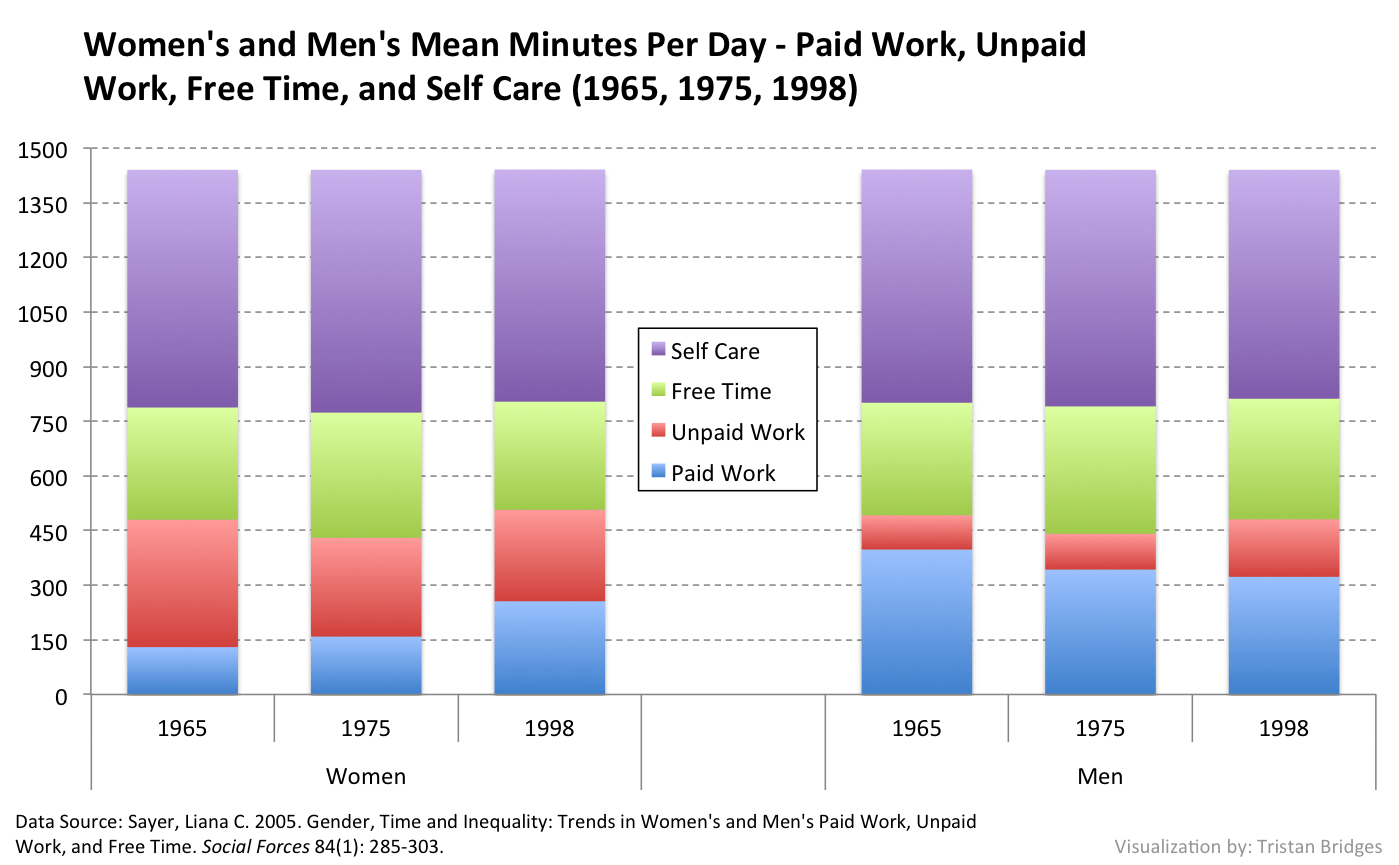
Asking about how people use their time has been a mainstay on surveys dealing with households and family life.  We ask people to assess how much time they spend on all manner of mundane tasks in their lives–everything from shopping, sleeping, watching television, attending to their children, and household labor is divided up into an astonishing number of variables.  The assumption, of course, is that people can provide meaningful information or that their responses are an accurate (or approximately accurate) portrayal of the time they actually spend (see here).  This is why time diary studies came into being–they produce a more accurate picture of how people use their time.  People record their actual time use throughout the day in a diary, marking starting and stopping points of various activities.  And there are a number of different scholars who rely on this method and these data.  But Liana Sayer is among the leading scholars in the field.  When I’ve seen her present, or others present on time use data, the data are almost always visualized in the same way (as stacked column charts).  Personally, I love seeing the data this way.  The changes jump out at me and I feel like I instantly recognize trends and distinctions they discuss. But I have learned in my classroom that students do not always have the same reaction.

I’m interested because I use data visualizations in class a lot.  And in my (admittedly limited) experience, students have an easier time interpreting the story of time use data when it is visualized in some ways over others.

All of the examples here are pretty basic changes in data visualizations.  But, learning these basics are necessary to help students read the more complex data visualizations they may encounter.  Being able to interpret visualizations of temporal data is important; it’s part of what helps social scientists consider, measure, and critique the idea of “feminist change.”  Distinguishing between men’s and women’s time use is only one pocket of this field.  But, it’s the one I’ll focus on here, and on which Liana Sayer is among the foremost experts.  The data I’m visualizing below come from one of Sayer’s most cited articles: “Gender, Time and Inequality: Trends in Women’s and Men’s Paid Work, Unpaid Work, and Free Time” (here – behind a paywall).

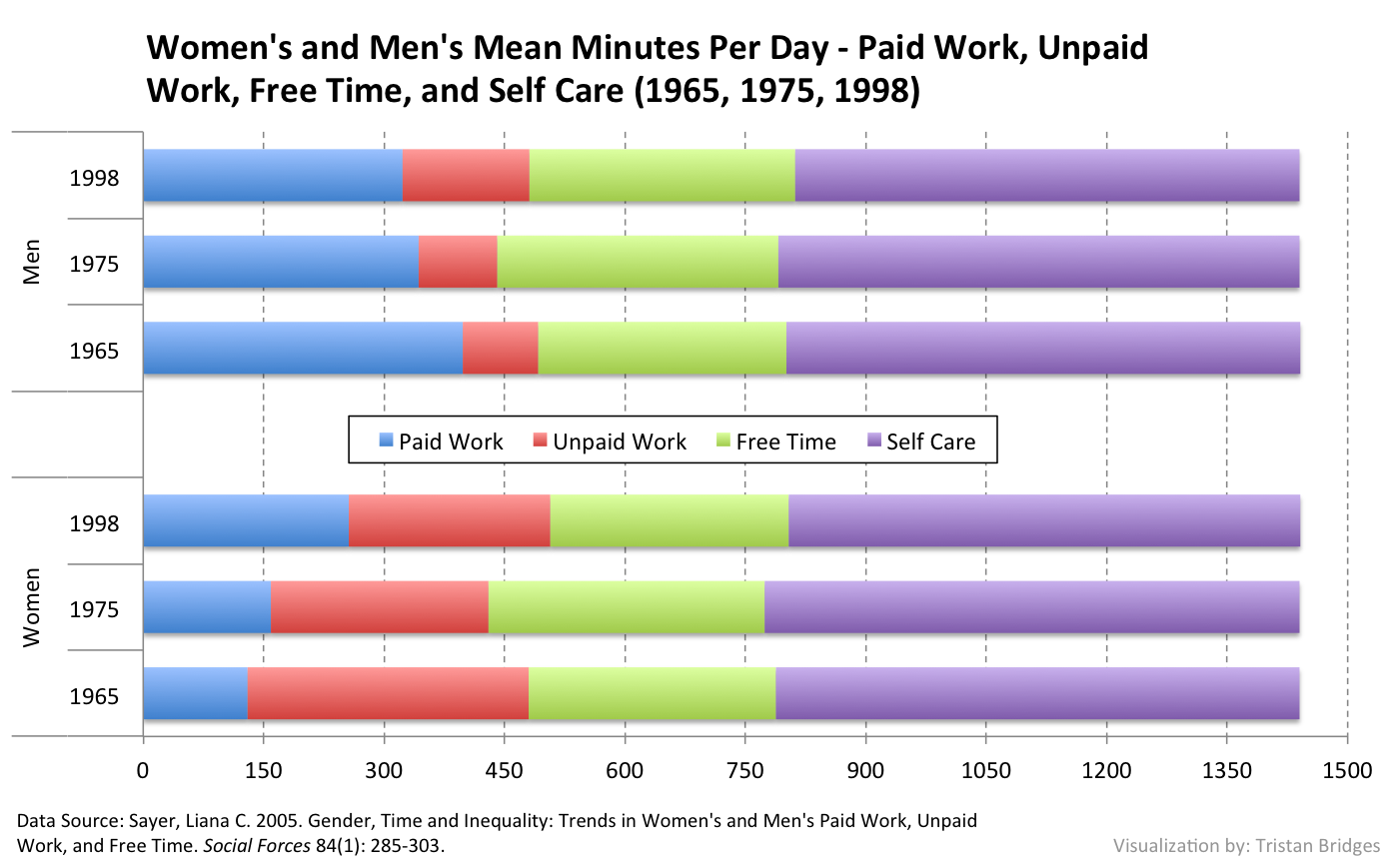
It’s fairly common to present time use data with a series of stacked columns (the same way the Census often illustrates shifts in household types).  Below is a visualization of the differences between women’s and men’s minutes per day allocated to paid work, unpaid work, free time, and time dedicated to self care.  It’s all time diary data and we talk about why this is more reliable and a better measure – but also why it is more difficult to collect, etc.  Some students see the story of this graph immediately.  I do too.  Men’s time allocated to paid labor decreased while women’s increased.  And women perform more unpaid work than do men.  Lots of students, however, are stumped. stacked column

But when I present the data differently, students often have an easier time seeing the story the chart is produced to illustrate.  The Pew Research Center visualizes a lot of their data using stacked bar graphs.  And maybe it’s because these are more easily recognized by people with less experience with data visualization.  I have found that more of my students are able to read the chart below than the one above (at least for temporal time use data comparisons).stacked bar

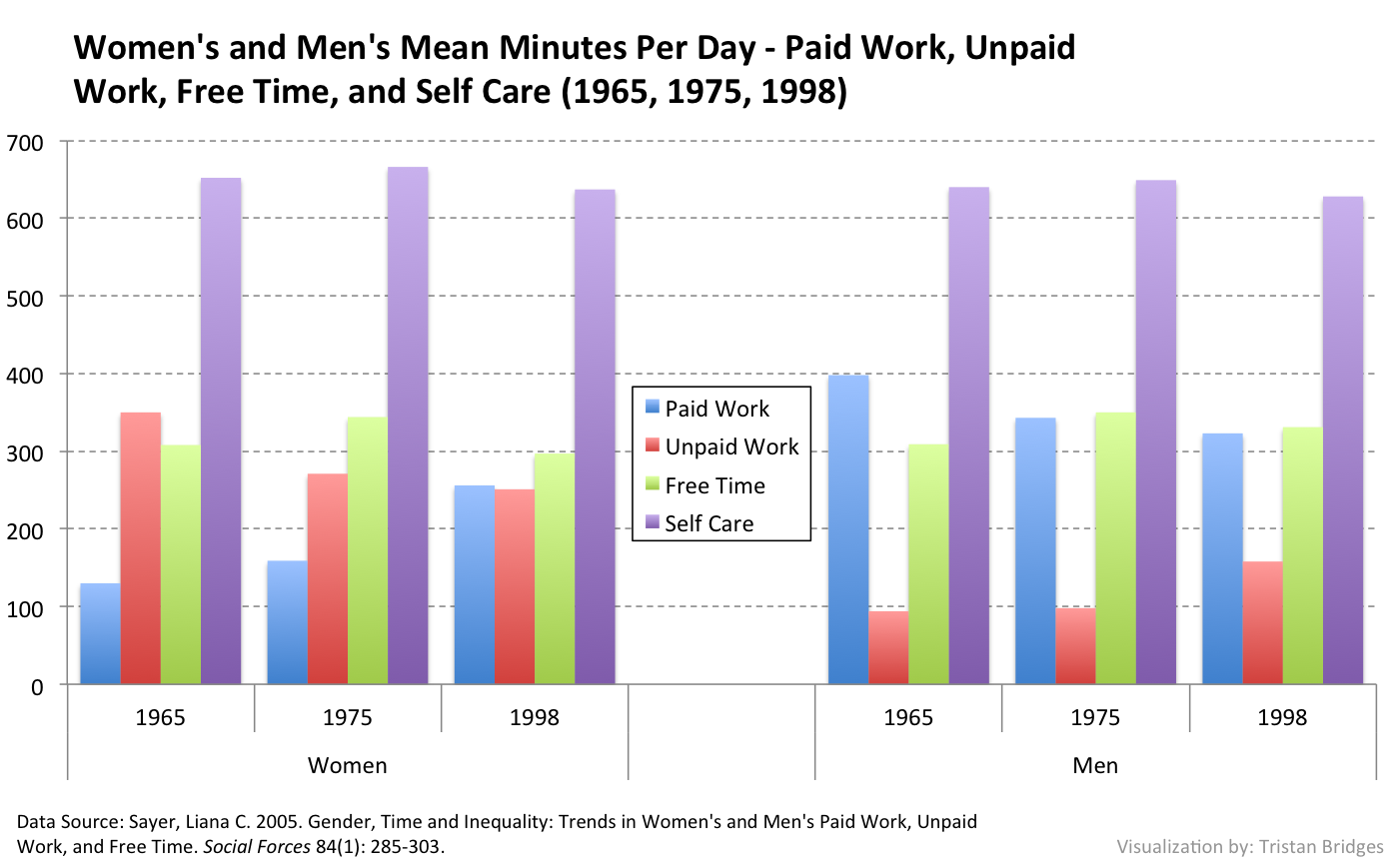
Another way of presenting these data might be to use clustered columns.  I have also found that students are more quick to recognize the trend in these data with the graph below than they are with the initial stacked column chart.cluster column

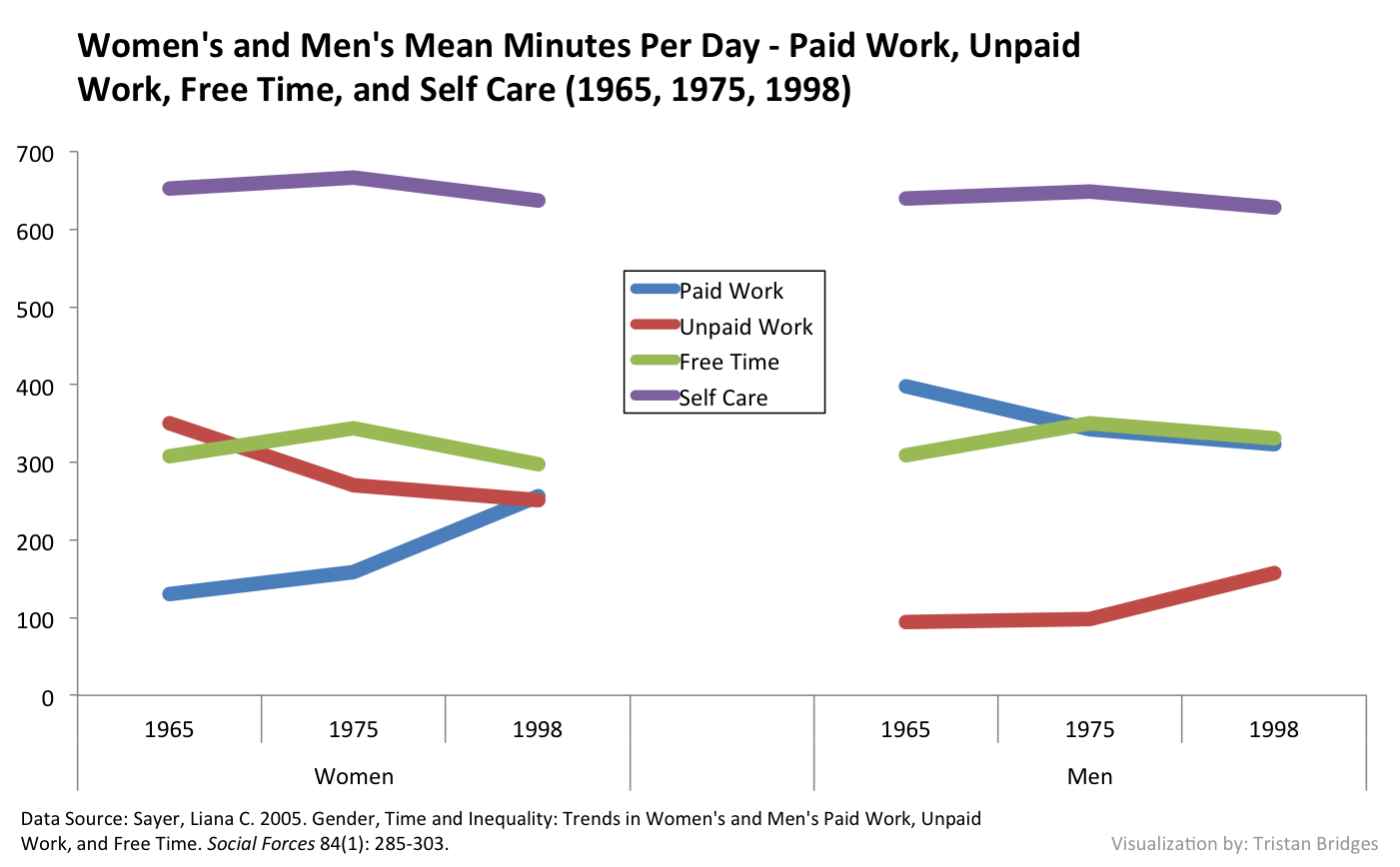
But, I’ve found that students have the easiest time with line charts for temporal time use data.  On the chart below, I deleted the grid lines because The New York Times sometimes displays time trend data this way (see Philip Cohen’s piece on NYT Opinionater, “How Can We Jump-Start the Struggle for Gender Equality?” for an example).  Students that struggle to recognize the trend in the clustered column chart, are much faster to see the trend here.line

These aren’t an exhaustive set of examples, and all of them are basic visualizations.  For instance, we might use a stacked area chart to show these data (as trends in the racial composition of the U.S. are often depicted), a scatterplot (as data on GDP and fertility rates are often illustrated), a series of pie charts (as men’s and women’s various compositions in different economic sectors are sometimes visualized), or something else entirely. Screen Shot 2016-03-22 at 9.59.28 AMIn fact, The New York Times produced a really incredible interactive stream graph visualizing data from The American Time Use Survey that illustrates differences in time use between groups. I sometimes have students explore this graph in my course on the sociology of gender.  But many struggle interpreting it.  This is, I think, in part due to the fact that we often take data visualization literacy for granted.  It’s a skill, and it’s one we should be better at teaching.

I think the point I want to make is that we (or I, at least) need to think more carefully about how we visualize our data and findings to different audiences.  Liana Sayer has an incredible mastery of this (she presents data in all of the ways mentioned in this post and more throughout her work).  One thing that I’m thinking more about as I write and teach about research and findings amenable to data visualization is which visualizations are best suited to which kinds of data (something all scientists are concerned with), but also which visualizations work with which kinds of audiences.  This is new territory to me.

Visualizing feminist change in a single chart is difficult.  And it’s often accompanied by, “Well, this is true, but let me tell you about what these data don’t show…”  But, I’m interested in how we make choices about visualizing feminist research and whether we need to make different kinds of choices when we talk about the findings with different kinds of audiences.

Did the title of this post make you uneasy? My guess is that you seldom received that advice from mentors, family members, or friends; and if you teach, you would most likely never give that advice to your own students. From a very young age I learned to be giving of my time and money. Sharing and helping others were desirable qualities—selfishness was not. As I re-read this last sentence, I can’t help but still agree with that statement. I try to instill these same values in my own ten-year-old daughter. However, I constantly find myself encouraging students to be selfish! As a Latina professor at a large research university, I constantly battle with this moral paradox when it comes to advising my Latina/o students.

I have the honor of mentoring students of color, predominately Latino students. These students seek me out because I am often the only Latina professor in the department and some of them are able to identify with me because I teach courses on Latinos and immigration. I am bilingual, the first in my family to graduate from college, and I come from a working class family. I also enjoy getting to know my students. I ask them about their families and they feel comfortable talking with me about their personal and educational backgrounds, as well as their academic aspirations.Advise2

I have discovered that when I ask my undergraduate Latino students about their future academic aspirations, they usually reply in the same way: “I don’t know,” they say, “I just want to be able to help people.” Then they list professions such as social work, teaching, law, and even sociology. As I hear their responses, I think of my own college years, when I felt the same way. This type of response used to give me a warm sensation and hope in humanity. After all, it is great when students want to pursue a career that helps others. Today, I don’t feel as optimistic by this altruistic response. It now worries me that Latino students are being limited to “helping” professions that are not always as financially rewarding and socially transformative as they imagine.

Superhero

Underprivileged students who face social inequalities in their communities and schools often turn to careers that allow them to support both their families and other racial and ethnic minorities. According to sociologist Jody Agius Vallejo, middle class Latinos from working class backgrounds are more likely to “give back” to kin and co-ethnics (see her book, Barrios to Burbs). In her work on racialized tokens, for example, sociologist Glenda Flores found that Latina primary school teachers are tracked into teaching and, once there, develop a missionary zeal and actively advocated for their Latino students. Similarly, Maya A. Baesley and Mary J. Fischer’s research shows that talented black college students “opt out” of high-paying and high-status careers for fear of discrimination in particular fields such as science, engineering, information technology, and finance (see here). After graduation, some of these students then choose jobs that, although low-paying, enable them to help the black community. In these studies, discrimination experienced by communities of color shapes the educational trajectory of young men and women.

In my own research with Mexican child street vendors in Los Angeles (see here and here), I found that these youth had two main career aspirations that would empower them to help their communities and their own street vending parents—law and law enforcement. Their decisions to choose these careers were rooted in their everyday street vending struggles. For example, one parent told me: “I have always said to my son, like I have seen many injustices with the police here in my community, and in reality we do need legal representation. … At first he told me that he wanted to be a lawyer and then he said ‘No, I don’t just want to be a lawyer, I want to be a judge.’” Similarly, thirteen-year-old Arturo said his parents wanted him to be “something in life. Like a Lawyer or a hero.” When I asked him to clarify, he said “Like a lawyer, a police officer because they save people… Someone that is considered a hero.” Many of my respondents wanted to become heroes to the struggling people in their lives.

The students that come to my office express a similar sentiment. They have experienced and witnessed many injustices in their communities and wish to major in fields that will allow them to enact change. I too come from a generation of Latino students who saw education as a way out of poverty and a promise to create positive social change. But this is a heavy burden to carry. I opt to encourage students to pursue careers they love and to focus on themselves—to be selfish! Students are usually surprised that I give this advice. Their reactions, however, are not as cutting as those I get from other Latino professionals, some who are close friends. Among other things, I have been told that I am too “Americanized.” Some express surprise and then gesture in disagreement while trying to change the conversation.

I hope to see a day when my own daughter and Latino students who come to my office me me medon’t feel constrained by their mission to help, but rather are moved to choose jobs based on their individual intellectual curiosities. I am confident that if giving back is in their heart, then they will find a way to help people by becoming social workers, teachers, attorneys, doctors, engineers, chemists, or graphic designers. So, my dear students, be selfish. And while you are at it, do your best in whatever field you choose. I’m sure you will positively impact a life or two or more along the way.


Emir Estrada is Assistant Professor in the School of Human Evolution and Social Change at Arizona State University.

As our department and numerous others think about ways to increase majors, I left our last faculty meeting thinking “Why Sociology?”. Not just for students, but why we – as faculty – studied, are teaching, or are using sociology in our research or work. I thought about not only personal statements I had to write for the job market, discussing my parent’s influence on my sociological perspective, but also jobs (pre- and post-PhD), volunteer experiences, and in general, my life in terms of why sociology or how I use sociology and continue to learn.

One can read numerous reports by the American Sociological Association on why students major in sociology and their paths after graduation . Most do not go on the “sociological academic” track (i.e. PhD programs in Sociology), but instead if they go to graduate school, they do so in more applied fields such as social work, public health, or the law. Sociology majors with various degrees, from the Bachelors, Masters, to the PhD, also work in a variety of settings. So, why sociology for a major? The skills? The mindset? What can entice students towards this major and what are the “benefits”? I believe if we cannot explain our own sociological perspective and mindset, including the utility to everyday life and careers beyond academia, we may be limiting sociology as a potential major or way of thinking for students. In today’s post, I’ll relate how I “came” to sociology.

My Background: A Sociology Major from the Beginning

I grew up in a family that fostered my educational aspirations by providing the access and financial means to do so. Despite these normative privileges afforded to me, my parents taught me important lesions about society and inequality that has impacted my personal values, work, and scholarship.

Hooded as "PhD"!
Hooded as “PhD”!

Growing up in the Midwest, I watched my parents actively participate in the Elks Club, in which service to others was a defining element of this benevolent organization. Each Holiday season, I helped assemble and deliver food baskets to economically disadvantaged families with my parents. I remember one year when we met a family who could not afford to turn on their heat. The whole family sat in front of the open stove in the kitchen for warmth. When I asked my parents about this, they explained to me the existence of poverty and inequality in our society. This small incident began what has become my lifelong exploration of and work toward ending social injustice. I was shown through example by my parents that social justice was something to strive for and that that our own comfortable middle class status was indeed a privilege.

My childhood and adolescence were also shaped by my mother’s job working as a claims’ administrator at the Social Security Administration (SSA). In an emotionally challenging job, my mother worked with a variety of people, from those with disabilities to those with economic difficulties, who were usually on the lower rung of the social class and status ladder in society. My mother’s duties included determining whether they qualified for Social Security, and the amount of benefits the government would provide. During high school, my mother took an early retirement from SSA. We discussed her job at length and the reasons why she was retiring at younger age, as she articulated a description of structural inequalities in society. My mom existed as the middle person between those in need and the government, and she found the rules and bureaucracy limiting. Emotional strain resulted when she had to work with those in need who did not receive what they needed to survive. This profound sociological insight has had a lasting impact on my views of structural inequality.

My parents in their younger years. My role models.

Coming from a background where service to others was important, at the end of high school and in college, I started working with people with  disabilities. My work included program development, life skills training, and community integration. Doing this work, I not only witnessed, first- hand, the discrimination that persons with disabilities face, but also learned life lessons from my clients. They taught me about friendship, understanding, and the importance of appreciating the simple things in life in a society that promotes perfectionism, able-ism, and cultural consumerism to make us happy. This job has had a significant influenced on my life. They were a part of my family. Starting this work while I was in high school, while also taking a sociology class, combined with the influence of my background and influenced my decision to declare sociology as a major in college. I knew that I wanted to make a difference. Working with people with disabilities allowed me to see how society is structured in a way that creates and constructs differences and meanings, and from a “disability” lens, how it is structured for able-bodied persons.

I declared my major as Sociology from the moment I applied to and started college, which I now understand is very rare. Also rare, especially at that time, was my ability to take a Sociology course in high school. But in taking this class, the idea of sociology resonated with my values, how I thought, and especially the lessons my parents taught me, and in particular, in my work with people with disabilities.

Why Sociology? Learning, Living, and Applying the Sociological Imagination

A common critique we hear in the field is that those who are obtaining their PhDs are being trained to be academics and not how to apply or use sociology outside of a professorship in academia. While not all programs are like this and despite the critique, we also understand for the most post, this is how our professors were trained and this is what they know.

Grad Students Act out Famous Sociologists

However, I want to move beyond the graduate school academic versus applied debate to speak to how we talk and think about sociology, with undergraduates in mind. Why is sociology useful? Why are we not just an “easy” major or one that “confirms” common sense (or “debunking” it). How or why can sociology be useful to our personal lives? To do this, I will tell part of my story, in my next post in a few weeks. Not all will agree with what I have to say, but the beauty of sociology is that it is flexible.

Yes, I am back in the academy and want to be successful, but I also want my students (and potential majors) to know sociology is useful beyond a classroom and beyond teaching. In my next post, I will center on jobs I have had with a degree in Sociology (beyond a tenure track professor job) and the strenuous event of moving across the country from a metro area of the North to a small town in the Deep South, in which thinking about things in sociological manner indeed helped keep me sane.

I leave you with the following questions that are relevant to us “selling” sociology, but also to our own continued learning in the field. This relates back to historical debates about what sociology should be, why it is not social work (though as an MSW, I see the connections), and contemporary discussion on what engaged or applied sociology means.

  • How did you come to sociology as a field?
  • How do you define sociology (beyond a “textbook” definition)?
  • How do you think sociologically and how do you explain this others?
  • How you use sociology in your life?
  • What are core or essential skills of sociology training?
My student wins a social activism award from SWS

I traveled to Winthrop University five months after my baby was born to talk to faculty and students about women’s unique needs during disaster. I was flying with my electric breast pump, which would both save me from the horrifying pain of engorgement and allow me to avoid dumping what women’s health practitioners call “liquid gold.” I am not a “breast is best” advocate; I’m a “whatever-the-mother-wants-to-do” advocate. Women, after all, already experience a lot of pressure around what it means to be a good mother, and research shows that the discrepancies between their expectations (like breastfeeding) and their experiences (finding breastfeeding difficult, impossible, painful, frustrating, and just plain not wanting to do it) causes stress, unhappiness, feelings of failure, and affects their overall experiences of motherhood.

Look how easy it is/Blogs.babycenter.com

Older women have oohed and ahhed over my pump, wishing they had something so efficient when their children were babies. Indeed, I came home from the hospital with a manual pump that was completely useless (the only pump my insurance covered), and I wondered how the generation before me didn’t chuck them in the fire just to watch them burn (yes, they are that bad). To these women, I was a “good” mother—a mother so dedicated to breastfeeding my child that I was able to bridge my work and my motherly duties. If I was going to insist on working outside of the home, they suggested, at least I was still putting my baby first. There is no short supply of family and friends who applaud mothers of infants for toting their pumps to work, and who tsk-tsk women for forgoing breastfeeding (or, ironically, for breastfeeding “too long”).

The portable electric breast pump symbolizes the supposed freedom of contemporary mothers and conjures up the image of the Supermom who juggles it all seamlessly: work, family, husband. Supermom’s repertoire notably does not include self-care, which reflects the cultural conflation of motherhood with martyrdom and ignores women’s experiences of postpartum depression, anxiety, and OCD. (see also, Trina’s post on maternal mental health). What these women didn’t see, though, was me anxiously looking for space to pump while I traveled. Considering that we as a society are so quick to demand women breastfeed, the lack of such space is both curious and telling.

In the United States, we promote conflicting and constraining ideas about women’s bodies as heterosexually titillating or maternal—and which never really belong to them. We show breasts when they are represented as for men, but mothers should hide their breasts by investing in shawls or nursing in dirty public restrooms. On the verge of tears, I stood in a dark humid bathroom stall of the Atlanta airport. My pump hung from a small hook on the stall door, drooped open while I stood there pumping into the toilet. There was no way I could get a clean catch in the bacteria filled lavatory. I snapped a blurry selfie with my iPhone and sent the photo along with an expletive filled text to my husband, expressing my frustration with living in an androcentric society built “by men, for men.” The absence of spaces dedicated to traveling families and nursing mothers does not make the airport gender neutral. On the contrary, by not accommodating nursing and pumping mothers, we push them into the recesses of public spaces and contain their bodies in the home. We imply that public spaces are not meant for them and consequently normalize and privilege adult male bodies. At the same time, demanding that women breastfeed marginalizes their physical, emotional, and psychological struggles with motherhood. It also ignores the multifaceted character of women’s lives, which creates pressure to succeed at both home and work.

Supermom/Christopher Boswell/PhotoSpin

During my layover returning home, I walked swiftly around the American Airline terminal, desperately looking for a place to pump. I would have just plugged into the nearest cellphone charge station but was sure that the site of me pumping, even if not showing my breasts, would offend someone. When I passed a room dedicated to smokers—with comfy couches and a flat screen cable television—I was tempted to incite protest. An airline representative looked surprised when I asked her, “Where do nursing mothers go?” She finally pointed me to a small family restroom, where I could lock the door. It was dirty and there was no place to sit or set up my pump, but at least it was private—that is until people started knocking at the door to get in and jiggling the handle to hurry me up. I hung my head as a woman yelled through the door, “Other people need to get in!”

Lactation Room Sign Breastfeedchicaho.wordpress.com

Should airports have lactation rooms? Absolutely. So should universities, workplaces, and other public and private spaces. Sometimes all it takes is a clean room, a cozy chair, an electrical outlet, and a mini-fridge. Of course this requires shifting ideologies around women’s bodies and who has a right to be comfortable in social spaces. Lactation rooms don’t make Supermom an attainable ideal and do not excuse people who pressure women about breastfeeding. But they do signal to women and their families that this world is built for them, too. Of course, what might also help is conceptualizing women’s bodies beyond a binary in which they are either exposed heterosexual objects or hidden maternal nurturers. But that’s for another post.

Adjunct:  “a thing added to something else as a supplementary rather than an essential part”.

I’ve been teaching Sociology as an “adjunct” for nearly 20 years.  I never liked this descriptor, but I learned early on that most students don’t know or seem to care about my title or my status, and for me, that’s the bottom line. I have found that students are oblivious to stratification within academia – the cascade of titles and honors that starts with part-timers at the bottom, and then officially begins with Assistant Professor, the tenuous first step which initiates the gradual and arduous climb up and up, until – if lucky – one reaches Associate, Full and eventually, at the far end of the career spectrum, Emeritus, the end of the line, after decades of classes taught, research conducted, peer-reviewed articles and books published, talks given and dissertations advised.

When prospective parents and students tromp around campus, asking all the right questions, they are rarely prompted to ask one of the most relevant questions:  “Will my professors be part-time (low-paid) labor?” No, if they ask anything related to the status of teachers, they want to know if the professors have doctorates, and often the answer is “yes”, avoiding the issue of labor stratification altogether.

That said, most students just assume that their teacher is the professor, unless that teacher is still a graduate student. In fact, in every undergraduate class I have taught, students insist on calling me “Professor”, even when I tell them to call me by my first name. I generally stop short of telling them about my status in the academic chain; I also don’t tell them that they may never see me again because I’m not sure if I’ll be re-hired. I have had some teaching jobs where students are shocked when, at the end of the semester, they hear I might not be back the following year.  Sometimes, that opens up the conversation about stratification within the academic labor market. After all, this is Sociology, where issues of class, gender and race are paramount. Why not insert one’s own “social location” into the mix?

The increase in employment of part-time, adjunct faculty in academia has become an “issue” for some university systems, especially when union contracts or state laws limit the number of part-time faculty. Despite bloated administrative budgets and the building of new athletic centers and sports arenas designed (in some places) to make an institution more “competitive”, the teaching staff is where pennies are pinched.

Adjunct teaching an add-on rather than central

Teaching as an adjunct is not my “full-time work”; it truly is an adjunct to my career, in which I co-run a small social science consulting group called Arbor Consulting Partners (www.arborcp.com). In other words, thankfully, I don’t depend on this income as my “bread and butter”. Teaching is my passion but it’s really hard to make a living teaching as an adjunct.

I have been lucky to not be at the bottom end of the adjunct pay scale – which can be as low as $2,000 per course, but the wages generally hover around $5,000-6,000 at many research universities, unless you’re teaching at one of the “prestige” institutions. Many adjuncts piece together a string of teaching gigs, sometimes as many as 6 classes per semester and sometimes in different institutions, just to pay the bills. They/we receive no benefits, and while they are teaching a full load, they often don’t have an office – or if they do, they share it with all the other part-timers, so it’s hard to use for meetings with students or to get any work done. Adjuncts can work their butts off and still be poor and disenfranchised.

Generally, an adjunct functions outside of the system. We’re not paid to go to meetings or advise students. This is fair, given that we’re only paid to teach. But for those who would like to be more involved – and even be considered for a tenure track position – this status can be a liability. New hires in academia are judged for their ability to teach and advise students, and in research universities, they are judged by their academic scholarship.  Adjuncts rarely have time to pursue their own research, and if they do, it’s on their own dime, unless they have sought and received a grant, which is harder to do without an institutional base. Some universities even disallow part-timers from receiving university grants.

Having the capacity to teach many different courses is central to any adjunct’s survival. I have taught a variety of Sociology courses in a range of academic institutions, including courses on aging, sex and gender, feminist theory, work and family policy, gender and leadership, and most recently, a course on Evaluation Research, which is the work I do as a consultant. For some of those jobs, I had a one-year contract, but mostly, I have been teaching by the course and by the semester, with the possibilities of returning, which I have now happily done in three of the institutions where I have taught. Generally, I have either replaced a professor who is on-leave, taught a course that full-time faculty didn’t have time to teach, or more recently, I have taught courses that no one else has the expertise to teach.

One thing that I love about teaching at the university level is the freedom to design a syllabus, regardless of whether a course has been taught by another professor. Not all adjuncts get to do this. Over the years, I have experimented with incorporating the arts into my teaching, and invariably, other professors (those on the ladder) tell me they think it’s really cool. I have been lucky that, for me, teaching as an adjunct is a choice. I have also had some incredible colleagues, supportive and inclusive. But many adjuncts do not feel they are treated as equals relative to full-time faculty.

Unionizing the adjunct labor force

Adjunct Teacher, Otis College of Art and Design, LA

There is a growing movement to unionize this low-paid contingent labor force, and the Service Employees International Union (SEIU) and the American Federation (AFT) of Teachers are two of the major unions now leading the charge nationally. A dozen new union locals have been established, including one at Tufts University, where I got a one-year contract right after I completed my doctorate, and another at Lesley University, where one of my friends, a fully tenured faculty member, played a key role. Both were organized by SEIU.

So where do I stand? I strongly believe that it is in the interests of all parties within academia for Part-time Faculty to be paid well and have good working conditions, including consistency in the courses they teach and multi-year contracts, as this contributes to the overall quality of education at the institution. At the same time, Universities should not rely so heavily on part-time labor. The slow creep of an unstable labor force comprised of part-time contracted workers is a disservice to students, their parents and the institution overall.

Tufts University Adjuncts

At Tufts, part-time faculty members successfully negotiated a contract that included 22% pay raises over a 3-year period, longer-term contracts, and the right to be interviewed for full-time positions in one’s department. In addition, their contract stipulates that adjuncts who teach three or more courses over the academic year will have access to health, retirement, tuition reimbursement, and other employee benefits. This is a major victory for part-timers and the University, overall.

Historically, it has always been challenging to organize “professional” workers, given the notion that labor unions are associated with blue-collar workers, not teachers or nurses or social workers, who are falsely considered “above that”. But frankly, this notion is just a way to hold back the collective strength of workers from having more power. The move to organize adjunct labor – just like the move to organize all workers who are underpaid and undervalued – is critical not just to the individuals who directly gain from union representation; it is also critical for the broader society and economy.

Harvard University Widener Library

A recent article in the Harvard Crimson describes the working conditions for its “non-ladder” faculty, or put in more plebeian terms, adjunct faculty. Harvard can call these workers what they want, but they are still contingent labor. Adjuncts at Harvard and other Ivy’s get paid sometimes twice or three times what adjuncts at less prestigious institutions get paid.  But unlike tenure track faculty, they are subject to short contracts, far lower wages than their colleagues, and lower status than their colleagues. An exception to this is when the Ivy’s hire former politicians or entrepreneurs who command high wages to teach a course because of the prestige they bring to the institution. For the “average” non-ladder employee at Harvard, the institution affords a status akin to a post-doc, a coveted year following the completion of one’s doctorate which may be devoted to research. This is because teaching at Harvard, even as a “non-ladder” employee, carries the imprimatur of a fancy-labeled institution. Surely, one would think, if that institution is hiring this person to teach their students, they must be smart by association.

Core Faculty, Lesley University
Angelica Pinna Perez, Dalia Llera and Jason Pramas, Core Faculty supporting the union vote, Lesley University

Bigger questions must be raised about whether universities are going to depend more fully on lower-waged contracted workers. The system of tenure, where faculty members are essentially hired for life, has been subject to debate for many years, posting the question: Is the tenure system critical to protecting intellectual inquiry, and/or is it a system that rewards decreasing productivity? But this thinking avoids the real issues. The tenure system is not to blame for the rise in part-time contracted labor in academia. We must, instead, look at bloated administrative budgets and the trend to create amenities to attract students, particularly those paying full-freight.

David Kociemba, President of the American Association of University Professors (AAUP) at Emerson College, where he teaches in the Department of Visual and Media Arts, is quoted as saying the adjunct movement is “four decades in the making”, but he was able to finish the union drive at Emerson College in only two months. This just demonstrates how ready some part-time faculty members are to get organized, given the opportunity.

So far, I have not been at an institution during a union drive for adjunct labor. That is perhaps another casualty of life as a “sometimes adjunct”, or any adjunct for that matter, given that these part-time workers aren’t tethered to the institutions where they teach. But I imagine that if I do continue to teach courses here and there, I will eventually sit in the eye of the storm, and instead of supporting the movement from the sidelines, writing blog posts and signing petitions, I will add my voice to the collective. While I don’t count on my adjunct jobs to pay the bills, I wouldn’t mind…

This is the second half of a two-post series on the pro-feminist and activist Chris Norton at Feminist Reflections by Michael A. Messner. The first half of “Learning from Chris Norton over three decades—Part I” can be found HERE.

Flash forward to 2010. I was now a tenured full professor, pushing 60, a number of books under my belt. I was working with two young male Ph.D. students who in some ways reminded me of myself thirty years earlier—inspired by feminism, wanting to have an impact on the world. Both Tal Peretz and Max Greenberg had, as undergrads, gotten involved in campus-based violence prevention work with men. Unlike three decades ago, this work had become pretty much institutionalized; a guy like Tal or Max now can plug in to a campus or community organization, be handed an anti-violence curriculum, and get to work with boys and men. I figured this was a great opportunity to do a study with these two guys, tapping in to the roots of men’s work against gender-based violence in the 70s and 80s, and contrasting it with the work being done today.

NortonCropOf course, I thought of Chris Norton and MASV. I located Chris online. Ever generous, he agreed to be interviewed. In December of 2010, I drove to his house in Sebastopol, and as I knocked on his door, I wondered how different he’d look or be. After all, I had morphed from a long-haired, bearded youngster thirty years ago to clean-shaven gray-haired, gradually balding, stooped-shouldered guy. I spied him through the window as he came to the door, and as he opened it I was mildly astonished to see that he looked pretty much the same—bristly mustache and full head of hair—reddish, but with some gray mixed in. He also still had the same warm smile, accented now by smile lines around his eyes that, if anything, made him appear even more warm and friendly than before.
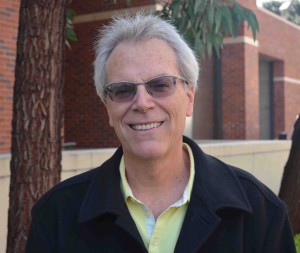
We went out to lunch, and did what older guys do: caught up on each others’ lives, shared our hopes, fears, and challenges we’d faced with our kids, commiserated about our ageing bodies. On this latter topic, Chris had more serious news to share than I. He was facing, with strength and optimism, a liver transplant in the near future.

We returned to his home, and settled in for the interview in a cozy cabin-like structure behind his and Mary’s home. We fell right in to a nice conversation, and I used bits of the transcript of my 1980 interview with Chris to prod his memory, and to probe ways in which he’d changed, or not, since then.   Most interesting to me were his reflections on the work that MASV had done so many years ago. He joined the several other MASV men whom I would eventually also interview in saying that he was very proud of the work the group had done. But in retrospect, he said he wondered how effective they’d been, and figured that if the group had it to do all over again, they might have done their work differently:

I don’t think I would go at it at all the way we did then, ‘cause I think in some ways, … I think we were doing something to prove something to ourselves and other people of our age group, and I don’t think we were thinking about, like, what’s it like to be a teenage boy in high school, and what are these images going to do to you when they’re shown up on a screen, and is it going to have any of the effect that we’re hoping to have? And I think it would have been really good to kind of get guys to talk about, well, there’s issues of bullying, issues of, you know, being popular, not popular. I mean, it seems like there could be a lot of things that could have been much more valuable, ‘cause in some ways, I think we almost had this stick and we’re going to beat you over the head with this thing. And… perhaps if they felt like they were more understood, maybe they could be more understanding of women and, and where women are coming from. And I think that would be more the way I would go about it now.

[Back then], we were really just making it up, I mean, it was the seat of our pants… we felt like we should be doing something. We were feeling like we need to be also talking about the same things that the women were talking about—but we basically just took their analysis and presented it. You know, it didn’t—it didn’t feel like it was coming from our core, you know, from who we were, other than maybe from our guilt

And, and you know, I think—having more of a positive vision of what a man should be, rather than going in there and telling men what they shouldn’t be doing—having a more pro-active, having a more kind of like, basically creating an ethic of, “This is what a man should do.” You know, this is, this is a positive thing for a man to do, and also like, what does a man want? You know, rather than like, “Oh, you shouldn’t be bad,” but…you wanna have a good relationship, you wanna have a relationship with someone that’s based on some degree of equality, on some degree of, of mutual respect, of everyone having opportunities, or people feeling good about their lives, about who they are. And, that presupposes having some degree of, of understanding of who you are yourself and what you want. And I felt like we weren’t, back then, we weren’t coming at it from that—it was more sort of like, you know, men are bad—Andrea Dworkin told us this—we know men are bad, we are bad, we’re gonna’ go and tell the high school boys that they’re bad too, for looking at pornography, and that pornography’s gonna’ make them badder than they already are. And, there wasn’t that—I think there’s gotta’ be a positive vision. And you have to have, I mean, you don’t want to be blind to the bad stuff that goes on, but there has to be kind of some upside for doing this, ‘cause I don’t think otherwise people are gonna’ really pay any attention or wanna listen to you.

Chris’s statement very neatly encapsulated about thirty years of change in the ways that men now approach doing violence prevention work with boys and men. In Some Men, the book that Max Greenberg, Tal Peretz and I wrote from this research, we chronicle the grassroots of this activism—set in place in the 70s and 80s by community groups like MASV—in part because it is important to honor the foundations of positive social change. But it’s also important because today’s younger activists, however savvy and pragmatic they may be about the ways they approach boys and men with their message, may also have lost something very important that earlier activists like Chris Norton had: a grounding in a larger view of social change that viewed their efforts to stop sexist violence against women as intricately connected with efforts to humanize and bring justice to the world.   For groups like MASV, feminist work with boys and men, Chris explained, was an integral part of a larger transformative movement:

… an important way of sort of humanizing socialism, or getting rid of some of the hard-edged more Stalinistic tendencies that some socialist movements could have. And it also just made a lot of sense [for] those of us too, who also were rejecting militarism and the traditional terms of being masculine or man, and were looking for some kind of a new way—when I came to Berkeley initially I was involved in the anti-war movement, and lived in communal houses, and we’d gotten involved in the food conspiracy, and—it was all part of this whole, you know, sort of community, alternative society in a way that we kinda’ felt like we were creating it back then.

In retrospect, like many radicals of his generation, Chris expressed frustration with the current prospects for transformative social change.

I think I’ve retreated some degree from utopianism. But I do feel that it’s definitely possible to have a far more egalitarian society than we do. And I just, I feel like—and that’s part of my frustration too, is those of us who feel that way haven’t found ways to be very effective in putting forward that vision and, and making that vision something that’s attractive to people, and making people realize that what we’re living under is not actually that great for a lot of people, and it’s very difficult for a lot of people.

Part of my goal in writing Some Men with Max and Tal was to encourage today’s anti-violence activists to re-connect to that larger vision. It is stories from this generation of activists like Chris Norton that help to keep alive this larger vision.

The community bonds that sustain that vision were palpable when I attended Chris Norton’s memorial service in 2012, after he had succumbed to cancer.  Included among the scores of family and friends celebrating Norton’s life were a handful of MASV men—guys who in their youth had pioneered anti-violence work. Now considerably older, they shared a sense of pride in what they had accomplished so many years ago. Following MASV’s demise, they had gone on to do other progressive work: Chris Anderegg worked for years helping women’s DV shelters with their finances; Larry Mandella created workshops for fathers; Santiago Casal did community organizing to get a memorial built in Berkeley for civil rights leader Cesar Chavez. All of them, in their own ways, were clearly in it for the long haul.

Still today, I am not and probably never will be much of an activist. But I hope that my research and writing makes some small contribution to progressive thinking, and progressive social change, a contribution that both honors and learns from the brave and important work that’s been done in the past by the doers of the world, like Chris Norton, whom I so admire, and whose collective work helps to make the world a better and more just place.

_____________________________

Messner2013cMichael A. Messner is professor of sociology and gender studies at the University of Southern California, and author (with Max Greenberg and Tal Peretz) of Some Men: Feminist Allies and the Movement to End Violence Against Women (Oxford University Press, 2015).

This is the first half of a two-post series on the pro-feminist and activist Chris Norton at Feminist Reflections by Michael A. Messner. The second half of “Learning from Chris Norton over three decades” will be published on May 21, 2015 @ 9:00am EST (and linked here).

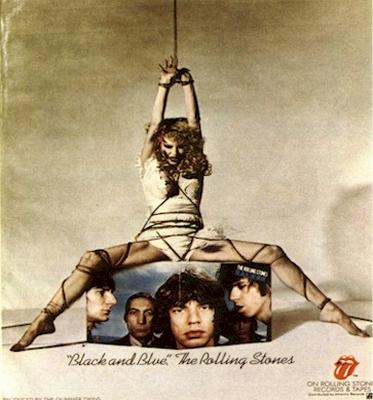
The guy at the front of the room was saying stuff I’d never heard a man say before, especially to a room full of young college guys.   Through my basketball-player-eyes, I sized him up to be at least 6’5” with the broad shoulders of a power forward. He had medium-length reddish hair and a ruddy face dominated by a bristly mustache that left his mouth a bit of mystery. And what words emerged from this mouth! With a style that seemed simultaneously gentle and passionate, he urged these young guys to think critically about their own relationship to pornography. BlackBlueBacked up with a slideshow that depicted popular album covers (The misogynist public billboard promoting The Rolling Stones’ album Black and Blue was one of them), he pointed to the links between sexual objectification of women, men’s use of pornography, and men’s violence against women.

This stuff was hard to hear for young men—and I include myself in this. It was 1980. I was 28 and in recent years had come to define myself as a “pro-feminist man.” I’d even been in a men’s consciousness-raising group in Santa Cruz. But like many younger men like me who were awakening to feminism, I was still struggling with my own deeply engrained erotic attachments to conventional sexualized imagery of women, as depicted not only in Playboy and Penthouse, but pretty much everywhere around me. So here was this giant guy standing up there, calling us out—calling me out—on my shit. What struck me most, and what made it possible to hear what he was saying, was how he spoke as one of us—self-reflexively talking about his own immersion in a culture of eroticized sexism and violence against women, how it affected and continued to affect him. He revealed that he was part of a group of men, Men Against Sexist Violence (MASV), that did educational work on sexism with boys and men—in schools, on the radio, in prisons—while also supporting each other to become pro-feminist men. (As I watched him in action, the punster in me wondered with a private chuckle whether the other members of his group were so, well, massive.)

I agreed with everything this guy said in his presentation and I admired his courage. I wanted to talk with him, maybe become friends with him, and for sure I wanted to interview him for my new research project for grad school—in-depth interviews with men in pro-feminist men’s groups. After the talk, I introduced myself. He greeted me warmly and immediately agreed to allow me to interview him.

Chris Norton was his name, and it turned out he was a guy of middle class origin who had moved to Berkeley in recent years, taken up work as a carpenter while also immersing himself in the progressive politics of the time. I had initially imagined he might become a basketball buddy, but we were only two minutes into our interview before he assuaged me of that illusion. When I asked him about his boyhood relationship to masculinity, he said,

…in sports, I didn’t feel like being aggressive often times and for instance I’m tall and was supposed to be good at basketball, to stand under the hoop and get all the rebounds, and it just didn’t work out—and people’d get pissed off at me for not getting all the rebounds—and then we wouldn’t end up winning and I’d get resentment back, and frustration from people, because I wasn’t doing what I was expected to do and then I’d feel bad about myself and think, “Well I guess I’m a failure, I’m not strong enough or not aggressive enough, maybe there’s something wrong with me or wrong with my masculinity; I’m not a man.”

Norton3
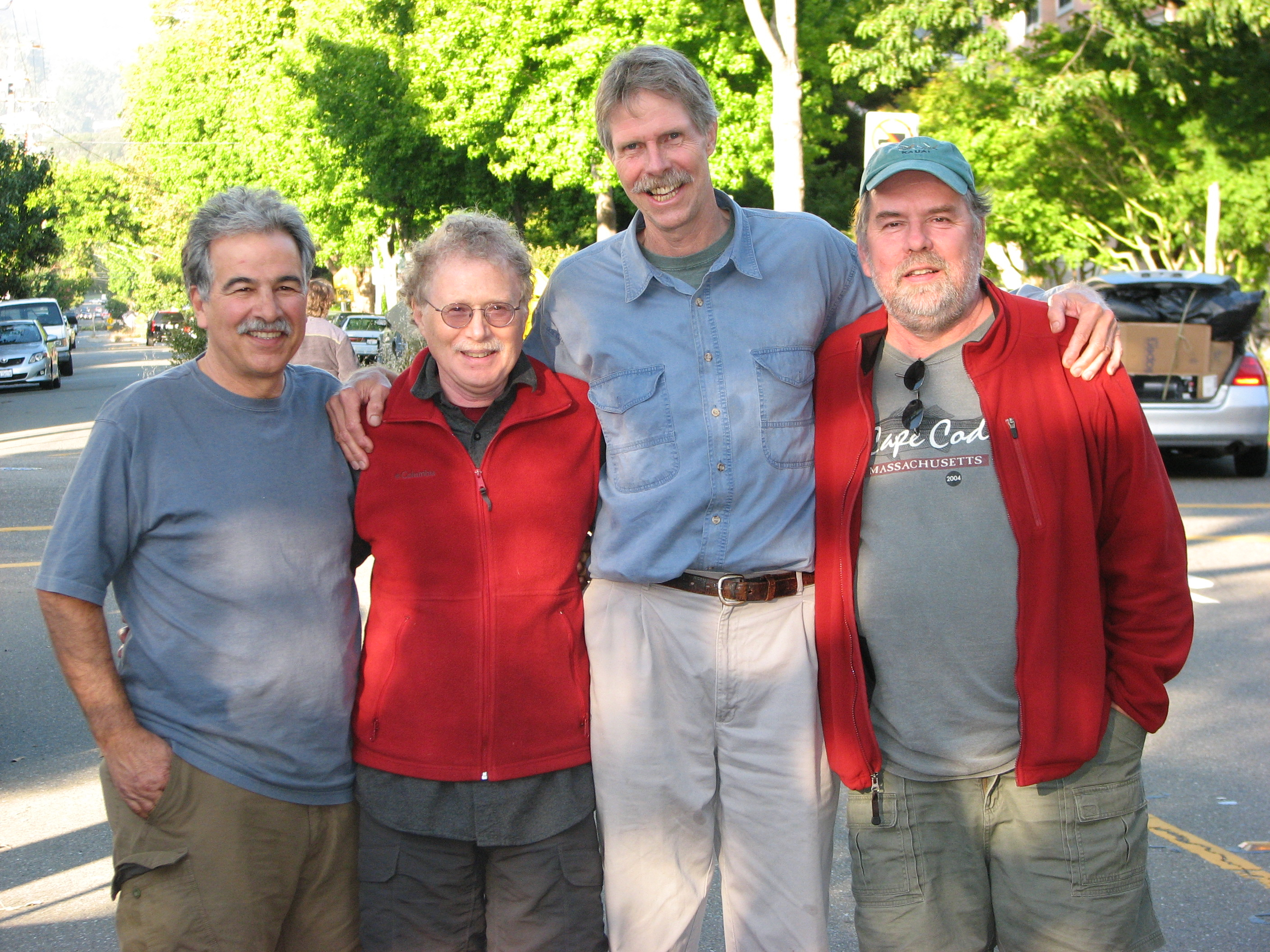
Longtime comrades and SF Bay Area pro-feminist pioneers: L-R, Larry Mandella, Men Against Sexist Violence (MASV); Tom Berry, Berkeley Men’s Counseling Center; Chris Norton, MASV; Dana Francis, Men Overcoming Violence (MOVE).

My 1980 interview with Chris Norton not only helped me to complete a study toward the goal of getting my Ph.D.   It also helped to me begin to clarify the sort of person I am. Over the years, I’ve enjoyed thinking of myself variously as a socialist, a radical, a feminist, a progressive, an advocate for social justice. But mostly I don’t do much with these political commitments. Oh, I’ve marched in a few protests and paid dues in some progressive organizations, but I can’t stomach meetings and I hate the grind of building and sustaining organizations. I live so much inside my own head; I read, I write, and the most public thing I do is to lecture and occasionally write an op-ed on some social issue. But this guy, Chris Norton, though he had nearly identical politics as mine, was an opposite character type, a type I admired, even romanticized—a doer, a man committed to acting in the world rather than sitting around thinking about things.

In our interview, Chris spoke of the tensions of being a pro-feminist man, of struggling with how to integrate his commitments to feminism with his daily life as a carpenter, where he worked with men who didn’t always share those commitments. He spoke of MASV’s internal discussions of sexism and pornography, and of his own complicated relationship to feminism and other progressive politics. When I asked him if he called himself a feminist, his response revealed his ongoing self-criticism at his own internalized sexism, while also telegraphing what would become his next major political commitment:

I used to; I don’t know if I do right now. Just because I think I’ve been seeing a lot of limitations to feminism or some of the lacks that it has as far as dealing with class and other things… Some feminists, a certain branch of middle class feminists are sort of like “I want more of the pie” and as someone who’s real interested in changing class relationships and in a more thorough-going revolution I don’t really want to identify with that and I don’t feel real supportive of women executives and women in those positions… In my experience in Latin America, seeing the need to deal with class relationships—I see that as a real difference. The starting point of feminist consciousness between the U.S. and Latin America is really different. I think that any kind of revolutionary movement in the US has to pay a lot of attention to women’s issues, just because that’s where we are. But I think there’s like a bourgeois women’s movement that’s really self-centered and on some level I don’t think I’d call myself a feminist—I think I feel guilty about using that term when I have so much (This whole thing about looks)—I feel guilty because I have so much of this stuff that feels unresolved in myself—It’d be dishonest to call myself a feminist.

It’s two different things. On one level I have objections to some of the tendencies that feminism has and on the other hand I don’t think I’m good enough to call myself a feminist. When we were in the radio collective we called ourselves “pro-feminists,” [which] means that you’re supporting feminism, but not being women, we couldn’t be feminists.

Chris continued working with MASV for the next couple of years, but was shifting his attentions to Latin American solidarity work. I got together with him—maybe around 1983 or 1984 or so—and he told me he was planning to go to El Salvador to work as a freelance journalist, covering the brutal U.S. war that was attempting to suppress a popular uprising. At the time, following the 1979 Sandinista revolution in Nicaragua, there was good reason to believe in the possibility of a succession of victorious liberation movements in Latin America. It was the mid-80s now, and Chris wanted to be a part of this history. He told me he dreamed of being in San Salvador when the victorious FMLA marched in.

I wanted to help—to support Chris, to contribute to the revolution—but of course I’d not stray too far from the local comfort of my oak desk, the very same one upon which I now rest my hands as I write, more than three decades later. I organized a big launch party for Chris at my rambling old rented house in the flatlands of Berkeley. The idea was to gather Chris’s friends and political comrades, as well as some of my own, for a fund-raiser to help Chris get to El Salvador and begin his work as a freelance writer. We cooked up industrial-sized vats of spaghetti for the event, and Chris presented an inspiring El Salvador slide show that outlined the political struggles and stakes. As it turned out, Chris and I had lots of friends; the house was packed to the gills with supporters. And, as it turned out, Chris and I had very few friends who had any money. The pittance we raised may have paid for Chris’s first handful of notebooks.

But he got there. During the latter half of the 1980s, Chris wrote from San Salvador, freelancing for the Christian Science Monitor and other magazines and papers. When I would see Chris’s byline in the CSM I would smile and shake my head in admiration. During those years, still glued to my desk, I wrote my dissertation, prepared articles for academic journals that would hopefully secure me a job, and started my salaried faculty job at USC. Oh, I attended anti-Reagan demonstrations in the early 80s, protested U.S. interventions, donated tiny amounts of money to Latin American solidarity and other progressive organizations—but never did I put my body on the line in the way that Chris Norton did. My admiration for Chris grew… but somewhere starting in the early 1990s, I lost track of him. Immersed in my academic career, building a family in L.A. with Pierrette and our young sons Miles and Sasha, Chris’s life and mine headed in different sorts of directions. I’d think of Chris occasionally, wondering what he was up to.

Part II will be posted on May 21st, 2015 at 9:00am EST and linked here.

_____________________________

Messner2013cMichael A. Messner is professor of sociology and gender studies at the University of Southern California, and author (with Max Greenberg and Tal Peretz) of Some Men: Feminist Allies and the Movement to End Violence Against Women (Oxford University Press, 2015).


When my daughter went into her final year of college, I started feeling a sense of trepidation about what would come next. She was a Sociology major (yay!), was into the arts (yay again), and had lived in New Orleans for four years (cool). Fortunately, she lined up an internship her senior year and now two years later, things have worked out pretty well.

But you never know. In an economy that rewards those in STEM fields and business, the seniors I now teach are predictably in panic mode as they face a very uncertain future. Regardless of all the internships and community service experiences they are accruing, there’s no avoiding the dour statistics for young college graduates. When one student came to me, asking for advice about applying for a consulting job that was way beyond her reach, I found myself counseling her about the virtues of working in a coffee shop. So what if she’s an international relations major!

Hudson River Psychiatric Center
State Psychiatric Center

My first “real” job after graduating from  college was working in a state psychiatric hospital. This seemed like a “natural” place to be, since one whole side of my family was riddled with serious psychiatric disorders. Between an aunt with agoraphobia who never left her house, an aunt and an uncle who had “manic-depression” (now called bipolar disorder, a more “respectable” name), and a mother who struggled with clinical depression and alcoholism, I was quite at home working in an institution for people with severe mental health problems.

When I graduated, the state psych hospital was hiring tons of young college graduates. This was in the early ‘70s, when thousands of patients, people who had spent years, sometimes decades, living in inside the walls of state hospitals, were released into the community in a move to “de-institutionalize” them. The motive was humanitarian, but the reality for many of the patients was downright cruel because many of them were unprepared for life on the outside. Nonetheless, it did mean that a lot of my friends and I had jobs when we graduated.

I was hired as the institution’s dance therapist. I had been a dancer for many of my young years, and my professional goal – if one could call it that – was to somehow combine my interest in helping people with my passion for dance. I lucked out, since the field of dance therapy was just emerging, and one of the first certified dance therapists in the U.S. was willing to train me during my senior year of college.

I worked with people who were still living “inside” the institution, as well as out-patients who were being transitioned into a day treatment program. Because I was a professional dancer in a mental hospital, many of the institution’s rules did not seem to apply to me. Or at least that’s what I thought and how I behaved… More than once, I led a group of patients in a snake line through the hallways, wearing a leotard and tights. We seemed off-limits to criticism, as this “crazy” activity was “therapy”! It felt downright revolutionary!

While working in an institution wasn’t where I “landed” professionally, it was nothing short of a profound experience for a 21-year-old. I fell in love with schizophrenics who were smart and spoke in metaphors that seemed poetic and deep. I’ll never forget one of my out-patients, a diminutive woman named Ruth, who spent her entire adult life in the psych hospital. Ruth held her body like a tight fist, and stood all day, rocking rhythmically back and forth. I feel teary when I think about her. Another person seared in my mind is a tall, broad gentleman in a perpetual cowboy hat. People called this man of few words, “the Captain”. One of my most glorious days was when I took “the Captain” for a drive in the country, with two other patients. Outside it was minus forty degrees – this was Central New York in winter – but inside the car, with sun shining through the windows, it felt warm and protective. He said little throughout the drive, just smiled…

By the time I was hired to work as a dance therapist at the state psych center, sociologist Erving Goffman had already published his seminal book Asylums: Essays on the Social Situation of Mental Patients and Other Inmates. One of Goffman’s greatest contributions was his critique of what he called “total institutions”, which included mental hospitals and prisons, those institutions with a high degree of regimentation, and an elaborate privilege system. He described relations between staff and patients (or inmates) as caste-like, with detailed “rules” of deference and demeanor.

I knew nothing of Goffman while I was working in that first post-college job. But after studying this brilliant sociologist in graduate school and using his analyses in a class I now teach, it all comes back to me. I lived what Goffman described. Drawing upon those earlier experiences, I could now understand his theoretical frameworks. One of my favorite co-workers, a friendly and clever guy named Willie who was the janitor, surely understood Goffman’s analysis when he changed his first name from Willie to “Doctor”. Whenever anyone wanted his services, they would yell “Doctor”. He always came running with a smirk on his face.

Despite the draw of my first job, I realized within a year that I wasn’t going to last. I was too young, too inexperienced, too overwhelmed with it all. While I found the people interesting, I had no real training. And even though I was a good listener, I fought back tears every time a “client” expressed sadness or joy. Ultimately, what drove me to work at the psych hospital – working with really troubled people – became the reason I had to leave. It wasn’t the right fit, even though it seemed so at the beginning. With a far more robust economy than we have today, I saved up enough cash that year to travel Europe for nearly a year, so that’s what I did!

As my father used to say, everything we do in life accrues and has meaning. This has to be true, as well, for college students who are saddled with debt and graduating to a lousy economy and a dearth of employment opportunities that “fit” with their majors. A number of my friends are living at “home” (where they grew up) and working in unpaid internships that they hope will lead to a paid job. I know one person who dropped out of college in her freshman year and learned how to do organic farming. Now she’s running a business where she creates peace gardens for interested clients. I know one person who couch-surfed for a few months, and then got a job sailing someone’s boat to the Virgin Islands. At one point, during an intense storm, he wondered if he was even going to make it… I can imagine that he’s not the only one feeling that way, although perhaps for different reasons.

When I think about my own daughter – and all the young people I encounter these days – what I wish for them is the courage to follow their passion, and then feel okay about whatever job or internship (or whatever) they find, knowing that those things may not be the same thing. At least for now…