
Endings & Beginnings
May is full of beginnings and endings — graduations from high school and college propel students on to new endeavors.
Chasity is a student who will always hold a special place in my heart. She’s talented, passionate, and hard working, and while I’m sad that we’ll no longer be part of each other’s day-to-day, I’m excited to see what the future holds for her.
It has been an exciting year, and I’ve enjoyed watching Chasity grow. She has worked with me as a research assistant; we traveled together to a conference where she received a national award. Chasity received our department’s Undergraduate Sociology Student Research Award, served as president of our Sociology Club, and won another award from our university’s Multicultural Center.
On Saturday she’ll walk across the stage and receive her diploma, marking the commencement of her undergraduate studies; she’ll move away with her fiancé and her new chapter will begin.
Working with Chasity as a student has been an honor and I’m incredibly proud of her. At the same time, it’s bittersweet. As teachers, we’re expected to teach and guide our students. But as I reflect on the past year, I’m also reminded of how much our students teach us. Chasity has been my student. She’s been my mentor as well. I’ve learned so much from her about social justice, activism, and staying the course. Teaching in the Deep South has been an adjustment for this Northern transplant, and students like Chasity remind me why I push through.
Mentoring & Recognizing Our Students
Mentoring relationships are often seen as one way, but I see them as reciprocal. Naturally, there are appropriate professional boundaries, but this does not mean our students do not impact or mentor us. They come to us from different parts of the world; they share their stories. When we are open, we learn.
This post serves as a thank you and a tribute to Chasity, as well as a testament to the importance of mentoring, with emphasis placed on what our students give us. While our job is to help students learn, learning is not just a give and take relationship. We are human. We teach sociology, where many concepts are personal for our students and ourselves. Emotions can not be removed from the learning process. We build relationships with our students, and we care about them.
I want to write this post within a framework of feminist mentoring, but today words fail me. This post is from the heart. At times, I think as faculty we are negligent in recognizing the talents and humanity of our undergraduate students. We may not take the time to tell them how they’ve changed us, taught us, and pushed us to be our best. We all need positive reinforcement and this is especially true of our students.
“I Just Do It”- Social Justice to Unite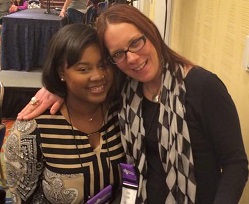
Each year, SWS requests nominations for the Undergraduate Student Activism Award and Chasity was an obvious choice. Her work on campus speaks for itself. She’s served as a diversity peer educator, worked with the Gay Straight Alliance, engaged in research on racism, women, and mental health. She’s worked tirelessly with the Sociology Club and the Multicultural Student Center, volunteering and mentoring numerous students. She’s part of Model UN, and these are only the things I can remember. She does all this in addition to being an exceptional student.
For Chasity’s nomination for this award, I received letters of support from faculty and staff across campus. As I wrote in my letter,
“Chasity is dedicated to social justice, and is able to use a sociological lens to frame her inquiries. But most importantly, it is not just her experiences that fuel her activism, but her desire to build bridges among diverse groups, to relate to and understand people, and she does so in a professional, reflective way, serving as a role model to others who strive for equality.”
As the letters of support attest, Chasity takes a lead role in advocating for social justice and equality, and she does so with professionalism, empathy, and self-reflection.
Chasity is humble and her work is never self-serving or simply for fame. She does it because she cares deeply for others. She is passionate about social justice. This was beyond evident when we were working on her resume. I asked about her work and she responded, “I just do it; I don’t think about writing it down.”
The world needs more people like Chasity. Chasity is about action, authenticity and living her values. Students like Chasity inspire me to be better — a better person, as well as a teacher and scholar.
Mentoring Our Undergraduates
Chasity has helped me become a better person, but also teacher and scholar. She can tell you what I have helped her with, but this post is not about that. It’s about showing our own humanity and appreciation for students, particularly undergraduate students, who often get left out of the conversation about mentoring and positive relationships. I’m grateful to have been able to work with so many wonderful students in my teaching career. Mentoring undergraduates does not have to take away from our research or teaching. Seeing the humanity and positive attributes of our students can do wonders for their development and by actually listening to them, we can grow professionally and personally.
I encourage you to reach out to students who’ve made a difference in your life. I’ve learned so much from many of my students this year, but today is about Chasity. Join me in congratulating her as she walks across the stage on Saturday and begins an exciting new chapter.
For Chasity
A poet, I may not be, but this is the best way I can tell you and the fabulous folks who read this blog about you. Here goes…
You have my support and I am forever grateful.
After intense teaching days, you were there.
With a smile, words of wisdom, reminding me how much you learned.
You were the voice of reason when I was ready to run.
You listened and reminded me why I do this important work.
You were the calm during a long day of travel, despite your lack of sleep.
You even didn’t poke me when I snored!
You made me proud; you made me laugh; I cried when you won your award.
You made quite the impression with your authenticity, professionalism, and knowledge.
You worked hard collecting, coding, and analyzing data.
Your awards were numerous,
And you deserve every one!
You have made an impact.
On me,
On your peers,
On your mentors,
On our department,
On campus.
As you move forward, I will miss you,
Yet you will forever be in my heart,
Guiding me, reminding me to build bridges and advocate for justice.
I’ll hear your words to me — you’re worth it!
Never forget how wonderful you are.
You’ve made a difference.
Life is not always easy,
New chapters bring new challenges.
But you are ready.
You are strong and intelligent,
Resourceful and creative,
Empathetic and caring.
You will be okay.
But always remember,
As you care for others, you’ll need support.
Don’t be afraid to ask for it.
Your family, friends, colleagues, and peers,
Will be here for you.
Be brave and take care of yourself.
Chase your dreams!
Congratulations, Graduate!
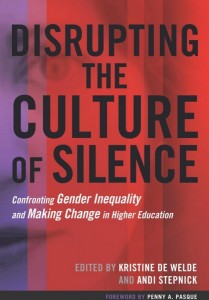 Change in Higher Education