empowerment

I remember, about a decade ago, meeting U.S. scholars at an international conference. In the period of an otherwise nice lunch, one particular colleague – a second wave (cisgender, straight) feminist of color – initiated a conversation on what turned out to be her nephew going through gender reassignment (although she voiced this as her “niece” going through “bodily mutilation”). I remember the challenge of having to articulate a harsh and yet loving criticism of this colleague who I otherwise respected, and still respect today, and my need to understand how, and why, these readings of the flesh took center stage in this colleague’s fears. Having experienced racialized sexualities and racialized gendered readings throughout our lives, she came to the table with preconceived notions about the sanctity of one’s body, and trans* identities and experiences challenged that idea.

About 10 days ago, I recalled that moment when I started reading criticisms of Chimamanda Ngozi Adichie’s recent comments, and various responses from transwomen, among them Laverne Cox. Adichie has clarified her points most recently, where she reiterated the main premise of the separation between trans* and cisgender women – that transwomen have had “male privilege,” inserting, pretty much god-like, that posture on transwomen’s histories (please read this inspiring story on the challenges this poses to cisgender women agreeing with Adichie). This has been the point of contention of much of the public debate. The character of her accusations as transphobic are two-fold. On the one hand, they are politically efficacious for trans communities – a group that should be directly speaking on trans* issues (and not Adichie). Yet, on the other hand, they are a shallow move that avoids addressing the historically charged relationship between feminist thought, sociology, and trans* rights, a move that cannot be brushed away with a mere accusation of transphobia.

My goal is to converse with (cisgender and trans*/transsexual) feminist scholars and activists, and although I center my remarks on the sociological discipline, I want to reach social scientists and non-academics alike. I wish to engage whatever politics we activate when we deploy a monolithic view of feminism, but also, the subsequent attacks and remarks of Adichie as transphobic. To be sure, cisgender (straight and lesbian identified) feminist wars have taken shape for decades: as a case in point, Cherríe Moraga’s work has been critiqued for its posture against transmen (in ways that have been labeled transphobic). True, there is a lot of tension in the sex-gender wars between cisgender feminist activists/scholars, and those of latter waves of feminist thought. But what seems problematic in this case is the focus on Adichie as a target.

It seems so easy, so self-celebratory, to challenge a woman whose engagement with “third-world” postcolonial writing has been exponentially far more advanced than White cisgender feminists in the US, a scholar whose premise has been one of liberation. This, especially when there are feminists with a stronger platform – and many more untapped issues on intersectionality to address – than Adichie. Thus, I remain suspect of the inherent colonial underpinnings of those (White, well intended, trans* and cisgender activists) accusing a Nigerian woman of transphobia, in light of how Nigeria, and other countries in the African continent, are portrayed in terms of their perceived more homophobic/transphobic stands. (How much does that stance caters to USAmericans’ elevated sense of righteousness?) That, too, has to be a point of contention, and one to focus on, and work through, in these discussions.

The context of the interview is often missing from the criticisms. Ironically, and literally a minute before the oft-quoted excerpt, Chimamanda was critiquing the cliquish way (think social movements) in which left-ist groups (say: feminist groups, but let’s extend it to queer groups, anti-racist groups, “radical” groups, etc.) organize, develop a common language, solidify boundaries, and consequently police each other in terms of the maintenance of the most progressive language. She acknowledged it as a genuine attempt to create social justice and change, yes, but with the (often) unintended effect of sustaining their status.

Certainly, sociologists such as Viviane Namaste (in her book, Oversight) have critiqued these in-group linguistic privileged cues/behavior. In the context of gender-neutral language, Namaste problematizes the use of requesting self-pronouns in group setting introductions, when attempting to provide voice to a diverse set of experiences. Namaste critiques these moves for what they do – further alienating trans* and transsexual people by magnifying the White savior (cisgender and straight) complex in the utterance of the “preferred” pronouns. (Really, some do not have preferred, but their own, pronouns, defined by them and articulated in everyday interactions, and not in mere utterances.) To expect many trans (especially non-gender queer transgender and transsexual) people to unequivocally utter their identity – which has been for many a source of stress and an identity in process – and turn it around to make it seem liberating, only benefits the ones evoking its use. Ultimately, is the language we use a tool for freedom, or is language a set of exclusionary layered accounts that, by virtue of its precision, erase and dismiss those who are not “engaged” enough?

Beyond Adichie’s interview, but including it, we also fail to account for the imagery, and imaginaries, we (in US society) hold of trans people (this includes the reaction cisgender feminist women – including Adichie – often have of transwomen). In the US, most USAmericans are still more exposed to Caitlyn Jenner as a trans figure, and not so much to people like actress Laverne Cox, writer Janet Mock, or Jennicet Gutiérrez, the trans Latina activist who challenged Obama to free those undocumented immigrants in detention centers at the cusp of same sex marriage becoming legal nation-wide. (The fact that I find myself in need to add qualifiers for each of them may signal that they are not yet recognized in many places outside of these cliquish groups.) Transgender imaginaries dominate certain narratives, and Jenner’s centrality in the “reality” TV shows signals a protagonism in the US’ mainstream imagery of transwomen.

This take on transwomen’s histories, however, may also speak to the US’ obsession with power through masculinity. That tired old narrative – that Jenner renounced masculinity (after being recognized as an incredibly talented male athlete) – is still, for most USAmericans, a “shocking” narrative. Overall, such readings reveal how we conceive of power, how much we cling to it, and how little do we think of the non-masculine (or give it space, for that matter) in the world.

As another case in point, Joanne Meyerowitz documented the “former GI turned beauty queen” 1950s “bombshell transformation” – about Christine Jorgensen – in her incredibly resourceful book How Sex Changed. (Cox references Jorgensen in her tweets by mentioning the lack of recognition of transwomen, except in the “macho guy becomes a woman” pre-fixed recipe framework.) There, the focus on masculinity – a conflation of maleness and masculinity, really – is an example of the type of obsession with maleness, masculinity, and other axes of power that are often not interrogated when studied from some humanities and fields in the social sciences, and automatically plopped as a convenient narrative to explain away the “outliers.” We should know better. But masculinity serves as a way to continue to leave un-interrogated some of our assumptions.

In Adichie’s brief exchange, the interviewer set her question up in ways that seemed leading. In that context – when receiving a question that suggests transwomen always already enter feminist spaces through a history of male privilege – there is already little to salvage. I do think that language betrays us, and sometimes we fail to see something, or act right then and there. Adichie could have restated the question, rethought her assumptions, critiqued the premise of the query. That she did not is precisely what we should be considering an opportunity rather than a chastising imperative to discipline her – or those who do not see things the way “we” do. As it turns out, she continues to defend this narrative over and again. A cisgender-driven feminist thought that is perhaps engrained in Adichie should not result in judgment, but the starting point of action and conversation, en route to coalitional work. We must challenge these tired old arguments with counter arguments. Some of us do it from an academic platform, though that is not the only (or even main or “best”) way to do so. In my own research on masculinity and transmen, it was clear how, as one interviewee noted, “I had no past as a man, but I had no future (as a woman).” Others noted how, even as they faced life as men in the world, and seemed to benefit from male privilege, a sudden bodily exposure—be it a car accident, a medical test at an OBGYN office, or in potential erotic/sexual encounters—immediately removed this so-called privilege. Yes – Adichie, and others, should not fall on the “male privilege” trap. But we can explain, and elaborate on, why these are fallacies that need rethinking.

Sociologists too have lived with a fascination with gender deviance, understanding social norms through categorical gender lenses, and using excess to illustrate the rules of its ordering. (Perhaps as sociologists we need to challenge our simplest use of socialization altogether.) Privilege and power do not operate in simple binaries and opposites—we do know this from feminist thought—but to name biological circumstances (XY or XX chromosomes, external genitalia) as social is to reinstate sex circumstances as gender fixed criteria in our histories (with no room for variation or degrees). The humanities and social sciences of our times should move beyond the notion that transwomen are biologically male, and trans* activists are pushing us to see how damaging this is (and doing so through coalitional efforts). Thankfully, yet painfully, through her comments on being policed because of her femininity, Laverne Cox is really moving forward the discussion Adichie began. Cox did so by invoking a simple element: that her perceived deficit in the accomplishment of masculinity was indeed the fact of her femaleness (not just her femininity) and an “unknown” (if not unspoken) gender identity. That uncovers a previous social scientific approach to difference that challenged, and simultaneously reified, sex/gender.

We must challenge feminism in transformative ways, so that transwomen’s womanhood is no longer addressed through discourses of male privilege. However, that does not require forcing cisgender feminists to equate transwomen’s experiences with cisgender women’s experiences. What is damaging is not just the erasure of trans experience and identities as women, if they so wish to see themselves as (some trans* people do not abide nor work within that binary), but the homogeneous articulation of a single womanhood, which feminist thought has constantly refuted. To say ‘trans women are trans women’ is noting women with a particular life experience, and that can be, without the automatic mainstream-feminist compulsory answer that falls back on the tired “male privilege” narrative. In thinking intersectionally, one should be disturbed not so much because of the separate articulation of transwomen from (but also as) women; but the overgeneralization of that statement and what it erases – Jenner, Cox, Mock, Gutiérrez, and others have infinitely distinct experiences based on class and immigration and race and ethnicity and education and age and body type/size and ability, to name but a few markers.

Because of Adichie’s intent to see transwomen as non-universally women, I still believe Adichie’s feminism is intersectional. It may not be my cup of tea, and yes, I will continue to resist that narrative. But that should not reduce her history of intersectional work to ashes because of a single criticism. We must also be critical of the uses and abuses of the terms and their reach—here, I am reminded of the impossibility of intersectionality in Jane Ward’s Respectably Queer (in this case, in three sites that used sexuality as the basic premise to show the ways in which race/class/gender could not be addressed in tandem). And I see a chance, an opportunity, to build, not to shut down. What remains for us is the harder work of communicating across differences, which is not so shallow. It requires commitment, but also, an understanding of these feminist postures. Yet, I agree, it certainly does not require their endorsement.

I am not suggesting that we should not hold our activists, scholars, heroines or public intellectuals to task – not at all.  What I am suggesting is that we do not disavow them because they’ve taken a historically narrow position, given their own social location and experience. What I am suggesting is that we take a stand (especially those of us, non-trans scholars) to challenge, as in my opening vignette, both the assumptions about second wave feminism as the uncritical read of trans* lived experience. Laverne Cox’s tweets (which can be read in their totality here) were filled with an intent to engage, to communicate and challenge, and to not alienate Adichie as a feminist cisgender woman – and by extent, feminist cisgender women. I sure hope those of us, trans* and not trans-identified alike, can at least follow in Cox’s footsteps.

_____________________

Salvador Vidal-Ortiz (Ph.D.) is associate professor in the sociology department at American University (AU), in Washington, DC. He coedited The Sexuality of Migration: Border Crossings and Mexican Immigrant Men (NYU Press, 2009) and Queer Brown Voices: Personal Narratives of Latina/o LGBT Activism (University of Texas Press, 2015). Aside from his Fulbright-based research on forced migration/internal displacement and LGBT Colombians, he is now engaged in a new project, with Juliana Martínez, also from AU, on “Transgendering Human Rights: Lessons from Latin America.” He was an inaugural editorial board member of Duke’s newest journal TSQ: Transgender Studies Quarterly.
I am an abortion provider. I provide abortions because I understand that a woman’s ability to control her life trajectory is intimately tied to her ability to control her fertility. Having worked in rural Africa, I have witnessed firsthand the medical and social consequences of limited access to safe and legal abortion. It is my mission to maintain access to safe and legal abortion in the United States. In the U.S. almost half of all pregnancies are unplanned and about half of unplanned pregnancies will end in abortion. This makes surgical abortion one of the most common procedures performed in the U.S. Do I wish there were fewer unplanned pregnancies and abortions? Of course. But there will always be a need for abortion because contraception fails, pregnancy complications arise, and rape doesn’t just “shut that whole thing down.”

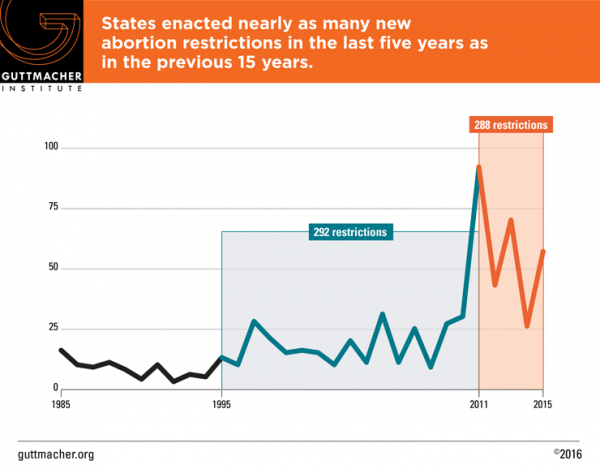
While Roe v. Wade guarantees women’s legal right to abortion, states have the legal authority to restrict and regulate abortion. “TRAP” (Target Regulation of Abortion Providers) laws are state laws that single-out abortion providers and apply burdensome regulations that make it difficult or impossible to provide abortions. TRAP laws have addressed building regulations, staffing requirements, the informed consent process, mandatory waiting periods, whether public funds (such as Medicare or Medicaid) can be used to pay for abortions, and even the surgical technique physicians are allowed to use to perform abortions (see here for a summary of state-by-state laws). Immediately following Roe v. Wade in 1973, states began to regulate abortion provision. But in the last five years the number of restrictions has skyrocketed. From 2011 to 2015, 288 new TRAP laws were enacted.

On the surface, these laws sound great. Who doesn’t want abortion to be safe? However, abortion is already extremely safe and these laws do nothing to protect women. There is no evidence to support the claim that TRAP laws improve the safety of abortion. Multiple legislators have been pleased to admit that passage of TRAP laws would be a means to the end of abortion in their states; revealing their true motives. What proponents of TRAP laws don’t understand (or maybe they do?) is that TRAP laws actually hurt women and their families.

Clinics close because they can’t afford to adapt to ever-changing facility regulations. Physicians are afraid to provide abortion care because of the stigma and violence associated with doing so. Many states require multiple clinic visits to obtain an abortion. Women have to travel increasing distances to find an abortion provider. All of this burdens women and their families in the form of increased procedure cost, transportation, lost wages, and childcare expenses, to name a few. It also leads to increased gestational age at the time of abortion. First trimester abortion is incredibly safe—much safer than pregnancy and childbirth. The risks associated with abortion, though, increase with increasing gestational age.

Recent data from Texas provides evidence of the harmful effects of TRAP laws. Texas House Bill 2 (H.B.2), required hospital admitting privileges for physicians performing abortions, set strict facility guidelines, required specific surgical practices for medical abortions, and banned most abortions after 20-weeks of gestation. When abortion clinics closed as a result of H.B.2, the number of self-induced and late abortions increased (see here and here). Other women were unable to obtain abortions, forcing them to carry unwanted pregnancies to term. Late abortion, illegal abortion, self-induced abortion, and unwanted childbearing are associated with women’s increased morbidity and mortality when compared to early, accessible, and legal abortion. TRAP laws are a form of state-imposed gender-based structural violence.

rate of abortion laws

In the Supreme Court case Whole Woman’s Health v. Hellerstedt, the physician admitting privilege and surgical facility requirements of H.B.2 were challenged. The petitioners, a group of Texas abortion providers, argued that H.B.2 created an undue burden on the right of women to obtain abortion. The defendants argued that the bill was necessary to protect women’s health. Justice Ginsberg got to the heart of the issue when she said “Don’t we know…that the focus must be on the ones who are burdened?” She pointed to the fact that TRAP laws disproportionately affect women already marginalized by their gender, financial resources, geography, and other factors that limit access to healthcare. They institutionalize oppression thinly veiled as the paternalistic desire to protect women from their own decisions about their reproductive lives.

brant quoteWith a 5-3 vote, SCOTUS ruled that H.B.2 created an undue burden for the women of Texas. And the female justices played a major role in shaping the course of the oral arguments on the case. Justice Bryer wrote the majority opinion, stating that the requirements of H.B.2 “vastly increase the obstacles confronting women seeking abortions in Texas without providing any benefit to women’s health.” TRAP laws in other states are likely to be challenged as a result of the SCOTUS decision, with defendants having to demonstrate they benefit rather than create burdens on women’s health. TRAP laws, which have been one of the most successful methods of regulating women’s reproductive choices in the last decade, may be on unstable ground. This is a momentous victory for reproductive rights.

______________________________

Brant_headshotAshley Brant, DO, MPH is an obstetrician-gynecologist and abortion provider. She completed her residency at Baystate Medical Center in western Massachusetts. Her research focuses on contraceptive access and medical education. She currently practices in Washington, DC.
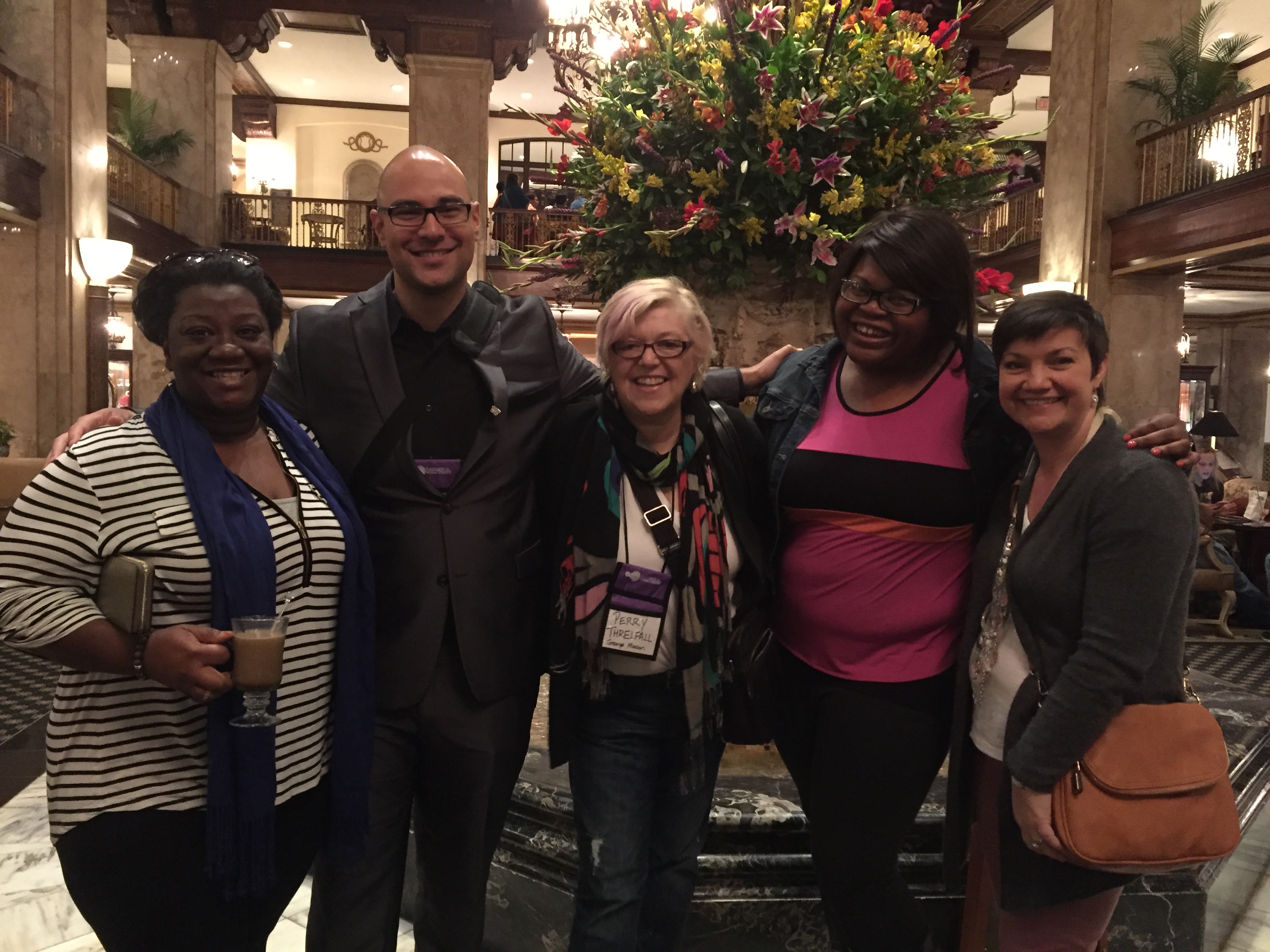
 

About a month ago, I found myself embarrassed to sit as the sole faculty member at a table of new members of Sociologists for Women in Society (SWS) – that is, aside from Dr. Mary Bernstein, outgoing SWS president, who led the new member orientation. I was excited to attend my first SWS winter meeting (really, first of anything hosted by SWS), but also embarrassed that I was new already half way to tenure and still “new.” No disrespect meant to the graduate students in that room, but I felt as though I was sitting at the kids’ table at Thanksgiving dinner. And, when it came my turn to introduce myself, I felt as though I was at an Alcoholics Anonymous meeting: “Hi, my name is Eric Grollman, and this is my first SWS meeting.” “Hi Eric,” my fellow newbies didn’t actually say, but I could hear in my imaginative and anxious mind.

No Support To Attend SWS Meetings

I went through all six years of graduate school, and then two years in my current position, without ever attending an SWS function. Some years I was a dues-paying member, and some years not. I justified the distance from SWS by identifying as more of a health scholar, and secondly a sexualities scholar – that gender was only tangentially related to my research. It took an encouraging email from SWS Executive Officer, Dr. Joey Sprague, to finally get serious about becoming involved in SWS. Recently, my work as an intellectual activist – particularly on my blog, Conditionally Accepted – has focused on protecting fellow intellectual activists from public backlash and professional harm. As many of those who have been attacked are women of color, it was clear that my efforts were in line with SWS’s mission and many of its initiatives. You-should-get-involved became you-should-attend-the-winter-meeting, which became you-should-organize-a-session-on-this-topic. This was quite a break from what feels like eagerly awaiting opportunities for leadership in other academic organizations!

I’ve studied sexuality and gender, as well as their intersections with race, since I officially declared my major in sociology and minor in gender studies in college. And, I’ve been an activist of sorts since kindergarten, focusing heavily on LGBTQ and gender issues beginning in college. Why did it take me so long to get involved with SWS – a feminist sociologist organization?

Elizabeth Salisbury, Drs. Jodi Kelber-Kaye, Ilsa Lottes, Fred Pincus, Michelle Scott, Carole McCann, and Susan McCully, among others. These aren’t names that are known nationwide (not yet, at least), but they are forever a part of my life. These are professors who were fundamental in the raising of my feminist consciousness, and in feeding my budding activist spirit. They introduced me to Black feminist theory (among other theoretical perspectives), feminist and queer critiques of the media, womanist accounts of herstory, and social justice-oriented research methods. Clearly, I still feel nostalgia for those days of self-exploration, advocacy, and community-building.

Graduate school, unfortunately, was a hard right-turn from my undergraduate training. I chose to pursue a PhD in sociology, assuming it would be easier to get into the fields of gender studies, sexuality studies, or even student affairs with that degree than the other way around. I won’t waste my energy on regretting the decision, but I recognize that it was the first of many compromises I would make to advance my career. Dreams of a joint PhD with gender studies were dashed due to “advice” that I would not be employable. I was discouraged from my fallback plan of a graduate minor in gender studies or sexuality studies because, I was told, one can “read a book” to learn everything there is to know about gender. By the time I selected the topic for my qualifying exam, I knew to select the more mainstream area of social psychology rather than the more desirable areas of sexualities, gender, or race/class/gender/sexualities. Still, I was reminded again that my interests in gender, sexualities, and race were not “marketable” when I proposed a dissertation on trans health. I was mostly obedient as a student. So, I shouldn’t have been surprised by my friends’ surprise that I had been offered a tenure-track position in sociology with a focus on gender and health. I entered grad school open to interdisciplinary study on queer, feminist, and anti-racist issues, utilizing qualitative methods, and tying my research to my advocacy; I left a mainstream quantitative medical sociologist who viewed writing blog posts as a “radical” forms of advocacy.

Would it surprise you that I wasn’t encouraged to attend an SWS meeting in graduate school? Those who were actually involved in SWS did so on their own volition. We were otherwise expected and encouraged to attend the mainstream organization – the American Sociological Association – and perhaps the regional sociology conference as a starting point to “nationals.” It wasn’t encouraged, it wasn’t the norm; and, on the limited funds of a graduate student, I had to be pragmatic about which conferences I attended. ASA won out all through grad school and beyond.

Finally Finding My Feminist Sociology Community

Tressie Me Perry DawnSo, back to my first SWS winter meeting. It was amazing, of course. I felt like an academic celebrity, having many people – some whom I knew, many whom I did not – express their appreciation for my blog, Conditionally Accepted. Admittedly, with such visibility as an intellectual activist, there is a lingering twinge of the mentality I was forced to adopt in grad school: “what about my research?” I thought privately. Obviously, these colleagues care about my research, as well. But, I found that the meeting, unlike other conferences I’ve attended, was just as much about research as it was about feminism, activism, and building a community. At what other conference would I feel torn between attending a session on feminist public sociology (hosted by the fine folks at Feminist Reflections) and another on campus anti-racist activism? Certainly not the conferences I’ve been attending over the years.
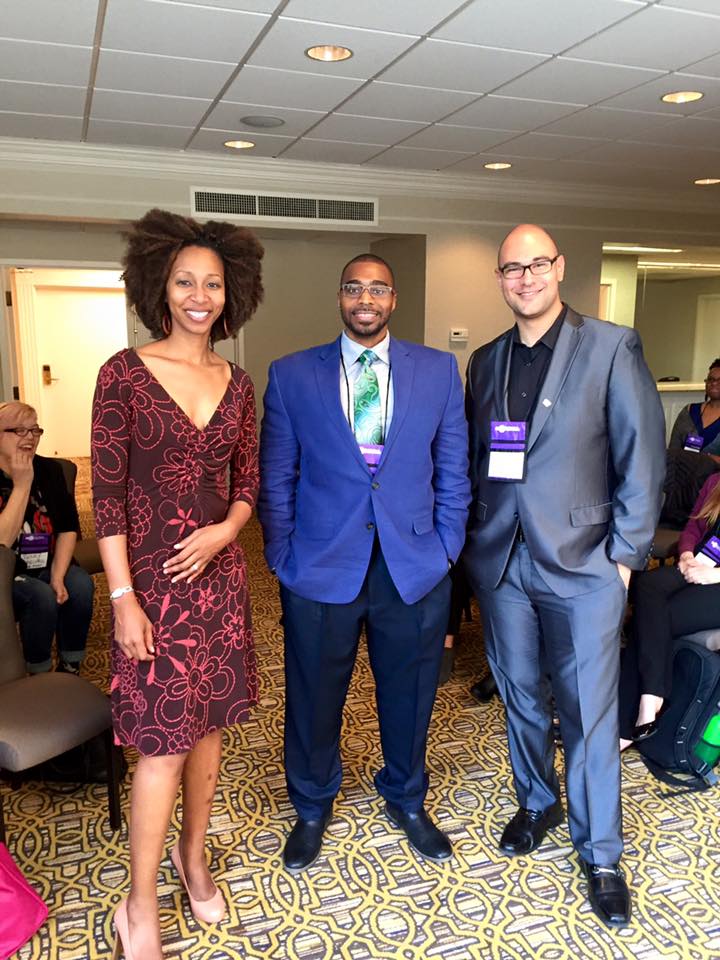
In hindsight, I realize how easy the meeting was emotionally, socially, and professionally. I saw an occasional glance at my nametag, but never followed by averted eyes. I sensed genuine curiosity in meeting others, not the elitist-driven networking to which I’ve grown accustomed at academic conferences. There was even a banquet, featuring a silent auction, a dance party, and delicious food, on the final night of the meeting. Feminist sociologists know how to party after a busy day of talking research and advocacy!

Needless to say, SWS meetings will be one of the regulars on my yearly conference circuit. I am left wondering how different my career and life would be thus far had I attended SWS from the start. Would I have had an easier time finding support for my research and advocacy knowing that I would at least have a network of social justice-minded colleagues in SWS? Would I be in some sort of leadership position within SWS by now? I even saw half a dozen current grad students from my graduate program at the meeting. What do they know that I didn’t?

I can’t speak to paths I did not take, and why others do what they do (or don’t do). I made the decision to focus on becoming involved in mainstream sociology spaces to increase my visibility, widen my professional networks, and enhance my job prospects. SWS did not seem like a feasible opportunity for me because it was not seen as a central in my graduate program. I suffered to a great extent in attempting to navigate the powerful mainstream expectations of my graduate training and my own goals to make a difference in the world. I don’t know that I could have handled being marginal anymore than I already was as a Black queer intellectual activist who studies race, sexualities, and gender.

Find Your Own Feminist Academic Community

Adia Ray MeWhat I take from life’s lessons is that one can really benefit from looking just a little bit further to find what one needs. My program devalued research on my communities – Black and LGBTQ. But, had I attended just one SWS conference, I would have found that there exists an academic space where that work is valued without question. My program sought to “beat the activist” out of me; but, in SWS, I would have found regular, open discussions about feminism, activism, and social justice. I know now that if I cannot find support for my goals, my identities, my politics in my immediate context, I am certain I can find support elsewhere. And, if not, there are likely a few others who are willing to join together to build a community that would offer such support. “If you build it, they will come,” or something along those lines. So, no matter how alone we might feel in a specific program, department, university, field, organization, etc., we have to remember that the universe is vast – there is someone or some group out there in which we can find home.
I don’t want to end by beating myself up, though. I’ve done too much of that in trying to make sense of the traumatic experience of grad school. Rather, I want to end by encouraging those who are in supportive networks to reach out to fellow colleagues and students who you know will benefit from access to such networks. I want to encourage those with power, money, and other resources to share them with someone who may not be able to afford attending a conference that might be transformative for them – but their department won’t support or encourage. I encourage faculty to emphasize to their students how amazing SWS is, or at least having other options besides ASA. Departments and universities can also consider setting aside money and resources to help students attend SWS, the Association of Black Sociologists, Humanist Sociologists, Society for the Study of Social Problems, regional sociology meetings, and those outside of sociology (e.g., National Women’s Studies Association). We do not advance our field by reproducing mainstream and traditional work; we do it by taking risks and thinking outside of the box. We do not benefit from young, aspiring feminist sociologists trudging through their careers thinking that their feminist politics are at odds with success in sociology, nor having them drop out of their programs or leave sociology for more supportive fields. We benefit from supporting the creativity and bravery of the next generation of scholars.

So, I hope to see you at the next SWS meeting. I’ll be the one attendee with the big grin on my face – well, at least one of the many.

___________________

Dr. Eric Anthony GrollmanEric Joy Denise is a Black queer feminist sociologist and intellectual activist, and an Assistant Professor of Sociology at the University of Richmond. Their research focuses on the impact of prejudice and discrimination on the health, well-being, and worldviews of oppressed groups, especially those marginalized by multiple systems of oppression (e.g., LGBTQ people of color). They are the founder and editor of the blog, Conditionally Accepted, which is now hosted by Inside Higher Ed.
I am headed to the Eastern Sociological Society conference in Boston, MA this week. My main focus is the Digital Sociology mini-conference that is held in conjunction with the event. The mini conference’s first year was 2015, when I co-organized it with Jessie Daniels and Karen Gregory. My name is still on the organizers’ list this year with Jessie and Leslie Jones. I should say upfront that Leslie and Jessie did all of the legwork this year. My year was spent in various stages of completing three book manuscripts and settling into the first year of my tenure track job at Virginia Commonwealth University. This will be my first year presenting, organizing and contributing to an academic conversation as a “legitimate” sociologist. more...

A few years ago, I was on the treadmill at the gym, trying to undo a day of sitting and staring at my computer, when a casual “gym friend” joined me on an adjacent treadmill. She noticed that I hadn’t been there much lately, and wanted to know why. I didn’t know her well and could have manufactured some quick story, but she had always been so warm and friendly, so I decided to tell her the truth: my 97-year-old father had passed away. Her response was immediate and kind, as she empathized with how hard it is to lose a parent. Then she looked up to the ceiling of the gym, and as I followed her gaze wondering what had stolen her attention, she said in a reassuring voice that “he is in heaven now,” and then looked back at me with a smile. Not knowing how to respond, I smiled back wanly and increased the incline on the treadmill. I wish I could believe my dad was in heaven and, as my partner says, I hope to be happily surprised…

She then asked about the funeral, and I explained that we had it right away because I’m Jewish and that’s what we do. Apparently distracted by the realization that I was a Jew, she paused, and then told me that she had many arguments with her Catholic friends who believe “the Jews killed Christ.” (Wait a minute – where did that lovely empathy go?!) Just as I was thinking about an exit strategy, she came back to earth and said, “It’s crazy that people of all faiths don’t get along.” And as I was mentally excusing her for that detour, she added, “except for the Muslims.” With those words, I was hooked again. I looked back at her and must have appeared surprised because she smiled uncomfortably…and then told me she worried that Muslims – presumably all Muslims – were terrorists. Wasn’t it time for me to leave the cardio area and work on my abs or something? But no, I couldn’t leave now because I saw this as a “teachable moment.”

Her comments really irked me. Here was a kind-hearted, well-meaning person who lacked real knowledge about Muslims, and seemed to be swallowing whole the Fox News/right wing extremist narrative. It upset me that people like her – presumably good people – can be so vulnerable to wrong thinking. Moreover, the current array of bigoted GOP candidates – fueled by and reinforced by right-wing media outlets – are able to reinforce people’s fears into a frightening political direction.

In his analysis of why Donald Trump is gaining traction in this presidential race, scholar and activist Noam Chomsky says that Trump is “evidently appealing to deep feelings of anger, fear, frustration, hopelessness, probably among sectors like those that are seeing an increase in mortality, something unheard of apart from war and catastrophe.”  Trump supporters, he argues, “are sinking into hopelessness, despair and anger”.  Instead of directing these feelings against the structures and institutions that are “the agents of the dissolution of their lives and worlds”, Trump incites people to blame “those who are even more harshly victimized,” including Muslims.  Add to this the fact that Trump is an entertainer! He cushions his message of hatred of “the other” with the bombast of a reality TV delivery. Chomsky warns us that these “signs are familiar,” as they “evoke some memories of the rise of European fascism.”

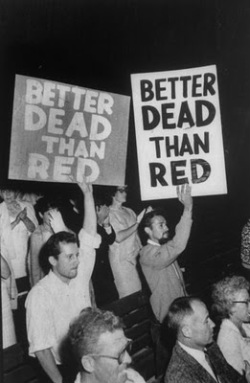
http://christewtechproject.weebly.com/uploads/1/4/4/8/14485152/1351702220.jpgI hearken back to the consistent message I heard throughout my life from my political activist father – that we must stand up for our beliefs. In the 1940s and 1950s, he was a very effective union organizer, fighting for better wages and working conditions for working men and women. But in 1954, he was called before the House Un-American Activities Committee (HUAC) to answer the now-infamous question, “Are you now or have you ever been a member of the Communist Party (CP) of the United States?” After much emotional wrangling, he decided to challenge the committee’s legality. As a result, he was “blacklisted” from employment in the U.S. and could only find work selling life insurance for 15 years through a Canadian firm. Again in 1965, he was subpoenaed to testify before the Committee. By that time, he had become a prolific playwright, writing about his experiences within the labor movement in an attempt to give voice to working people. His life choices affected his family. We lost friends and were rejected by family members. And yet I have internalized – without a doubt – the importance of challenging injustices.


So what did I say to my treadmill partner when she brought up her fear of radicalized Muslims? I told her that the media would like us to believe that all Muslims are terrorists, but most Muslims are peaceful people. Didn’t the “Koran incite Muslims to commit terrorist acts?” she asked. I replied that I knew that was completely false, drawing upon knowledge I have gained over the years.

Did I say enough to challenge her thinking? I’m not sure. There is that moment when we may ask ourselves, “Am I going to challenge this person? How do I do it respectfully? Am I risking their wrath? Will I feel uncomfortable? While it might be a conversation with just one person, I have no doubt that these interactions can make a difference in changing people’s minds. Maybe they will be more thoughtful or less reactive. But I believe that if we remain silent, we are – in a way – complicit.

There are many ways to fight misinformation and to work for a better, more equitable world. We can organize, write, teach, and, sometimes, just talk with a friend, colleague, or acquaintance. And we shouldn’t be afraid to do so.

Did the title of this post make you uneasy? My guess is that you seldom received that advice from mentors, family members, or friends; and if you teach, you would most likely never give that advice to your own students. From a very young age I learned to be giving of my time and money. Sharing and helping others were desirable qualities—selfishness was not. As I re-read this last sentence, I can’t help but still agree with that statement. I try to instill these same values in my own ten-year-old daughter. However, I constantly find myself encouraging students to be selfish! As a Latina professor at a large research university, I constantly battle with this moral paradox when it comes to advising my Latina/o students.

I have the honor of mentoring students of color, predominately Latino students. These students seek me out because I am often the only Latina professor in the department and some of them are able to identify with me because I teach courses on Latinos and immigration. I am bilingual, the first in my family to graduate from college, and I come from a working class family. I also enjoy getting to know my students. I ask them about their families and they feel comfortable talking with me about their personal and educational backgrounds, as well as their academic aspirations.Advise2

I have discovered that when I ask my undergraduate Latino students about their future academic aspirations, they usually reply in the same way: “I don’t know,” they say, “I just want to be able to help people.” Then they list professions such as social work, teaching, law, and even sociology. As I hear their responses, I think of my own college years, when I felt the same way. This type of response used to give me a warm sensation and hope in humanity. After all, it is great when students want to pursue a career that helps others. Today, I don’t feel as optimistic by this altruistic response. It now worries me that Latino students are being limited to “helping” professions that are not always as financially rewarding and socially transformative as they imagine.

Superhero

Underprivileged students who face social inequalities in their communities and schools often turn to careers that allow them to support both their families and other racial and ethnic minorities. According to sociologist Jody Agius Vallejo, middle class Latinos from working class backgrounds are more likely to “give back” to kin and co-ethnics (see her book, Barrios to Burbs). In her work on racialized tokens, for example, sociologist Glenda Flores found that Latina primary school teachers are tracked into teaching and, once there, develop a missionary zeal and actively advocated for their Latino students. Similarly, Maya A. Baesley and Mary J. Fischer’s research shows that talented black college students “opt out” of high-paying and high-status careers for fear of discrimination in particular fields such as science, engineering, information technology, and finance (see here). After graduation, some of these students then choose jobs that, although low-paying, enable them to help the black community. In these studies, discrimination experienced by communities of color shapes the educational trajectory of young men and women.

In my own research with Mexican child street vendors in Los Angeles (see here and here), I found that these youth had two main career aspirations that would empower them to help their communities and their own street vending parents—law and law enforcement. Their decisions to choose these careers were rooted in their everyday street vending struggles. For example, one parent told me: “I have always said to my son, like I have seen many injustices with the police here in my community, and in reality we do need legal representation. … At first he told me that he wanted to be a lawyer and then he said ‘No, I don’t just want to be a lawyer, I want to be a judge.’” Similarly, thirteen-year-old Arturo said his parents wanted him to be “something in life. Like a Lawyer or a hero.” When I asked him to clarify, he said “Like a lawyer, a police officer because they save people… Someone that is considered a hero.” Many of my respondents wanted to become heroes to the struggling people in their lives.

The students that come to my office express a similar sentiment. They have experienced and witnessed many injustices in their communities and wish to major in fields that will allow them to enact change. I too come from a generation of Latino students who saw education as a way out of poverty and a promise to create positive social change. But this is a heavy burden to carry. I opt to encourage students to pursue careers they love and to focus on themselves—to be selfish! Students are usually surprised that I give this advice. Their reactions, however, are not as cutting as those I get from other Latino professionals, some who are close friends. Among other things, I have been told that I am too “Americanized.” Some express surprise and then gesture in disagreement while trying to change the conversation.

I hope to see a day when my own daughter and Latino students who come to my office me me medon’t feel constrained by their mission to help, but rather are moved to choose jobs based on their individual intellectual curiosities. I am confident that if giving back is in their heart, then they will find a way to help people by becoming social workers, teachers, attorneys, doctors, engineers, chemists, or graphic designers. So, my dear students, be selfish. And while you are at it, do your best in whatever field you choose. I’m sure you will positively impact a life or two or more along the way.


Emir Estrada is Assistant Professor in the School of Human Evolution and Social Change at Arizona State University.

One of my mother’s favorite holiday songs is “The Little Drummer Boy.” The “original version”:


While we have numerous recordings of this on various holiday records, the one I know best is the Bing Crosby and David Bowie version, “The Little Drummer Boy: Peace on Earth”, which is a different song than the original.

https://youtu.be/n9kfdEyV3RQ


While listening to the song this week, as I was trying to get into the Holiday mood, the lyrics “peace on earth” kept coming to mind. In doing a bit of research about this somewhat odd duo of Bing Crosby and David Bowie, I discovered that the initial lyrics of the song didn’t include the phrase “peace on earth” (http://www.41051.com/xmaslyrics/drummer.html). My curiosity was peaked, and I continued to google (I mean research!) how the performance of these two music legends came to be.  While I can’t testify to the accuracy and validity of my sources, I read that David Bowie did not want to sing “The Little Drummer Boy” for Crosby’s Holiday special in 1977, and people wondered if Bing Crosby even knew who David Bowie was. However, it appears that at the time Bowie decided to be on this special TV show as a way to appear “normalized”. The story goes that the tune and lyrics for “Peace on Earth” were re-written by David Bowie, Ian Fraser, Larry Grossman, and Alan Kohan, just for this recording. If you listen closely, you can hear Crosby sing more of the traditional “Little Drummer Boy”, while Bowie brings in the phrase “Peace on Earth.” (Source: https://en.wikipedia.org/wiki/Peace_on_Earth/Little_Drummer_Boy)

Though I’m not old enough to be part of Bowie’s “glory days” of glam rock, my older second cousins exposed me to this artist when I was a youngster, and I still have clear memories of seeing Labyrinth in the theater (i.e. staring David Bowie). Whether we attribute the meaning and lyrics of “Peace on Earth” to Bowie and his co-writers, I believe it is a beautiful song- one that still has meaning in a world not is still not peaceful, or for that matter, tolerant. See the powerful lyrics below, in which I bold the “Peace on Earth” message.

Peace on Earth, can it be?

(A newborn King to see, pa-ram-pam-pam-pam)

Years from now, perhaps we’ll see

(Our finest gifts we bring, pa-ram-pam-pam-pam)

See the day of glory

(See the fine King, pa-ram-pam-pam-pam, ra-pam-pam-pam)

See the day when men of good will

(Ra-pam-pam-pam)

Live in peace, live in peace again

(So newborn king, pa-ram-pam-pam-pam)

Peace on Earth

Can it be?

(Can we come?)

Every child must be made aware

Every child must be made to care

Care enough for his fellow man

To give all the love that he can

(Little baby, pa-ram-pam-pam-pam)

I pray my wish will come true

(I see the child, pa-ram-pam-pam-pam)

For my child and your child too

(I’ll take my trumpet, pa-ram-pam-pam-pam)

He’ll see the day of glory

(I’ll play my best for Him, pa-ram-pam-pam-pam, ra-pam-pam-pam)

See the day when men of good will

(Ra-pam-pam-pam)

Live in peace, live in peace again

(And he smiled at me, pa-ram-pam-pam-pam)

Peace on Earth

(Me and my drum)

Can it be?

Source:: http://www.songlyrics.com/bing-crosby-david-bowie/peace-on-earthlittle-drummer-boy-lyrics/)

So you can see that David Bowie wanted to strengthen the message of this song. Yes, the lyrics he wrote used gendered language, but perhaps we can forgive him because this was 1977, on the Bing Crosby show, when he was trying to appear “normal,” and normal was gendered at that time. But if you know David Bowie’s work you know he was not about dichotomous gender roles. Think of “Rebel, Rebel”, one  of my favorite songs by him.

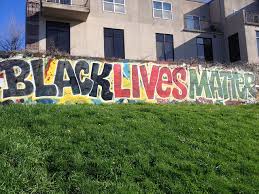
Thus, dear Feminist Reflection readers, I leave you with this to reflect upon. This recording of The Little Drummer Boy was from 1977. It is now 2015. Where are we now? Do we have peace on earth?  No. We still live with bigotry, prejudices, and fear. Racism, xenophobia, sexism, homophobia, transphobia, and related oppressions still exist. Gains have been made, such as the legalization of same sex-marriage by SOCUTUS and students and others willing to stand up for Black Lives Matters. Yet, you can still be fired for being gay in some states, though you can be legally married. Young black men are shot. We deny sanctuary to refuges, although our government policies contributed to this global battle that resulted in a refugee crisis. We use our “beliefs” based on fear instead of compassion and tolerance.

As we approach the new year – in the midst of this Holiday season – I ask, how can we accomplish peace on earth? And how can we carry this message forward beyond “the Holidays” where giving seems to be cherished and praised more? How can we make structural changes that will bring about peace? How do we teach children and each other tolerance? How do we give peace to our own selves in a chaotic world?

Whatever you believe or do not believe in, I say, in trying to the be the most inclusive I can, “Happy Holidays”, but please keep in mind how we can create peace on earth.


Growing up in South Central Los Angeles, I remained vigilant to my surroundings and viewed feminist consciousness as something natural. I was painfully conscious of racial and socio-economic disparities, and I had a keen eye for the ways in which internal and external social class divisions affected my community, not to mention the daily hassles of gender inequality that surrounded me. I could not fathom as a teenager that people studied this in order to learn it. Upon seeing a course listed, The Sociology of Gender, I thought, “Who needs a textbook to figure this out?” I was living through it on the mean streets of South Central and the neighborhood that bordered this, Compton, California. I volunteered with the Women’s Infant Care (WIC) Program as early as 13 years old as part of a Summer Youth Enrichment Program for low-income inner city youth. And I remained the acutely aware survey-minded sociologist about local community social problems. The dilapidated geriatric neighborhood of Los Angeles – where some people raced through to head toward the 110 Harbor Freeway – was the everyday geographic space that formed my community. I never thought that people would invest time learning how to be a feminist with regards to these issues that women of color face each and every day. I was a natural one, or, in the words of Beyoncé, “I woke up like this.” However, things changed when I entered the Ivory Tower of Academia as an undergraduate.

I started out learning about feminism after reading Patricia Hill Collins’ work and then juxtaposing that to Sandra Harding’s work. I have always been fascinated with how discourses across feminisms worked. It was through this fascination that I developed an understanding that in addition to the production of knowledge, we also need to build relationships and coalitions around shared and different realities we experience as women. It is difficult capturing the particular realities that reproduce economic inequality for women as a unit, and how our binary classifications serve to label and legitimate the disempowerment of women as a group, unless we have discussions about these around the kitchen table. In fact, this is how we initially started building feminist coalitions around our feminist social locations with gender oppression and privilege. I have been reflecting upon sex and gender more and more these days. And I’ve been thinking about ways in which issues that relate to gender also relate to race and class and sexuality.

A well seasoned feminism makes no exceptions. The well seasoned feminist understands that full equality is like a full course well-balanced meal. It is also hearty and filling. It is like fresh baked ziti or gumbo or quiche. Upon reflection of the many different feminisms I have learned about, I always arrive back to the question that led me to these critiques in the first place—questions that interrogate the common core of our “womanism”, “being fully human,” the embracing of that shared part of us that we come to understand through our correspondences at conferences, research/teaching collaborations and informal table talk. To some extent we are like a well-seasoned dish. We have tasted some of the flavor or even have personal knowledge of what it feels like to experience the struggles across a socially unequal landscape and the work we do in our perpetuation and/or reduction of social inequalities.

I am reminded of a cold day in the fall at the University of California Davis while taking Judith Stacey‘s Sociology of Gender course. I was sitting in Olson Hall feeling as if I would never transition through my first semester of undergraduate studies. And in walks another student—a strong brave black woman- who seemed to instantly understand what I was experiencing. She looked at me and said, “You’ll be okay. This is the way first semesters go.” Her voice carried an aura of wisdom about my trepidation with beginning my academic studies at a predominately white college. She was speaking to me; she was speaking to the gendered experience of being a woman in college; she was speaking to the racial experience of being a black woman in college; and she was speaking to the classed experience of being a woman of color from a low income working-class family who was putting a lot of faith in what a college degree from a top-ranked university might provide for her future.

How could I feel comforted by this sense of feminist empowerment that she fostered within me? How was I able to pick up and carry on? I somehow knew that she understood the gendered part of my experience as a woman in an androcentric, masculine thought-based academic setting. Is this not why feminists pressed so hard in the 60s for Women Studies departments? After she said this to me, I regained my academic momentum, and immediately got up, walked to Shields Avenue towards the memorial student union and embraced my new experience. What I later came to realize, however, is that before I even knew about academic feminism or what it meant to take a feminist course from Dr. Judith Stacey, I was embraced by something that was very feminist outside of my neighborhood community in Los Angeles. This realization led me to another discovery: feminism is in many ways very abstract; it is knowing that you are not alone in a world that chooses whether or not to understand your gendered reality.

Taking these lessons and looking back on my life, I see that my life from 13 years old until the present has been rich with musings about all things feminist and the multiple reflections of what a feminist is and could be. This, I found, is what makes me tick. And this is what makes me a stronger feminist. I can appreciate the very struggles that we have across multiple identities. It is a social scientific fact that in some spaces, we as feminists are more privileged over our sisters, and in other spaces, we bear the burden of oppression in relation to our feminist sisters. None of us, however, would deny that there is an eclipsing of worldviews that bring women together under the canopy of shared understandings, narratives and collective biographies. Whether it’s fighting for women’s suffrage and/or trying to get equal pay, our challenges and struggles are collective and require us to fight together. Recognizing that our differences make us stronger is a goal toward which we can work more diligently.  This act of working together is most effective when we collectively share in a social consciousness, collectively identifying as ‘feminists’ toward our common goal of challenging and reducing social inequalities.

imagesMy best understandings of this strong feminist force becomes most apparent when I look at feminisms through the lens of multiple reflections—many feminists, many experiences. These experiences frame a set of points that represent feminist coordinates reflecting diverse feminist standpoints. Together, our feminist standpoints challenge us to change present social and economic conditions among ourselves and within the larger society.

I close with a multi layered multifaceted quilt of feminist reflections which synthesizes my early teenage years up to the present day. My initial experiences with a natural feminist social consciousness and later learning it through an academic lens has enabled me to connect the importance of building strong feminist coalitions across our differences. We as feminists represent a collective joined by our diverse life experiences, akin to a resilient quilt that is sewn and stitched together from many different pieces of fabric (life experiences). It is through our collective strength that we make each other better in our work to challenge and reduce social inequalities. I am grateful that we are together as one multifaceted, multi layered quilt in this struggle.

__________________________________

WallaceGail Wallace is a Research Fellow at Johns Hopkins University Bloomberg School of Public Health. She specializes in Urban|Rural Health Policy, Health Disparities across Race, Class and Gender along with the Health of Minority Populations.

Many nights this week I felt choked up and emotional. Beyond the global issues we are currently facing- the attacks in Paris and many states refusing Syrian refugees- many of us are witnessing racism on our campuses. One of the students on my campus posted some provocative words on social media that resulted in strong emotional responses from both students and faculty.

BLM

Teaching Students of Color as a White Woman

Two years ago in my Sociology of Health Care class most of the students were women of color. When we studied health disparities and the impact of racism, the students were not surprised by what they read, specifically about the impact of racism on birth outcomes and mental health. I remember the day I showed a video on how racism affects birth outcomes, and the meaningful class discussion we had afterwards. As a white woman (and one in the South with credentials behind her name), I didn’t want to be “that” professor who talks about inequality based only on on data, with students assuming I am the expert, or that I might be trying to marginalize their experience and put it into categories, or that I knew what it felt like to be a person of color. Instead I told them I could share the sociological research and evidence, but as a white woman I was not going to pretend I had shared their experience, and that their voices were critically important in this discussion.

My beloved copy of Patricia Hill Collins book Black Feminist Thought is no longer on my bookshelf. I gave it to a student, a woman of color, who through tears, told me about the racism and discrimination she has faced in her life and on campus. Another student, a queer woman of color, waited a week during a break to come talk to me about a painful experience, where the intersections of race, gender, and sexual identities collide. I feel honored that these students trusted me and shared their painful stories. In saying this, I am not asking for an award for being an ally that my students trust. Instead, I am advocating that we let our students know we support them as allies. In doing so, we must listen to their experiences. Racism and social justice are issues we should all be working on and not just on the backs of those who already oppressed.

Free Speech? Social Media, Racism, and Threatening Language

Monday evening after arriving home from an event with my daughter, a post by a student I do not know at our institution made its rounds on Face Book (FB). The post critiqued the Black Lives Matter movement and associated protests in Missouri. This student didn’t just express their disdain for these protests; they made what some perceived as threatening claims about what would result if this happened on our campus. To add fuel to the fire, this student also expressed their severe dislike for those who are Muslim or Islamic, in response to the tragedy in Paris.

hateTo their credit, our administration responded through Facebook, as well as with a letter from our current president, acknowledging the importance of free speech as a constitutional right, and also saying that threatening comments violate our student code of conduct. The original post by the student has since been taken down. Unfortunately, too many people had taken screen shots of the post for it to be truly deleted.

As I was reading various responses via comments to the different Facebook posts about the incident and what students, alumni, and parents were writing, I was upset, angry, and sad. One set of comments ran the gamut, from the expression that God loves everyone, to the belief people were over-reacting, and that we can’t control free speech. Other comments pointed out the threats, the racism, historical legacies of racism, and emotions such as anger and fear. I felt a mixture of emotions as I read about how students of color feel on campus – many of them students I know personally. How do we advocate for social justice and ending oppression of our students while enabling free speech?

Our administration did respond, as I noted above, and I believe the incident is being taken seriously. Our NAACP chapter and minority students on campus also spoke out in regards to the incident. (Here is one story.)

I decided that this was an opportunity for my students to discuss these real life issues in one of my classes, where all but one of my students is a person of color. We discussed the Facebook messages, both in regard to racism on campus and also in relation to the Syrian refugee issues (as we live in state in which our Governor and leaders stated we would not allow them due “security” issues).

Students’ Voices on the Issues

I told my students this blog would be about these issues and they gave me permission to share with you part of our discussion. To preface this, I told them it was their time to talk. I wanted to know how they felt, what racism they have seen or experienced, and what solutions they thought might help. Not all the students agreed on solutions, but it was a fruitful discussion, and I wanted to share some of its highlights.

I admit it is difficult to put this in writing, as I do not want to misrepresent what students said nor just put their words into categories. To present important components of this conversation, here are summaries and a few quotes from the students, which is not in any particular order:

Whites are afraid of African Americans and when we (African Americans) speak it’s seen as riot comparable to the KKK.

Look around at us… 1 in 4 of us (as black) will end up in jail.

If a black student posted something with this hatred and threats they would be in jail.

Specific events have happened in the past on campus involving symbols of racism and slavery, which caused fear among students of color.

Children are socialized to be racist.

Greek residences on campus resemble plantations. Students of color feel uncomfortable with the whiteness in this space.

Things are not going to change until the system changes. We have to start with children and teach them what matters.

The Black Lives Matter movement can be seen in different ways in terms of it is going to work. “We are fed up” and “our people are dying” were stated.

Why are there mandatory classes on drinking and sexual assault on campus, but not about diversity issues relating to people of color? Why are we required to take math, but not a class on dealing with diversity? Even if classes are intended to be about diversity for incoming students, they may not really deal with the issues.

A student of color talked about a class she took on race issues, in which there were only two white students. One of these students was honest in the class and noted she wanted to learn more about diversity issues, but was afraid to ask questions as she might be labeled as racist in doing so.

Why is there a lack of diversity, more specifically people of color, as faculty and administrators on campus?

In summary, the conversation had many directions and I don’t think any of what my students said will surprise many people. Some of the conversation was hard as some students felt hopeless and angry. Others were more positive about change occurring and much of this was about kids and education. So, is presenting what the students said going to change things? I hope that it can lead to more conversations, but this is only a starting point. I feel that what I can do is listen, reinforce that their voices matter, and encourage them to talk to faculty and administrators on campus who do care. I take their words seriously and continue to think about through my role as an educator.

Understanding & Compassion vs. Violence & Fear

As I told my students, their voices are important, but it is not just their job to have these discussions on our campus (and all campuses) or in society. We can’t put the burden only on students of color and those who are oppressed, to do all the work. As part of systematic racism and oppression, we are all part of the problem and solutions. As sociologists who study and know that racism in all forms still exists, we can listen to our students and let them know their voices and concerns are legitimate.

ListenWe are not allies unless we are willing to listen. And in my eyes, this requires empathy and compassion. It’s also about acknowledging that for some of us, we benefit from and contribute to these systems of oppression, because of our own privileges. We need to have humility to take a step back. Even though we might be “experts” as professors and researchers, we need to listen. In doing so, we need to let our students, colleagues, and friends know our empathy is not just, “I’m sorry for how you feel”, but it’s also, “Please tell me how you feel and how do we work together to solve this.”

Black lives matter. My students’ lives matter. Let’s be there for them by standing up for social justice, enabling conversations to happen, voices to be heard, and recognizing our own parts in systems of oppression. I thank my former and current students for having these discussions.

In our society, within our local environments, within our country, and globally, it is evident we all do not all agree with each other or even understand each other. Because the root of many of these issues are structural, we are not going to solve all our social problems immediately. However, I believe we can try to understand with compassion, not fear or hate. In terms of all the current issues we are facing in society, with historical components, compassion and empathy is going to get us farther than threats of violence or actions based on fear.


Robin-Thicke-Blurred-LinesRobin Thicke’s song, “Blurred Lines,” achieved international recognition in 2013. But the lyrics were also heavily criticized as promoting sexual violence by celebrating “blurred lines” around sexual consent. Indeed, the song and video prompted an online photo essay in which women and men are depicted holding up signs with words they heard from their own rapists—some of which were almost direct quotes from Thicke’s song. The song received a great deal of negative and positive press all at the same time. The media attention seemed to prove the media adage that any coverage is good coverage if Thicke’s continued celebrity is any measure.

It’s not a new argument to suggest that many elements of what feminist scholars refer to as “rape culture” are embedded in seemingly pleasurable elements of pop culture, like songs, movies, television shows etc. And Robin Thicke’s song served as an example to many of how we not only tolerate rape culture—but how we celebrate it and render it “sexy.” Recently, Rebecca Traister discussed just how much rape culture even informs what we think of as “good sex” in her piece “The Game is Rigged: Why Consensual Sex Can Still be Bad.” In it, Traister challenges the notion that all consensual sex is good and shows just how messy the debate about what qualifies as “consensual” really is. In many ways, our national discussion around sexual assault and consent is taking up themes raised by feminists in the 1980s about what actually qualifies as consent in a society in which violence against women is considered sexy.

Compared with “Blurred Lines,” Justin Bieber’s newly released hit single, “What Do You Mean?” has been subject to less critique. The notion that women do not actually know what they want and that they are notoriously bad and communicating their desires (sexual and otherwise) is pervasive. In the song, Bieber asks the woman with whom he’s interacting, “What do you mean? / Ohh ohh ohh/ When you nod your head yes / But you wanna say no / What do you mean?” The lack of clear consent isn’t just present in the song; it is what provides the sexual tension. It’s part of what is intended to make the song “sexy.”

Sexualizing women’s sexual indecision is an important part of the way rape culture works. It is one way that conversations about consent often over-simplify a process that is and should be much more complex. The song itself presents Bieber nagging the woman to whom he’s singing to make a decision about their relationship. But there are many elements suggesting that the decision she’s being asked to make is more immediate as well—not only about the larger relationship, but about a sexual interaction in the near future. Throughout the song, the click of a stopwatch can be heard as a beat against which Bieber presses the woman to make a decision while berating her for the mixed signals she has been sending him.

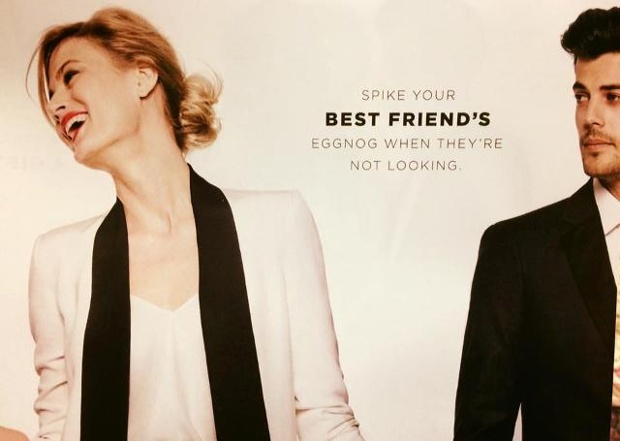
Bloomingdales-Spike-Drink-Ad-jpg
Image from Bloomingdale’s 2015 holiday catalog.

Bieber is presented as the “good guy” throughout the song by attempting to really decipher what the woman actually means. Indeed, this is another element of rape culture: the way in which we are encouraged to see average, everyday guys as “not-rapists,” because rapists are the bad guys who attack women from bushes (at worst) or simply get them drunk at a party (at best).*  The controversy over the ad in Bloomingdale’s recent 2015 holiday catalog urging readers to “spike your best friend’s eggnog when they’re not looking” shows that this kind of rape culture is also casually promoted in popular culture as well.  But, the larger discourse that Bieber’s song plays a role in promoting is the notion that women do not know what they mean or want. Bieber plays the role of someone simultaneously pressuring her for sexual advance (“Said we’re running out of time”), helping her work through her feelings (“What do you mean?”), and demanding results (“Better make up your mind”). And, like the Bloomingdale’s advertisement, this is not sexy.

Indeed, the music video (above) takes this a step further. Bieber is shown at the beginning paying John Leguizamo on a street corner and asking him to make sure “she doesn’t get hurt.” We later find out that John was paid to orchestrate a kidnapping of both Justin and the woman whom he meets in a hotel room. Both are taken by men in masks, driven to a warehouse in the trunk of a car, and tied up. Justin is able to free them, but they are still in a room with their kidnappers. They back up to a door that leads outside the building and see that they are one of the top floors. Justin turns to the woman, holds out his hand and asks, “Do you trust me?” She takes his hand and they both jump out of the building. They jump and fall to the ground, landing on a parachute pillow only to discover that the whole thing was a trick. The kidnapping was actually orchestrated ruse to bring her to a party that they entered by leaping from the building away from the men who’d taken them. The men in masks all reveal themselves to be smiling beneath. She smiles at Justin, recognizing that it was all a trick, grabs his face, kisses him and they dance the night away in the underground club.

Even though the song is about feeling like a woman really can’t make up her mind about Justin, their relationship, and sexual intimacy, the woman in the video is not depicted this way at all. She appears sexually interested in Justin from the moment the two meet in the video and not bothered by his questions and demands at all. Though it is worth mentioning that he is terrorizing her in the name of romance, indeed the terror itself is a sign of how much he loves her—also a part of rape culture. This visual display alongside the lyrics works in ways that obscure the content of the lyrics, content that works against much of what we are shown visually.

justin-bieber-what-do-you-mean-cover-413x413Part of what makes rape culture so insidious is that violence against women is rendered pleasurable and even desirable. Thicke and Bieber’s songs are catchy, fun, and beg to be danced to. The women in Thicke’s video also appear to be having fun strutting around nude while the men sing. The woman in Bieber’s video is being kidnapped and terrified for sport, sure, but it’s because he wants to show his love for her. She’s shown realizing and appreciating this at the conclusion of the video. Rape culture hides the ways that sexual violence is enacted upon women’s bodies every day. It obscures the ways that men work to minimize women’s control over their own bodies. It conceals the ways that sexual violence stems not just from dangerous, deviant others, but the normal everydayness of heterosexual interactions. And all of this works to make sexualized power arrangements more challenging to identify as problematic, which is precisely what makes confronting rape culture so challenging.

___________________________

*See C.J. Pascoe and Jocelyn Hollander’s forthcoming work in Gender & Society“Good Guys Don’t Rape: Gender, Domination, and Mobilizing Rape”—for more on what this discourse looks like and how it works.