Goffman

New & Noteworthy

Election Fallout and Increased Infant Health Disparities by Leo LaBarre covers research by Paola LangerCaitlin Patler and Erin Hamilton. They found adverse birth outcomes rose among Black, Hispanic, and Asian mothers after the 2016 election, highlighting how political stress and racism can harm infant health indirectly.

Our latest Clippings by Mallory Harrington includes:

  • Peter Hepburn: In an Associated Press article, Hepburn—Assistant Professor of Sociology at Rutgers University-Newark and Associate Director at the Eviction Lab—highlighted the toll of eviction on schoolchildren, noting that 40% of those at risk of eviction are kids, who often face school transfers and chronic absenteeism.
  • Michel Anteby: Writing in The Conversation, Anteby defended bureaucrats as essential to public service, drawing on Max Weber’s classic theories to argue that they act as expert safeguards against “dilettantism, favoritism and selfishness” (Boston University).
  • Ellis Monk: In a Washington Post article on diversity and AI, Monk warned that political pressure and speed-to-market demands may undermine inclusive design in tech, despite global companies like Google working to accommodate varied skin tones in AI outputs (Harvard University).
  • David Yamane: In The Conversation, Yamane outlined five key insights about American gun culture, from its normalization to its diverse ownership and shifting symbolic meanings—ideas explored in his upcoming book Gun Curious (Wake Forest University).
  • Tristan Bridges: In a New York Times feature on Twitch streamer Hasan Piker, Bridges explained how Piker benefits from “jock insurance,” a concept describing how men with high masculine capital can subvert gender norms without facing social penalties (UC Santa Barbara).

From the Archives

Florida recently conducted “Operation Tidal Wave,” a six-day immigration sweep that resulted in the arrest and deportation of more than 1,100 undocumented immigrants. These large-scale enforcement actions risk tearing families apart and destabilizing entire communities. In this 2022 piece, Delgado highlights how adult children in mixed-status families often assume emotional and logistical responsibilities to support and protect their undocumented parents.

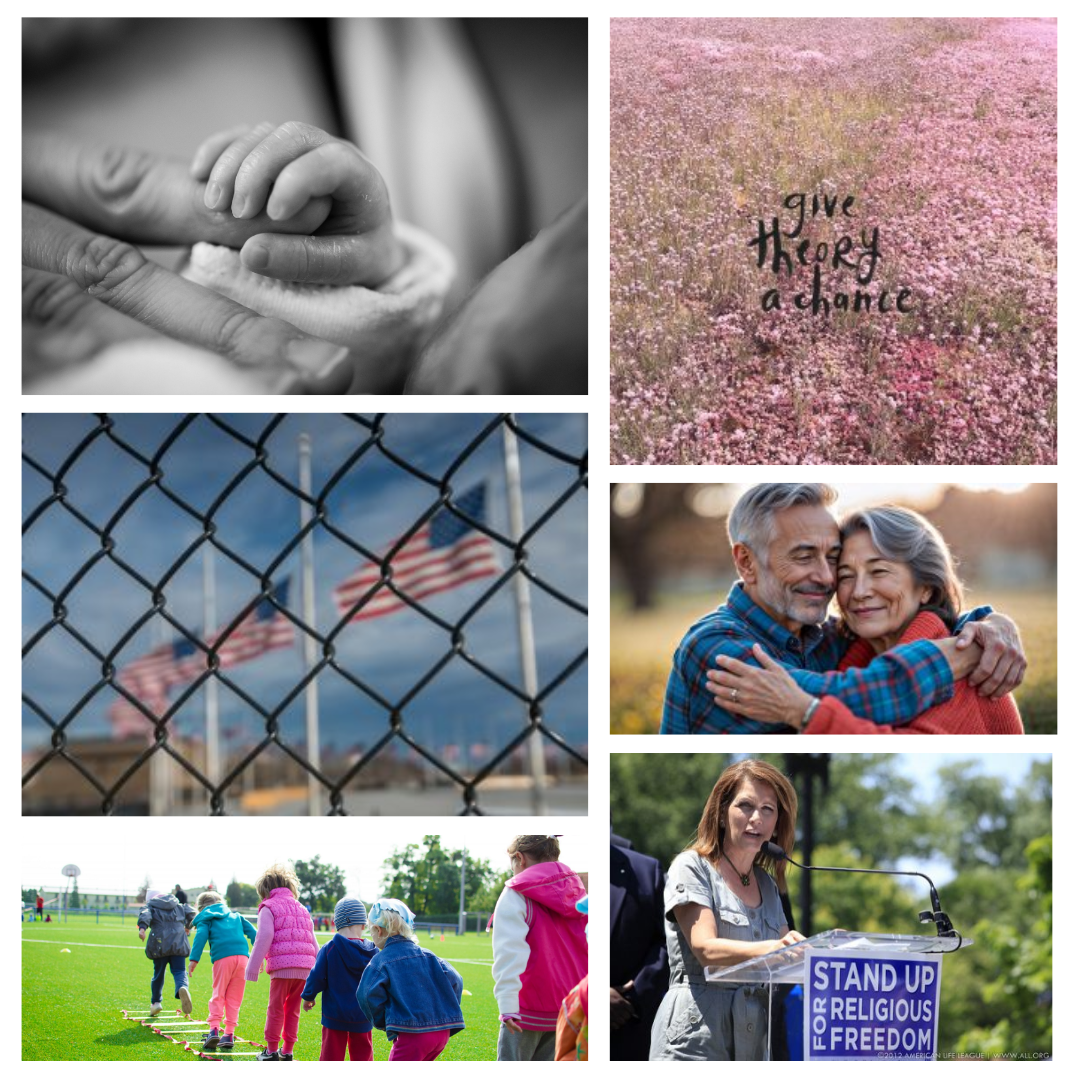
A Supreme Court case is set to decide if religious schools can be considered public charter schools or not – a decision that could radically transform public education in the United States. Historically, the separation of church and state has meant that public schools cannot give overtly religious instruction, but supporters of this case argue that barring religious schools from applying to a charter school program infringes upon religious liberty. This Sociological Images piece by Evan Stewart from 2018 discusses debates and controversies surrounding religious freedom and discrimination.

More from our Partners & Community Pages

Council on Contemporary Families

give theory a chance

New & Noteworthy

Our latest Discovery, summarizing recent academic article publications, by Emma Goldstein highlights a recent study by Annika Pinch and colleagues which found that while BeReal initially encouraged authenticity through time-limited, unedited photo sharing, users gradually began to game the system by delaying posts and retaking images to appear more curated.

This week’s Clippings from Mallory Harrington includes:

  • Tom Juravich examines how the residential construction industry has undergone a “race-to-the-bottom” since the Great Recession, with contractors increasingly offloading work to subcontractors and misclassifying employees to cut costs in a recent The New York Times piece.
  • Christian Smith argues that traditional religion in America hasn’t just declined—it’s become culturally obsolete. In his new book Why Religion Went Obsolete, Smith explores how shifts in social life have rendered organized faith less relevant, even as some individuals continue to find it personally meaningful, featured in Religion News Service, and picked up by The Salt Lake Tribune.
  • Paul Starr and Nancy Foner analyze Trump’s historically high support among Hispanic voters, arguing that some Hispanics identify with the white mainstream and are drawn to conservative cultural values, in a recent The New York Times opinion piece.
  • Justin Farrell in GQ explored how the ultra-wealthy are remaking the American West by purchasing rural land and building exclusive ski clubs, all while adopting the aesthetics of working-class life.
  • Arlie Russell Hochschild in Nonviolence Radio maps an “anti-shaming ritual” at the heart of Trump’s appeal, where public transgressions are followed by backlash, victimization, and emotional identification from his supporters.

From the Archives

  • As the Trump Administration continues intentions to slash education funding, this 2013 piece from the Scholars Strategy Network archives underscores how financial investment in schools directly shapes outcomes—especially for the most marginalized students.
  • Prices of a variety of grocery items are expected to increase if President Trump’s proposed 10% tariffs are implemented. In 2019, Allison Nobles surveyed the state of the research and found that poor Americans tend to spend a greater portion of their income on essentials like housing and food.
  • RFK reported that the government has launched a research effort to identify the cause of “the autism epidemic,” with the goal of eliminating the “exposures” he believes are behind the condition in a short timeline. This piece from 2019 covers research on the social factors that contribute to increased recognition and diagnosis of autism, as well as the ways autism is differently understood across cultures.

More from our Partners & Community Pages

Center for Holocaust & Genocide Studies

Council on Contemporary Families

  • Leave Laws Support Equity by Jeff Hayes and H. Elizabeth Peters write on how aid family and medical leave policies reduce inequality and support working caregivers, but access remains uneven, especially for low-wage workers, people of color, and those needing eldercare.

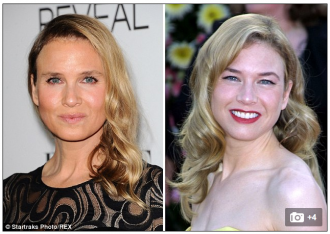
The Daily Mail compared photos of Zellweger last week, aged 45, with photos from 2001, when she was 31.

Renee Zellweger received a ton of attention last week, not all of it wanted. The core of the story, if you haven’t been following along, is that the “work” (most insist her strikingly different new look must be the result of extensive plastic surgery) that Zellweger had done was so extensive that her fans and many others could no longer recognize the 45-year-old movie star. “She looked,” as the Washington Post quoted one fan, “different. Maybe not bad. Just not at all like herself.” Coincidentally, the reading for my “great books in sociology seminar” last week was Erving Goffman’s classic treatment of stigma.

Much of Stigma is about how people deal with various deformities and social blemishes in their daily lives (“the management of a spoiled identity” in Goffman’s dry, sardonic subtitle). That is, it’s actually not that pertinent to the Zellweger story. But there is this section about how variously famous and infamous people—actors or athletes, for example, or well-known criminals—try to disguise themselves so that they aren’t recognized in public. Goffman’s point is that publicly known and recognizable people must sometimes change their look so as not to be recognized as themselves—they must alter their appearance to transform their (public) identity and pass as someone else. Zellweger’s case, it seems to me, is kind of the inverse—she has changed her look,  the equivalent of her public self, to such an extent that she is no longer easily or entirely recognizable as the person the public knows as “Renee Zellweger.” She is, as the fan said, “not at all like herself.”

Another recent example is the actress Jennifer Grey—the young star of the original “Dirty Dancing” movie whose rhinoplasty removed her most distinctive feature. As she put it, “I went into the operating room a celebrity and came out anonymous.” Grey’s life—or at least her career—was never the same. (Though it did involve a short-lived sitcom where she played, essentially, herself: a movie star who was no longer a star because no one knew who she was anymore.) Zellweger’s new look, surgical or not, is a public identity and recognizability problem.

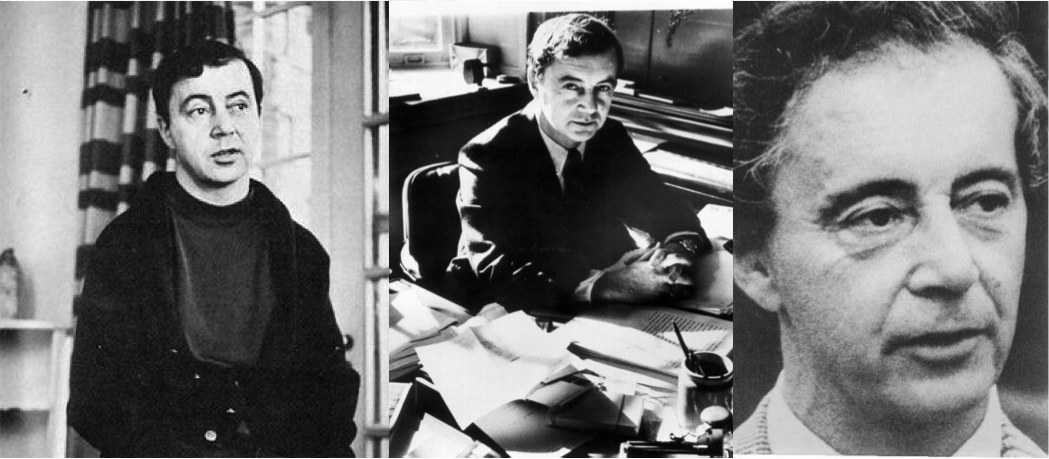
Erving Goffman pictured throughout his career.

I say this because there have been many other, different lessons and reflections on the Zellweger story. Some have seen it as an example of plastic surgery run amok. Indeed, the Washington Post story went on to point out that there were some 11 million such procedures in 2013—which was 12% more than in 2012 and six times the number of procedures performed in 1997. Others have seen Zellweger’s refresh (she says any change in her appearance is simply due to being well-rested, happy, and no longer working crazy film schedules) as an example of our obsession with looks and appearances. There is, obviously, a role and function for these analyses and interpretations. However, I think they easily miss the issues of identity and presentation of self and interactions with others that are at stake and in play here.

A lot of times we imagine our identities—and others’—to be fairly fixed and concrete. But Goffman’s larger oeuvre is full of ideas about impression management, the presentation of self, and interaction rituals that insist that all of us construct and remake our identities each and every day in our interactions with others. Thus, we are more plastic and malleable than we often care to realize. One of Goffman’s most famous explications is a chapter called “On Face-Work.” Goffman begins, “Every person lives in a world of social encounters, involving him [or her] either in face-to-face or mediated contact with other participants. In each of these contacts, he tends to act out what is sometimes called a line—that is, a pattern of verbal and non-verbal acts by which he expresses his view of the situation and… himself.”

Goffman then introduces the notion of “face:” the positive social value a person effectively claims for himself by the line other assume he has taken during a particular contact.” We all work to present a particular persona or “face”  that fits the notion of ourselves we are trying to project and the image others have of us in any particular instance or encounter. But this face-work doesn’t always work the way we want. Sometimes we don’t present ourselves properly in/through our faces, other times our presentations are not accepted or, as in a case of misrecognition or plastic survey, not recognized at all. It can be awkward and unsettling to be reminded of all that, whether in our own daily lives or in our mediated interactions with celebrities and public figures like Renee Zellweger.

For what it is worth, Zellweger, at least in her public presentation of self, appears to be handling all of this face-work commentary and controversy quite well. As she told People, “Perhaps I look different. Who doesn’t as they get older? Ha. But I am different. I’m happy.” When Zellweger uses the term “different” the second time, I think, she is referring to a new look that better fits her own sense of self. Her look may be unsettling to her fans and the general public, but it is either the result of her happiness or something that makes her happy. These are the paradoxes and peculiarities of faces and identities in both public and private. It’s face-work in action.

RU02072014

Sign up for TSP’s mailing list, and get the Friday Roundups sent right to your inbox!

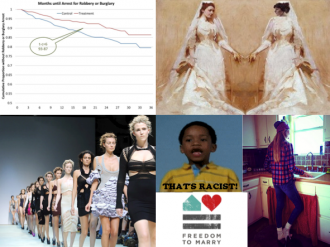
This week on The Society Pages, we tackled drug addiction and harm reduction, body image and stigma, Twitter as a public forum for shaming, marriage equality and health, and the thin line between The Bachelor‘s Juan Pablo and Duck Dynasty‘s Phil Robertson. Plus much more (as always)!

more...

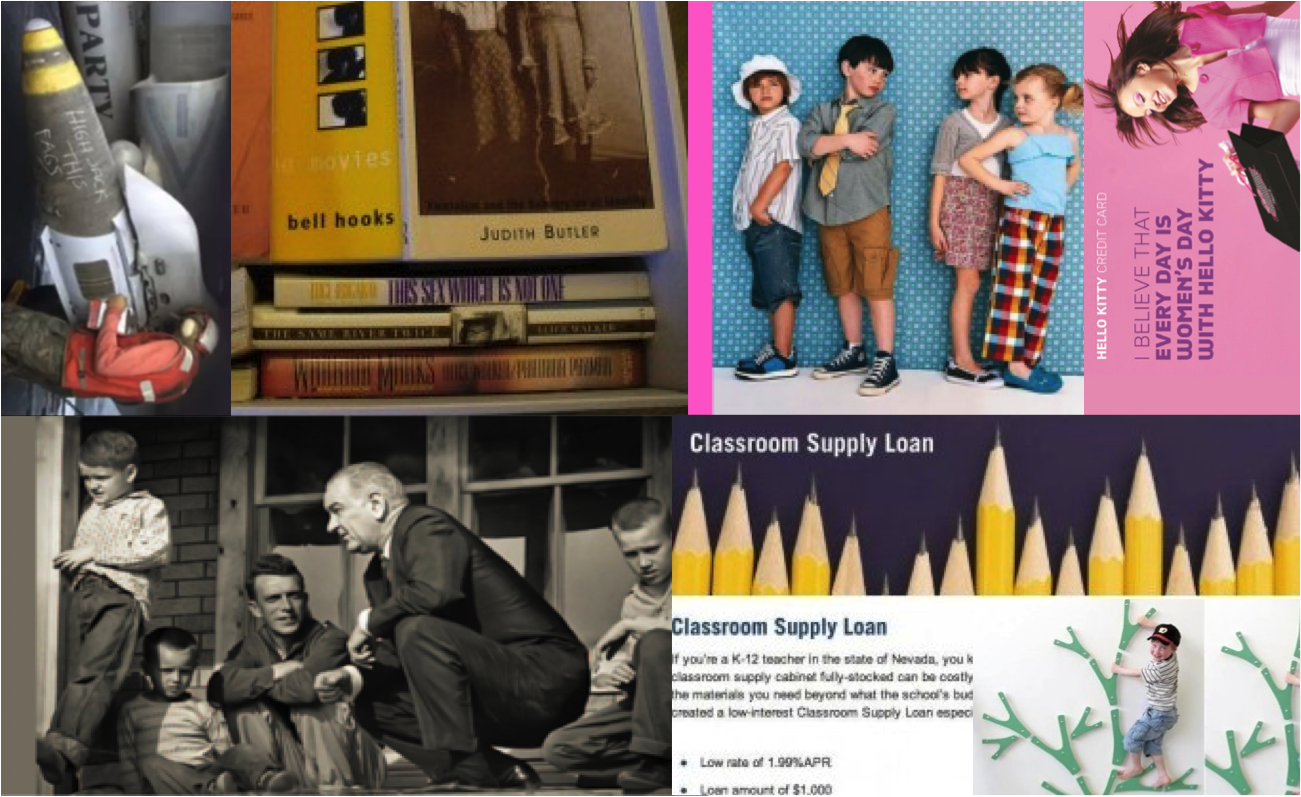
RU011014This week saw outrage over personal loans offered to Nevada teachers just to buy classroom supplies (for their public school rooms!), a flurry of suggested “great books in sociology” reading lists, 40 years of the War on Poverty, another fight in the toy aisle, and, of course, Canada’s gift to the U.S., the Polar Vortex (we’re particularly sorry for the South… at least we Minnesota types have some snowpants we can dig out of the basement). Enjoy! more...

As a follow-up to my post about great books in sociology last week, I called for readers to send in their own Top 10 lists. It has been fun to see those starting to come in. Here’s one from TSP blogger, Monte Bute, the self-styled “backstage sociologist.” Replete with an introductory explanation and annotations for each proposed volume, Bute suggesetd the title “A Populist’s Top Ten Sociology Books.” I tend to think of it as a classic, old-school list. Take it away, Monte.

Wayne Booth once argued that every composition strikes a “rhetoric stance”—an author, a subject, and an audience. Usually these elements are implicit; in this essay, I give you the “Full Monte.”

What is my persona? I am a populist sociologist, an outsider with a hardscrabble perspective. Lacking what Tillie Olsen called “the soil of easy growth,” I acquired my taste for great books not in seminar rooms but on the streets. Never disciplined by a sociology graduate program, I forged my chops experientially—as a deviant, dissident, and organizer.

What is my subject? It is a case for the ten best sociology books. But what do I mean by “best”? I sought books that allow the reader to achieve, in the words of C. Wright Mills, “a quality of mind that will help them to use information and to develop reason in order to achieve lucid summations of what is going on in the world and of what may be happening within themselves.” (By the way, The Sociological Imagination came in 11th on my list.) more...

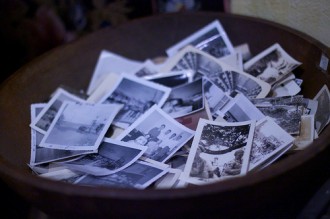
Bowl of Someone Else's Memories by cogdogblog via flickr.com
Bowl of Someone Else’s Memories by cogdogblog via flickr.com

My colleague Teresa Swartz (full disclosure: I’m also married to her) has this writing exercise that she does with all of her Intro students at the end of the semester. In a nutshell, she asks them to write a brief paper situating themselves in the social contexts that have most profoundly shaped and determined their lives and identities. The exercise, which she calls a “sociological memoir,” is inspired by C.Wright Mills‘ famous definition of the sociological imagination as becoming aware of the intersection of one’s personal biography with larger social and historical forces. The book she often has the class read as an illustration is Dalton Conley’s wonderfully idiosyncratic early life narrative Honky. In the last couple of days I’ve read another couple of pieces I think I’m going to recommend to her as well.

Andrew Lindner’s “Epilepsy, Personally and Sociologically,” on TSP’s ThickCulture blog, is one of them. more...