Archive: Oct 2014

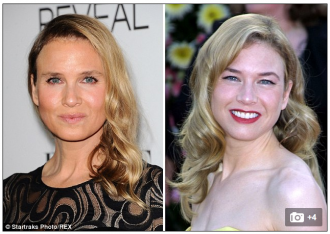
The Daily Mail compared photos of Zellweger last week, aged 45, with photos from 2001, when she was 31.

Renee Zellweger received a ton of attention last week, not all of it wanted. The core of the story, if you haven’t been following along, is that the “work” (most insist her strikingly different new look must be the result of extensive plastic surgery) that Zellweger had done was so extensive that her fans and many others could no longer recognize the 45-year-old movie star. “She looked,” as the Washington Post quoted one fan, “different. Maybe not bad. Just not at all like herself.” Coincidentally, the reading for my “great books in sociology seminar” last week was Erving Goffman’s classic treatment of stigma.

Much of Stigma is about how people deal with various deformities and social blemishes in their daily lives (“the management of a spoiled identity” in Goffman’s dry, sardonic subtitle). That is, it’s actually not that pertinent to the Zellweger story. But there is this section about how variously famous and infamous people—actors or athletes, for example, or well-known criminals—try to disguise themselves so that they aren’t recognized in public. Goffman’s point is that publicly known and recognizable people must sometimes change their look so as not to be recognized as themselves—they must alter their appearance to transform their (public) identity and pass as someone else. Zellweger’s case, it seems to me, is kind of the inverse—she has changed her look,  the equivalent of her public self, to such an extent that she is no longer easily or entirely recognizable as the person the public knows as “Renee Zellweger.” She is, as the fan said, “not at all like herself.”

Another recent example is the actress Jennifer Grey—the young star of the original “Dirty Dancing” movie whose rhinoplasty removed her most distinctive feature. As she put it, “I went into the operating room a celebrity and came out anonymous.” Grey’s life—or at least her career—was never the same. (Though it did involve a short-lived sitcom where she played, essentially, herself: a movie star who was no longer a star because no one knew who she was anymore.) Zellweger’s new look, surgical or not, is a public identity and recognizability problem.
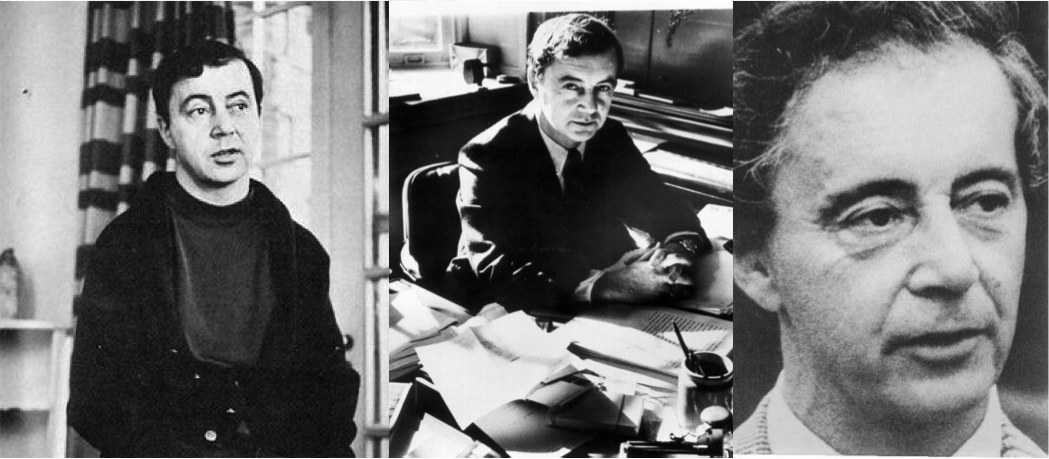
Erving Goffman pictured throughout his career.

I say this because there have been many other, different lessons and reflections on the Zellweger story. Some have seen it as an example of plastic surgery run amok. Indeed, the Washington Post story went on to point out that there were some 11 million such procedures in 2013—which was 12% more than in 2012 and six times the number of procedures performed in 1997. Others have seen Zellweger’s refresh (she says any change in her appearance is simply due to being well-rested, happy, and no longer working crazy film schedules) as an example of our obsession with looks and appearances. There is, obviously, a role and function for these analyses and interpretations. However, I think they easily miss the issues of identity and presentation of self and interactions with others that are at stake and in play here.

A lot of times we imagine our identities—and others’—to be fairly fixed and concrete. But Goffman’s larger oeuvre is full of ideas about impression management, the presentation of self, and interaction rituals that insist that all of us construct and remake our identities each and every day in our interactions with others. Thus, we are more plastic and malleable than we often care to realize. One of Goffman’s most famous explications is a chapter called “On Face-Work.” Goffman begins, “Every person lives in a world of social encounters, involving him [or her] either in face-to-face or mediated contact with other participants. In each of these contacts, he tends to act out what is sometimes called a line—that is, a pattern of verbal and non-verbal acts by which he expresses his view of the situation and… himself.”

Goffman then introduces the notion of “face:” the positive social value a person effectively claims for himself by the line other assume he has taken during a particular contact.” We all work to present a particular persona or “face”  that fits the notion of ourselves we are trying to project and the image others have of us in any particular instance or encounter. But this face-work doesn’t always work the way we want. Sometimes we don’t present ourselves properly in/through our faces, other times our presentations are not accepted or, as in a case of misrecognition or plastic survey, not recognized at all. It can be awkward and unsettling to be reminded of all that, whether in our own daily lives or in our mediated interactions with celebrities and public figures like Renee Zellweger.

For what it is worth, Zellweger, at least in her public presentation of self, appears to be handling all of this face-work commentary and controversy quite well. As she told People, “Perhaps I look different. Who doesn’t as they get older? Ha. But I am different. I’m happy.” When Zellweger uses the term “different” the second time, I think, she is referring to a new look that better fits her own sense of self. Her look may be unsettling to her fans and the general public, but it is either the result of her happiness or something that makes her happy. These are the paradoxes and peculiarities of faces and identities in both public and private. It’s face-work in action.
RU102714Ooh, it’s almost Halloween! That means it’s time to for a few classics, including the annual holiday roundup from Sociological Images. Here’s what we’ve been up to this week:

Office Hours Podcasts:

Michael Burawoy on Global Social Movements,” with Matt Gunther.

There’s Research on That!

Gender Pay Gaps: The Silicon Ceiling?” by Anne Kaduk.

Citings & Sightings:

NFL’s Domestic Abuse Prevention Team Drafts Sociologist Beth Richie,” by Amy August.

Scholars Strategy Network:

How To Increase Voter Turnout in Communities Where People Have Not Usually Participated in Elections,” by Melissa R. Michelson.

Teaching TSP:

Politics and Power, A Classroom Exercise.” Related, “Power, Sociologically Speaking,” by Vincent J. Roscigno.

A Few from The Community Pages:

Last Week’s Roundup

Sign up for the Roundup Email!

Ru102214A week’s worth of sociology, at your fingertips! It must be the future.

Features:

‘Technological Optimism’: Egg-Freezing a Better Deal for Companies than for Women,” by Rene Almeling, Joanna Radin, and Sarah S. Richardson.

Teaching TSP:

Desistance and Reentry: An activity for the LCD classroom.”

Citings & Sightings:

Ebola Scares: When Panic is a Pathogen,” by Evan Stewart.

Pushing Secret Service Director Off the Glass Cliff?” by Matt Gunther.

There’s Research on That!

Tax Haven Mavens,” Erik Kojola.

Tactical Textbooks: The Politics of Teaching History,” by Jack Delahanty.

Linking Up with New Social Networks,” by Evan Stewart. more...

RU101414Just a taste of what we’ve been cooking up at The Society Pages!

In Case You Missed It:

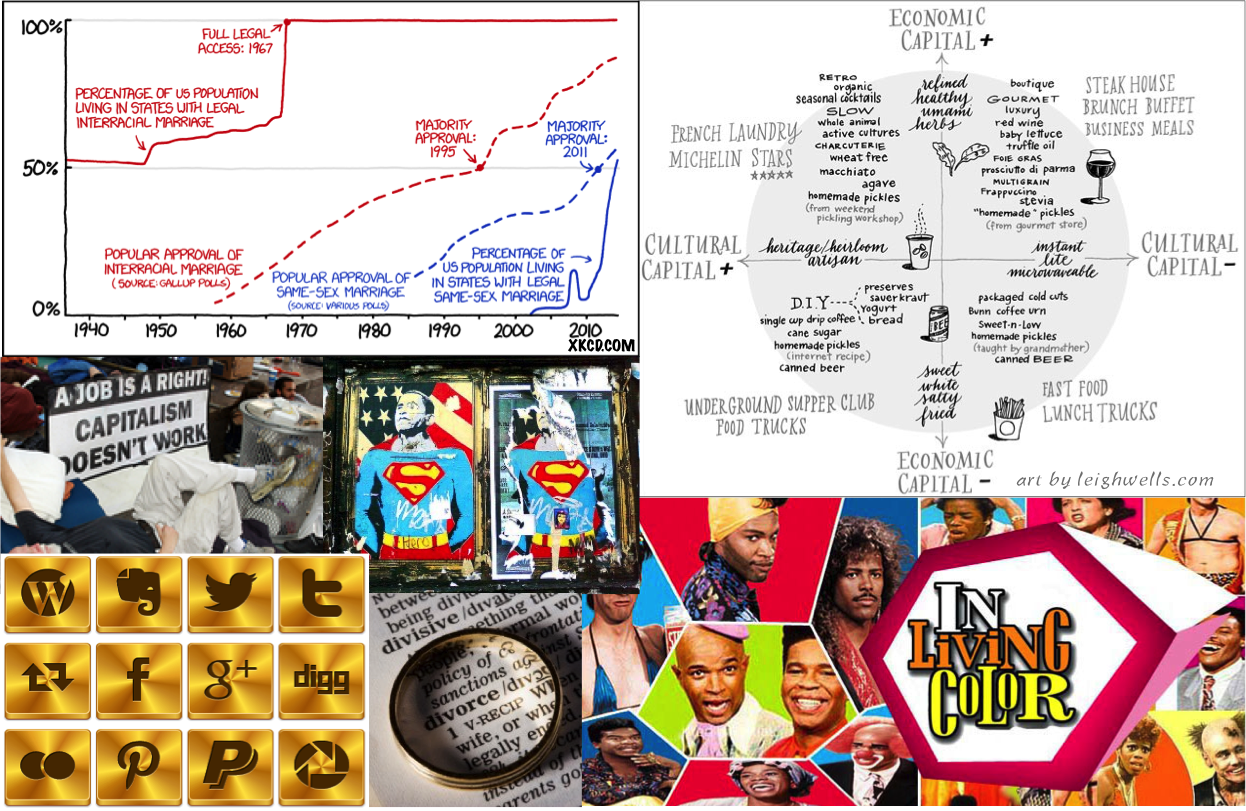
Same-Sex, Different Attitudes,” by Kathy Hull. With the recent SCOTUS demurral, it’s worth a look at the lightning fast change in Americans’ approval of same-sex marriage; this article is just six months old, and the numbers have already shifted.

Roundtables:

Re-evaluating the ‘Culture of Poverty’ with Mark Gould, Kaaryn Gustafson, and Mario Luis Small,” by Stephen Suh and Kia Heise. Sixties-era rhetoric still affects black Americans.

There’s Research on That!

Fast Food Strikes Bring Everyone to the Table,” by Erik Kojola.

Think Fast: Policing, Race, and Implicit Bias,” by Richie Lenne.

Falling Poverty Rates Leave US Hungry for More,” by Jacqui Frost.

Growing and Granting Genius,” by Evan Stewart.

Rockefellers Less Loyal to Oil,” by Erik Kojola.

Atheist Church: A Predictable Paradox,” by Jacqui Frost.

Back in Living Color? Diversity on TV,” by Stephen Suh. more...

TSP's Jon Smajda, multi-tasking
TSP’s Jon Smajda, multi-tasking

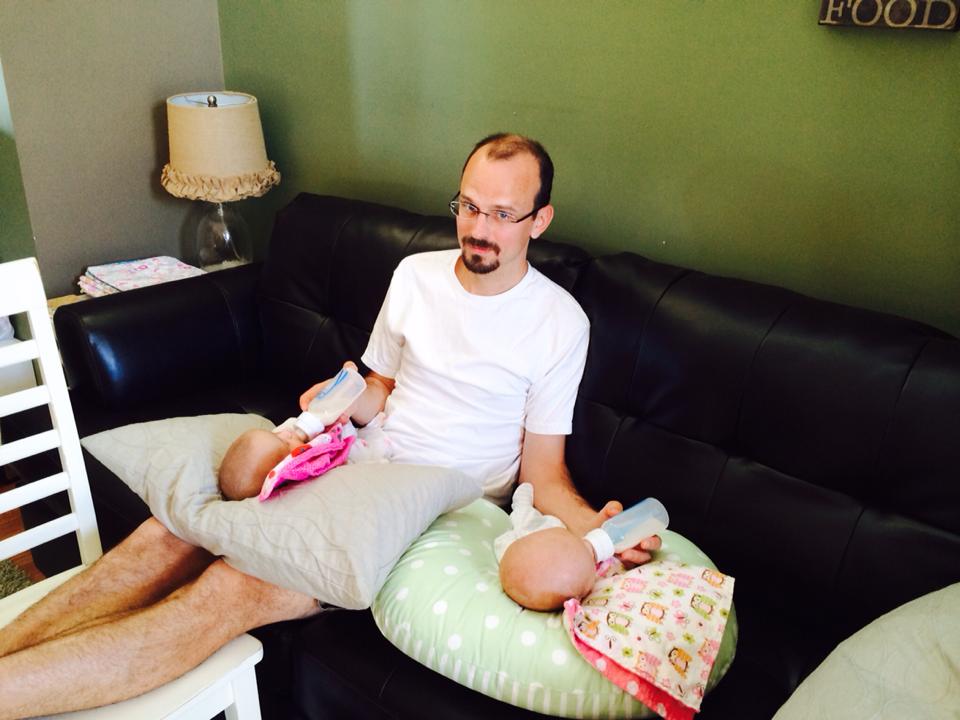
Our brilliant web editor, Jon Smajda, has been working overtime to bring a new look and feel to The Society Pages. Jon’s been after us for years to de-clutter these pages and to make it easier for folks to navigate. The new design should work much better for our mobile and tablet readers (desktops accounted for 85% of our traffic in 2012, but only 55% today) and Jon’s also dramatically improved our search functionality. Rest assured that you’ll still find all the same great TSP feature content on the new site (at the same URL’s no less) — just scroll down to find a handy directory for TSP features, Community Pages, and Partners. We’ll be building out our topics pages and introducing other exciting changes in the next few months, so we hope you’ll bear with us! As always, we’d love to hear your ideas and feedback — and you can congratulate Jon on his *other* new arrivals.

claudes-2011bThe ASA kindly asked me to write up a little welcome for the incoming Contexts editorial team for the most recent issue of Footnotes. Since TSP is the online home of contexts.org, I’m a former co-editor of the magazine, and Phil Cohen and Syed Ali are fellow sociological travelers, how could I resist?


Extra! Extra! Read all about it! The new editors for Contexts, the ASA’s one-of-a-kind, accessible to a general audience publication, have been chosen. They are Philip N. Cohen of the University of Maryland and Syed Ali of Long Island University. Cohen and Ali will take their turn at helm beginning in January. They bring with them big ideas about sociology, tons of energy and experience with public engagement, and their own distinctive (and sometimes irreverent) sensibilities.

About the New Editors

Philip Cohen is Professor of Sociology at the University of Maryland-College Park, where he received his PhD in 1999. He returned to his alma mater in 2012 after stints at University of California-Irvine and the University of North Carolina-Chapel Hill. Cohen specializes in family demography, gender inequality, and labor market disparities and has published widely and in all the leading journals of the field. His most recent writing has been devoted to communicating sociological insights to bigger and broader audiences, largely through his prolific and widely read “Family Inequality” blog, which can be found at familyinequality.com, and his forthcoming book, The Family: Diversity, Inequality and Social Change (W.W. Norton & Co.).

Before settling on sociology, Cohen explored unsuccessful careers as a bagel server, journalist, and rock star. As his online followers and fan club well know, Cohen spends a great deal of his free time blogging. Instead of the rock-star life he once imagined, he now muses about families, inequality, sociology, and demography. “I enjoy research, teaching, and learning, and I’m happy to pursue those interests while satisfying my desire to argue about politics on the Internet,” said Cohen, who lives with his wife and two children in Takoma Park. He is also proud to have always worked at state universities (though he does admit to applying for a few private school jobs along the way).

Syed Ali is Associate Professor of Sociology at Long Island University-Brooklyn. His research interests center around migration, assimilation, ethnicity, and religion. He has conducted ethnographic research among Muslims in Hyderabad, India, South Asians in the United States, and migrant workers in Dubai. Ali is perhaps best known as the author of Dubai: Gilded Cage (Yale University Press 2010) but also has a new book (co-authored with yours truly) due out in January under the title Migration, Incorporation, and Change in an Interconnected World (Routledge/Taylor-Francis).

Ali spent his early childhood in rural West Virginia, but was uprooted to New York City once his parents realized, as he put it, “we were brown.” He returned to the South for graduate work at the University of Virginia, and then bounced back to Brooklyn where he now lives with his wife and two children. Once a late-night country radio DJ (under the unassuming moniker “John Thomas”), Ali now moonlights as a potter and Ultimate Frisbee player. His team finished 6th in the men’s grandmasters (40+) division at the recent national championships in Florida. More important than the result, however, Ali reports that “no one got hurt.” more...