
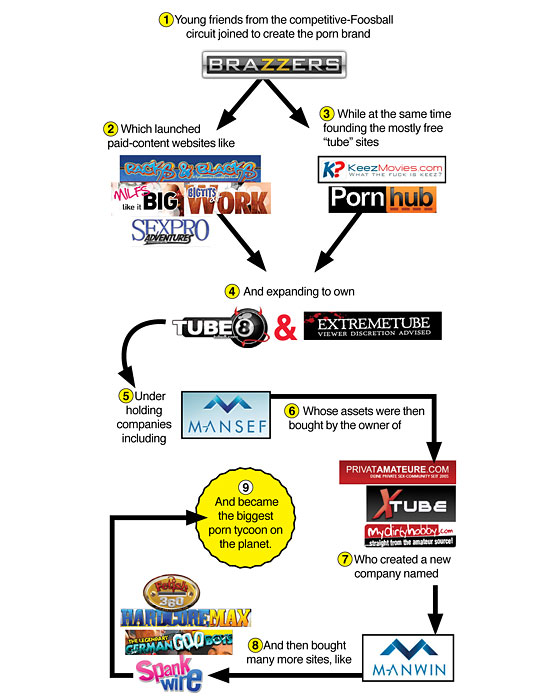
 Infographic from New York Magazine’s amazing article on online porn. A must read.
Archive: 2011
Here, Marshall McLuhan argues to Norman Mailer that we see our present as a rear view image always placed in the context of the past. Only the artist can see the present as it really is.
Via Next Nature:
Our historical snippet of the moment is a Canadian television fragment from 1968 featuring a debate between Norman Mailer and Marshall McLuhan on the implications of media technology and whether nature still existed.
The two heroes of the ’60s are absolute opposites. Leaning forward in his chair, Mailer is assertive, animated, hot, engaged. McLuhan, abstracted and smiling wanly, leaning backward, cool. Mcluhan argues “The planet is no longer nature,” he declares, to Mailer’s uncomprehending stare; “it’s now the content of an art work.” Mailer: “Well, I think you are anticipating a century, perhaps”.
Here, Amber Case states something commonly repeated on this blog: we are all cyborgs. As such, she calls herself a cyborg anthropologist, similar to how we conceive of the study of technology and society as Cyborgology (perhaps without such strict disciplinary terms – but that is another discussion).
However, there is much disagreement between Case’s usage of the term and how I (and others) on this blog define a cyborg.
First, Case argues in the video above that the human cyborg is a recent invention. A product of new technologies that compress our mental capacities over time and space. On this blog, however, we tend to use the term much more broadly. For instance, one fundamental technology that structures other technologies built upon it is language. Post-structuralist thinking has long taught us about the power of language to drive what and how people think, how selves are formed, how power is enacted, and so on. Other technologies, such as spatial organization (think the architectural technologies of the amphitheater or panoptic prison) have profound impact on the mental processes of humans. The human mind has never been independent of technology, and, as such, we have always been cyborgs.
My second disagreement surrounds Case’s argument that more...
 The abstract submission deadline for the Cyborgology “Theorizing the Web 2011” conference had been extended to February 20th. Submit here. Registration also now open.
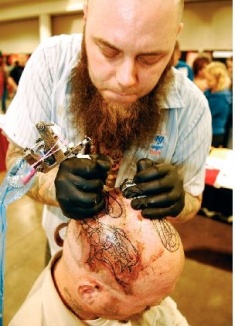 In an earlier post, I discussed growing trends of body modification as illustrative of the new cyborg body. Although it is debatable whether these trends are in fact “new,” (after all, various indigenous cultures have been practicing body modification long before European colonists began taking note of it in their travel diaries), I would like to continue this conversation by looking at one subculture of body modification: tattooing.
As an avid “tattoo collector” myself, I have spent the past few years attending tattoo conventions, hanging out with tattooers, and getting heavily tattooed, all while working on my research regarding the popularization of tattooing. What I notice are changing norms regarding appropriate use of the body as canvas. I would like to draw your attention to one particular trend that is growing in the tattoo subculture: facial tattoos.
What was once the purview only of convicted felons has become an increasingly normative way of expressing one’s commitment to the subculture. (For a case in point, simply Google “facial tattoos” and see what pops up.) What I notice from my interviews and discussions with tattooers and clients alike is a sharp disparity between those who see the face as a legitimate space for artistic display and those who see the face as “off limits.” Traditionally, tattooers were wary of getting tattooed on “public skin” (e.g., face, hands, and neck), as employment in the industry was unpredictable and one never knew if she would need to find another job amongst the masses. Having tattoos on public skin was almost certain to prevent employment. But things may be changing. more...
 I am a big fan of Marshall McLuhan and think he is due for a well-timed comeback in this the year of his centennial. I posted this great Playboy interview a while back and am now fixated with a new website called McLuhan Speaks. This site archives short video clips of our media prophet in action.
Click the images below to watch some of my favorite short clips from the site.
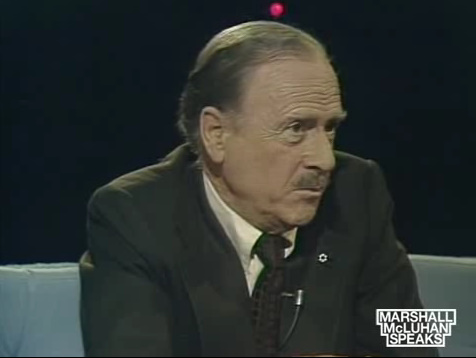 Here, and ever ahead of his time, McLuhan describes how we will become obsessed with surveilling each other, something that social media often exemplifies.
 While the tide is turning, comics are still an under-appreciated medium in 2011. This despite increased interest in superheroes given the Hollywood treatment and critical attention to thoughtful indie pieces like Fun Home and Love and Rockets. It’s a shame because comics’ juxtaposed panels, their special way of framing time in terms of space, are well equipped to address those intersections of identity, technology, and visual representation that get so much play in mainstream and academic press. Image Comics’ Infinite Vacation is one new ongoing title that tackles those ideas head on.
Writer Nick Spencer is a rising star whose big hit, Morning Glories, blends teenage drama with the surreal paranoia of 60s TV thriller The Prisoner. In Infinite Vacation, Spencer teams with artist Christian Ward to tell the story of Mark, daily user of a ubiquitous, near-future technology which allows anyone to buy or sell their existence in parallel universes through a smartphone app; for $25,000 Mark can become the hero cop version of himself, and it’ll cost at least $3000 for him to become a Mark who did not just get walked out on by that mystery girl in the coffee shop.
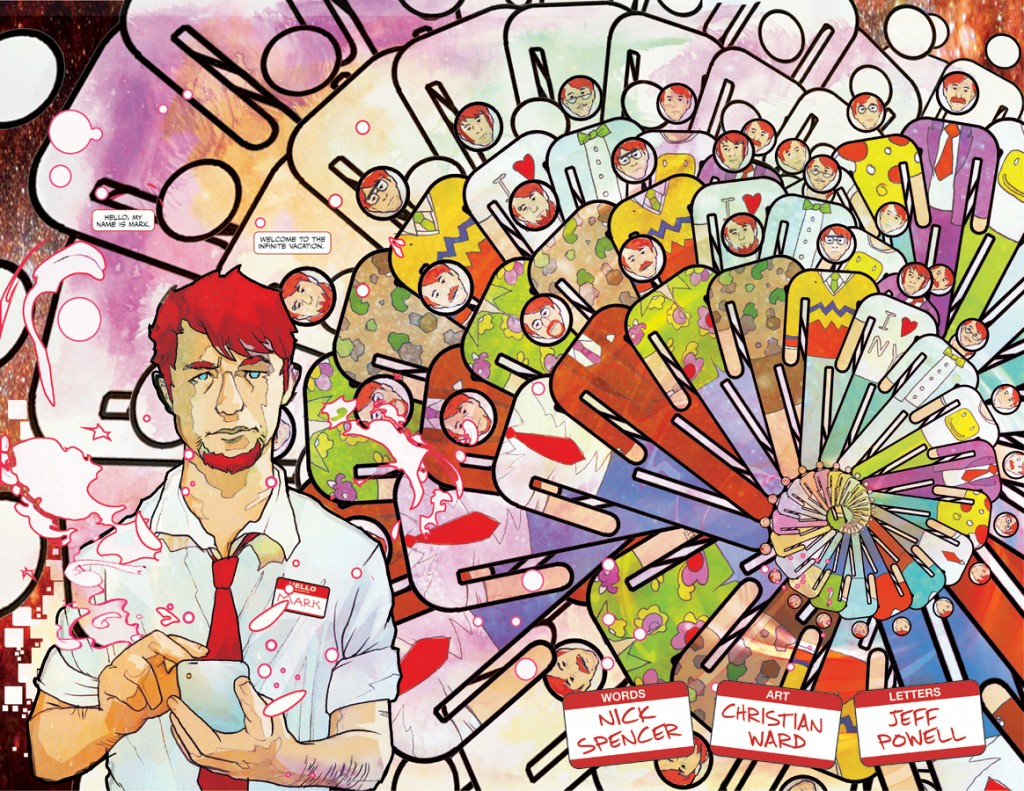
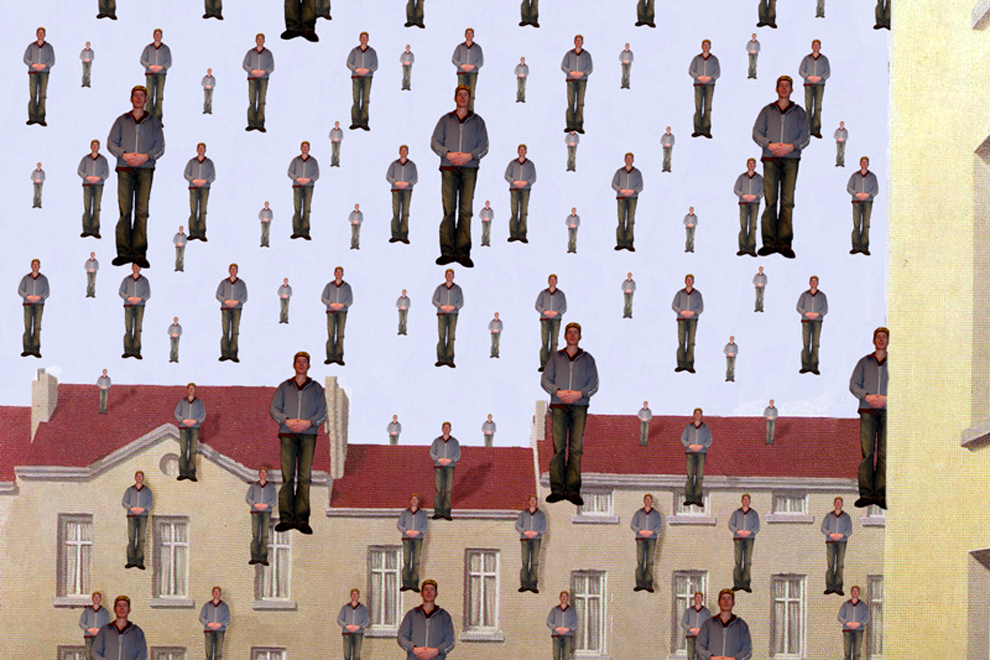
Mark is a cyborg less like Robocop and more like the average Facebook user who presents their preferred self to the world via an array of edited images, clicked “likes”, and comments with friends (i.e., exactly how Cyborgology editors define the cyborg in their inaugural post). Identity definition and presentation through web spaces and consumer devices is a major theme in Infinite Vacation, whether it’s the RSS feed of your alternate selves’ lives and deaths or that mystery girl saying, “That thing in your hand isn’t worth shit to me…” when Mark tries to prove his seriousness by showing how expensive his app-assisted reality purchase would have been. A gorgeous opening spread (below) has infinite Marks fitted into generic male outlines, reminiscent of your chosen profile picture replacing the pale blue Facebook default. more...
This post originally appeared on one of our favorite blogs, OWNI, 25 January, 2011. 
Without indulging into the theories developed by radical sociobiologists, we can reasonably hypothesize that the development of the ego, vanity, and a sense of self-importance were more or less the result of evolutionary adaptations needed for our species’ survival.
THE NATURAL NEED TO EMERGE FROM THE CROWD
In prehistoric times, group survival depended on the level of strength and stamina individuals had in an insecure world where they were powerless against nature. They had to be strong enough to persevere over harsh weather conditions, long migrations, and other dangers in this savage world. They also had to be fit enough to compete against other males for females, thus perpetuating their contribution to the gene pool.
More than just mere strength was needed for survival: The cohesion and solidarity of the groupallowed people to defend themselves against larger animals and organize collective hunts. In turn the group provided food security for everyone, justifying why collective actions were instated as an efficient method for survival. more...
…the further augmentation of the body with technology.
Here, Marshall McLuhan argues to Norman Mailer that we see our present as a rear view image always placed in the context of the past. Only the artist can see the present as it really is.
Via Next Nature:
Our historical snippet of the moment is a Canadian television fragment from 1968 featuring a debate between Norman Mailer and Marshall McLuhan on the implications of media technology and whether nature still existed.
The two heroes of the ’60s are absolute opposites. Leaning forward in his chair, Mailer is assertive, animated, hot, engaged. McLuhan, abstracted and smiling wanly, leaning backward, cool. Mcluhan argues “The planet is no longer nature,” he declares, to Mailer’s uncomprehending stare; “it’s now the content of an art work.” Mailer: “Well, I think you are anticipating a century, perhaps”.
Here, Amber Case states something commonly repeated on this blog: we are all cyborgs. As such, she calls herself a cyborg anthropologist, similar to how we conceive of the study of technology and society as Cyborgology (perhaps without such strict disciplinary terms – but that is another discussion).
However, there is much disagreement between Case’s usage of the term and how I (and others) on this blog define a cyborg.
First, Case argues in the video above that the human cyborg is a recent invention. A product of new technologies that compress our mental capacities over time and space. On this blog, however, we tend to use the term much more broadly. For instance, one fundamental technology that structures other technologies built upon it is language. Post-structuralist thinking has long taught us about the power of language to drive what and how people think, how selves are formed, how power is enacted, and so on. Other technologies, such as spatial organization (think the architectural technologies of the amphitheater or panoptic prison) have profound impact on the mental processes of humans. The human mind has never been independent of technology, and, as such, we have always been cyborgs.
My second disagreement surrounds Case’s argument that more...
The abstract submission deadline for the Cyborgology “Theorizing the Web 2011” conference had been extended to February 20th. Submit here. Registration also now open.
In an earlier post, I discussed growing trends of body modification as illustrative of the new cyborg body. Although it is debatable whether these trends are in fact “new,” (after all, various indigenous cultures have been practicing body modification long before European colonists began taking note of it in their travel diaries), I would like to continue this conversation by looking at one subculture of body modification: tattooing.
As an avid “tattoo collector” myself, I have spent the past few years attending tattoo conventions, hanging out with tattooers, and getting heavily tattooed, all while working on my research regarding the popularization of tattooing. What I notice are changing norms regarding appropriate use of the body as canvas. I would like to draw your attention to one particular trend that is growing in the tattoo subculture: facial tattoos.
What was once the purview only of convicted felons has become an increasingly normative way of expressing one’s commitment to the subculture. (For a case in point, simply Google “facial tattoos” and see what pops up.) What I notice from my interviews and discussions with tattooers and clients alike is a sharp disparity between those who see the face as a legitimate space for artistic display and those who see the face as “off limits.” Traditionally, tattooers were wary of getting tattooed on “public skin” (e.g., face, hands, and neck), as employment in the industry was unpredictable and one never knew if she would need to find another job amongst the masses. Having tattoos on public skin was almost certain to prevent employment. But things may be changing. more...
I am a big fan of Marshall McLuhan and think he is due for a well-timed comeback in this the year of his centennial. I posted this great Playboy interview a while back and am now fixated with a new website called McLuhan Speaks. This site archives short video clips of our media prophet in action.
Click the images below to watch some of my favorite short clips from the site.
Here, and ever ahead of his time, McLuhan describes how we will become obsessed with surveilling each other, something that social media often exemplifies.

While the tide is turning, comics are still an under-appreciated medium in 2011. This despite increased interest in superheroes given the Hollywood treatment and critical attention to thoughtful indie pieces like Fun Home and Love and Rockets. It’s a shame because comics’ juxtaposed panels, their special way of framing time in terms of space, are well equipped to address those intersections of identity, technology, and visual representation that get so much play in mainstream and academic press. Image Comics’ Infinite Vacation is one new ongoing title that tackles those ideas head on.
Writer Nick Spencer is a rising star whose big hit, Morning Glories, blends teenage drama with the surreal paranoia of 60s TV thriller The Prisoner. In Infinite Vacation, Spencer teams with artist Christian Ward to tell the story of Mark, daily user of a ubiquitous, near-future technology which allows anyone to buy or sell their existence in parallel universes through a smartphone app; for $25,000 Mark can become the hero cop version of himself, and it’ll cost at least $3000 for him to become a Mark who did not just get walked out on by that mystery girl in the coffee shop.
Mark is a cyborg less like Robocop and more like the average Facebook user who presents their preferred self to the world via an array of edited images, clicked “likes”, and comments with friends (i.e., exactly how Cyborgology editors define the cyborg in their inaugural post). Identity definition and presentation through web spaces and consumer devices is a major theme in Infinite Vacation, whether it’s the RSS feed of your alternate selves’ lives and deaths or that mystery girl saying, “That thing in your hand isn’t worth shit to me…” when Mark tries to prove his seriousness by showing how expensive his app-assisted reality purchase would have been. A gorgeous opening spread (below) has infinite Marks fitted into generic male outlines, reminiscent of your chosen profile picture replacing the pale blue Facebook default. more...
This post originally appeared on one of our favorite blogs, OWNI, 25 January, 2011.
Without indulging into the theories developed by radical sociobiologists, we can reasonably hypothesize that the development of the ego, vanity, and a sense of self-importance were more or less the result of evolutionary adaptations needed for our species’ survival.
THE NATURAL NEED TO EMERGE FROM THE CROWD
In prehistoric times, group survival depended on the level of strength and stamina individuals had in an insecure world where they were powerless against nature. They had to be strong enough to persevere over harsh weather conditions, long migrations, and other dangers in this savage world. They also had to be fit enough to compete against other males for females, thus perpetuating their contribution to the gene pool.
More than just mere strength was needed for survival: The cohesion and solidarity of the groupallowed people to defend themselves against larger animals and organize collective hunts. In turn the group provided food security for everyone, justifying why collective actions were instated as an efficient method for survival. more...
…the further augmentation of the body with technology.