

socioeconomic status

Looks like a long walk. Photo by Krystian Olzszanski Flickr CC.

Those who have fallen on hard times or don’t have many resources can turn to public programs for essentials like food and housing assistance, but what about transportation? As people living in poverty are forced to the suburbs by rising costs and gentrification, they are now further away from the places and services they need to reach, like work and clinics. Enter Alexandra Murphy, a University of Michigan sociologist recently quoted in the Pacific Standard: “Transportation has been outside of what we define as a human service… even though it’s widely acknowledged that transportation creates opportunity and hardship.”

King’s County in Seattle is offering a new subsidized bus program that is garnering national attention. As described in the Pacific Standard, “[the program] will now allow low-income residents to ride buses, trains, and ferries for $1.50, when standard fares can be more than $3.” Programs like this, however, come with liability risks. What happens if a government-subsidized vehicle gets into an accident? The stickiness of these situations can be a deterrent for those hoping to start public transportation programs; as Murphy explains, “it’s the perception that it’s a quagmire that people don’t even want to walk into.” With time, it is hoped that King’s County may offer a way forward for other communities facing a mismatch between where the housing is plentiful and where the jobs are on offer.

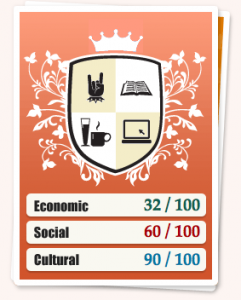
Image via alicexc.deviantart.com


Princess Jasmine fell for Aladdin, even after his Prince Ali façade failed. Lady Sybil Crawley married the family chauffeur Tom Branson, despite his socialist views and Irish, working-class origins. Richard Gere scaled a fire escape to retrieve his “Pretty Woman.” Typically, sociologists say, marrying across class differences happens much less frequently in real life than in popular culture. Jessi Streib, however, wrote a whole book about these uncommon couples. She tells New York Magazine’s Science of Us the findings in her The Power of the Past: Understanding Cross-Class Marriages.

Streib’s interviews revealed benefits and challenges to class difference in marriage. Partners may recognize in each other qualities they felt lacking in their own class background. Thus, working-class individuals may value the confidence and sense of stability of middle-class individuals, while middle-class partners may gravitate toward the intimacy and expressiveness they perceive in working-class families. Middle-class individuals often communicate in a “managerial” style, which, according to Streib, means “They manage their emotions, so before you want to express something, you think about it first, you figure out what you really feel, you think about how to express it in a way that will make the other person most comfortable, and then you kind of quietly and very calmly state how you feel and make sure there’s a good rationale behind it.” Working-class individuals, on the other hand, have a more laissez-faire way of expressing emotions. They are more likely to state their honest feelings directly, even if they’re not particularly nice or polite.

While differences in communication styles provide opportunities for understanding, they also pose challenges. Trying to change the other person, Streib says, is not going to make a partnership work.

The couples who it went really well for were the ones who appreciated each other’s differences. So they would say things like, “You know, it’s not how I do it, but I can understand why that other way makes total sense,” or could actually use their partner’s differences to help them solve a problem at times. So keeping in perspective that difference isn’t necessarily bad, and that they love their partner despite or because of all these differences, could help a lot.

As in any relationship, cooperation and communication are keys to success. Cross-class marriages may not be incredibly common, but at least one sociologist is convinced Tom and Sybil could have made a life of it—save a few plot twists.

One survey participant's "coat-of-arms" generated by taking the Great British Class Survey. Click for image source.
One survey participant’s “coat-of-arms” generated by taking the Great British Class Survey. Click for image source.

Step aside, Downton Abbey, the British social hierarchy is astir again. The BBC Lab UK, with Manchester University’s Fiona Devine and Mike Savage from the London School of Economics, has conducted a class study of more than 161,000 people: the Great British Class Survey. In addition to studying each individual’s economic capital, the researchers also looked at respondents’ social capital (their social status and connections) and cultural capital (the nature and extent of their cultural interests and activities). According to Devine, this extensive survey allowed for “a much more complete picture of class in modern Britain” than previous work has captured.

The team’s results found that the traditional model of class was losing its relevance, with only 39% fitting into the working, middle, or upper class. According to the BBC, the team proposes “a new model of seven social classes ranging from the elite at the top to a ‘precariat’—the poor, precarious proletariat—at the bottom.”

The researchers believe the working and middle classes have waned because of the rise of the information age:

They say the new affluent workers and emergent service workers appear to be the children of the ‘traditional working class,’ which they say has been fragmented by de-industrialisation, mass unemployment, immigration and the restructuring of urban space.

In other words, information-age Britons don’t fit into industrial class structures. The people aren’t obsolete, but the categories may be.