culture

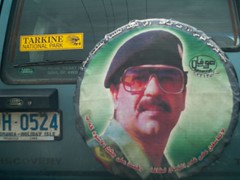
Saddam?Some people still believe that Saddam Hussein was behind the 9/11 attacks, even with substantial evidence to the contrary.   AlterNet recently reported on a sociological study that provides insight into how some people rationalize such false information:

Of 49 people included in the study who believed in such a connection, only one shed the certainty when presented with prevailing evidence that it wasn’t true.  The rest came up with an array of justifications for ignoring, discounting or simply disagreeing with contrary evidence — even when it came from President Bush himself.

“I was surprised at the diversity of it, what I kind of charitably call the creativity of it,” said Steve Hoffman, one of the study’s authors and now a visiting assistant professor at the State University of New York, Buffalo.

The voters weren’t dupes of an elaborate misinformation campaign, the researchers concluded; rather, they were actively engaged in reasoning that the belief they already held was true.

Responses to the 9/11 commission’s finding that there was no link between Hussen and 9/11 included:

“Well, I bet they say that the commission didn’t have any proof of it, but I guess we still can have our opinions and feel that way even though they say that.”

Reasoned another: “Saddam, I can’t judge if he did what he’s being accused of, but if Bush thinks he did it, then he did it.”

Others declined to engage the information at all. Most curious to the researchers were the respondents who reasoned that Saddam must have been connected to Sept. 11, because why else would the Bush Administration have gone to war in Iraq?

Connecting 9/11 to the current health care debate, Hoffman said:

“I do think there’s something to be said about people like Sarah Palin, and even more so Chuck Grassley, supporting this idea of death panels in a national forum….[They] kind of put the idea out there, but what people then do with the idea … ” he said. “Our argument is that people aren’t just empty vessels. You don’t just sort of open up their brains and dump false information in and they regurgitate it. They’re actually active processing cognitive agents.”

Andrew Perrin, another one of the study’s authors, provided additional commentary: 

“I think we’d all like to believe that when people come across disconfirming evidence, what they tend to do is to update their opinions,” said Andrew Perrin, an associate professor at UNC and another author of the study.

That some people might not do that even in the face of accurate information, the authors suggest in their article, presents “a serious challenge to democratic theory and practice.”

“The implications for how democracy works are quite profound, there’s no question in my mind about that,” Perrin said. “What it means is that we have to think about the emotional states in which citizens find themselves that then lead them to reason and deliberate in particular ways.”

Evidence suggests people are more likely to pay attention to facts within certain emotional states and social situations. Some may never change their minds. For others, policy-makers could better identify those states, for example minimizing the fear that often clouds a person’s ability to assess facts and that has characterized the current health care debate.

Examiner.com recently reported on research into the connection between workplace gossip and office politics. Who gossips at work, and whom they gossip about, may reveal who has real power in the workplace.

Said Indiana University sociologist Tim Hallet, one of the authors of the study:

“If you’re interested in learning how an organization works, you can look at the organizational chart, which can be useful. But often people say, ‘I still can’t tell how things get done, who the prime movers are.’ If you’re attentive, you can see who has the informal status, which isn’t on the formal charts. It can help you understand how work actually gets done.”

More about the research:

In order to determine what political work was getting done through gossip, Hallett and his colleagues—sociologists Donna Eder and Brent Harger—observed the employees at an elementary school. At the time, teachers at the institution were adjusting to a new school principal and often felt like their concerns were not being adequately addressed. In order to cope with this sense of powerlessness, the teachers often used gossip to vent their concerns, as they believed the official channels were not open to them to lodge formal complaints.

According to Hallett, gossip not only happens during employee downtime, but often in more formal settings like business meetings:

“When you’re sitting in that business meeting, be attentive to when the talk drifts away from the official task at hand to people who aren’t present,” he said. “Be aware that what is going on is a form of politics and it’s a form of politics that can be a weapon to undermine people who aren’t present. But it also can be a gift. If people are talking positively it can be a way to enhance someone’s reputation.”

Halloween PumpkinsUSA Weekend recently highlighted the growing fascination that Americans have with our favorite blood-sucking friends: vampires.   This phenomenon is underscored by the recent success of the Twilight series, HBO’s second-most watched series ever True Blood, and the popularity of the new CW network show The Vampire Diaries.

Karen Sternheimer, sociologist at the University of Southern California, provides commentary: 

“One reason for the intense teenage interest in newer stories, especially Anne Rice’s The Vampire Chronicles, Twilight and The Vampire Diaries, is the sense that the vampires are outsiders among us. In True Blood, they’re simply trying to fit into society. Often, they’re also seen as more vulnerable and less predatory.  Vampires look like us, but they’re different, and those are experiences that a lot of young people can relate to, especially dealing with not just the physical aspects of relationships when you’re young but also the emotional aspects, the danger vs. the draw of that so-called ‘forbidden love’ that really resonates with a lot of young women.”

Charlaine Harris, author of the Sookie Stackhouse novels (upon which True Blood is based), provides additional commentary: 

“Vampires never have to go on Social Security, they never have to have a hip replacement, they’re never going to need bifocals  They just won’t have the problems of aging that humans face, and that’s very appealing, especially perhaps to Americans.”

On that note, pay attention to how many little vampires you see roaming the streets tomorrow night.

Puppies!Earlier this week Forbes.com ran a story about pet culture in the U.S. in the 21st century, which has transformed our four-legged pets into our children.

About the trend:

America’s cultural pendulum has swung toward pets. 71% of U.S. households own a pet, and most are willing to spend vast amounts of time and money to keep Sparky and Fluffy happy. The pet industry has tripled in the past 15 years. The APPA estimates pet spending will reach $45.4 billion this year, an increase of $2 billion since 2008–despite the crippling recession.

In the last few years, they’ve exploded into popular culture, too. As Paris Hilton and Jessica Simpson are splashed across the celebrity glossies with their furry friends, the broader media followed suit. People.com offers the offshoot People Pets.com, AOL draws audiences with its new site Paw Nation, and icanhascheezburger.com gets hundreds of submissions daily of user-generated lol cats (laugh-out-loud funny photos of cats). Bo, America’s “First Dog,” is still making headlines.

And sociological commentary…

“People are fascinated by pets. We act and spend on them as if they were our children,” says NYU sociology professor Colin Jerolmack, who studies animals in society. “We’ve civilized them to the point that they are no longer a part of wild nature.” It wasn’t always so. Just over a century ago in the 1800s it was very rare to have a pet, Jerolmack says. They were luxury items and status symbols of the bourgeoisie, showcasing that a family had the means and resources to own a pet. Animals then were purely functional; dogs were often used to hunt, and cats used to scare off mice. As society developed and technology advanced, the utilitarian use of pets waned.

And from another sociologist…

Author of Understanding Dogs, sociologist Clinton Sanders, says pet obsession has been rapidly growing during the past 20 years. “The danger is that we don’t let animals be animals anymore,” he says. “It does them a disservice and results in some ignorant kinds of treatment.

“Dogs,” he says, “would be perfectly content eating the same food every day for the rest of their lives. It tastes good, fills them up and never disappoints. A dog’s owner, on the other hand, might say, ‘I would never want the same meal again and again, how boring.’ Then she goes to the store and buys her pup a variety of options, which in turn disrupts the dog’s digestive tract.” But, Sanders insists,”Dogs aren’t like us.”

Similarly, interpreting their behavior as if they were human can lead to false assumptions. Says Sanders, “People might believe the dog peed on their bed because she was angry that they were gone, but what if the dog has a urinary tract infection? It’s an inappropriate way of understanding their behavior.”

But why are we so crazy about our pets? NYU sociologist Colin Jerolmack, quoted above, has an answer…

Why have they become so important to us? NYU’s Jerolmack speculates that it may be due to people’s decreasing connection to each other. In an era of online social networks, long work hours and distances between families, we have far fewer strong social ties and many more weak ties, he says. “We’re spending a lot more time alone or with our immediate family. The companionship of pets has become much more valuable today.”

Furthermore, relationships with pets are much less emotionally messy. They love you no matter what you look like or if your breath stinks. And they show affection consistently. Pets have become a relatively easy and loveable replacement of children or a strong community, which, Jerolmack warns, may lead to an impending culture clash.

“In the city, we’re already seeing debates over park space going to kids or dogs,” says Jerolmack. “There will be more people demanding social recognition of pets, wanting to bring their pets everywhere. And with an industry relying on them, I don’t see us going backwards.”

Read more.

Widely read in numerous sociology classes, the writings of Barbara Ehrenreich have become classics. Her most recent book, Bright-Sided, was discussed earlier this week on National Public Radio.

NPR’s ‘Talk of the Nation’ reports:

When author Barbara Ehrenreich was diagnosed with breast cancer, she was bombarded with wildly optimistic, inspirational phrases. But a cheerful outlook, she argues, does not cure cancer.

In her new book, Bright-Sided, Ehrenreich explores the negative effects of positive thinking, and the “reckless optimism” that dominates America’s national mindset.

“We need to brace ourselves for a struggle against terrifying obstacles,” Ehrenreich writes, “both of our own making and imposed by the natural world. And the first step is to recover from the mass delusion that is positive thinking.”

A brief excerpt from the book…

How can we be so surpassingly “positive” in self-image and stereotype without being the world’s happiest and best-off people? The answer, I think, is that positivity is not so much our condition or our mood as it is part of our ideology — the way we explain the world and think we ought to function within it. That ideology is “positive thinking,” by which we usually mean two things. One is the generic content of positive thinking — that is, the positive thought itself — which can be summarized as: Things are pretty good right now, at least if you are willing to see silver linings, make lemonade out of lemons, etc., and things are going to get a whole lot better. This is optimism, and it is not the same as hope. Hope is an emotion, a yearning, the experience of which is not entirely within our control. Optimism is a cognitive stance, a conscious expectation, which presumably anyone can develop through practice.

The second thing we mean by “positive thinking” is this practice, or discipline, of trying to think in a positive way. There is, we are told, a practical reason for undertaking this effort: positive thinking supposedly not only makes us feel optimistic but actually makes happy outcomes more likely. If you expect things to get better, they will. How can the mere process of thinking do this? In the rational explanation that many psychologists would offer today, optimism improves health, personal efficacy, confidence, and resilience, making it easier for us to accomplish our goals. A far less rational theory also runs rampant in American ideology — the idea that our thoughts can, in some mysterious way, directly affect the physical world. Negative thoughts somehow produce negative outcomes, while positive thoughts realize themselves in the form of health, prosperity, and success. For both rational and mystical reasons, then, the effort of positive thinking is said to be well worth our time and attention, whether this means reading the relevant books, attending seminars and speeches that offer the appropriate mental training, or just doing the solitary work of concentration on desired outcomes — a better job, an attractive mate, world peace.

Listen to the report here.

Read the NPR transcript.

In an article entitled, “First Blood: Introducing Menstrual Activism,” Salon.com explores the ‘negative cultural stance toward menstruation’ and what is being done to counter it.

The background, from Salon.com:

Every woman has one. Not what you’re thinking — that too, yes, but I am referring to a menstruation horror story. A bright blood stain blooming on the back of white jeans, a first period that has the audacity to arrive during gym class or one that colors a yellow swimsuit red while you are waterskiing with your grandfather, as happened to Rachel Kauder Nalebuff, the editor of “My Little Red Book.”… But does the embarrassment many women feel arise from a negative cultural stance toward menstruation? And do we need a concerted effort to address it?

In an article published in the Guardian on Friday, writer Kira Cochrane situates “My Little Red Book” at the center of a new wave, as it were, of “menstrual activism.” (The movement is also called “radical menstruation,” “menstrual anarchy” or “menarchy.”) The term, she writes, “is used to describe a whole range of actions,” such as “simple efforts to speak openly about periods, radical affronts to negative attitudes, and campaigns for more environmentally friendly sanitary products,” since a woman could create her own personal landfill with the 11,400 tampons she uses in her lifetime. (What I want to know is: Who counted?)

The sociological commentary:

Chris Bobel, a women’s studies professor at the University of Massachusetts Boston and the author of an upcoming book, “New Blood: Third Wave Feminism and the Politics of Menstruation,” explains that many “menstrual activists begin by thinking, wait a minute! Do we have to regard our period as something dirty? Do we have to greet a girl’s first period with silence?” According to Cochrane, these women are attempting to take “the shame out of periods,” to overcome the supposed “menstrual taboo.”

But are significant changes really happening?

But the greatest indicator that the cultural attitude toward menstruation has shifted may be the ads for “feminine products.” Ads have ceased to be so euphemistic you have no idea what product is being peddled (“Be free and active!”). The latest from Tampax are hilariously direct in their wink-wink indirectness. Mother Nature (played by Catherine Lloyd Burns) offers a “monthly gift” — a box wrapped in red paper, a symbol obvious enough to please teenage boys and dissertation writers alike — to various women (in one ad, it’s Serena Williams) at inopportune moments. When primetime viewers are savvy enough about menstruation to get in-jokes about periods and blood, it’s a safe bet that the stigma has eased.

Those who prefer to remain quiet about the subject may not be evincing gynophobia so much as conversational etiquette. It may be an act of modesty, not of shame. People don’t much discuss erectile dysfunction or bowel problems either, and not for reasons of gender, or because those bodily processes are particularly taboo. When menstruation is a relevant subject between people — girlfriends and boyfriends, husbands and wives, female friends — it’s not generally treated as humiliating or distasteful. And indeed, women don’t seem to feel much fear about talking about it. Case in point: “My Little Red Book,” for which 90-odd female writers agreed to share their stories.

Read more.

MafiaThe Boston Globe ran a story over the weekend about fascinating research by sociologist Diego Gambetta…

In his new book, ”Codes of the Underworld: How Criminals Communicate” (Princeton University Press), sociologist and Mafia expert Diego Gambetta explores this subculture and unearths an unspoken language among bad men. He offers insight on how mobsters, pedophiles, prisoners, and other shady characters earn one another’s trust and prove their mettle. And what he documents is both disturbing and, sometimes, hilarious.

It turns out–according to Gambetta, a native Italian and a sociology professor at the University of Oxford–that there are really practical reasons why Sicilian mobsters like to use nicknames, why pedophiles might out themselves to others online, why prison inmates fight (or don’t fight), and why mobsters from Japan to Russia might be out there, right now, reciting lines from ”The Godfather,” such as, ”Leave the gun. Take the cannoli.”

Excerpts from the Globe’s interview with Gambetta:

IDEAS: Based on your research, what would people find most surprising about how people communicate in the criminal underworld?

GAMBETTA: I would say doing things that would seem irrational to us. Like revealing bad things that you’ve done. Or hurting yourself. Or hurting innocent people. I have a chapter on self-harm, which is probably the most unexpected thing you find.

IDEAS: What are some examples of ways criminals compromise themselves to prove their toughness or trustworthiness to another criminal?

GAMBETTA: One thing you can look at is how pedophile rings on the Internet work. Some of them work by asking new members to contribute previously unknown photographs to their website. In that sense, they contribute to the website of pedophile photographs, but at the same time they’re also giving information that they themselves have done that. So they are unlikely to be undercover agents. And with respect to physical harm, the best domain in which criminals have to prove their toughness, day in and day out, is prison. You find a lot of self-harm in prison.

Read more of the interview…

A recent story in the Metro News (Vancouver, Canada) caught my attention…

A group that tells people how to kill themselves has been barred from presenting at Vancouver’s public library over concerns that the library could be held liable for helping people to commit suicide.

Paul Whitney, the city’s librarian, said he cancelled the booking — which tells people how to kill themselves, what drug to buy and where to buy it — after legal and law enforcement advisers told him it would violate the Criminal Code.

Whitney said it was inappropriate for the publicly funded library to be putting itself in that position of “undo risk.”

About the group:

But Dr. Philip Nitschke, director of the Australian right-to-die group Exit International, said the group does not encourage people to commit suicide, but rather it gives them end-of-life information to better consider their options.

“This is an issue of vital importance to elderly Canadians … The library is a place where one would expect the free impartation and discussion of ideas and information,” said Nitschke, via an Internet video link from Australia yesterday.

The sociological perspective…

Russel Ogden, a criminologist at Kwantlen Polytechnic University who has studied assisted suicide in Canada for the past 20 years, said talking about suicide is not an offence.

There is evidence, he added, that discussing suicide can even act as a deterrent.

Read more.

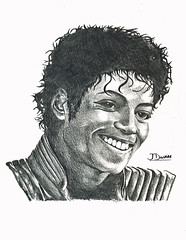
MJ PENCIL DRAWING

The New York Times ran a story at the end of last week about the media flurry surrounding celebrity deaths over the last several months. The article takes a closer look at the context and meaning of all the alarm.

The trend…

ONE after the other, they were dying: Michael Jackson, Farrah Fawcett and Ed McMahon, all in the same week earlier this summer. Next were Walter Cronkite, John Hughes and, in late August, at a pitch point of public grief, Senator Edward M. Kennedy. Then on Monday, Patrick Swayze died after a widely publicized struggle with pancreatic cancer, only to be followed by Mary Travers of Peter, Paul and Mary Wednesday night.

It has been, by all appearances, the endless funereal season, with a news media swarm on the departed and a parade of nostalgic tributes, as bloggers and Twitterers went on “celebrity death watch.” Even before Senator Kennedy succumbed to brain cancer Aug. 25, columnists wrote pleading laments like one in The Washington Post that said, “God, please stop taking away our celebrities.”

But the trend may be exaggerated.

But in fact, no more celebrities had died than in past summers, according to Lou Ferrara, a managing editor in charge of entertainment and lifestyle coverage for The Associated Press.

The perception of numerous celebrity deaths was not supported by the number of obituaries the news agency wrote, he said, because it was not a matter of how many died, but who.

What does all of this mean? The sociologist explains…

This summer could come to be known as the summer when baby boomers began to turn to the obituary pages first, to face not merely their own mortality or ponder their legacies, but to witness the passing of legends who defined them as a tribe, bequeathing through music, culture, news and politics a kind of generational badge that has begun to fray.

“This is a historical development in cultural history,” said Todd Gitlin, 66, the sociologist and author of “The Sixties,” who teaches at the Columbia University School of Journalism. “It’s the ebbing of figures who have a wide enough span of appreciation and admiration so they appeal to significant numbers of people, like incarnations of virtue. So people take a new measure of themselves when they ask, ‘Will there ever be anybody else like X’ ”?

Read more.

Gift of a friendThe Chicago Tribune ran a story this week about the rash of bad behavior by politicians, celebrities, and athletes alike in recent months.

The breakdown:

After watching South Carolina Republican Rep. Joe Wilsonheckle the president during a joint session of Congress,Serena Williams cuss out a line judge at the U.S. Open andKanye West snatch the microphone from a 19-year-old newcomer, to champion a much-honored megastar, on theMTV Video Music Awards, you may have had the following thought:

What the (bleep) is wrong with people these days?

Those three incidents during the past week represent the latest trifecta of public incivility in a year in which town-hall health-care discussions routinely have devolved into shouting matches, President Barack Obama has been compared to and depicted as Adolf Hitler and figures across the political spectrum have flung epithets unprintable in a family newspaper.

The incidents, notable as much for their breaches of decorum as for their content, follow a general pattern: incident, outrage, hundreds of thousands of YouTube hits, apology and, maybe, punishment. What’s unclear is whether such outbursts are signs of shifting times or just a news cluster that gives us an excuse to wring our hands and look back at polite ol’ days that may never have existed.

Sociologist Gary Alan Fine is asked for his comments, and thoughtfully responds that this is likely not a new pattern of behavior, but a new pattern of interest…

Northwestern University sociology professor Gary Fine was reluctant to draw big conclusions, noting that Williams follows a long line of athletes — among them tennis players Jimmy Connors and John McEnroe — who have berated umpires, that presidents have been heckled in some form at least since Lyndon Johnson and that the British Parliament shows far less respect toward its head of government.

What the current controversies really indicate, Fine said, is what kind of news most people prefer.

“People like to pretend that they care about policy, but they really care about people and stories,” Fine said, noting that the Wilson outburst “provided a story about what is otherwise a complicated, confusing and, dare I say, boring debate about the details of health care.”

Read more.