
inequality

Flowers and Candles for Kiante Tay Campbell. Photo by George Kelly, Flickr CC

Despite the current administration’s affirmations of high crime rates and push for more tough on crime policies, their approach does not align with the reality of crime in the United States, where violent crime fell substantially over the past 25 years. In a recent article in The New York Times, sociologist Patrick Sharkey discusses his research on both the causes and social benefits of the violent crime drop.

Reductions in crime improved the overall climate in major cities, but especially improved social conditions in disadvantaged communities of color. Declines in homicide led to increased life expectancy for young Black males. Sharkey’s research also demonstrates that declines in homicide helped to narrow the achievement gap between Black and White children and decreased concentrations of poverty in many cities. According to Sharkey, “living in poverty used to mean living with the constant threat of violence. In most of the country, that is no longer true.”

Undervalued forms of violence prevention —  non-profit organizations in particular — could help keep levels of violent crime low. Sharkey argues that a method that focuses on safety and creating community, rather than tough policing and prosecution, is the next step to a further reduction in violent crimes:

“These findings suggest a new model for combating urban violence. While police departments remain crucial to keeping city streets safe, community organizations may have the greatest capacity to play a larger role in confronting violence. Working directly with law enforcement and residents, these organizations are central to the next stage in the effort to make our cities even safer.”


Photo by futureatlas.com, Flickr CC

In the decades since the Holocaust, the international community created mechanisms like the 1951 Genocide Convention in order to ensure that the world would “never again” experience such tragedy. Even so, genocide and mass violence continue to occur across the world. Recent AP reports provide even more evidence of a genocide in Myanmar, yet military response and global governance are again lacking. In a recent article in The Washington Post, Aliza Luft addresses these failings and suggests that economic tactics may succeed where others have failed.

Many factors can influence violent behavior, like prejudice and propaganda, but for many who commit violence, economic considerations are essential. For example, some governments use poverty to motivate civilians to engage in violence, offering resources in exchange for participation. According to Luft:

“Thus, one strategy for intervention is to even the economic playing field: to lower the capital of the génocidaires while increasing that of their potential recruits. Responses can include targeted financial measures such as asset freezes and economic divestment from major firms that help fund genocidal governments. Additionally, non-governmental relief efforts might focus not only on food, medicine, and housing for the displaced, but also on creating economic opportunities to reduce the potential for recruitment by genocidal authorities.”

Economic strategies can take many forms, including organizations that guide companies towards pro-human rights policy, as well as online campaigns that have dissuaded companies from working with genocidal regimes. Luft argues that anyone can aid in genocide prevention through personal spending choices, outreach, and activism. She suggests civilians use financial strategies that may influence politics and policy:

“To deepen the link between investment or operations abroad and commitments to human rights, civilians can emply boycotts and social media campaigns to pressure these companies over their complicity in genocide. Research has shown that economic and reputational concerns can motivate a company to change its policies. It is time to mobilize on behalf of the Rohingya, and to target businesses whose taxes and revenue fund violence.”

Photo by Gareth Simpson, Flickr CC

With the highest incarceration rate in the world, many policymakers in the United States are looking to reform the criminal justice system. Some have turned to fines as an alternative to jail or prison. Unfortunately, fines may not be the best solution, according to sociologist Alexes Harris

In a recent New York Times article, Harris argues that a fine-based system places a huge financial burden — the responsibility of funding the entire criminal justice system — directly on those who are often least able to pay. Harris writes,

These people are paying for the system of justice from which we all benefit, but they cannot afford to do so. They are often poor, unemployed and of color. In research on monetary sanctions in nine states, my research team and I found that many people have trouble navigating the legal process associated with fines and fees, like finding out how much money they owe and meeting minimum payment requirements. Of the 380 people we interviewed, over half received public assistance and a vast majority had problems paying their legal debt.

Consequences for not paying can be severe. Not only do delays in payment often result in late fees or interest charges, warrants are sometimes issued for those who fail to pay, and they may end up incarcerated anyway. However, Harris explains that there are other alternatives to incarceration besides fines:

“They should instead search for ways to reduce criminal justice budgets by prioritizing preventive measures proved to decrease recidivism and improve public safety such as free drug and alcohol treatment programs, low-cost housing, restorative justice and job training. To start, lower courts should rely on day fines, where monetary sanctions are determined based on a person’s daily wage and the seriousness of the offense. The sanction is proportionate to a person’s ability to pay and the degree of harm inflicted.”

Photo by Dean Hochman, Flickr CC

Originally posted Jan. 26, 2017

Prospective college students consider a wide variety of factors when deciding on a university. While academics and career opportunities are often high on the list, colleges known as top party schools have a special appeal. Everyone loves a good time, but as Occidental College sociologist Lisa Wade describes in her new book, American Hookup: The New Culture of Sex on Campus, this idea of college as “fun” is a fairly recent trend some troubling consequences.

In a feature with Time Magazine, Dr. Wade explains how American universities changed from predominantly strict, formal institutions to environments known for casual hookups and wild parties. Whereas in colonial America, colleges were highly regulated places, as the student body underwent a shift, so did campus culture. Wade explains,

“They [colonial college students] were generally obedient, but as the eighteenth century came to a close, colleges were increasingly filled with wealthy sons of elite families. These young men weren’t as interested in higher education as they were in a diploma that would ratify their families’ hoarding of wealth and power. Predictably, they had a much lower tolerance for submission.”

This rebellious attitude led to widespread expulsions across many elite universities, as well as the early foundations of Greek life. Fraternities became hubs for parties, alcohol, and casual sex, a legacy that still holds strong on many college campuses across the United States. And while the party scene can be tempting for many, American Hookup highlights how this emphasis on noncommittal and unemotional sex also sets the stage for widespread rape and sexual assault.

“Thanks to the last few hundred years, most colleges now offer a very specific kind of nightlife, controlled in part by the same set of privileged students that brought partying to higher education in the first place, and designed to promote, as much as possible, the ‘big four-year org’ that students both desire and dread.”

Photo by Tammy Anthony Baker, Flickr CC

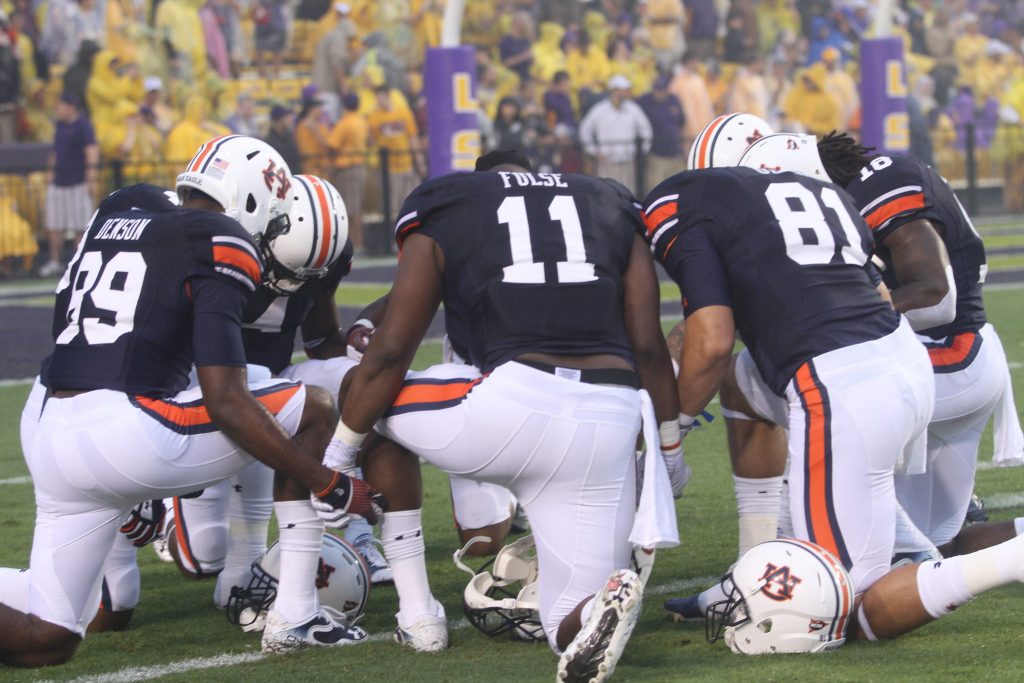
In the last few months, President Trump’s incendiary tweets have found a home in sports, including comments on the NFL, the NBA, and college basketball. In a recent article in ABC News, sociologists discuss how Trump’s tweets about sports with high percentages of Black athletes are racially-coded, and may reveal Trump’s own racial bias and attempts to appeal to his political base.

In response to President Trump’s  demand that owners fire NFL players for kneeling, sociololgist Ben Carrington argues,

“When Trump uses language referring to Black athletes or other Black figures that kind of speak out in terms of them being ungrateful and undeserving of their place in sports, he’s re-invoking that dark era in American sports in which that language was explicit and Black players couldn’t play.”

In another example, Trump demanded thanks for keeping three UCLA basketball players out of jail in China after shoplifting, calling the father of one player an “ungrateful fool” and “a poor man’s version of Don King, but without the hair.” As these tweets gain headlines, the media may miss the core racial issues that drive this kind of dialogue in sports, according to sociologist Doug Hartmann.

“Trump’s been able to make the focus be on whether this is appropriate or not, and how players should be punished or disciplined, and completely distracted our attention from the racial issues that the players who are protesting want to focus our attention on – police brutality, huge wealth gaps, the treatment of African Americans in cities — those are real racial issues.”

In short, Trump’s tweets and the media’s coverage of them divert public attention from larger issues of racial injustice in the United States.

Photo by Francois Marcotte, Flickr CC

Despite recent declines, the United States still has one of the largest prison populations among comparable nations. Most of those incarcerated in U.S. prisons will eventually be released. Evidence suggests that as many as 600,000 individuals are released from prison each year. Upon release, many people must serve time on parole, which typically involves a period of supervision with a set of conditions that a parolee must follow, such as passing a drug test. In a recent article in The Conversation, Shawn Bushway and David Harding discuss how violations of parole conditions appear to be a key driver of high prison populations, rather than new offenses.

Since people convicted of a felony are randomly assigned judges in Michigan, Bushway and Harding, along with their colleagues Jeffrey D. Morenoff and Anh P. Nguyen, conducted a “natural experiment” to account for how an individual’s background may influence their sentences. As the authors explain,

This random assignment of judges mimics the way a scientist would design a randomized, controlled experiment in the lab. There are no obvious differences between who gets randomly assigned to one judge and who gets assigned to the other. For all intents and purposes, the groups are identical. So if one group ends up with stricter sentences, it’s likely due to the judge’s predilections rather than to anything specific to the individual defendants and their crimes.”

The authors are thus able to understand the specific effects of parole violations. Their findings suggest that people who are imprisoned and then released to parole — rather than those who are put on probation (instead of incarceration) initially — are more likely to return to prison. Further, some scholars remain skeptical that probation may also be another avenue into the prison system. Overall, the work of social scientists suggest that if we want to reduce prison populations, we must reevaluate parole and probation practices, including the response to violations of supervision conditions. 

Photo by https://bestreviewsbase.com/

Originally posted Sept. 11, 2017

Even in 2017, when more and more women enter historically male-dominated fields, archaic notions of what counts as “men’s work” or “women’s work” continue to persist in many workplace environments. A recent article in The Globe and Mail covers a study that shows how gender stereotypes hurt both men and women at work, and it particularly hurts employees in new fields.

Jobs in new industries are considered to be more gender-neutral than older professions, but gendered perceptions still take hold in these new roles. Using data from a microfinance bank in Central America, Laura Doering and Sarah Thébaud examine how initial interactions with either a man or woman in a gender-ambiguous position shape future perceptions of that role. They find that a client’s initial interaction with a male or female loan manager shaped their perceptions of the entire position as more masculine or feminine. As Doering points out,

“For example, if we first encounter a man in a new or gender-balanced job, we begin to associate the job with masculine stereotypes.”

Clients not only quickly attach gendered perceptions to the position, but are more likely to comply with the demands of the male rather than female managers. However, if the borrower first encounters a woman in the management position, they attribute less authority to the next manager, regardless of gender. As for ways to combat this bias, the authors suggest that one possible solution is an endorsement from a high-status employee among the presence of clients or other colleagues. Doering concludes,

“Such endorsements from high-status individuals can nudge clients and other employees toward more equitable treatment of workers in female-typed roles.”

Photo by miriampastor, Flickr CC

The recent accusations of many prominent men in media, politics, and the music industry for sexual harassment and assault have many wondering what can be done to reduce sexual harassment in the workplace. According to sociologists Frank Dobbin and Alexandra Kalev, the answer is simple: hire and promote more women. In an article published by the Harvard Business Review, Dobbin and Kalev review the working conditions that promote sexual misconduct, and emphasize the importance of a top-down approach to enact real change.

Harassment thrives in workplaces with male-dominated management where women are outnumbered among their peers. While the answer to this problem is hiring more women for these roles, the authors explain why this process is not so straightforward:

“…women tend to leave workplaces where sexual harassment is common and goes unaddressed; the fight can feel hopeless in an environment where gender bias runs rampant.”

Therefore it is necessary for organizations to take on the challenge of hiring and retaining women in leadership roles. Many grievance systems and anti-harassment trainings were first implemented in the 1970s, but appear to have been relatively ineffective — women who file complaints often face serious repercussions, including being demoted or facing continued harassment and other types of mistreatment from colleagues.  

Dobbin and Kalev argue that sexual harassment in the workplace should be handled in a way that the survivors of sexual harassment are not punished. They urge CEOs and other company leaders to speak out against sexual harassment and to rethink how they promote and retain female employees.

“[I]t’s critical that leaders start accepting some of the responsibility that the courts have allowed them to brush off for such a long time… After all, culture is shaped by behavior at the top. As long as men dominate in management, it’ll be up to them to make those changes.”

Photo by Ray_LAC, Flickr CC

With the current presidential administration’s promises to build border walls and increase deportations, it may be surprising that Latinx immigrants report experiencing less discrimination than those born in the United States. According to a recent survey featured in NPR’s Code Switchonly 23% of Latinx immigrants report experiencing discrimination, while 44% of Latinx born in the United States report discrimination. 

Sociologist Emilio Parrado told NPR that perceptions and experiences of discrimination are related to an individual’s level of participation in and adaption into United States culture. Research suggests that Latinx born in the United States may face more direct discrimination than immigrants, because they are more likely to engage in competitive workforce and social settings. 

“Discrimination is a strategy of the dominant group to protect itself, to protect the benefits that they have, so discrimination is something that emerges not when people are culturally different, but that emerges when people compete.”

Parrado also argues that many immigrants come to the United States without knowing the contextual “rules” of interactions with others, which makes it harder to  immediately identify instances of discrimination or racism.

“For immigrants, there is a process of learning that you are being discriminated against…Immigrants tend to think that it’s their own fault, that it’s because they don’t know the rules, or they don’t know English.”

Thus, past research may not fully capture how much discrimination is occurring simply because people may not recognize it as such. In response, some children of Latinx immigrants who were born in the United States are trying to educate their families on what discrimination looks like.

Photo by Philip Cohen, Flickr CC

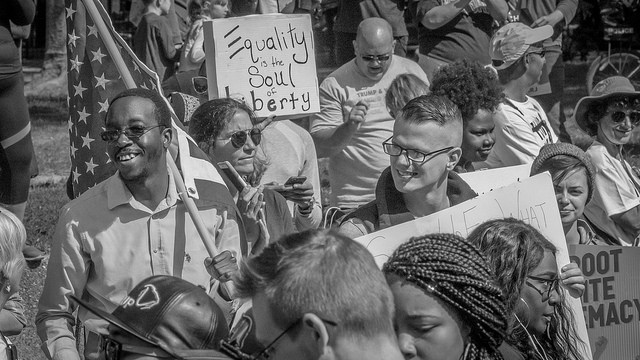
Recent social movements in the United States, like Black Lives Matter and Occupy Wall Street, have sought to challenge the status quo. While such movements often make the news, less attention is paid to how they achieve success. A recent article in the New York Times by sociologist Kenneth T. Andrews argues that social movements bring about change through exercising different types of power — cultural, disruptive, or organizational.

We are used to seeing cultural or disruptive power from movements in the media, but organizational power is also important. Organizational power is reflected in a movement’s ability to sustain its agenda through ties to other groups. Recent research suggests that after the Tea Party built upon disruptive power gained from initial protests, it established local organizations and supported political candidates that shared its ideas, ultimately transforming the Republican Party. However, as with each mechanism of power, organizational power also has constraints. Andrews explains,

“Staging the occasional protest and raising money are one thing; developing leaders and building constituencies are another. Despite substantial resources and hundreds of organizations, the environmental movement, for example, has not generated the sort of participation sufficient to meet the environmental challenges we face.”

In short, the pathways to power that different social movements utilize are very important to the movement’s success in encouraging change. A movement may have the most success when it combines all three types of power, which helped movements like the Civil Rights Movement. And even if a movement itself is short-lived, the cultural effects may remain long after a movement has fizzled out, and even small-scale changes can still have the cultural power to affect the status quo well into the future.