Privilege

Image by Th3 ProphetMan

I’d like to start off with an admittedly grandpa-sounding critique of a piece of technology in my house: My coffee maker’s status lights are too bright. My dad got it for my partner and I this past Christmas and we threw-out-the-box-immediately-wanna-keep it, but the thing has a lighthouse attached to it.  We live in a relatively small (and very old) place and our bedroom is a small room right off the kitchen. The first night we had the coffee maker I thought we had forgotten to turn off the TV.  We don’t really need alarm clocks anymore either, because when it finishes brewing it beeps like a smoke detector. Again, we love the coffee maker (Dad, seriously we love it.) but sometimes it feels like wearing a shoe that was designed for someone with six toes. more...


Not gonna show images of #Trayvonning.

Note: This article discusses virulent racism and white privilege. However, every effort has been made to not post or link to the images discussed below.

At first, I didn’t want to write about the privileged little shits who, sometime around May of last year, got it in their heads that it would be funny to lay facedown on the floor with some skittles and tea and call it #trayvonning. The Zimmerman verdict brought the disgusting meme back into timelines and news cycles, so I feel obliged to make short mention of it. I thought it would be disingenuous of me to write a post for just about every other (1, 2, 3) performative internet meme without mentioning this disgusting bit of racism. #Trayvonning shows up on the usual platforms –Facebook, Twitter, Instagram, and Tumblr—albeit I don’t see as much #Trayvonning as I did #standingman or even #eastwooding in its heyday. There are no dedicated web sites to #Trayvonning (although I haven’t checked Stormfront), nor have I ever seen the hashtag reach trending status. If there’s any silver lining to this story it’s the fact that I encountered many more people deriding the meme, than participating in it. more...

wpid-goodwhitepersoncertificate(Expiation, n.: the act of making amends or reparation for guilt or wrongdoing; atonement: an act of public expiation.)

Dear reader, are you still thinking about the Zimmerman verdict?

Yeah, me too.

Over the last five days I’ve been thinking a lot about Trayvon Martin’s murder, and about George Zimmerman’s acquittal, and especially about the reactions to both that I’ve observed since the jury returned with a verdict Saturday night. I’ve been thinking (and somewhat obsessively reading) about these things not just because of my contractual obligation as a sociologist, but because as a person I’m saddened, troubled, and angered by what all of this says about U.S. society. Yet I’m not just a person; I’m also a white person, and as such I don’t know where to begin processing the fact that, regardless of my personal particularities, I am by this fact alone complicit in the systems of oppression that made Martin’s murder and Zimmerman’s acquittal possible.

Here’s the thing about white people, the Zimmerman verdict, and its aftermath: more...

Photo by 'lance robotson'
Photo by ‘lance robotson

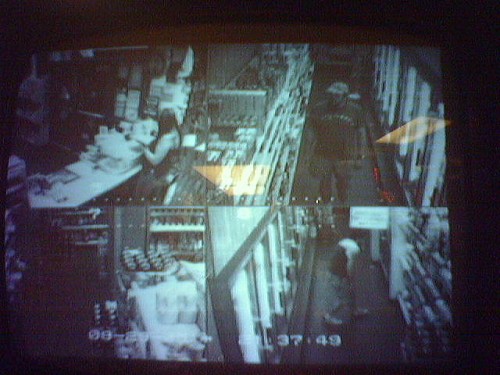
Earlier this week, the New York Times ran yet another hilariously digital dualist piece on a new surveillance system that lets retailers follow customers’ every move. The systems, mainly through cameras tied into motion capture software, can detect how long you stared at a pair of jeans, or even the grossed-out face you made at this year’s crop of creepy, hyper-sexualized Halloween costumes. The New York Times describes this as an attempt by brick and mortar stores to compete with data-wealthy “e-commerce sites.” (Who says “e-commerce” anymore? Seriously, change your style guide.) Putting aside the fact that most major retailers are also major online retailers, making the implicit distinction in the article almost meaningless, the article completely misses the most important (and disturbing) part of the story: our built environment will be tuned to never-before-seen degrees of precision. We have absolutely no idea what such meticulously built spaces will do to our psyches. more...

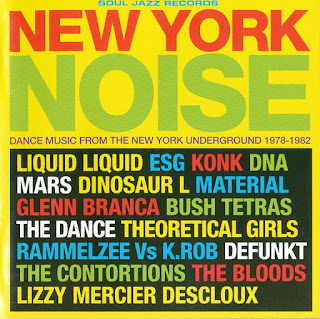
The idea that technology and techno-scientific urbanization/development is making life more noisy is not new. Luigi Russolo wrote about this in his famous futurist manifesto The Art of Noise. “In antiquity,” he argues, “life was nothing but silence. Noise was not really born before the 19th century, with the advent of machinery. Today noise reigns supreme over human sensibility” (4). Russolo’s manifesto was written in 1913. “ON IT” like usual, The New York Times published a couple of stories about it last week.

Not all of NYC’s noise was bad.

While it’s certainly not news that cities are noisy, the Times article does suggest that the politics of urban noise have changed significantly since Russolo’s time. Urban noise works (or produces political effects) differently because it is understood differently–it’s not industrial and machinic, but post-industrial and affective. more...

Moocs

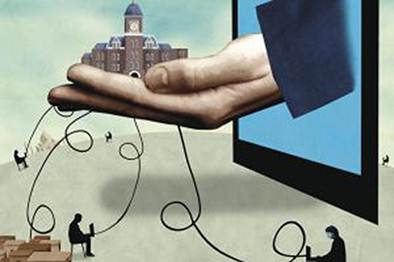
MOOCs: Massive Open Online Courses.  These generally free, multi-thousand student, online college courses, come in a variety of forms (typically differentiated as xMOOCs and cMOOCs), and have become the fertile ground for debates about the future of higher education. Such debates exploded last week when the San Jose State University (SJSU) Philosophy Department published an open letter to Dr. Michael Sandel, explaining to the the Harvard University Professor why they refused to enter into a contract that requires them to incorporate his MOOC on Justice into their curriculum.

The letter from SJSU and the formal and informal responses to it, highlight key tensions expressed by the academic community with regard to MOOCs. The letter itself captures many larger concerns, as professors worry about prioritization of the ‘bottom line,’ lack of interactivity, loss of professorial autonomy, and the perpetuation of class/power/resource hierarchies as students at a few select schools engage in a rich classroom environment, while everyone else views educational videos that were made for someone else, do not account for their needs, and do not incorporate their voices or experiences. The following is an excerpt from the original letter: more...

blogging

In this post I attempt to tackle a complex but increasingly important question: Should writers cite blog posts in formal academic writing (i.e. journal articles and books)? Unfortunately, rather than actually tackle this question, I find myself running sporadically around it. At best, I bump into the question a few times, but never come close to pinning down an answer.

To begin with full disclosure: I cite blog posts in my own formal academic writing. But not just any blog posts. I am highly discriminate in what I cite, but my discriminations are not of the cleanly methodical type which can be written, shared, and handed out as even a suggested guide.  Mostly, I cite Cyborgology and a select few blogs that I know really really well. I have done so in my last three formally published works (two of which are Encyclopedia entries), and successfully suggested blog posts to others via peer-review. When pressed for a rationale (as I have been in conversations with colleagues), I less-than-confidently ramble something like Well I mean, I know these bloggers to be good theorists, and I find their work useful for my own. Some of their work is published only in blog form, and I need those ideas to build my argument. I also don’t want to ignore something good that I know is out there. But I mean, I know there are other good things out there that I don’t know about, or don’t know enough to trust. And I know I’ve written bad ideas on Cyborgology, or ideas that I further developed later, so I guess quality is not a sure thing, but reviewers and editors have accepted it so…[insert sheepish grin].   more...

Below is a partial transcript of the introductory remarks I gave at the Technoscience as Activism Conference held in Troy, New York and hosted by Rensselaer Polytechnic Institute from June 26-28, 2012. The conference was funded by the NSF’s GK-12 Fellowship Program

I almost never read my presentations but we’re short on time and there’s a lot of stuff that I want to share with you and I don’t want to miss anything. Publicly reading an apology for reading in public is an apt metaphor for what this conference is about, or more precisely what it is a response to. When I approached Dr. Ron Eglash about putting on this conference I told him I only wanted to do it if I could make the conference reflect the kind of politics espoused in the presentations. I don’t want to invite a bunch of brilliant people to Troy, who want to talk about democratizing science and technology, and keep them in a single room all day. Troy should benefit from some of your unique experiences, and the people of Troy have done some amazing things that I think the visitors will enjoy and appreciate. more...

Before Zuccotti, before UC Davis, there was the G8 Summit in Seattle, 1999. Image c/o Wikimedia Commons

I am really pleased to see academics tackling the problems of ineffective activism and capitalist oppression. Overcoming such large and complicated problems means trying out every tool in the tool shed. That is why Levi R. Bryant’s “McKenzie Wark: How Do You Occupy an Abstraction?” is so important. It is one of many efforts by academics to apply their reasoning to an active social movement. His recommendations are quite brazen. Bryant writes: “You want to topple the 1% and get their attention?  Don’t stand in front of Wall Street and bitch at bankers and brokers, occupy a highway.  Hack a satellite and shut down communications.  Block a port.  Erase data banks, etc.  Block the arteries; block the paths that this hyperobject requires to sustain itself.” The ends that Bryant suggests are intriguing. They certainly demand bigger and better things from the Occupy movement, but the means by which he reaches these conclusions are severely problematic. I think they neglect to consider the full effects of such actions and I attribute this oversight to his choice of analytic tools: object-oriented ontologies, new materialism, and actor network theory.

more...

This is the complete version of a three-part essay that I posted in May, June, and July of this year:
Part I: Distributed Agency and the Myth of Autonomy
Part II: Disclosure (Damned If You Do, Damned If You Don’t)
Part III: Documentary Consciousness

Privacy is not dead, but it does need to change.

Part I: Distributed Agency and the Myth of Autonomy

Last spring at TtW2012, a panel titled “Logging off and Disconnection” considered how and why some people choose to restrict (or even terminate) their participation in digital social life—and in doing so raised the question, is it truly possible to log off? Taken together, the four talks by Jenny Davis (@Jup83), Jessica Roberts (@jessyrob), Laura Portwood-Stacer (@lportwoodstacer), and Jessica Vitak (@jvitak) suggested that, while most people express some degree of ambivalence about social media and other digital social technologies, the majority of digital social technology users find the burdens and anxieties of participating in digital social life to be vastly preferable to the burdens and anxieties that accompany not participating. The implied answer is therefore NO: though whether to use social media and digital social technologies remains a choice (in theory), the choice not to use these technologies is no longer a practicable option for number of people.

In this essay, I first extend the “logging off” argument by considering that it may be technically impossible for anyone, even social media rejecters and abstainers, to disconnect completely from social media and other digital social technologies (to which I will refer throughout simply as ‘digital social technologies’). Consequently, decisions about our presence and participation in digital social life are made not only by us, but also by an expanding network of others. I then examine two prevailing privacy discourses—one championed by journalists and bloggers, the other championed by digital technology companies—to show that, although our connections to digital social technology are out of our hands, we still conceptualize privacy as a matter of individual choice and control. Clinging to the myth of individual autonomy, however, leads us to think about privacy in ways that mask both structural inequality and larger issues of power. Finally, I argue that the reality of inescapable connection and the impossible demands of prevailing privacy discourses have together resulted in what I term documentary consciousness, or the abstracted and internalized reproduction of others’ documentary vision. Documentary consciousness demands impossible disciplinary projects, and as such brings with it a gnawing disquietude; it is not uniformly distributed, but rests most heavily on those for whom (in the words of Foucault) “visibility is a trap.” I close by calling for new ways of thinking about both privacy and autonomy that more accurately reflect the ways power and identity intersect in augmented societies. more...