sport

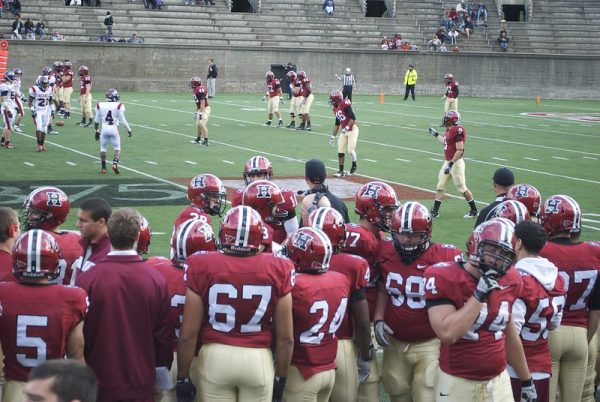
Harvard vs. Bucknell football game. Photo by Yzukerman, Flickr CC

There is no shortage of writing on the history of college sports, especially its history of scandal. There is also plenty of writing on how big-time college sports harm both the colleges and their athletes. Books as varied as Pay for Play: A History of Big-Time College Athletic Reform, College Sports Inc.: The Athletic Department vs. The University and College Athletes for Hire: The Evolution and Legacy of the NCAA’s Amateur Myth highlight the rise of the NCAA through and because of scandal, the enormous amounts of money flowing through college athletic departments (but not to players), and the contortions of universities to fit big-time athletics.

But athletics matter even in schools defined by their academics rather than their sports. Documents from the recent Harvard affirmative action legal case confirm prior research: even at the Ivies and at coed liberal arts colleges, athletes receive a substantial admissions bump. Articles from The Atlantic and Slate detail this bump and how it especially benefits upper-class white students. At Ivies and elite liberal arts colleges, the potential financial gain from athletics (as suspect as that might be at other schools) doesn’t make sense as the primary reason to keep sports in these schools. So what are some other reasons that American higher education institutions prioritize athletics? Here are three that sociological thinking and research can help us understand.

1.Status Networks and Peer Institutions

First, athletics helps schools signal who their peers are, both academically and athletically. Higher education in the United States didn’t develop from a master plan. It is, instead, a network and market of schools that jockey for position, carving out niches and constantly battling for status. Athletic conferences are one way that institutions establish networks, and research has found that schools within conferences come to share similar status, both athletically and academically. The Ivy League is the prime example of this phenomenon. Although “the Ivies” have come to mean a set of elite schools, the league began as simply a commitment to compete against each other on the athletic playing field. 

2. Competing for Students

Another way that colleges signal prestige is through established ranking systems, and a key part of those rankings come from measures of selectivity and the quality undergraduate students. So all colleges are competing for students — either to solidify rankings or to simply matriculate enough students for small, tuition-dependent institutions to be able to pay the bills. In Creating a Class, Mitchell Stevens points out how important athletics are to recruiting students within the competitive, small liberal arts space. He writes,

“Students choose schools for multiple reasons, and the ability to participate in a particular sport at a competitive level of play is often an important one. Because so many talented students also are serious athletes, colleges eager to admit students with top academic credentials are obliged to maintain at least passable teams and to support them with competitive facilities.”

3. Non-academic Signals in Admissions

Histories of Ivy League admissions have revealed how including athletic markers was part of establishing who belonged at the school. On the most obvious level, prominent alumni who were athletes or the parents of prospective students publicly pushed for admissions policies that would be beneficial to others like them. But more subtly, and more insidiously, having an affinity for athletics was viewed as a mark of the “Yale man,” the upper-class, Christian, future leader of the world who had the presence of mind and body to pick up new ideas and manage others. 

Athletics in colleges isn’t just a money-maker or something to keep students happy. It’s a way for colleges to recruit students, fight for status, and signal what types of students they value.

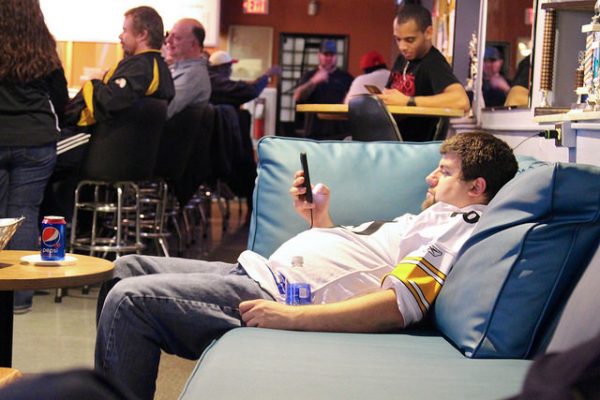
Photo of cricket players in white uniforms holding their arms in the air to signal for an appeal
Players appeal for a wicket. Photo by Nic Redhead, Wikimedia Commons CC

“Howzat?”
“Kaaaaach it!”
“Bowled ‘im!”
“Wadda wrong’un!”

Americans may scratch their heads at these expressions, but a large body of international sports fans relishes those words. England and Wales are currently hosting the Cricket World Cup, the 12th edition of the tournament that began in 1975; ten national teams who have made it past qualifiers are slogging it out to lift the trophy. Social scientists around the world have studied cricket — as with many sports, a social science perspective on cricket shows that the pitch and stumps reside at a complex intersection of globalization, postcolonialism, boundaries, and identity.

Cricket is a global sport based on institutional and organizational processes as well as broader patterns of cultural and national identity. The centuries-old sport started in the United Kingdom and has since spread into a worldwide, modernized phenomenon, complete with fireworks, cheerleaders, and sophisticated analytics. An international network of cricketing organizations, athletes, broadcasting companies, sponsors, and state actors bring the game to its large, global audience.
In several countries, cricket’s growth has been shaped by the dilemmas, challenges, and sticky wickets of decolonization. In these countries, cricket has played an important role in building new cultural and national identities; social scientists explain that the popularization of cricket is both a cause and consequence of broader change. South Asian nations today are key players and decision-makers in the international cricketing world, which reverse-sweeps conventional logic that white countries hold greater global power.
The cricket field can also tell us a lot about race, belonging, and hierarchy. A classic in the social science of sport, C.L.R. James’ Beyond the Boundary uses his tales playing cricket to highlight status, exclusion, prejudice, and inequality within a social world shaped by racism, colonialism, and resistance. For example, he describes how team selection in cricket was shaped by skin-color rather than skill. Today, James’ ideas still influence scholars who study cricket as relevant to race, group boundaries, and social movements. Some researchers have studied anti-racist activism and the pursuit of equitable cricket representation in countries grappling with racial inequality. Others have shown that cricket offers an avenue of legitimization for marginalized and underrepresented groups in such nations.

Unfortunately, many issues of exclusion and marginalization still exist in the cricketing world today, both within and across different nations. As cricket continues to grow, globalize, and gather, such issues will hopefully be firmly driven outta here from the middle of the bat.

For an explanation of cricket terms, visit this ESPN glossary.

Photo of a Steelers fan watching the Superbowl from a couch. Photo by daveynin, Flickr CC

Each year we are reminded of research on how many calories the average American eats on Super Bowl Sunday (hint: it’s more than Thanksgiving). Other research finds that fans of NFL teams that lose eat more saturated fat the next day than fans of teams that win. News outlets ranging from Men’s Health to Runner’s World to Healthy Women publish guides on how to stay healthy on game day. But sitting on the couch isn’t the only activity that is linked to both sports and food. As plan your healthy (or unhealthy) Super Bowl weekend, take a look at the research on how athletics can affect the eating habits of athletes ranging from body builders to youth basketball players.

Among female athletes, eating disorders are a prevalent issue. However, the research on whether female athletes are significantly different from their non-athlete peers regarding prevalence of eating disorders is mixed. Sport-specific factors such as performance pressure contribute to disordered eating, especially in sports that encourage leanness. The combination of disordered eating, amenorrhea, and osteoporosis is called the “female athlete triad.”
Male athletes are not immune from concerns over eating. Wrestlers may be at particular risk of disordered eating due to the intense emphasis on weight. Other sports encourage weight gain, and specific positions, such as linemen in American football, often achieve weight gain through stomach fat that puts them at risk for health complications like diabetes and cardiovascular disease. Athletes and non-athletes may turn to steroid use to achieve a more muscular body, which can include intense cycles of 6,000+ calories per day followed by weeks of a stringent, low-calorie diet.
Proponents of youth sports expect that these activities instill healthy food and exercise habits. However, one study found that many youth sports events provide participants with unhealthy food and lack healthier options. Although youth involved in sports are more likely to eat fruits, vegetables, and milk than those not involved in sports, they also consume more calories overall and are more likely to eat fast food and drink sugar-sweetened beverages. Parents and organizers of youth activities need to be aware of the food options and information available to young athletes in order to make youth athletics a net positive in the health of children.

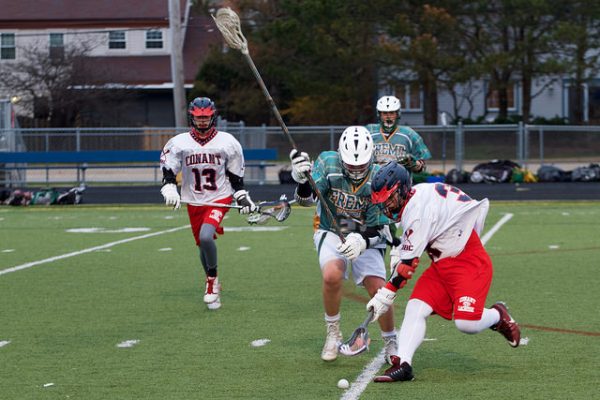
Photo of two high school lacrosse players fighting for the ball. Photo by H. Michael Miley, Flickr CC

During his Supreme Court confirmation hearings, Brett Kavanaugh repeatedly referred to his experiences in high school and high school athletics in ways that depicted sports as wholesome and beneficial for youth. While not denying the benefits of sports, sociological research highlights the detrimental impacts of athletic involvement as well. And in contrast to Kavanaugh’s characterizations, this research shows that athletic participation is often associated with substance use and abuse, violence, and risk-taking among boys and young men in the United States.

The connection between athletic involvement and alcohol use is well-established through research, and the connection is especially pronounced for white male athletes at the top of their peer status hierarchy. Ironically, being high-status in high school drives both alcohol use and some of the protective features of sports, like connection to school and higher grades. Nationally representative surveys have also demonstrated that involvement in organized sports is associated with binge drinking in college, and that binge drinking continues after actual athletic participation ends. Recent work on drug use indicates that male athletes are more likely to be prescribed opioids, accidentally overdose, and have used opioids recreationally than non-athletes or female athletes.
Classics in the field of sport sociology discuss the “Triad of Violence” that is taught through sports: 1) violence against women, 2) violence against others, and 3) violence against the self. For example, male athletes learn to play through pain and to talk about (heterosexual) sex as a conquest. More recent research continues to find links between sports and violent behavior, especially for contact sports. Since risk-taking is central to both the meaning of sport and the meaning of masculinity, it is not surprising that male athletes are more likely to engage in a variety of “risk-taking” behaviors, from drunk driving to unprotected sex.


For other work on how masculinity norms in sport link to sexuality and race, see here!

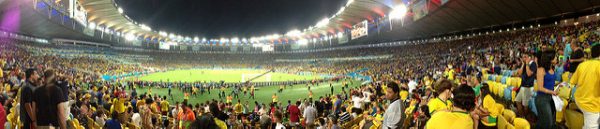
Photo by Rodrigo Soldon Souza, Flickr CC

The FIFA World Cup is in full swing in Russia, and fans from all over the world have been traveling or tuning in to catch their favorite teams and players. The World Cup may seem like fun and games, but for social scientists all over the world, soccer — or “football,” as most of the world calls it — is Exhibit A in the argument that sport and its mega-events are a powerful social force on the world stage.
Sport elites and enthusiasts often celebrate the positive, community-building dimensions of soccer’s social power, highlighting soccer’s role in building national unity and fostering international cooperation. Across various geographic boundaries and historical periods, soccer can and often does bring people together through shared traditions, social networks, and goals. International sports can even shape international politics and diplomacy.
As TSP co-Publisher Doug Hartmann has insisted for years however, even as sport builds community and social connections, it simultaneously crates differences and distinctions, some of which can lead to conflict or inequality. Global soccer exhibits these social dynamics as well. For example, the popularity of sports and competition in many parts of the world can be connected to historical processes of colonialism and imperialism. Another common theme in the social scientist’s playbook is the racism and violence that so often accompanies soccer in both national and international settings.

All this might help explain why some scholars have been cautious and critical of the Russian World Cup, such as Jules Boykoff, who warns against the presence of bigotry and ultranationalism in an op-ed with the LA Times. The complicated intersections of sport, power, and race means that there are times when it’s not all fun and games.


For more, check out this NBC Think article on “sportwashing”– using mega-sports events to elevate a country or politician’s reputation and distract from their negative human-rights records.

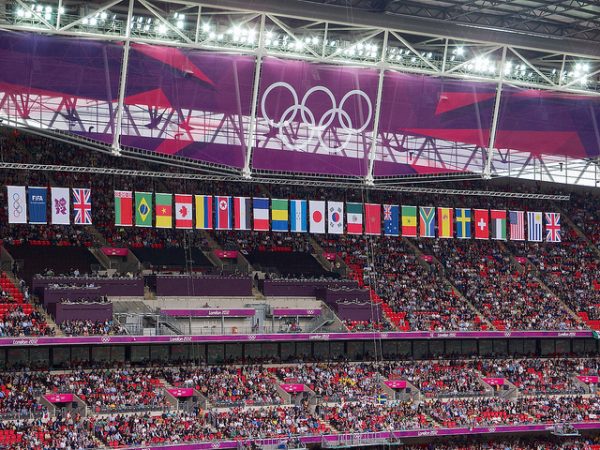
Photo by Paul Hudson, Flickr CC

For many across the globe, the Olympics is a chance to celebrate a shared human connection, athletic achievement, and national pride. The Olympic Charter claims the Games encourage friendship, cross-cultural understanding, and world peace, but to do so the games must be free of politics. The Olympics present an opportunity to cross divisive diplomatic lines, like the temporary calming of tensions between North and South Korea. But these ideals may be overly optimistic as these global events have real political effects.

Historically, only the economic and social elite participated in the Olympics, so other versions like the Worker’s Games countered the Olympic Games in the early 1900s. In addition, the Olympics themselves have become a space to challenge the status quo. Protests, or lack thereof, can challenge or reinforce global norms.
Sporting events like the Olympics may allow nations to compete with each other without the consequences of war. Non-violent competition is even more important in the modern world, where technology allows for increasingly lethal methods of warfare. This may be one reason nations financially invest in producing elite athletes and could be behind recent controversies, like the Russian doping scandal.
Though intended to be apolitical, nations may attempt to use the Olympics to sway global public opinion. Foreign policy officials report that political rebranding was a key reason to host the games. Modern media channels make this motivation even more powerful than in decades past, as nations know that the Olympics will have extensive global coverage.


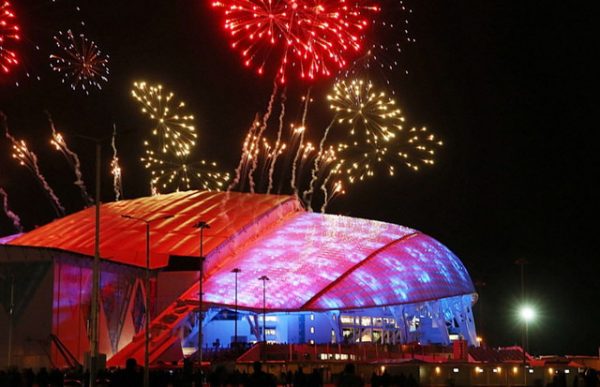
Photo by Sam Churchill, Flickr CC

Large-scale sporting events, including the Winter Olympics and the Super Bowl, are in the international spotlight this winter. These mega-events are often heralded for promoting economic mobility and social cohesion, and cities across the world bid for events like the Olympics to cement their identities as world-class cities. For sociologists, these events also highlight how inequality operates in urban spaces.

Under the assumption that stadium construction promotes local growth, many cities rely on both tax subsidies from their local populace along with private investment. Financial investors tout the unprecedented trend of stadium-building in the past decades as opportunities for job growth, tourism, and other revenue boosts. However, much research suggests that stadiums and major sport events do not have broad economic benefits for their host cities, as benefits tend to be distributed unequally along racial and class lines. While local resistance has grown substantially in recent years, resource-laden investing firms and political coalitions that advocate for such projects are largely successful at squelching these efforts.
The role of sporting events in perpetuating inequality demonstrates how the geography of urban space reflects a deepening divide between the “haves” and “have nots.” For example, sociologists demonstrate that cities often implement policies and practices that criminalize and punish behaviors of homeless individuals in public spaces. Other studies indicate that sporting events in the United States, especially the Super Bowl, contribute to the militarization and surveillance of public space in the post-9/11 era.

So, as we watch these sporting spectacles from our television screens, see them up close (if we’re lucky), or experience the negative consequences outlined above (if we’re not), it is important to be aware of how these events are manifestations of both society’s triumphs and social ills.

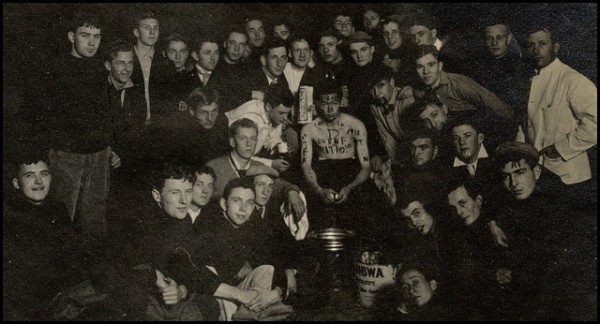
Hazing at the University of Michigan in 1907. Photo via VasenkaPhotography, Flickr CC.

Hazing has been in the news a lot recently. It exists across a variety of settings, including sports and the military.

Why does hazing occur? Some research discusses the function of hazing as rites of passage or as an expression of group solidarity. Hazing can bring members together, validate one another in the group’s eyes, symbolize transition into group membership, bolster group cohesion, and create group conformity within particular hierarchies.
Research on insider’s attitudes towards hazing highlights interesting dynamics within organizations. Individual members often have negative thoughts about hazing, but individuals are unlikely to protest the practice in-group settings. Power dynamics within those groups normalize hazing and silence opposition to it.
The research suggests that hazing takes on a particular character within Greek Letter Organizations (GLOs). In fraternities, for example, where membership and group identity are constructed around ideas of the “all-male” group, hazing can serve as a validation of masculinity and a suppression of femininity. In addition, in GLOs that have been historically raced, hazing can express racial identities, in-group unity, and belonging.

Fantasy sports have gained coverage as a sport of their own.

You’ve probably seen more than an ad or two this fall for DraftKings or FanDuel, two massive online fantasy sports websites valued at over $1 billion each. Since 2009, the number of fantasy sports players has doubled, and, as of August, 56.8 million participated in the United States and Canada (according to the Fantasy Sports Trade Association). It’s not all fun and games, though. The New York Attorney general launched an investigation into these sites, and a recent feature in The New York Times highlights how deep the rabbit hole goes for illegal online gambling on fantasy sports. It is easy to focus on scandalous stories of crime rings, big winnings, and crushing losses, but these sites are not just about gaming the system. Sociologists emphasize that they are also powerful social communities driven by cultures of masculinity and fandom.

Eric Leifer argues that the history of sports fandom in the U.S. is place- and team-based—fans supported the team in their town or region as a marker of community membership. Fantasy leagues and social media challenged this by shifting the focus from entire teams to individual athletes’ performance.
Sociologists, especially, focus on the racialized and gendered nature of sport-based communities. Members often forge strong social ties in male-dominated spaces that emphasize knowledge and expertise, and the groups can privilege racial stereotypes and racialized assumptions about athletic performance.
Fantasy sites (and the betting that ensues on them) are in line with other case studies that show how online socialization is not “less real” or consequential than offline social interaction—both teach everything from harmless play to deviant behavior. We see the power of online interaction in everything from hackers developing their own open-source political theory to online peers teaching others how to download music for free and sport message boards reinforcing racial stereotypes.
Of course, gambling is tied up in these social structures. While American society has “medicalized” compulsive gambling, treating it as an individual and treatable problem, more recent work shows how social environments create what gamblers want most: a chance to be in the “zone” and play for long periods of time. The strong communal aspect of fantasy sports websites makes them a perfect space for sustained play.

With more video evidence released of Ray Rice assaulting his fiancée (now wife), Janay Palmer, in a New Jersey Casino elevator, the media has been buzzing over Rice’s release from the Baltimore Ravens and indefinite suspension from participation in the NFL. Rice was originally suspended for two games, but the public felt this punishment didn’t fit the crime, especially since other players had been suspended entire seasons for smoking marijuana. After the backlash over the disproportionate sentencing handed out by league President Roger Goodell and the NFL, the league altered its policies towards domestic assault conduct. From Michael Vick’s dogfighting scandal to the relatively recent Aaron Hernandez debacle, the NFL has been under heavy scrutiny over the conduct of its players. How do these big organizations handle such scandals?

Comparisons of arrest rates in the NFL and the general population show that players often have lower rates that the national average for all offenses, including domestic violence. The “NFL criminality myth” is perpetuated when sport is interpreted through a “white lens,” and parallels that of general stereotypes about blacks as crime prone.
Within the NFL, arrests for domestic violence are higher than any other crime, unlike the general population where arrests are higher for other offenses. Few players are successfully prosecuted in the courts for domestic assault, though, and they rarely face sanctions on their eligibility to play.
There is widespread agreement among the general population about which crimes are severe, and what constitutes a just punishment for those crimes (although demographics and victim/offender characteristics modify these effects slightly).  The original punishment handed down to Ray Rice did not fit into our collective conceptions of morality and justice, and public outrage is one symptom of that mismatch.
Sociologists know that when an organization’s reputation and integrity is threatened, they often attempt to fix things by distancing themselves from the problem or the perpetrator (disassociation), and/or implementing policies that attempt corrective action. Sometimes these actions are just symbolic gestures, but sometimes they also show real institutional change. In this case the NFL seems to be following the script!