protest

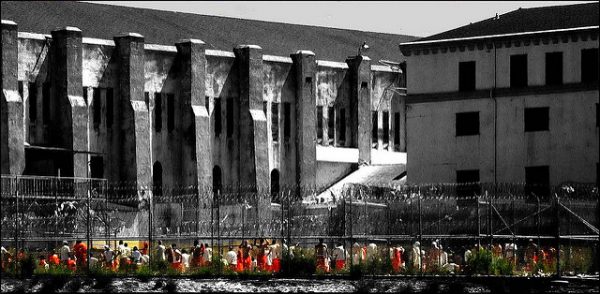
San Quentin State Prison, California. Photo by telmo32, Flickr CC

This past August, the Incarcerated Workers Organizing Committee, a labor union for prisoners, began a nationwide strike to protest against inhumane conditions, the use of solitary confinement, and precarious work in U.S prisons. Fighting prison conditions and labor precarity has been a long-standing struggle for prisoners in the United States and around the world, and social science research explains the dynamics underlying this struggle.

As ‘total institutions” prisons provide poor substitutes of basic needs, or limited access to basic items, services, and comforts like hygiene items, clean clothing, nutritious food, education, and health care services.  Consequently, prisons end up depriving inmates of their wellbeing, autonomy, sense of self-worth, and control over their fates. In the United States, the indignities of prison conditions range from major maltreatments, such as the abuse of long-term solitary confinement, to minor cruelties, such as restricting the use of showers and toilet paper (imagine being limited to just one roll per month), in overcrowded facilities.
The specific conditions of prison labor reflect long-standing contradictions. On the one hand, social science evidence suggests that providing jobs to inmates has a positive effect and can reduce their involvement in future crime activities. On the other hand, prison labor has also led to abuse and exploitation. Correctional facilities use prison labor to serve private industries, to perform cleaning and maintenance functions within facilities, or even to repair public water tanks and fight wildfires. Prison labor has also served as an instrument of economic policy in the labor market. In the 1990s, for example, rates of unemployment declined when a massive number of able-bodied working age men went to U.S. prisons.

Imprisonment often has devastating consequences for inmates, their families, communities, and society at large. Even though certain policies like prison labor may involve potential benefits, their positive effects only occur when there is a genuine effort to achieve inmates’ social inclusion. Inmates’ struggles to achieve effective changes in their living conditions therefore require sustained and special attention from the public and policy makers.
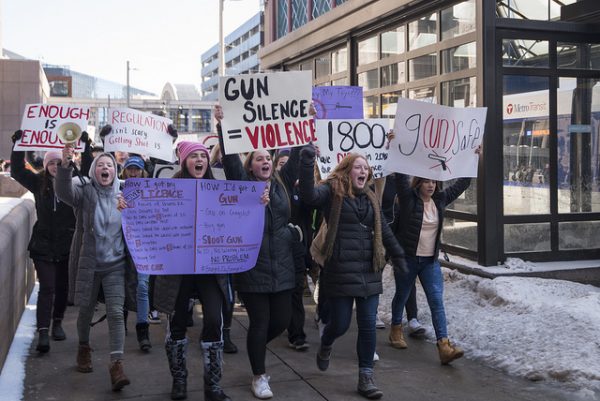

Minneapolis High School Students Protest for Gun Law Reform. Photo by Fibonacci Blue, Flickr CC

“They say…That us kids don’t know what we’re talking about, that we’re too young to understand how the government works. We call BS.” –Emma Gonzalez

Many of us are still reeling over the killing of 17 students at Marjory Stoneman Douglas High School in Florida nearly three weeks ago. Since then, lawmakers, advocates, and concerned citizens have called for stricter US gun control laws — particularly for assault weapons. Those spearheading the current movement are the teenage survivors of the shooting like Emma Gonzalez and Cameron Kasky. Students around the country are joining their peers in Parkland, Florida for the first annual March for Our Lives rally later this month. From the Freedom Riders and 1960s anti-war protesters to Black Lives Matter and Me Too, youth have played a vital role in shaping social movements. Sociological studies on social movements and young people’s mobilization help us understand the energies behind their activism.

School environments, social networks, and families influence youth civic participation in activities such as volunteering, voting, and engaging in political protest. Campus life, for example, fosters political action by exposing students to an array of social issues, allowing them to congregate in nearby locations, introducing youth to new social networks, and provide the free time necessary to organize. Families where parents were highly politically-involved may also increase youth likelihood of participating in political action. At the same time, parents may serve as a hindrance for some youth, as young women and girls may be more likely to experience parental opposition to their political activism.
Attention to youth activism raises questions about the effectiveness of political protest more generally. Recalling the 1960 Black student-led sit-in during the Civil Rights movement, one study found that southern cities with sit-ins were more likely to desegregate lunch counters in the months following protest. These social movement successes are often the product of effective framing strategies that depict certain social problems as moral injustices.  Moral frames often include identifying victims, blaming those responsible for their victimization, and calling individuals to act against the injustice. Different from prior waves of activism, however, newer generations can utilize social media to transmit moral frames to the broader public. Youth of color, for example, have used profile picture changes, comics, memes, and hashtags to garner support against police brutality and anti-immigration policies.
Photo by Elvert Barnes, Flickr CC

“They use their media to assassinate real news…all to make them march, make them protest, make them scream racism, and sexism, and xenophobia, and homophobia. To smash windows, burn cars, shut down interstates and airports, bully and terrorize the law abiding, until the only option left is for the police to do their jobs and stop the madness.”

Last month, NRA spokesperson Dana Loesch spoke these words in a new video campaign targeting progressive political protesters. The ad features black and white media footage of protest signs with the words “RESIST” and shows protesters looting, breaking windows, and starting fires in the street. Loesch and the NRA have since received widespread criticism for the advertisement’s seemingly pro-violence rhetoric, even evoking a video response from BlackLivesMatter. While the NRA maintains that the advertisement is not intended to encourage violence against progressive political protest, the black and white imagery depicting protesters as criminals is eerily reminiscent of political campaigns (e.g. the civil rights movement of the 1960s and 70s) that used political action as a call for criminalization and law and order.

In times of spiraling economic instability, political divisiveness, and social inequality — such as the Great Depression or the Civil Rights Movement, the result is often public unrest and widespread protest. In order to quell state criticisms, elite political actors on both sides of the political spectrum develop campaigns that heighten public anxiety of crime by conflating political dissent with criminal activity. President Nixon, for example, ran on a campaign of “law and order” and called himself part of the “silent majority” on this issue. Regardless of actual fluctuations in crime rates, the public often accepts these messages of criminalization and tough on crime policies. This law and order rhetoric then legitimizes police and military aggressive surveillance – and at times, physical confrontation – against protesters.
We can link the current tide of mass incarceration to these types of campaigns in the 1960s and ’70s. Though the Johnson administration is lauded for taking important legislative steps in welfare reform, Elizabeth Hinton’s recent work argues that the administration simultaneously developed legislation, like the Law Enforcement Assistance Act (LEAA), that expanded police control through federal funding and toughened criminal sanctions amid a time of sit-ins, boycotts, and marches by (young) black advocates against Jim Crow practices. The Johnson administration helped create the “War on Crime,” and their political rhetoric rested upon the notions of black urban pathology and individual (as opposed to structural) economic failure.
Photo by Mobilus In Mobili, Flickr CC

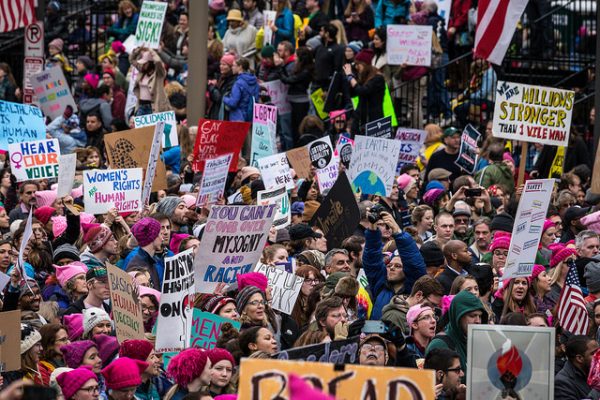
In one of the largest days of protest in recent history, the Women’s March on Washington and its sister marches drew millions of people out into the streets of major American cities to protest the inauguration of Donald Trump and to call for protecting the rights of women, immigrants, and other groups that are likely to be further marginalized by the Trump administration. A look at research on past women’s movements sheds light on the ways that gender shapes when and how women protest, and the important roles they have played in social movement history.

While some argue that women are too diverse to constitute an “issue group,” women’s social mobilization around issues of reproductive, labor, and voting rights has had an important impact on movement culture in the United States. In fact, women’s groups were some of the first to work outside of the existing political system by relying on changing public opinion, rather than voting, as a movement strategy.
But women have to contend with a social movement culture that is structured around already pervasive gender norms, which means that the strategies used by women’s movements, and women’s roles in social movements more generally, are in many ways reflective of existing gender norms. For example, women’s movements are more likely to rely on nonviolent strategies, like marches, and women are more likely to be recruited into movement groups to perform nonviolent, gendered tasks, such as canvassing or managing the movement’s social networks.
Though women are often relegated to the subordinate roles and more menial tasks of political organizing, research finds that these roles have been a key ingredient to social movement success. A historical analysis of the Civil Rights Movement in the U.S. reveals that African American women acted as “bridge leaders,” making the necessary connections between movement leaders and constituents that helped grow the movement. Women have also played a vital role in the U.S. environmental justice movement and drawn on their grievances and experiences as mothers to challenge pollution and toxic waste.


The success of the recent Women’s March is further evidence that when women mobilize, they can be a powerful force for change. 

Photo by blulaces. Click for original.
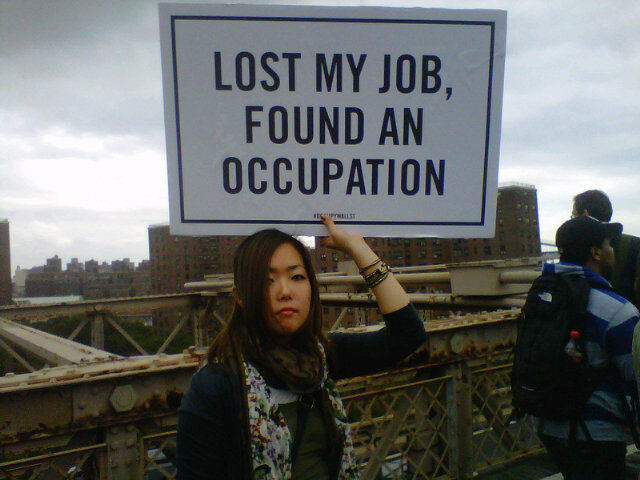
In addition to current labor activism, movements for economic justice have also emerged from students, retirees, consumers, and other communities outside traditional unions and leftist political parties. Today’s mass movements range from the Indignados movement in Spain to Occupy in the U.S. to anti-austerity protests in Greece to massive student demonstrations in Chile. Protestors are contesting the inevitability of privatization, cuts to public spending, and rising inequality, among other issues worldwide.

Read Part I (The U.S. & Inequality) and Part II (Global Labor).

The Rockefellers, powerful American industrialists with vast wealth built from the oil industry, are now ditching fossil fuels. According to an announcement from the Rockefeller Brother’s Fund, the organization has pledged to withdraw their investments from fossil fuels and instead invest in clean energy. Corporations and institutions respond to pressure when social norms shift and change, especially when it impacts their public image and the bottom line.

Corporations can be pressured to enact socially responsible behaviors through government policy, nonprofits, civil society groups, social movements, and internal culture and leadership.
Yet, this announcement may also represent a corporate public relations and greenwashing campaign that fails to address the underlying causes of climate change. Either way, the direct impact on energy industries may be less important than the symbolic impact of the gesture.
Image via Annette Burnhardt via Flickr Creative Commons

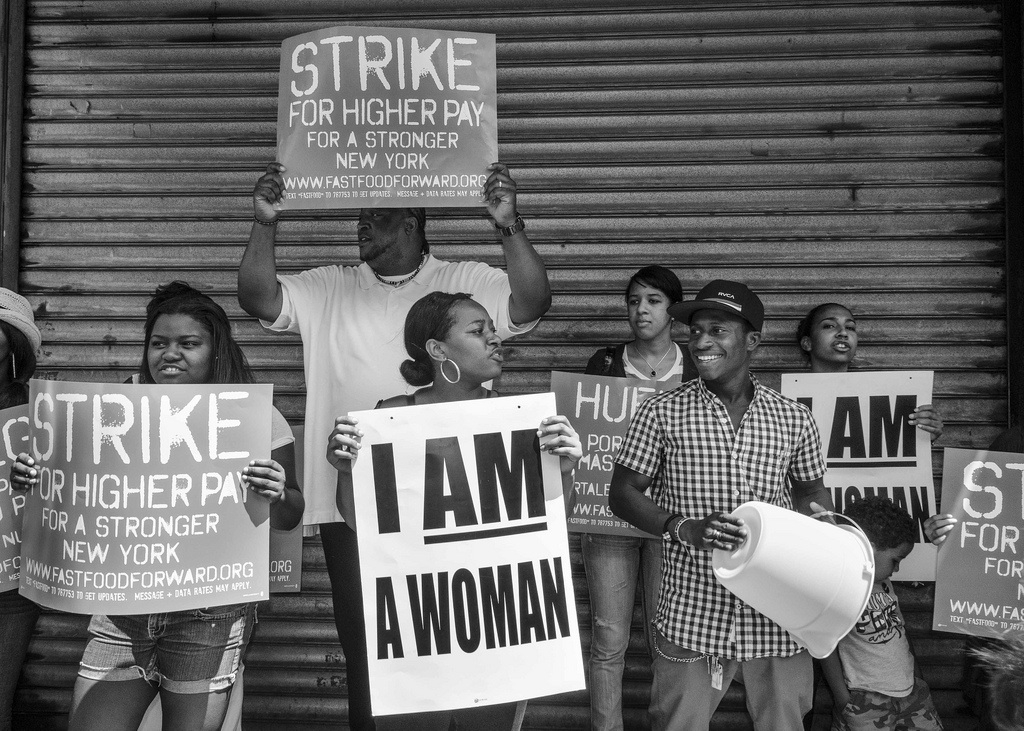
Flipping burgers at McDonald’s is the iconic dead-end job of the U.S. service economy with low-wages, few benefits and certainly no labor unions. But now a national movement of fast-food and other low-paid workers is growing and organizing to improve working conditions. In the past two years there have been seven national fast-food strikes, which reflect a broader resurgence in the U.S. labor movement and new forms of social mobilization from Occupy Wall Street to the Walmart Black Friday strikes. These recent protests have mobilized often marginalized communities in ways that question the service economy model based on cheap non-unionized labor.

Service work, and fast-food in particular, is a growing sector of employment that is indicative of larger trends in the U.S. economy towards contingent, temporary employment and low wages. Violations of workplace laws like mandatory overtime and minimum wage are part of corporate cost-cutting and common in low-wage industries, and unionization could help give workers power to resist these practices.
This revitalized labor movement is also mobilizing women, people of color and immigrants who were largely left out of the traditional craft and industrial unions.
Broader decline of unionization and decrease in the minimum wage has contributed to rising income inequality, and so attempts to organize low-wage workers could help all U.S. workers and reduce this inequality. Union membership provides a wage boost for workers, especially women, people of color and those with less education.

For more on the inclusive power of unions, check out this Girl w/Pen! post.

In the latest push against an FCC proposal that would create fee-based “fast lanes” on the Internet, a coalition of tech companies purposely slowed download speeds on their websites. The idea – to demonstrate to users how the new rules might slow traffic on non-paying sites – generated quite a stir: as of September 10th, the FCC received a record-breaking 1.4 million public comments on the proposal.

The coalition of protesting firms includes a roster of sites that rely heavily on user uploads: Mozilla, Etsy, PornHub, Kickstarter, Vimeo, and Reddit all voluntarily slowed traffic. Netflix also joined, displaying a message explaining to users “If there were Internet slow lanes, you’d still be waiting.” Tech giants Google and Twitter added their opposition as well. Protest organizers are asking the FCC to reclassify the Internet as a “Common Carrier” under Title II of the Telecommunications Act, thereby granting the government special regulatory powers designed to protect the web as a kind of public commons.

For most of us, the idea of a “commons” calls to mind a kind of protected natural resource, like the public lands that ecologist Garrett Hardin wrote about in his classic article, “Tragedy of the Commons.” The protesters, though, are asking the FCC to create a “commons” from a service that was built in-part by Internet service providers who now want to charge for speed. So, where might the government stake its claim on a proprietary public service? David Harvey and other social scientists have shown how and why capitalist societies engage in this kind of “commoning.”
The incredible outpouring of individual action in this protest owes a great deal to the organizing efforts of a number of large corporations, each with its own ideological and financial interests in the final ruling. What do you call a campaign that uses grassroots tactics, but takes cues from big business? “Astroturfing”, says Sociologist Edward Walker – and it’s more common than you might think.

The 1990s saw a surge in student activism surrounding labor issues, most prominently in campaigns against sweatshop labor for cheap clothing. College students around the country held sit-ins and rallies protesting companies like Nike and Gap that were in many ways credited with those companies improving their labor policies. Forever 21—a popular retail chain targeting youth and student shoppers—recently opened a new outlet with even cheaper clothes that has the media revisiting the 90s’ protests. According to an article in The New Yorker, “the grand opening of F21 Red, however, was marked not by picketers but by customers who lined up early for gift cards. What changed?” This question brings up a broader sociological question of how and why student and youth populations participate in activism, as well as how this might be changing.

The student activism in the 90s was not solely spurred by a common cause against sweatshop labor amongst students. Instead, this spike in activism was in many ways led and organized by already formed networks of labor activists that intentionally targeted students. Further, the successes were limited, and the movement did little to affect perceptions of cheap labor overall.
Activism and its outcomes are influenced by local and historical context. Sociologists have found that while today’s youth cohorts are participating in protests and other forms of traditional activism less than their parents, they are participating in alternative, more individualized forms of activism like petition signing and volunteering. They argue that what it means to be a “good citizen” is changing and that younger generations are driving this change.

Ukraine has faced turbulent times over the past few weeks. The current crisis began in November when President Yanukovych rejected financial stabilization talks with the European Union and instead took a bailout from Moscow. Weeks of protests have culminated in the deaths of many protesters and parliament ousting President Viktor Yanukovych, who has fled the capital in Kiev. Elections will likely occur in May, and Yulia Tymoshenko, leader of the 2004 Orange Revolution which toppled Yanukovych a decade ago, is a strong candidate.

While the media spins the protests as a pro-democracy and pro-EU push against a corrupt government, only 43% of Ukranians actually wanted the EU deal, and Yanukovych was actually acting in the favor of the majority. Ukraine has been deeply divided since its independence in 1991. In the country’s east, the majority speak Russian as their first language, where they also have historical and cultural links to Russia. In the west, the Ukrainian-speaking majority would rather see their country identify with Europe and the EU than with Russia.

The conflict in Ukraine is not just an isolated protest against the president or his decision, it may signal a much larger divide in national identity.
Protest events don’t come out of nowhere. They serve as “switchmen” in the development of social movements, existing within a broader context shaped by culture and history.

For more on how sociologists study these kinds of social movements, check out this TSP roundtable.