government

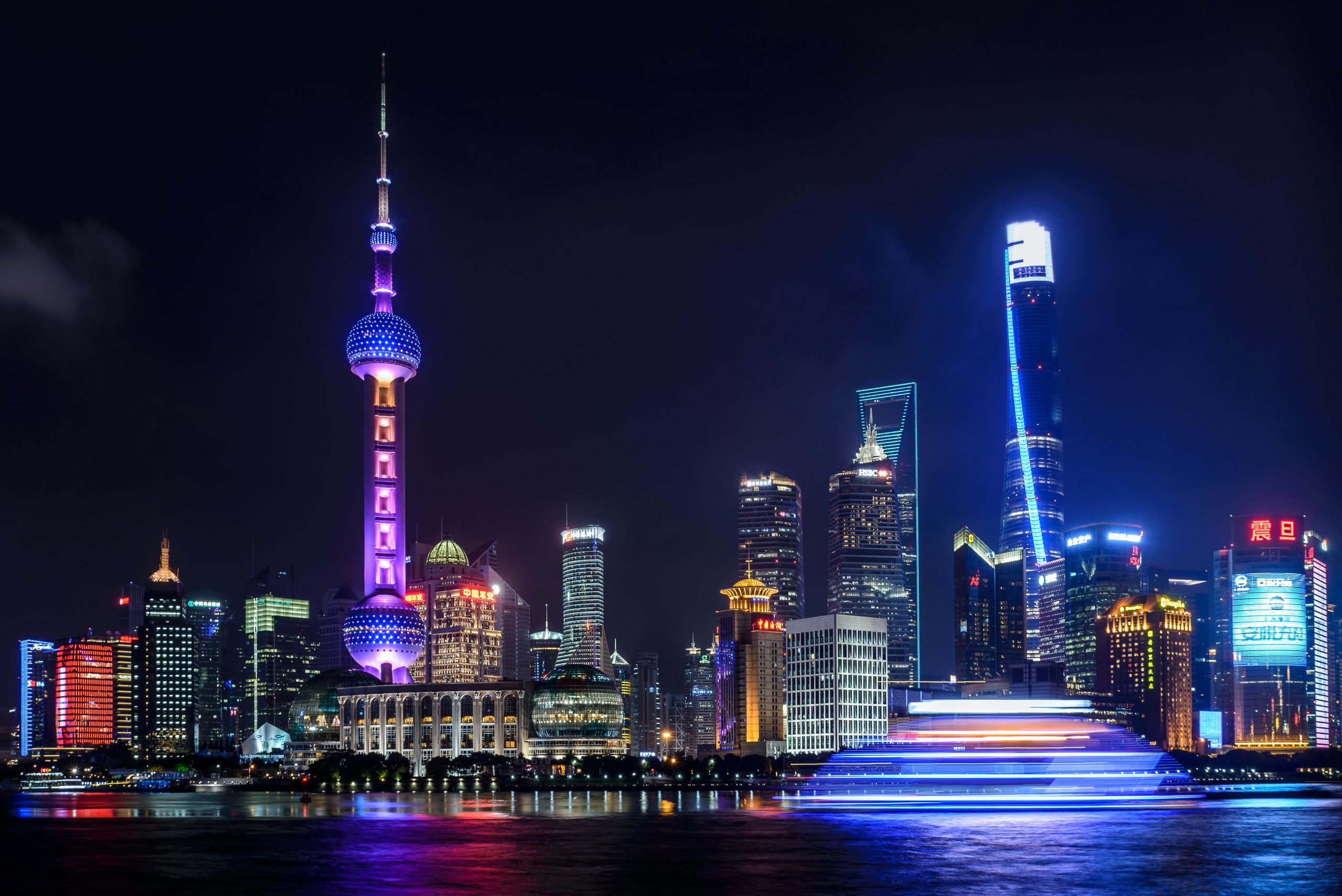
A large city at night, with colorful lights illuminating the cityscape. Photo by Wolfram from Pexels under Pexels license.

From Hollywood actors to community activists and literary writers, Asian Americans have been gaining increasing visibility on public platforms. However, given that Asian Americans come from over 20 ethnic and national groups, there is variety and diversity in history, language, culture, and experience that the umbrella term “Asian American” cannot encompass. Over time, in fact, Asian Americans have been lumped into a monolithic culture and stereotypes typically associated with East Asians, erasing the diversity that is a crucial part of Asian America. 

What does it mean to be “Asian American” in the United States? How are Asian Americans defying, redefining, and embracing this ambiguous and monolithic label? 

Immigration and Asian Americans

Asian Americans and their immigration to the United States have always been an important part of the history of the United States. Ethnic groups like Chinese and Japanese Americans have been around since the gold rush and sugarcane fields of Hawaii respectively. Other groups, especially Southeast Asian refugees, came to the United States as a result of colonialism and war. It is important to acknowledge how these different histories compose and have shaped Asian American identities, cultures, and communities.

  • Lee, Erika. 2015. “A Part and Apart: Asian American and Immigration History.” Journal of American Ethnic History 34(4):28–42. 
  • Lee, Erika. 2016. The Making of Asian America: A History. New York, NY: Simon & Schuster.

Panethnicity

Panethnicity refers to any collective identity built across ethnic boundaries and differences (Okamoto and Mora 2014). For Asian Americans, panethnicity was created as a political identity for activism and solidarity among Asian-origin peoples in the face of a deeply racialized United States. In more recent decades, “Asian American” has become an identity for Asian Americans to share in panethnic cultural histories, activities, and media. However, it has also become an identity forced upon Asian-origin peoples, where entities like the government group all Asian-origin ethnicities under this broad umbrella term to distinguish them from both White people and other people of color.

  • Lee, Jess. 2019. “Many dimensions of Asian American pan‐ethnicity.” Sociology Compass 13(12). 
  • Nakano, Dana Y. 2013. “An interlocking panethnicity: The negotiation of multiple identities among Asian American social movement leaders.” Sociological Perspectives 56(4):569-595.
  • Okamoto, Dina G. 2014. Redefining race: Asian American panethnicity and shifting ethnic boundaries. New York, NY: Russell Sage Foundation.
  • Okamoto, Dina, and G. Cristina Mora. 2014. “Panethnicity.” Annual Review of Sociology 40:219-239.Espiritu, Yen Le. 1992. Asian American panethnicity: Bridging institutions and identities. Philadelphia, PA: Temple University Press.

The Monolithic “Asian American” – Commonalities and Variations

In recent decades, “Asian American” as a panethnic category has also become a point of contention for people who are categorized and racialized as such. Many ethnic groups, like South Asian ethnic groups, feel unrepresented in an umbrella category that seems to predominantly reflect East Asian culture, values, experiences, and socio-cultural status. An example of this is the “model minority” stereotype, which upholds Asian Americans as hard-working and high achieving in comparison to other racial minority groups, and yet still inferior and a threat to White people (Kim 1999). However, the model minority is often in reference to East Asians (although depending on the context this can also include Asian Indians and Vietnamese), ignoring the disparities many Asian Americans like South and Southeast Asians experience.

As a result, there have been calls to disaggregate, or break down, Asian Americans by ethnic groups because of how this monolithic racial label camouflages the vast differences and inequities between Asian American groups. Examples include the income gaps between groups like Chinese Americans and Nepalese Americans, and even within ethnic groups, like Chinese Americans, there are vastly different and unequal experiences. 

  • Kibria, Nadia. 1998. “The contested meanings of ‘Asian American’: Racial dilemmas in the contemporary US.” Ethnic and Racial Studies 21(5), 939-958.
  • Lee, Jennifer, and Karthick Ramakrishnan. 2020. “Who counts as Asian.” Ethnic and Racial Studies 43(10):1733-1756.
  • Tsuda, Takeyuki. 2022. “I Don’t Feel Very Asian American”: Why Aren’t Japanese Americans More Panethnic?” Sociological Inquiry 92: 919-942. 
  • Yamashita, Liann. 2022. ““I just couldn’t relate to that Asian American narrative”: How Southeast Asian Americans reconsider panethnicity.” Sociology of Race and Ethnicity 8(2):250-266

Xenophobia and Anti-Asian Racism

Asian Americans continue to face xenophobic sentiments in a country where, no matter who is included or how long their family has been in the US, they are treated as foreigners (Tuan 1998). Even when praised as “model minorities” who “made it” compared to other minority groups, this valorized position can quickly crumble beneath them. The COVID-19 pandemic and the rise of anti-Asian hate that followed is an example of Asian Americans’ tenuous position in the racialized hierarchy of the United States. 

  • Kim, Claire Jean. 1999. “The Racial Triangulation of Asian Americans.” Politics & Society 27(1):105-138. 
  • Kim, Nadia. 2007. “Asian Americans’ experiences of “race” and racism.” In Handbooks of the Sociology of Racial and Ethnic Relations, pp. 131-144. Boston, MA: Springer US.
  • Tessler, Hannah, Meera Choi, and Grace Kao. 2020. “The anxiety of being Asian American: Hate crimes and negative biases during the COVID-19 pandemic.” American Journal of Criminal Justice 45:636-646.
  • Tuan, Mia. 1998. Forever Foreigners or Honorary Whites? The Asian Ethnic Experience Today. New Brunswick, NJ: Rutgers University Press. 
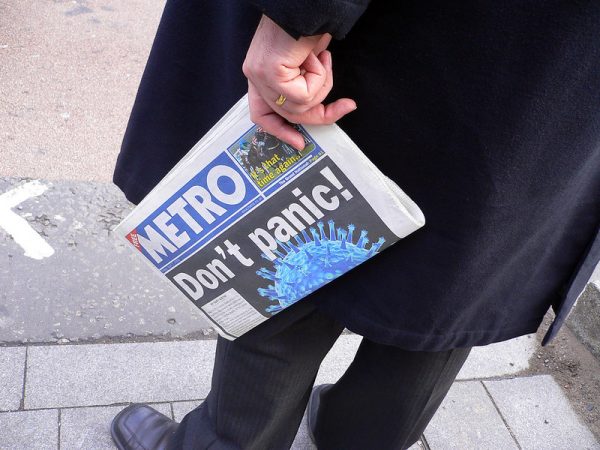
Photo by photologic, Flickr CC

This post was created in collaboration with the Minnesota Journalism Center

Coronavirus — also known as COVID-19 — has taken the global media world by storm. Over 2,000 have died and more than 79,000 are infected globally. The World Health Organization has been criticized for not declaring a public health emergency earlier than they did, but doctors including Dr. Emily Landon at the University of Chicago are saying that “people shouldn’t panic.” 

In cases of public health epidemics, whether people panic depends in part on how journalists cover the issue and which experts they cite. Journalists tend to quote official sources like government officials and public health officials to inform the public about outbreaks of illness including influenza, swine flu, Zika, Ebola, and more recently, coronavirus. Being quoted in news articles gives public health officials the opportunity to share their expertise on said topics to help inform readers about how to protect themselves and avoid infection. From a sociological perspective, focusing on the spread of information about pandemics and infectious diseases provides opportunities for scholars to comment on evolving social structures and processes in a way that will influence the biomedical sciences’ public and policy agenda.

As epidemiologist Adam Kucharski wrote in The Guardian, “stories sparking fear seem to have overtaken the outbreak in real life” and misinformation (a topic The Society Pages has written about here) seems to be more contagious than the virus itself. The “need for speed” in publishing journalistic updates about the virus as well as scholarly work has resulted in several retractions, including the retraction of a preprint of a scholarly paper after its analysis was found to be faulty. 

Further, the spread of information — and misinformation, including conspiracy theories — about health crises often occurs on social media platforms including Twitter and Instagram. Scholars found that false information spread especially quickly during Ebola outbreaks in West Africa and in the Zika outbreak in Brazil, which led to the formation of counterproductive policies passed by public health officials who struggled to combat false claims. In recent years, Instagram was found to be the most effective platform for health organizations including Centers for Disease Control, the World Health Organization, and Doctors without Borders to engage followers during global health crises.
Scholars, including Dr. Anita Varma, recently published five tips for journalists on covering coronavirus. These include paying attention to the frames used and including quotes from official sources like government officials as well as the people directly affected by the health concern. Dr. Karin Wahl-Jorgensen published an article on the role that fear plays in narratives about public health crises. The bottom line is: The way stories are told matters and affects the management of pandemics and policy responses.
Photo by Andrew Turner, Flickr CC

Originally posted July 8, 2019.

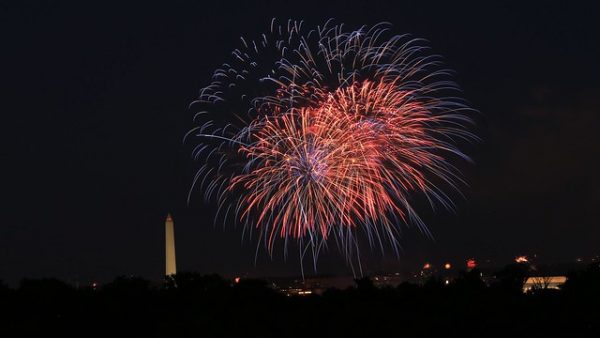
On July 4th, 1776, signers of the Declaration of Independence declared their intent to “dissolve the political bands” holding the United States and Great Britain together. That subtle language quells the imagery of violent revolution — over nearly a decade of warfare, thousands died in the conflict. Today, in the midst of flags and cookouts, the violence of the revolution may yet again fade to the background. But many social scientists examine such violence deeply, and in doing so showcase the power of violence to remake identity, redraw state boundaries, and bring power to marginalized groups.

Acts of violence can redefine the boundaries of groups. During crises like civil war or political upheaval, political elites may seek to unite ethnic, racial, or religious groups to consolidate power. Threats of violence may motivate these groups, for fear or for self-protection, to mobilize. Historically, these changing groups have influenced national boundaries — indigenous groups were often targeted for violent elimination in order to conquer a space for a particular identity group, or areas were conquered to make more space for a group in power. In these ways, many of the symbolic and physical boundaries in the world around us carry traces of violence.
Violence and conflict can also create opportunities for those with limited political power. Elisabeth Jean Wood, for example, analyzed how insurgent groups of impoverished and exploited workers could use organizing and sometimes violent tactics to convince powerful leaders to negotiate, thus installing democratic governments. Marie Berry examines political power in the aftermath of conflict, showing how the participation of women in traditionally male spaces after violence enabled political organizing and gains in power. Though the extent and longevity of these changes differ between conflicts, violence and its aftermath have the capacity to result in political change.
While the transformative power of violence looks different across cases, its power doesn’t exist in a vacuum — global norms and regulations around violence often impact its destructive and constructive capacities. Today’s belligerents are often aware of laws surrounding the use of violence, like regulations about who or what can be targeted and what types of strategies are permitted. To garner favor with powerful international actors, many combatants abide by these regulations. Others abide selectively, like signing onto treaties in order to partake in other forms of violence with less oversight.

In the centuries that have passed since the revolution, many Americans now think of July 4thas a day of parades and parties, as representations of conflict have faded over time. But amongst the fireworks, social science shows the centrality of violence in national histories, international relations, and the relative power of social groups. 

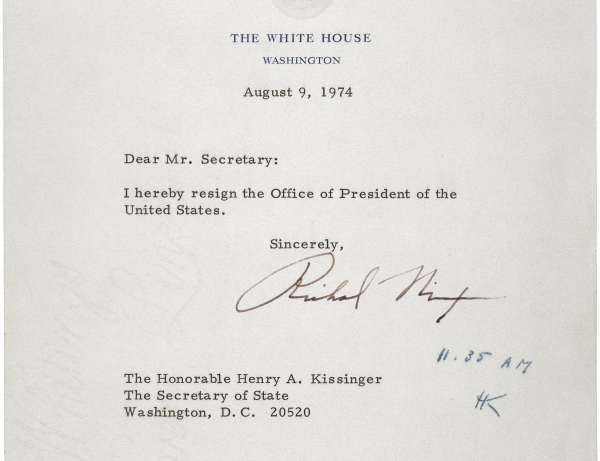
Richard Nixon’s resignation letter from August 9, 1974. Photo via Wikimedia Commons.

The impeachment proceedings have sparked contentious public debates about what should and should not be considered a “scandal” today. From the earliest days of the discipline, sociologists have employed theory and research to study why some incidents and individuals who seem scandalous have major impacts and lasting legacies, while others seem to make no mark whatsoever. They also help us see how both scandals and the public outcry that they can occasion are socially constructed by norms and values, organizational processes, and inequalities that extend well beyond any one individual person or event. It’s so sociological, it’s almost scandalous!

To begin, the identification of something as a social problem or “a scandal” requires that an issue is well known in society and intersects with a meaningful moral set of concerns. The construction of a scandal also involves who or what has the power to apply and enforce social norms about right and wrong. For example, public sanctions and normalized stigma against prominent queer citizens and pro-gray groups reinforced widespread bigotry, marginalization, and violence.
Media obviously plays an important role in creating and framing a scandal. Its coverage is shaped by often invisible social factors such as media businesses’ goals, newsroom budgets, and journalistic practices. In addition, the activities of political groups, social movements, and civic organizations can drive public debate and attention to certain issues or problems. Such groups’ impact is not necessarily a product of their moral beliefs or strength of conviction, but factors such as their name-recognition, finances, and networks. Thus, institutional processes, civic organizations, and material factors shape how a scandal is socially constructed.
Sociological factors such as status, gender, and race intersect with organizational contexts, media factors, and broader public norms to shape the aftermath of scandals as well. In political or corporate contexts, the power and resources of an individual or organization often determine whether and how they are punished for transgressions (or exonerated) and what kinds of reforms must be undertaken. Furthermore, the aftermath of a state scandal can be greatly determined by whether the government has a system of checks and balances, as well as whether criticizing state actors comes with consequences of its own. Unweaving such complex webs can show why some shocking scandals leave affected parties unscathed, while others leave long-lasting scars.

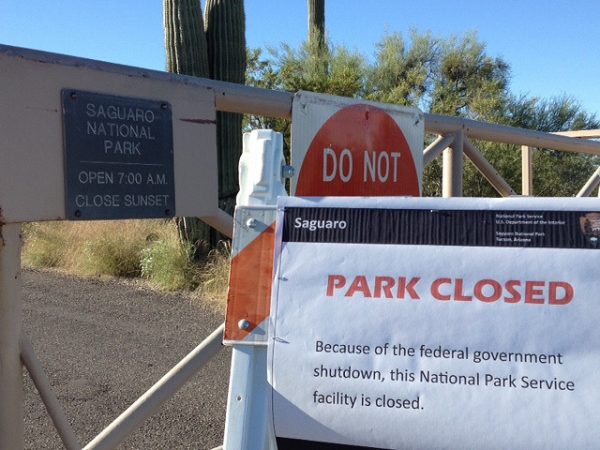
Photo of a closed sign outside Saguaro National Park during the 2013 U.S. federal shutdown. Photo by NPCA Photos, Flickr CC

Originally posted October 15, 2013.

Government shutdowns are (thankfully) rare and tend to lead to a lot of calls to economists: what happens to the dollar on the international market? How do military towns and towns that rely on National Park tourism survive? Will companies screech to a halt while they wait for the FDA to get back to business? In the meantime, we might take this opportunity to remember the myriad ways in which all Americans are dependent upon the government.

Most people don’t realize they benefit from government programs.

In 2012, Mettler asserted 96% of Americans benefit from 21 specific government programs (not including those that affect all people equally, like road maintenance). These include “submerged” benefits (like tax breaks for mortgage interest) and direct benefits (like Medicaid). In Table 3 of the second citation, she shows that even some 44.1% of those receiving Social Security benefits answer “no” when asked if they “have used a government program.”

The government is instrumental in innovation.

Fred Block and Matthew Keller sum up some of their research in a Scholars’ Strategy Network brief on government as the main driver of innovation. Using data from R&D‘s annual top 100 breakthroughs list, in 2006 they identified 88 winners with some government support, 77 of which relied on federal dollars and 42 of which came directly out of federally-sponsored labs. They also focus on a program started by Ronald Regan’s Administration that, today, provides up to 6,000 loans ($2 billion or so) annually to small businesses trying to commercialize new tech.

Photo by Ulisse Albiati, Flickr CC

Originally posted August 6, 2018.

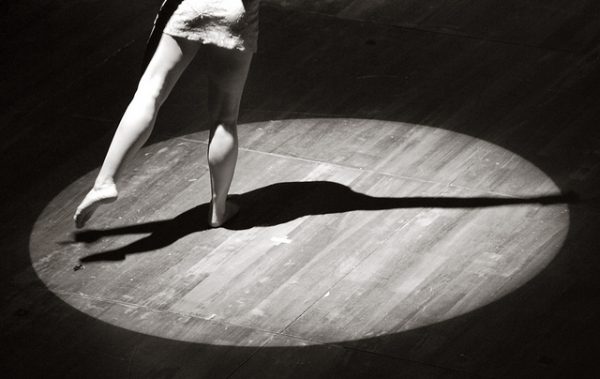
Teenager Maedeh Hojabri was recently arrested and imprisoned by Iranian authorities for posting Instagram videos of herself dancing in her bedroom. People around the globe were stunned at the news, although such punishment and censorship is sadly a common phenomenon. In Iran, Hojabri’s actions violated conservative legal norms that impose a strict dress code and condemn women for exposing their hair or dancing in public. More than a century of social science research can help shed light on why governments criminalize the violation of expected gender norms.  

Classical sociological theory argues that state actors use legal sanctions to exert control and enforce moral sentiments, in an attempt to garner social solidarity. The criminalization of dancing, for example, enforces and legitimizes the morality of conservative values and strict social control. To protect dominant social values, elites may use the penal system as a tool to persecute and discriminate against social minorities. The dominant group’s repression of subordinate groups derives from hierarchies that operate around patriarchal, racial, religious, class, national, political, or ethnic distinctions. Hojabris’ case illustrates repression based on patriarchal norms.
The state may also use the penal system to demonstrate competence and authority. Penal repression allows the state to demonstrate its sovereign capacity and reassert political authority under threat. The case of criminalizing dancing in Iran thus illustrates how public authorities use penal policy to address a legitimacy crisis. Many scholars link the loss of public confidence in the political system to the rise of punitive populism and the ascendancy of penal severity in and outside the United States.

The penal state has become a central instrument for the exercise of authority. It can protect conservative values and strengthen the power of political elites, who exploit the penal system to legitimize their political agendas. While criminalizing dancing seems odd in the United States, in Iran it serves to enforce moral rules, extend social control, and demonstrate state power.

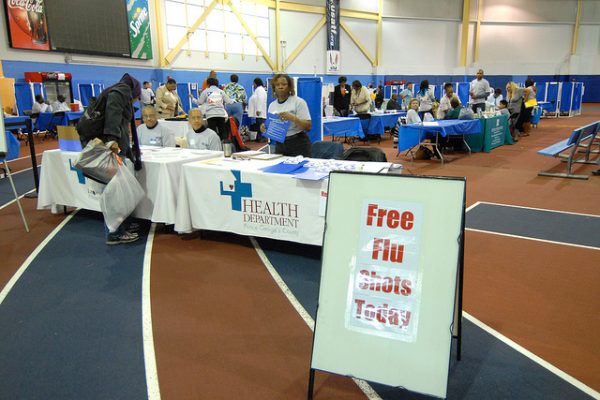
Photo of flu shot clinic for veterans. Photo by Maryland GovPics, Flickr CC

After President Trump blamed California state officials for not doing enough to fight and prevent wildfires, civil servants seem to be fed up. Though often understood as emotionless state bureaucrats, frontline workers of the state — from firefighters to social workers — must often deal with suffering, emergencies, and disasters in the everyday operations of their agencies. Social science research helps us understand how state actors manage these roles and maintain their own emotional wellbeing.

The work of state agents entails balancing institutional rules and scarce state resources. Their everyday decisions are thus an essential component of administering and implementing public policy. Because they control the distribution of services, state officials can become policymakers with considerable discretion in the daily implementation of state activities. Their work not only influences how state operations impact citizens’ lives, but it also shapes citizens’ perceptions of state legitimacy.
Workers’ affective lives — their emotional challenges and commitments to institutions — impact the functioning of organizations. Unlike many politicians, scholars, or journalists, state bureaucrats have everyday contact with adversity, social problems, and vulnerable populations. For state officials who interact with the public, working with clients can be emotionally draining and even physically harmful. Civil servants suffer emotional and psychological distress as a result of their daily roles. The consequences of exhausting interactions are harmful to the purposes of the organization, as — in the process of routine operations — bureaucrats may develop special preferences, antipathies, and discrimination against their clients.

State agents thus perform a complex balancing act, both for society and for themselves. Instead of using the stereotype of bureaucrats as vile and insensitive, public policy decisions must also consider the operations of organizational behavior and the struggles of bureaucrats in providing state services.

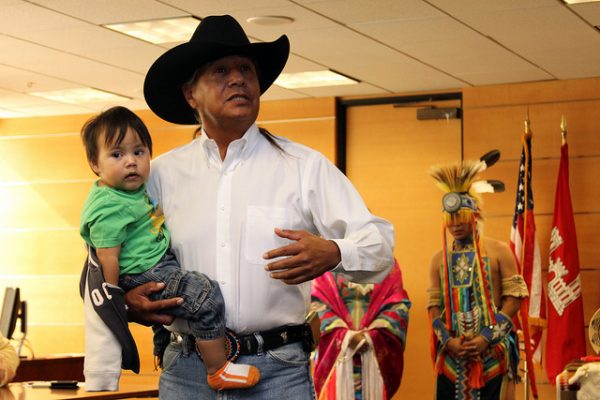
Photo of a Seminole man holding his child at an American Indian Heritage Month celebration. Photo by Los Angeles District, Flickr CC

After years of debate, the Indian Child Welfare Act (ICWA) — which sets minimum requirements for caseworkers handling state child custody proceedings involving Native children — was recently ruled unconstitutional by a Texas federal judge. The judge argued that ICWA violates constitutional rights to Equal Protection because it “elevates a child’s race over their best interest” — despite the fact that Native children are actually citizens of federally recognized tribes. Social science research helps us understand the historical context necessitating ICWA’s creation, with respect to the problematic history of child removal from Native communities as shaped by racialized, gendered, and cultural ideas.

The ICWA was enacted in 1978, a time when Native children were being removed from their homes and placed in foster care at staggering numbers under the guise of protecting children. At that time, 25-35% of Native children were removed from their homes by state child welfare or by private adoption companies. And the majority (about 85%) of these children were placed outside of their families and communities, even when relatives were willing to take them. Today, despite the minimal protections offered by the ICWA, Minnesota places more Native children in foster care than any other state, making up 20% of children in the system.
The ICWA’s creation and implementation has not only been a response to child-removal through adoption, however. Even earlier, Native children were sent to government or Christian-run boarding schools where teachers forced children to abandon their distinct tribal cultures — they cut Native children’s hair, did not allow them to speak their native languages or participate in cultural practices, and enforced strict discipline through corporal punishment. The boarding school era prevented generations of Native people from learning (and passing on) parenting tools. This separation of families, along with the disruption to Native cultural and spiritual practices, has been linked to symptoms similar to post-traumatic stress disorder, increased exposure to physical violence, and substance abuse in Native communities.
The removal of Native children is also couched in deep-set racialized, gendered, and cultural notions of family, specifically the white middle class ideal of the nuclear family, characterized by two married parents and children. Conversely, non-Native supporters of these adoption practices often relied on stereotypes of Native women as sexualized, unmarried, and thus unfit, which pathologized Native families as neglectful. They have also argued that each child’s best interests should be considered on an individual basis, rathering than acknowledging what tribes see as the importance of culture and identity, tribal rights, and belonging. In other words, supporters of Native adoption saw “disadvantaged” Native children that needed to be “rescued” by individual acts of goodwill (from white, middle class Americans).

So what will legal reconsideration of the Indian Child Welfare Act bring? Many tribes fear that the Texas ruling sets a dangerous precedent that could dismantle the federal laws put in place to correct historical injustices like the boarding school system. Other tribal leaders see the ruling as an attempt to destroy their right to political and cultural survival through their children, while simultaneously compromising efforts to heal from the wrongdoings inflicted upon tribal communities. In the context of the current political division over the treatment of immigrant children separated from their parents at the U.S. border, such concerns warrant serious attention.

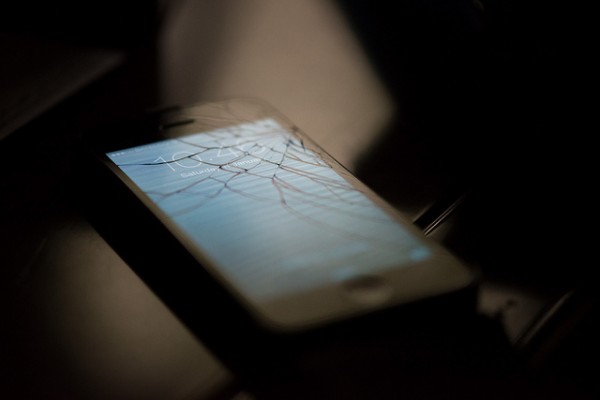
Photo by Faris Algosaibi, Flickr CC. https://flic.kr/p/j7hLsu
Photo by Faris Algosaibi, Flickr CC.

The FBI now says they may not need Apple’s help to break into a terrorist’s iPhone, but for months they have insisted Apple’s programmers must write a program enabling them to bypass security on this and other Apple devices. The demand raised questions about security and surveillance in a time of rapid technological change. Apple’s refusal to comply stemmed from both a philosophical stance on privacy and concerns that such a program could easily be exploited. The company and its programmers further argued that code should be covered by free speech protections—no one can be forced to write code against their will. Sociological research shows how assumptions about the objectivity of computer code work against arguments like Apple’s and how these assumptions are often used to legitimize the policing of already marginalized populations.

Apple’s concerns about controlling how and when a “break-in” program gets used are valid. Not only can it fall into the hands of hackers and the like, technologies like this can be used by law enforcement to maintain social inequalities and reinforce harmful stereotypes. Sociologists show how computer code and surveillance technologies are not value-neutral, but are instead composed of the values and opinions of those who write and use them. The result is that the police often use these presumably objective technologies to justify intrusive policing of the already at-risk.
From this perspective, it becomes easier to understand code as speech. Codes are the expression, intentional or otherwise, of the values and beliefs of the programmer. What makes code in some ways more powerful than speech is that it is also highly functional. Jennifer Peterson explains that code is at once the writing of a program as well as the program’s execution—it is both expressive and functional—but the legal system overlooks the functional capacity of code as speech and the ways that it can be used to protest, dissent, and discriminate.

And for a great read on surveilling sociologists, check out Stalking the Sociological Imagination: J. Edgar Hoover’s FBI Surveillance of American Sociology by Mike Forrest Keen.

Just when we thought the season’s hottest tablet or smartphone picked up on Black Friday might be a new FBI black site, The Economist reports some tech giants are working extra privacy measures into their gadgets to protect user data. By making services like text encryption available by default, this trend provides extra privacy for some users (mostly those who aren’t already targeted for surveillance), despite criticism from law enforcement that it shields criminal networks from investigation. While we usually think about privacy as an individual right to be left alone, social science shows why these trends are important for a public conversation about what privacy should be.

Americans’ emphasis on the right to privacy remains high, and while public opinion did tend to favor increased government surveillance immediately following September 11th, 2001, support for these practices has declined since.
But privacy isn’t just isolation from governments or other people. Classic research argues it is an ongoing social relationship where we negotiate interactions with others, and more current work shows this relationship changes across time and place.
Current studies of how people use technology show that privacy concerns kick in when people share information online. It also finds this focus on individual behavior ignores structural privacy concerns about the devices themselves and how people learn to interact with them. The “encrypted by default” trend starts a new conversation about what our shared, social definition of privacy should be.