
economy

Photo by torbakhopper, Flickr CC

Originally published July 30, 2019.

As candidates gear up for this week’s democratic debates, constituents continue to voice concerns about the student debt crisis. Recent estimates indicate that roughly 45 million students in the United States have incurred student loans during college. Democratic candidates like Senators Elizabeth Warren and Bernie Sanders have proposed legislation to relieve or cancel  this debt burden. Sociologist Tressie McMillan Cottom’s congressional testimony on behalf of Warren’s student loan relief plan last April reveals the importance of sociological perspectives on the debt crisis. Sociologists have recently documented the conditions driving student loan debt and its impacts across race and gender. 

In recent decades, students have enrolled in universities at increasing rates due to the “education gospel,” where college credentials are touted as public goods and career necessities, encouraging students to seek credit. At the same time, student loan debt has rapidly increased, urging students to ask whether the risks of loan debt during early adulthood outweigh the reward of a college degree. Student loan risks include economic hardship, mental health problems, and delayed adult transitions such as starting a family. Individual debt has also led to disparate impacts among students of color, who are more likely to hail from low-income families. Recent evidence suggests that Black students are more likely to drop out of college due to debt and return home after incurring more debt than their white peers. Racial disparities in student loan debt continue into their mid-thirties and impact the white-Black racial wealth gap.
Other work reveals gendered disparities in student debt. One survey found that while women were more likely to incur debt than their male peers, men with higher levels of student debt were more likely to drop out of college than women with similar amounts of debt. The authors suggest that women’s labor market opportunities — often more likely to require college degrees than men’s — may account for these differences. McMillan Cottom’s interviews with 109 students from for-profit colleges uncovers how Black, low-income women in particular bear the burden of student loans. For many of these women, the rewards of college credentials outweigh the risks of high student loan debt.
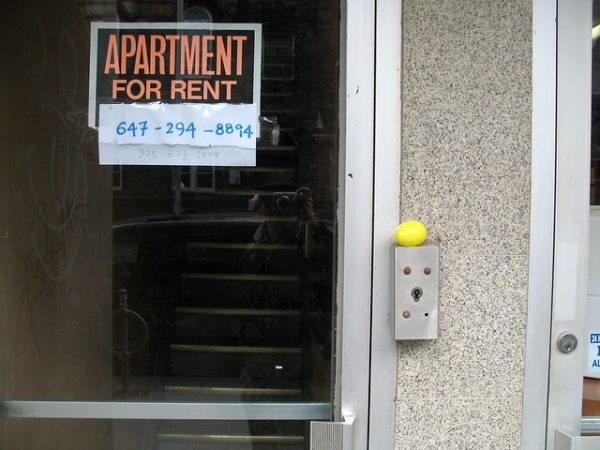
Photo of a sign that read "Apartment for Rent" on a glass door. You can see stairs through the door and there is a phone number written below the sign.
Photo by Simon Law, Flickr CC

Sociologist Matthew Desmond’s popular book, Evicted brought to light just how precarious housing can be for someone living in poverty in the United States, but there’s far more to the challenges than money alone. One important and under-appreciated aspect of housing insecurity involves health, and sociologists have shown that the relationships between health and housing are more complicated than you might imagine.

On the one hand, a health crisis can propel a whole family into housing hardship. For instance, one study found that when one member of a household experiences a drastic change in health, the household is much more likely to miss a utility payment. And once they miss that payment, they are less likely to be able to recover the next year, pushing the household further into economic disadvantage.

But the relationship also goes the other way around: Health often suffers following housing precarity. People who have experienced some kind of housing insecurity — getting behind on rent payments, moving for cost of housing, experiencing homelessness — were more likely to report anxiety and depression than those who had not experienced housing insecurity. One particular study showed that evicted mothers were more likely to report depression and poor health for themselves and their children when compared to mothers who were not evicted.

More positively, getting access to housing while already experiencing housing insecurity can have health benefits. For instance, children who lived in public housing had better mental health outcomes than those who were still on the waiting list.

Policy makers and community organizations can utilize social science research on health and housing to improve housing security in the future.

Photo by Office of Congresswoman Katherine Harris, Wikimedia Commons

This post was created in collaboration with the Minnesota Journalism Center.

Recent estimates from the International Labor Organization (ILO) and Walk Free Foundation found that more than 40 million people are in modern slavery. The ILO has valued human trafficking as a $150 billion industry, with $99 billion coming from commercial sexual exploitation. Prostitution and trafficking are both illegal in America (except for several counties in the state of Nevada where prostitution is legal), but the two terms are often conflated. With regard to terminology: When one is coerced or forced into selling themselves for sex, it is a form of trafficking, and those who enter the regulated sex industry voluntarily are deemed sex workers.

The “normalization” of sex work worldwide is still in flux. Scholars divide the international community into two camps with regard to this issue: abolitionist feminists, who believe both voluntary and involuntary prostitution and sex work is exploitative; and human rights feminists, who de-link prostitution/sex work and trafficking by arguing that some adult women and men are in prostitution/sex work voluntarily and should not be considered victims, and only those who are forced or coerced to be prostitutes or sex workers should be considered trafficking victims.
Scholars demonstrate that NGO coverage of trafficking often portrays “ideal victim” and “ideal perpetrator” stereotypes that don’t always reflect the truth about who is subject to trafficking worldwide. Further, journalistic coverage of trafficking is often written through the lens of “episodic” frames that provide personal narratives but lack trend statistics, quotes from experts, or social forces at play in perpetuating demand for trafficking worldwide.
As anti-trafficking campaigns evolve in the Digital Age, technology also plays an integral role in efforts to curb demand and address supply that flows through social media networks and the Internet. Initiatives — including research about online demand for sex and working partnerships between social scientists, law enforcement, and anti-trafficking NGOs — are shaping the future of anti-trafficking efforts worldwide.
Photo of a drone flying in the air near a statue of Joan of Arc.
Photo by Ted Eytan, Flickr CC

This post was created in collaboration with the Minnesota Journalism Center.

The landscape of journalism is changing every day. The Pew Research Center reported that newspaper newsroom employees declined by 45% between 2008 and 2017, and Nieman Lab argues that newsrooms are in the midst of a “do-or-die moment.” As traditional newsrooms lose hundreds of reporters and editors annually, content creators including WikiLeaks and Deadspin are coming alongside legacy media outlets including CNN, the BBC, and The New York Times to provide information to the public. All of these players publish content online in a journalistic fashion, raising the question of what journalism is as a profession.

In the midst of a shrinking workforce, scholars are starting to pay attention to “interlopers” and “intralopers:” Interlopers are actors or institutions who may consider the work they do to be part of news media, though they do not always define themselves as journalists; web analytics companies are one current example. Intralopers are similar to interlopers, but instead work from within news organizations as specialists in digital and social media and often produce emerging technology meant to complement journalists’ work. Both play increasingly key roles in journalistic spaces.
Machines and software packages are beginning to play a more central role in news gathering, news selection, news writing, news editing, and news distribution in newsrooms worldwide. Drones are one example of machines occupying space traditionally held by journalistic actors. 2016 was a turning point for the institutionalization of drones in newsrooms in the United States, when the Federal Aviation Administration (FAA) amended aviation regulations to allow for widespread experimentation with drones in American journalism. Since that date, journalists from outlets including The New York Times and The Washington Post have produced compelling stories, photos and videos but have also go through a comprehensive federal certification process (Columbia Journalism Review recently wrote about this phenomenon).
Analytics and metrics also play a key role in newsrooms nationwide. However, journalists have varying opinions of how influential their role is in their daily routines, with some arguing that analytics challenge journalists’ authority to decide which stories are newsworthy.
Beyond analytics and metrics, journalists and technologists often collaborate with each other on a regular basis to create open-source software programs. One example is “hackathons” — events where coders and journalists come together to find solutions to journalistic problems in the interest of creating a brighter future for news outlets worldwide.

Photo of a closed sign outside Saguaro National Park during the 2013 U.S. federal shutdown. Photo by NPCA Photos, Flickr CC

Originally posted October 15, 2013.

Government shutdowns are (thankfully) rare and tend to lead to a lot of calls to economists: what happens to the dollar on the international market? How do military towns and towns that rely on National Park tourism survive? Will companies screech to a halt while they wait for the FDA to get back to business? In the meantime, we might take this opportunity to remember the myriad ways in which all Americans are dependent upon the government.

Most people don’t realize they benefit from government programs.

In 2012, Mettler asserted 96% of Americans benefit from 21 specific government programs (not including those that affect all people equally, like road maintenance). These include “submerged” benefits (like tax breaks for mortgage interest) and direct benefits (like Medicaid). In Table 3 of the second citation, she shows that even some 44.1% of those receiving Social Security benefits answer “no” when asked if they “have used a government program.”

The government is instrumental in innovation.

Fred Block and Matthew Keller sum up some of their research in a Scholars’ Strategy Network brief on government as the main driver of innovation. Using data from R&D‘s annual top 100 breakthroughs list, in 2006 they identified 88 winners with some government support, 77 of which relied on federal dollars and 42 of which came directly out of federally-sponsored labs. They also focus on a program started by Ronald Regan’s Administration that, today, provides up to 6,000 loans ($2 billion or so) annually to small businesses trying to commercialize new tech.

San Quentin State Prison, California. Photo by telmo32, Flickr CC

This past August, the Incarcerated Workers Organizing Committee, a labor union for prisoners, began a nationwide strike to protest against inhumane conditions, the use of solitary confinement, and precarious work in U.S prisons. Fighting prison conditions and labor precarity has been a long-standing struggle for prisoners in the United States and around the world, and social science research explains the dynamics underlying this struggle.

As ‘total institutions” prisons provide poor substitutes of basic needs, or limited access to basic items, services, and comforts like hygiene items, clean clothing, nutritious food, education, and health care services.  Consequently, prisons end up depriving inmates of their wellbeing, autonomy, sense of self-worth, and control over their fates. In the United States, the indignities of prison conditions range from major maltreatments, such as the abuse of long-term solitary confinement, to minor cruelties, such as restricting the use of showers and toilet paper (imagine being limited to just one roll per month), in overcrowded facilities.
The specific conditions of prison labor reflect long-standing contradictions. On the one hand, social science evidence suggests that providing jobs to inmates has a positive effect and can reduce their involvement in future crime activities. On the other hand, prison labor has also led to abuse and exploitation. Correctional facilities use prison labor to serve private industries, to perform cleaning and maintenance functions within facilities, or even to repair public water tanks and fight wildfires. Prison labor has also served as an instrument of economic policy in the labor market. In the 1990s, for example, rates of unemployment declined when a massive number of able-bodied working age men went to U.S. prisons.

Imprisonment often has devastating consequences for inmates, their families, communities, and society at large. Even though certain policies like prison labor may involve potential benefits, their positive effects only occur when there is a genuine effort to achieve inmates’ social inclusion. Inmates’ struggles to achieve effective changes in their living conditions therefore require sustained and special attention from the public and policy makers.

Just when we thought the season’s hottest tablet or smartphone picked up on Black Friday might be a new FBI black site, The Economist reports some tech giants are working extra privacy measures into their gadgets to protect user data. By making services like text encryption available by default, this trend provides extra privacy for some users (mostly those who aren’t already targeted for surveillance), despite criticism from law enforcement that it shields criminal networks from investigation. While we usually think about privacy as an individual right to be left alone, social science shows why these trends are important for a public conversation about what privacy should be.

Americans’ emphasis on the right to privacy remains high, and while public opinion did tend to favor increased government surveillance immediately following September 11th, 2001, support for these practices has declined since.
But privacy isn’t just isolation from governments or other people. Classic research argues it is an ongoing social relationship where we negotiate interactions with others, and more current work shows this relationship changes across time and place.
Current studies of how people use technology show that privacy concerns kick in when people share information online. It also finds this focus on individual behavior ignores structural privacy concerns about the devices themselves and how people learn to interact with them. The “encrypted by default” trend starts a new conversation about what our shared, social definition of privacy should be.

Microsoft CEO Satya Nadella has been harshly criticized for his remarks that women should trust in the system to give them the right raises as they go along, rather than asking for raises they feel they deserve.  While he later “clarified” his statement on Twitter saying that he meant to say that the tech industry must close the gender pay gap so asking for a raise is not needed, research shows why sociologists are skeptical of his arguments.

The gender pay gap is well documented, and it exists even when controlling for a variety of factors related to wages, such as occupation, work hours, and educational attainment.
Occupations with lots of female employees also tend to be paid less favorably than those requiring similar skills but largely done by men.
Mothers tend to be particularly disadvantaged in terms of salary compared to childless women or to men.
Women can also face penalties for asking for a raise, even if they deserve it, if they don’t frame their request in a way that still conforms to gender norms.

For more on women in the workforce, check out these previous TROT posts and briefs from SSN.

American companies have a new trick for an old trend of saving money by going overseas – moving their headquarters to countries with lower taxes.  These recent corporate inversions in which U.S. based companies, such as Medtronic and Burger King, reincorporate abroad in order to avoid taxes is part of an ongoing process in which corporations go global to offshore work and shuffle money through “tax havens” to boost profits. Commentators such as Allen Sloan condemn these tactics as unpatriotic and bad corporate citizenship. This highlights the tension between national interests and the pressures of globalization. We know that firms are not tied to particular national borders—a fundamental aspect of capitalism that classic theorists like Max Weber and Karl Marx observed in the 19th and early 20th century— but why are these publicly unpopular actions so prevalent today?

While nation-states have lost some power in the past 30 years, they created the very policies that contributed to economic globalization. U.S. policy since the 1970s has led to an increased financialization of the economy and the opening of global capital flows. Corporations aren’t just moving overseas due to greedy and unpatriotic CEOs, but the result of decades of change in policy and the global economy. 
Firms also have immediate financial interests in increasing shareholder value and avoiding taxes, even if that means harming national interests or engaging in immoral behaviors. Organizational dynamics, leadership and culture shape business strategies as well as the broader policy and economic context. 

The Rockefellers, powerful American industrialists with vast wealth built from the oil industry, are now ditching fossil fuels. According to an announcement from the Rockefeller Brother’s Fund, the organization has pledged to withdraw their investments from fossil fuels and instead invest in clean energy. Corporations and institutions respond to pressure when social norms shift and change, especially when it impacts their public image and the bottom line.

Corporations can be pressured to enact socially responsible behaviors through government policy, nonprofits, civil society groups, social movements, and internal culture and leadership.
Yet, this announcement may also represent a corporate public relations and greenwashing campaign that fails to address the underlying causes of climate change. Either way, the direct impact on energy industries may be less important than the symbolic impact of the gesture.