Uncategorized

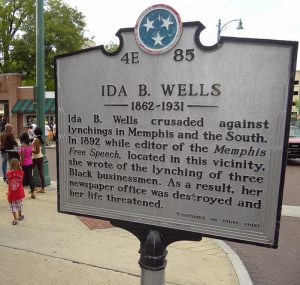
Photo of a plaque commemorating Ida B. Wells. Photo by Adam Jones, Flickr CC

As Black History month draws to a close, it’s important to celebrate the work of Black scholars that contributed to social science research. Although the discipline has begun to recognize the foundational work of scholars like W.E.B. DuBois, academia largely excluded Black women from public intellectual space until the mid-20th century. Yet, as Patricia Hill Collins reminds us, they leave contemporary sociologists with a a long and rich intellectual legacy. This week we celebrate the (often forgotten) Black women who continue to inspire sociological studies regarding Black feminist thought, critical race theory, and methodology.

Ida B. Wells (1862-1931) was a pioneering social analyst and activist who wrote and protested against many forms of racism and sexism during the late 19th and early 20th century. She protested Jim Crow segregation laws, founded a Black women’s suffrage movement, and became one of the founding members of the NAACP. But Wells is best-known for her work on lynchings and her international anti-lynching campaign. While Wells is most commonly envisioned as a journalist by trade, much of her work has inspired sociological research. This is especially true for her most famous works on lynchings, Southern Horrors (1892) and The Red Record (1895).
In Southern Horrors (1892), Wells challenged the common justification for lynchings of Black men for rape and other crimes involving white women. She adamantly criticized white newspaper coverage of lynchings that induced fear-mongering around interracial sex and framed Black men as criminals deserving of this form of mob violence. Using reports and media coverage of lynchings – including a lynching of three of her close friends – she demonstrated that lynchings were not responses to crime, but rather tools of political and economic control by white elites to maintain their dominance. In The Red Record (1895), she used lynching statistics from the Chicago Tribune to debunk rape myths, and demonstrated how the pillars of democratic society, such as right to a fair trial and equality before the law, did not extend to African American men and women.
Anna Julia Cooper (1858-1964) was an avid educator and public speaker. In 1982, her first book was published, A Voice from the South: By A Black Woman of the South. It was one of the first texts to highlight the race- and gender-specific conditions Black women encountered in the aftermath of Reconstruction. Cooper argued that Black women’s and girls’ educational attainment was vital for the overall progress of Black Americans. In doing so, she challenged notions that Black Americans’ plight was synonymous with Black men’s struggle. While Cooper’s work has been criticized for its emphasis on racial uplift and respectability politics, several Black feminists credit her work as crucial for understanding intersectionality, a fundamentally important idea in sociological scholarship today.
As one of the first Black editors for an American Sociological Association journal, Jacquelyn Mary Johnson Jackson (1932-2004) made significant advances in medical sociology. Her work focused on the process of aging in Black communities. Jackson dismantled assumptions that aging occurs in a vacuum. Instead, her scholarship linked Black aging to broader social conditions of inequality such as housing and transportation. But beyond scholarly research, Jackson sought to develop socially relevant research that could reach the populations of interest. As such, she identified as both a scholar and activist and sought to use her work as a tool for liberation.

Together, these Black women scholars challenged leading assumptions regarding biological and cultural inferiority, Black criminality, and patriarchy from both white and Black men. Their work and commitment to scholarship demonstrates how sociology may be used as a tool for social justice. Recent developments such as the #CiteBlackWomen campaign draw long-overdue attention to their work, encouraging the scholarly community to cite Wells, Cooper, Jackson, and other Black women scholars in our research and syllabi.
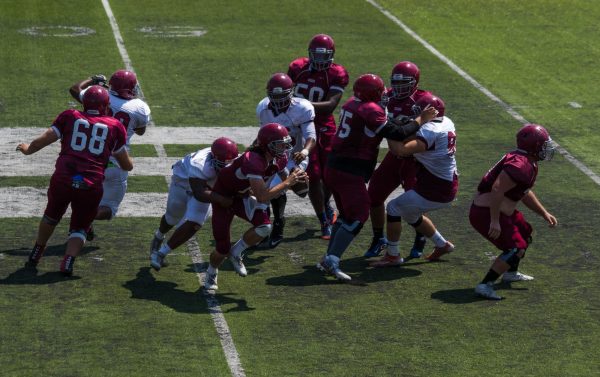
Student Athletes from the Sierra College Football team play in the pre-season football scrimmage at Sierra College in Rocklin, Calif. on August 20, 2016. (Photo by davidmoore326, licensed under CC BY-NC-ND 2.0)

Thanksgiving has NFL games, Christmas has the NBA, and New Year’s has college football. This season as you sit down to watch bowl games or the college football playoff, check out some of the sociological college football research from our partner Engaging Sports

Football can be a path toward economic opportunity, but scholars find race and class patterns in who takes this risky path. For example, Black players are generally from more disadvantaged areas while white players come from more advantaged areas, perhaps indicating that white players benefit from more resources in training while financial necessity drives black players. 
Fans may not have a say in recruiting college athletes, but they certainly have strong opinions about the young athletes at their favored schools. Fans stay away from overtly racist language on message boards, but a criminal record did affect fan support of prospective athletes. 
Finally, both American football and the NCAA seem to constantly be dealing with scandal. Read the articles below for some context on current scandals within the NCAA and how the concussion crisis is affecting a number of sports. 
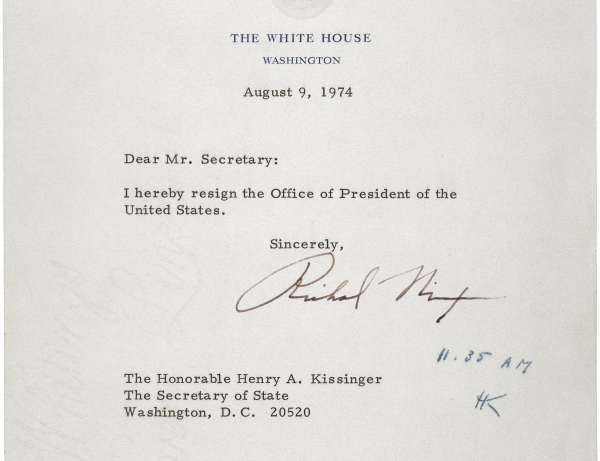
Richard Nixon’s resignation letter from August 9, 1974. Photo via Wikimedia Commons.

The impeachment proceedings have sparked contentious public debates about what should and should not be considered a “scandal” today. From the earliest days of the discipline, sociologists have employed theory and research to study why some incidents and individuals who seem scandalous have major impacts and lasting legacies, while others seem to make no mark whatsoever. They also help us see how both scandals and the public outcry that they can occasion are socially constructed by norms and values, organizational processes, and inequalities that extend well beyond any one individual person or event. It’s so sociological, it’s almost scandalous!

To begin, the identification of something as a social problem or “a scandal” requires that an issue is well known in society and intersects with a meaningful moral set of concerns. The construction of a scandal also involves who or what has the power to apply and enforce social norms about right and wrong. For example, public sanctions and normalized stigma against prominent queer citizens and pro-gray groups reinforced widespread bigotry, marginalization, and violence.
Media obviously plays an important role in creating and framing a scandal. Its coverage is shaped by often invisible social factors such as media businesses’ goals, newsroom budgets, and journalistic practices. In addition, the activities of political groups, social movements, and civic organizations can drive public debate and attention to certain issues or problems. Such groups’ impact is not necessarily a product of their moral beliefs or strength of conviction, but factors such as their name-recognition, finances, and networks. Thus, institutional processes, civic organizations, and material factors shape how a scandal is socially constructed.
Sociological factors such as status, gender, and race intersect with organizational contexts, media factors, and broader public norms to shape the aftermath of scandals as well. In political or corporate contexts, the power and resources of an individual or organization often determine whether and how they are punished for transgressions (or exonerated) and what kinds of reforms must be undertaken. Furthermore, the aftermath of a state scandal can be greatly determined by whether the government has a system of checks and balances, as well as whether criticizing state actors comes with consequences of its own. Unweaving such complex webs can show why some shocking scandals leave affected parties unscathed, while others leave long-lasting scars.

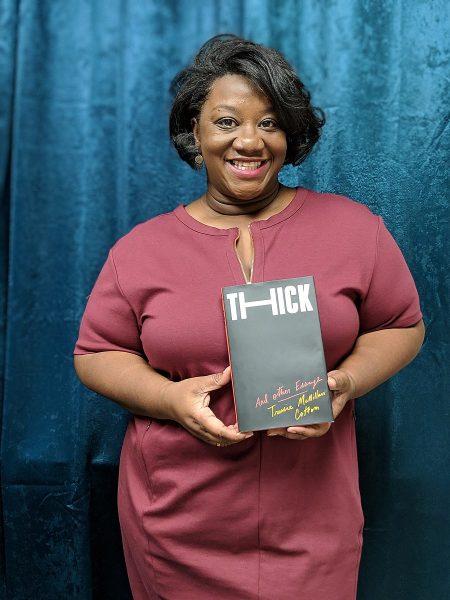
Tressie Mc Millan Cottom displays her essay collection Thick, which was nominated as a National Book Award Finalist. Photo via Wikimedia Commons.

In addition to being a formidable sociologist of technology and education, Tressie McMillan Cottom is an upender extraordinaire of class, race, and gender hierarchies throughout academia and the broader social world. Her book, Thick, was recently nominated as a National Book Award Finalist. With over 100 thousand followers, she is the center of gravity of an ever-expanding Twitter community, and also writes an extremely influential blog. Moreover, she has created a new program of study–Digital Sociology–at Virginia Commonwealth University, where she teaches as an Associate Professor in the Sociology Department.

Even before making her mark in the sociology of higher education with her book, Lower ed: The troubling rise of for-profit colleges in the new economy, McMillan Cottom had become an expert at using social media to assert and establish her legitimacy among scholars. As a graduate student she posted a critical analysis of arguments made by a more senior scholar on her blog, and this earned her the support of a wide and diverse readership. She carries on this tradition of bringing voice and legitimacy to Black women in Thick. Through her essays, McMillan Cottom centers the Black women’s intellectual tradition and their experiences while asking readers to get comfortable with some of the most uncomfortable topics: misogynoir, child loss, sexual violence, to name a few. Her powerful blend of sociology and poignant, personal stories give voice and representation to so many, in a space where such stories so often go unheard.
On Twitter, McMillan Cottom has also created a conversation space where thousands of followers feel supported as they navigate intersecting identities which are oftentimes complicated offline. This virtual space has also become a novel topic for scholarly research. Known as Black Cyberfeminism, this research explores how identities are created and interpreted in virtual places. It also critically examines the intersectional oppressions faced by Black women in virtual institutions. As Cottom argues, Black Cyberfeminist Theory provides a new lens for understanding and engaging in conversations around sociological phenomena.
Working with the Virginia Commonwealth University Sociology Department, Tressie McMillan Cottom has developed undergraduate and graduate Programs in Digital Sociology. Digital Sociology focuses on the use of social media as part of everyday life and the ways it contributes to patterns of human behavior, social relationships, and concepts of the self. Her curriculum encourages students to apply sociological theory to analyze data produced by online human activity, including endless timelines and trends offered from various digital technologies and platforms.

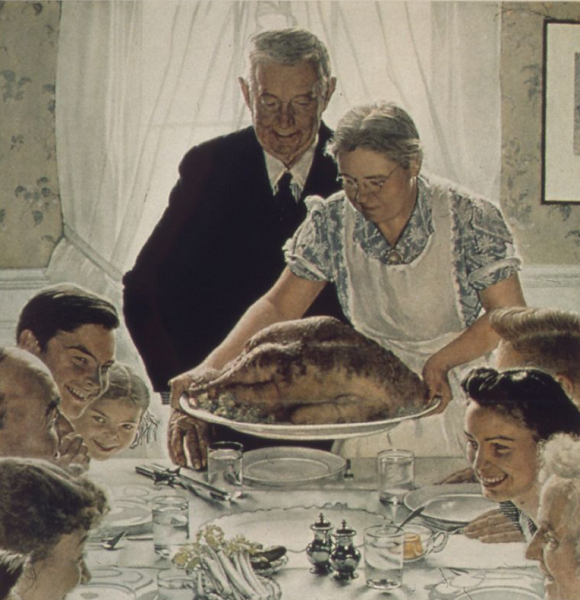
Peaceful holiday meals may still be the ideal, but they are not the norm. The image shows part of a World War II propaganda poster by Norman Rockwell, proclaiming, “OURS… to fight for: Freedom from want,” via Wikimedia Commons.

As we prepare for Thanksgiving, many people look forward to sharing a warm meal with their family and friends. Others dread the holiday, gearing up to argue with their relatives or answer nosey questions. TSP has written about the political minefield that holiday meals can be in the past. This year we want to point out that the roots of difficult dinners actually run deep in everyday family mealtime. Thanksgiving, like any family mealtime, has the potential for conflict. 

Scholars have documented how important meal time can be for families in terms of cultivating relationships and family intimacy. However, they also show that despite widespread belief that families should share “happy meals” together, meals can be emotionally painful and difficult for some families and family members.
Disagreements between parents and children arise at mealtime, in part, because of the meal itself. Some caregivers go to battle with “picky eaters.” Migrant parents struggle to pass cultural food traditions to children born in the United States. Low income parents worry that their children will not like or eat the food they can afford.
Family meals also reproduce conflict between heterosexual partners. Buying, preparing, and serving food are important ways that women fulfill gendered expectations. At family meal-times men continue to do less work but hold more power about how and when dinner is served.
Thanksgiving, or any big holiday meal, can involve disagreements. However, that is not altogether surprising considering that everyday family meals are full of conflicts and tension.
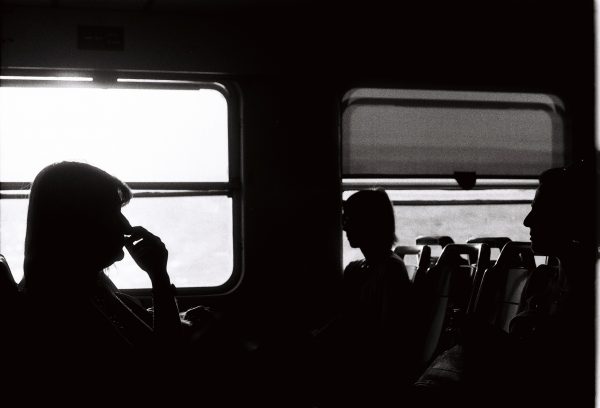
A woman walks alone in a dark alley. Photo by renee_mcgurk via Flickr.
While opinions of particular environments, situations, or objects may appear to be objectively dangerous or safe, sociologists argue otherwise. Instead, they find that opinions about safety are subjective. While there is a physical reality of harm and fear, beliefs about safety and danger spread through socialization, rather than direct observation. For example, Simpson notes that snakes and turtles can both cause illness and death through the transmission of venom or bacteria, yet snakes are seen as dangerous and turtles as benign. In other words, danger and safety do not exist on their own; they are contextual.
Socialized beliefs about safety and danger are also raced, classed, and gendered. While statistics indicate that men are predominantly the victims of violent crime, women express greater fear of crime. This fear often acts as a form of social control by limiting women’s daily activities, like when they leave the house and what they wear. Furthermore, the construction of fear and crime is often tied to racist legacies. In the United States, white women express prejudicial fear about areas marked as “dangerous” or “sketchy,” due to the occupation of this space by men of color.
Safety and danger are also constructed at the international level, as national security is politicized. For example, instances of large-scale political violence, such as genocide, war, and acts of terrorism revolve around the social construction of an enemy. More generally, national enemies are constructed as dangerous and a threat to the safety of a nation’s people. This construction of the enemy and perception of fear can move people to join terrorist organizations, participate in genocidal regimes, and enlist in state militaries.

Photo Credit: Sun International, Flickr CC

As students get ready for spring break, many leave their textbooks and syllabi behind. They may be unaware that partying is packed with sociological ideas. In fact, sociologists have long observed how norms and customs shape the way people experience festivals and celebrations. Over a century ago, French sociologist Emile Durkheim argued that rituals, celebrations, and festivals are integral parts of society’s function and build solidarity among communities. Rituals can involve small, everyday conversations with other people as well as large festivals, concerts, and major sporting events. Spring break partying, traveling, and interactions are all modern examples of this social process.

Emile Durkheim. 1915. The Elementary Forms of Religious Life.  New York: Dover Publications, INC.

Erving Goffman. 1967. Interaction Rituals: Essays in Face to Face Behavior. Chicago: Aldine Transaction.

Recent work has emphasized one particular ritual in which college students take part: partying. This research details how contemporary norms and common practices regarding partying like hookups, hazing, and excessive alcohol use have become a large part of the college culture. Sociologists are also showing, however, that popular images of spring break and college life do not always match reality. In particular, partying can produce inequalities in access and safety, particularly for women, racial/ethnic minorities, and low-income students. In short, college partying remains an eminently social phenomenon, shaped by social forces, histories, and ideas.

Elizabeth A. Armstrong and Laura T.Hamilton. 2013. Paying for the Party: How College Maintains Inequality. Cambridge: Harvard University Press.

Lisa Wade. 2017. American Hookup: The New Culture of Sex on Campus. New York: W.W. Norton and Company.

Photo by Cristian V, Flickr CC

Prominent figures in American film, news, and politics are facing a dramatic wave of sexual harassment accusations. In response, the heads of organizations — like the Academy of Motion Pictures Arts and Sciences and various colleges and universities — are not only encouraging victims to voice their allegations, but also re-examining their own institutional cultures. Social science research has explored the social dynamics of sexual harassment in the workplace and the conditions that prevent reporting. 

Individuals who experience sexual harassment often do not report right away — some may not interpret their experiences as abuse at first, but even when they do, many choose not to come forward. And others who are aware of the harassment frequently turn a blind eye. In order for victims of sexual harassment, discrimination, or abuse to come forward, they must first believe that doing so will be effective and not result in their own harm. Lost jobs opportunities and the fear of retaliation are among the most frequent reasons for not reporting, and educational, psychological factors, and financial resources all influence the likelihood of reporting. 
Organizations can also develop cultures of corruption and silence as sexual harassment becomes embedded within the institution. Members normalize and justify these practices, and then socialize newcomers to view such behavior as permissible and even desirable. In doing so, members of the organization legitimize and reinforce the status quo. For instance, women’s success may be interpreted as a threat to men’s masculinity, and in some cases, these men respond through controlling practices like sexual harassment. In order to keep their jobs and avoid conflict with coworkers, many women remain silent and feel they must tolerate unwelcome sexual advances. When coworkers witness harassment and do not respond, victims may internalize negative judgments, which lowers their sense of well-being and reduces opportunities for collective action.

Photo by Steve Snodgrass, Flickr CC

This past week, the Philadelphia Board of Pensions and Retirement voted to withdraw its investments in the for-profit prison industry. However, the prison industry depends on more than just investors to finance its operations. It also relies on resources from defendants, inmates, and their families. Social science research demonstrates the far-reaching consequences of the penal systems’s money leveraging strategies.

Federal and state criminal justice agencies and correctional institutions charge defendants and inmates with the costs of arrest, prosecution, conviction, incarceration, and supervision. For example, fees include the cost of electronic monitoring and registration for people convicted of sex offenses. In some states, defendants pay for their hearings (court-fees). If found guilty, they also pay room-and-board fees while in prison (pay-to-stay fees).
As a form of punishment, judges impose monetary sanctions for misdemeanor and felony crimes alike. Monetary sanctions disproportionately disadvantage defendants from low-income communities through three different mechanisms: reducing family income, limiting their access to jobs or educational opportunities, and increasing the likelihood of ongoing criminal justice system involvement. These consequences challenge the assumption that monetary sanctions serve as a more favorable alternative to incarceration or supervision.
Correctional authorities outsource the operation and provision of services within correctional institutions to generate revenues for both public and private institutions. Contracts to run prison services – commissaries, telephone services, or online banking, for example – are based on commissions (what critics call “kickbacks”), which generate incentives for corruption and disproportionate profit-making at the expense of inmates and their families. This means companies have higher incentives to increase their profit margins by charging higher prices and fees.

Photo by Harold Navarro, Flickr CC

Immigration is a hot-button issue in American politics today. President Trump’s proposed border wall, rescinding of DACA, travel bans for multiple majority-Muslim countries, and increased detention and deportation have meant that the debate has focused almost exclusively on Hispanics and Muslims. This is the latest in a long history of misgivings towards immigrants that has obvious racial dimensions. It’s easy to forget that much anti-immigrant rhetoric is based on American attitudes about who is white, or who has the potential to become white. Social science research reminds us how certain groups who were once cast as racial outsiders eventually came to be seen as “white,” while others have been consistently denied white status and the full citizenship that comes with it.

The meaning of “white” has changed through the course of American history. From the 19th century into the early 20th century, “white” only incorporated Anglo-Saxon, Protestant Americans. American voters and policymakers were concerned that “non-white” immigrant groups such as the Irish, Poles, Jews, and Italians lacked the ability to assimilate into American society. Gradually, however, these immigrants became incorporated into the dominant racial category and were thus no longer considered outsiders.
This did not apply to all immigrant groups, however. Despite the historical flexibility of the category, whiteness never encompassed everybody. Courts, laws, and pseudoscience defined whiteness in ways that excluded some groups from full citizenship in America. Many immigrant communities—such as West Indians, Hispanics, and the Chinese—found themselves in racial categories that shaped their access to various socioeconomic opportunities, belonging, and citizenship.