theory

Migrant labor sustains U.S. agriculture. It is essential and constant. Yet the people who do the work remain hidden. That invisibility is not just social. It is spatial. Employers tuck housing behind groves, set it far off the road, or place it on private land behind locked gates. These sites are hard to reach. They are also hard to leave.

As a paralegal at my stepmother’s immigration law firm in Metro Detroit, I met with many migrant workers who described the places they were housed. They worked long days in fields or orchards, often six or seven days a week, and returned to dormitories built far from town. The stories stayed with me. They worked in extreme heat and came back to shared spaces without privacy, comfort, or dignity. Workers are placed in dorms with shared beds and tight quarters. Bathrooms are communal. Kitchens are often bare.

A bedroom for migrant farmworkers at the Nightingale facility in Rantoul, Ill., in July 2014.
Credit: Photo by Darrell Hoemann/Midwest Center for Investigative Reporting. Used with permission.

Images help tell this story. Photographs from North Carolina and California show identical cabins in rows. Inside are narrow beds, small windows, and not enough space to stretch. These photos are more than documentation. They are evidence. They show us what it looks like to build a system that erases the people who keep it running.
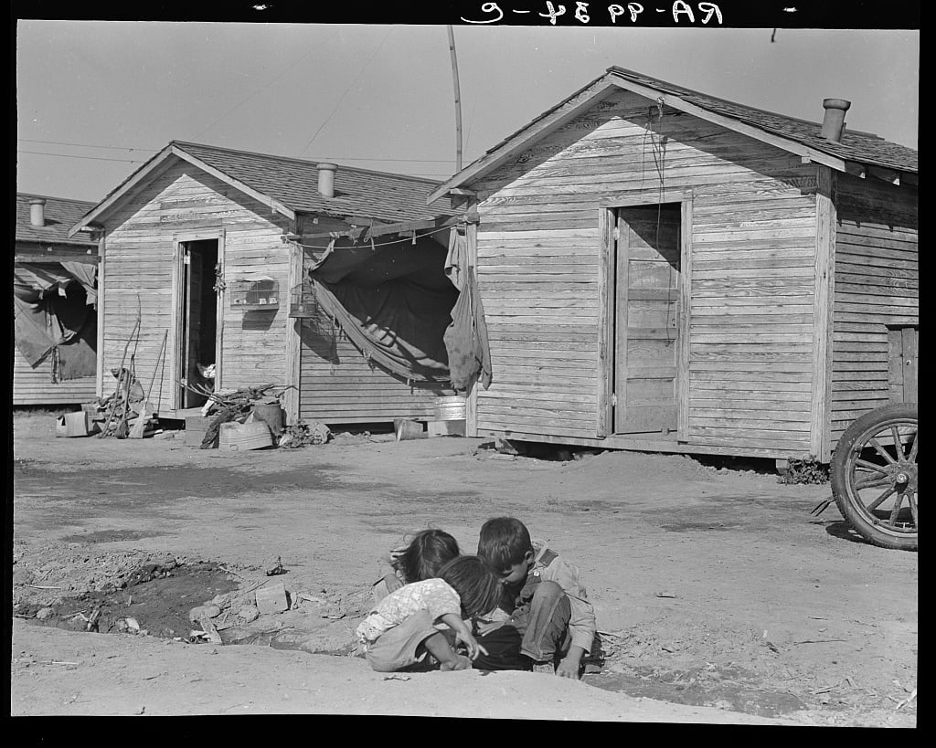
Migrant agricultural worker’s family in Nipomo, California, 1936. The mother, age 32, sits with three of her seven children outside a temporary shelter during the Great Depression.
Credit: Photo by Dorothea Lange. Farm Security Administration Collection, Library of Congress. Public domain.

Sociology gives us a framework to see that this is not just bad housing structure. It is a structural problem. When the employer controls housing, every complaint becomes a risk. Speaking up may not only cost your job, it also means losing your bed and risking forcible deportation. The design limits autonomy and keeps people quiet. The fewer choices a person has, the easier it is to control them.

In sociology, conflict theory starts with a simple idea: society develops and changes based on struggles over power and resources. In the case of migrant labor, that struggle is visible in the very organization of housing. Henri Lefebvre argued that space is socially produced. Social production means that space is shaped by those who have authority to determine how people live. This is not driven by comfort, fairness, or function. The arrangement and social production of space reflects the interests of those and control. The shape of a room, the distance between houses, and the layout of a building are not random. They reflect relationships.

Similarly, Michel Foucault shows how institutions use architecture to enforce discipline. In migrant housing, space signals control. These dorms do not need bars or guards. The buildings are made to meet the minimum legal standard for shelter. That standard is barely above what is allowed for a prison cell. The architecture dehumanizes, and in doing so, it controls.

I saw this firsthand. A worker told me his bunk was so close to the next that he could hear every breath of the man above him. His wife told me there were rules about visitors, meals, and noise. They could not live together, even though they were married. They felt monitored. They were afraid to speak. These homes were not theirs. The system made sure of that.

Sociology gives us the language to name what is happening. This is not a housing crisis. It is a labor strategy. These camps are not temporary accidents. They are long-term solutions to a problem no one wants to fix. As scholars and citizens, we should bring these designs to light. We cannot change what we do not see.

Joey Colby Bernert is a statistician and licensed clinical social worker based in Michigan. She is a graduate student in public health at Michigan State University and studies feminist theory, intersectionality, and the structural determinants of health.


Cheeseburger Baby - South Beach Miami
Cheeseburger Baby – South Beach Miami by AdamChandler86, Flickr CC

One of the biggest challenges and joys I have in teaching Introduction to Sociology is making ideas like social construction, cultural objects, or bureaucracy visible and intuitive to students. A big part of our value as a general education course is in showing students how to use these ideas in the world. I make a point to focus on bureaucracy, for example, because drawing attention to the unique skills and challenges of navigating a large bureaucratic system like a university is one way sociology can help students across many different majors.

Max Weber plays a big role here, of course, but one of the challenges in teaching his work is the “This is Water” problem — students are so steeped in bureaucracy that it is hard to recognize its unique traits. George Ritzer’s The McDonaldization of Society is a classic example, but the point-of-sale system is now so normal in the service industry that it can be difficult to wrap your head around any other way to organize a business. That’s why I love the charming 2004 documentary Hamburger America, by George Motz.

How do you make a cheeseburger? Ask your students and you will probably get a pretty standardized answer. At least one of these segments will turn that question on its head.

Not only do we get an intuitive sense of how much rich, unexpected variation there is in a cheeseburger, but this documentary also works in so many interesting insights about different regions and local cultures in the U.S. There are hooks here into lived experiences with segregation, de-industrialization, urban planning, and food systems. People are engaging with tradition, history, and economic change. This documentary is a fantastic way to show how culture is embedded in objects — the burgers pair well with Wendy Griswold’s cultural diamond!

All of these anchors give students an intuitive sense of how wildly different social arrangements can emerge without the systematizing force of bureaucracy or large scale, franchised restaurants. It is a great way to spur discussion – just don’t show it right before lunch.

Evan Stewart is an assistant professor of sociology at University of Massachusetts Boston. You can follow his work at his website, or on BlueSky.

A few years ago, I bought two orange traffic cones at a hardware store for twenty bucks. It was one of the best, most stress-relieving purchases I made.

“Traffic Cones” by Jacqui Brown, Flickr CC

Parking space is scarce in big cities. In our car-centered culture, the rare days you absolutely need a large truck in a precise place can be a total nightmare. These cones have gotten me through multiple moves and a plumbing fiasco, and they work like a charm.

The other day, in the middle of saving space to address said plumbing fiasco, a neighbor walked up to me and politely asked what was going on. They were worried their car was going to get towed. I reassured them that I was the only one having a horrible day, and I started thinking about how much authority two cheap plastic cones had. There was nothing official about them (they even still have the barcode stickers attached!), but people were still worried that they were trespassing.

The point of these cones wasn’t to deceive anyone, just to signal that there is something important going on and that people might want to stay clear for a little while. The same thing happens when a neon vest and an unearned sense of confidence let people go wherever they want.

Saving parking spaces like this is a great case of social theorist Max Weber’s distinction between power and legitimate authority. I can’t make anyone choose not to park where my plumber will need to be. What I can do is use a symbol, like a traffic cone, that indicates this situation is special, there is a problem, and we need space to deal with it. If people accept that and choose not to run over the cones, they have successfully conveyed some authority even if I actually have none. My neighbor accepts some legal authority, because they know people can be ticketed or towed, and they accept some traditional authority, because orange cones and traffic markers have long been a way we mark restricted spaces.

At this point, it is easy to say this is silly or superficial. You would be right! It is totally absurd that anyone would “listen” to the cheap plastic cones, but I think that is exactly the point. When you can’t force people to do things, social signaling like this becomes really important for fostering cooperative relationships. Symbols matter, because they help us confirm that we are willing to cooperate with each other, and they give us the ability to take each other at our word. If only there was a way to use them for something larger, like a global health emergency. From sociologist Zeynep Tufekci:

Telling everyone to wear masks indoors has a sociological effect. Grocery stores and workplaces cannot enforce mask wearing by vaccination status. We do not have vaccine passports in the U.S., and I do not see how we could…In the early days of the pandemic it made sense for everyone to wear a mask, not just the sick…if only to relieve the stigma of illness…Now, as we head toward the endgame, we need to apply the same logic but in reverse: If the unvaccinated still need to wear masks indoors, everyone else needs to do so as well, until prevalence of the virus is more greatly reduced.

Sociological Song of the Day: JD McPherson – “Signs & Signifiers”

Evan Stewart is an assistant professor of sociology at University of Massachusetts Boston. You can follow his work at his website, or on BlueSky.

“W. E. B. Du Bois and his Atlanta School of Sociology pioneered scientific sociology in the United States.”

– Dr. Aldon Morris

I had the good fortune to see Dr. Morris give a version of this talk a few years ago, and it is one of my favorites. If you haven’t seen it before, take a few minutes today and check it out.

Also, go check out the #DuBoisChallenge on Twitter! Data visualization nerds are re-making Du Bois’ pioneering charts and graphs on race and inequality in the United States.

https://twitter.com/asociologist/status/1363827706538975232?s=20

Evan Stewart is an assistant professor of sociology at University of Massachusetts Boston. You can follow his work at his website, or on BlueSky.

It is hard to keep up habits these days. As the academic year starts up with remote teaching, hybrid teaching, and rapidly-changing plans amid the pandemic, many of us are thinking about how to design new ways to connect now that our old habits are disrupted. How do you make a new routine or make up for old rituals lost? How do we make them stick and feel meaningful?

Social science shows us how these things take time, and in a world where we would all very much like a quick solution to our current social problems, it can be tough to sort out exactly what new rules and routines can do for us.

For example, The New York Times recently profiled “spiritual consultants” in the workplace – teams that are tasked with creating a more meaningful and communal experience on the job. This is part of a larger social trend of companies and other organizations implementing things like mindfulness practices and meditation because they…keep workers happy? Foster a sense of community? Maybe just keep the workers just a little more productive in unsettled times?

It is hard to talk about the motives behind these programs without getting cynical, but that snark points us to an important sociological point. Some of our most meaningful and important institutions emerge from social behavior, and it is easy to forget how hard it is to design them into place.

This example reminded me of the classic Social Construction of Reality by Berger and Luckmann, who argue that some of our strongest and most established assumptions come from habit over time. Repeated interactions become habits, habits become routines, and suddenly those routines take on a life of their own that becomes meaningful to the participants in a way that “just is.” Trust, authority, and collective solidarity fall into place when people lean on these established habits. In other words: on Wednesdays we wear pink.

The challenge with emergent social institutions is that they take time and repetition to form. You have to let them happen on their own, otherwise they don’t take on the same same sense of meaning. Designing a new ritual often invites cringe, because it skips over the part where people buy into it through their collective routines. This is the difference between saying “on Wednesdays we wear pink” and saying

“Hey team, we have a great idea that’s going to build office solidarity and really reinforce the family dynamic we’ve got going on. We’re implementing: Pink. Wednesdays.”

All of our usual routines are disrupted right now, inviting fear, sadness, anger, frustration, and disappointment. People are trying to persist with the rituals closest to them, sometimes to the extreme detriment of public health (see: weddings, rallies, and ugh). I think there’s some good sociological advice for moving through these challenges for ourselves and our communities: recognize those emotions, trust in the routines and habits that you can safely establish for yourself and others, and know that they will take a long time to feel really meaningful again, but that doesn’t mean they aren’t working for you. In other words, stop trying to make fetch happen.

Evan Stewart is an assistant professor of sociology at University of Massachusetts Boston. You can follow his work at his website, or on BlueSky.

For a long time, political talk at the “moderate middle” has focused on a common theme that goes something like this: 

There is too much political polarization and conflict. It’s tearing us apart. People aren’t treating each other with compassion. We need to come together, set aside our differences, and really listen to each other.

I have heard countless versions of this argument in my personal life and in public forums. It is hard to disagree with them at first. Who can be against seeking common ground?

But as a political sociologist, I am also skeptical of this argument because we have good research showing how it keeps people and organizations from working through important disagreements. When we try to avoid conflict above all, we often end up avoiding politics altogether. It is easy to confuse common ground with occupied territory — social spaces where legitimate problems and grievances are ignored in the name of some kind of pleasant consensus. 

A really powerful sociological image popped up in my Twitter feed that makes the point beautifully. We actually did find some common ground this week through a trend that united the country across red states and blue states:

It is tempting to focus on protests as a story about conflict alone, and conflict certainly is there. But it is also important to realize that this week’s protests represent a historic level of social consensus. The science of cooperation and social movements reminds us that getting collective action started is hard. And yet, across the country, we see people not only stepping up, but self-organizing groups to handle everything from communication to community safety and cleanup. In this way, the protests also represent a remarkable amount of agreement that the current state of policing in this country is simply neither just nor tenable. 

I was struck by this image because I don’t think nationwide protests are the kind of thing people have in mind when they call for everyone to come together, but right now protesting itself seems like one of the most unifying trends we’ve got. That’s the funny thing about social cohesion and cultural consensus. It is very easy to call for setting aside our differences and working together when you assume everyone will be rallying around your particular way of life. But social cohesion is a group process, one that emerges out of many different interactions, and so none of us ever have that much control over when and where it actually happens.

Evan Stewart is an assistant professor of sociology at University of Massachusetts Boston. You can follow his work at his website, or on BlueSky.

Sociologists spend a lot of time thinking about lives in social context: how the relationships and communities we live in shape the way we understand ourselves and move through the world. It can be tricky to start thinking about this, but one easy way to do it is to start collecting social facts. Start by asking, what’s weird about where you’re from?

I grew up on the western side of the Lower Peninsula of Michigan, so my eye naturally drifts to the Great Lakes every time I look at a map of the US. Lately I’ve been picking up on some interesting things I never knew about my old home state. First off, I didn’t realize that, relative to the rest of the country, this region is a hotspot for air pollution from Chicago and surrounding industrial areas.

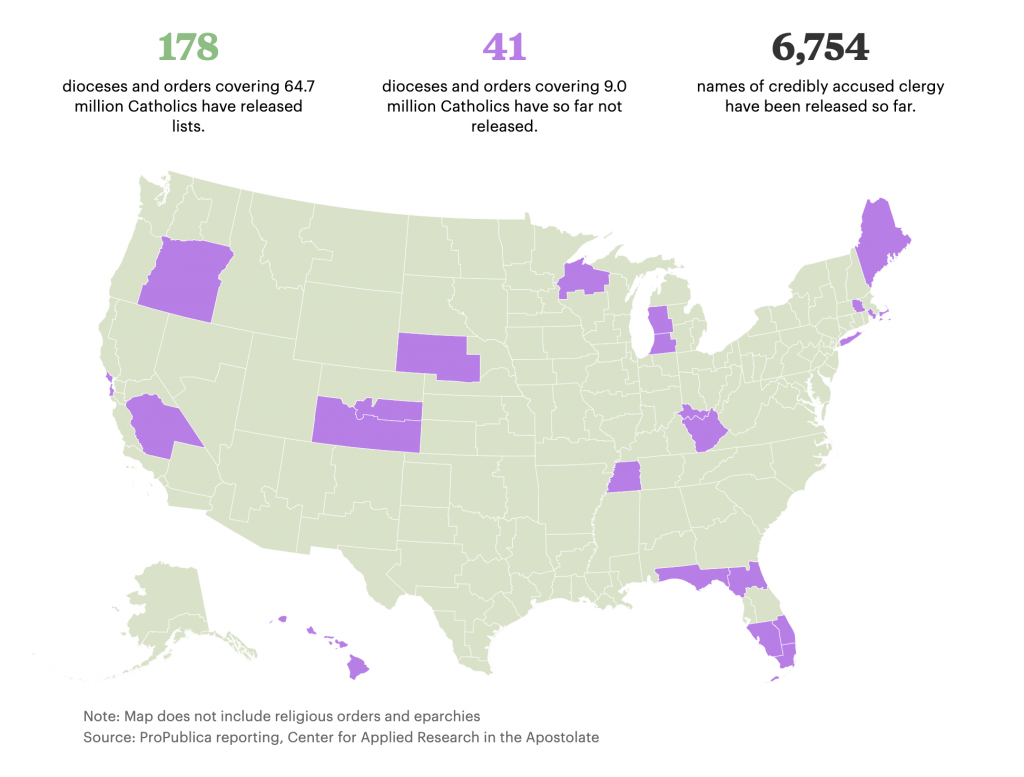
Second, I was looking at ProPublica’s reporting of a new database of Catholic clergy credibly accused of abuse, and noticed that the two dioceses covering western MI haven’t yet disclosed information about possible accusations. I didn’t grow up Catholic, but as a sociologist who studies religion it is weird to think about the institutional factors that might be keeping this information under wraps.

Third, there’s the general impact of this region on the political and cultural history of the moment. West Michigan happens to be the place that brought you some heavy hitters like Amway (which plays a role in one of my favorite sociological podcasts of last year), the founder of Academi (formally known as Blackwater), and our current Secretary of Education. In terms of elite political and economic networks, few regions have been as influential in current Republican party politics.

I think about these facts and wonder how much they shaped my own story. Would I have learned to like exercise more if I could have actually caught my breath during the mile run in gym class? Did I get into studying politics and religion because it was baked into all the institutions around me, even the business ventures? It’s hard to say for sure.

What’s weird about where YOU’RE from? Doing this exercise is great for two reasons. First, it helps to get students thinking in terms of the sociological imagination — connecting bigger social and historical factors to their individual experiences. Second, it also helps to highlight an important social research methods point about the ecological fallacy by getting us to think about all the ways that history and social context don’t necessarily force us to turn out a certain way. As more data become public and maps get easier to make, it is important to remember that population correlates with everything!

Evan Stewart is an assistant professor of sociology at University of Massachusetts Boston. You can follow his work at his website, or on BlueSky.

Social scientists rely on the normal distribution all the time. This classic “bell curve” shape is so important because it fits all kinds of patterns in human behavior, from measures of public opinion to scores on standardized tests.

But it can be difficult to teach the normal distribution in social statistics, because at the core it is a theory about patterns we see in the data. If you’re interested in studying people in their social worlds, it can be more helpful to see how the bell curve emerges from real world examples.

One of the best ways to illustrate this is the “Galton Board,” a desk toy that lets you watch the normal distribution emerge from a random drop of ball-bearings. Check out the video below or a slow motion gif here.

The Galton Board is cool, but I’m also always on the lookout for normal distributions “in the wild.” There are places where you can see the distribution in real patterns of social behavior, rather than simulating them in a controlled environment. My absolute favorite example comes from Ed Burmila:

The wear patterns here show exactly what we would expect a normal distribution to tell us about weightlifting. More people use the machine at a middle weight setting for the average strength, and the extreme choices are less common. Not all social behavior follows this pattern, but when we find cases that do, our techniques to analyze that behavior are fairly simple.

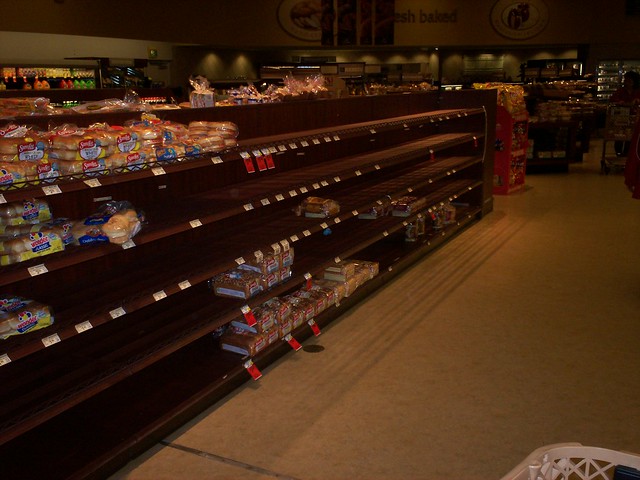
Another cool example is grocery shelves. Because stores like to keep popular products together and right in front of your face (the maxim is “eye level is buy level“), they tend to stock in a normally-distributed pattern with popular stuff right in the middle. We don’t necessarily see this in action until there is a big sale or a rush in an emergency. When stores can’t restock in time, you can see a kind of bell curve emerge on the empty shelves. Products that are high up or off to the side are a little less likely to be picked over.

Paul Swansen, Flickr CC

Have you seen normal distributions out in the wild? Send them my way and I might feature them in a future post!

Evan Stewart is an assistant professor of sociology at University of Massachusetts Boston. You can follow his work at his website, or on BlueSky.