gender

Here is a link to the Oklahoma Marriage Initiative, a publicly-sponsored marriage-promotion program. The idea behind it is that increasing marriage, particularly among poor women, would decrease poverty and, therefore, welfare rolls.

Here is a link to the parenting section. Among other things, couples will learn “the benefits of marriage” and “strengthening the father-child bond.” Nothing is said about the mother-child bond–presumably it’s just fine. Note also that in the artwork for the page is very gendered–the woman is holding the baby, the male figure is standing over or protecting her. If you go to the photos section (pictures of actual participants), there are pictures of men holding their babies.

It might be useful to read the article “The Marriage Cure,” by Katherine Boo, in the August 18 & 25, 2003, issue of The New Yorker as well–Boo follows several poor black women as they go through the program and try to figure out how to find marriagable men (and it is made clear to them that they need to look for a man, any man).

I’m going to use this in my Intro to Sociology course as a way to discuss the idea that poor women wouldn’t be poor if only they would get married–to anyone.

Jessica Simpson wore a pink Tony Romo (Dallas Cowboys quarterback) jersey at a recent game. In case you didn’t know, they are dating. This was the first time she went to one of his games and actively acknowledged their relationship.

The Cowboys lost. And here’s the fascinating thing: She was immediately blamed for the loss. This photo, where she looks sort of pouty and upset, has popped up everywhere, though there are photos available where she looks happy and is cheering. Here is a Dallas Morning News column addressing the blame put on Jessica Simpson.

These two Jessica masks are available here; the idea is that fans of the teams the Cowboys are playing should take them to games to throw Romo off so the Cowboys will lose (another mask is available at RuinRomo).

This whole story of Jessica causing the Cowboys to lose was a big enough deal that yesterday, while sitting in a restaurant, I saw ESPN announce that she will not attend the upcoming Cowboys game against the New York Giants. FOX News added the story to their website. This is news! In this article, Romo insists he is focused on the game, not Jessica.

This fits in with a long line of women being seen as a threat to men’s performance in male-dominated arenas (sports, the military, and police forces in particular). When I taught Sociology of Sport we discussed how in the early 1900s single women who attended baseball games would be harassed, spit at, and sometimes removed from the game by other fans who felt they were going to distract the players and make them lose. There’s also the long-standing belief that men shouldn’t have sex before a game. Women sap men’s strength (think Sampson and Delilah in the Old Testament), and men who become romantically/sexually involved with women risk becoming weak (i.e., feminine) and failing in the masculine world.

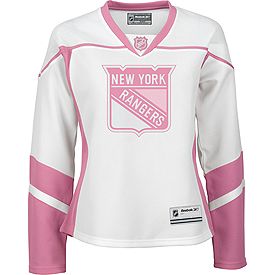
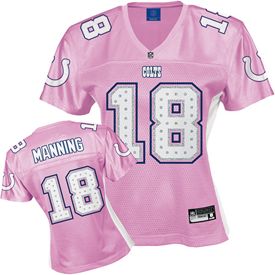
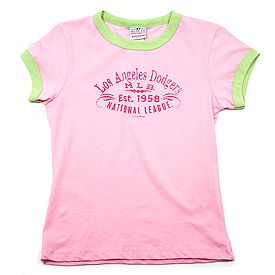
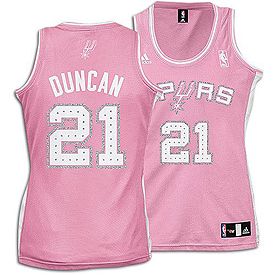
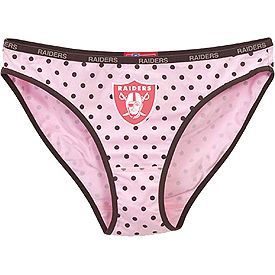
This story might be a good addition to the pictures of pink athletic team jerseys.

Gwen Sharp is an associate professor of sociology at Nevada State College. You can follow her on Twitter at @gwensharpnv.

Text:

“Please keep stealing our stewardesses. Within two years most of our stewardesses will leave us for other men. This isn’t surprising. A girl who can smile for 5 1/2 hours is hard to find. Not to mention a wife who can remember what 124 people want for dinner. (And tell you all about meteorology and jets, if that’s what you’re looking for in a woman.) But these are not the things that brought on our problem. It’s the kind of girl we hire. Being beautiful just isn’t enough. (We don’t mean it isn’t important. We just mean it isn’t enough.) So if there’s one thing we look for, it’s girls who like people. And you can’t do that and then tell them not to like people too much. All you can do is put a new wing on your stewardess college to keep up with the demand.”

Dorotha found this here.

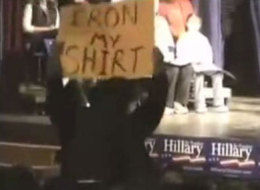
Hecklers shout at Clinton to “iron my shirt!” at a campaign speech in New Hampshire:See the video:[youtube]http://www.youtube.com/watch?v=FjS8_WWhjao[/youtube] Via the Huffington Post.

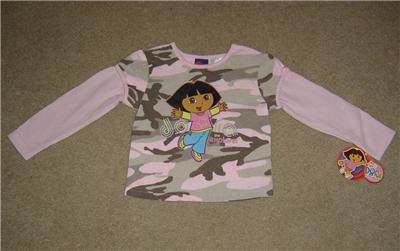
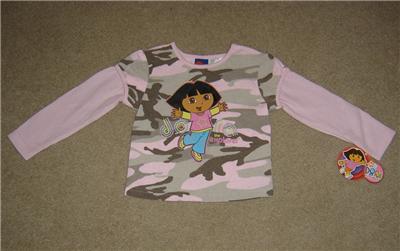
Pink camo + Dora the Explorer = cutesy toughness for little girls.


Pink camo + vinyl pants = sexy.

Special edition Hard Rock Barbie with pink camo punk-ish outfit and guitar. This could also be used as an example of the commodification of countercultures.

This print, on a girls’ outfit, is called “butterfly camo.” Note the spots are butterfly-shaped.

Did you know there’s a website with tons of pink camo clothing?

I found all these here.

This is a nice compliment to our post of the t-shirt with pictures of safety pins on it (an example of the co-optation of punk culture):

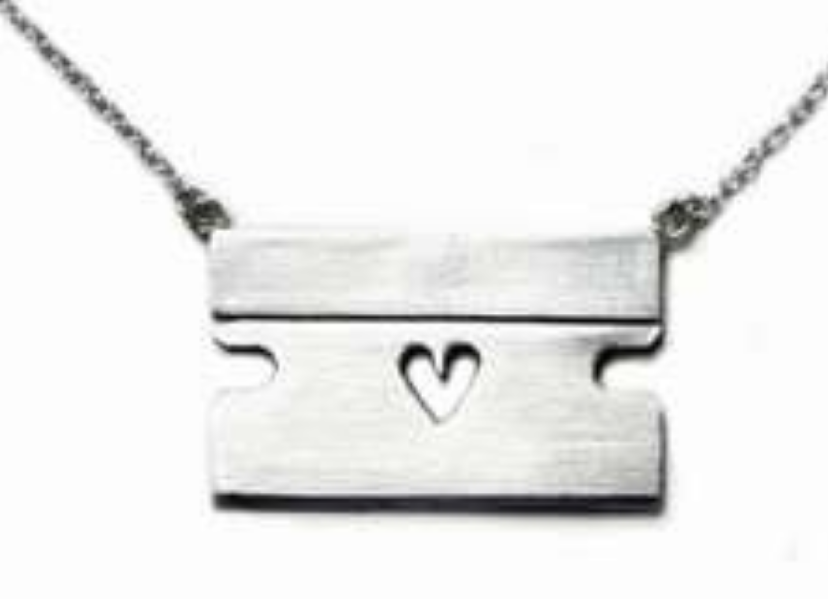
When you’re so tough that you are compelled to hang a razor blade around your neck, but not so tough that you want an ouchie.

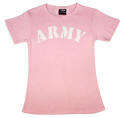
This one is a nice example, also, of the way in which we “play” with gender by collapsing traditionally distinct ideas (masculine toughness symbolized by the razor blade and sweet femininity symbolized by the heart) (see also sparkly camouflage, trucker hats with the word “princess” written across them, and pink sports jerseys).

Buy the fake razor blade jewelry here (or don’t).

Lisa Wade, PhD is an Associate Professor at Tulane University. She is the author of American Hookup, a book about college sexual culture; a textbook about gender; and a forthcoming introductory text: Terrible Magnificent Sociology. You can follow her on Twitter and Instagram.

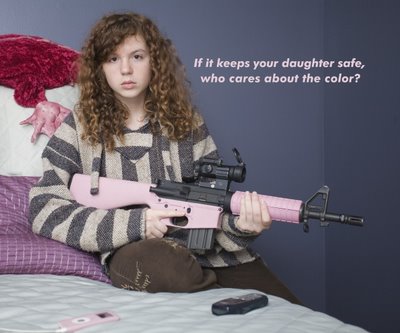
Anti-gun control propaganda (found here) aimed at EVERYBODY.

What you might expect from the pro-gun lobby:

For kids!

Pro-gun feminism?

Guns are for fags:

Gun control is racist:

Bill F. sent in this one. What’s interesting about this image is the comment on masculinity–the implication is that “pacifist” men (whatever “pacifist” is taken to mean) aren’t “real” men because they can’t or won’t fulfill their role of protecting women. The gun becomes a replacement for sissified men.