You might have heard that the U.S. added 290,000 jobs in April.  At the same time, the unemployment rate rose!  Bwhat!?

The unemployment rate doesn’t measure how many people are unemployed.  It sounds like it should, being that it includes the words “unemployment” and “rate” and all, but it doesn’t.  Instead, the unemployment rate measures how many people are looking for jobs.  When things are really bad, some people get discouraged and give up, or go to school instead, or stay home to take care of their kids and save day care money.

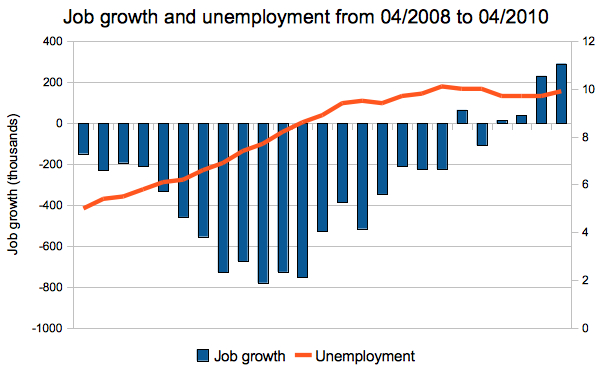
So the number of jobs and the unemployment rate are not directly correlated.  Ezra Klein posted this visual:

It shows unemployment rising as job growth remains negative, leveling off as (perhaps) people drop out of active job seeking, and than actually going up again there at the end in response to two months of solid job growth.

So it turns out that, in this case, a rise in the unemployment rate is good news.  It means some people are hopeful again.

Lisa Wade, PhD is an Associate Professor at Tulane University. She is the author of American Hookup, a book about college sexual culture; a textbook about gender; and a forthcoming introductory text: Terrible Magnificent Sociology. You can follow her on Twitter and Instagram.

This 4-minute 20-second video, by Colorlines, uses true stories to illustrate the impact of a 1996 law that authorizes the (sometimes retroactive) deportation of non-citizens convicted of any crime, including misdemeanors and traffic violations.  In 2008, the video reports, the U.S. government deported almost 360,000 people on these grounds.

Via Racewire.

Lisa Wade, PhD is an Associate Professor at Tulane University. She is the author of American Hookup, a book about college sexual culture; a textbook about gender; and a forthcoming introductory text: Terrible Magnificent Sociology. You can follow her on Twitter and Instagram.


Yael S. sent along a 10-minute educational video by FilmFixation. In it, she asks viewers to consider the conditions in which historical photographs came to be.  “Why was it created,” she asks, “by whom, and for what purpose?”  It starts off a bit slow, but picks up with voiceover.  Please be alerted that there are images of racialized violence:

Lisa Wade, PhD is an Associate Professor at Tulane University. She is the author of American Hookup, a book about college sexual culture; a textbook about gender; and a forthcoming introductory text: Terrible Magnificent Sociology. You can follow her on Twitter and Instagram.

Crossposted at Jezebel.

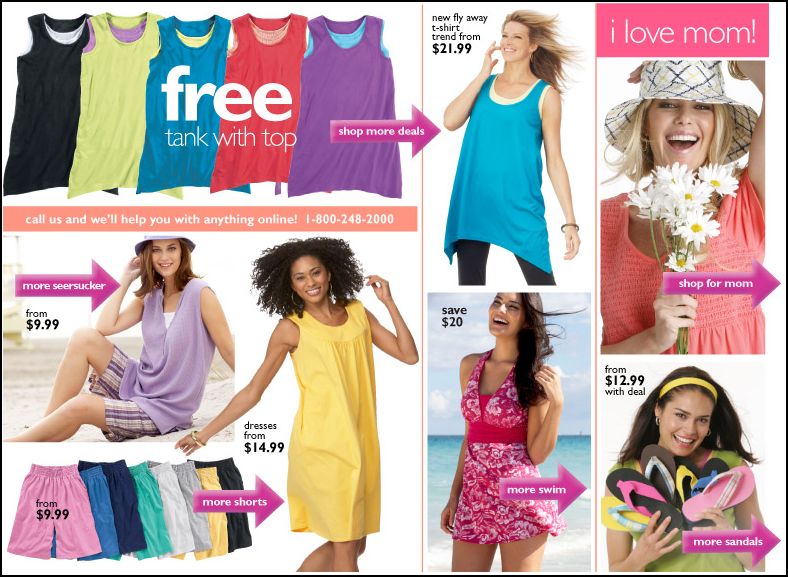
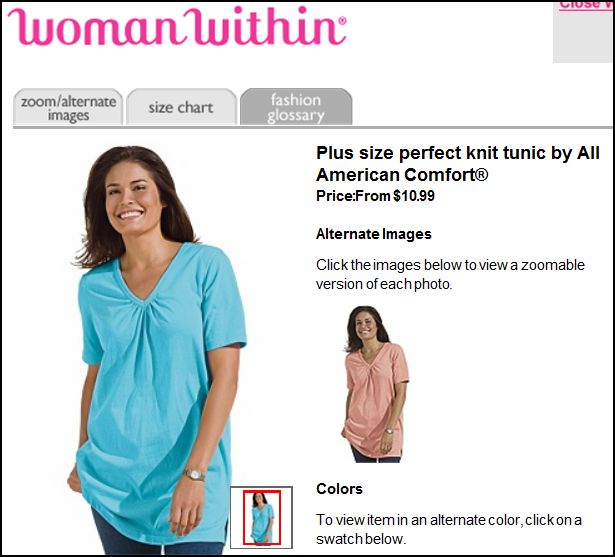
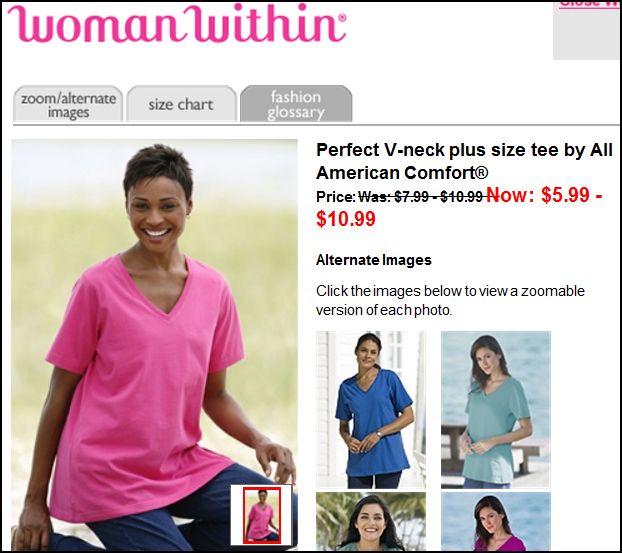
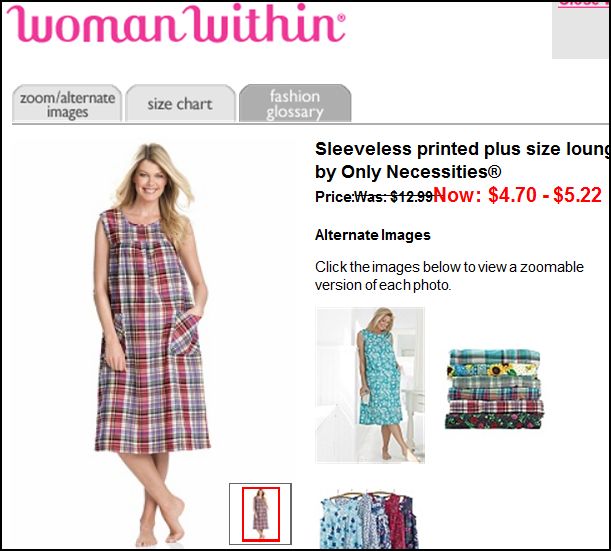
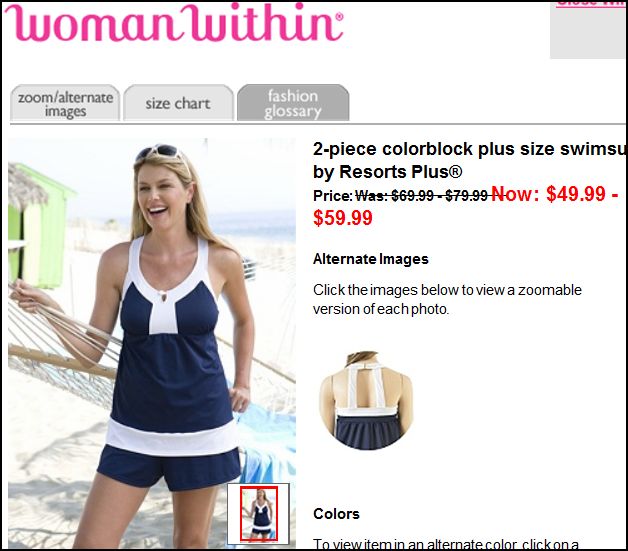
Meg R. noticed something funny at Woman Within, a website that sells clothing sizes 12w to 44w.  All of the models were very thin, thus not representative of the intended customer base at all.  But, even odder, they were all swimming in clothes that (by today’s standards) were far too large for them.  So the website featured thin models selling plus-size clothes (not, in itself, that surprising), but didn’t scale down the clothes to fit them!  We might imagine that using thin women would make customers, even if they aren’t thin, like the clothes (because we all internalize thin preference), but modeling poorly fitting clothes, as Meg said, wasn’t doing the product any favors!  We’re both baffled by the logic.

Some examples:

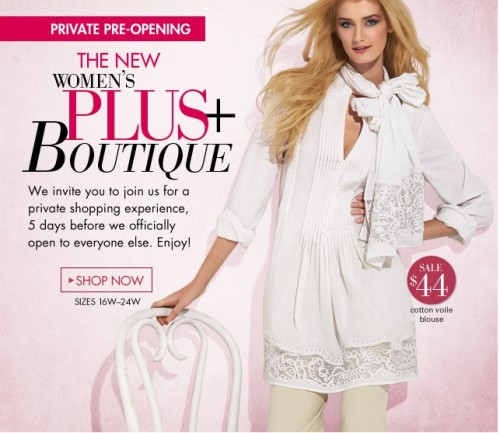
NEW! (July ’10): Liz R. sent in another example. This ad is for clothing sized 16-24 but with a very thin model:

Lisa Wade, PhD is an Associate Professor at Tulane University. She is the author of American Hookup, a book about college sexual culture; a textbook about gender; and a forthcoming introductory text: Terrible Magnificent Sociology. You can follow her on Twitter and Instagram.


Tanita sent in this funny short video that addresses the sexism female authors have often faced when trying to get their work published or taken seriously in literary circles (some, such as Mary Ann Evans, better known as George Eliot, resorted to using male pen names to combat these problems).

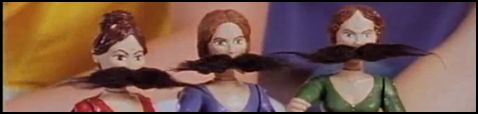
What better way for female authors to deal with the situation than use their action-hero superpowers to combat sexist publishers? I present to you the Brontësaurus:

Confession: I know this will make many of you scream in horror, and that the book has all kinds of feminist overtones and is greatly beloved and majorly influenced literature, and I’m showing myself to be a literary heathen with no appreciation for the arts, but I read Jane Eyre once, and I think Charlotte Brontë’s most effective weapon might be her ability to get you bogged down reading lengthy Gothic descriptions of moors and stuff.

Though if you ever need to make me cringe and run, tell me you’re going to make me read Tess of the d’Urbervilles. I tried reading it just for fun once, and I have never been so pained.

Penny R. and p.j. sent in a link to the American Able project. A description from the artist’s website:

‘American Able’ intends to, through spoof, reveal the ways in which women with disabilities are invisibilized in advertising and mass media. I chose American Apparel not just for their notable style, but also for their claims that many of their models are just ‘every day’ women… Women with disabilities go unrepresented…in most of popular culture. Rarely, if ever, are women with disabilities portrayed in anything other than an asexual manner, for ‘disabled’ bodies are largely perceived as ‘undesirable’…

Too often, the pervasive influence of imagery in mass media goes unexamined, consumed en masse by the public. However, this imagery has real, oppressive effects on people who are continuously ‘othered’ by society. The model, Jes Sachse, and I intend to reveal these stories by placing her in a position where women with disabilities are typically excluded.

The goal is admirable. Individuals with disabilities are routinely ignored in pop culture, and if depicted, they are often either mocked or are devoid of sexuality (notable examples being the documentary Murderball and the depiction of a character in a wheelchair on the TV show Friday Night Lights, though both focus solely on men with disabilities who generally have relationships with women who do not).

That said, it brings up the eternal question regarding artistic endeavors, particularly those aimed at undermining prejudices: does it work? The idea here is to show a woman with disabilities in sexualized contexts and use humor to counter popular conceptions of those with disabilities as asexual (and parody American Apparel in the process). As with any use of parody/irony/etc., it poses a dilemma. Will viewers get it? Will they grasp the intent and look at the images through that lens? Will it lead some people to question why they might find these photos shocking, why a woman with a disability shown in sexual situations would be surprising, or the reason for any discomfort they might feel when looking at them?

Or will people respond by ridiculing Jes, or even feeling disgusted? Will they look further into those feelings and why they might have them? Will it change anything?

And how do you decide if it’s worth it? If half of viewers engage in some introspection and examining of their own prejudices, and half don’t, is that a sufficient trade-off? If 90% of people ridiculed the images and it reinforced their belief that bodies of those with disabilities are undesirable, but 10% would think about how women with disabilities are de-sexualized, or that American Apparel presents a very narrow range of body types as “normal,” everyday women, would you feel that you had accomplished something significant? Is it the artist’s responsibility to care?

Similar questions have been posed about photos of individuals from Appalachia: do they humanize people often depicted as backward “hillbillies,” or do they actually reinforce perceptions that everyone living in the area is poor and rural?

How do you negotiate the use of art to make social statements (whether questioning prejudices, pointing out inequalities, or humanizing stigmatized groups), considering that once you put something out in the public domain, you have little control over how people interpret it and whether they take from it the opposite message you intended, perhaps even ridiculing your subjects as a result of your project?

Gwen Sharp is an associate professor of sociology at Nevada State College. You can follow her on Twitter at @gwensharpnv.

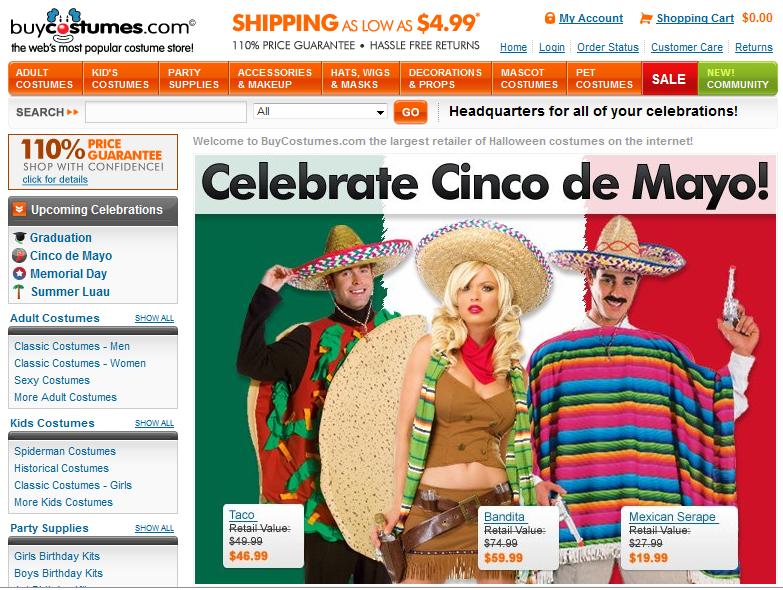
Mexican Independence Day May 5th commemorates the Battle of Pueblo in which Mexico defeated the French…  how better to celebrate than to animate offensive stereotypes and make fun of Spanish!

Maya sent us a link to publicity for a clothing swap schedule for May 5th called “Swappo de Mayo,” of course:

And Maddy B. sent us a screen shot from buycostumes.com.  This image was featured on the front page in mid-April:

See also our post featuring “celebrations” of Martin Luther King Day.

(Thanks to Ramona, Jess, Ryan, Kristen, CS, and Jorge for the correction on the significance of the date!)

—————————

UPDATE: Several Readers who corrected my mistake have stated that it was offensive.  I’m really sorry.

Gwen and I have a policy of owning our mistakes.  I don’t know everything, even things that I really should know.  One of the best things about this blog, for me as an author, is that I learn all the time.  I don’t resent being corrected, I am grateful.

I apologize that my ignorance was offensive. My hope is that, by leaving the post up, with my ignorance laid bare, I am modeling the kind of humility that allows people to learn new ideas and accept correction from others.

Lisa Wade, PhD is an Associate Professor at Tulane University. She is the author of American Hookup, a book about college sexual culture; a textbook about gender; and a forthcoming introductory text: Terrible Magnificent Sociology. You can follow her on Twitter and Instagram.

Snehata K. sent in two commercials for Miller Lite that reproduce ideas of masculinity while encouraging men to do something usually seen as feminine: care about calories. In the commercials we see that it’s ok to drink beer with fewer calories than the regular, as long as you do it in a manly way:

What’s a feminine way of drinking light beer? Prioritizing calorie content over the taste. If you’re a guy, you can care about health/diet and thus want a lower-calorie beer, but only if you show you still care about beer the way men are supposed to: you appreciate the taste and won’t sacrifice it for anything.

Guys who forget that are embarrassingly girly. And being feminized is clearly stigmatizing, worthy of ridicule. Even women are disgusted by feminized men. So not only will men who fail to adequately perform masculinity be ridiculed by men, they’ll lose any chance with hot chicks, too. As they do so often, men are receiving a clear message: be sure you’re masculine in every way, all the time, or you risk losing any claim you have to a respected version of manhood.

Of course, if you really want to be manly, you need to stop caring about silly things like your health altogether and drink Miller High Life.