The Physicians Committee for Responsible Medicine (PCRM) sponsored two new billboards in Albany, NY, warning residents that cheese makes you fat in what is possibly most irresponsible way ever. The first features an obese man’s disembodied torso and the words, “Your abs on cheese.” The second features an obese woman’s butt and thighs and the words, “Your thighs on cheese.” The images make a very clear statement: fat people are disgusting.
The PCRM advocates for a vegan diet. The aim of this campaign is to get Albany residents to reduce their cheese intake, as cheese is a common source of saturated fat and, according to the PRCM, a major contributor to obesity in the United States. In Albany, home to several dairy farms, 63 percent of adults are obese. This is higher than the statewide obesity level of 59 percent. Obesity prevention is a valid cause, to be sure, but at what cost to other health issues?

According to their website, the PCRM is “a nonprofit health organization that promotes preventive medicine, conducts clinical research, and encourages higher standards for ethics and effectiveness in research.” For an organization so concerned with ethical standards, the PCRM has sunk pretty low with this offensive and damaging campaign. In the jargon of health communication ethics, the PCRM have committed a common and classic misstep: the failure to consider the unintended consequences of their message.

Just like a single food item (in this case, cheese) is not responsible for the entire obesity epidemic, obesity is not the only serious health problem facing Americans. We are also struggling with our body image and self-esteem as we cope with the barrage of photoshopped and unrealistic “ideal bodies” in the media. The National Eating Disorders Association states that “in the United States, as many as 10 million women and 1 million men are fighting a life and death battle with an eating disorder such as anorexia or bulimia. Millions more are struggling with binge eating disorder.”

In the medical hegemony, physical health tends to outrank mental health in “importance.” But the line between physical and mental health issues is not always clear, especially with the confluence of obesity, body image disturbance, eating disorders, and self-esteem. The PRCM is wearing blinders to these interrelated health issues in their dogmatic pursuit of a singular, isolated objective.

Physicians are taught to “do no harm.” The PRCM needs to understand that insensitive words and pictures are absolutely harmful to our health. There are better ways to educate and motivate people to make healthier food choices; ethical health campaigns do not sacrifice one health issue to promote another.

————————

Leah Berkenwald is a graduate student of Health Communication at Emerson College, in collaboration with the Tufts University School of Medicine, and holds a MA in American Studies from the University of Nottingham. She is currently designing a social marketing campaign on body image for the Massachusetts Institute of Technology. She also works as the Online Communications Specialist at the Jewish Women’s Archive, and blogs at talkinreckless.com.

If you would like to write a post for Sociological Images, please see our Guidelines for Guest Bloggers.

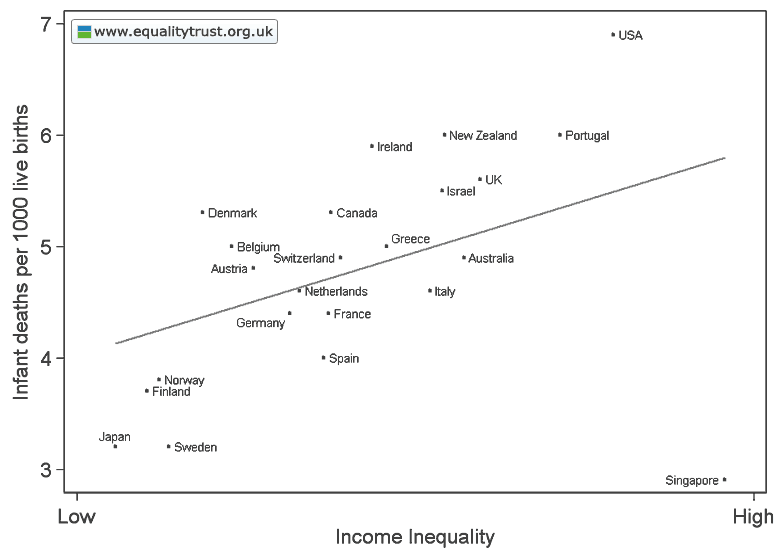
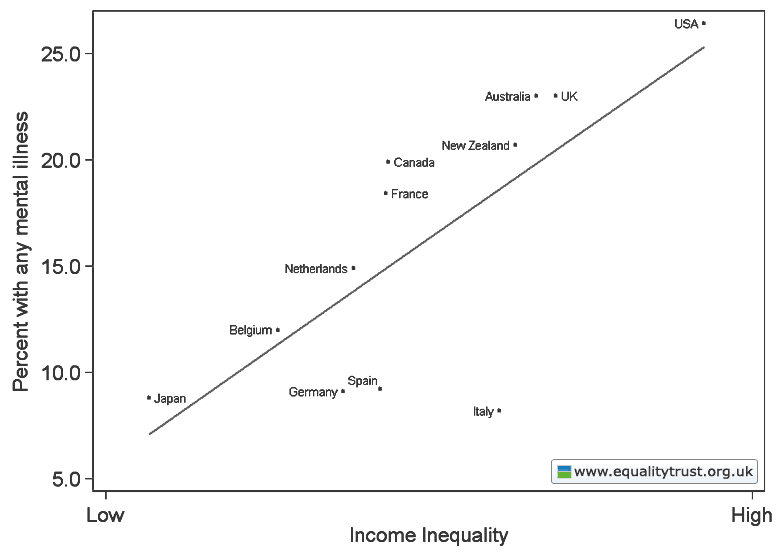
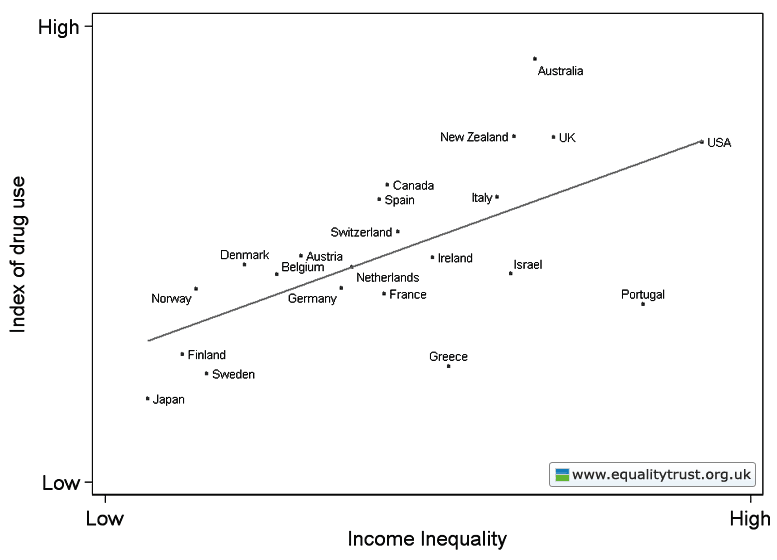
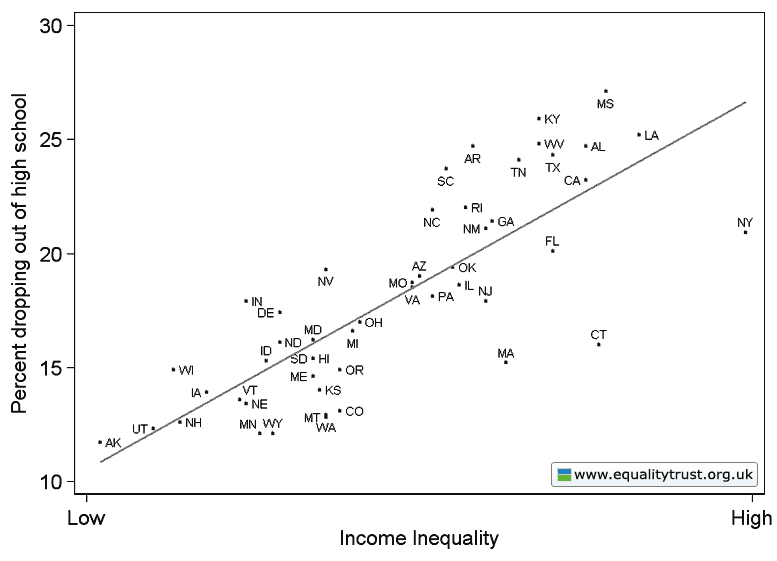
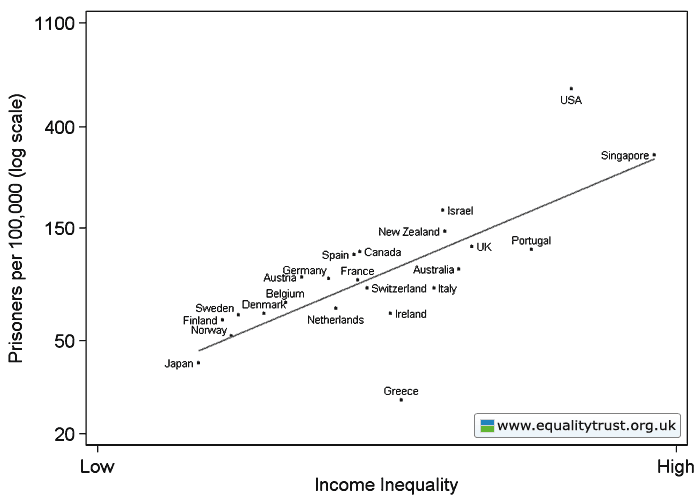
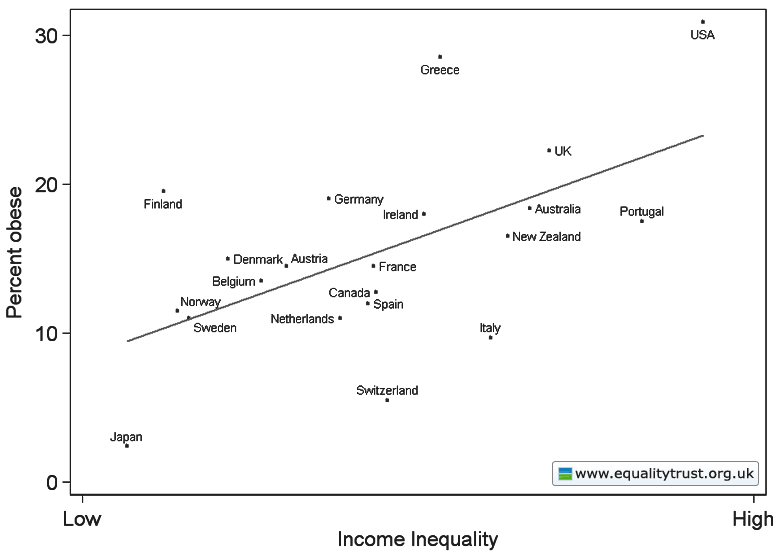
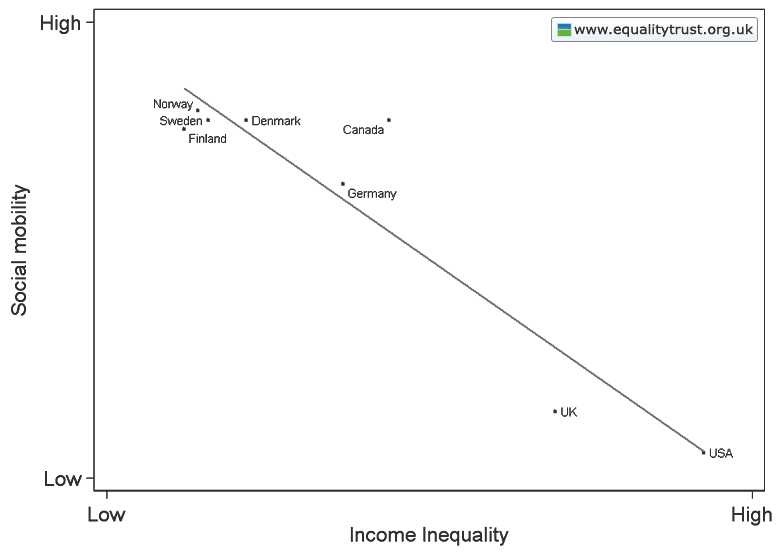
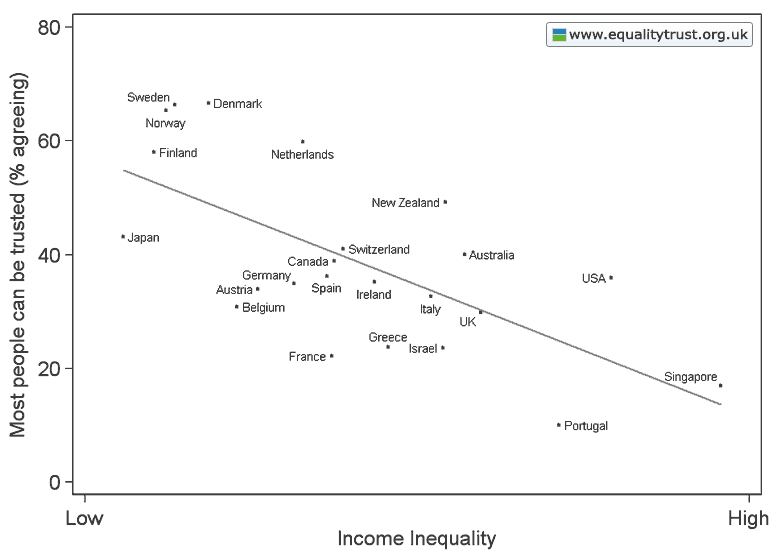
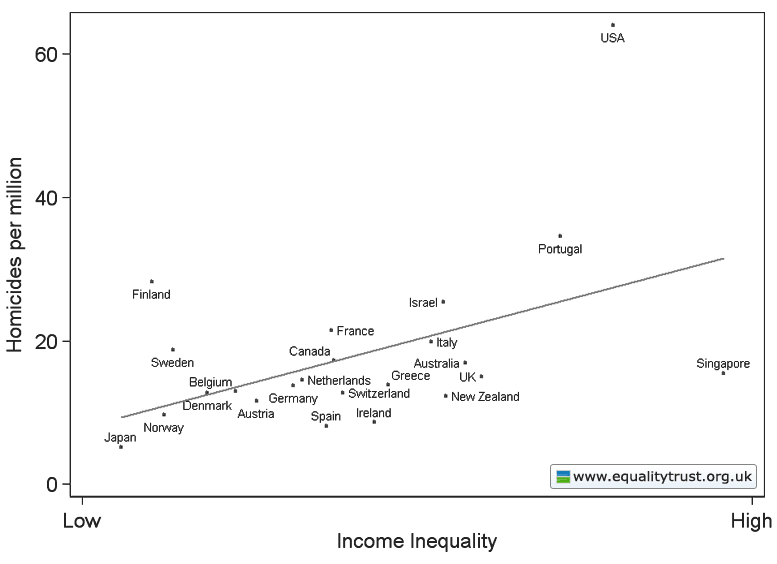
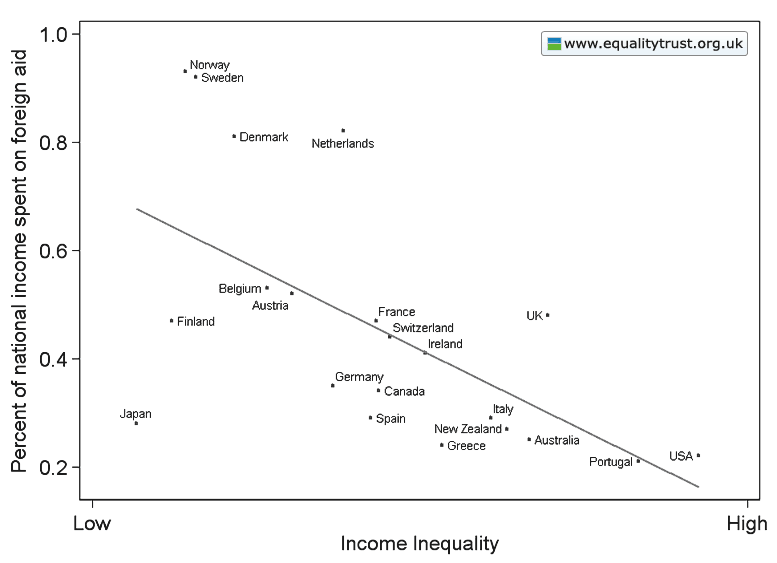
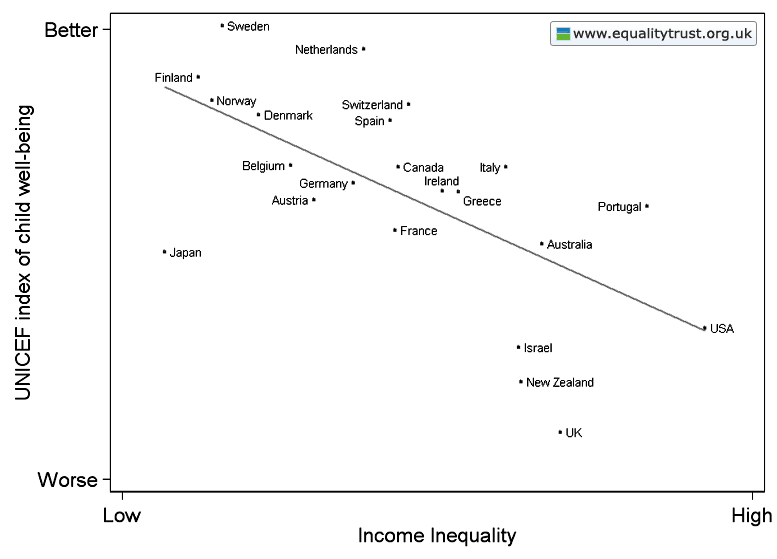
The mysterious SocProf, who writes The Global Sociology Blog, offered a nice review of Richard Wilkinson and Kate Pickett‘s book, The Spirit Level: Why More Equal Societies Almost Always Do Better.  Wilkinson and Pickett offer transnational research showing how, exactly, income inequality is related to bad outcomes on average.  In other words, as SocProf puts it, “…egalitarianism is not a bleeding heart’s wet dream but rather the only rational course of action in terms of public policy.”  The 11 graphs, available at the Equality Trust website, speak for themselves.

Societies with more income inequality have higher infant death rates than other societies:

Societies with more income inequality have higher rates of mental illness than other societies:

Societies with more income inequality have a higher incidence of drug use than other societies:

Societies with more income inequality have a higher high school drop out rate than other societies:

Societies with more income inequality imprison a larger proportion of their population than other societies:

Societies with more income inequality have a higher rate of obesity than other societies:

Individuals in societies with more income inequality are less likely to be in a different class than their parents compared to other societies:

Individuals in societies trust others less than people in other societies:

Societies with more income inequality have higher rates of homicide than other societies:

Societies with more income inequality give less in foreign aid than other societies:

Children in societies with more income inequality do less well than children in other societies:

The authors sum it up pretty simply: : “Th[e] dissatisfaction [measured in this data is] a cost which the rich impose on the rest of society.”

And they have a clear policy proposal relevant to the current economic crisis.

[This is] a clear warning for those who might want to place low public expenditure and taxation at the top of their priorities. If you fail to avoid high inequality, you will need more prison and more police. You will have to deal with higher rates of mental illness, drug abuse and every other kind of problems. If keeping taxes and benefits down leads to wider income differences, the need to deal with ensuing social ills may  force you to raise public expenditure to cope.

Readers Ana and Dmitriy T.M. sent in a TED talk of Richard Wilkinson discussing the relationship between income inequality and social problems:

Lisa Wade, PhD is an Associate Professor at Tulane University. She is the author of American Hookup, a book about college sexual culture; a textbook about gender; and a forthcoming introductory text: Terrible Magnificent Sociology. You can follow her on Twitter and Instagram.

Cross-posted at Ms.

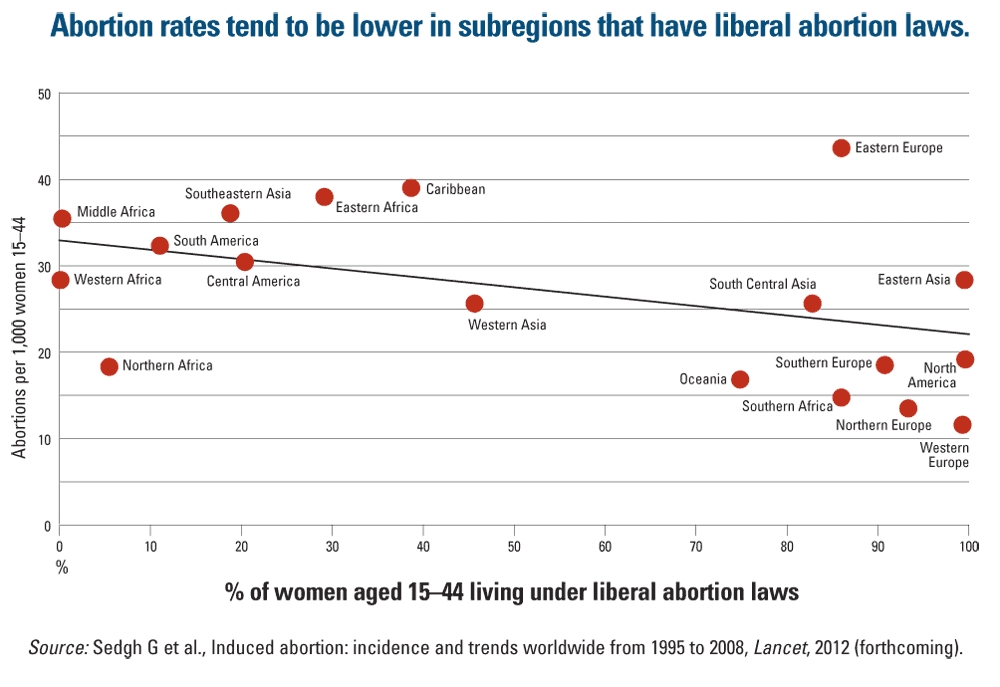
Andrew S. let us know that The Lancet has just released a study on global trends in abortion, focusing on overall rates, access to safe vs. unsafe abortions, and how the legal status of abortion impacts abortion rates. The results shed some interesting light on the effects of efforts to reduce abortion by outlawing or restricting access to it. Looking at data from 1995 to 2008, the authors found that abortion rates were actually lower in areas of the world with less restrictive abortion laws:

[Via ThinkProgress.]

The Guttmacher Institute provides a full summary of the article. Not surprisingly, the more restrictive abortion laws are, the higher the proportion of unsafe abortions (with Eastern Europe being a significant outlier, with the highest global abortion rates). About half of all abortions are unsafe, leading to the deaths of roughly 47,000 women each year, or 13% of all global maternal deaths — almost entirely in developing nations, where restrictive abortion laws are more common and  access to contraception and medical care are generally lower.

UPDATE: A couple of commenters pointed out that I was sloppy with my wording, and it seems like I’m making a direct causal argument (i.e., fewer restrictions leads to fewer abortions). The situation is more complicated than that; the very fact that some nations have more restrictions than others likely reflects a variety of issues that themselves influence the abortion rate, so that while there might be *some* causation, it’s also probable that laws on abortion and abortion rates are both influenced by other variables. I don’t think that getting rid of all restrictive laws in, say, Southeastern Asia, without making any other change at all, would necessarily lead to a dramatic shift in abortion rates. That said, what I find more interesting is the opposite proposition: the idea that imposing restrictions on abortion will automatically reduce abortion rates, which doesn’t seem true, at least on a global level.

Since outright hatred and discrimination of people because of their race is no longer socially acceptable in our post Civil-Rights era, many argue racism no longer exists.  But sociologists suggest that racism simply changed, becoming more implicit and indirect.

Eduardo Bonilla-Silva argues that the new racism entails individuals saying and doing things that perpetuate racial stereotypes and inequalities, but they do so in such a way that the offender is able to deny being explicitly racist.  One of the many types of new racist strategies Bonilla-Silva highlights is the use of racially charged code speak, or using indirect racial rhetoric and semantic moves to express an ideology that serves to reinforce white dominance over minorities.

The Daily Show’s Larry Wilmore illustrates the code speak implicit in presidential candidate Newt Gingrich’s suggestion that we combat poverty by hiring poor children to clean the restrooms at their schools.  In the clip below, Wilmore notes that “it’s 2011, and you can’t just call Black people lazy,” and then points out Gingrich’s racial code speak.  He notes Gingrich’s statement about “neighborhoods where they may not have that experience [of working]” is “code for inner-city, which is code for urban, which is code for Black.”   Gingrich’s statement about poor children having “no habit of showing up [to work] on Monday” is “code for shiftless, which is code for lazy, which is code for black.” Wilmore then plays more of Gingrich’s speech where the presidential candidate cites statistics about Black unemployment, thereby making his implicit racial assumptions explicit:

.
The clip also points out how racial ideology engages very different explanations for the causes of poverty depending on the race of those affected.  Wilmore notes, “when Black people are poor it’s their fault because they are lazy and on welfare, but down in poor Appalachia it’s not your fault; it’s China’s fault, or India’s fault, or all the money we’re spending on Black people on welfare.”

When John Stewart asks why this is important, Wilmore points out how the causes of poverty “matter to the solutions,” thereby pointing out Gingrich’s implicit prejudices of nonwhite inferiority with his proposal that Black poverty could be eliminated by hiring children to clean toilets (and Gingrich reaffirmed his support for this idea at a GOP primary debate last week, to wild crowd applause). Similarly, Rick Santorum is now defending himself after saying, “I don’t want to make black people’s lives better by giving them somebody else’s money,” ignoring the fact that most recipients of government aid are White and the vast majority of Blacks are employed and do pay taxes to support the social safety net citizens of all races use. In both cases, the message is clear: African Americans are deficient, with no work ethic, and the solution to poverty is entirely at the individual level, with no need for larger structural changes.

—————————-

Jason Eastman is an Assistant Professor of Sociology at Coastal Carolina University who researches how culture and identity influence social inequalities.

If you would like to write a post for Sociological Images, please see our Guidelines for Guest Bloggers.

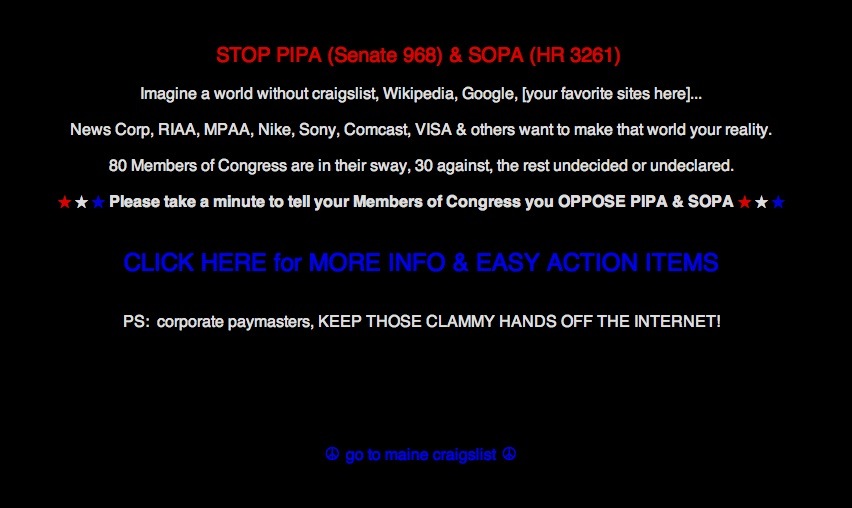
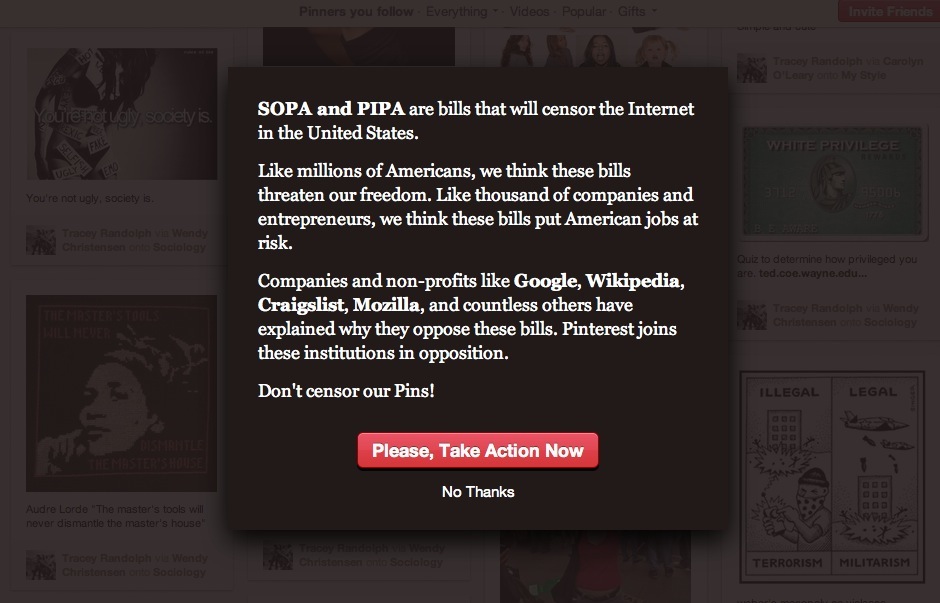
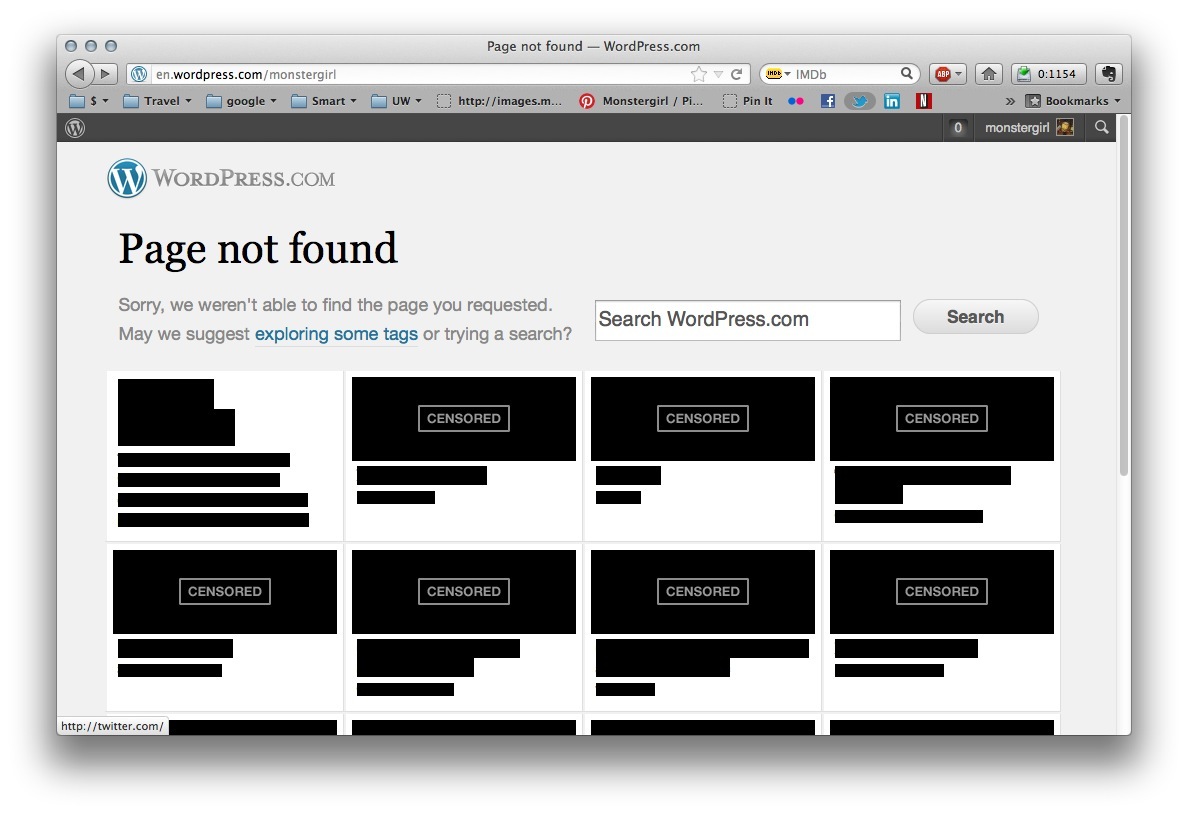
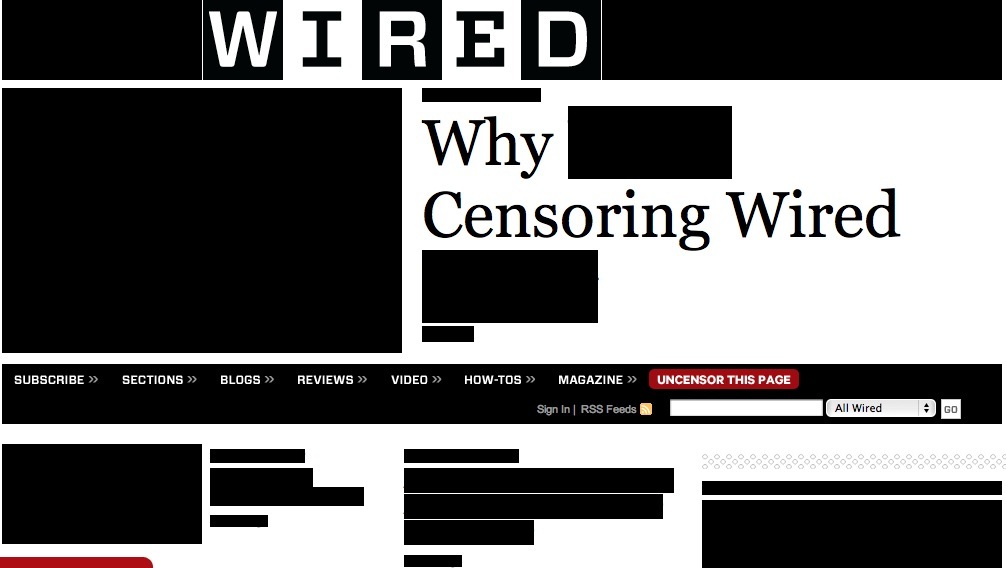
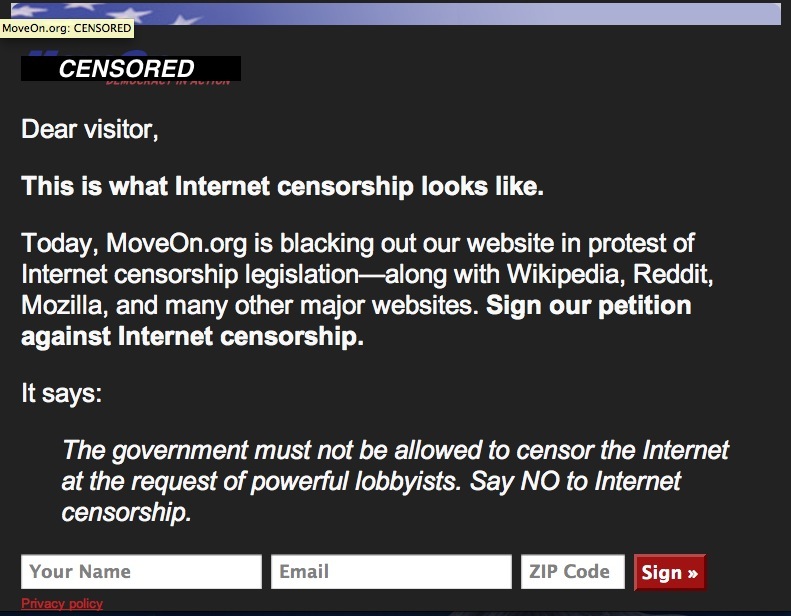
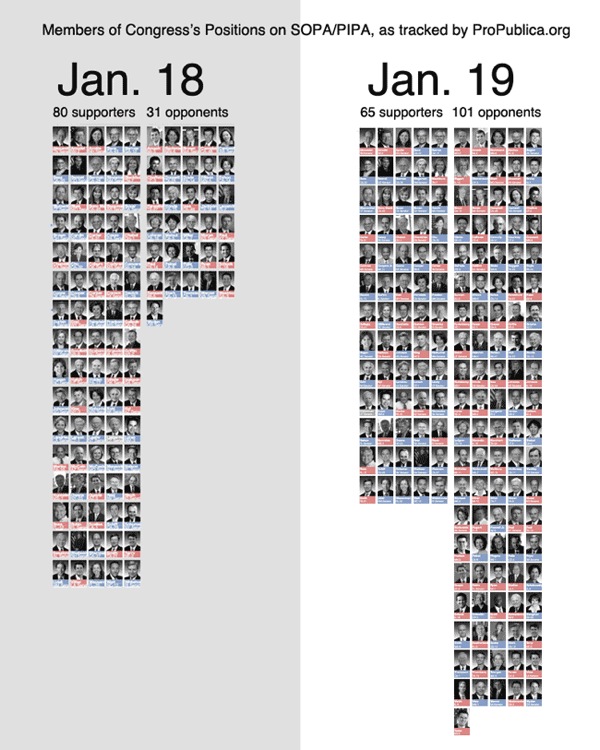
On January 18th, 2012 many sites on the internet went “black” to protest the Stop Online Piracy Act (SOPA) and the Protect Intellectual Property Act (PIPA), including Wikipedia, Boing Boing, Reddit, Cheezburger, Craig’s List, WordPress, Wired, and Sociological Images too, to name a few (in solidarity, Google blacked out it’s logo).  While written ostensibly to make it easier to stop pirating of music, movies, and other media, opponents argue that the Acts are so penalizing and over-reaching that they would essentially criminalize sharing and creativity.  There’s a great slideshow of the blacked out sites at the Los Angeles Times.

The next day proved that this online action made a large difference, at least in the short run. Seventy Congress members switched their positions or newly decided to stand against the Acts (Boing Boing). Congress has postponed actions on the Act, which was slotted for today.

From the point of view of Sociological Images, this is a much needed victory. From a sociological point of view, it is another illustration of how the internet creates both new legal issues and facilitates new social movement tactics.

Lisa Wade, PhD is an Associate Professor at Tulane University. She is the author of American Hookup, a book about college sexual culture; a textbook about gender; and a forthcoming introductory text: Terrible Magnificent Sociology. You can follow her on Twitter and Instagram.

Sociologists and others use the term “agenda setting” to describe the way that the media focuses our attention on some things and not others.  In this way, media actors may not control how we think about things, but they may very well control what we think about.

This instance of agenda setting involves SOPA, the Stop Online Piracy Act.  Media Matters put together this figure illustrating the relative number of television segments given to SOPA and other issues — the British Royal Family, the football player Tim Tebow, Casey Anthony and her missing daughter, Alec Baldwin’s behavior on a plane, and the Kardashian divorce — between October 26th, 2011 and January 12th of this year.

Data like this is often used to explain why Americans tend to be quite uninformed about important issues.  For more examples, see this post comparing the covers of TIME and Newsweek in the U.S. and elsewhere.  See also: Setting the Agenda on Trump and Setting the Agenda on Janet Jackson’s “Wardrobe Failure.”

Thanks to Dolores R. for the tip!  Via Socialist Texan.

Lisa Wade, PhD is an Associate Professor at Tulane University. She is the author of American Hookup, a book about college sexual culture; a textbook about gender; and a forthcoming introductory text: Terrible Magnificent Sociology. You can follow her on Twitter and Instagram.

Amber W. sent in this ad for laser eye surgery:
See our post on the surprising history of the Rosie the Riveter icon.

Lisa Wade, PhD is an Associate Professor at Tulane University. She is the author of American Hookup, a book about college sexual culture; a textbook about gender; and a forthcoming introductory text: Terrible Magnificent Sociology. You can follow her on Twitter and Instagram.

“Hey look! Fox News, American Idol, and Monday Night Football had a threesome and it made a baby named the Southern Republican Presidential Debate!”

That was my first thought, anyway, as I watched my first Republican Primary debate of the season two nights ago. I was really surprised at the opening dramatization of the event on CNN.  If you don’t know what I’m talking about, you absolutely must watch the first few minutes of the video below (especially :40 to 2:30):

So, what do you think?  Does this smack of sensationalism to you?  Is this just what TV looks like these days?  Without being overly nostalgic, how does this compare to the mood of previous debates?  How might this framing of the debates affect how people think of the presidency, our government, the process?

Lisa Wade, PhD is an Associate Professor at Tulane University. She is the author of American Hookup, a book about college sexual culture; a textbook about gender; and a forthcoming introductory text: Terrible Magnificent Sociology. You can follow her on Twitter and Instagram.