Way back in January, Dolores R. sent us a link to an illustration of how not to integrate social studies into the math curriculum, posted at SocialisTexan. Apparently some teachers in Gwinnett County, Georgia, thought it would be good to have some math word problems that connected to lessons from social studies, including racial history and slavery. One of them wrote some questions, which nine different 3rd-grade teachers approved; when the issue came to light, four had distributed them as part of a homework assignment. Parents complained upon seeing the questions, which many felt were inappropriate. For example, some questions asked students to calculate how much cotton or oranges slaves would pick, while another asked, “If Frederick got two beatings per day, how many beatings did he get in 1 week?”:

The teacher who created the questions later resigned and apologized. From all appearances, he really was trying to think of some way to connect different aspects of the curriculum. However, this chosen method was…very poorly thought out. The homework questions are insensitive, seeming to trivialize the violence of slavery rather than reinforce history lessons about it in a useful manner.

So how might topics from social studies, math, and other areas of the curriculum be integrated in a useful way? Sylvia Glauster, a middle school math teacher at The Ancona School in Chicago, emailed us about one example that I think connects discussions of racial history to math in a much more constructive manner.

Sylvia said that she often uses Soc Images posts to spark discussion among students, and that some of her students became particularly interested in racist images, including those in a post Lisa wrote several months ago about the historical meanings behind images of African Americans with watermelons: “Initially, they were not sure why some of the pictures could be viewed as racist, and hypothesized that their friends might also miss the connections that the blog post explains.”

So they got busy and developed a study to investigate further. Two students — 5th-grader Morgan and 6th-grader Sara (whose parents gave permission for their names to be used here) — chose five images and surveyed a random sample of 34 other students to see how many found the images racist. The students explain:

We started out by making a survey chart and getting pictures that we thought were racist.  Next, we surveyed people anonymously.  With all our data that we collected we made pie charts [for African Americans, Whites, and Other race/ethnicities].

The students had two hypotheses:

Before we started the survey we thought that the African American people would have more yes’s because they might have had similar racial experiences.  Most of the pictures are targeted at African Americans. We also thought that the 7th and 8th graders would say yes [they are racist] to more of the pictures because they are older than the 5th and 6th graders [and have had more experience].

The overall results:

The students had a good introduction to the research process. While one of their hypotheses was upheld, the other wasn’t:

We found that the 7th and 8th graders said yes to more of the pics.  Our hypothesis was right.  But our hypothesis for the African Americans was wrong.  The Caucasians said yes to more of the pics.

Interestingly, Sylvia says that “students were least likely to find the caricature of Jafar [from Aladdin] racist, which my students think is probably because our culture is more aware of racism against African Americans.”

This, I think, is a more thoughtful cross-curricular activity. It doesn’t just shoehorn some references to slavery or racial history into a math problem in a superficial way. Students thought critically about the topic and the larger social and historical context, all while practicing important skills in math and statistical analysis.

I’m sure that guiding students through a project of this sort takes significantly more planning and effort than writing the word problems did. But that’s part of the point: if you want to help students understand our complicated racial/ethnic history, as well as how race operates in our society today, you can’t do it on the cheap. It takes careful thought and a lot of preparatory work by the instructor to create activities and materials that foster critical thinking in a sensitive, appropriate way. Kudos to Sylvia for providing a good example, and to Sara and Morgan for doing such a nice job on their project!

Merinda B. sent in an interesting example of the use of gendered discourses in airline marketing. Last fall British Airways released “To Fly. To Serve,” a commercial touting the bravery and adventurousness of BA pilots. These pilots, who heroically pushed into the frontiers of air travel and now ensure the safety and comfort of their travelers, are presented as exclusively male:

Transcript:
Those first young men, the pioneers, the aviators. Building superhighways in an unknown sky. Leaving wives and children in their snug homes with just a kiss and a promise to return. Roaring into the clouds to battle wind and stars. Their safety system built of brain and heart. They landed where there were no lights. Transforming strange names from tall tales into pictures on postcards home. And those next young men, travelling further, faster, higher then any in history, are the ones that followed them. Who skimmed the edge of space, the edge of heaven, the edge of dreams. And we follow them up there, to live by an unbreakable promise. The same four words stitched into every uniform of every Captain that takes their command: To fly. To serve.
As Merinda pointed out, while the British Airways of 1920 presumably had all-male pilots, that’s certainly no longer true in 2011. BA hired its first female pilot in 1987; indeed, she flew the first flight to land at Heathrow airport’s recently-added Terminal 5 in 2008. As of 2008, BA had about 175 female pilots on staff. Yet the ad reserves the heroic pilot role only for men. Women appear in the role of worried wife, waiting at home while her brave husband is off to do “battle” (similar to imagery of wives waiting on the homefront while soldiers go off to war) or as passengers, safe in the hands of their trusty male pilots; even in the modern scenes, this romanticized pilot-as-soldier role is imagined as male-only.

In another example of gendered marketing, German airline Lufthansa recently mailed ads to male customers, encouraging them to sign up for a new credit card. Nothing particularly out of the ordinary there, but the ad campaign, sent to us by Katrin, drew a lot of attention — and criticism — because the credit card in question wasn’t for the men themselves, but for their female partners. The Women’s Special card was offered as an add-on to male frequent fliers who have a Lufthansa Miles-and-More account:
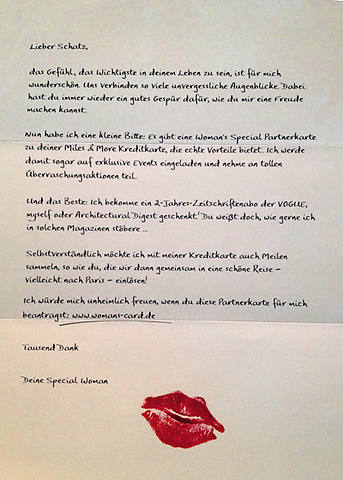
Written as a letter from a woman to her male partner, many felt the ad reinforced stereotypes of female dependence and consumerism. Katrin provided a translation:

Dear Honey,
The feeling that I am the most important thing in your life is wonderful for me. We are bound together by so many unforgettable moments. During which you again and again had a great feel for how to make me happy. Now I have a small plea: There is a Woman’s Special partner card to your Miles & More credit card which offers real benefits. With it I will even be invited to exclusive events and will take part in great surprise activities. And the best part: I’ll get a 2-year-subscription to VOGUE magazine, Myself  or to the Architectural Digest as a gift. You know how much I like browsing these kind of magazines… Of course I also want to collect miles with my credit card, just like you, which we can then redeem for a nice trip together- maybe to Paris! It would make me very happy if you could apply for this partner card for me: www.womans-card.de
Thousand times thank you,
 Your Special Woman
Part of the criticism sprang from the explicitly gendered program; the card, after all, isn’t called the Partner’s Special, or Spouse’s Special, but specifically the Woman’s Special. As The Local, a German English-language news site, reported, one German businesswoman, Anke Domscheit-Berg, Tweeted, “Will I be getting a letter from my sweetheart asking if he can have a partner credit card to go shopping with?” Presumably not — there is no equivalently-named (or even gender-neutral) option targeting the male partners of account holders.

Cross-posted at Jezebel.

I’ve been watching the response to Anne-Marie Slaughter’s Why Women Still Can’t Have It All roll out across the web.  Commentators are making excellent points, but E.J. Graff at The American Prospect sums it up nicely:

Being both a good parent and an all-out professional cannot be done the way we currently run our educational and work systems… Being a working parent in our society is structurally impossible. It can’t be done right… You’ll always be failing at something — as a spouse, as a parent, as a worker. Just get used to that feeling.

In other words, the cards are stacked against you and it’s gonna suck.

And it’s true, trust me, as someone who’s currently knee-deep in the literature on parenting and gender, I’m pleased to see the structural contradictions between work and parenting being discussed.

But I’m frustrated about an invisibility, an erasure, a taboo that goes unnamed.  It seems like it should at least get a nod in this discussion.  I’m talking about the one really excellent solution to the clusterf@ck that is parenting in America.

Don’t. Have. Kids.

No really — just don’t have them.

Think about it.  The idea that women will feel unfulfilled without children and die from regret is one of the most widely-endorsed beliefs in America.  It’s downright offensive to some that a woman would choose not to have children.  Accusations of “selfishness” abound.  It’s a given that women will have children, and many women will accept it as a given.

But we don’t have to.  The U.S. government fails to support our childrearing efforts with sufficient programs (framing it as a “choice” or “hobby”), the market is expensive (child care costs more than college in most states), and we’re crammed into nuclear family households (making it difficult to rely on extended kin, real or chosen).  And the results are clear: raising children changes the quality of your life.  In good ways, sure, but in bad ways too.

Here are findings from the epic data collection engine that is the World Values Survey, published in Population and Development Review. If you live in the U.S., look at the blue line representing “liberal” democracies (that’s what we are).  The top graph shows that, among 20-39 year olds, having one child is correlated with a decrease in happiness, having two a larger decreases, and so on up to four or more.  If you’re 40 or older, having one child is correlated with a decrease in happiness and having more children a smaller one.  But even the happiest people, with four or more children, are slightly less happy than those with none at all.

Don’t shoot the messenger.

Long before Slaughter wrote her article for The Atlantic, when she floated the idea of writing it to a female colleague, she was told that it would be a “terrible signal to younger generations of women.”  Presumably, this is because having children is compulsory, so it’s best not to demoralize them.  Well, I’ll take on that Black Badge of Dishonor.  I’m here to tell still-childless women (and men, too) that they can say NO if they want to.  They can reject a lifetime of feeling like they’re “always… failing at something.”

I wish it were different. I wish that men and women could choose children and know that the conditions under which they parent will be conducive to happiness.  But they’re not.  As individuals, there’s little we can do to change this, especially in the short term.  We can, however, try to wrest some autonomy from the relentless warnings that we’ll be pathetically-sad-forever-and-ever if we don’t have babies.  And, once we do that, we can make a more informed measurement of the costs and benefits.

Some of us will choose to spend our lives doing something else instead.  We’ll learn to play the guitar, dance the Flamenco (why not?), get more education, travel to far away places, write a book, or start a welcome tumblr.  We can help raise our nieces and nephews, easing the burden on our loved ones, or focus on nurturing our relationships with other adults.  We can live in the cool neighborhoods with bad school districts and pay less in rent because two bedrooms are plenty.  We can eat out, sleep in, and go running.  We can have extraordinary careers, beautiful relationships, healthy lives, and lovely homes.  My point is: there are lots of great things to do in life… having children is only one of them.

Just… think about it.  Maybe you can spend your extra time working to change the system for the better.  Goodness knows parents will be too tired to do it.

Lisa Wade, PhD is an Associate Professor at Tulane University. She is the author of American Hookup, a book about college sexual culture; a textbook about gender; and a forthcoming introductory text: Terrible Magnificent Sociology. You can follow her on Twitter and Instagram.

Cross-posted at Family Inequality.

Fat people shown with no heads, starving children shown with dull stares? The short explanation may be the difference between a shaming frame and a pity frame. Fat people are blamed for their obesity, so to show their faces stimulates shame and stigma. Starving children are helpless, homogeneous victims, so to stare into their eyes stimulates feelings of pity in the viewer.

The news media’s practice of showing what Charlotte Cooper has called “headless fatties” is ubiquitous. Writing about this phenomenon on a news blog, Nate Jones says,

Picturing the obese without heads is a handy solution for an age-old problem: How do you illustrate a story on obesity without shining a spotlight on any individuals? Cropping out faces is more polite — and more legal — than leaving them in, the thinking goes. It’s journalism at its most paternalistic.

And then he asks,

Assuming we don’t stop covering obesity stories entirely, is there a way to illustrate them without saying, “Hello, you are fat. May I take your picture?”

But wait a minute. Why not ask that?

It seems to me that, in sparing a few news photographers some embarrassment — as they approach strangers and ask them this question — the media instead perpetuates the shame, embarrassment and stigma of millions of other people. (And if a few people get over it, ask, and show the full picture, it might just be less difficult to have the conversation the next time.)

Here’s a suggestion: instead of approaching people while they are eating alone on the boardwalk or at a fast food restaurant, how about finding people at work or school or playing with their children, and showing them living real, complicated, human lives with a potentially risky health condition?

An unscientific sample: Here are the 17 pictures on the first page of my Google images search for “obesity men.” The pictures include 15 individuals, 9 of whom have no faces. (The equivalent search for women yielded 30 obese people, 17 of whom were faceless.)

On the other hand

So why is it so different for starving children? Here are the Google images of “starving child.”

They all have faces. Also, none of them are White Americans (which makes sense, since hardly anyone starves in America, though many are food insecure). Also, maybe no one asked their permission to use their likenesses.

For obese people in a rich country, the shame and stigma is a big part of the problem itself — as the anguish it causes undermines healthy behavior. Shame and stigma does not promote healthy weight loss.

For starving children in a poor country, the pity of rich-country viewers is also part of the problem, because it becomes the story, detracting from systematic impoverishment and exploitation. For them, pity also seems ineffective at generating solutions.

Showing pictures of obese people and starving children in the news is important. Both of these practices set up dehumanizing scenarios, however, because they do not create images of complete people in the social contexts of their lives.

Philip N. Cohen is a professor of sociology at the University of Maryland, College Park, and writes the blog Family Inequality. You can follow him on Twitter or Facebook.

In May of this year the baseball team at Our Lady of Sorrows, a high school charter in Arizona, was scheduled to play a championship game against Mesa Preparatory Academy.  Claiming a religious tenet forbidding co-ed sports, they forfeited the final game of the season.  Mesa’s second baseman, you see, was a 15-year-old named Paige Sultzbach.

This was not an isolated incident.  In 2011 a high school threatened to forfeit a junior varsity football game unless a girl on the opposing team, Mina Johnson, sat out.  Johnson, a five-foot-two-inch 172-pound linebacker on the opposing team, had “gain[ed] a reputation in the league as a standout junior varsity player”; she sacked a six-foot quarterback in her very first game. Nevertheless, not wanting to be the cause of a lost opportunity for her team to play, Johnson sat out.  The opposing team still lost to hers 60 to zero, but apparently that was less humiliating than losing to a girl.

In my sociology of gender textbook I discuss the practice of segregating sports by gender.  Both those on the political left and political right tend to think this is a good idea.  Conservatives tend to think that women are more fragile than men, while liberals want women to have the same opportunities.

Ensuring that men never compete alongside or with women, however, also ensures that the belief that men would always win goes unchallenged.  In other words, because we already assume that men would win any competition with women, it is men, not women, who have the most to lose from de-segregating sports.  If women lose, the status quo — believing women are physically inferior to men — simply remains in place.  But if men lose, the assumption of male superiority is undermined.

Women’s participation in non-team sports, of course, potentially challenges these assumptions in a different way.  While some of these sports try to write rules that ensure that women never measure up to men (e.g., body building has a cap on how muscular women can be), others lay these comparisons bare, which brings us to Sarah Robles.  Robles, a weightlifter, out-lifted all Americans of both sexes at last year’s world championships.  “On her best day,” writes Buzzfeed, “she can lift more than 568 pounds — that’s roughly five IKEA couches, 65 gallons of milk, or one large adult male lion.” Here she is lifting 278 pounds.

The Buzzfeed article focuses on how a main source of revenue — corporate sponsorship — is likely out of reach for Robles.  Companies don’t like to support athletes who challenge our beliefs about men and women.  And Robles certainly does.  She’s proof that women can compete with men, at their own games even, and win.

Thanks to Kari for the tip!

Lisa Wade, PhD is an Associate Professor at Tulane University. She is the author of American Hookup, a book about college sexual culture; a textbook about gender; and a forthcoming introductory text: Terrible Magnificent Sociology. You can follow her on Twitter and Instagram.

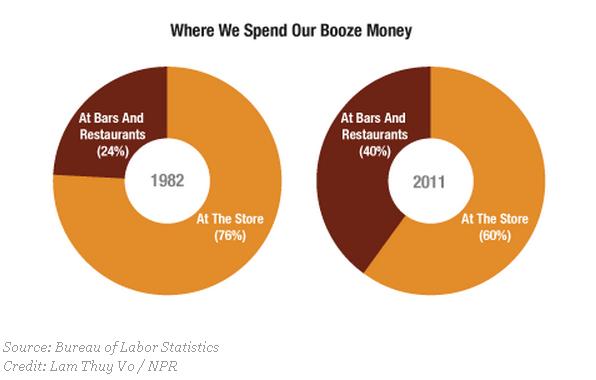
A report at Planet Money suggests that Americans are getting our wallets lifted at the bar these days.  In 1982, 24% of our liquor budget went to bars and restaurants; today it’s 40%.

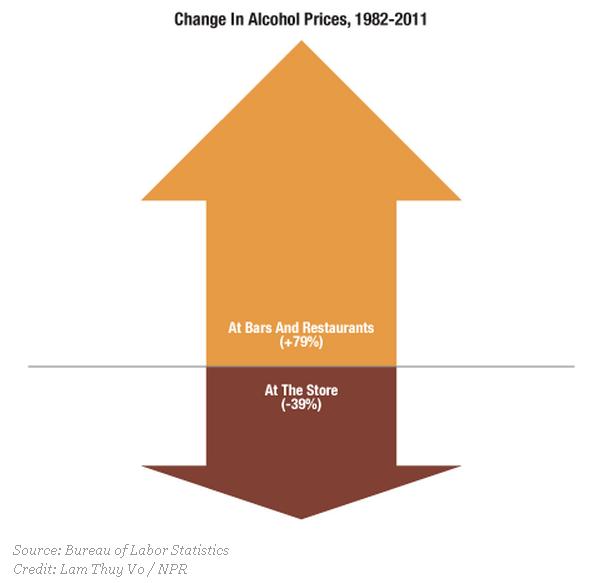
This isn’t because we’re eating or drinking out more, it’s because the price of spirits has gone down at the grocery store, but way up at establishments.

On average, $1 out of every $100 earned by Americans goes to liquor, and that hasn’t changed since 1982.  But how much we pay where has shifted quite dramatically.

Lisa Wade, PhD is an Associate Professor at Tulane University. She is the author of American Hookup, a book about college sexual culture; a textbook about gender; and a forthcoming introductory text: Terrible Magnificent Sociology. You can follow her on Twitter and Instagram.

Sociologist Michael Kimmel and a reader named L.A. sent along a link to a fashion spread on a Bulgarian magazine’s website.  It’s another example of the glamorization and sexualization of violence against women.  Titled, “Victim of Beauty,” the featured photographs have absolutely nothing to offer, short of showing beautiful women who appear to have been beaten, cut, strangled, and burned.   As I’ve written elsewhere:

As much as I’m bored of seeing women appear to be beaten, sick, or dead in fashion spreads, it also really feels like we must hate them.  Why else?  Why else this constant glorification of their abuse?

I’m going to show one image and throw the rest behind the jump.  They’re very disturbing (e.g., women with slit throats and more). Take a morbid tour, if you like, through more examples of violence against women in fashion:  the fear and suffering of women as a sexual turn on, dead and deadish ladies in fashion (herehere, and here), ads with women looking supremely uncomfortableAsian bondage fantasies, two more examples of the sexy black eye trope, and gulf oil spill themed-examples (here, and here).


Lisa Wade, PhD is an Associate Professor at Tulane University. She is the author of American Hookup, a book about college sexual culture; a textbook about gender; and a forthcoming introductory text: Terrible Magnificent Sociology. You can follow her on Twitter and Instagram.

We’ve posted before on the way that kids’ products, and the way they are marketed, often reinforces an active boys/passive-and-pretty girls binary. Rebecca Hains noticed that the Stride Rite store near her, as well as the Stride Right website, does so. For instance, girls can “sparkle” and “shine”:

The descriptions for girls’ sneakers on the website emphasize how they’ll help girls shine:

Boys are encouraged to identify with superheroes:

The descriptions for the boys’ shoes emphasize action and speed, as well as their ability to protect the feet of adventurous boys:

More examples of Stride Right marketing at Rebecca Hains’s blog.

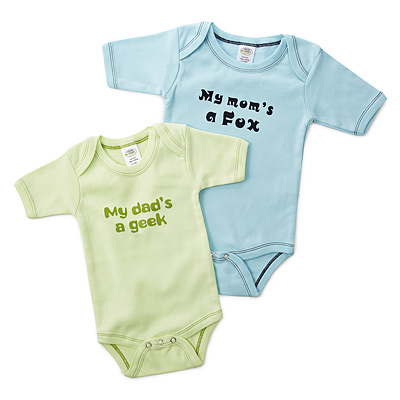
Erica B.-K. found these onesies which, though sold by a site called uncommongoods, reflect rather common gendering:

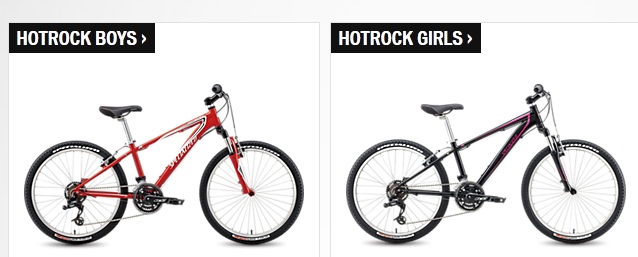
Hiroshi H. noticed that the website for Specialized Bicycle Components divides bikes into ones for boys and girls, though the only noticeable difference was color:

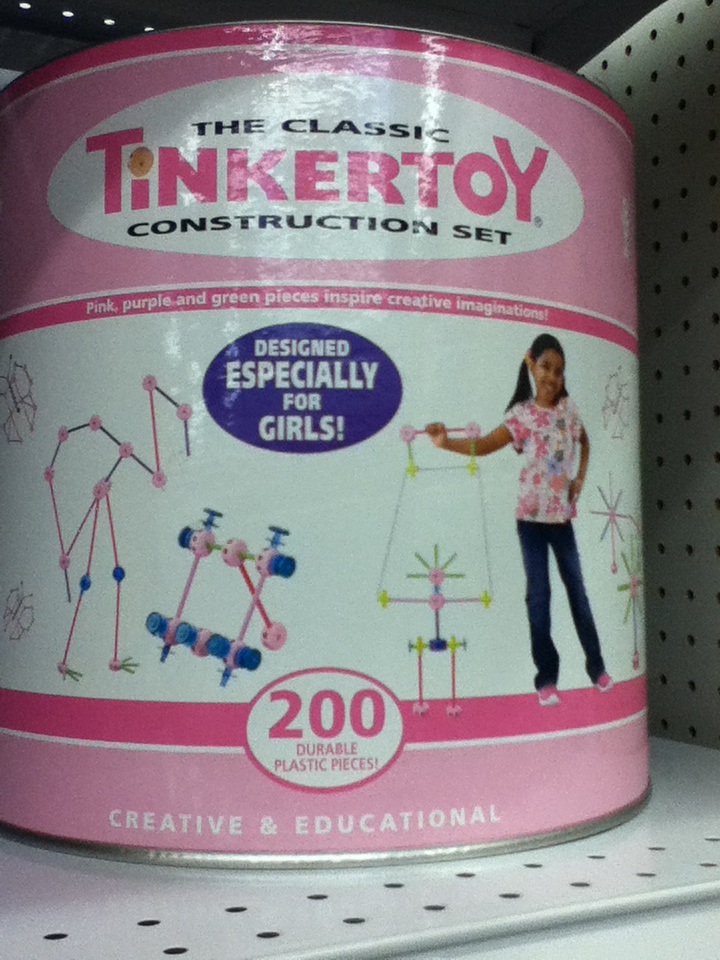
And finally, Anne R. noticed that there’s a Tinker Toy set that, because it is pink and purple, is thus “designed especially for girls”:

As someone who loved Tinker Toys and Lincoln Logs as a kid, I’m all for encouraging as many kids as possible to play with them, yet saddened if we are at a point where parents and/or children cannot imagine Tinker Toys could be for girls unless the package screams it at them. But I would kinda like to build that flamingo.