Pink, as we all know, is all about gender – it’s for girls.  And sissies.

The University of Iowa… for decades has painted the locker room used by opponents pink to put them “in a passive mood” with a “sissy color,” in the words of a former head football coach, Hayden Fry.

That’s from Frank Bruni’s NY Times op-ed today.  But not all cultures link pink to femininity.  The Palermo soccer team wears pink uniforms as do other European teams.  In the U.S., it was only in the 1950s that pink took on its “boys keep out” message, and even then, a charcoal gray suit was often matched with a pink shirt or necktie.  In The Great Gatsby, set in 1922, Nick writes of Gatsby:

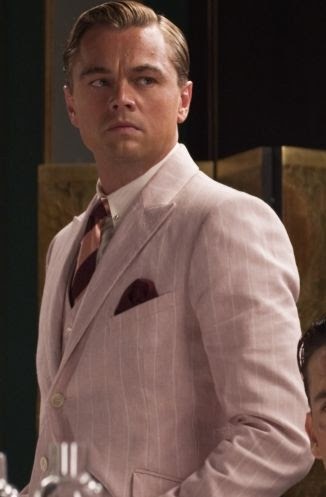
His gorgeous pink rag of a suit made a bright spot of color against the white steps, and I thought of the night when I first came to his ancestral home, three months before.
1
DiCaprio as Gatsby in the recent Baz Luhrman film.

.

In the previous chapter, Tom Buchanan says that he has been “making a small investigation” of Gatsby’s past.

“And you found he was an Oxford man,” said Jordan helpfully.

“An Oxford man!” He was incredulous. “Like hell he is! He wears a pink suit.”

Gatsby’s choice of suit colors reveals not his sexuality but his class origins.  An educated, upper-class gentleman – an Oxford man – would not wear a pink suit.  Anna Broadway cites this passage in her Atlantic article and adds,

According to an interview with the costume designer for Baz Luhrmann’s recent film, the color had working-class connotations.

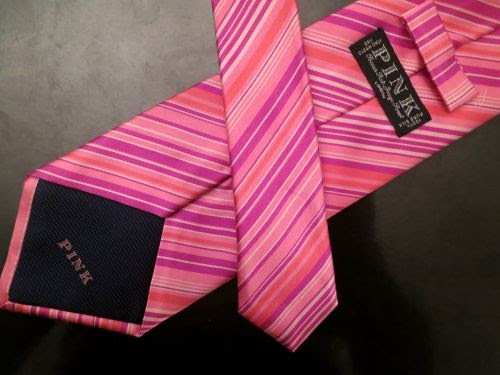
Today, that class connotation is reversed.  It’s the preppie type men at the country club who are wearing pink shirts or even, on the golf course, pants.   That trend may be reinforced by something entirely fortuitous – a name.  The upscale fashion designer Thomas Pink, perhaps because of his name, does not shy away from pink as a color for men’s clothes.
2

Do you agree that pink still has class connotations?  And how do they intersect with the color’s gendered meaning today?

Cross-posted at Montclair SocioBlog.

Jay Livingston is the chair of the Sociology Department at Montclair State University. You can follow him at Montclair SocioBlog or on Twitter.

Screenshot_4This is the second post in a four part series. Start at the beginning with: Whimsical Branding Obscures Apple’s Troubled Supply Chain.

In a recent post on the Apple brand and its cultural significance, I drew on my study with Gabriela Hybel of over 200 Apple television commercials aired between 1984 and the present to argue that Apple excels at what branding experts refer to as “emotional branding.” I pointed out that Apple commercials cultivate happiness through whimsical depictions of products and their users. In this post I focus on another key finding from this research, which is the prominence of sentimentality in Apple commercials. Both of these things — whimsicality and sentimentality — are key parts of the promise that Apple makes to its customers.

To this end, an important part of the promise that Apple makes to its customers is that using their products will strengthen the customer’s relationships with loved ones, and that the customer will experience positive emotions because of this. This trend, like playfulness, can be traced back to a commercial for the iMac and iMovie that aired in 2000.

Sentimentality features heavily in commercials for iPads and iPhones that have aired over the last few years. In the “I’ll be home for Christmas” ad for the iPad and iPad Mini, which aired in 2012, Apple technology provides the platform for the development of a seemingly long-distance relationship between a young girl and her grandfather.

A commercial that debuted just a month ago drips of sentimentality as it illustrates how Apple products strengthen our relationships with loved ones, near and far. But, also, and importantly, the commercial emphasizes the experiential aspect of the brand in a way that appeals to our desire to feel positive emotions.

With its subtly slowed motion, time and experience are stretched out in this commercial.  Regarding the company signature that appears on products, the narrator states, “You may rarely look at it, but you’ll always feel it. This is our signature. And it means everything” (emphasis added).

Apple product users are living in the moment, soaking up all the sentimental experiences of pleasure, love, satisfaction, and jubilation that the brand promises, and that the products appear to deliver upon. This promise is what sells Apple products. It shows us what we can have if we make the purchase, and in doing so, convinces us to turn a blind eye to the labor and environmental abuses in the company’s Chinese supply chain.

Next:  Be Young, Be Cool, Be Happy…as an Apple Consumer.

Nicki Lisa Cole, Ph.D. is a lecturer in sociology at Pomona College. She studies the connections between consumer culture, labor, and environmental issues in global supply chains. You can follwer her at 21 Century Nomad, visit her website, and learn more about her research into Apple here.

Fun fact: because the right side of the brain is more involved in processing emotions than the left and each side of the brain controls the opposite side of the body, the left side of the face is generally more expressive.

We humans must know this on some unconscious level, because self-portraits (or “selfies“) tend to feature the left side of the face more often than the right. In fact, real portraits — you know, painted by artists — show the same bias going all the way back to the 16th century.

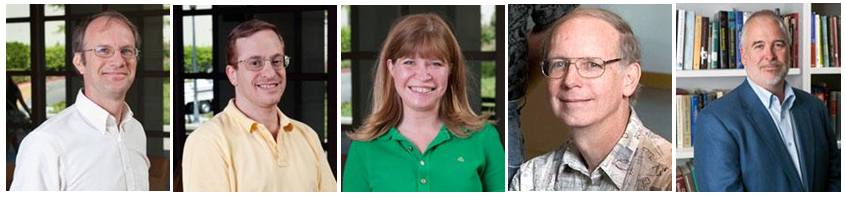
I borrow these fascinating insights from a blog post by Owen Churches, a psychologist who wanted to know if all types of people leaned towards showing their emotional side, or if there were exceptions.  He and his colleagues decided to look at academics, collecting 5,829 head shots appearing on professors’ faculty pages.  He found that English and Psychology professors were most likely to pose in ways that drew attention to the left side of their face, but Engineering professors did not.  This, Churches writes, “suggests that these hard scientists seek to display themselves to the world as the unemotional clichés of popular myth.”

So, I thought I’d do a little experiment.  I collected the head shots of everyone in the sociology department at my college, Occidental, and everyone in the physics department (we don’t have engineering, alas). Trend holds!

1 2

Lisa Wade, PhD is an Associate Professor at Tulane University. She is the author of American Hookup, a book about college sexual culture; a textbook about gender; and a forthcoming introductory text: Terrible Magnificent Sociology. You can follow her on Twitter and Instagram.

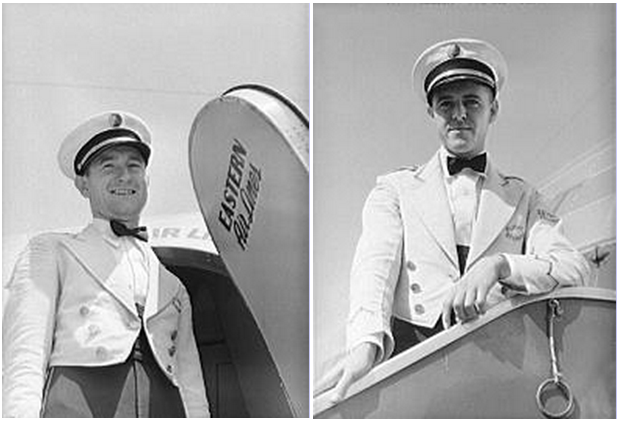
When the airline industry first tried to go commercial after World War I, it needed to convince skeptical customers that air travel was safe.  One strategy was to make passengers feel that the entire crew was able and willing to see to their safety. This included the stewards, the all-male precursors to the stewardess. But which men to hire?

The default employee should have been an African American.  Ocean liners and train cars, air travel’s main competitors and the model on which they built their business, largely employed Black porters and stewards.  But the airlines believed that the overwhelmingly White passengers would not have felt comfortable placing their lives in the hands of Black men.  So they hired White men instead.  Kathleen Barry, who discusses this in her book Femininity in Flight, explains:

Equanimity on aircraft circa 1930 was a tall order for anyone, but stereotypes dictated that it would most likely come from white male attendants. With uniforms that echoed the naval-style garb of pilots, stewards reassured passengers that the white men in the cabin as well as the cockpit were competent and in control.

Screenshot_1

If stewards were so capable and appreciated, why not offer one’s appreciation in cash?  The answer is, in short, because tips were for Black people.  Black porters on trains and boats were tipped as a matter of course but, according to Barry, tipping a White person would have been equivalent to an insult. A journalist, writing in 1902, captured the thinking of the time when he expressed shock and dismay that “any native-born American could consent” to accepting a tip.  “Tips go with servility,” he said. Accepting one was equivalent to affirming “I am less than you.” This interpretation of the meaning of a gratuity, alongside airlines’ need to inspire confidence and simple racism, is why we don’t tip flight attendants today.

Lisa Wade, PhD is an Associate Professor at Tulane University. She is the author of American Hookup, a book about college sexual culture; a textbook about gender; and a forthcoming introductory text: Terrible Magnificent Sociology. You can follow her on Twitter and Instagram.

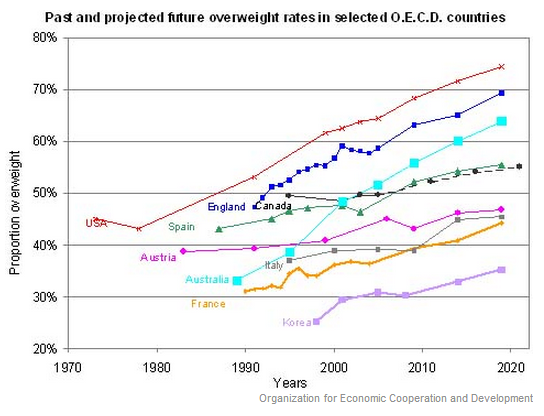
We all know — because we are being constantly reminded — that we are, collectively, getting fat.  Americans are at the forefront of the trend, but it is a transnational one. Apparently, it is also transspecies: pets, wild animals, and laboratory animals are also gaining weight.  Here’s some country-level data from the New York Times:

Screenshot_1In an excellent review of the existing literature, David Berreby at Aeon skewers the idea that a simple, victim-blaming “calories in, calories out” model can explain this extraordinary transnational, transspecies rise in overweight and obese individuals.  I won’t summarize his argument here, except to simply list the casual contenders for which there is good evidence:

  • Sleeplessness
  • Stress
  • Viruses
  • Bacteria
  • Industrial chemicals
  • Heavy metals
  • Electric lights
  • Air conditioning
  • Famine in previous generations

If you ever want to have an opinion on fat again, read Berreby now.

Lisa Wade, PhD is an Associate Professor at Tulane University. She is the author of American Hookup, a book about college sexual culture; a textbook about gender; and a forthcoming introductory text: Terrible Magnificent Sociology. You can follow her on Twitter and Instagram.

Screenshot_1All In with Chris Hays does a great job mocking the “What’s wrong with Black culture?” question.  He and his “guest,” Gawker’s Cord Jefferson, straight-face skewer news programs that take every instance of African American law breaking as an opportunity to castigate the group writ large.  It’s great satire:

Via Todd Krohn at The Power Elite.

Lisa Wade, PhD is an Associate Professor at Tulane University. She is the author of American Hookup, a book about college sexual culture; a textbook about gender; and a forthcoming introductory text: Terrible Magnificent Sociology. You can follow her on Twitter and Instagram.

Our favorite economist, Martin Hart-Landsberg, has written a detailed account of what is causing the rise of income inequality around the world.  Here I’d like to highlight just one of his really interesting observations.

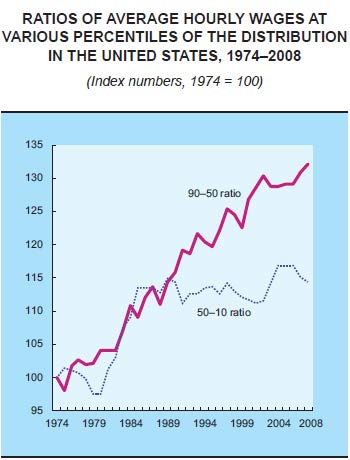
While we usually think that rising income inequality is caused by the rich getting richer and the poor getting poorer, a more complex picture is emerging.  The graph below plots the hourly wages of the 90th percentile (Americans who make more than 89% of the population) relative to the wages of the 50th percentile (the purple line) and the wages of the 50th compared to the 10th percentile (the dotted blue line).

In English: it asks how quickly the richest people (90th) are pulling away from the average person (50th) and how quickly the average person is pulling away from the poorest (10th).  The answer?  Income inequality has been increasing since the 70s but, since the late ’80s, rich people have continued pulling ahead of the average American, but the average American has not been gaining on the poor.

Wage-ratios

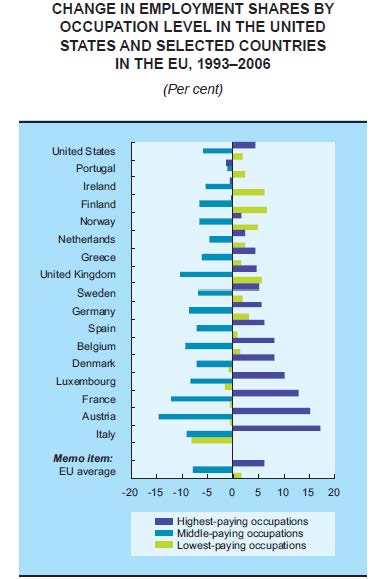
Another indicator that the middle class is shrinking is changes in the share of jobs that are low-, middle-, or high-paid.  The next graph shows that, across a wide range of countries, high- and low-paying jobs are on the rise, but middle-paying jobs are on the decline.  So, middle income jobs are disappearing, but there are more of both high- and low-income jobs.

Jobs (1)

Hart-Landsberg suggests that the reason for this shift in the economy involves the globalization of production.  For more, visit Reports from the Economic Front.

Lisa Wade, PhD is an Associate Professor at Tulane University. She is the author of American Hookup, a book about college sexual culture; a textbook about gender; and a forthcoming introductory text: Terrible Magnificent Sociology. You can follow her on Twitter and Instagram.

Screenshot_2The short answer? No.

Law professor Osagie K. Obasogie interviewed a series of people who had been blind since birth about their understanding of the concept of race.   Counter-intuitively, he found that race was as meaningful to them as it was to sighted people and that their descriptions and biases were largely in line with cultural norms.  The article includes really striking quotations from the interviewees and what Obasogie describes as an “empirical assessment of the metaphor of colorblindness.”  He’s also published a book based on the research: Blinded By Sight.

In this three minute interview, he explains some of his findings:

Lisa Wade, PhD is an Associate Professor at Tulane University. She is the author of American Hookup, a book about college sexual culture; a textbook about gender; and a forthcoming introductory text: Terrible Magnificent Sociology. You can follow her on Twitter and Instagram.