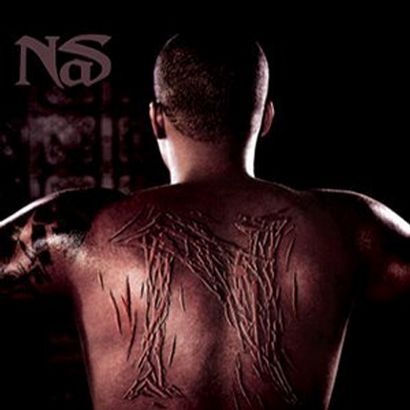
Rap is fascinating in that, in the short history of the art form, it represents both the power of resistance by marginalized and disempowered groups and the power of appropriation by mainstream culture and capitalist commodification.  With this in mind, I bring your attention to the cover of Nas‘ new album cover (tentatively set to release on July 1st) (found here):

The image immediately brings to mind (I can only imagine deliberately) the famous photograph of the back of a whipped slave from 1863 (found here).  I’ll go ahead and put it after the jump, as it’s a very real and troubling historical photograph:

more...

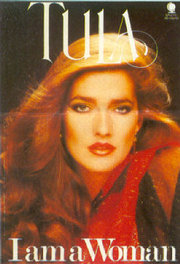
Caroline Cossey (also known as Tula) is a British male-to-female transsexual who had a successful career as a model and some small movie roles; Cossey also appeared in Playboy in 1981. In 1982 a tabloid broke the story that she was a transsexual, which ended her modeling career. Here is the cover (found here) of her autobiography, which she wrote soon after being outed:

Cossey was born with Klinefelter’s syndrome, a form of genetic intersexuality.

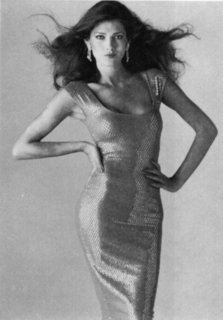
Here are some other pictures of her:

Found here.

Found here.

You can watch a segment on her that aired on the TV program Hard Copy here.

These might be interesting for discussions of intersexuality, sex-reassignment surgery, and our ideas of the gender binary that everyone must fit into–as well as the outrage people often feel if they’ve been “fooled” by someone who manages to “pass” as a gender different from what they “really” (read “biologically”) are. You might compare this to the story of Brandon Teena, a female-to-male transsexual who was raped, beaten, and murdered by two men in a small town in Nebraska in 1994 after they discovered he was a transsexual (who had not had sex-reassignment surgery). Teena was, of course, the subject of the movie “Boys Don’t Cry,” but there is also a documentary about him, “The Brandon Teena Story,” which includes interviews with his girlfriend and members of the community.

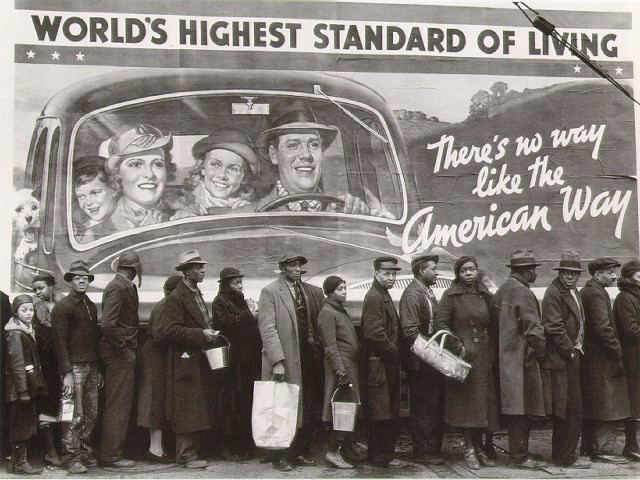
Marc sent in this image (found here):

According to this site, the photo was taken by Margaret Bourke-White; this site, where you can buy old issues of LIFE magazine, lists the photo in the index for the February 15, 1937, issue. Apparently the people standing in line were flood victims.

This is a great image for sparking discussion about “the American Way” and what that was meant to be (clearly white and presumably middle-class, from the mural), and the ways in which non-whites (and poor whites) are often invisible in depictions of what America is. And, of course, it could be a great image for a discussion of rhetoric and propaganda (for instance, murals proclaiming how wonderful the standard of living is even though the Great Depression was by no means over).

Thanks, Marc!

One of my students last semester wrote a paper in which she looked at sexist images of Condoleezza Rice. Interestingly, much of the online discourse was very similar to the way people talk negatively about Hillary Clinton. It was fascinating to see the same themes used by people with different political viewpoints in their criticisms–both Hillary and Condoleezza were described as bitches and whores and as ugly man-hater lesbians. My student argued persuasively that the reason the online attacks on the two women were so similar was because they weren’t being viewed as politicians or through the lens of their policies, but instead the attacks used a sexist lens that focused on their femaleness–and willingness to trespass on male-dominated political terrain–as the thing to attack, rather than any specific action or policy. Unfortunately for the blog, though good for humanity, I didn’t find as many images that had been made to accompany the hateful rhetoric about Condi as about Hillary.

Here’s an image (found here) I came across (note that George Bush’s face has been super-imposed on the handler):

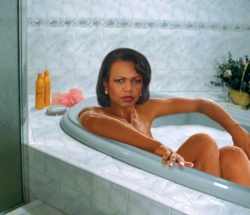
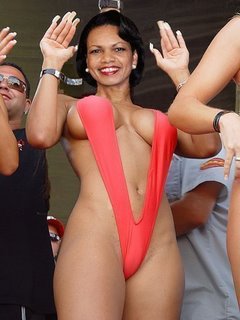
Both Hillary and Condi are often described as ugly. However, I noticed when searching for images of Condoleezza that both supporters and critics occasionally sexualized her (especially in reference to a pair of stiletto-heeled boots that got a lot of public attention at one point). I haven’t found similar images of Hillary from either supporters or critics (whether it would be preferable to be sexualized by a supporter or opponent, I’m not sure). I found this image of Condi in a bathtub here, though it was posted on several other websites I came across in a really brief search.

This bathing suit image came from here.

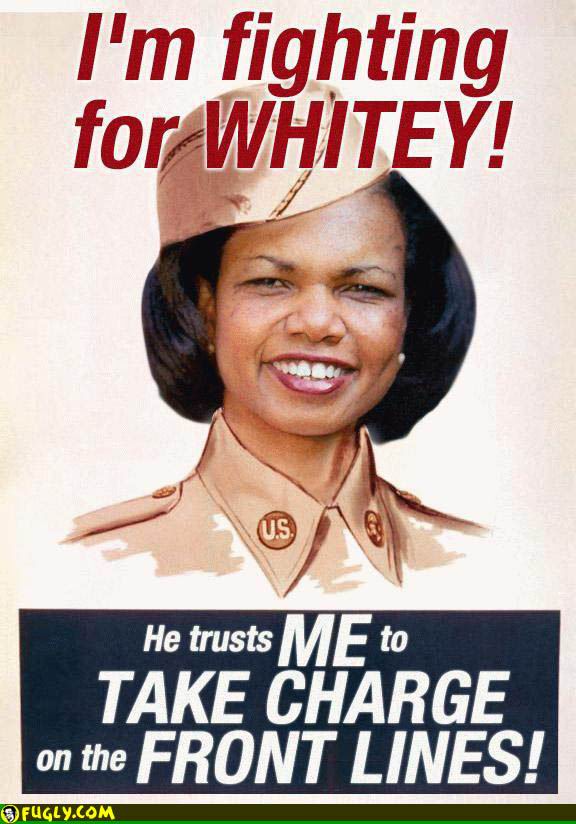
Unsurprisingly, Condoleezza’s race is also a focus in online discussions in a way that Hillary’s isn’t, such as this image (found here) that plays on the idea of the Uncle Tom (the implication being that Black Republicans or military hawks are puppets used by Whites for their own agenda–that is, that they are either duped or are trying to get power by appeasing Whites):

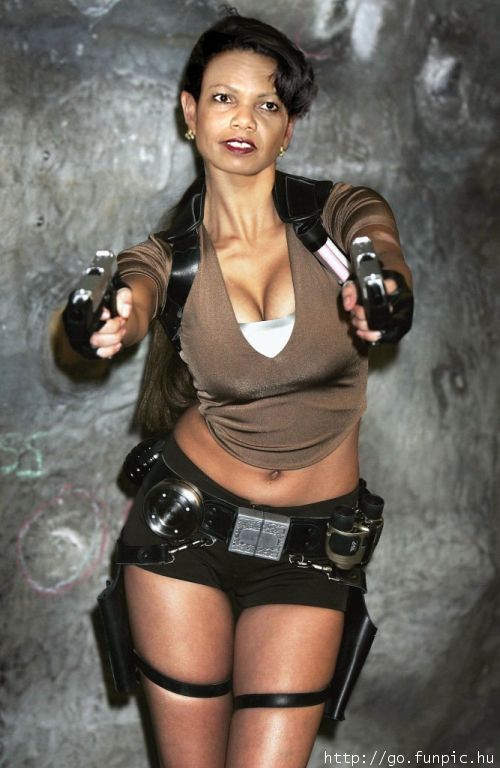
NEW: p.j. sent in this sexualized picture of Condi:

Thanks, p.j.!

This is the iconic photo of Tommie Smith and John Carlos (found here) from the 1968 Olympics in Mexico City. They raised their arms, wearing black gloves, in a symbol of protest against racism in the U.S. Less often noticed is that they were wearing beads to symbolize victims of lynching and went barefoot to protest the fact that the U.S. still had such extreme poverty that some people went without basics, such as sufficient clothing. Peter Norman, the Australian 2nd-place winner, grabbed a button produced by the Olympic Project for Human Rights (see below) when he found out what the other two were going to do and wore it in solidarity (if you look closely you can see that all three are wearing matching white buttons).
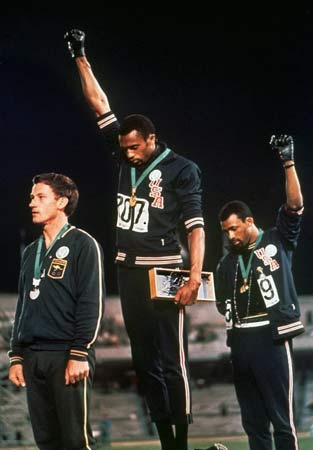

The reaction was immediate and negative. Carlos and Smith were stripped of their medals, ejected from the Olympic Village, and returned to the U.S. to widespread anger. In David Zirin’s book What’s My Name, Fool? Sports and Resistance in the United States (2005, Chicago: Haymarket Books), several black athletes discuss the difficulties they faced as a result of their actions. This 2003 interview with Tommie Smith covers some of the same issues.

Below is a button like the ones they were wearing. Much like we often think Rosa Parks spontaneously decided not to give up her seat on the bus (ignoring the fact that she attended training with other African Americans determined to protest inequality in the South), the assumption is often that Smith’s and Carlos’s gesture was something they decided on at the moment. In fact the Olympic Project for Human Rights, organized by Black U.S. athletes, had tried to organize an athletes’ boycott of the 1968 Olympics. When that was unsuccessful, tactics switched to making statements at the Olympics. This was part of an organized plan on the part of a number of Black athletes who were tired of representing the U.S. but being expected to stay silent about racism in the U.S.

Some of these buttons are for sale ($300 each!) on Tommie Smith’s website.
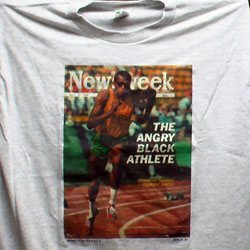
A t-shirt with the cover of the July 15, 1968, issue of Newsweek about “the angry black athlete.”
I looked for a photo of the cover itself but could not find one online. Clearly the nation was anxious about the attitudes of Black athletes even before the Olympics (in October) caused such a stir.

I think these images are useful in a couple of ways. I use them to undermine the idea of the individualistic protester and to bring attention to the ways Civil Rights activists organized and planned their actions. It could also be useful for discussions of politics in sports–the ways in which athletes have at times used their position to bring attention to social inequality, as well as the repercussions they may face for doing so. It might also be interesting to ask why this image caused so much furor, and how the Olympics is constructed as this non-political arena for international cooperation (a topic I cover in my Soc of Sports course). You might compare the image from the 1968 Olympics to this image (found here) from the 1936 Olympics in Germany:
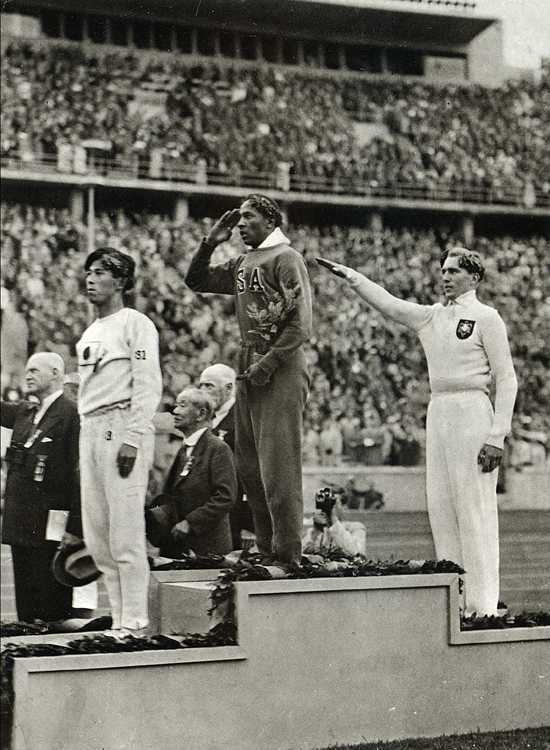
Here we also see the Olympics being used to make a political statement, but in this case the athlete was not thrown out of the Olympic Village or stripped of his medals. What is the difference? Just that time had passed and attitudes toward political statements at the Olympics changed? In the 1936 pose, the athlete was showing pride in and support for his country, whereas Smith and Carlos meant their gesture as a protest of conditions in the U.S.–thus shaming their nation in an international arena (this was a major cause of the anger they faced when they returned to the U.S.–the idea that they were airing the nation’s “dirty laundry,” so to speak, for others to see). Could that be part of the difference in the reaction?

Of course, a cynical person might argue that these seemingly ungrateful, misbehaving black athletes who refused to smile and play along were being publicly punished in the media for getting “uppity” (in a time period where white Americans were also wearying of minorities’ continued demands for equality and social change).

In case you hadn’t seen it already, this is the ad that is causing all the hullabaloo about Rachel Ray and Dunkin’ Donuts being in bed with Muslim terrorists (via lawgeek):

The incident might be useful in illustrating the social construction of social problems, moral panic, and racial politics after 911.

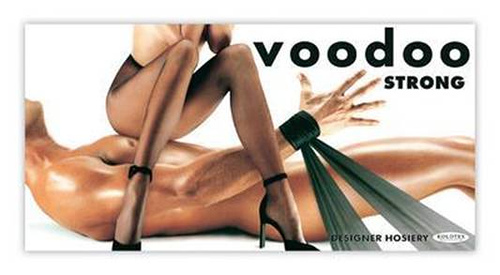
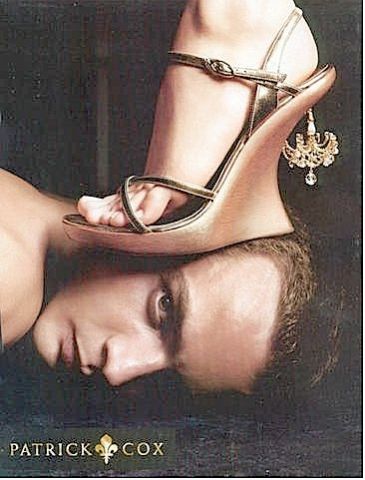
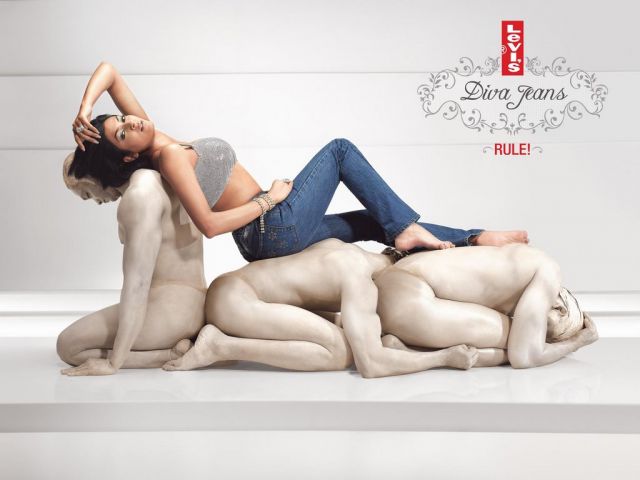
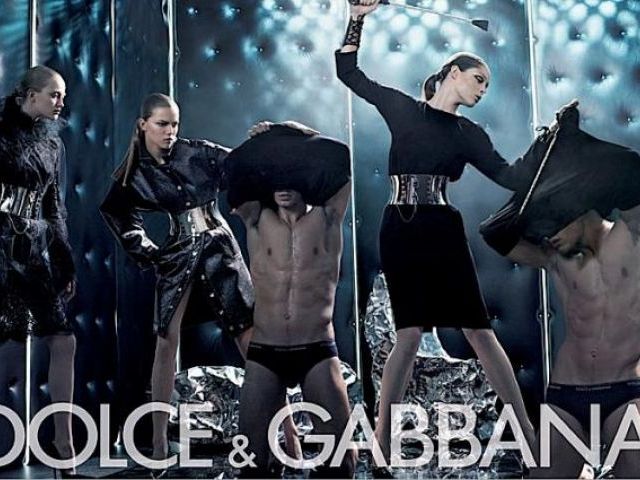
Miguel sent us a link to Galeria: Ellas Mandan, a set of advertisements that reverse the common images of male dominance by showing women in control:

For liquor:

For pantyhose:

Shoes:

Jeans:

Dolce & Gabbana:

A submission from Stumblng Tumblr from the Brylcreem website:

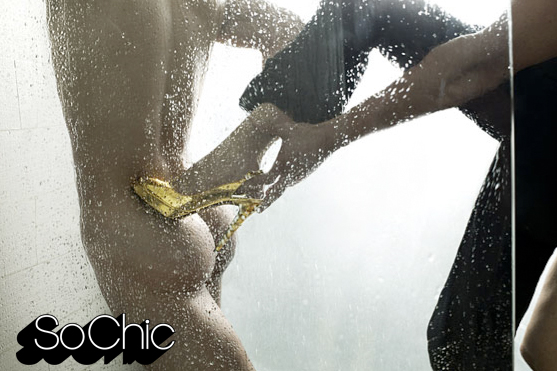
NEW!  A fashion ad from Phillip G.:

lrg-2765-brian_atwood_series2_03_jpg

These images show women in “control” of, or dominating men, but in a very sexualized manner that often references S&M or bondage. So women can have power, but have to be sexualized at the same time. This fits in well with our cultural beliefs that women have power over men because men want sex and will allow themselves to be manipulated by women in order to get it. So women can supposedly control men by threatening to withhold sex until they get what they want.

And is it not possible to just have some images where men and women are equals and no one has to be dominant? Is that out of the question?

Thanks, Miguel!