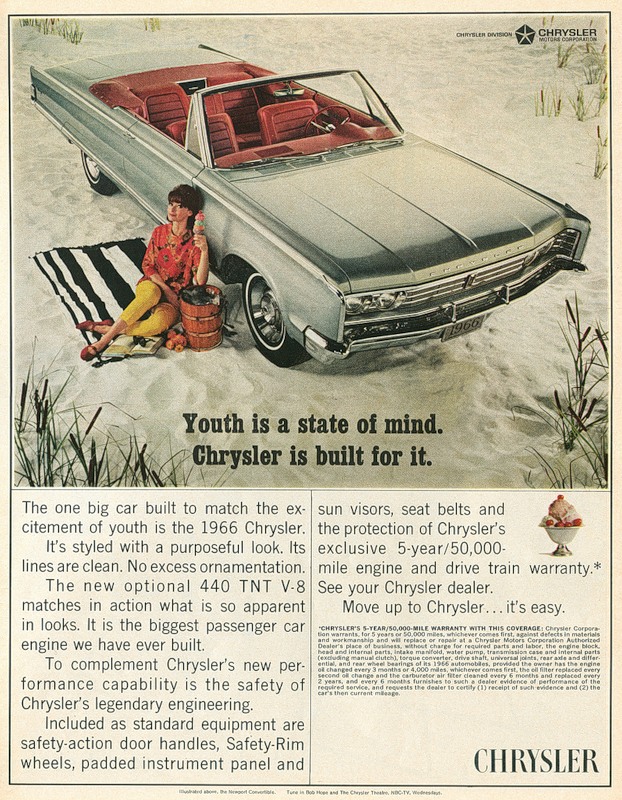
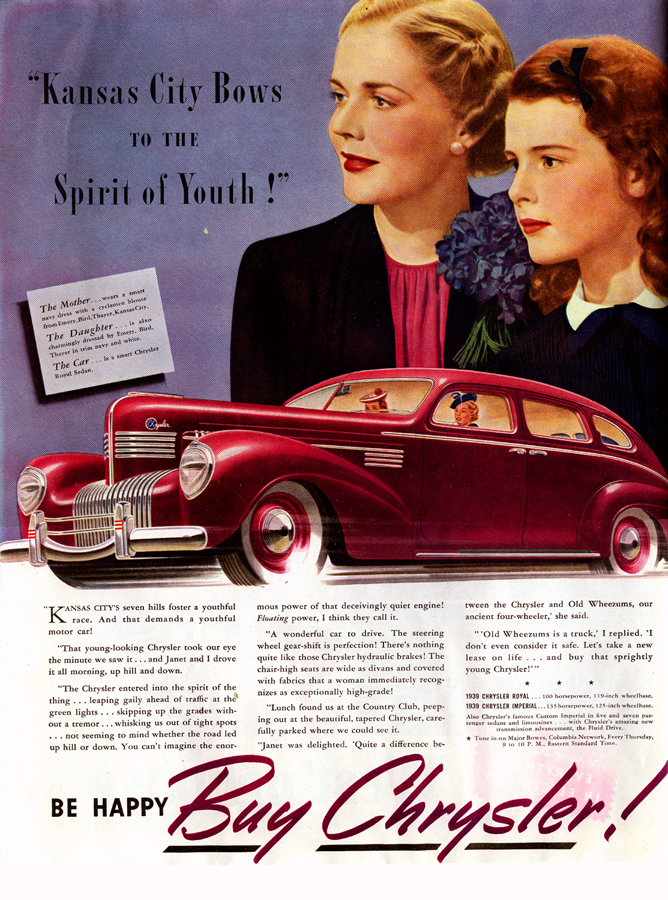
I love that this vintage ad suggests that Chrysler cars are for the young at heart. When I think Chrysler, I think of grandparents.
But no, “youth is a state of mind” and, according to this ad, it involves “a purposeful look,” “clean” “lines,” “no excess ornamentation,” and “safety.” And ice cream, of course.
What a different social construction of what being young is all about!
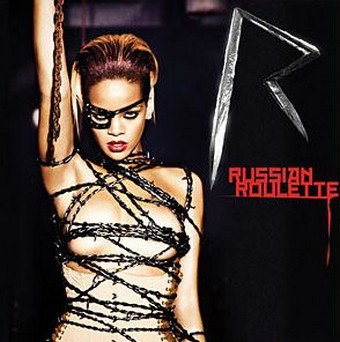
Rihanna’s first new single since getting beaten by boyfriend Chris Brown is titled “Russian Roulette.” On the cover, she is wrapped in barbed wire with an eye patch that looks like a black eye:
The lyrics include:
And you can see my heart beating
You can see it through my chest
And I’m terrified but I’m not leaving
Know that I must pass this test
So just pull the trigger
And:
So many won’t get the chance to say goodbye
But it’s too late too pick up the value of my life
Given the many, many young girls that blamed Rihanna for her beating, releasing a song that posits that love is simply dangerous is really… disappointing.”
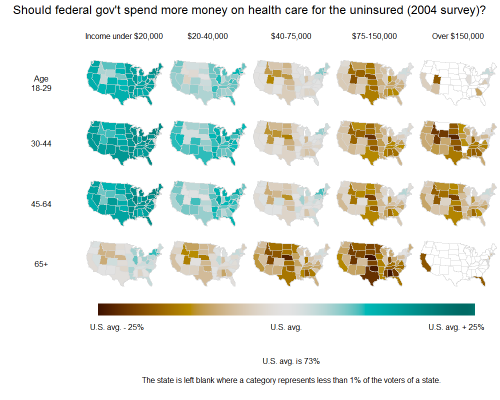
From FiveThirtyEight, showing the percentage answering “more” to the question “Providing health insurance for people who do not already have it–should the federal government spend more on it, the same as now, less, or no money at all?” in a 2004 poll. Note that the colors show deviation from the U.S. average, which was 73% answering “more”; brown indicates lower support, turquoise is higher support:
Not surprisingly, higher income correlates with lower support for more spending to cover the uninsured. The lower support among those over age 65, compared to other age groups, is sort of fascinating given that they themselves benefit from government spending on health programs that provide them coverage. But then, given that I’ve seen photos of people holding signs saying “keep the government out of Medicare,” I don’t know why I think people on Medicare would support public health insurance in general.
Of course, these numbers have likely changed now that the health care issue is getting so much coverage and publicity.
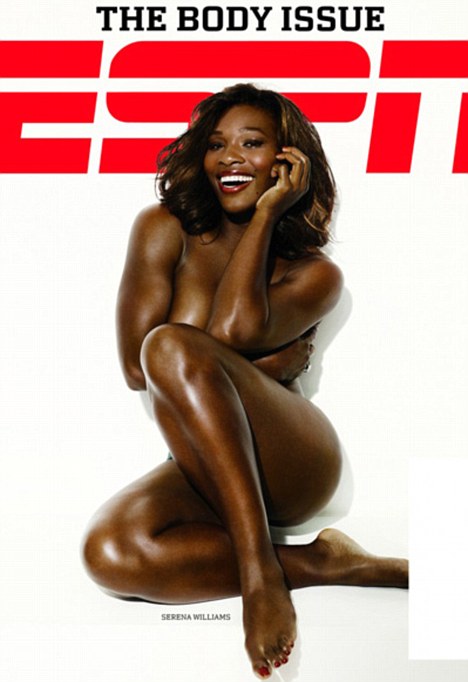
Serena Williams is on the cover of ESPN this month, as Becky T. pointed out. And Becky is torn. I’d like to put it up for discussion.
The cover:
So, on the one hand: Dude. Why is it that a woman rarely makes it onto the cover of ESPN and, when she does, she’s freakin’ naked? And, of course (*sarcasm*), it’s for “The Body Issue” (because women’s bodies are where it’s at, right fellas?). I did a google image search for “espn cover” and the first page of results includes only two women. One is naked (Williams) and the other is pregnant.
On the other hand: The cover doesn’t appear to be trying to hide or diminish Williams’ strength. The girl is STRONG. Check out that bicep! Part of me wants to say that she looks good. DAMN good.
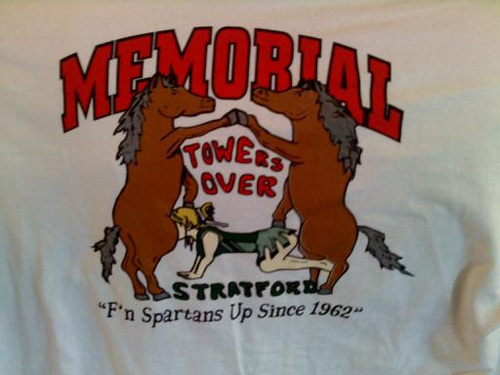
Emily L. sent in a link to the t-shirt below. It was made by students at Houston’s Memorial High (go, Mustangs!) for the yearly football game against their rival, Stratford. It nicely reveals how sex and domination are conflated in American society. On the shirt, “beating” Stratford at football is conflated with “fucking” them. As the text says: “F’n Spartans Up Since 1962”:
As I’ve discussed elsewhere, it should be really troubling to us all that “fuck” has the double meaning that it does.
In the early 1980s the Reagan Administration engaged in an active campaign to demonize welfare and welfare recipients. Those who received public assistance were depicted as lazy free-loaders who burdened good, hard-working taxpayers. Race and gender played major parts in this framing of public assistance: the image of the “welfare queen” depicted those on welfare as lazy, promiscuous women who used their reproductive ability to have more children and thus get more welfare. This woman was implicitly African American, such as the woman in an anecdote Reagan told during his 1976 campaign (and repeated frequently) of a “welfare queen” on the South Side of Chicago who supposedly drove to the welfare office to get her check in an expensive Cadillac (whether he had actually encountered any such woman, as he claimed, was of course irrelevant).
The campaign was incredibly successful: once welfare recipients were depicted as lazy, promiscuous Black women sponging off of (White) taxpayers, public support for welfare programs declined. The negative attitude toward both welfare and its recipients lasted after Reagan left office; the debate about welfare reform in the mid-1990s echoed much of the discourse from the 1980s. Receiving public assistance was shameful; being a recipient was stigmatized.
Abby K. recently found an old Sesame Street segment called “I Am Somebody.” Jesse Jackson leads a group of children in an affirmation that they are “somebody,” and specifically includes the lines “I may be poor” and “I may be on welfare”:
I realized just how effective the demonization of welfare has been when I was actually shocked to hear kids, in a show targeted at other kids, being led in a chant that said being poor or on welfare shouldn’t be shameful and did not reduce their worth as human beings. Can you imagine a TV show, even on PBS, putting something like this on the air today? Our public discourse at this point says that being on welfare is shameful, and that those receiving it in fact aren’t “somebody.” They are dependents, lazy loafers, and their kids are just additional burdens on the state; they don’t have the same rights to dignity and respect as other citizens, and they certainly shouldn’t expect to get it.
Of course, the totally confused looks on some of the kids’ faces are hysterical.
About Sociological Images
Sociological Images encourages people to exercise and develop their sociological imaginations with discussions of compelling visuals that span the breadth of sociological inquiry. Read more…