
Let’s face it, teaching sociological research methods is always challenging, even in so-called “normal” times. It’s part of the core curriculum that can be a pretty tough sell, especially to undergraduate students who don’t see themselves as future researchers. But, at least in the U.S. context, times are far from normal. Higher education is under attack, generative AI has infiltrated our classrooms whether we like it or not, and misinformation is rampant. Here at First Publics, we are thinking deeply about how to teach sociological methods in light of these current challenges. What role can sociological research methods play in the context of crisis? What is the value of research methods courses? How can these classes equip students to face the contemporary polycrisis we find ourselves in?
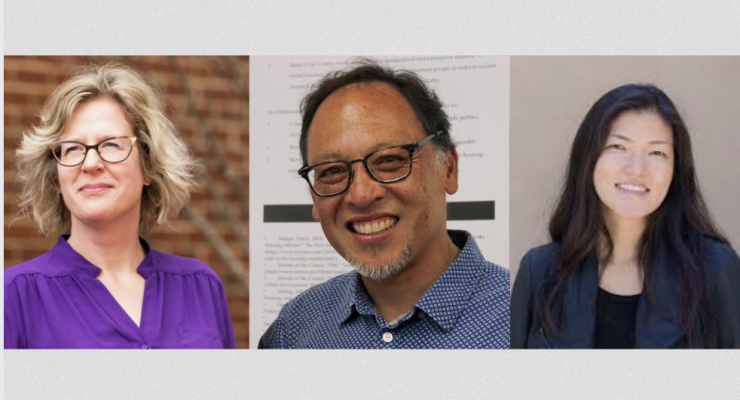
On November 6th, 2025, we asked three award-winning and experienced instructors to help us answer these questions: Steve McKay (Professor of Sociology and Director of the UCSC Center for Labor and Community, University of California Santa Cruz), Patricia Richards (Professor of Sociology and Women’s & Gender Studies, University of Georgia), and Naomi Sugie (Associate Professor of Sociology, University of California Los Angeles). The answers they provided invited us to rethink what methods classes can and do teach students. The three agreed that methods classes should help students produce and engage in good research, not only by teaching them methodological tools and techniques but also by helping them problematize the everyday world and foster meaningful connections with communities outside the university. Importantly, they also stressed that research methods courses can teach students to become discerning consumers of information—especially amid attacks on science, the spread of misinformation, and the unregulated use of AI.
Problematizing the everyday
Our impulse when thinking about methods courses is typically to jump to skills and techniques, but our panelists reminded us that we need to begin by teaching students how knowledge is situated. That is, even before we can teach those skills, before we can even ask good research questions, we have to engage students in disrupting taken-for-granted assumptions. Drawing on W.E.B. DuBois and feminist theorists such as Dorothy Smith, Patricia Richards talked about problematizing the everyday:
“Feminist methodologies, as I teach them, have three main components. They start by making the everyday world problematic, and they do so in order to demystify structures of domination.” (start 9:16)
Elaborating on this point, she made suggestions for how we can use theory to that end. Citing Dorothy Smith, she added:
“Women having to step outside of themselves in order to… see themselves from the perspective of the other, in order to understand themselves within the dominant perspective of knowledge. [Those insights] have been useful for opening up for students, a more critical eye to the assumptions going into how knowledge is built, and how they might build knowledge differently.” (start 1:01:01)
Introducing the idea that research can be emancipatory and action-oriented in some respects, Richards suggests that considering the needs of the community is a core way of engaging students. This point was echoed by Steve McKay, who suggested that engaging communities in research can help universities demonstrate their value in the context of right-wing, populist attacks on universities:
“One thing is to understand some of the attacks… particularly from the right, as populist, right? And it’s an anti-elite [attack]. But that, from the right, gets paired with an anti-liberal bias, right? So, [it becomes an] attack on science. But it’s fundamentally an attack on elitism. So, if we think about it in that way, and to think about [how] universities are on their heels trying to defend themselves because they’re getting tagged as elite, as irrelevant. And they’re having a hard time defending themselves sometimes, right? Because we can be absolutely elite. And so, what are universities doing, sometimes they’re trying to reassert their public missions… to demonstrate their value beyond the academy, right?” (start 10:17)
Of course, working with communities outside of the classroom means building meaningful connections with them: a topic our panelists turned to next.
Fostering Meaningful Connections
For the panelists, working with the community means co-creation and co-production throughout the research process and letting the community guide the research agenda that is useful to them. As McKay put it:
“We try, in some ways, [to] pursue projects that are meaningful to our community partners. But we always start with two really simple questions… What do you know but can’t prove? And what do you need to know to do your work better?” (start 34:01)
In his role as director of the Center for Labor and Community at UCSC and the instructor for the Community Engaged Research Practicum, McKay has demonstrated how methodological training can be grounded in community priorities through projects on housing, low-wage labor, and immigrant belonging. As McKay put it, responding to a crisis often requires first listening to the needs of community collaborators and then engaging in what he called “reverse engineering” (starts 13:25).
Richards explained how she prompts students to think about issues of reciprocity and collaboration and co-creation because “that’s the research that creates transformation” (starts 45:22). Naomi Sugie further elaborates, saying:
“In times of crises, [community partners] really shine a light on how research methods are really like, a conversation with community groups, and that those conversations make research projects better, like was said by someone at the beginning of this conversation, and I think that times of crises really kind of show the power of those partnerships very well” (starts 39:16).
In her experience conducting research alongside both students and communities, Sugie has found that communities are “closest to understanding the rapidly changing environment,” (start 21:29) particularly during moments like the pandemic and lived experiences in prisons, jails, and immigration. Engaging in collaborative research can equip students to be better producers of information but also, importantly, discerning consumers.
Forming discerning consumers
All students, even those who have no interest in becoming researchers, are faced with misinformation and opportunities to evaluate data sources. Our panelists emphasized that research methods can help students become more discerning consumers of information in the context of attacks on science. Sugie shared a timely anecdote which clarified how students are grappling with making sense of false claims and misinformation every day:
“I can remember a class discussion around Tylenol, right? And assessing the effects of Tylenol, and the claims around Tylenol. I think sociological methods have so many direct things to say about trying to assess claims like that, right? … We talked all about the differences between correlation and causation, which is a really, really important tool skill for students to know about when they’re making critical assessments about things that they’re hearing, in the media and from the administration.” (start 31:26)
For Sugie, the research methods courses are especially important when facing attacks on science, data, and higher education. Sugie said:
“In this sort of context, I think that research methods, in particular, are so important to both equip people with tools to be consumers discerning information, but then also being producers, to collect data, to try to kind of keep the data and the knowledge and the information out there about these different institutions.” (start 16:32)
Mini Class Note: Using Collaborative AI Tools in Methods Courses
Many instructors shy away from AI tools. Naomi Sugie recommends Perusall, an online learning tool that invites students to collaborate, ask questions, and share ideas or insights on articles and readings. Sugie describes the site as “a way to encourage students to do deep reading and to make comments, and for other students to see those comments” and that it further “ supports deep conversation about methods, and about articles, and about choices that researchers made about different things, and you can kind of get past the surface-level discussion that you would normally have in a class, and really get into these sorts of deep, deep topics” (start 57:53).
Sugie has used this software to facilitate discussion of journal articles and other reading assignments in large undergraduate classes (ranging from 110 to 140 students) and small graduate seminars. In a methods course she teaches to first-year PhD students each week she assigns two students as discussion leaders. The remaining students read and comment on methods articles in Perusall. The discussion leaders review these comments ahead of class and facilitate in-class discussion that addresses student comments from Perusall. This approach has been very successful, enabling the conversation to move quickly past the surface-level issues and to delve deeply into the more contested and challenging questions.
McKay agreed, sharing the types of questions he hopes his students learn to ask about research after taking methods courses:
“[I] teach them about being skeptical. How was that research collected? What was the wording on that survey? Who asked these folks? ” (start 24:19)
Similarly, Patricia Richards teaches students to address the credibility of what they are reading and the information they are consuming explicitly. For her, the key is to help students ask critical questions about the research process “every step of the way” while providing them with a list of questions and assignments that encourage that engagement (start 25:16)
All three panelists agreed that it has become our responsibility, as instructors of methods courses, to prepare students to be critical consumers, especially in this moment.
At First Publics, we were thrilled to engage in this conversation with Steve McKay, Patricia Richards, and Naomi Sugie. The panelists reminded us of the critical role research methods courses play and invited us to rethink why we teach methods. We look forward to the remaining webinars in this series, which will continue to discuss why, how, and who we teach.
This webinar was supported by the American Sociological Association’s Howery Teaching Enhancement Grant. Quotes were lightly edited for readability. You can watch the entire webinar here: https://www.youtube.com/watch?v=142t-yfdLvA.
Comments