

A section of my Sociology of Education course is devoted to primary and secondary education policy. We tackle one of the biggest policies that has shaped K-12 education —school choice. I assign my recent book, Kindergarten Panic: Parental Anxiety and School Choice Inequality, as well as short videos and popular opinion news articles to provide context for the discussion. In a short 75-minute seminar, I have found that diversifying my pedagogical approach by alternating discussion, group, and independent activities ensures students understand policy impacts across multiple levels. I do this by splitting the class into intervals–a 15-minute lecture and personal reflection, and 30 minutes each for a team project and an independent visual analysis. Each class module centers on a different instructional method and policy lens. I find this mode of teaching pairs well with a lesson on policy because my goal is to encourage students to think about policy from multiple perspectives.
Mini-Lecture and Personal Reflection
To begin our conversation on policy, we explore personal experiences and reflections. I ask students to reflect on the schools they attended and how school choice might have shaped their educational contexts. We turn next to a broader discussion of policymaking and policy experiences based on the assigned reading. We cover the major debates and students evaluate key questions and arguments for and against school choice. I intentionally develop questions that encourage students to think about how policy has impacted their own lives, how policy appears in current news outlets, and how policy is experienced differently by various actors in the education sector. Grounded in an understanding of how a policy like school choice shapes student learning, students are ready to apply these frameworks in an interactive activity.
Active and Peer Learning
In the first guided group activity, students apply their understanding of policy in a role-playing activity. I use the “School Choice and Inequality: Choosing Schools Activity” developed by Alanna Gillis and published in the Teaching Resources and Innovations Library for Sociology. Students evaluate family descriptions—families with varied income levels and racial and ethnic backgrounds who are all deciding on a school for their child. As students role play as a parent with an elementary-aged child, they think through the available options and consider how the introduction of a new policy shapes decision-making for families. I use this conversation to demonstrate how a policy like school choice, while intended to reduce inequality, may actually create great constraints and barriers for many families.
Project-Based Learning and Visual Analysis
To wrap up our policy discussion, we circle back to media representations and visuals in an independent activity. Here, I allow students to choose which visuals (1. charter school websites, 2. charter school advertisements, 3. school choice movie trailers/posters) they would like to examine. I ask students to think about how messages about charter schools and traditional public schools are disseminated by deciphering and comparing advertisements, websites, and movie trailers. Students can pick from a list of national charter school websites or school choice movie trailers. After examining their chosen media depiction, students share the messages that are transmitted. As a class, we think about how these media visuals shape on-the-ground perceptions for families and the overall effectiveness of policies.
Building Critical Frameworks
By the end of the seminar, students gain a deeper understanding of policy and why policy matters, potentially opening their eyes to new career possibilities, the news and media, and even future research questions they might explore for a senior thesis or a research paper. I see this most clearly on students’ open-response midterm exams and their final school district projects. In course reviews, students also share their appreciation for the real-world applicability of the course material.
I find that this varied mode of teaching works across classes in the social sciences and is particularly useful for seminars as well as introductory and more advanced courses. Diversifying the ways we approach policy in the classroom setting also teaches students to think critically about the frameworks they use in their everyday lives to evaluate policy. More broadly, these activities make the classroom a more inclusive space, reducing barriers to participation and engagement and providing students with room and flexibility to interweave their social locations and lived experiences.
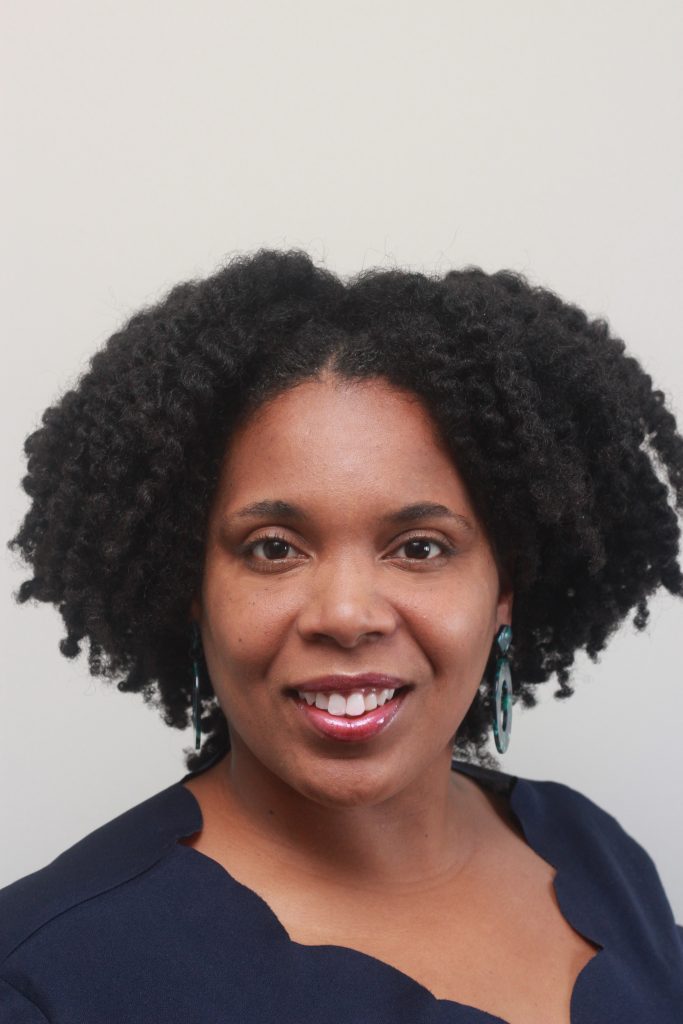
Bailey A. Brown is an assistant professor of sociology in the Sociology and Anthropology Department at Spelman College. Brown researches and teaches on the sociology of education, research methods, urban sociology, race and ethnicity, and inequality. Brown is the author of Kindergarten Panic: Parental Anxiety and School Choice Inequality (2025).
Comments