

As a part of our Teaching Theory Special Series, First Publics invited Drs. Wesley Longhofer and Daniel Winchester, authors of Social Theory Re-Wired, to talk about their goals for and experiences with writing their theory reader. Drs. Longhofer and Winchester discussed the origins and inspiration for the book, and their dedication to empowering students and providing instructors with a set of tools to build a theory course that excites both them and their students.
First Publics: Tell us about the origin of this book. What inspired you to write it together?
Wesley Longhofer: Dan and I both went to graduate school at the University of Minnesota, and one of the things I really cherished about our program was the opportunity many of us had to teach. And my first course was a required social theory class for sociology majors held on Thursday nights. Not surprisingly, I thought, “Well, great, nobody’s going to want to be here.” In the class, I had nontraditional learners, new Americans who had just immigrated from Liberia, musicians in some really successful rock bands, and some really sharp students who wanted to go to graduate school. Then I had a lot of students who were like, “I just have to get through this.” And social theory was not a class known for being very approachable or accessible. So I taught it in a way that I consumed it and learned it, which meant that I drew from a lot of media and music. We would discuss Weber’s ideal types of social action using characters from “Do the Right Thing,” we would listen to Radiohead when we talked about Weber and the iron cage and The Coup when we talked about Marx – all as a way to make the text itself more approachable.
Then I was asked to teach an online version of it asynchronously (this was before we all became accustomed to classes on Zoom). This was around the time when Contexts came to the University of Minnesota, and Chris Uggen and Doug Hartman were the editors. I was on the graduate board and later became the graduate editor. And Contexts really taught me how to how write for a general audience. And so that’s how I wrote that online content. I took all of my lecture notes, including the film clips, song lyrics, and other media, and turned in into a text. Doug then encouraged me to turn the online content into a book and introduced me to an editor at Routledge. But after I wrote the proposal for the book, I took a job in a business school and knew I wasn’t going to be teaching social theory anytime soon. So I brought Dan on and said, “Hey, Dan, why don’t we write this together? You think about theory deeply. You’re also an incredible teacher, and you might be teaching theory in the future. Why don’t we just collaborate?” It was serendipitous, though. Had I not taught an asynchronous online class, I wouldn’t have had the building blocks, and had Contexts not been in Minnesota, I wouldn’t have had the connection with the publisher. And so it was those two things that made it possible. Then the shape that it took really was through the collaboration.
FP: Can you talk a little bit about your choice to frame the textbook using language of technology (e.g., social theory “rewired,” system updates, etc.)? How does this framing align or contribute to your vision of making social theory more understandable to today?
Daniel Winchester: One of the things that Wes and I learned early on working with Routledge is that you have to have a justification or vision for why there needs to be yet another social theory reader on the market. There are already many out there, many of them quite good. But when Wes and I were talking about the type of undergrad theory course that we wanted to teach or would want to take, we talked a lot about making it more of a conversation about big ideas. So, that’s when this idea of the thematic structure of the book came along. The book is organized into five major themes that we argue social theorists have been discussing since the discipline began, even before the discipline began, before there was a thing called sociology. And so when we were thinking about that, we were thinking about restructuring the basic outline of a theory class. But, we also quickly realized that a lot of our primary examples, especially connecting to the present day, were about technology and how central technological change is to issues of social order, capitalism, inequality, identity, and surveillance. Technology and technological change have been a huge focus of many social theorists. Of course, social theorists today, like Ruha Benjamin, are looking at the development of AI technology. But even going back to Marx, who had a lot to say about industrialization and rapid technological change, not just for capitalist production, but even for what he thought was going to be this post-scarcity society of Communism. Max Weber, who started this conversation about how technology supercharged our society’s penchant for focusing on instrumental concerns, instrumental rationality, sometimes over more value-rational concerns. And so in some ways, technology, we realized, was an evergreen topic for thinking and theorizing about society. So, it coalesced into technology being the organizing theme for the entire product.
WL: We also started this project in 2009-2010, about five years after Facebook was formed but right when it was taking off. The early days of social media were a massive experiment in impression management – how do we represent the self in these technological environments? It opened up all these other conversations, too, that have also been foundational in social theory. The questions that we were asking at the time were whether technology was pulling us apart or bringing us closer together. That’s a Durkheim kind of question. So we had the title in our heads, and then I thought maybe the cover should look like a network map or a circuit board where we could illustrate all of these connections across contemporary and classical.
FP: There has been an ongoing discussion among sociologists regarding who and what theories we should highlight in social theory courses. For instance, the inspiration for First Publics, builds on the work of Michael Burawoy, who taught social theory himself and wrote on teaching living theory. In his work, he suggests that sociology is unique in its attachment to the sociological “canon” which can make teaching theory difficult, but not if we treat theory as a language and put theorists in conversation with each other. What guided your decisions in selecting contemporary extensions, as well as the contributors for system updates in each chapter?
WL: Choices have to be made, and our own biases go into making those choices. We gravitate towards things that we like (which is maybe why there’s not a lot of Talcott Parsons in there). So, a few things helped guide our decisions in the most recent edition. First was what we were hearing from instructors. It’s a book that is assigned in classes. These are the instructors who are in the trenches teaching social theory. So, what are they teaching and what do they want more of? Second was the conversations the discipline was having. What is the value of a canon? Does it box us in? Does it limit innovation? Who is being excluded? Finally, social theory has always been a response to the times, and so calls for racial justice, the pandemic, the climate crisis – these were all pushing us to ask different kinds of questions and dig deeper into theory. So, we heard that we needed more post-colonial theory, more on race and inequality, so we added Cedric Robinson. We needed more on technology, so we brought in Ruha Benjamin and Shoshana Zuboff.
DW: We start each of the sections with what is generally thought of as a key classical theorist. A member of the so-called canon, whether that’s Durkheim for the section on social order, or Marx and Engels on the social consequences of capitalism, or Weber on the potential dark sides of modern life. But I think there are absolutely legitimate criticisms of canonizing particular social theorists. Wes and I agreed to move away from that. But, what we thought, and I still very much think this after teaching undergrad social theory now for a dozen years or so, is that there is something illuminating about being able to show students that a person who wrote 150 years ago was writing and concerned about many of the same things that they are right now. Sometimes, you have to do some work to show them that’s the case, but part of what starting with a classical theorist does is make students realize that sociology is a relevant and long conversation about issues that don’t go away, that these are things that we’re still grappling with today. It also allows students to see that these “canonical” figures had limitations and sometimes outright biases and prejudices in their way of thinking, but at the same time, they also had incredibly insightful things to say. I think being able to demonstrate those connections and the historical length of these conversations about issues of social order, about capitalism, about power, is really interesting and fun.
There is something illuminating about being able to show students that a person who wrote 150 years ago was writing and concerned about many of the same things that they are right now.
Daniel Winchester
WL: I think part of it is that we teach theory in the way that we were taught theory. So, that becomes reified over time. It takes a long time to undo and to change that. We designed the book in the spirit of Burawoy to say that these theorists are responding to conversations of prior theorists, and let’s focus on the conversations that are both looking into the past, but also into the future. We have an alternative table of contents that if you’re really wedded to the traditional way of teaching theory and you really like the canon. It’s all there. But we want to think about it as more evergreen conversations that theorists have been having.
FP: What are your hopes for how the textbook is used in a social theory course by instructors and by students?
DW: I would say one of the things I hope all instructors and students are able to get from this book is the ability to have conversations. Reading a lot of theoretical work and social theory is just hard. But, I hope that in the process, as instructors are breaking down the difficult material with their students and with the book, it leads to a place where students really start to be engaged in conversations about these big ideas. So it becomes less about knowing the details of Marx’s or Foucault’s theoretical apparatus, than it is about seeing that this person has a really interesting idea about how market crashes occur, or how social disorder and disintegration happen, and that can be a point where everybody can have a chance to be a part of the conversation. Sometimes students are tired, sometimes instructors are tired, but I do hope that there are those moments where you just have these really insightful and exciting conversations about a topic that happens to be central to sociological theory.
FP: Some sociologists express that the connection between theory courses and public sociology is not as intuitive as other courses in sociology, especially for students. In what ways do you think your textbook encourages students and instructors to make this connection?
WL: In writing the book, we wanted students to understand that people think in theories all the time. We may not use that language, but we all have explanations for the way the world works that are informed by our prior experiences and observations. But too often, we think that theory must only come from the academy. Ali Meghji has this great Sociological Theory piece from last year that argues Burawoy’s idea of public sociology was perhaps too one-directional, that it was more about getting sociology out and less about getting the public in. Meghji draws upon, for example, the Zapatista movement in Chiapas, which had a pretty serious theory of neoliberalism that talked about financial markets, colonialism, and the military to explain subjugation and oppression. That’s social theory, too, in that it is a framework that draws upon lived experience to help explain a problem. So, I think if we were to redo the book again, we might want to think about some texts that don’t come from the academy that might help us get at these same kinds of questions from a different perspective.
DW: The way that we tried to design the book and the website was to encourage bringing people into the conversation, to, in some ways, decenter theory as this mystified conversation or rarified set of skills. As Wes said, everyone thinks theoretically about the world around them. It’s just a matter of how we build the skills and critical capacities to get people to do that better, to do it more reflectively, to do it more critically. When reading someone like Bourdieu or Dorothy Smith or Patricia Collins, we want students to see that person thinks theoretically like them, but at a level that’s really sophisticated. We think that it can get students excited about merging their own thoughts on the issue and putting them into conversation with these theorists. I think that what we’ve tried to do with this book, and what I think I try to do in most of my undergrad theory courses, is make it like you’re a part of this conversation as much as Pierre Bourdieu.
WL: It’s also important to remind ourselves that a lot of the early theorists were public sociologists, Du Bois being probably the most prominent one. But Marx wrote that philosophers explain the world, but the point is to change it – we have got to move from the abstract to the practical. That was a public sociology kind of statement. So, this idea that theory is relevant for the public is not new. It’s actually a very old idea.
So, this idea that theory is relevant for the public is not new. It’s actually a very old idea.
Wesley Longhofer
FP: Is there anything else about the book that we haven’t asked you that you’d like to say?
WL: It’s a reader – a lot of its weight, both literally and figuratively, is just original texts. And I think this is a challenge for many instructors. How can we help students read original theory when we are constantly told that students don’t read anymore? And we get that some instructors may not think their students need to read 20 pages of Distinction. But we also know that most instructors love reading theory and want their students to fall in love with it, too.
DW: I agree with that. Part of what makes us “old school” is that we both have a commitment to reading, and that part of what a theory course teaches you to do is to read hard things. I think students can actually take pride in that. By the end of a theory course, students can take pride in the fact that they have a working understanding and knowledge of some pretty heavy ideas that have been really influential and consequential for the development of entire societies. I mean, everybody talks about Marx all the time, but I doubt many of the people who talk about Marx and Marxism have read him. But our theory students do, so they’ll have informed ideas, criticisms, etc., from that process.
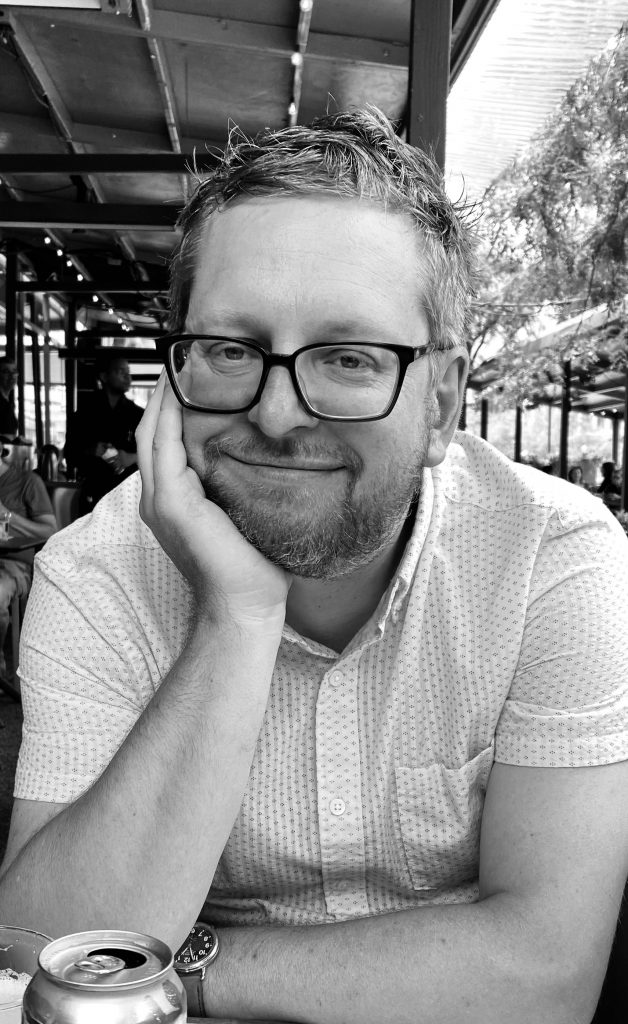
Wesley Longhofer is an associate professor of organization and management in the Goizueta Business School at Emory University. His research interests include organizations, climate change, and human rights. He currently serves as the Senior Director of Emory’s Center for Faculty Development and Excellence and Assistant Vice Provost for Faculty Affairs.
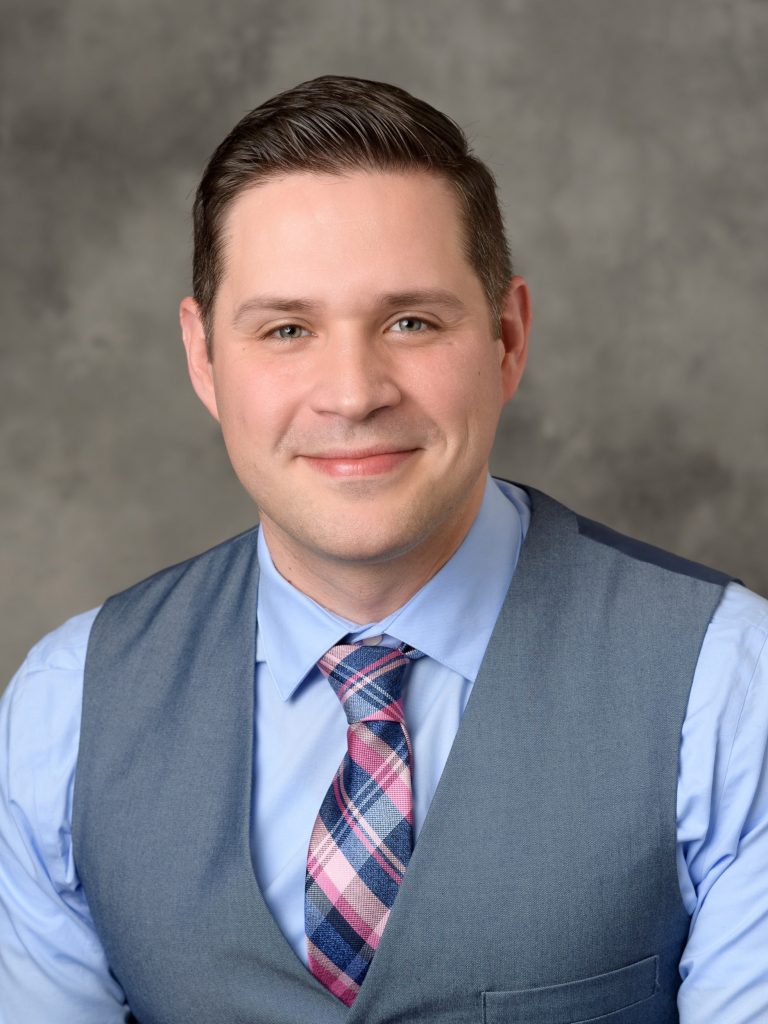
Daniel Winchester is an associate professor of sociology at Purdue University. His research examines how cultural practices shape human experience and action, with a particular focus on the study of religion. He has conducted ethnographic studies of conversions to Islam and Eastern Orthodox Christianity, respectively, and is currently writing a book analyzing how Evangelical missionary organizations produce particular understandings and experiences of “the global”. In addition to Social Theory Re-Wired, he has published theoretical work in journals like Social Forces, Sociological Theory, Theory & Society, Sociology of Religion, and Journal for the Scientific Study, among others.
Comments