bodies

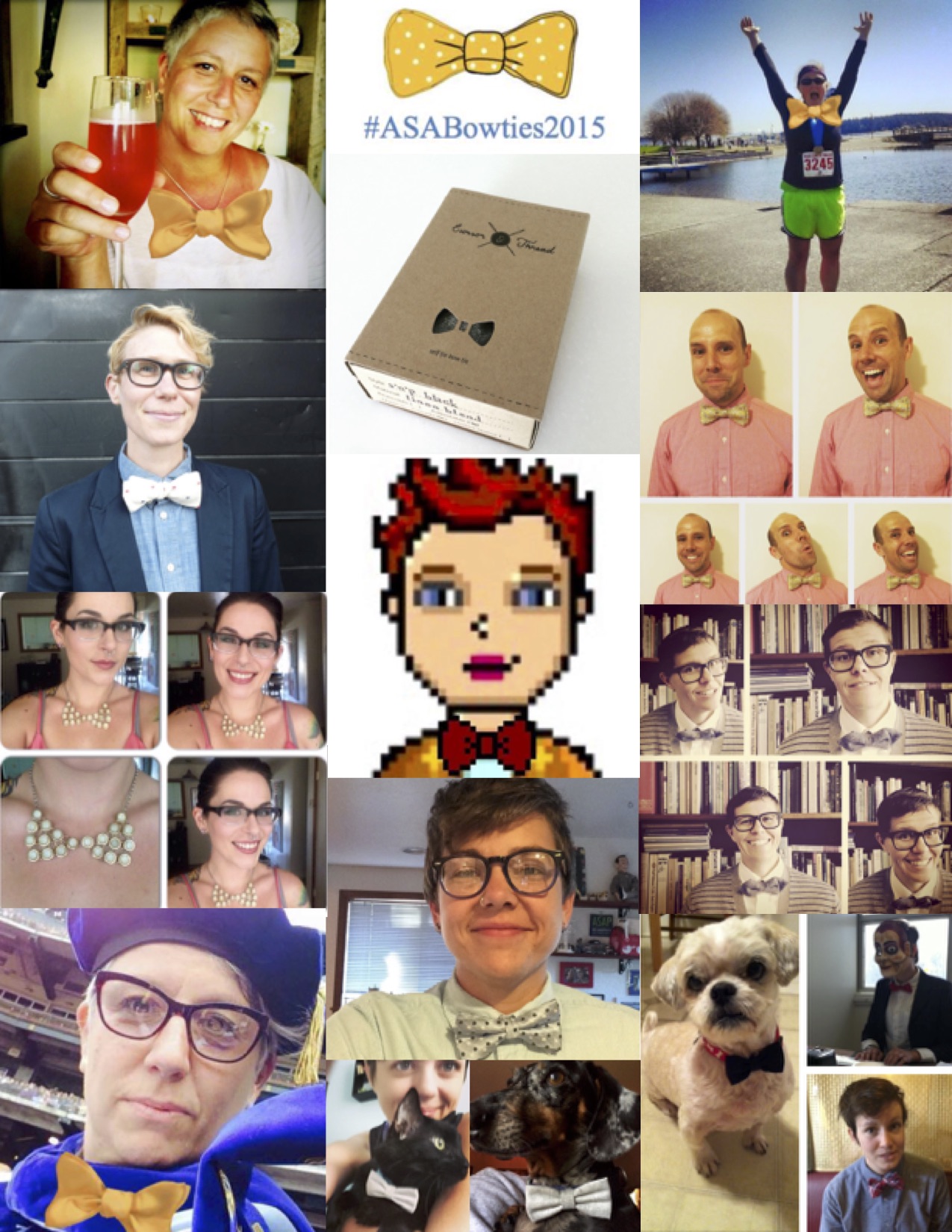
ASA Bowties 2015 jpegSpot a bow tie, meet a sex and gender scholar (or someone lucky enough to have donned a bow tie on our day)! The Sex & Gender Section of the American Sociological Association will celebrate its members, increase the visibility of sex and gender researchers at the summer meeting, and support conversation and networking with a “wear-a-bow tie” campaign. The Section’s Membership Committee encourages all members to wear a bow tie on Saturday, August 22nd, Sex & Gender’s designated section day.

Members can wear their own bow ties, pick up one of the free 500 bow tie pins at the Section Business Meeting on Saturday (from 9:30-10:10am), or get creative with jewelry, broaches, bow tie print apparel and other displays. The bow tie is fun way to boost our Section visibility with a trendy gendered style accessory. You can find bow ties clip art and designs in all sorts of places including on phone cases, mugs, socks, various forms of jewelry, emoji, photo editing apps, and, or course, actual bow ties. I personally watch the same YouTube video each time I’ve tied one. And, if you choose to brave one you need to tie yourself, I’ll just highlight the most important piece of information distilled in this How-To video: “Remember, there’s no such thing as a perfect bow tie.”

To discuss the campaign in more detail, I asked Kristen Schilt, chair of the Sex and Gender Membership Committee, and section member D’Lane Compton to join us in a brief digital interview.

Tristan: How was the bow tie decided upon for the campaign?

Kristen: Sex & Gender is one of the largest sections at ASA – in fact, this year, we surpassed all of the other sections with over 1200 members! With such a big section, however, it can be difficult for newer members to find a way in and to meet people. Our idea with this visibility campaign was to come up with a common symbol for all members to display on “sex and gender” day at ASA. Our hope was for it to be an ice-breaker for newer members and a way to show the general ASA what an important part of the discipline the field of sex and gender has become. We asked for suggestions for possible images and the bow tie came out as the winner among the section council. We felt that it was visible – seeing a large group of ASA members in bow ties would raise conversation. The bow tie also has a history of gender transgression in fashion, from Marlene Dietrich to butch subcultures in the 1950s. We recognized that not all members would be excited about the bow tie, but, we also felt no symbol would have full consensus in such a large and diverse section. We decided to move forward with this visibility campaign so we would be taking action on increasing the sense of community among newer and more established members. We imagine that if this campaign is a success that the Sex & Gender section will solicit member suggestions for a new symbol. We look forward to seeing what people come up with!

Tristan: What if members don’t want to wear a bow tie but do want to participate?
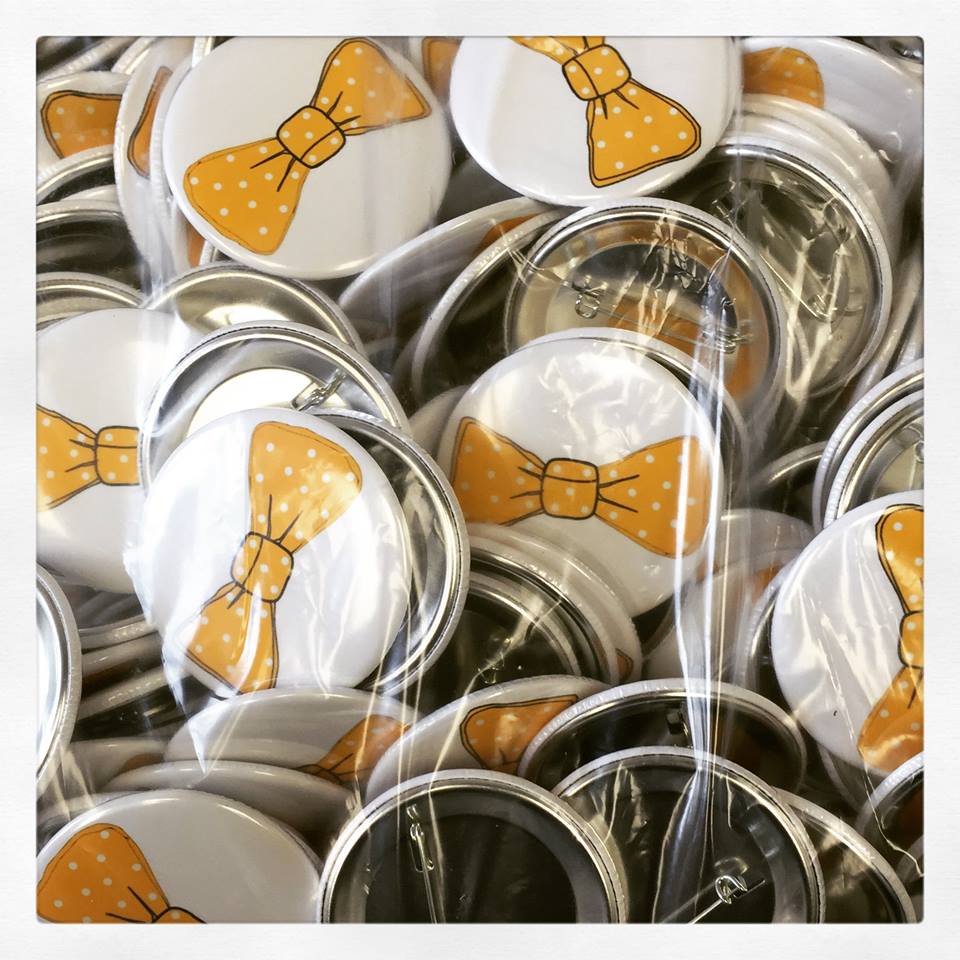
11011222_785267271571761_4706088863506098956_nKristen: Sex & Gender has commissioned 500 bow tie buttons that members without bow ties can wear on Saturday, August 22nd. We will give out these buttons at the Sex & Gender business meeting at 9:30 am. Any remaining buttons will be available at Sex & Gender sessions throughout the day. Just look for Jessica Fields, chair of the section, Kristen Schilt, head of Membership, or members D’Lane Compton and Tristan Bridges, who helped promote the winning bow tie idea.

D’Lane: Beyond the free buttons the section will be handing out, there are other ways you can get creative. For example, while I will be sporting a bow tie on Saturday, I also plan to draw a bow tie on my coffee cups that day. I will likely have a sharpie on hand if folks want to borrow it. I have also heard of some folks who were talking about bow tie-themed socks and various pieces of jewelry including earrings, broaches, hair combs, and necklaces. I will also be playing “I spy…” looking for those folks.

Tristan: What do you like about the campaign?

D’Lane: Beyond the visibility and promotion of the section, what I like most about the campaign is that I am certain it will generate a great deal of interaction whether it be online or on the streets, so to speak. I think it will also offer up different avenues in which we can learn new things about our colleagues and friends and of course just be a simple icebreaker for making new connections. It also gives us something to talk about other than work and may allow some insights into our tastes, likes, and dislikes.

Maybe it’s in my roots growing up under the Friday night lights of Texas stadiums, but I love spirit and “spirit days”. Wearing mismatched clothes on Wacky Wednesday, Thursday was tie day, and of course school colors on Friday. I remember having tie day in high school and loving the fact I had an “appropriate” reason to wear a tie and wouldn’t catch slack for wearing menswear that day. For some wearing a bow tie may feel like drag for the first time, irrespective of sex. Could be professional drag, or dandy drag, some combination, or other types of drag.

Despite all critiques, spirit days made for increased engagement and social bonding. It gave us something new to try, a place to play with who we are; and it was fun. You could also be really annoyed by it and opt out…which still allowed you to engage with others and bond over how ridiculous joiners are or the particular activity was and how over it all you were. It is with this mind set I approach my enthusiasm over the campaign.

Tristan: How are you considering participating?

D’Lane: I plan to wear a bow tie, and, assuming they are down with it, I will take as many pictures as I can of other bow ties and bow tie representing folks to share online. I know people who will not be in attendance plan to show their support by wearing a bow tie Saturday and tweeting it. I have also already changed some of my profile pictures to represent the section. And maybe I will instigate a #ASABowTieScavengerHunt hashtag searching for a collection of the ingenuity of members finding clever ways to participate!

10432120_794886257276529_5923158181651371396_nTristan: Thanks so much for telling us more about it. It sounds like a fun event. The new logo for the section even found a bow tie for the event, thanks to logo designer Eli Alston-Stepnitz. (See the July newsletter for an essay by Eli, Tristan, and Jessica Fields on the process of producing the new logo.) I’ll be wearing a bow tie on Saturday to participate. I chose one from a “conversation starter” line online.

Make sure you participate using the #ASABowties2015 hashtag on social media. And tag @asanews in your posts. In addition to making a show of the size and enthusiasm of our section at ASA, we’re also hoping that this sparks us to make some digital noise this year.

We hope section members will help live tweet the sessions they attend. In addition to flagging posts with session numbers, consider using #ASAGender15 in your tweets during presentations. The Sex & Gender twitter account (@asasexandgender) promoted the hashtag. We are an extremely vibrant section on social media. I’m excited to see whether we can connect our social media energy with this suggestion.

Thanks to Kristen Schilt and D’Lane Compton for the campaign and the interview. We’re all excited to see everyone this weekend. See you soon and safe travels!
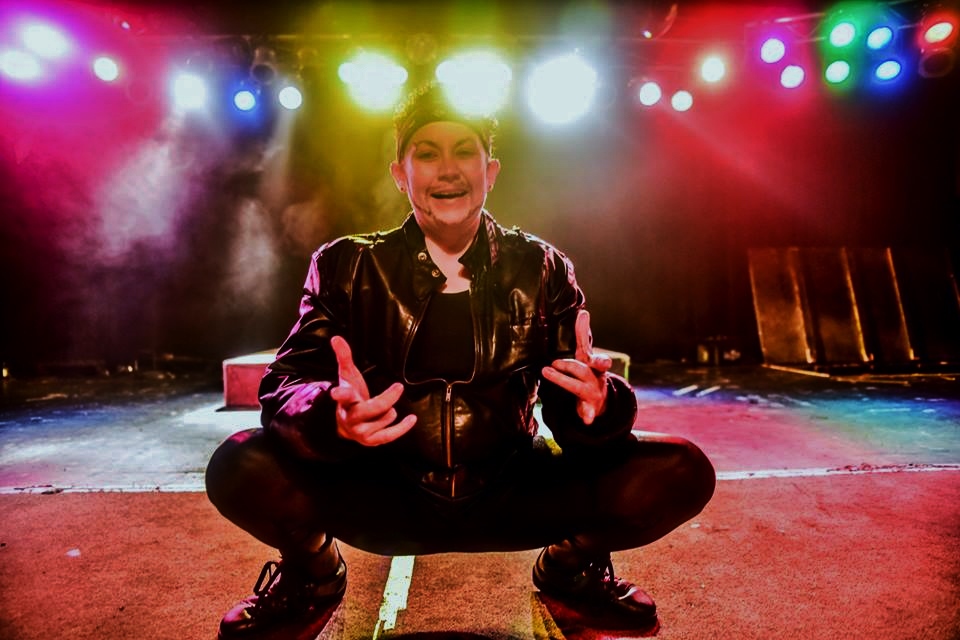
dragSouthern drag kings are interrupting the gender binary and making the South a safer place for queer people. Yes, drag kings do exist in the South, even the rural South. In our recent study (coauthored with Kimberly Kelly), we examine 27 South Carolina drag kings’ ideas about and experiences with drag in the South. The goal of this project is to make queer life in the South more visible and to explore how it differs from larger metropolitan areas that are more often the subject of academic research. Drag culture in the South is thriving and we wanted to know more about its impact.

Our findings suggest that Southern drag kings do not share intentions with drag kings in larger cities. Southern drag kings do not wish to overtly challenge the gender status quo. Unlike drag kings in other areas, they do not think of their performance as political. In contrast, Southern drag kings understand drag as a safe and fun outlet for expressing a female masculinity not respected in their everyday lives. As one king explains, “From all the experiences I’ve had, it’s just about fun and escape.”

drag 1The majority of drag kings in the South entered drag to express their long-term identification with masculinity. Many use drag as a testing ground for gender transition. Southern drag kings often described difficulty finding spaces where their masculine, or otherwise queer, identities were accepted. Performing drag was one place where many kings felt accepted and received positive messages about queer culture and transgender identities. Through drag they were able to receive information about gender identity and sexuality that many perceived unavailable outside these venues in the South. One drag king explains that drag is a place where transgender people can feel more comfortable. He says, “I guess more people are naturally drawn to that if they don’t feel comfortable in their skin because it’s like the first arena where you’re accepted as your new persona.”

Although their intentions are largely individualistic, for entertainment or gender transition, we argue the performance of drag in the South still has the effect of challenging the gender order and leads others to push for change in our society. Intentionality is not necessary for political impact. drag 4By performing as men, drag kings question the innateness of masculinity and show its performative nature. That Southern drag kings do not overtly state these challenges to the gender order does not eliminate the power of their performances.

Though the South may not be ready for an overt challenge to the gender hierarchy, drag provides a safe space for those who wish to step outside the gender binary. Southern drag kings understand the conservative nature of the South, and rather than challenge it directly, seek to remove themselves from it, if only for one show. Although change may be slower in the South than other areas of the country, drag provides a glimmer of hope for overcoming the gender hierarchy, especially in a context where the gender binary is so rarely interrupted.

________________________

baker (2)Ashley A. Baker recently completed her PhD in Sociology at Mississippi State University and begins a position as an Assistant Professor of Sociology and Social Work at Simpson College in the Fall of 2015. Her coauthor, Kimberly Kelly, is an Associate Professor of Sociology and the Director of Gender Studies at Mississippi State University.
Their article “Live Like a King, Y’all: Gender Negotiation and the Performance of Masculinity among Southern Drag Kings” will be released for OnlineFirst publication at Sexualities soon.

Vanity Fair
Vanity Fair

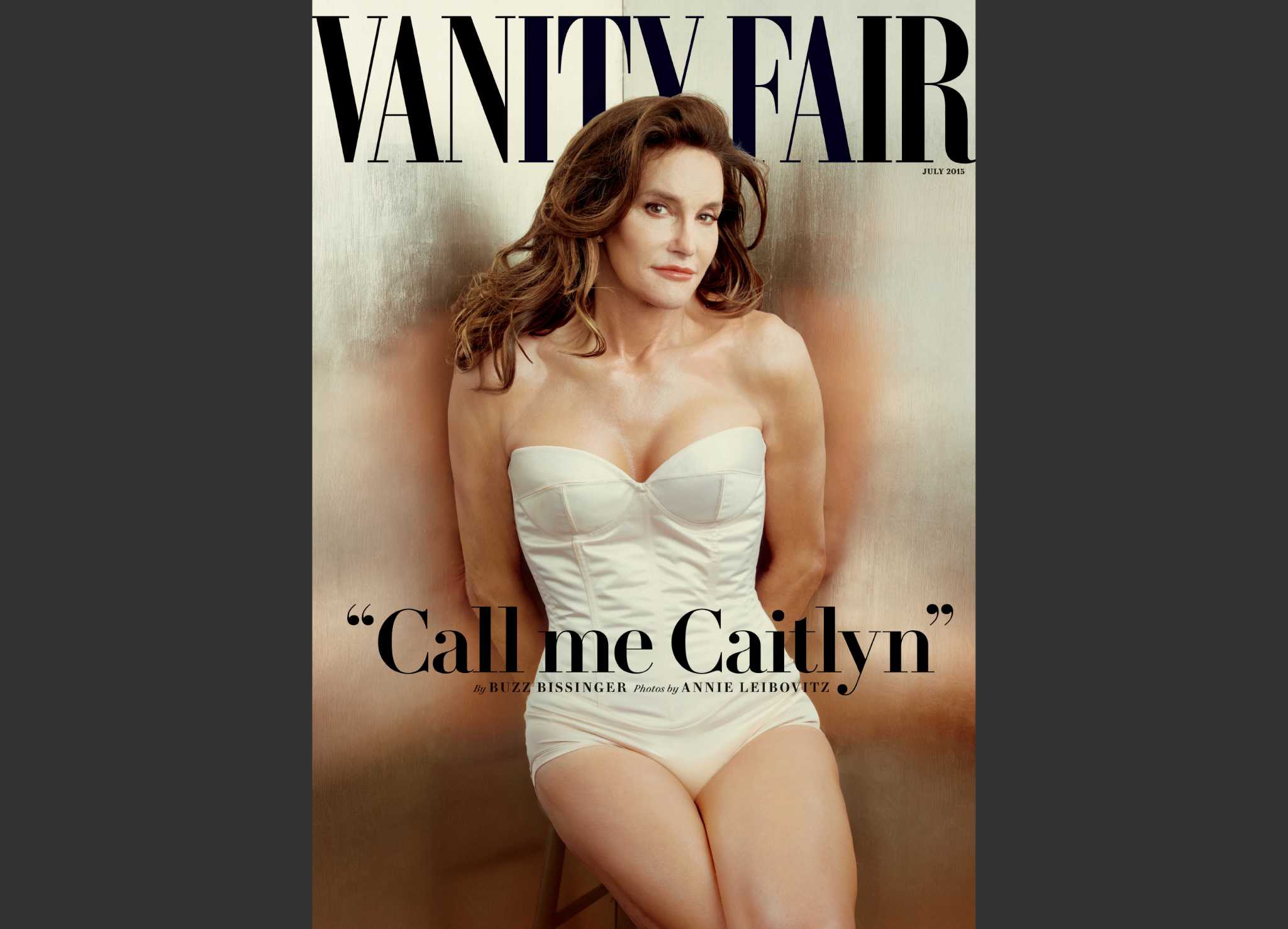
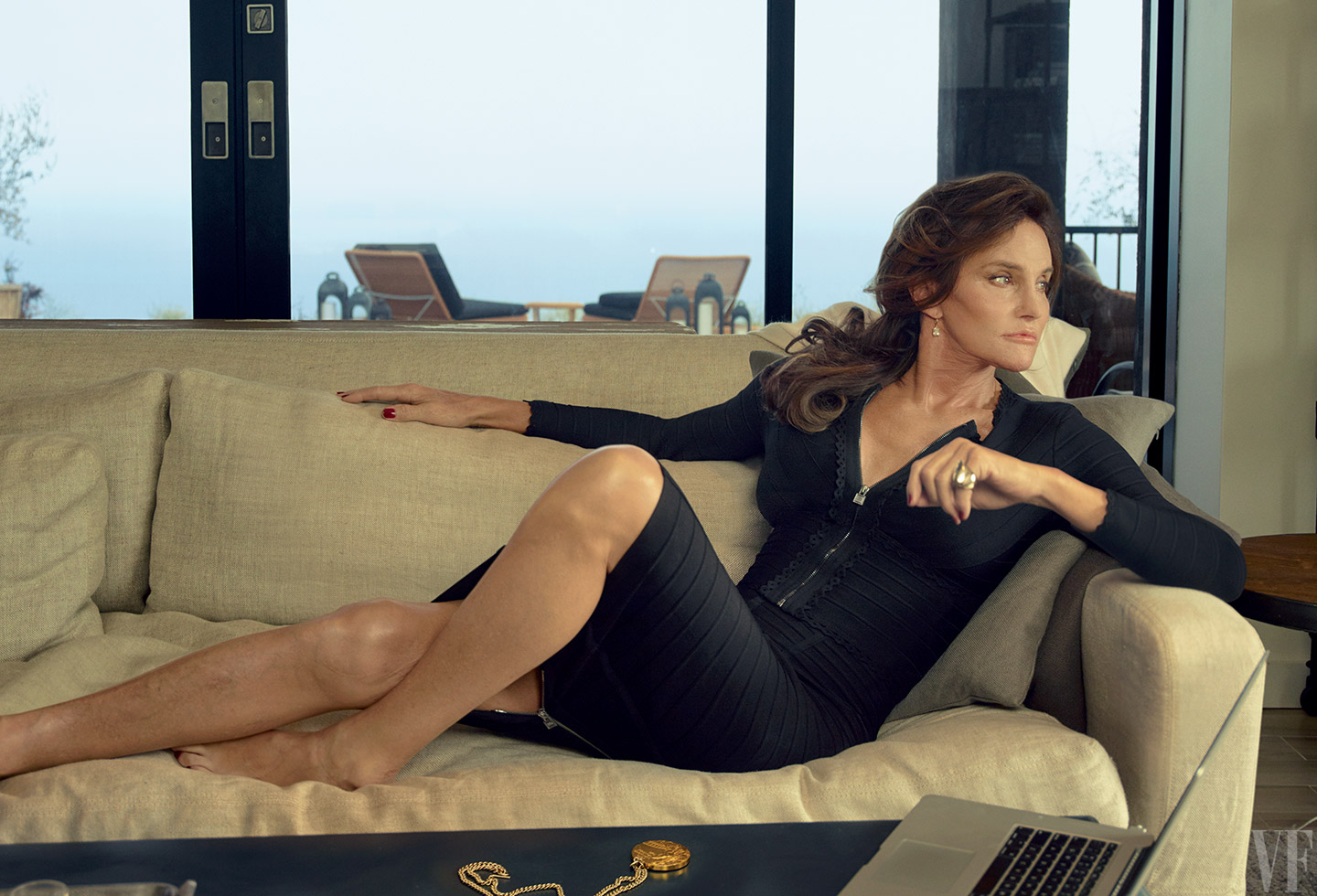
In April 2015, Olympic athlete and reality television star Bruce Jenner sat down with ABC’s Diane Sawyer to reveal his gender identity. Born male, Bruce declared that he always felt female and was going through the process of becoming a woman. In June, an image of Jenner dressed in a cream-colored bustier was the cover of Vanity Fair magazine, captioned by the pronouncement, “Call me Caitlyn.”

Those of us born in the last forty years have had little choice but to be affected by waves of cultural change. Every generation has this, of course, but generations who have been branded like cattle with the letters “x” and “y” have been placed in the unique position of both benefiting from the feminist and queer activism of those who came before us while also participating in a massive technological, Internet-based, and over-exposed celebrity culture which saturates our socialization. For feminist pop culture scholars like myself this is thrilling, especially considering the impact pop culture can have on society.

My generation was pushed into the “We are the World” phenomenon, the 1985 song whose proceeds benefited USA for Africa. We saw Magic Johnson announce his HIV status, forever cementing a childhood hero’s vulnerability and shattering ideas about ‘who gets AIDS.’ We were young and impressionable when Madonna came on the scene, her music and images pushing against gender roles.

In the decades that followed, we have witnessed our country’s shift in gay and lesbian rights, through comediennes like Ellen DeGeneres, pop stars and actors such as Lance Bass and Neil Patrick Harris as well as countless others who came out and then continued to have thriving careers.

My generation has watched as pop culture shined a light on issues such as violence against women, in part, because of the work of people like musician Tori Amos who co-founded RAINN, Angelina Jolie’s status as a U.N. goodwill ambassador and even men like WWE legend Mick Foley who regularly raise hundreds of thousands of dollars to support the work of RAINN and volunteer for the hotline.

Yet, these examples are of people acting intentionally and using their time and talent to better the world. Which is why it is surprising that a reality show, whose premise is to follow a wealthy family’s quest for stardom, is becoming part of social change.

Like most people, I know that beings called Kardashians and Jenners exist. The reality television show Keeping Up with the Kardashian’s has run regularly since 2008, featuring the blended family of Kris Kardashian and Bruce Jenner. The family’s popularity has had huge monetary gains and spurred a list of products too long to mention (here is a link to most of them), while simultaneously being critiqued for the “reality” created by the show’s producers.

It is because of the widespread impact of the show that leads me to think that the transition of Bruce Jenner to Caitlyn Jenner may be one of the single most important moments in pop culture for multiple generations. Whether we think of Caitlyn as an Olympic athlete, father or reality TV star, her transition from man to woman in such a public and well-orchestrated way is inescapable. Very few Americans can now say they do not know of someone who is transgender.

Caitlyn’s public revelation will undoubtedly help people who are struggling with transgender issues, being able to see ourselves and identify with another person is part of social development. It will also feed the masses of skeptical or cynical people who reject the power of celebrity. This is the beauty and brutality of popular culture.

Incredibly, watching the way Jenner has chronicled her life-long struggle with gender has placed terms like “gender identity” and “sex vs. gender” into media culture. The social construction of gender is becoming part of a national conversation, and gender studies scholarship is leaping into daily coverage of Jenner’s transition. Terms like ‘intersectionality’ are entering discussions about age (Jenner is 65), social class (she can afford the best surgical procedures) and privilege (unlimited resources aid her ability to transition and pass as a woman). Currently, gender studies is a focus of national media, something that was evident in the Keeping Up with the Kardashian’s special, “About Bruce” when Kim bluntly asked her step-father, “So if you’re a ‘woman’ and you used to have sex with my mom, does that mean you’re a lesbian?” In that moment, queer theory entered the Kardashian household. Millions of people were challenged to think about the spectrum of sexuality. Now, frank conversations about gender roles are popping up at dinner tables and coffee shops around the country.

Of course, Jenner’s experience does not speak for all transgender people. (How could it?)

As coverage of the Vanity Fair cover unfolded, comments about Caitlyn’s appearance were abundant. Being able to “pass” as male/female allows a certain amount of privilege for transgender people, their image conforms to set gender norms. There is comfort in men and women resembling our socially constructed ideas of male/female. Additionally, transitioning the way Caitlyn did was costly, the multiple surgeries and cosmetic procedures are not available for all. Further, as Jon Stewart noted, the media’s appetite for breaking down women’s looks is insatiable, as they did when the Vanity Fair image was released.

cjenner2
Vanity Fair Interview

For transgender people there is already a high level of scrutiny about their bodies and, for transgender women, her cultural capital is based on her beauty. Jenner is lucky, she met these social expectations, CNN even declared her to be “stunning.” Passing is not as easy for many transgender people. There are limited resources for most to have a perfect coming out.

Regardless, the spotlight Caitlyn has elected to shine on herself is going to change lives. Gender, in all its inceptions, needs to be a part of the national conversation and Caitlyn Jenner is doing just that. I can’t wait to see what happens next.
________________

Adrienne PicAdrienne Trier-Bieniek PhD is a gender and pop culture sociologist. She is the author of Sing Us a Song, Piano Woman: Female Fans and the Music of Tori Amos (Scarecrow Press, 2013) and co-editor of Gender and Pop Culture: A Text-Reader (Sense, 2014). Her writing has appeared in various academic journals as well as xoJane, The Mary Sue, Gender & Society Blog, Feministing, and Girl w/Pen, and she runs the Facebook page Pop Culture Feminism. Adrienne Trier-Bieniek is a professor of sociology at Valencia College in Orlando, Florida.

Originally posted at Inequality by (Interior) Design

photo 1(1)I recently moved to upstate New York.  So, there’s a lot more Victorian-style architecture in my neighborhood.  I’ve posted on the interesting ways that Victorian architecture gender segregates activity within the domestic space before (here and here).  One room I’ve been interested in lately is a room with a few different names and a history that’s not entirely known.  It’s sometimes referred to as a “roofwalk.”  But, it’s more commonly called either a “widow’s walk,” “widow’s perch,” or a “widow’s watch.”  When I first learned about it, it was written about as a widow’s watch.  And there’s a bit of cultural mythology that surrounds these rooms in homes.  Here are two houses in my neighborhood with the room (right and left).

photo 2(1)The story that I’ve always heard about this room is that it was designed for the wives of sailors to watch and wait for their husbands to return.  Women whose husbands died at sea–so I was told–would sit in these rooms, pining for their long-lost lovers.  As it happens, there’s not a great deal of evidence that this was, in fact, the original purpose of the room, nor that this is how these rooms were actually used.  They did initially appear during the period when the sailing industry produced international trade on a level previously unimaginable and during which naval warfare dominated (~1500’s through the mid 1800s).  But the rooms could have equally been intended for (and used by) mariners themselves (rather than their wives) to look out for ships due back in port.  Indeed, in some communities, these rooms are referred to as “captain’s walks.”

And it’s also true that a great deal of these rooms were initially built around the chimneys of homes to provide quick and easy access to the chimney both in case it needed repair, and for a quick way to put out chimney fires–a constant dilemma in early American architecture.  This was the reason people had their chimneys “swept” every so often.  The accumulated ash and soot, if not regularly removed, could ignite.  Sweeping chimneys was serious–and extremely dangerous–business.  victorian style chimney sweep, a child chimney sweep,  hulton piChildren were often used because of their size, but it was a job often given to orphaned children.  It’s also a powerful illustration of historical understandings of children and childhood.  Despite being illegal, it would be unthinkable to ask a child to do something this dangerous today.  Chimney fires were serious business.  So, having quick access to pour sand down might have saved your home.

Yet many of these rooms today are not around chimneys, and if they were intended for either men or women, they were a room gendered by design.  And if intended for women, then they continued a tradition within Victorian architecture of designing rooms specifically intended to segregate (and/or isolate) certain emotional displays of women, keeping them out of sight.

Boudoirs and fainting rooms are similar examples.  Boudoirs, I think, are popularly thought of as rather large closets for women, in which wealthy Victorian women would bathe, dress, sit gazing at themselves in mirrors and brushing their hair (at least this is how they’re sometimes depicted on film).  It was also a private space in which women could carry out hobbies (like reading and embroidery) or entertain lovers away from various others in the house.   Interestingly, men’s private chambers were referred to as their “cabinet” (a term also used in American politics referring to the small group of people who advise and assist the president).  Boudoir is not as commonly used today.  It actually translates to something like “sulking room.”  And, boudoirs were also designed as spaces to which women might flee to avoid having socially “inappropriate” emotional displays in front of others.

Fainting rooms served similar purposes.  Typically on the main level of the house, fainting rooms were typically equipped with fainting couches.  How these rooms were actually used is the subject of some debate among historians.  Some have assumed that women were fainting because of the pain and various bodily restrictions caused by regularly wearing corsets.  Others suggest that these rooms and couches were used in some of the treatments prescribed for hysteria.  In either case, fainting rooms were designed to isolate women during periods of intense duress.

Rooms dedicated to socially “inappropriate” emotional displays from men are absent in Victorian architecture, perhaps because “real men” were presumed not to ever have need of them.  It’s an interesting case in which architecture plays a critical role in our interactions, either segregating or suppressing certain displays.

The floor plan of the White House recently made headlines because of a subtle change that’s caused a bit of a stir: it now features a gender-neutral restroom. Just one. But one was enough to make headlines. Many people don’t think twice about which restroom to use in public. Some people’s choice, however, is more of a dilemma than you might assume. Many transgender individuals struggle with the restroom issue in public settings. And this is an issue that forces cis-gender folks to confront deeply held beliefs about a gender-segregated setting—beliefs some may not fully realize they hold and many may be ill-equipped to discuss.

Making use of a public restroom is not often understood as a political act. Yet, a group of transgender folks in the U.S. and Canada are participating in a bit of digital activism by doing just that. It’s a quiet social movement, but it’s already gained some media attention. Pictures posted alongside the hashtags #Occupotty, #WeJustNeedToPee, and less often #LetMyPeoplePee on all manner of social media are starting a much-needed conversation about gender in and around public restrooms.

Brae Carnes
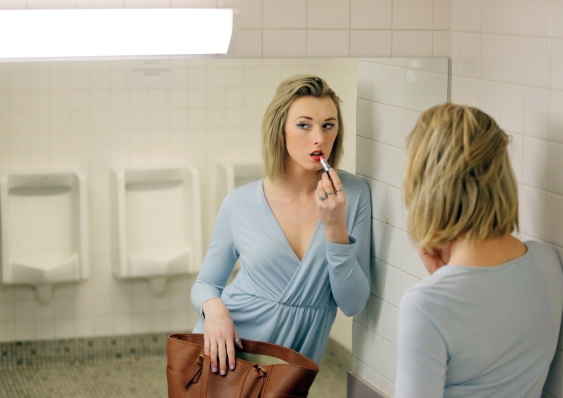
Brae Carnes, a transwoman in Victoria, depicted here using a men’s public restroom to raise awareness about what discriminatory legislation associated with “bathroom bills” would actually look like in practice.

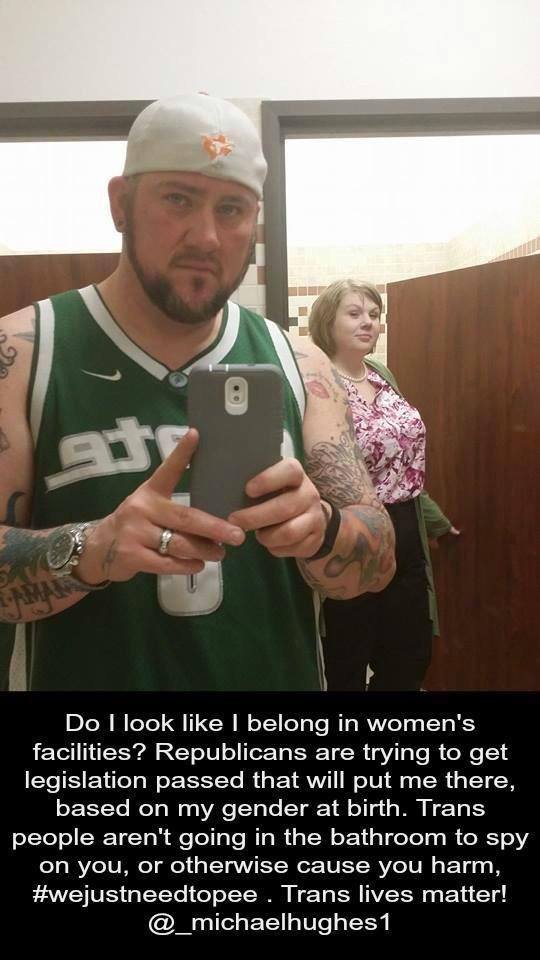
Brae Carnes is a transgender woman living in Victoria, Canada whose photo-activism went viral when she posted an image of herself applying lipstick in a public restroom with a line of urinals against the wall behind her (see left). Brae told reporters at the Times Colonist, “I’m giving them what they want… I’m actively showing them what it would look like if that became law and how completely ridiculous it is” (here). And Brae is not alone. Michael Hughes, a transgender man living in Minnesota, also caused some digital waves when he posted a series of pictures of himself in women’s restrooms with captions like: “Do I look like I belong in women’s facilities?” (see below). Brae and Michael are part of a vocal group of trans* rights activists opposing legislation that would force transgender people to use the public restroom facilities associated with their birth gender (the sex they were assigned at birth). So-called “bathroom bills” are being introduced in the U.S. and abroad, and #Occupotty is an important challenge to the proposed legislation.

B_6vNpGUQAAm_bgThose introducing bathroom bills most often justify them as being about “protection,” “public safety,” and as attempts to reduce violence and assault. The bills rely on the transphobic myth that transgender individuals are sexually perverse and that they are likely to be sexual predators.  Thus, defenders of these bills often claim that they are about protecting cis-gender people. This avoids the troubling truth that transgender individuals are far more likely to have violence committed against them than they are to commit this kind of violence against others. Indeed, Media Matters found no evidence to substantiate the claim that restroom sexual assaults were higher in trans-inclusive jurisdictions.  One survey of transgender and gender non-conforming individuals in Washington D.C. found that 70% of respondents reported having been either harassed in, assaulted in, or denied access to public restrooms (see here).   It’s an important issue and Brae Carnes and Michael Hughes are helping to draw more attention to the lives that hang in the balance.

Bathroom bills portray trans* persons as sneaky and deviant and as attempting to trick the rest of us into using a restroom with them. But, as Mic.com reported, there have been zero reported attacks on cis-gender people by transgender people in public bathrooms. All of the documented attacks victimized trans* persons. So, why is the conversation about transgender people committing violence rather than about protecting transgender folks from cis-gender violence?

This is an instance of what Laurel Westbrook and Kristen Schilt call a “gender panic”—situations in which people collectively react to challenges to biology-based ideologies about what gender is and where it comes from by attempting to reassert those ideologies. Bathroom bills produce just this type of ideological collision where biology-based ideologies and identity-based ideologies are pitted against each other in public discourse. Inside this ideological discord, we gain new information about the gender binary, gender inequality, and how our beliefs about gender difference take a lot more work to uphold than we may assume.

Bathrooms are intensely gendered spaces. The belief that men and women, boys and girls, ought to relieve themselves in separate rooms is a powerful illustration of our collective investment in gender differences. But, sex-segregated bathrooms are a matter of social preference and organization rather than being recommended by our biology. And when we attempt to resolve this gender panic by resorting to biology (such as introducing legislation mandating the criteria of “birth gender” for public restroom use), we continue an awful tradition of putting transgender people at risk of violence under the guise of protecting “us” from “them.”  But, social scientific research shows that we are in far greater need of policies that protect “them” from “us.”

Bathroom segregation is a political issue and one that deserves academic and public feminist support. The proposed legislation relies on myths associated with cis-gender and transgender people alike. Whether motivated by hate or misunderstanding, these laws fail to acknowledge well-documented facts about violence against transgender people, and in doing so, play a role in perpetuating continued violence and discrimination against transgender people. #Occupotty is a political statement and a request for recognition and rights. But these brave digital activists are doing more than that, too. They are exposing a set of myths that also work to justify gender and sexual inequality. Whether openly acknowledged or not, it is for this reason that #Occupotty meets resistance and it is for this reason that it deserves more support.

#TransLivesMatter


This article was republished on Wonder Anew, an ongoing project born from an idea that personal positive change (finding the best in ourselves) is a way to gain insight and wisdom to live a better life, that sharing our personal changes lifts others’ spirits, and that listening to others’ changes can inspire us to be contributors to the world.


Professionals wear many hats. I’m a scholar, author, researcher, editor, educator, analyst, speaker, evaluator, advisor, collaborator, investigator, advocate, and consultant. I’m also a yoga instructor. In addition to my advanced degree in social science, I’ve logged more than 300 hours of formal yoga training and taught more than 400 hours of public classes.

Parivrtta Hasta Padangusthasana - Big Bend National Park
Parivrtta Hasta Padangusthasana – Big Bend National Park

Yoga, derived from the Sanskrit root “yuj” means “yoke” or “union.” The practice uses a variety of movements, breathing exercises, meditation, and relaxation techniques to help the practitioner achieve union (balance) between the mind, body, and spirit. Although yoga can be traced back thousands of years, modern yoga has morphed into a variety of new styles that incorporate classical and contemporary philosophies and methods. It may be practiced as a form of religion, lifestyle, leisure, or fitness. Americans spend $6 billion a year on yoga classes, equipment, clothing, workshops, videos, books, and more. Yoga has become so popular as a health modality, with about 17 million practitioners in the United States alone, that doctors are starting to recommend yoga to their patients to improve health and enhance allopathic medicine.

Many modern practitioners (70 percent of whom are women) do yoga specifically to improve their health. I started practicing more than 15 years ago for that same reason. Since then, yoga has become more than a pastime for me. It is the singular item I resist from crossing off my ever-expanding “to-do” list. It is the activity I seek out within the nooks and crannies of passing time. Yoga gives me a chance to breathe, to balance in perilous positions, to stand on my head and quite literally experience the world from a different perspective. Yoga calms me down; it helps keep me sane. Yoga informs my being, my living, and my work.

I’ve practiced yoga for thousands of hours. I’ve taught outdoors in parks and on rooftops, and indoors in living rooms, lounges, classrooms, dance halls, yoga studios, and occasionally in the session rooms at academic conferences. Yoga has been this thing in the periphery of my professional life. But every time I teach a class I witness a palpable shift in the room, a sense of calm that sweeps in and through, from beginning to end.

I used to think my yoga practice was more tangential to my work, but upon reflection I realize that is not the case. I now see that yoga is also a body project that has the potential to engage feminism and inspire feminist consciousness. It is neither a necessary condition nor a guaranteed outcome. But the body has long been the beating heart of copious feminist work.

Feminist Theory and the Body

Early western feminists didn’t always consider the body to be central to women’s empowerment. Women have been equated with the body (not the mind) throughout history, and this helped to justify the treatment of women as property, objects, and commodities. Some feminists therefore believed that equality between men and women rested upon the notion that rationality (reasoning) was the universal human capacity that could render neutral the seemingly fundamental biological differences that promoted gender inequality. Simone De Beauvoir’ radical exploration of such inequality in The Second Sex brought the relation between the body and the self to the center of feminist theorizing. Unlike the history of (dualist) western intellectual tradition in which the body was absent or dismissed as irrelevant, feminism’s second wave argued that the body matters; materially, discursively, performatively, and phenomenologically.

Corporeality is entangled in culture and biology, meaning and substance, identity and lived experience, mind and matter. Yoga can be a window into these varied dimensions of feminist conceptualization.

Culture and Biology: Yoga provides an opportunity to participate in an ancient, though modified, cultural tradition while experiencing the rhythm of life through the synchronization of breath and movement.

Meaning and Substance: As the body breathes and energy flows, mindful attention to the positioning of the body in physical space (in the shape of a cobra, an eagle, a triangle, a wheel, a warrior, a mountain, a corpse) allows awareness of oneself, as corporeal and beyond the body, to surface.

An actor and an observer at the same time, a yoga practitioner may become aware that sensory activities give rise to perceptions and judgments that may be based in reason (e.g., pulling weeds all weekend contracted my shoulders, limiting my range of motion) or may transcend both reason and experience (e.g., I’m not strong). Through the practice, we can learn that perception is not purely sensation; nor is it purely interpretation. Consciousness is a process that includes sensing as well as reasoning.

Identity and Lived Experience: Practicing yoga with others perhaps inches away and planted, firmly or precariously, on their own plot of imagined earth (often delineated by a 2’ x 6’ sticky mat) places the individual in relation, in an orchestrated flow of energy and motion. Unlike many social interactions we simultaneously experience ourselves with, and apart from, others. On a level we know, too, that we are an element of their perceptions just as they are a component of ours.

Mind and Matter: With regular practice, yogis may experience equanimity: a perfect, unshakable balance of mind. Researchers at Massachusetts General Hospital in Boston define it as “an even-minded mental state or dispositional tendency toward all experiences or objects, regardless of their origin or their affective valence (pleasant, unpleasant, or neutral).” It is the essence of well-being, the foundation for clarity, neutrality, and insight.

Why does the mind-body-spirit of yoga matter for feminism?

Much of feminist organizing focuses on informational empowerment and structural change to improve human conditions. This is vital. Yet the body still matters. It is a source of meaning, identity, empowerment, and connection. It is part of life. It is life. Yet, the body is judged, controlled, politicized, medicalized, contaminated, and abused. The body is objectified, commodified, marked in accord with perceived social value, and exploited for its labor. The body remains a site of inequality and therefore must remain a feminist project.

For me, yoga is a way to remember that I am not a brain on a stick. Being in my body, and connected through yoga and meditation reveals an inner potency and respect of self. I am strong yet vulnerable. I am in my body, of my body, and beyond my body. And when I find equanimity in my yoga practice, the unity of mind-body-spirit provides healthy fodder for my feminist work and the life I want to live.

Additional Resources:

Around 10 years ago, when I was going through menopause, I switched to a new OB/GYN who nearly convinced me to go on Hormone Replacement Therapy (HRT). I had told her that my mother struggled with hot flashes and depression during her “change of life”, as they say, and I was worried about what it would be like for me. As a preventive measure, she prescribed HRT. Jump two frames forward and there I was, standing in line at the local pharmacy waiting to pick up my meds, but feeling very ambivalent. I’ve always been drug-adverse, and I thought, ‘why am I considering taking these meds unless it’s absolutely necessary?’ I was trying to stave off a problem that didn’t actually exist!

Serendipitously, I started to chat with the woman in line next to me, a friend of a friend, who suggested that if I had questions about HRT, I should take a look at Dr. Christine Northrup’s book, “The Wisdom of Menopause”. Even though I walked out of that store with a filled prescription, I never cracked the bottle. Northrup says, “I’ll take my chances with the hormones that mother nature has taken at least 3 million years to come up with”, arguing that women with healthy ovaries and adrenals may not need (HRT). Even for the one-third of women who have had their ovaries removed and may benefit “from a little estrogen or a little progesterone or possibly a little testosterone”, Northrup says that “in no case should these be the conventional hormones that are synthetic. This is important for people to know: you cannot patent a naturally occurring hormone”. (Northrup’s advice about nutritional supplements below.*)

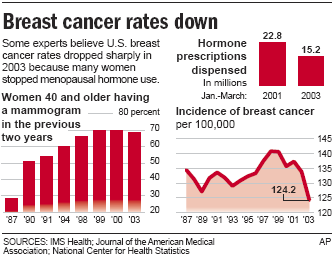
It turns out that there are some serious reasons to avoid HRT. Medical sociologist, Gayle Sulik, writes:  “Clearly, there is a relationship between the use of synthetic hormone therapies and breast cancer even if the mechanisms are not fully understood. In 2002, when the findings from the Women’s Health Initiative estrogen-plus-progestin study came out, about 38 percent of postmenopausal women in the U.S. were using some type of hormone therapy drug. When the WHI findings hit the news, sales plummeted and breast cancer incidence rates also dropped”.

An article published in the New England Journal of Medicine also linked a sharp decline (6.7 percent) in breast cancer incidence in 2003 with the release of the first Women’s Health Initiative report “and the ensuing drop in the use of hormone-replacement therapy among postmenopausal women in the United States.'”

I later read somewhere that around 40% of women who get their HRT prescriptions filled never take the stuff, and that info validated my choice. The link between HRT and breast and other cancers was too real to me. My mother had had breast cancer, and it seemed like taking these drugs was like playing with fire. Instead I devoured literature on alternative ways to deal with menopause symptoms, drank my soy milk and copped a “bring it on” attitude.

As if there weren’t enough reasons to question the use of Hormone Replacement Therapy, I just discovered another. Call me naïve or sheltered, but it never occurred to me that Premarin – an HRT taken by a number of my friends – was named for what it actually is: Pregnant Mare’s Urine. In other words, the drug of choice for so many menopausal women comes from horses that are “farmed” for this exact purpose. Northrup says, “People will tell you that Premarin is natural–yeah, it’s natural if you are a horse!”

According to an April 5th Boston Globe article by Nestor Ramos,, these horses are kept “inside long barns in the Canadian provinces of Manitoba and Saskatchewan”, lined up in rows of small stalls, “tubes snaking up from under them into vessels nearby”. Geez! Ramos, comments, “It sounds like science fiction — some equine version of “The Matrix,” in which a superior species saps humans for their nutrients — but it’s true: The urine is precious”.

The article is a human interest piece focusing on two women – one, age 70; the other, in her late 20s – who share a love of horses. It turns out that while selling Premarin is a profitable industry, “keeping hundreds of horses pregnant every year” in order to gather their urine has a downside. The mares have babies, and selling the foals for meat is also apparently a profitable business. The elder woman has spent years going back and forth to Manitoba to rescue some of these foals from the “slaughterhouse floor”, but her energy to make this trip has waned, so having a protégé who shares her passion has made it possible for her to carry out this mission, and in a way, build in the potential for someone to carry on when she no longer can make the journey.

I love the story of these two women: one in which the passion and leadership of the “elder” inspires the younger, and the vibrancy of the younger who makes this difficult journey possible. But what if there wasn’t such a lucrative industry around harvesting pregnant mare urine in the first place to supposedly rescue aging women from a natural change in their reproductive cycles? Northrup comments, “The hormones that naturally occur in the human female body have been altered so that the drug companies can justify the R&D programs to patent a hormone and therefore make their money. It’s frightening!”

Check out this Huffington Post piece by investigative reporter Martha Rosenberg, called “When the publication plan is ready, the research will appear”, in which she describes how the marketing arm of a drug company published articles denying the link between HRT and cancer. “Though the marketing firm’s “science” is egregiously flawed — HT has strong links to breast cancer, breast cancer, heart disease and Alzheimer’s — the papers have not been retracted.”

The cultural narrative for menopause, very much aided and abetted by the pharmaceutical industry – is that it’s a medical crisis to be tackled. Women’s natural reproductive functions have long been viewed as indicative of “otherness”, weakness and incapacity, from menstruation to menopause. While many women surely benefit from a medical approach to easing symptoms of menopause, we must question who and what the medicalization of menopause serves, and recognize that menopause isn’t a wasting away, a time in which we go bonkers and lose our minds and bodies. It is just another passage in a series of chapters in women’s lives.

* Northrup does recommend the use of nutritional supports such as omega 3 fats and B vitamins, “to help clear estrogen dominance from your system”.  Because when you stop ovulating and you don’t have progesterone to balance the estrogen, “that can create a state of anxiety, jitters, and headaches”. Her advice? Eating soy or ground up flax seed “helps a great deal to give you plant hormone support while your body is making the transition”.

For more reading, see:

Peter Conrad: Medicalization and Social Control: http://66.199.228.237/boundary/addiction/medicalization_and_social_control.pdf

Meyer, Medicalization of Menopause: Critique and Consequences: http://www.ncbi.nlm.nih.gov/pubmed/11809008

Marlene Cimons: Medicalization of Menopause: Framing Media Messages in the 20th Century: http://drum.lib.umd.edu/bitstream/1903/8352/1/umi-umd-5616.pdf

Leonard Nimoy attended University of California, Los Angeles in 1971 to study photography. He had already filmed the original Star Trek television series, which didn’t develop a cult following until reruns of the show aired in the 1970s. His love of photography, however, predates his portrayal of the half-Vulcan, Spock.

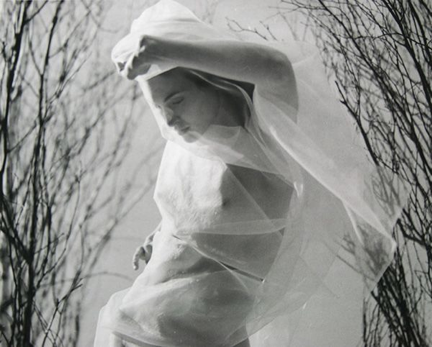
While this role is what most people are sure to remember Nimoy by, I will always think of him as a skilled photographer who engaged cultural rhetoric on the gendered and sexual body. Perhaps his most controversial work is titled Shekhina, which is his attempt to capture divinity in a “feminine” form. Shekhina, he explains here, is a Jewish “deity”—one so luminous that men in synagogue have to look down, away, or otherwise shield their faces. As a child, he wondered, “Why hide the face? Why can’t we look?”

Spending seven years searching for Shekhina through his photography, Nimoy produced images he describes here as a “crossover between sensuality and religion.” Consequently, he was asked to not show his photographs at a Seattle synagogue where he had been scheduled to talk about his work. The controversy around this censorship arose because of a religious discomfort with sexual portrayals of women—as sexually desirable and perhaps as sexually desiring—and the association of women with power. Nimoy saw his work as a “very strong feminist statement” partly because “to some degree, in the orthodox community, that makes people uncomfortable—the idea that god is a woman.”

Shekhina
Shekhina. Leonard Nimoy/R. Michelson Galleries

Nimoy’s Shekhina series at times conflates femininity with desirability, but it also challenges us to think of women as corporeally and inherently powerful. He captures the simultaneous idolization of femininity and invisibility of the female body in religion, specifically in Judaism. And the looking away from Shekhina speaks to her ideological incandescence as well as to the way religion is structured around gender dichotomies, whereby women are cast within an androcentric institution as heterosexually alluring and men as driven by primitive roots—or by what Martha McCaughey refers to in her book, The Caveman Mystique, as Darwinian ideas about sex.

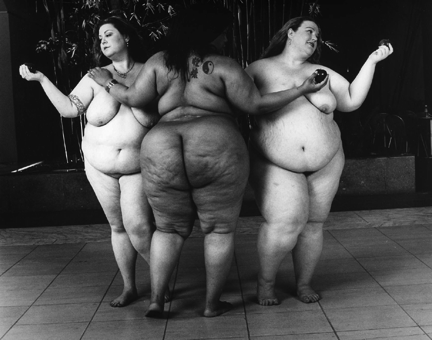
At the same time Nimoy challenges the invisibility of a powerful, deific femininity, he also privileges hegemonic corporeal norms, situating in his frames thin, white women with long hair who often peer down. [When they look directly at the viewer, the images take to task representations of women as meek]. Nimoy recognized this, noting that it was not until he began work on The Full Body Project that he realized very specific bodies and definitions of beauty dominated his work. A large-bodied model contacted him to see if he was interested in photographing her precisely because she represented a different sort of body than he was used to shooting.

Joan Jacob Brumberg’s book on The Body Project looks historically to demonstrate the ways social norms have turned women’s bodies into all consuming projects. At any given time, women’s bodies are defined as malleable and docile, evoking Michel Foucault’s notion of the panopticon, by which women internalize narrow, sexist bodily expectations. To take on work that captures an alternative image of beauty, Nimoy said he had to ask himself, “Will you do something that scares you?” In other words, could he do justice to a woman who challenged him to rethink how he was portraying beautiful bodies and women’s sexuality?

Nimoy’s relationship with the model evolved into a larger venture as he found that when he showed his photography, it was pictures of this full-bodied woman that “got the attention. So I thought, there’s something going on there in our culture about this kind of body.” Nimoy appeared to know he was engaging larger conversations about the misogyny of fat-shaming and problematic definitions of what counts as a beautiful and thus culturally valued woman. He found a San Francisco burlesque group called The Fat-Bottom Revue that was happy to pose for him; the women were comfortable in their own skin and used the art of dance and theater to do body-positive activism. Along with these women, Nimoy highlighted bodies as cultural symbols that are constrained by gendered structures but also vehicles of agency through which we experience the world around us and develop intellectual, emotional, and physical relationships with others. [For more on The Full Body Project, see here and here].

The Full Body Project. Leonard Nimoy/R. Michelson Galleries
Leonard Nimoy
Leonard Nimoy. Seth Kaye Photography.

As a gender scholar who studies issues of masculinity, I can’t help but wonder where the masculine body is in Nimoy’s work. Why not capture sensual photos of large bodied men? Or of female masculinity? Focusing on femininity and female bodies relegates “beauty” to feminine identified bodies, but it also keeps women at the center of a discussion of bodies and structures of power. [In my own research, I explore men’s relationship to beauty and the beauty industry. See here]. What Nimoy does so well in his photography is acquaint us with images of bodies that beget conversations about gender, sexuality, and social hierarchies. As Nimoy noted, his photos put us in touch “with something beyond what you see in the image;” and he saw his work as not about any particular model or group of models, but rather about “feminine power.”

_____________________

Barber_PhotoKristen Barber is an Assistant Professor of Sociology and a Faculty Affiliate in Women, Gender, and Sexuality Studies at Southern Illinois University, Carbondale. She teaches courses on gender, inequality, work, and qualitative methods and is on the Gender & Society Editorial Board. Her book on women working in the men’s grooming industry is forthcoming with Rutgers University Press.